It’s The Go-To Drug To Treat Opioid Addiction. Why Won’t More Pharmacies Stock It?

A bus run by the organization Prevention Point parks at Kensington and Allegheny avenues in Philadelphia to offer harm-reduction services to drug users in the area. Louis Morano (center), who was visiting the Prevention Point bus for the second time, sits outside and waits to be seen by Dr. Ben Cocchiaro.
Brad Larrison for WHYY
hide caption
toggle caption
Brad Larrison for WHYY
Louis Morano knows what he needs, and he knows where to get it.
Morano, 29, has done seven stints in rehab for opioid addiction in the past 15 years. So, he has come to a mobile medical clinic parked on a corner of Philadelphia’s Kensington neighborhood, in the geographical heart of the city’s overdose crisis. People call the mobile clinic the “bupe bus.”
Buprenorphine is a drug, also known by its brand name, Suboxone, that curbs cravings and treats the symptoms of withdrawal from opioid addiction. Combined with cognitive behavioral therapy, it is one of the three FDA-approved medicines considered the gold standard for opioid-addiction treatment.
Morano has tried Suboxone before — he used to buy it from a street dealer to help him get through his workday when he couldn’t use heroin. It kept the sick feelings of withdrawal at bay. So he has a sense of how it will make him feel, though he has never been prescribed it. He used to think of it as a crutch. But now, he is committed to his recovery, and buprenorphine is key.
“I can’t do this anymore,” Morano says. He wants the medical support.
The bupe bus is a project of Prevention Point, Philadelphia’s only syringe-exchange program, and is part of the city’s efforts to expand access to this particular form of medication-assisted treatment for opioid addiction.
Morano is first in line. After a short time, the heavy doors of the bus heave open and Dr. Ben Cocchiaro waves Morano inside, where they squeeze into a tiny exam room. Together, Cocchiaro and Morano discuss how buprenorphine might help Morano’s recovery be more successful this time, as well as if he’s open to seeing a therapist. Cocchiaro gives Morano instructions on how to take the medication and then calls a pharmacy to authorize a prescription.
To date, much of the research on barriers to buprenorphine access has focused on the fact that there are too few medical providers available to write the prescriptions.
According to federal law, doctors must apply for a special waiver from the federal Substance Abuse and Mental Health Services Administration to prescribe buprenorphine. To get the waiver, a doctor must undergo eight hours of training — and, initially, can prescribe the drug to only a maximum of 30 patients at any one time. Given these constraints, many doctors don’t bother.
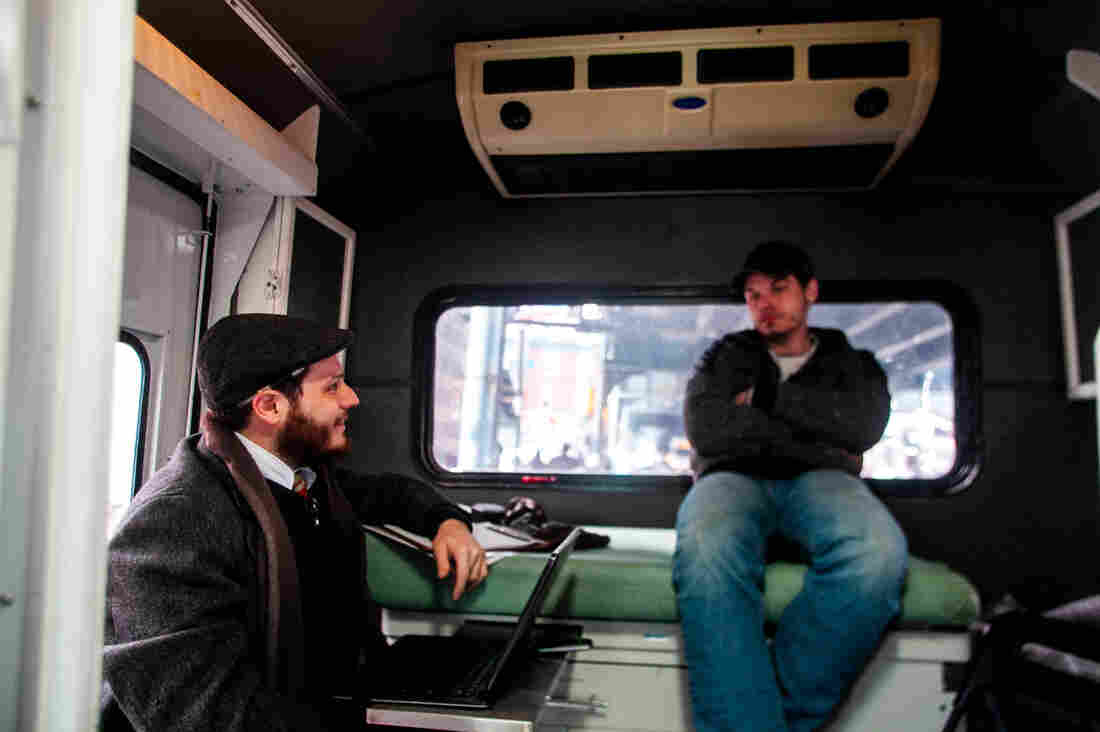
Inside the exam room on the “bupe bus,” as the mobile medical clinic is called, Dr. Ben Cocchiaro and Louis Morano talk over Morano’s options. Morano says he’s committed to his recovery this time and wants the support of buprenorphine to help him quit heroin.
Brad Larrison for WHYY
hide caption
toggle caption
Brad Larrison for WHYY
But, according to people active in addressing the opioid crisis, some pharmacists also prevent many opioid users who need buprenorphine from getting it.
“We can write a bunch of prescriptions for people,” says Dan Ventricelli of the Philadelphia College of Pharmacy. “But if they don’t have a pharmacy and a pharmacist that’s willing to fill that medication for them, fill it consistently and have an open conversation with that patient throughout that treatment process, then we may end up with a bottleneck at the community pharmacy.”
Pharmacists frustrated by remedy’s street use
There are a number of reasons some pharmacists say they are hesitant.
Just a few blocks away from the bupe bus in Kensington, for example, Richard Ost owns an independent pharmacy. He says his store was one of the first in the neighborhood to stock buprenorphine. But after a while, Ost started noticing that people were not using the medication as directed — they were selling it instead.
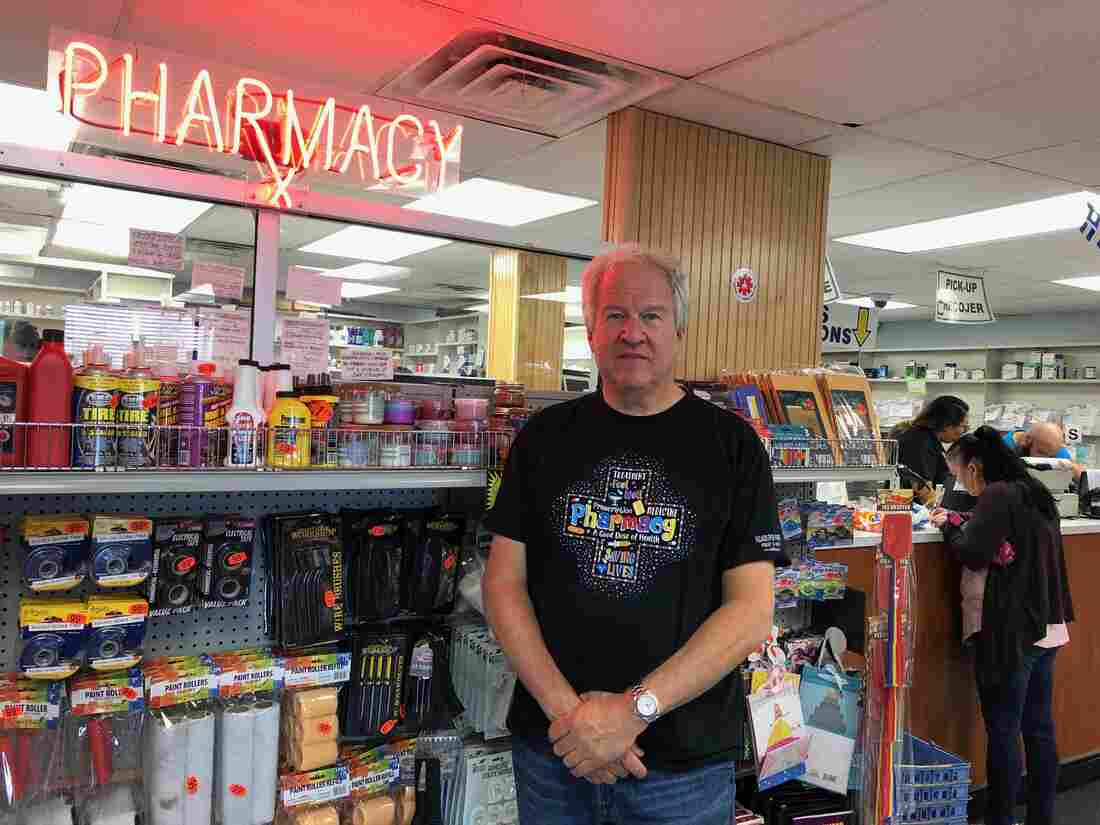

Richard Ost owns Philadelphia Pharmacy, in the city’s Kensington neighborhood. He says he has stopped carrying Suboxone, for the most part, because the illegal market for the drug brought unwanted traffic to his store.
Nina Feldman/WHYY
hide caption
toggle caption
Nina Feldman/WHYY
Buprenorphine acts as a partial opioid agonist, which means it’s a low-grade opioid, in a sense. When taken in pill or tablet form, bupe is unlikely to cause the same feelings of euphoria as heroin would, but it might if it were dissolved and injected. Many people buy it on the street for the same reason Morano did: to keep from going into withdrawal between injecting heroin or fentanyl. Others buy it to try to quit using opioids on their own.
“We started seeing people [sell the drug] in our store in front of us,” says Ost. He says it’s unethical to dispense a prescription if a patient turns around and sells the drug illegally, rather than uses it. “Once we saw that with a patient, we terminated them as a patient.”
Ost explains that the illegal market for Suboxone also means that customers trying to stay sober are continually targeted and tempted.
“So if we were having a lot of people in recovery coming out of our stores,” Ost says, “the people who were dealing illicit drugs knew that, and they would be there to talk to them. And they would say, ‘Well, I’ll give you this’ or ‘I’ll give you that’ or ‘I’ll buy your Suboxone’ or ‘I’ll trade you for this.’ “
Eventually, Ost’s staff didn’t feel safe, he says, and neither did the customers. He understands the value of bupe but says it just wasn’t worth it. He has mostly stopped carrying it.
Even pharmacies that aim to stock buprenorphine can have trouble doing so. Limits set by wholesalers require pharmacies to order the drug in small, frequent batches. Though pharmacies can apply for exemptions to order more at a time or have a higher percentage of their total stock be controlled substances, doing so invites a higher level of scrutiny from the wholesaler and, in turn, from the federal Drug Enforcement Administration.
Buprenorphine saves lives
Doctors and pharmacists also receive different education about how long buprenorphine should be prescribed before tapering a patient off the drug. Medical providers sometimes prescribe it for long-term treatment, based on recent SAMHSA guidelines, while pharmacists may view longer courses of treatment as intensifying the risk of long-term dependency.
“It’s not even that they’re on different pages,” says Ventricelli. “It’s that they’re reading completely different books.”
If a patient going through withdrawal can’t quickly get buprenorphine, the stakes are high, says Silvana Mazzella, associate executive director at Prevention Point — patients may be more likely to turn back to heroin or fentanyl.
“We’re in a situation where if you are in withdrawal, you’re sick — you need to get well,” she says. “You want help today, and you can’t get it through medication-assisted treatment. Unfortunately, you will find it a block away — very quickly and very cheaply.”
Doctors with Prevention Point have found a pharmacy near the bupe bus — the Pharmacy of America — that will reliably dispense buprenorphine to their Philadelphia patients.
The head pharmacist there, Anthony Shirley, says he’s comfortable filling the scripts because he trusts that the doctors at Prevention Point will write prescriptions only to patients who need the medication. He has heard firsthand from patients who say buprenorphine saved their lives.
“That’s something you can’t really put a price tag on,” Shirley says. For him, the calculation is simple: His store is in an area where lots of people need buprenorphine. That means it’s his job to get it to them.
This story is part of a reporting partnership with NPR, WHYY and Kaiser Health News.
Sherm Poppen, Grandfather Of Snowboarding, Dies At 89

Sherm Poppen didn’t become wealthy off of his invention, the Snurfer. But Poppen, who died recently at 89, is widely considered the grandfather of the multi-billion dollar snowboard industry.
Simone Biles Becomes First Woman To Land Triple-Double In Competition
NPR’s Mary Louise Kelly speaks with NBC Sports reporter Nick Zaccardi about Simone Biles landing a triple twisting double somersault at the U.S. Gymnastics Championship.
Simone Biles Earns 6th U.S. All-Around Gymnastics Title With Historic Triple-Double


Simone Biles competes on the balance beam at the U.S. Gymnastics Championships on Sunday. The reigning world champion is the first woman to stick the landing after two flips and three full twists.
Charlie Riedel/AP
hide caption
toggle caption
Charlie Riedel/AP
The first time that Simone Biles performed a triple-double at the U.S. Gymnastics Championships in Kansas City, she wasn’t pleased. After soaring through the air to complete two flips and three full twists on Friday, she stumbled.
On Sunday, the 22-year-old did it again — and stuck the landing. It’s the first time a woman has done so in competition.
AIR BILES ?
The height on @Simone_Biles historic pass is INSANE. pic.twitter.com/TAwNxBw9Rr
— NBC Sports (@NBCSports) August 12, 2019
The reigning world champion finished the competition on Sunday with the U.S. all-around title. It’s her sixth.
Previously the only woman to win six U.S. all-around gold medals was Clara Schroth-Lomady, who won her titles between 1945 and 1952.
Biles also made history by performing a double-double dismount — two twists and two somersaults — off the balance beam on Friday.
Before competing last week, Biles criticized USA Gymnastics, the national governing body of the sport, for failing to protect its athletes against abuse. Biles revealed in 2018 that she was one of the many gymnasts abused by former national team doctor Larry Nassar.
“You had one job. You literally had one job and you couldn’t protect us,” Biles told reporters on Wednesday.
Simone Biles Wins 6th U.S. Women’s Gymnastics Title
After a historic triple-double flip in the floor exercise, Simone Biles collected her sixth title Sunday in Kansas City, Missouri. The Olympic champion is preparing for the 2020 games.
‘Baby Shark’ Takes Hold At Nationals Park
Fans of the Washington Nationals have a new reason to watch: they can enjoy a “Baby Shark” attack every time Gerardo Parra comes to bat, when the infectious children’s song starts playing.
LULU GARCIA-NAVARRO, HOST:
The music a baseball player picks to walk up to home plate is a careful choice. It anticipates the batter’s next hit, the one that could mean victory or the one that could turn a losing game around.
(SOUNDBITE OF SONG, “THIS IS HOW WE DO IT”)
MONTELL JORDAN: (Singing) This is how we do it.
(SOUNDBITE OF SONG, “GASOLINA”)
DADDY YANKEE: (Singing in Spanish).
(SOUNDBITE OF SONG, “FEELING GOOD”)
MICHAEL BUBLE: (Singing) It’s an new day. It’s a new life. It’s a new life for me. And I’m feeling good.
GARCIA-NAVARRO: Walk-up music is a staple of baseball culture. Recently, Gerardo Parra of the Washington Nationals mixed up that tradition with…
(SOUNDBITE OF SONG, “BABY SHARK”)
PINKFONG: (Singing) Baby shark, doo doo doo doo doo doo. Baby shark, doo doo doo doo doo doo. Baby shark, doo doo doo doo doo doo. Baby shark.
GARCIA-NAVARRO: …The insidious, yet joyful “Baby Shark.”
BLAKE FINNEY: To have “Baby Shark” come up at Nats Park has been something completely different and it’s absolutely taken it by storm.
GARCIA-NAVARRO: That’s Blake Finney. He writes about the Nationals for SB Nation’s website, Federal Baseball. Now, to be fair, this isn’t the first time a major league player has used “Baby Shark” as a walk-up song. Elvis Andrus of the Texas Rangers uses it, too, but it’s really taken off at Nationals Park thanks to Gerardo Parra. He chose the song because his 2-year-old daughter loves it. Now, it’s become his thing. Blake Finney says the center fielder has been quite the morale booster since he was traded to the Nats in May.
FINNEY: When he joined the team, they were down in the dumps. They were not meeting expectations. There were calls for the manager to be fired and the dugout didn’t seem to have that much life.
GARCIA-NAVARRO: Oh, it has a life now.
(SOUNDBITE OF ARCHIVED RECORDING)
UNIDENTIFIED ANNOUNCER: Gerardo Parra.
(SOUNDBITE OF SONG, “BABY SHARK”)
PINKFONG: (Singing) Baby shark, doo doo doo doo doo doo.
GARCIA-NAVARRO: The dugout, the entire stadium, even the opposing team, every time its Parra’s turn at the bat, few people can resist a “Baby Shark” attack.
CHRIS DENNING: Everybody in the audience, they just start clapping, and it’s almost like they’re anticipating it. Everybody’s got their hands in like – in their shark chomping motion ready to go. And then as soon as that music starts going, they start clapping their hands together and singing along.
(SOUNDBITE OF CROWD CLAPPING)
GARCIA-NAVARRO: Chris Denning has seen this action up close at Nats Park. He could only clap with one hand because he was recording on his phone with the other. He’s familiar with the song. He’s the father of seven, and he’s a longtime Nats fan.
DENNING: For me, I look at this and I’m kind of hopeful that this is a moment in which the fans really kind of grow together. You know, it’s silly to think that it’s just, you know, the song is the thing that’s doing it for us.
ANNIE DINEEN: The first time I saw people doing the shark thing, I was a little bit skeptical to be completely honest.
GARCIA-NAVARRO: That’s Annie Dineen. She’s 28 years old, no kids, and she thought she was immune to the power of “Baby Shark.”
DINEEN: But I was sitting in a section where there were, like – there must have been a summer camp. There were, like, 10 or 15, like, 4-year-olds and their faces – they were so excited. And I was like, well, OK, this is kind of fun. And then I was hooked, and now I’m an avid shark supporter.
GARCIA-NAVARRO: And Dineen, along with many other shark supporters, now considers this song a true sports anthem.
(SOUNDBITE OF SONG, “BABY SHARK”)
PINKFONG: (Singing) Baby shark, doo doo doo doo doo doo. Baby shark, doo doo doo doo doo doo. Baby shark, doo doo doo doo doo doo.
Copyright © 2019 NPR. All rights reserved. Visit our website terms of use and permissions pages at www.npr.org for further information.
NPR transcripts are created on a rush deadline by Verb8tm, Inc., an NPR contractor, and produced using a proprietary transcription process developed with NPR. This text may not be in its final form and may be updated or revised in the future. Accuracy and availability may vary. The authoritative record of NPR’s programming is the audio record.
Simone Biles Continues To Break Records
Simone Biles became the first person in history to land a double twisting, double somersault in competition at the U.S. Gymnastics Championship.
LULU GARCIA-NAVARRO, HOST:
We’re in awe of Simone Biles. She’s already broken a bundle of records, and she’s made history again. At the U.S. gymnastics championship on Friday, she became the first gymnast to land a double-double in competition. In her dismount from the balance beam, she soared in a double twisting, double somersault dismount.
(SOUNDBITE OF ARCHIVED RECORDING)
UNIDENTIFIED ANNOUNCER: Here it comes – two flips, two twists, never been done in competition.
(CHEERING)
UNIDENTIFIED ANNOUNCER: That makes everything just a little bit more palatable.
GARCIA-NAVARRO: It does make everything more palatable, doesn’t it? If Biles can complete the double-double in international competition, they’re going to name it after her. It would be the third move with her name on it.
Copyright © 2019 NPR. All rights reserved. Visit our website terms of use and permissions pages at www.npr.org for further information.
NPR transcripts are created on a rush deadline by Verb8tm, Inc., an NPR contractor, and produced using a proprietary transcription process developed with NPR. This text may not be in its final form and may be updated or revised in the future. Accuracy and availability may vary. The authoritative record of NPR’s programming is the audio record.
Former NFL Player Chris Borland Asks Catholic Church To Take Stand On Gun Control
Former NFL player Chris Borland grew up Catholic in Dayton. He talks with host Sacha Pfeiffer about his call for the church to take a stronger stand for gun control and against white supremacy.
SACHA PFEIFFER, HOST:
Chris Borland is another athlete who’s taking a stand, and he’s asking other athletes to join him. He’s a former NFL player who grew up in Kettering, Ohio, a suburb of Dayton. After the mass shootings there and in El Paso and in Gilroy, Calif., he wrote an open letter to the archbishop of Cincinnati urging the Catholic Church to, quote, “lead as Christ would.” I asked Borland why he wanted to single out the Catholic Church…
CHRIS BORLAND: It’s what I know, and I grew up within the church. And I see a concerning lack of assertiveness in addressing what’s going on in our country. And to have, you know, what happened in Dayton be met with what I’d consider just the minimal reaction thoughts and prayers to me isn’t enough.
PFEIFFER: What exactly do you want the church to do?
BORLAND: To firstly name and condemn white supremacy – two of the three terrorist attacks were carried out in the name of white supremacy. Secondly, to frame gun control for what it is, a pro-life stance. And thirdly, to hold accountable politicians who are parishioners who use the lord’s name and talk about God in Christ to get elected and then don’t act once in office and embody those values.
PFEIFFER: Last week, the archbishop of San Antonio, Texas, on Twitter was critical of President Trump. He said to him, stop your hatred. And he got heavily criticized for that – the archbishop did – kind of had to backtrack a little. If the archbishop and a part of the country that’s been right at the center of both the crisis on the border and now this attack can’t come out strongly and explicitly call out people that he thinks are promoting racism and violence, do you think it’s realistic to expect other Catholic leaders to do the same?
BORLAND: I don’t know that it’s realistic. This may be entirely naive. I’ve emailed and called and left messages to the Archdiocese of Cincinnati, you know, a half dozen or more over the past few days, and have gotten minimal response. So we do have a lot of power in the voice and the numbers of athletes that have competed in the greater Catholic League and we’re going to start there. Maybe it falls on deaf ears, but I think it’s better than doing nothing.
PFEIFFER: You mentioned that you’re trying to build a coalition in a sense of other athletes with prominent public platforms to speak out and join you. Have you been able to get other professional athletes to join you in calling out the Catholic Church?
BORLAND: It’s starting. We’ve had a few, you know, retweet and like the tweets that I put out a couple days ago. You know, there’s a handful of text conversations between men and women that have played at a high-level and email chains. And we’re figuring out the best way to do that. But the sad nature of gun violence in America and of hatred is that if you wait very long, there’s likely be another atrocity. So although it’s imperfect right now, we want to act and figure this out as we go. But, you know, when it happens in your backyard, you have to do something.
PFEIFFER: That’s Chris Borland, a former NFL linebacker who grew up in Dayton. We reached out to the Cincinnati Archdiocese for comment on Borland’s letter, and we were told that the archbishop has read it but hasn’t yet sent Borland a formal response.
Copyright © 2019 NPR. All rights reserved. Visit our website terms of use and permissions pages at www.npr.org for further information.
NPR transcripts are created on a rush deadline by Verb8tm, Inc., an NPR contractor, and produced using a proprietary transcription process developed with NPR. This text may not be in its final form and may be updated or revised in the future. Accuracy and availability may vary. The authoritative record of NPR’s programming is the audio record.
Saturday Sports: Yankees, Simone Biles
NPR’s Sacha Pfeiffer talks about the growing role of personal politics in sports and more with Howard Bryant of ESPN.
SACHA PFEIFFER, HOST:
And now it’s time for sports.
(SOUNDBITE OF MUSIC)
PFEIFFER: The New York Yankees remain one of the hottest teams in Major League Baseball, and politics continues to creep its way into the sports world. ESPN’s Howard Bryant joins us now to talk about all of that. Good morning, Howard.
HOWARD BRYANT: Good morning. How are you?
PFEIFFER: I’m good. So the Yankees – also very good for them – although it’s been 10 years since they’ve won a World Series, you’re saying that fans have good reason to be excited that they could do it this season.
BRYANT: Well, I think they do. And I think one of the reasons is their depth. It’s unbelievable how many players the Yankees have had injured this year, whether it’s Aaron Judge, whether it’s Giancarlo Stanton – virtually everybody in their lineup – Gary Sanchez. They’ve all been hurt. They’ve used the injured list a ridiculous number of times this year in terms of number of players that they’ve had hurt. And yet, they still have the best record and – in the American League. And they are still the team that has somehow run away with the American League East.
They’ve been knocking on the door the last couple years. They went to the American League Championship Series in 2017. They lost to the Red Sox in the playoffs last year. And this year, they look like they’re really close. And it’s kind of interesting, too, because, when you think about the Yankees, you think about them winning all the time and not being the underdog. But when you put Red Sox-Yankees next to each other, ever since 2004, the Red Sox have three championships, and the Yankees have one.
PFEIFFER: Right. And what do you think is making the Yankees so good this year?
BRYANT: It’s their depth. They’ve got so many players that you’ve never heard of, whether it’s Gio Urshela or the young Gleyber Torres. They’ve had so many injuries. You look at a – even a kid like Andujar last year who was playing great for them – he got hurt. And just every new player that comes into the lineup steps in, does something great. That kid Ford is hitting home runs now. Tauchman’s got 12 home runs. It’s just amazing. And you’re like, who are these guys? And yet, every player they put into the lineup produces. And that’s that magic that you have with championship teams where everybody contributes. And before you know it, they’re the ones at the end of the finish line.
PFEIFFER: Howard, there’s been a lot of noteworthy sports news happening off the playing field lately, athletes and activism. I know that Simone Biles, the Olympic gymnast, has been very outspoken, and that’s really caught your attention.
BRYANT: Well, absolutely, it has, considering that now you’re looking at these federations with – whether it’s the U.S. gymnastics with the Larry Nassar scandal and the sexual assault of those young gymnasts and how many over how many years – 300. And you look at these federations, and their job is to protect these athletes. Their job is not simply to profit off of them.
And when you look at what’s happening to them or you’re talking about the equal pay situations, whether it’s the U.S. women’s national hockey team or the U.S. women’s soccer team, or whether it’s equal pay in tennis, the athletes are recognizing that they have more power than they have been exercising over the past several years. And you’re starting to see now the athletes recognizing and saying and using their power, whether they get criticized for it or not – that they’ve got a stake in this, and they’re going to make sure everybody hears them.
PFEIFFER: Well, speaking of criticism, do you have a sense of the ratio of fans who like outspoken athletes versus fans who take a shut-up-and-just-play-the-game stance?
BRYANT: Well, I think that sports has never been anything but political. It’s always had a political element to it. And so people who don’t like this are usually saying, I don’t like what you’re saying. And they don’t have much of a great sense of history. I also understand the need for sports to be the place where you can get away from your problems. But there’s a separation here. Part of it is your entertainment, but part of it is their job.
PFEIFFER: That’s ESPN’s Howard Bryant. Howard, thank you.
BRYANT: Thank you.
Copyright © 2019 NPR. All rights reserved. Visit our website terms of use and permissions pages at www.npr.org for further information.
NPR transcripts are created on a rush deadline by Verb8tm, Inc., an NPR contractor, and produced using a proprietary transcription process developed with NPR. This text may not be in its final form and may be updated or revised in the future. Accuracy and availability may vary. The authoritative record of NPR’s programming is the audio record.
At ‘High Five’ Camp, Struggling With A Disability Is The Point


At Nashville’s “High Five” camp, 12-year-old Priceless Garinger (center), whose right side has been weakened by cerebral palsy, wears a full-length, bright pink cast on her left arm — though that arm’s strong and healthy. By using her weaker right arm and hand to decorate a cape, she hopes to gain a stronger grip and fine motor control.
Blake Farmer/Nashville Public Radio
hide caption
toggle caption
Blake Farmer/Nashville Public Radio
There’s a summer camp for kids with disabilities in Nashville that does things a little differently. Instead of accommodating the campers’ physical challenges, therapists make life a bit tougher, in hopes of ultimately strengthening the kids’ ability to navigate the world.
Priceless Garinger’s left arm is wrapped from shoulder to fingertips in a neon pink cast on the day I visit. The left is actually the 12-year-old’s strong hand. It’s her other arm and hand that’s been the problem since she was born with cerebral palsy. She can move her right arm but has difficulty grasping anything.
“Right there, where you bend your arm, it itches right there,” she says, using a plastic spoon to scratch her elbow, which is out of reach.
This day camp is organized by Vanderbilt Children’s Hospital. Some campers, like Priceless, have cerebral palsy; others have had a brain tumor removed, or had a stroke. All of them have a weak side of the body they rarely use. At High Five Constraint Camp the children are forced to try to strengthen that weak side.
“Yeah, there it is,” Priceless says as she bumps bare arms with a fellow camper — an improvised fist bump.
This kind of rehab is known as constraint-induced movement therapy. Similar camps are run by children’s hospitals all around the U.S. during the summer, based on research by Edward Taub at the University of Alabama at Birmingham. He hypothesized years ago that the affected limbs suffer from “learned nonuse.”
Priceless takes her turn on the indoor obstacle course at the hospital’s pediatric rehab facility, located at a Vanderbilt satellite campus on Nashville’s outskirts. She rides a modified zipline, wrapping her long legs around the swinging seat — swooping along and then dropping into a pit of overstuffed pillows.
The occupational therapists prompt her to climb out. They cheer her on but don’t immediately help. The struggle is the point.
Priceless finds her way out, and next plops down on a scooter. She grunts as she tries to propel herself with a hand that she can barely control.
“I’m not going anywhere,” she says.
Her therapist gives her a little boost toward the finish line, where Priceless hits a buzzer that sounds an alarm and draws cheers from the other campers.
Constraint-induced therapy
The restrictive rehab techniques are increasingly used with kids who have cerebral palsy, though there hasn’t been much research showing the approach is all that much better than traditional physical therapy. And some kids become overly frustrated or even refuse to cooperate.
To outsiders, the strategy can seem mean.
“If the families have never heard of it before, it’s kind of like, ‘What? You’re going to cast their good arm and take away their really functional hand?’ ” says occupational therapist Stephanie Frazer.
This particular day camp started a decade ago as part of a research project at Vanderbilt University. When the study concluded, the camp shut down. But Frazer revived it in recent years because she believes the approach, and the setting, are effective.
“Whenever we’re casting that good arm, the brain is like, ‘I have this other arm here.’ And they start using it more and it starts creating pathways,” she says. “They actually make a lot of progress in a short amount of time.”

The kids’ temporary casts end in a mitten shape to minimize any wiggle room and attempts to rely on that stronger hand while at camp.
Blake Farmer/Nashville Public Radio
hide caption
toggle caption
Blake Farmer/Nashville Public Radio
Even snacktime can be turned into a therapeutic experience. Playing with food is required at this camp. The kids take pretzels and stab them into blocks of cheese.
Some blow bubbles in their juice, partly out of frustration. Some resort to using the arm that’s in a cast to feed themselves.
Seeking independence
This is the third summer of camp for Priceless, who wasn’t exactly enthusiastic when she started. But she’s beginning to see how helpful it would be to be able to rely on both hands to do things like manipulate a remote control.
“I want to play with my iPad and watch TV,” she says.
The parents of the campers are even more motivated, because they understand how the use of two hands could make independence in adulthood much more feasible for their children.
“She talks about wanting to drive,” says Laura Garinger, Priceless’ mom.
From past experience, Garinger says she suspects that for the first few months after this camp session, Priceless will use her weak hand more often. But in past summers she has eventually reverted to relying on her strong side.
Still, Garinger says, she has witnessed lots of other, permanent successes.
Garinger, who is a special education teacher, met Priceless when the little girl was 3 years old; she adopted Priceless two years later. The preschooler needed to use a walker at the time. Now she walks on her own.
Being able to rely on both hands would go a long way toward helping Priceless achieve her dreams, her mom says.
“She hopes to be a police officer, so the sky’s the limit. We’ll see,” Garinger says, pausing as her voice shakes with emotion. “I mean, it’s probably not realistic, but I always tell her she can do what she wants when she grows up.”
Garinger says the first step for Priceless is strengthening her arm enough to give a high-five — and a two-arm hug.
This story is part of NPR’s reporting partnership with Nashville Public Radio and Kaiser Health News.