World Cup Final: It’s The Juggernaut Vs. The New Kid As U.S. Takes On The Netherlands

The Netherlands are the last team standing between the United States and its fourth Women’s World Cup. Here, U.S. forward Megan Rapinoe watches her teammates warm up before Tuesday’s 2-1 semifinal win over England.
Alex Grimm/Getty Images
hide caption
toggle caption
Alex Grimm/Getty Images
Before the World Cup began, nearly everyone predicted a final between the United States and, well, some team from Europe. Perhaps Germany, England or France. When the quarterfinals arrived, that soothsaying was on target: The Yanks and seven European squads remained.
Now all the blanks on the World Cup bracket have been filled in, save one. On Sunday, the mighty United States will battle the bright orange Netherlands as two soccer-crazed nations tune in.
Will the U.S. continue its march of greatness undaunted, or will the Dutch pull off an upset for the ages?
The U.S. squad has been nearly perfect, allowing no goals in the group phase and only one goal each against Spain, France and England.
But there have been some close calls. In Tuesday’s semifinal, there were moments when the U.S. team’s fate hinged on the smallest of margins. A goal in the 68th minute by England’s Ellen White would have been an equalizer, but it was ruled offside after video review. And a late-game penalty kick by England (during which most of America could be seen biting its nails) was saved by U.S. goalkeeper Alyssa Naeher. But the U.S. won, as it does so often.
So the final in Lyon, France, comes down to the juggernaut and the new kid.
This is just the second time the Dutch have played in the World Cup. The OranjeLeeuwinnen made it to the round of 16 four years ago and have been ascendant ever since. They were the surprise victors of the 2017 European Championships, and they are now beloved by a nation of orange-frocked football fans.
The Dutch are led by two strong attackers: Lieke Martens and Vivianne Miedema. Martens is a gifted winger who was named FIFA’s player of the year in 2017, but she is grappling with a toe injury that took her off the field for the team’s 1-0 semifinal win over Sweden. Miedema is a standout at Arsenal and, at 22, is already the Netherlands’ all-time leading scorer.
But it will take a lot to overcome the strength and skill of the U.S. Women’s National Team. As the U.S. has worked and won its way to play for a fourth World Cup title, it has done so with remarkable style and confidence.
Exhibit A: U.S. midfielder Rose Lavelle nutmegging the ball through the legs of England’s Millie Bright.
First big chance of the game goes to the @USWNT!
All set up by @roselavelle with the killer nutmeg on Bright ? #FIFAWWC pic.twitter.com/XvhOtcs1Lc
— FOX Soccer (@FOXSoccer) July 2, 2019
Exhibit B: Forward Alex Morgan scoring a soaring header to give the U.S. the lead on her 30th birthday. Then celebrating by delicately sipping an imaginary cup of tea. Then pointing out that male goal scorers celebrate in all kinds of ways, including in crude fashion, and that it elicits barely a comment.
Alex Morgan scores her first goal since the opening game and retakes the lead in the Golden Boot race (6 goals, 3 assists)
She’s the first player in #FIFAWWC history to score on her birthday ? pic.twitter.com/EGWBNIyaxI
— FOX Soccer (@FOXSoccer) July 2, 2019
Exhibit C: Megan Rapinoe.
For many U.S. fans, Rapinoe is the heart and soul of the team — artful winger, unflappable professional, moral center. Last week, President Trump tweeted critically about Rapinoe’s statement that she wouldn’t go to the White House if the team was invited. She stood by those words, then went onto the pitch and scored both of the U.S.’s goals against France.
Some have called her unpatriotic over her decision to not mouth the words to the national anthem before matches. But Rapinoe told reporters on Wednesday that she considers herself “particularly and uniquely and very deeply American.”
“I feel very fortunate to be in this country — I’d never be able to do this in a lot of other places but also, that doesn’t mean that we can’t get better. That doesn’t mean that we shouldn’t always strive to be better,” she said. “I think that this country was founded on a lot of great ideals, but it was also founded on slavery, and I think we just need to be really honest about that and be really open in talking about that so we can reconcile that and hopefully move forward and make this country better for everyone.”
Rapinoe didn’t play in the semifinal match against England because of a sore hamstring. Christen Press joined the team’s front line instead and scored almost immediately, demonstrating the depth and power the U.S. brings. Rapinoe says she will be healthy enough to play in Sunday’s final.
Netherlands midfielder Danielle van de Donk said Friday that she thinks the U.S. team has been arrogant.
“They’re basically already congratulating us on finishing in second place. I love it, let them say what they want to say,” she said. “The final is a game like any other: it will start at 0-0 and there are still at least 90 minutes to play. We’ll show them on the pitch how much we want to win that World Cup. Let’s talk afterwards!”
If the Dutch win, they will be honored Tuesday with a ceremony and a celebratory cruise through Amsterdam’s canals. The squad’s supporters have traveled en masse while in France and filled the streets with coordinated dancing, willing their team to greatness.
So this is happening in @valenciennes: Oranje parade in Valenciennes. @FIFAWWC @FecafootOfficie v @oranjevrouwen #StadeDuHainaut pic.twitter.com/mP1p5lRDZD
— Fatma Samoura (@fatma_samoura) June 15, 2019
If the U.S. wins, expect some tweets in all caps from the White House.
As it happens, the World Cup final isn’t the only FIFA event happening on Sunday. The governing body managed to schedule two other finals — in the men’s Copa América and CONCACAF tournaments — that day.
“It’s ridiculous, and disappointing, to be honest,” Rapinoe told reporters.
“I don’t really understand why there’s such a resistance against going all-in on women,” Rapinoe said. “I think it’s pretty clear women in sport have not been treated with the same care and financing and all of that that men’s sports has.”
Sunday’s match kicks off at 11 a.m. ET and will be broadcast on Fox and Telemundo.
Friday News Roundup – Domestic

“Tanks, but no tanks,” the Washington, D.C. City Council opined on Twitter.
They were talking about President Donald Trump’s July 4 “Salute To America,” the much-touted parade and fireworks display in D.C.
WAMU reporter Elly Yu told us earlier this week that President Trump has angled for a military parade ever since he saw one during a visit to France in 2017.
And the humanitarian crisis at the border continues to escalate.
Yimi Alexis Balderramos-Torres, a 30-year-old Honduran man, died in Immigration and Customs Enforcement (ICE) custody this week. He was waiting in Mexico while his application for asylum was processed and later crossed into the United States without legal documentation.
BuzzFeed reported ICE “was detaining more than 54,000 immigrants in jails around the country, an all-time record,” as of June 22.
Several members of Congress visited the border this week, including Democrat Alexandria Ocasio-Cortez. At one of the facilities they toured, Ocasio-Cortez said some migrant women told her they were being forced to drink out of toilets. This allegation was corroborated by other members of Congress on the trip and follows repeated allegations by immigrants saying they were forced to drink out of toilets.
Earlier that day, ProPublica published a story about a Facebook group for Customs and Border Protection (CPB) officials. They reported that group members posted violent memes about migrant deaths, in addition to “a vulgar illustration depicting Rep. Alexandria Ocasio-Cortez engaged in oral sex with a detained migrant.”
After the story’s publication, CBP said it opened an investigation into the posts.
In a statement, the Border Patrol chief, Carla Provost said “Any employees found to have violated our standards of conduct will be held accountable.”
And this week, NPR reported that the Department of Homeland Security issued fines to some immigrants who are in the country illegally.
From NPR’s reporting:
It’s the latest hard-line effort by the administration as it clamps down on illegal immigration at the border and increases interior enforcement.
“It is the intention of ICE to order you pay a fine in the amount of $497,777,” Lisa Hoechst, U.S. Immigration and Customs Enforcement officer, wrote to Edith Espinal Moreno in a letter dated June 25, 2019, obtained by NPR from lawyers for Moreno.
The Trump administration also seemed to drop its effort to add a question about citizenship to the 2020 Census.
But then — the president tweeted. He wrote on Twitter:
“The News Reports about the Department of Commerce dropping its quest to put the Citizenship Question on the Census is incorrect or, to state it differently, FAKE! We are absolutely moving forward, as we must, because of the importance of the answer to this question.”
But a lawyer from the Department of Commerce said this during a July 3 hearing on the case.
The tweet this morning was the first I had heard of the President’s position on this issue, just like the plaintiffs and Your Honor. I do not have a deeper understanding of what that means at this juncture other than what the President has tweeted. But, obviously, as you can imagine, I am doing my absolute best to figure out what’s going on.
I can tell you that I have confirmed that the Census
Bureau is continuing with the process of printing the
questionnaire without a citizenship question, and that process
has not stopped.
The DOJ says that the government is now looking for a way to add the question.
And the U.S. Women’s National Team is in the final of the World Cup. They won against England 2-1, even without the star power of midfielder Megan Rapinoe, who was sidelined with a hamstring injury. Lucky for the U.S., Rapinoe says she thinks she’ll be ready to play in the finals, which will take place on July 8 against The Netherlands.
We wrap up all the news from this holiday week and more.
Doctors Slow To Adopt Tech Tools That Might Save Patients Money On Drugs

Physicians complain that there’s not yet a standard drug-pricing tool available to them that includes the range of medicine prices each of their patients might face — one that takes into account their particular pharmacy choice and health insurance plan.
Exdez/Getty Images
hide caption
toggle caption
Exdez/Getty Images
When Mary Kay Gilbert saw her doctor in May for a skin infection on her leg, she wasn’t surprised to receive a prescription for an antibiotic cream.
But Gilbert, 54, a nurse and health consultant, was shocked when her physician clicked on the desktop computer and told Gilbert the medicine would cost $30 on her Blue Cross and Blue Shield plan.
“I was like, ‘Wow — that’s pretty cool that you know that information,’ ” she recalled telling the doctor in Edina, Minn.
Allina Health, the large Minnesota-based hospital network Gilbert’s doctor belongs to, is one of a growing number of health systems and insurers providing real-time drug pricing information to physicians so they can help patients avoid “sticker shock” at the pharmacy.
The pricing tool, which is embedded in each participating physician’s electronic health records and prescribing system, shows how much patients can expect to pay out-of-pocket, based on their insurance and the pharmacy they choose.
It also allows the doctor to find a cheaper alternative, when possible, and start the process of getting authorization for a drug, if the insurer requires that.
The soaring cost of drugs has been front and center in the growing national debate about revamping U.S. health care.
Patients abandon hundreds of thousands of prescriptions each year at the pharmacy, often because of high prices. Studies show that can jeopardize their health and often lead to higher costs down the road.
Such a tool can help consumers — many of whom are also facing increasing copayments and higher deductibles — learn about cheaper options in the doctor’s office.
Still, doctors have been slow to adopt the technology, sometimes because of concerns about getting bogged down in long discussions about drug costs. Humana, for example, introduced its drug pricing tool to its network of doctors in 2015. Today, fewer than 10% are using it, according to Humana officials.
These sorts of pricing tools do have serious limitations. Because price negotiations among insurers, drugmakers and middlemen are often highly competitive and secretive, the tools often don’t have useful data for every patient.
For example, Allina’s works for only about half its patients. The company says that’s because not all pharmacy benefit managers share their data on health plan enrollee costs, and those that do often provide only a fraction of their information.
“It’s a chicken-and-egg thing where doctors don’t use it because they don’t have the data for all their patients, and health plans don’t promote it to physicians because doctors don’t have the technology in place,” says Anthony Schueth, a health information technology consultant in Jacksonville, Fla. “It can be a powerful tool when it works, but at the moment the drivers are not there across the board for widespread adoption.”
At a hearing last month, Sen. Martha McSally, R-Ariz, pressed a top Trump administration health official about why many patients lack access to information on prescription drug prices at their doctor’s office.
“This is America. Why can’t we have this tool available tool now?” she asked. “The data is out there; the information is out there. What is it going to take to make this happen?”
The technology got a boost last month when the Centers for Medicare & Medicaid Services mandated that all Medicare drug plans embed such a tool in their doctors’ electronic prescribing system starting in 2021.
The details of what consumers spend out-of-pocket for drugs is provided by pharmacy benefit managers, or PBMs. They are the middlemen that negotiate with drugmakers on the prices insurers will pay for the medications and which ones the insurers will cover. So a tool’s usefulness is undermined when key PBMs are not included in the listings.
For example, a drug pricing tool sold by Surescripts, which is owned partly by the PBMs CVS Caremark and Express Scripts, includes data from those companies, but not from OptumRx, a PBM owned by insurance titan UnitedHealth. And the OptumRX drug pricing tool includes Optum data but not that of Express Scripts and CVS.
Demetrios Kouzoukas, who heads the Medicare program for CMS, says he hopes the program’s new drug mandate will spark the industry to provide doctors and patients access to a standard pricing tool, regardless of their insurance.
“What we are hoping and expecting is that there will be a standard that’s developed by the industry … so that the tool is available in all the electronic health records, for all the doctors and all patients, and spreads even beyond Medicare,” he told McSally at the hearing.
But cooperation does not seem to be on the horizon, some health industry officials say.
“I don’t see any chance that there will be a centralized system that will connect all of the plans/PBMs with all of the EHR systems currently in use anytime soon,” says Thomas Borzilleri, CEO of InteliSys Health, a health technology company based in San Diego.
Still, the National Council for Prescription Drug Programs, a nonprofit group that helps set guidelines for the pharmacy industry, has been working on standards for a drug pricing tool. John Klimek, a senior vice president of the nonprofit, predicts that by next year doctors across the country will be able to use the same drug pricing tool to look up all their patients’ drug costs, regardless of the insurer.
Even without such a standard in place, doctors and hospitals have an incentive to use the tool that goes beyond saving their patients money: Such a tool can be good for a provider’s wallet, too.
For example, Allina, which owns or operates about a dozen hospitals and dozens of clinics in Minnesota and Wisconsin, gets a set fee from some insurers to care for all of a patient’s health needs. So the doctors and health system all benefit when they can reduce costs and improve patients’ adherence to taking their medication, says Dr. David Ingham, a family doctor also from Edina. He’s one of 600 primary care doctors at Allina using the tool.
“When we prescribe a more expensive medication, we share less revenue from the insurance contract,” he says.
For example, he notes that the tool helped him prescribe inhalers to asthma patients.
“I pulled up one medication I normally use, and it said it would be $240 out-of-pocket, but it suggested an alternative for $20 that was pharmacologically equivalent,” Ingham says. “I sheepishly asked the patient which we should choose.”
Dr. Norman Rosen, a family physician in Orange, Calif., who is employed by Providence St. Joseph Health System, is one of 800 doctors who are testing the Blue Shield of California drug pricing tool this year. Based on the first few months of use, the tool is expected to save patients more than $100,000 in out-of-pocket costs this year, according to the companies.
Without the tool, Rosen says, it would be impossible for him to quickly know what drugs are covered by which insurers and what the copays are. He says he already has saved some patients several thousand dollars a year by changing their blood pressure and diabetes medications.
“It doesn’t take a lot of time, and this can be an important intervention,” Rosen says.
Kaiser Health News is a nonprofit, editorially independent program of the Kaiser Family Foundation and is not affiliated with Kaiser Permanente.
Candid And Sometimes Angry, Bud Selig’s New Book May Surprise You

Former Major League Baseball Commissioner Bud Selig sits outside his luxury suite to watch the Milwaukee Brewers game at Miller Park. His new book reveals how he navigated tumultuous events in his career like the devastating player strike and the spread of performance-enhancing drugs.
Sara Stathas for NPR
hide caption
toggle caption
Sara Stathas for NPR
Some of Bud Selig’s new book may surprise you.
In For the Good of the Game, the former Major League Baseball commissioner is candid, sometimes foul-mouthed and angry. That’s a stark contrast to his public persona when he led the sport for more than two decades, and navigated tumultuous events like the devastating player strike and the spread of performance-enhancing drugs.
Selig retired in 2015 but he’s still closely connected to the game he fell in love with as a boy — and that he helped change in profound ways.
Sharp edges
Bud Selig didn’t like Barry Bonds.
In 2007, Selig was miserable having to follow the steroids-tainted slugger for the San Francisco Giants, as Bonds crisscrossed the country closing in on the milestone he finally reached — breaking Henry Aaron’s career home run record.

The reception area of Selig’s office in downtown Milwaukee. He likes to take visitors on a tour of his office to explain its Hall-of-Fame worthy artifacts.
Sara Stathas for NPR
hide caption
toggle caption
Sara Stathas for NPR
In 1995, the Clinton administration got involved in trying to resolve the baseball player strike. During a particularly heated incident, Selig launched a tirade, replete with F-bombs, against former Vice President Al Gore.
These pointed moments, recounted in the book, don’t exactly jibe with Selig’s sometimes unflattering public image. Critics derided the commissioner as bumbling and absent minded.
Those who know him and worked with him, know differently. For them, the sharp-edged Bud Selig is real.
But so too is the one who gets lost in baseball reverence.
Almost Cooperstown
Selig likes to take visitors to his Milwaukee office on impromptu tours around the space, with its Hall-of-Fame worthy artifacts.
“Well there’s nothing like Cooperstown,” Selig says, “but this is pretty close.”
He stops at one wall, and points to a letter, written in 1942, a month after Pearl Harbor. It’s an original, from President Franklin D. Roosevelt to then baseball commissioner Kenesaw Landis, asking Landis to keep the game going during World War II.
“[Roosevelt] thought so much of the game,” Selig says, “and thought the game could really provide so much of a catharsis during the [war]. Y’know I often refer to baseball as a social institution and this letter’s another manifestation of that.”
The tour continues, past photos of “my guys” Henry Aaron, a lifelong friend and Robin Yount, who spent his entire, star-studded 20-year career with the Milwaukee Brewers. Selig brought the major league team to Milwaukee in 1970, owned it for many years and still cherishes all things Brewers.
There’s a row of seats donated by the L.A. Dodgers, signed by such luminaries as long-time manager Tommy Lasorda, Hall-of-Fame pitcher Sandy Koufax, broadcaster Vin Scully.
Mounted on another wall, an actual x-ray of legendary Boston Red Sox outfielder Ted Williams. It was given to Selig by the team.
“He broke his elbow in 1950, and played the whole game,” Selig marvels about Williams’ gritty performance in, of all things, an All-Star game. Modern players often dismiss the game as a meaningless exhibition, but Selig likes to remind them it meant something back in the day. In fact, Selig tried to infuse the all-star game with more significance in the early 2000s when he announced the league that won the game would have home field advantage in the World Series. But that experiment ended in 2016.

Selig stands next to a wall display in his office of New York Yankees legend Joe DiMaggio. “Well there’s nothing like Cooperstown,” he says, “but this is pretty close.”
Sara Stathas for NPR
hide caption
toggle caption
Sara Stathas for NPR
Talking to owners … a lot
The book recounts how Williams liked to tell Selig he had the worst job in America.
“That’s how he started every conversation,” Selig laughs. “How do you deal with those blankety-blanks … meaning the baseball owners.”
How did Selig answer?
“I said there are some weeks you’re right,” Selig says, adding, “but [I said] I’m doing what I love. And the owners were great. I can never criticize them.”

A row of autographed chairs from Dodger Stadium sits in Selig’s office. The signatures include long-time manager Tommy Lasorda, Hall-of-Fame pitcher Sandy Koufax, broadcaster Vin Scully.
Sara Stathas for NPR
hide caption
toggle caption
Sara Stathas for NPR
Of course many could, and did. Allegations ranged from owners trying to break the union during the 1994/95 baseball strike, to colluding in the early 1980s to hold down player salaries.
Selig, who was a long-time owner of the Brewers and, like all commissioners, worked for baseball’s owners, denies the allegations. And he still has a strong connection to at least one owner.
Mark Attanasio bought the Brewers from Selig and his family in 2005. He and Selig talk regularly – in fact, Selig’s phone rings as he’s driving to watch a Brewers game.
“Hi Mark.”

Selig, acting Baseball Commissioner of Major League Baseball and president of the Milwaukee Brewers, attends a news conference in Milwaukee, on Jan. 23, 1995, regarding the team’s season ticket sales.
Roberto Borea/AP
hide caption
toggle caption
Roberto Borea/AP
Selig has turned down the Neil Diamond music he loves and now focuses on his conversation with Attanasio. Which not surprisingly, is about baseball. Milwaukee has lost two straight games. But Selig notes, so have the Brewers division rivals.
“I know the [Chicago] Cubs are losing and the Redbirds [St. Louis Cardinals] are losing but the fact is …” Selig pauses as Attanasio speaks. “Oh you bet,” Selig answers.
During his working years, Selig talked and talked to everyone, especially owners.
“Yes I did spend endless hours [on the phone],” Selig says, “no question about it.”
When he became acting commissioner in 1992, Selig says he inherited a mess.
“Owners hating each other; owners hating the union. Everybody hating the commissioner,” he says.
Communication, in Selig’s mind, was key to setting things right. It was necessary to listen, cajole and convince people that controversial proposals like adding Wild Card teams to the playoffs, introducing revenue sharing between teams, instituting drug testing … all of that was good for baseball.
And the primacy of the game, Selig says, over individual teams, is a message he learned early and preached often.
“If you really are a great sports owner,” he says, “the well being of your sport is the most important thing. Everything else is secondary.”
Building new buildings

Fans begin to leave the Milwaukee Brewers game at Miller Park. Selig led the effort to build Milwaukee’s new stadium, which opened in 2001.
Sara Stathas for NPR
hide caption
toggle caption
Sara Stathas for NPR
Selig says new stadium construction, in the 1990s and 2000s, was a key to ensuring baseball’s well being.
New stadiums became new revenue generators. But there were often fierce battles because teams relied on a lot of public funding and, opponents said, manipulated cities by threatening to leave unless they got a new facility.
Selig led the effort to build Milwaukee’s new stadium, which opened in 2001. It was sometimes a bare knuckles effort that cost a Wisconsin state senator his job for casting a key vote in favor of public financing.
“We had a lot of controversy,” Selig says as he slides his black sedan into a spot in the Miller Park parking lot. “Public funds, private funds. [But] look at it today. They’re going to draw 3 million people here this year. In a market of a million five.”

Fans watch the game against the Seattle Mariners. New stadiums became new revenue generators. But there were often fierce battles over public funding for the projects, including Miller Park.
Sara Stathas for NPR
hide caption
toggle caption
Sara Stathas for NPR
This is a recurring theme in Selig’s book. Ends justified means.
There was pain and anger surrounding the 1994-95 strike and cancellation of the World Series. But since then, there have been 24 years of labor peace.
Big market owners like the New York Yankees’ George Steinbrenner railed against helping small and medium market teams. But, ultimately, Selig says revenue sharing helped save some from going bust, and increased parity so more teams could be competitive.
Steroids commissioner
There was perhaps no more enduring controversy than the issue of steroid use.
It mushroomed on Selig’s watch, prompting critics to label him the “Steroids Commissioner.”

Selig watches a presentation of the “Selig Experience” at Miller Park. It’s a multimedia presentation that tells the story of Selig’s role in bringing Major League Baseball back to Milwaukee in 1970, and leading the effort 25 years later to build the new park.
Sara Stathas for NPR
hide caption
toggle caption
Sara Stathas for NPR
Sitting now outside his stadium suite, munching on a salad, Selig wants to set the record straight on what he calls historical myths about the drug issue.
“We were slow to react? No we weren’t,” Selig says. “This [policing steroid use with drug testing] is a subject of collective bargaining.”
And Selig says the union wouldn’t bargain.

San Francisco Giants’ Barry Bonds (left) holds the National League Hank Aaron award with Commissioner Selig during a ceremony before Game 4 of the World Series on Oct. 27, 2004 in St. Louis. Selig was inducted into Baseball’s Hall-of-Fame in 2017 but Bonds and other other players linked to the so-called Steroids era have not.
James Finley/AP
hide caption
toggle caption
James Finley/AP
He still blames the Player’s Association for resisting at every turn the drug testing he says he wanted and got the owners to support. Although a comprehensive steroids study he commissioned, the Mitchell Report, spread the blame to include baseball management, including commissioners.
“Yes [the Mitchell Report] did,” Selig acknowledges, “that’s right. But look, I’ve often thought, what else could I have done?”
Selig always has said he consulted those inside the game – managers, players, medical staff, athletic trainers – and was told steroids were not a widespread problem. But that didn’t convince skeptical baseball writers, or lawmakers. In 2007, Florida representative Cliff Stearns called for Selig’s resignation.
“Certainly, a lack of leadership and oversight in Major League Baseball enabled these abuses to continue,” Stearns said at the time. “After 15 years of slow action, a new commissioner is needed to guide the league out of this era of drug abuse.”
If Selig and baseball were slow to react, they weren’t alone among sports organizations in the mid 1990’s. That’s according to Travis Tygart, head of the U.S. Anti-Doping Agency.
“Look with the U.S. Olympic Committee [another organization hit hard by performance enhancing drug use], the light switch hadn’t gone on either,” says Tygart. “It wasn’t until Congress [held] hearings and bad [doping] cases in late 1999, going into Sydney [2000 Olympics], where they said we have to get this right.”
Tygart says the light switch eventually went on for baseball, in a big way.

A food vendor walks through the crowd during a Milwaukee Brewers afternoon baseball game. On a national level, what were once raging baseball controversies during Selig’s tenure, now are accepted parts of the game.
Sara Stathas for NPR
hide caption
toggle caption
Sara Stathas for NPR
“To the extent you can get [baseball] owners to agree to anything,” he says, “Selig did a hell of a job getting his owners to eventually recognize the issues and put in a strong [drug] program. And that in turn, I think, turned the tide of the players.”
Baseball’s drug program today, Tygart says, with its robust testing and sanctions and investigating arm, is the gold standard among major U.S. professional sports.
Mollifying the critics
Critics still linger, however.
Selig was inducted into Baseball’s Hall-of-Fame in 2017. Some said, as a result, Barry Bonds and other players linked to the so-called Steroids era, who’ve been left out of the hall, should get in too.

A bronze statue of Selig stands near the main entrance of Miller Park. Selig says he wants to set the record straight on what he calls historical myths about the drug issue.
Sara Stathas for NPR
hide caption
toggle caption
Sara Stathas for NPR
Will Selig’s book, with its detailed description of the steroid battles and lengthy explanations of his actions, mollify the critics?
“I mean that’s a fair question,” Selig says. “I don’t think so. But maybe it will.”
“It was a painful period. It was a period that was clearly not good for baseball. But I have to say, finally, through a lot of pain, we got it right.”
A hometown legacy
Whatever the final verdict, Selig knows, at least, his legacy is secure in the place he’s always cared about most.
Walking the concourse at Miller Park, next to Selig, is revealing. You’d think all the strangers coming up or calling out were planted by the team.
But it’s genuine.

Selig’s legacy is secure in the places he’s always cared about most: Milwaukee and, since 2001, Miller Park.
Sara Stathas for NPR
hide caption
toggle caption
Sara Stathas for NPR
“Hi Mr. Selig, how are you?”
“Thank you for transforming the game, Mr. Selig.”
Wisconsin native Ben Gentile, 37, shook Selig’s hand.
“I just told him thank you for keeping baseball in Milwaukee,” Gentile says, referring to the time, before Miller Park, when there was talk that the Brewers might leave.
Milwaukee resident Katie Allen, another Selig hand-shaker, looked star struck.
“It’s amazing he’s here,” she says, “it’s amazing. He means a lot to the city. A hell of a lot.”
On a national level, what were once raging baseball controversies during Selig’s tenure, now are accepted parts of the game.
Wild card teams. Interleague play. Revenue sharing. Drug testing.



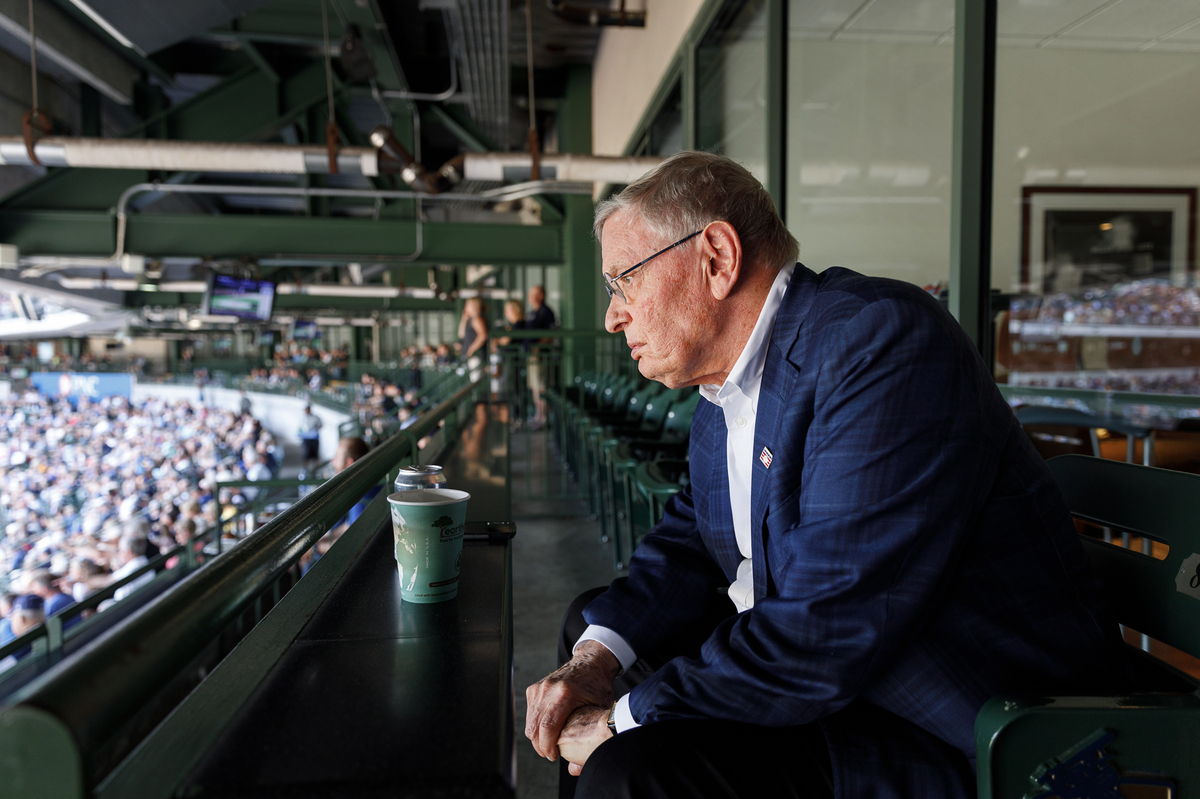


Selig walks down a hallway to his office. He has retired but he still works. It’s someone else’s job to meet the game’s current challenges, such as attracting younger, more diverse fans and maintaining labor peace.
Sara Stathas for NPR
hide caption
toggle caption
Sara Stathas for NPR
It’s someone else’s job to meet the game’s current challenges, such as attracting younger, more diverse fans, maintaining labor peace and improving action on the field.
But the commissioner emeritus is always a phone call away. He talks regularly with current Commissioner Rob Manfred, although Selig won’t reveal what’s said in their conversations.
Selig’s retired but he still works. On this day, he left the ballpark after a 4th inning home run put the Brewers ahead for good. Back at the office, with a Milwaukee victory secured and surrounded by his history, chances are good Bud Selig … was satisfied.
Memphis Hospitals Suspend Debt Collection Suits, Including Suits Against Employees
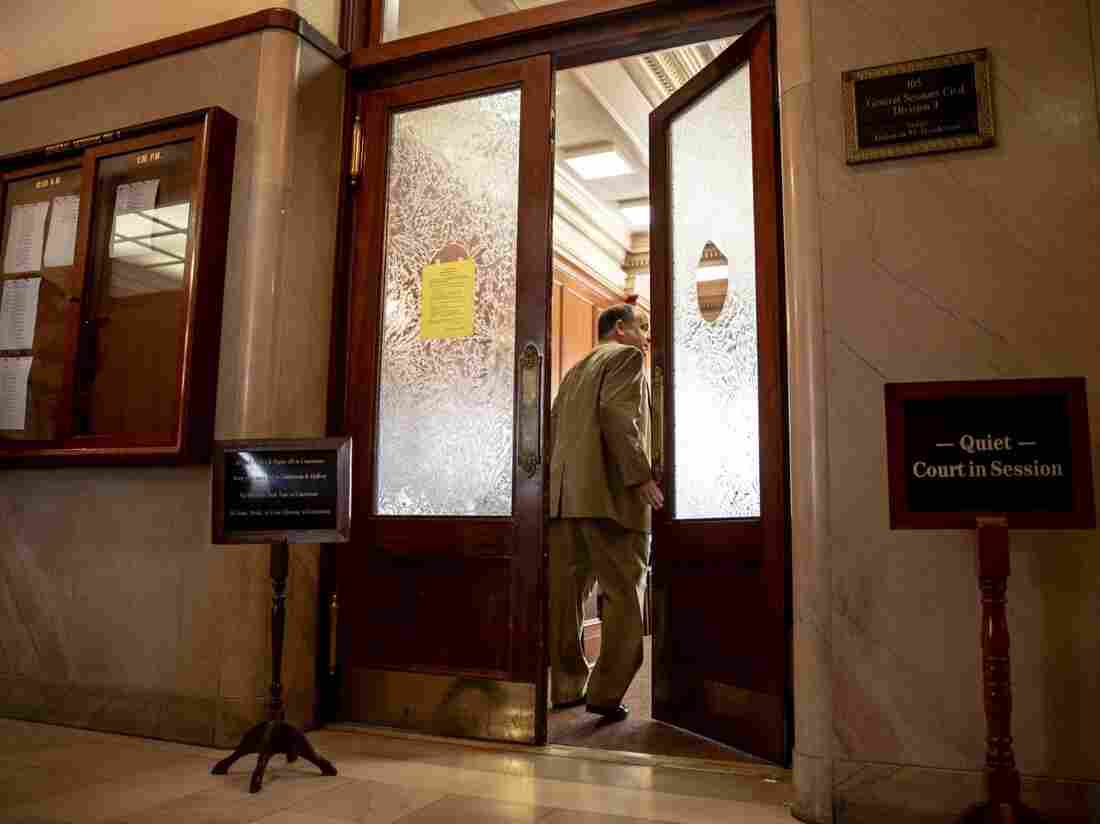

R. Alan Pritchard, one of two attorneys for Methodist Le Bonheur Healthcare, heads into Shelby County General Sessions Court Wednesday in Memphis. He asked the court to drop more than two dozen cases as the hospital reviews its collection policies.
Andrea Morales for MLK50
hide caption
toggle caption
Andrea Morales for MLK50
This article was produced in partnership with MLK50, which is a member of the ProPublica Local Reporting Network.
Methodist Le Bonheur Healthcare, the largest hospital system in Memphis, Tenn., said it has suspended “court collection activities” over unpaid medical bills — just days after an investigation by MLK50 and ProPublica (which also appeared on NPR) detailed its relentless pursuit of debts held by poor people and even its own employees.
“We recognize that we serve a diverse community and we are always thinking about how we can do more and serve our community better,” Methodist said in a written statement. “Over the next 30 days we will be reviewing our policies and procedures to ensure we are doing everything possible to provide the communities we serve with the care and assistance they need. Also, we will immediately suspend any further court collection activities during this period.
“As a learning organization that is committed to continuous quality improvement, we want to be absolutely sure that our practices continue to support our mission and vision of improving every life we touch regardless of ability to pay.”
Methodist dropped more than two dozen cases that were set for initial hearings on Wednesday’s morning docket at Shelby County General Sessions Court.
“Currently, Methodist is in the process of reviewing its collection processes,” R. Alan Pritchard, one of Methodist’s attorneys, told General Sessions Court Judge Deborah M. Henderson.
“You are free to leave,” Henderson told one defendant, who looked puzzled, a purse on her shoulder and a folder full of papers in her hand.
Henderson called the names of other defendants whose cases were on the docket.
Again and again, Pritchard said: “Dropped, please, your honor.”
One of the defendants whose case was dropped is Adrien Johnson, who works for the city of Memphis. Methodist sued him this year for an unpaid hospital bill of more than $900.
Reached by phone, Johnson said he believes the hospital bill was for X-rays he had taken while he was covered by his wife’s insurance. Wednesday was his first court date, and after the hearing, he said he wasn’t clear what the status of his debt was.
“I don’t know what they’re doing,” he said. “I need to find out what’s going on.”
From 2014 through 2018, the hospital system affiliated with the United Methodist Church filed more than 8,300 lawsuits, according to an MLK50-ProPublica analysis of Shelby County General Sessions Court records. That’s more than all but one creditor during that five-year period.
One story by the news organizations chronicled the struggle of Carrie Barrett, who makes $9.05 an hour at Kroger, to pay her 2007 hospital bill for $12,019. The bill has ballooned to more than $33,000 due to interest and attorney’s fees.
Another story detailed how Methodist sues its own employees, some of whom make less than $13 an hour, for unpaid bills related to care delivered at its hospitals. Its health plan doesn’t allow workers to seek care at hospitals with more generous financial assistance policies.
Defendants talked about how the lawsuits upended their lives and left them in a position where they would never be able to pay off their debts, which grew from year to year as interest mounted.
With $2.1 billion in revenue and a health system that includes six hospitals, Methodist leads the market: In 2017, it had the most discharges per year and profits per patient, according to publicly available data analyzed by Definitive Healthcare, an analytics company.
Methodist says it has “a hospital in all four quadrants of the greater Memphis area, unparalleled by any other healthcare provider in our region,” plus more than 150 outpatient centers, clinics and physician practices. The system also said it provides community benefits of more than $226 million annually.
The number of lawsuits Methodist files isn’t out of proportion to its size, at least compared to competitor Baptist Memorial Health Care and Regional One Health, the county’s public hospital. But Methodist stands out in other respects.
Its financial assistance policy, unlike those of many of its peers around the country, all but ignores patients with any form of health insurance, no matter their out-of-pocket costs. If they are unable to afford their bills, patients then face what experts say is rare: A licensed collection agency owned by the hospital.
Also, after the hospital sues and wins a judgment, it repeatedly tries to garnish patients’ wages, which it does in a far higher share of cases than other nonprofit hospitals in Memphis. A court-ordered garnishment requires that the debtor’s employer send to the court 25% of a worker’s after-tax income, minus basic living expenses and a tiny deduction for children under age 15.
Methodist secured garnishment orders in 46% of cases filed from 2014 through 2018, compared with 36% at Regional One and 20% at Baptist, according to an analysis of court records by MLK50.
Methodist’s announcement was welcomed by some local lawmakers.
“Methodist has been such a great community partner throughout Shelby County that I’m glad to hear they’re reviewing their process over the next 30 days,” said Shelby County Commissioner Mickell Lowery, whose district includes Methodist University Hospital.
U.S. Rep. Steve Cohen, D-Tenn., said: “I was surprised to read about Methodist Le Bonheur’s billing practices, and I’m glad that the company is re-examining them. … I will continue to monitor this situation and look forward to the company’s assessment.”
But the Rev. Anthony Anderson, a United Methodist elder at Faith United Methodist in Memphis, was more reserved.
“I am still heartbroken, and I say that spiritually,” Anderson said. “It breaks my heart to know that a Methodist-related entity, a hospital, would have these types of practices.”
He welcomed the policy review, but only if it leads to the complete erasure of all outstanding patient debt.
“This debt needs to be wiped away,” Anderson said. “That will be the direction I will be pushing towards as a Methodist — that we don’t burden families with these type of financial penalties.”
New data obtained from Shelby County General Sessions Court shows that Methodist has filed more than 600 new lawsuits this year. Its most recent suits were filed on June 21, days before the MLK50-ProPublica stories were published. Its most recent garnishment order was filed on Tuesday.
Wendi C. Thomas is the editor of MLK50: Justice Through Journalism. Email her at wendicthomas@mlk50.com and follow her on Twitter at @wendicthomas.
ProPublica is a nonprofit newsroom that investigates abuses of power. Sign up for ProPublica’s Big Story newsletter to receive stories like this one in your inbox as soon as they are published.
The Thistle & Shamrock: Alan Reid At Swannanoa


Dr. Kathy Bullock.
Courtesy of the artist
hide caption
toggle caption
Courtesy of the artist
Scottish singer, songwriter and former Battlefield Band member Alan Reid visits Traditional Song Week at the Swannanoa Gathering. We hear highlights from his remarkable musical encounters with Cathy Jordan, Len Graham, Sheila Kay Adams, Tony Ellis, Matt Watroba and Dr. Kathy Bullock.
Why WFAN’s Mike Francesa Is The Maestro Of Sports Talk Radio

Midway through the baseball season, commentator Mike Pesca offers this ode to a sports radio talk show host who can turn even the most dismal game into high stakes drama.
Former MLB Commissioner Selig Opens Up In ‘For The Good Of The Game’
As commissioner, Bud Selig led Major League Baseball through a major restructuring. He was also at the helm during the 1994 strike and the steroid era. He’s candid about it all in a new book.
U.S. Women Head To World Cup Final After Beating England 2-1
The top-ranked U.S. team is returning to the Women’s World Cup final for a third straight time after defeating England 2-1 Tuesday. They’ll take on either the Netherlands or Sweden on Sunday.
Serena Williams And Andy Murray Team Up To Play Mixed Doubles At Wimbledon


Serena Williams plays against Italy’s Giulia Gatto-Monticone in a women’s singles match at Wimbledon on Tuesday.
Ben Curtis/AP
hide caption
toggle caption
Ben Curtis/AP
Two tennis greats are pairing up for mixed doubles at Wimbledon. Serena Williams and Andy Murray will team up for the competition. Entries for the draw close Wednesday morning.
Earlier this week both players hinted at the possibility of playing together. Two-time Wimbledon champion Murray said, “I’m definitely playing in the mixed. I have got my partner – well 90 per cent sure.
“Is it Serena? Possibly. I just need to just confirm it.”
Williams has dominated women’s tennis, winning 23 major singles championships, and 14 in women’s doubles with her sister, Venus.
At a news conference earlier this week Williams fielded questions about the possibility of pairing with Murray. “His work ethic is just honestly off the charts. That’s something I’ve always respected about him. His fitness, everything. To do what he’s done in an era where there’s so many other great male tennis players, so much competition, to rise above it, not many people have done it. He’s actually one of the few,” Williams said, according to The Associated Press.
“Above all … he really speaks up about women’s issues, no matter what,” Williams continued. “You can tell he has a really strong woman in his life. I think, above all, that is just fantastic.”
Williams advanced on Tuesday at Wimbledon, beating the world No. 161 Giulia Gatto-Monticone from Italy 6-2, 7-5. Murray is entered in men’s doubles at Wimbledon with Pierre-Hugues Herbert.