U.S. Win 2-1 Over England As They Head To Women’s World Cup Final

The U.S. won over England in the semifinals of the Women’s World Cup. NPR’s Mary Louise Kelly speaks with sportswriter Stefan Fatsis for post game analysis.
The U.S. won over England in the semifinals of the Women’s World Cup. NPR’s Mary Louise Kelly speaks with sportswriter Stefan Fatsis for post game analysis.

Christen Press (left) celebrates after scoring the U.S.’s first goal during the Women’s World Cup semifinal against England. The U.S. won 2-1.
Alessandra Tarantino/AP
hide caption
toggle caption
Alessandra Tarantino/AP
It was the battle of unbeatens at this Women’s World Cup. Both teams were 5-0. The U.S. — the defending and three-time World Cup champion — and England — which was ranked third in the world but had never advanced past the semifinals. The game in Lyon, France, lived up to its billing with the U.S defeating England 2-1 to advance to Sunday’s final.
It was a tense, physical and nerve-wracking back-and-forth contest — particularly in the second half. But the drama began before the game’s opening whistle. Both teams switched up their lineups — including a major change by the United States. Coach Jill Ellis did not start forward Megan Rapinoe. Rapinoe was the spark and team leader who scored all four goals in the past two knockout games for the United States. Christen Press started in her place. Rapinoe did not warm up prior to the game. The team gave no reason for the swap.
In the five previous games of the tournament, England had allowed just a single goal. The U.S. was right behind: only conceding two. Those statistics wouldn’t last long as the scoring got started early.
Kelley O’Hara lofted a sweet cross into the English penalty area and Press slammed a header into goal in the 10th minute. It didn’t take long for England to respond. In the 19th minute, Ellen White powered the ball into the U.S. goal.
And just like that, England equalizes and their fans go nuts. Ellen White notches her 6th goal in 5 matches. #USA 1 – #ENG 1 #FIFAWWC pic.twitter.com/u4VtEKGhKb
— melissa block (@NPRmelissablock) July 2, 2019
The U.S. stormed right back in the 31st minute when Lindsey Horan chipped the ball over an England defender and Alex Morgan headed it past outstretched English keeper Carly Telford. It was the first goal for Morgan since she scored five in the opening U.S. match against Thailand. With the strike, she becomes the first person in Women’s World Cup history to score on her birthday (she’s 30).
The U.S. generated more scoring chances in the first half thanks to Tobin Heath, Rose Lavelle and Press. The Americans stifling and swarming defense kept England mostly at bay all game long.
England got the chance to tie it up late when a penalty kick was awarded after video review in the 83rd minute. England’s White was tripped up by Becky Sauerbrunn. English captain Steph Houghton stepped up to take the penalty. U.S. goalkeeper Alyssa Naeher dove low and to the right to make a sparkling stop to keep the score 2-1.
With the victory, the U.S. notched another Women’s World Cup record: it was the team’s 11th straight victory surpassing Norway which won 10 straight in 1995 and 1999.
The U.S. has now made it to the finals of the last three Women’s World Cups. It’s never won back-to-back titles, though. Only Germany has done that (2003 and 2007). The U.S. will play the winner of tomorrow’s semifinal: Sweden/Netherlands. The final is on Sunday in Lyon.
Alex Morgan (right) scored the second American goal of the semifinal.
Alessandra Tarantino/AP
hide caption
toggle caption
Alessandra Tarantino/AP

Alison Beyea of ACLU of Maine speaks during an abortion-rights rally at Congress Square Park in Portland, Maine, in May. Democrats elected last November have pushed through two laws that expand access to abortion in the state.
Derek Davis/Portland Press Herald via Getty Images
hide caption
toggle caption
Derek Davis/Portland Press Herald via Getty Images
While abortion bans in Republican-led states dominated headlines in recent weeks, a handful of other states have passed laws to expand abortion access. Maine joined those ranks in June with two new laws — one requires all insurance and Medicaid to cover the procedure and the other allows physician assistants and nurses with advanced training to perform it.
With these laws, Maine joins New York, Illinois, Rhode Island and Vermont as states that are trying to shore up the right to abortion in advance of an expected U.S. Supreme Court challenge. But what sets Maine apart from the other states is how recently Democrats have taken power.
“Elections matter,” says Nicole Clegg of Planned Parenthood of Northern New England. “In 2018, we saw the largest number of women get elected to our legislature. We saw an overwhelming majority of elected officials who support reproductive rights and access to reproductive health care.”
The dramatic political change also saw Maine elect its first female governor, Janet Mills, a Democrat who took over from Paul LePage, a Tea Party stalwart who served two terms. LePage had blocked Medicaid expansion in the state even after voters approved it in a referendum.
Clegg and other supporters of abortion rights have hailed the new abortion legislation as a big win.
“It will be the single most important event since Roe v. Wade in the state of Maine,” Clegg says.
Taken together, the intent of the two laws is to make it easier for women to afford and find abortion care in the rural state.
Nurse practitioners like Julie Jenkins, who works in a small coastal town, say that increasing the number of abortion providers will make it easier for patients who now have to travel long distances in Maine to get the procedure from a doctor.
“Five hours to get to a provider and back — that’s not unheard of,” Jenkins says.
Under the law set to go into effect in September, physician assistants and nurses with advanced training will be able to perform a surgical form of the procedure known as an aspiration abortion. These clinicians already are allowed to use the same technique in other circumstances, such as when a woman has a miscarriage.
Maine’s other new law will require all insurance plans — including Medicaid — to cover abortions and is supposed to be implemented early next year. Kate Brogan of Maine Family Planning says this legislation is a workaround for dealing with the U.S. law known as the Hyde Amendment, which prohibits federal funding for abortions except in extreme circumstances.
“That is a policy decision that we think coerces women into continuing pregnancies that they don’t want to continue,” Brogan says. “Because if you continue your pregnancy, Medicaid will cover it. But if you want to end your pregnancy, you have to come up with the money [to pay for an abortion].”
State dollars, not federal, will pay for the abortions performed through Maine’s Medicaid program (in general, Medicaid is funded by both state and federal tax dollars).
Though the bill passed in the Democratic-controlled Legislature, it faced staunch opposition from Republicans, including state Sen. Lisa Keim, during floor debates.
“Maine people should not be forced to have their hard-earned tax dollars [used] to take the life of a living pre-born child,” Keim says.
Instead, Keim argues, abortions for low-income women should be funded by supporters who wish to donate money. Otherwise, she said during the debate, the religious convictions of abortion opponents are at risk.
“Our decision today cannot be to strip the religious liberty of Maine people through taxation,” Keim says.
Rep. Beth O’Connor, a Republican who says she personally opposes abortion but believes women should have a choice, says she had safety concerns about letting clinicians who are not doctors provide abortions.
“I think this is very risky, and I think it puts the woman’s health at risk,” O’Connor says.
In contrast, advanced-practice clinicians say the legislation merely allows them to operate to the full scope of their expertise and expands patients’ access to important health procedures. The measure also has the backing of physician groups, including the Maine Medical Association.
Just as state laws restricting abortion are being challenged, so are Maine’s new laws. Days after Maine’s law regarding Medicaid and abortion passed, organizations that oppose abortion rights announced they would mount an effort to put the issue on the ballot for a people’s veto.
In the first round of Wimbledon, 15-year-old Cori Gauff, who goes by Coco, faced off against — and then defeated — five-time tournament champ Venus Williams.
It’s expected to be a doozy of a game at the Women’s World Cup Tuesday. The U.S. takes on England in the semifinals. The U.S. is the defending champion and England is ranked No. 3.
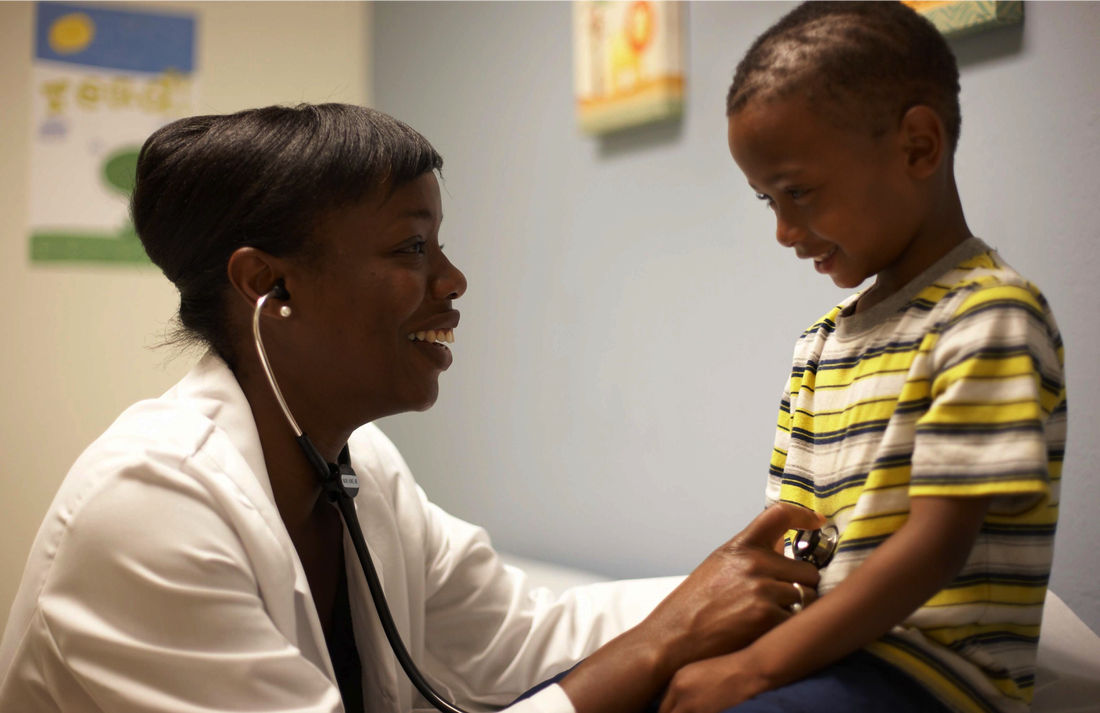
California Surgeon General’s Office
Not long after she finished her medical residency at Stanford University about a decade ago, Nadine Burke Harris got to work as a pediatrician in the Bayview-Hunters Point neighborhood of San Francisco. She founded and became CEO of a clinic there, focused on addressing health disparities in the community.
It was in talking with those children and their families, she says, that she first realized how many of her patients experiencing the worst health outcomes — those with the highest levels of chronic asthma, for example — were also living with significant adversity, such as growing up in a household where a parent was mentally ill, abusive or substance dependent.
Eventually, those conversations led her to the expanding research on adverse childhood experiences, or ACEs, and their profound, lifelong health effects. The term “ACEs” has been used since the 1990s to describe the abuse, neglect and other potentially traumatic experiences estimated to afflict more than 34 million U.S. children under 18.
Burke Harris has dedicated much of her career to spreading the word to fellow doctors and the public about ACEs and the dangers of this toxic stress to children. She champions a multidisciplinary approach to helping these kids and teens.
In an interview last year, after her book, The Deepest Well: Healing the Long-Term Effects of Childhood Adversity, was published, Burke Harris told NPR’s Cory Turner, “We all need to be part of the solution. If we each take … our little piece, it’s nuts how far we’ll be able to go, together as a society, in terms of solving this problem.”
California Gov. Gavin Newsom took Burke Harris up on her challenge, appointing her the first-ever surgeon general of California. Newsom cites the toxic stress of childhood trauma as among the root causes “of many of the most harmful and persistent health challenges facing Californians.”
I recently spoke with Burke Harris about her work and about what it means to her, particularly as a black woman, to serve as her state’s first surgeon general — one of only three such positions in the United States.
Interview Highlights
On the role of racism and discrimination in high maternal mortality, particularly among black women, who are three to four times more likely to die in childbirth than white women.
Health equity is one of the priority areas for my role. I’m currently working to understand better what the California Department of Public Health’s approach has been on addressing this issue. I also want to get a better understanding of what the drivers are behind what we’re seeing in maternal mortality and to see [to] what extent we can understand the impact of toxic stress and cumulative adversity.
My strong suspicion is that there is a connection, but right now I am working on pulling together the resources to be able to take a deeper look at questions like that and how [my office] might work together with other offices to support the statewide response.
On the possible links between childhood adversity and homelessness
When you look at the biggest drivers of homelessness in California, domestic violence is a major driver, as well as mental health and substance dependence issues. When you look at the impact of childhood adversity on all three of those issues, it’s massive.
What I’ve been hearing over and over again on my listening tour around the state is that childhood adversity is a “root cause issue.” So I think we have a tremendous opportunity to get at the root of the root and make some changes in the way our systems work. For example, beginning with universal screening for ACEs and figuring out how we are developing a coordinated response, so children and families can get the support that they need in a two-generation fashion.
On Newsom’s allocation of $45 million to implement the screening of all Medi-Cal recipients for adverse childhood experiences and her role in expanding such screening beyond California
Even though I’m the surgeon general for California, I believe we should be doing early identification and early intervention globally. That was the work I did in my previous role, and I feel in my current role I have an opportunity to be a champion of that. [Recently] I was in Virginia meeting with the first lady of Virginia and the secretary for health and human services in Virginia about the importance of ACEs screening and early identification.
Let’s go back to the maternal mortality issue. One of the biggest drivers of maternal mortality is increased risk of chronic conditions, such as heart diseases, diabetes, etc. We know that childhood adversity dramatically increases the risk of [those kinds of chronic conditions]. What would it be like if every OB-GYN in the country were able to do some type of assessment of cumulative adversity of the patients they were caring for, assessing their risk and being able to proactively do interventions to support and protect the health of their patients?
On what it means to be the state’s first surgeon general — especially as a woman of color
When I was in high school, my aunt, who is a physician in Chicago, took me to a “black women in medicine” conference. I remember looking around the room and being like, “Holy moly!” Because, I mean, it was a whole ballroom filled with black women in medicine. And that really had a lasting effect for me. I do believe that if we can see it, we can be it. And growing up as a black girl in the United States, I certainly faced my share of obstacles on the way. So it’s very, very meaningful to me to be able to stand in this role as an immigrant. My family came from Jamaica to the U.S. As a woman and as a woman of color, it’s something that I’m very proud of.
On inspiring the next generation
When I first came into the role, my first week on the job, one of my first speaking events was one put on by the black caucus in the California legislature. And as I was getting up to set up my slides and preparing — I had arrived early — there was a young boy who came up to me. And he was maybe 9 years old. And he came up to shake my hand and say hello. He said, “I just wanted to meet you. My mom took me out of school today so that I could meet the first black surgeon general of California.” It’s memorable. It makes me proud to be in this role. And I know that it was meaningful for that child and meaningful for his mom.
Erika Stallings is an attorney and freelance writer based in New York City. Her work focuses on health care disparities, with a focus on breast cancer and genetics. Her work has appeared in HuffPost, New York magazine, Jezebel and O, The Oprah Magazine. Find her on Twitter: @quidditch424.

Los Angeles Angels starter Tyler Skaggs pitches to the Oakland Athletics during a game Saturday in Anaheim, Calif. Skaggs died on Monday at age 27.
Marcio Jose Sanchez/AP
hide caption
toggle caption
Marcio Jose Sanchez/AP
Pitcher Tyler Skaggs has died at age 27, the Los Angeles Angels said Monday. The team did not announce a cause of death.
Skaggs was found unresponsive and pronounced dead at a hotel in Southlake, Texas, police said. He was with the team in Texas to play a series against the Rangers and was due to start for Los Angeles on Monday. The game has been postponed.
Angels statement on the passing of Tyler Skaggs. pic.twitter.com/6XA2Vu1uWV
— Los Angeles Angels (@Angels) July 1, 2019
Skaggs was chosen by the Angels in the 2009 draft and traded to the Arizona Diamondbacks. He was reacquired by the Angels for the 2014 season and had since won 25 games, the most recent one against the Oakland A’s on Saturday.
MLB.com describes him this way:
“Affable and likable in the clubhouse, Skaggs was a leader among the pitching staff and controlled the music in the clubhouse during Spring Training. He had tattoos on his arm with the state of California and an LA logo, indicating where he grew up.”
NPR’s Audie Cornish speaks with The Ringer’s Haley O’Shaughnessy about the opening day of NBA Free Agency and the drama that took place on Sunday.
NPR’s Audie Cornish talks with Courtney Nguyen, senior writer at WTA Insider about 15-year-old Cori “Coco” Gauff’s big upset against five-time Wimbledon champion Venus Williams.

A Trump administration rule has been delayed by courts. It was intended to protect health care workers who refuse to be involved in procedures they object to for moral or religious reasons.
thelinke/Getty Images
hide caption
toggle caption
thelinke/Getty Images
The federal government’s rule designed to support health workers who opt out of providing care that violates their moral or religious beliefs will not go into effect in July as scheduled. The effective date has been delayed by four months, according to court orders.
The “Protecting Statutory Conscience Rights in Health Care” rule was originally issued in May by the Department of Health and Human Services’ Office for Civil Rights. It aligns with that office’s religious freedom priorities and would put new emphasis on existing laws that give health care workers the ability to file a complaint with that office if they are forced to participate in medical care that violates their conscience — such as abortion, gender confirmation surgery, and assisted suicide.
As NPR has reported, the rule also expands the type of workers who are able to file this kind of complaint to billing staff and receptionists and anyone else who in any way “assist[s] in the performance” of a procedure.
Complaints of “conscience rights” violations are relatively rare — for a decade, the office would receive an average of one complaint like this each year. Last year, that number jumped to 343. That number is dwarfed by the number of complaints the Office for Civil Rights receives over issues like health privacy or race, sex and age discrimination, which typically number in the thousands.
Several groups sued the federal government over the rule immediately after it was issued. New York state led a coalition of 23 cities and states in one suit, and three jurisdictions in California also sued, including California state and San Francisco. Yet another plaintiff, Santa Clara County in California’s Bay Area, made the case that the rule put patient safety at risk, since it gave health workers the right to opt out of providing care without prior notice — potentially even in an emergency.
“If the rule goes through as it’s written, patients will die,” Santa Clara’s county executive, Dr. Jeff Smith, told NPR last month. “We will have a guaranteed situation where a woman has had a complication of an abortion, where she’s bleeding out and needs to have the services of some employee who has moral objections. That patient will die because the employee is not providing the services that are needed.”
Santa Clara and several other plaintiffs had filed for a preliminary injunction to prevent the rule from going into effect while the legal process played out.
“The federal government actually reached out to all the plaintiffs in all of the different cases and basically said that they didn’t want to have to deal with a preliminary injunction,” says James Williams, county counsel for Santa Clara. He says the government is seeking “summary judgment,” which means the judge could rule in its favor based on the arguments and documents it files with the court. According to Williams the government told the plaintiffs that it “would be willing to stipulate to a delay in the effective date to allow that to happen.”
That new effective date is Nov. 22 — the federal judge in the California cases made that official over the weekend, and in the New York case, the federal judge certified the change on Monday.
HHS made clear in its court filing that by agreeing to this delay, it is not suggesting that the plaintiffs are likely to succeed in ultimately blocking the rule. Instead, the agency says, it’s a logistical move.
“In light of significant litigation over the rule, HHS agreed to a stipulated request to delay the effective date of the rule until November 22, 2019,” an HHS spokesperson wrote in a statement to NPR, adding that the delay will “allow the parties more time to respond to the litigation and to grant entities affected by the rule more time to prepare for compliance.”
For plaintiffs, like Santa Clara County, the delay gives some “breathing room” while the lawsuits continue, according to county counsel James Williams.
“The delay is certainly good news because it means that this rule isn’t going to take effect and that the harms are not going to happen now,” Williams says. “But it’s just an interim step, and we’re going to be pressing forward very vigorously with getting a decision and summary judgment to vacate the rule.”
All parties are hopeful that the judges will make their decisions in these cases before the new effective date in November.