CEO Of U.S. Olympic Committee Resigns Citing Health Concerns Amid Nassar Fallout

Scott Blackmun, in 2007. He announced Wednesday that he is stepping down as CEO of the U.S. Olympic Committee. On the same day, the USOC announced steps it is taking to protect abuse victims.

Lee Jin-man/AP

hide caption

toggle caption

Lee Jin-man/AP

Under growing pressure to quit, Scott Blackmun, CEO of the United States Olympic Committee, resigned “due to ongoing health issues resulting from prostate cancer,” according to a USOC statement on Wednesday.

Board member Susanne Lyons will step in as the acting CEO until a permanent replacement is named.

The news came at the same time the committee announced steps “designed to protect athletes from abuse and respond quickly and effectively when issues surface.”

Among the reforms and initiatives the USOC said it is implementing are creating an advisory group that will include abuse survivors to safeguard against future abuse in “the Olympic community,” providing more funding to speed up the resolution of cases, and improving support and counseling “for gymnasts impacted by Nassar’s crimes.”

The USOC has been engulfed by the scandal surrounding Larry Nassar, onetime USA Gymnastics doctor, convicted of sexually assaulting minors. Scores of athletes who were in his care have accused him of abuse going back decades. He has been sentenced to hundreds of years in prison.

Two U.S. senators called for Blackmun’s resignation earlier this month, citing a Wall Street Journal report that found he and other USOC officials were aware of abuse allegations against Nassar for months before acting on them.

Sens. Jeanne Shaheen, D-N.H., and Joni Ernst, R-Iowa, questioned Blackmun’s leadership, citing an open letter he wrote in January in which he to uncover how the abuse could have gone on for so long and “who knew what and when.” But the senators said Blackmun failed “to admit his own supposed direct knowledge of allegations that were brought to his attention in July 2015.”

Several former Olympic athletes and advocates also called on Blackmun to step down.

In courtrooms, dozens of wrenching victim impact statements described Nassar as abusing athletes for years under the guise of legitimate medical treatment with seeming impunity.

Rachael Denhollander, a lawyer and one of Nassar’s first accusers, said after a sentencing earlier this month, that victims “wouldn’t be here had the adults and authorities done what they should have done 20 years ago,” according to The Associated Press.

Denhollander added that victims are turning their attention “with even greater force to the institutional dynamics that led to the greatest sexual assault scandal in history.”

Late last month, the entire board of USA Gymnastics announced they will resign.

USOC Chairman Larry Probst said new leadership is needed “so that we can immediately address the urgent initiatives ahead of us. … The USOC is at a critical point in its history.”

In a statement, Blackmun, who has been USOC CEO since 2010, did not mention the Nassar scandal, instead saying his role “has not only been immensely rewarding, it has been an honor and the highlight of my professional life,” He added, “I am proud of what we have achieved as a team and am confident that Susanne will help the USOC continue to embody the Olympic spirit and champion Team USA athletes during this transition.”

Let’s block ads! (Why?)

Russia's Olympic Committee Reinstated After Doping Scandal

Russia’s ban from the Olympic movement was lifted on Wednesday despite two failed doping tests by its athletes at the Pyeongchang Winter Olympics.

Pavel Golovkin/AP

hide caption

toggle caption

Pavel Golovkin/AP

After a major doping scandal limited Russia’s participation at the Pyeongchang Winter Olympics, the country’s Olympic committee has been formally reinstated by the International Olympic Committee.

This comes after the IOC said remaining test results from Russians who competed in the games came back negative.

In December, the IOC announced that Russia’s Olympic committee was suspended because of the state-sponsored cheating. As NPR’s Bill Chappell has reported, their athletes could still compete – but under the title of “Olympic Athlete from Russia.” Their uniforms bore the Olympic symbol and they carried the Olympic Flag at the opening ceremony. One hundred and sixty-eight took part in the games as neutral athletes.

There was some speculation that Russia might be reinstated in time for the closing ceremony, allowing the athletes to march under the Russian flag. The country’s Olympic committee paid some $15 million in fines.

But two Russian athletes failed doping tests — curling bronze medalist Alexander Krushelnitckii, whose mixed-doubles medal was stripped, and bobsledder Nadezhda Sergeeva. As Bill reported, the IOC said the failed tests and other factors “prevented the IOC from even considering lifting the suspension for the closing ceremony.”

Now that all final results are in, the IOC says that Russia’s suspension is “automatically lifted with immediate effect.”

“We must turn this page,” said Russian President Vladimir Putin at a ceremony for Olympians on Wednesday, according to The Associated Press. “We must draw relevant conclusions for ourselves, but I hope that international organizations also will eventually understand that sports must be kept away from problems unrelated to it.”

The IOC’s decision to ban Russia was prompted by a report from the World Anti-Doping agency led by law professor Richard McLaren.

“Released in two phases, the McLaren report concluded that Russia’s scheme involved more than 1,000 Russian athletes and that it also included plans both for manipulating doping controls and for covering up the system,” Bill reported.

Figure skater Alina Zagitova won the only individual gold medal by an athlete from Russia at this year’s games. Head here for Bill’s account of that medal ceremony, where the Olympic anthem played instead of the Russian one.

Let’s block ads! (Why?)

Amid Pressure From Nassar Case, USOC Chief Executive Scott Blackmun Will Step Down

NPR’s Ari Shapiro speaks with Washington Post reporter Sally Jenkins about the resignation of U.S. Olympic Committee chief executive Scott Blackmun, who cited health problems due to prostate cancer as his reason for stepping down, but there have also been calls for his resignation for not doing enough to address the sexual abuse cases within the U.S. Olympics gymnastics team.

Let’s block ads! (Why?)

NFL To Demand Cowboys Owner Reimburse Legal Fees, Reports Say

NFL Commissioner Roger Goodell (left) walks with Dallas Cowboys owner Jerry Jones during the NFL owners winter meeting in Irving, Texas, on Dec. 13, 2017.

LM Otero/AP

hide caption

toggle caption

LM Otero/AP

NFL Commissioner Roger Goodell is expected to try to recover the money spent on a seven-figure legal bill after recent battles with Dallas Cowboys owner Jerry Jones.

The story was first reported by The New York Times, and since then, other publications have had sources speak off the record. NPR has not independently confirmed the reports.

It all began several months ago when Jones tried to derail negotiations for Goodell’s contract extension. At the same time, Jones tried to get a six-game suspension reversed for Cowboys running back Ezekiel Elliott.

The New York Times, which talked to five league officials with direct knowledge of the situation, reports the punishment against Jones will be issued in the coming weeks:

“Goodell will declare that Jones’s actions were detrimental to the league … and the commissioner’s office. Goodell has been reluctant to be seen as exacting retribution for the way Jones tried to sabotage his contract talks, but he was urged to bring the penalties by several owners who believed that Jones had crossed an unspoken boundary by threatening his colleagues.

In November, Jones hired the high-profile lawyer David Boies and said he was prepared to sue the six owners on the league’s compensation committee, which had been working for months on extending Goodell’s contract. Jones also lobbied loudly for running back Ezekiel Elliott not to be penalized, and reportedly tried to influence league officials deciding his case. Elliott had been suspended by the league for six games before the season after the N.F.L. investigated domestic-assault allegations.

Jones will be ordered to pay the legal fees that the committee incurred defending itself, as well as the legal expenses the N.F.L. spent defending its decision to suspend Elliott.”

The Cowboys declined to comment to news organizations, as did the NFL.

In December at a league meeting in Irving, Texas, Goodell received a five-year contract extension. Most of the owners supported the terms, which provide Goodell the possibility of earning as much as $200 million.

Also at that meeting, Goodell and Jones tried to make nice in front of the cameras — they were shown walking together. At a news conference, with the Cowboys owner in the room, Goodell said he didn’t take Jones’ objections to the extension personally.

Let’s block ads! (Why?)

PHOTOS: Memorable Moments From The Pyeongchang Winter Olympic Games

Siblings Maia and Alex Shibutani of the United States compete in figure skating’s ice dance free program on Feb. 20. The pair nabbed bronze.

Richard Heathcote/Getty Images

hide caption

toggle caption

Richard Heathcote/Getty Images

The 2018 Winter Olympics ended Sunday evening in Pyeongchang, South Korea, with a closing ceremony featuring fireworks, K-pop performances, the reappearance of Tongan cross-country skier Pita Taufatofua sans shirt, and a dance party that brought athletes onstage, eager to let loose and celebrate their games.

Norway is taking home the most Winter Olympic medals this year, 39 total — 14 of them gold. The U.S. came in fourth in the medal count, winning 23 — its lowest number of medals since 1998, when it won just 13. (The gold medal count has stayed consistent at nine since 2006.) Host South Korea won 17, and its athletes took part in a joint North-South women’s ice hockey team.

The games delivered late, unexpected curling victories for the U.S. men (gold) and South Korea’s women (silver). The U.S. women’s ice hockey team, too, scored a historic win against longtime gold medalist Canada.

As doping violations continued to dog the Russians, its doubles curling team forfeited a bronze medal when one member failed a drug test. Frigid winds disrupted some events and caused others to be rescheduled. There were a few tiffs and episodes of poor sportsmanship. But these were not the games’ defining moments.

Throughout it all, there were the athletes, nearly 3,000 of them from 92 countries, embracing the Olympic spirit — and, win or lose, doing their best in sports they love. Here’s a look at some of the highlights.

Fans wear Olympic ring glasses during a medal ceremony on Feb. 18. The medals were given out in nightly ceremonies, so winners were given stuffed tigers right after their victories.

Richard Heathcote/Getty Images

hide caption

toggle caption

Richard Heathcote/Getty Images

Kim Yo Jong (second from right), the sister of North Korean leader Kim Jong Un, sits alongside North Korean head of state Kim Yong Nam at the Feb. 9 opening ceremony of the Pyeongchang 2018 Winter Olympics. The games took place against a backdrop of geopolitical tensions surrounding North Korea’s nuclear program.

Patrick Semansky/Pool/Getty Images

hide caption

toggle caption

Patrick Semansky/Pool/Getty Images

The opening ceremony of the Pyeongchang 2018 Winter Olympic Games included a musical performance surrounded by an image of a dove, matching the program’s peace theme.

Richard Heathcote/Getty Images

hide caption

toggle caption

Richard Heathcote/Getty Images

U.S. figure skater Adam Rippon made his Olympic debut on Feb. 12 as part of the team competition. He won a bronze medal in that event, while becoming a fan and media favorite.

Jamie Squire/Getty Images

hide caption

toggle caption

Jamie Squire/Getty Images

Nigerian bobsledder Akuoma Omeoga (second left) embraces teammate Aminat Odunbaku (second right) during the women’s bobsled heats on Feb. 21.

Alexander Hassenstein/Getty Images

hide caption

toggle caption

Alexander Hassenstein/Getty Images

U.S. skier Lindsey Vonn, who won bronze, follows guides for the victory ceremony of the women’s downhill on Feb. 21.

Fabrice Coffrini/AFP/Getty Images

hide caption

toggle caption

Fabrice Coffrini/AFP/Getty Images

Olympic workers take cover from extreme wind gusts at the media village on Feb. 14. The wind disrupted events and schedules.

Nathan Denette/The Canadian Press via AP

hide caption

toggle caption

Nathan Denette/The Canadian Press via AP

Competitors participate in the official training for the biathlon women’s relay on Feb. 21. The athletes from Belarus took gold in the event the next day.

Christophe Pallot/Agence Zoom/Getty Images

hide caption

toggle caption

Christophe Pallot/Agence Zoom/Getty Images

The U.S. men’s curling team celebrates its surprise win over Sweden on Feb. 24. It was the first team gold in the sport by an American team.

Aaron Favila/AP

hide caption

toggle caption

Aaron Favila/AP

Cross-country skier Peter Mlynar of Slovakia took part in the men’s 50-kilometer mass start race on Feb. 24. The race was won by Iivo Niskanen of Finland.

Matthias Hangst/Getty Images

hide caption

toggle caption

Matthias Hangst/Getty Images

Speedskaters Li Jinyu of China and Elise Christie of Great Britain fall as Choi Min-jeong of South Korea skates past during the short track 1,500-meter semifinals on Feb. 17.

Dean Mouhtaropoulos/Getty Images

hide caption

toggle caption

Dean Mouhtaropoulos/Getty Images

French biathlete Anais Chevalier competes at the shooting range in the women’s 4×6-kilometer relay on Feb. 22. Her team won bronze.

Kirill Kudryavtsev/AFP/Getty Images

hide caption

toggle caption

Kirill Kudryavtsev/AFP/Getty Images

The U.S. women’s ice hockey team celebrates after defeating Canada 3-2 to win gold on Feb. 22.

Harry How/Getty Images

hide caption

toggle caption

Harry How/Getty Images

A “flower girl” collects Winnie the Pooh stuffed animals thrown by fans of Japanese gold medalist figure skater Yuzuru Hanyu on Feb. 16, during the men’s figure skating short program.

Aris Messinis/AFP/Getty Images

hide caption

toggle caption

Aris Messinis/AFP/Getty Images

Lizzy Yarnold of Great Britain takes part in the women’s skeleton final run on Feb. 17. She won gold — and became the first woman to win two Olympic medals in the sport. She won her first at the Sochi Games in 2014.

Sean M. Haffey/Getty Images

hide caption

toggle caption

Sean M. Haffey/Getty Images

Snowboarder Silje Norendal of Norway competes during the final of the women’s big air event on Feb. 22. Anna Gasser of Austria won the gold.

Christof Stache/AFP/Getty Images

hide caption

toggle caption

Christof Stache/AFP/Getty Images

Super-G gold medalist Ester Ledecka of the Czech Republic celebrates her surprise win on Feb. 17. She went on to win gold in parallel giant slalom snowboarding as well, making her the first woman to win two gold medals in different sports at the same Olympic Games.

Ezra Shaw/Getty Images

hide caption

toggle caption

Ezra Shaw/Getty Images

Tongan cross-country skier Pita Taufatofua delighted fans at the closing ceremony by reprising his shirtless march from the opening ceremony.

Kirsty Wigglesworth/AP

hide caption

toggle caption

Kirsty Wigglesworth/AP

Russian athletes celebrate after winning the men’s gold medal hockey game against Germany, 4-3, in overtime Feb. 25. It was the second gold for the Olympic Athletes from Russia.

Jae C. Hong/AP

hide caption

toggle caption

Jae C. Hong/AP

U.S. cross-country skier Jessica Diggins crosses the finish line to win team gold in the women’s cross-country team sprint free final on Feb. 21.

Odd Andersen/AFP/Getty Images

hide caption

toggle caption

Odd Andersen/AFP/Getty Images

Gold medalists Tessa Virtue and Scott Moir of Canada perform during the ice dancing free skate on Feb. 20.

Julie Jacobson/AP

hide caption

toggle caption

Julie Jacobson/AP

Norway’s gold medalist Marit Bjoergen jumps for joy on the medal podium with Finland’s silver medalist Krista Parmakoski (left) and Sweden’s bronze medalist Stina Nilsson during the medal ceremony for the cross-country women’s 30-kilometer mass start classic. Bjoergen has won 15 Olympic medals over her career, the most of any Winter Olympian.

Christof Stache/AFP/Getty Images

hide caption

toggle caption

Christof Stache/AFP/Getty Images

Cross-country skier Iivo Niskanen of Finland celebrates winning the men’s 50-kilometer mass start classic race on Feb. 24. His was Finland’s first gold medal of the Pyeongchang Games.

Ian MacNicol/Getty Images

hide caption

toggle caption

Ian MacNicol/Getty Images

Let’s block ads! (Why?)

Highlights Of The Pyeongchang Olympics Closing Ceremony, In Photos

Artists perform near the Olympic flame during the closing ceremony. “Although parting is sad, we will remember Pyeongchang with beautiful memories,” said Lee Hee-beom, the Pyeongchang Olympics organizing committee president.

Martin Bernetti/AFP/Getty Images

hide caption

toggle caption

Martin Bernetti/AFP/Getty Images

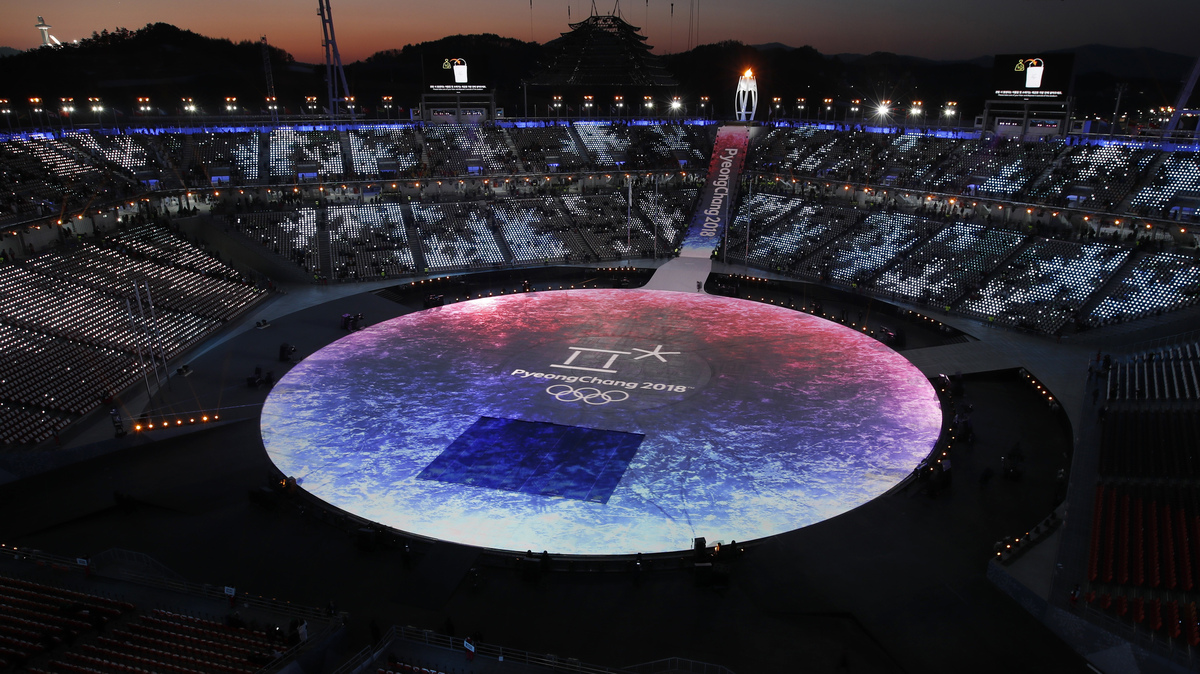
The Pyeongchang Winter Olympics concluded Sunday evening in South Korea. The closing ceremony saw fewer athletes than the opening event 17 days ago — some Olympians have already gone home — but didn’t skimp on pageantry, K-pop and expressions of hope for peace between the two Koreas.

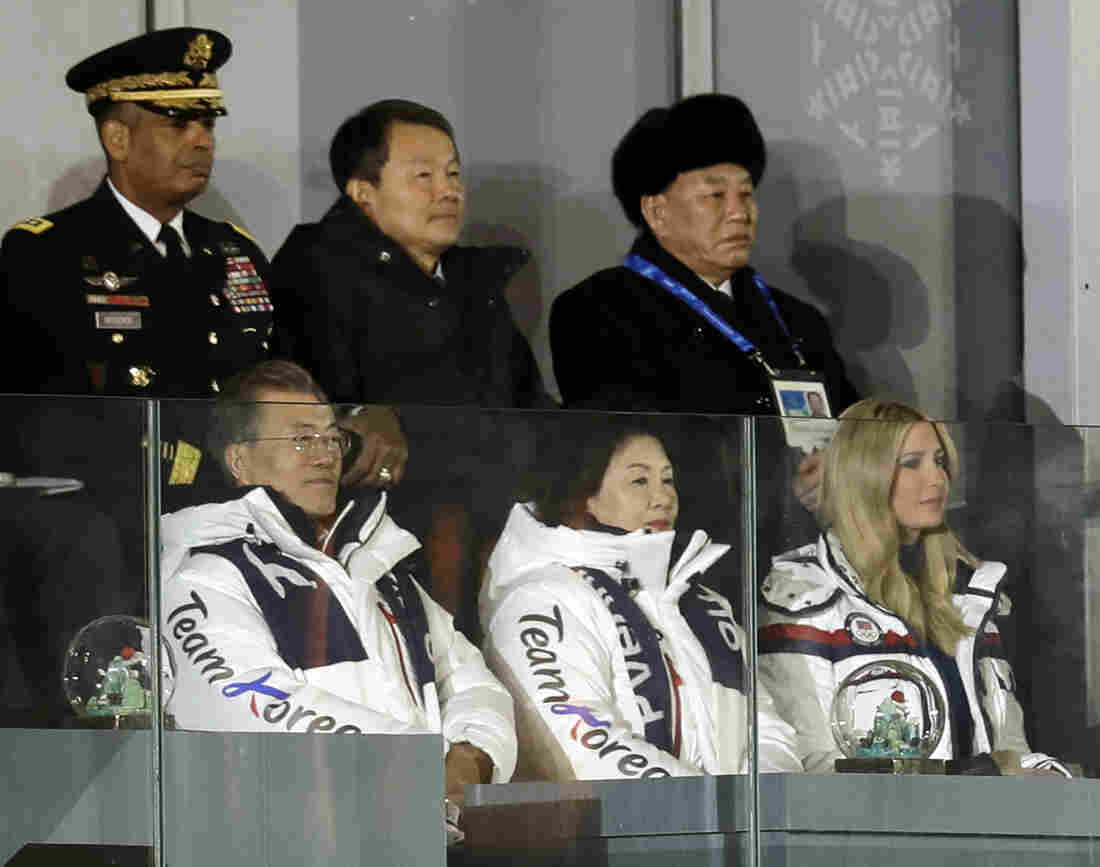
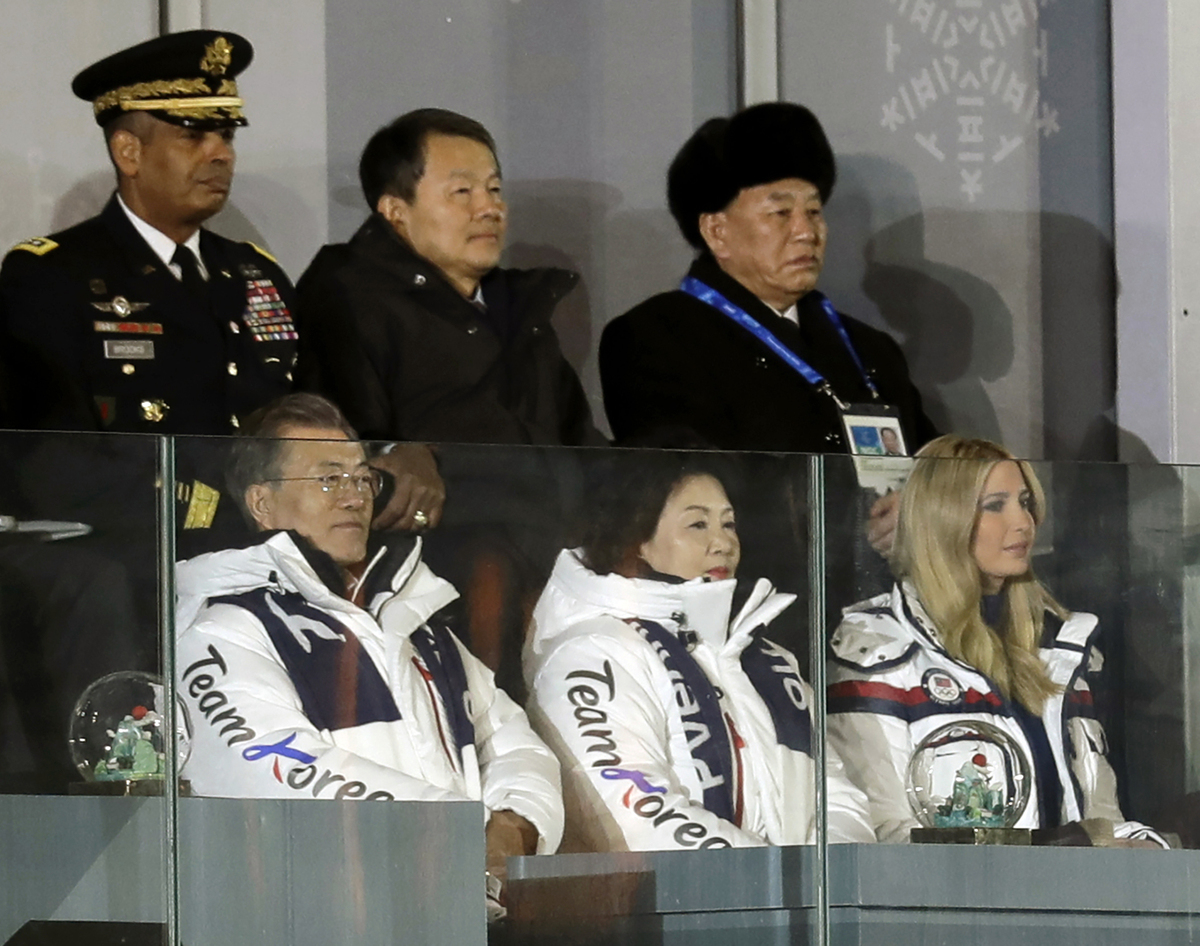
South Korean President Moon Jae-in (from left), his wife Kim Jung-sook, Ivanka Trump and North Korean Gen. Kim Yong Chol (back right) attend the closing ceremony.

Wang Zhao/AFP/Getty Images

hide caption

toggle caption

Wang Zhao/AFP/Getty Images

Ivanka Trump, daughter of the U.S. president, and South Korean President Moon Jae-in sat near a visiting North Korean general, Kim Yong Chol, believed to be a former spy chief, whose delegation had earlier been met with a sit-in by conservative South Korean lawmakers near the border crossing.

“Although parting is sad, we will remember Pyeongchang with beautiful memories. Athletes, you are true champions,” said Lee Hee-beom, the Pyeongchang Olympics organizing committee president. “The seed of peace you have planted here in Pyeongchang will grow as a big tree in the not-distant future. The hope and aspirations of South and North Korean athletes together with cheerleaders will definitely serve as a cornerstone of the unification of the Korean Peninsula.”

Thomas Bach, the head of the International Olympic Committee, said North and South Korea “have shown how sport brings people together in our very fragile world. You have shown how sport builds bridges.”

With the Olympic flame extinguished in Pyeongchang, the torch has been passed to Beijing. In 2022, the Chinese capital will host the next Winter Games. In the meantime, we have the Summer Olympics to look forward to in Tokyo in 2020.

Although some athletes had already gone home, the closing ceremony of the Pyeongchang Winter Olympics didn’t skimp on pageantry or celebration.

Javier Soriano/AFP/Getty Images

hide caption

toggle caption

Javier Soriano/AFP/Getty Images

Figure skaters Vanessa James and Morgan Cipres of France march in the parade of athletes. Their music choices for their routines drew a lot of attention from the media and on YouTube.

Maddie Meyer/Getty Images

hide caption

toggle caption

Maddie Meyer/Getty Images

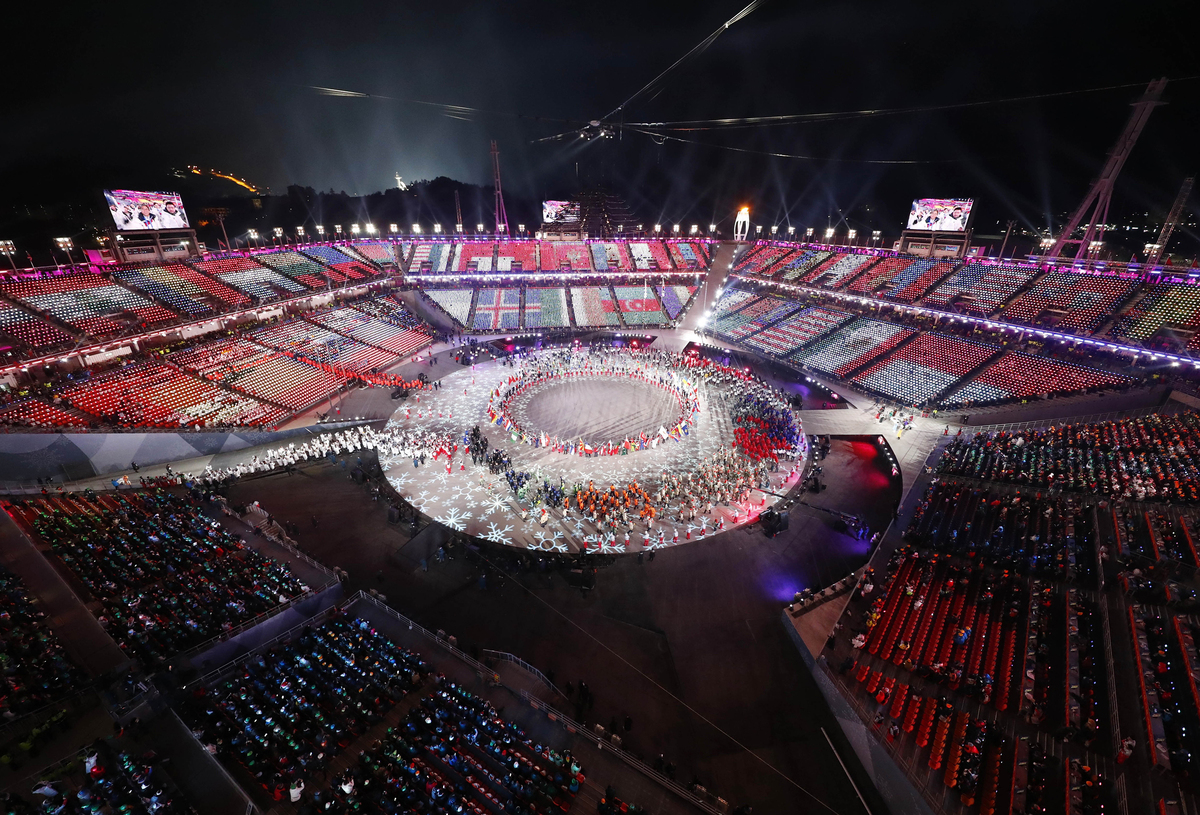
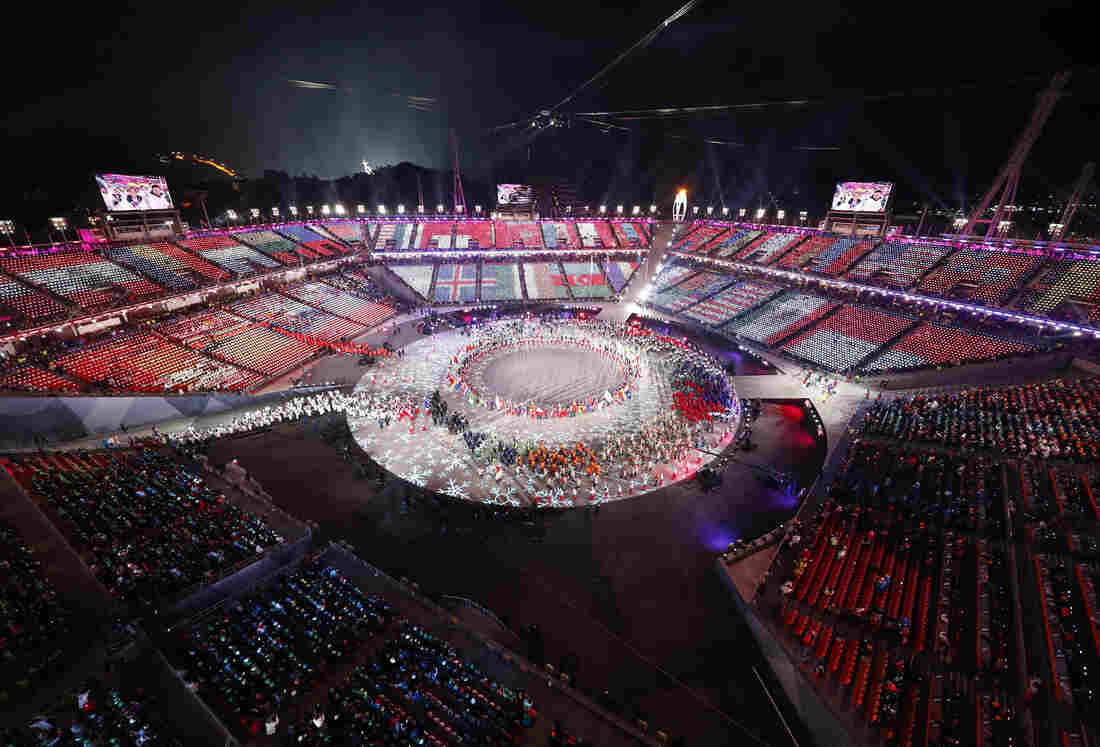
Flags of the participating nations are projected onto the stands as athletes enter the stadium. Unlike in the opening ceremony, there is no specific order for procession as all athletes come together.

Francois Xavier-Marit/AFP/Getty Images

hide caption

toggle caption

Francois Xavier-Marit/AFP/Getty Images

As part of the ceremony, 400 performers come in holding LED balls, followed by giant balloons that refer to the globe.

Martin Bernetti/AFP/Getty Images

hide caption

toggle caption

Martin Bernetti/AFP/Getty Images

Tongan cross-country skier Pita Taufatofua (left) once again marched bare-chested in frigid weather and met onstage with China’s silver medalist snowboarder Liu Jiayu and U.S. bronze medalist skier Lindsey Vonn.

Jonathan Nackstrand/AFP/Getty Images

hide caption

toggle caption

Jonathan Nackstrand/AFP/Getty Images

The ceremony began with a montage of the achievements and notable moments of the Winter Games. Other moments included a dance performance.

Charlie Riedel/AP

hide caption

toggle caption

Charlie Riedel/AP

According to the ceremony guide, K-pop singer CL performed “The Baddest Female,” “representing passion and the venturing spirit,” and 2NE1’s hit song ” ‘I Am the Best’ to convey the message that everyone is a winner.”

Natacha Pisarenko/AP

hide caption

toggle caption

Natacha Pisarenko/AP

The two-hour ceremony, featuring fireworks, started at 8 p.m. on Sunday in South Korea – 6 a.m. ET Sunday in the U.S.

Francois Xavier-Marit/AFP/Getty Images

hide caption

toggle caption

Francois Xavier-Marit/AFP/Getty Images

Four-time Olympian Arianna Fontana of Italy donned the gold, silver and bronze medals she won in the short track speedskating events in Pyeongchang.

David Ramos/Getty Images

hide caption

toggle caption

David Ramos/Getty Images

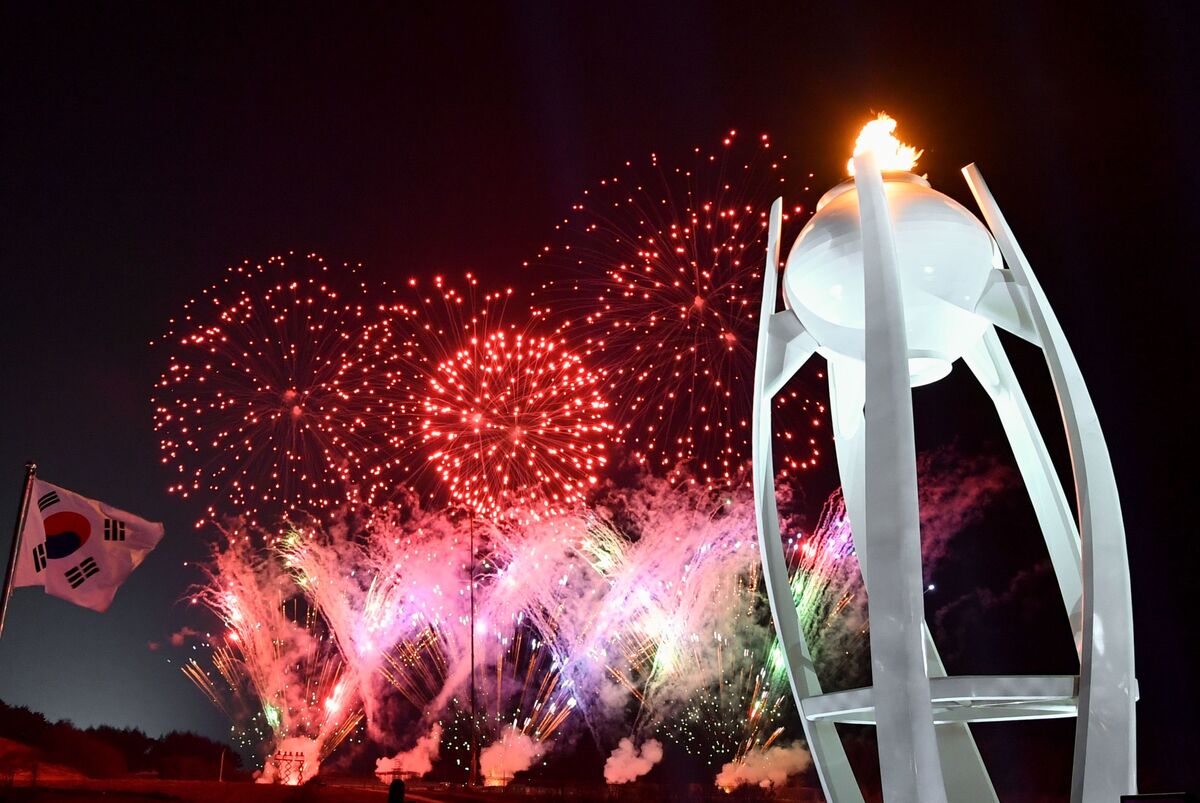
The Olympic flame of the 2018 Winter Olympics is extinguished amid fireworks at the closing ceremony. The next Winter Games will be held in 2022 in Beijing.

Florian Choblet/AFP/Getty Images

hide caption

toggle caption

Florian Choblet/AFP/Getty Images

North Koreans and South Koreans walk side by side. Thomas Bach, the head of the International Olympic Committee, said North and South Korea “have shown how sport brings people together in our very fragile world.”

Natacha Pisarenko/AP

hide caption

toggle caption

Natacha Pisarenko/AP

An elaborate, illuminated performance celebrates the Winter Games’ next site, Beijing, complete with an appearance by skating pandas.

Javier Soriano/AFP/Getty Images

hide caption

toggle caption

Javier Soriano/AFP/Getty Images

French biathlon champion Martin Fourcade (center), who won three gold medals in Pyeongchang, poses for a selfie with athletes and volunteers during the closing ceremony.

Jonathan Nackstrand/AFP/Getty Images

hide caption

toggle caption

Jonathan Nackstrand/AFP/Getty Images

The Olympic flame is extinguished in the cauldron. But Olympics fans will have to wait just over two years for another fix — the 2020 Summer Olympics in Tokyo.

Javier Soriano/AFP/Getty Images

hide caption

toggle caption

Javier Soriano/AFP/Getty Images

Members of Olympic Athletes from Russia teams parade in. The athletes had to compete under a neutral flag after the nation’s official team was banned from the games.

Dean Mouhtaropoulos/Getty Images

hide caption

toggle caption

Dean Mouhtaropoulos/Getty Images

Drones light up the sky in the shape of Soohorang, the white tiger Pyeongchang Winter Olympic Games mascot. The winning athletes were given plush tigers in Soohorang’s image.

Martin Bernetti/AFP/Getty Images

hide caption

toggle caption

Martin Bernetti/AFP/Getty Images

Performers deliver a South Korean flag. Organizers had promised that the Olympic Stadium would be “filled with the roar of compliments and the applause of friendship.”

Jonathan Nackstrand/AFP/Getty Images

hide caption

toggle caption

Jonathan Nackstrand/AFP/Getty Images

Let’s block ads! (Why?)

Olympics End With Closing Ceremonies

The Pyeongchang Winter Olympics are officially over and there was plenty of drama in the final weekend.

LULU GARCIA-NAVARRO, HOST:

The cauldron has been extinguished. The 23rd Olympic Winter Games has wrapped up in Pyeongchang, South Korea.

(SOUNDBITE OF ARCHIVED RECORDING)

CL: 2018, Korea. Let’s go.

GARCIA-NAVARRO: Closing ceremonies were held this evening Korea time to the beat of rap and K-pop and traditional Korean tunes. NPR’s Melissa Block joins us to talk about the ceremony and the games themselves. Hey, Melissa.

MELISSA BLOCK, BYLINE: Hey, Lulu.

GARCIA-NAVARRO: Opening and closing ceremonies at the Olympics are big, splashy pageants, as we all know. What was the theme of this closing ceremony?

BLOCK: Well, peace, harmony, diversity – I think the themes that we tend to see at these ceremonies. We heard a mixture of traditional music and new music. We were just listening to the Korean rapper CL with her song “The Baddest Female.” And what would a closing ceremony be without the shirtless, oiled-up Tongan? He was there, too.

GARCIA-NAVARRO: Oh, wow. I am sorry I was not able to see that. A North Korean delegation was also there for the closing, as they were for the opening ceremony. How was that received?

BLOCK: Right. These Olympics have been promoted as a unity games. There was a lot of diplomatic maneuvering. And they ended up sending 22 athletes from North Korea to compete here. But still, the tensions have been high. The North Korean delegation that’s here for the closing is led by a highly controversial figure, General Kim Jong Chul, who was accused of masterminding attacks on South Korea, including the torpedoing of a warship back in 2010 in which 46 sailors died.

So today, there was really a mixed message. We heard North Korea denouncing President Trump’s announcement of what he called the heaviest sanctions ever on North Korea. North Korea was saying a blockade would be considered an act of war and calling its nuclear weapons a treasured sword for justice. So there was that. But then word also came tonight that South Korea’s president, Moon Jae-in, met with the North Korean delegation. President Moon stressed that a dialogue between North Korea and the U.S. must open as early as possible. And according to the South Koreans, the North Koreans responded favorably, saying the regime is willing to engage in a dialogue with the U.S. So if that actually does bear fruit, that would be positive news indeed.

GARCIA-NAVARRO: Yeah. And potentially real news out of these games.

BLOCK: Absolutely.

GARCIA-NAVARRO: One question hanging over the closing ceremony also was this – would the athletes from Russia who got caught up in another doping scandal be allowed to march under their country’s flag? What happened?

BLOCK: Well, in a word, no. They were not allowed to. The IOC had dangled that prospect in front of the Russians, saying, if you behave, we will lift the sanctions we imposed because of your doping program. You can march under your Russian flag, not the neutral Olympic flag. But guess what? Two Russian athletes tested positive for banned substances at these games. So they didn’t march under the Russian flag. Remember, though, 168 Russian athletes did compete in these games. This was not an all-out ban. And it’s worth noting the Russian men’s hockey team, which won the gold medal today, defied the sanctions, sang the Russian anthem at the medal ceremony, drowning out the Olympic anthem that was playing at the same time.

GARCIA-NAVARRO: That’s NPR’s Melissa Block, covering the Olympics in Pyeongchang, South Korea. Thank you.

BLOCK: You’re welcome, Lulu.

(SOUNDBITE OF SUFFER LIKE G DID’S “BEOW”)

Copyright © 2018 NPR. All rights reserved. Visit our website terms of use and permissions pages at www.npr.org for further information.

NPR transcripts are created on a rush deadline by Verb8tm, Inc., an NPR contractor, and produced using a proprietary transcription process developed with NPR. This text may not be in its final form and may be updated or revised in the future. Accuracy and availability may vary. The authoritative record of NPR’s programming is the audio record.

Let’s block ads! (Why?)

Pyeongchang Olympics: Closing Ceremony Ends Biggest Winter Games Ever

At the closing ceremonies, Olympic athletes enter the stadium.

Pawel Kopczynski/Reuters

hide caption

toggle caption

Pawel Kopczynski/Reuters

The Winter Olympics closes the door on the Pyeongchang 2018 Games, with a big party and a last farewell from the 2,920 athletes who competed on ice and snow in South Korea. The number of athletes set a new record; so did the number of nations — 92 – represented.

Pyeongchang organizers promised that the Olympic Stadium, which seats 35,000, will be “filled with the roar of compliments and the applause of friendship.”

The two-hour ceremony started at 8 p.m. on Sunday night in South Korea – 6 a.m. ET Sunday in the U.S. It began with a segment called “Countdown: Dream for Tomorrow,” featuring performers paying tribute to the athletes.

Even as it celebrates the achievements of the past three weeks, the ceremony also looks ahead to Japan — Tokyo is slated to host the Summer Olympics in 2020 — and to China. In 2022, Beijing will become the first city to host both the Summer and Winter Olympic Games.

At Pyeongchang Olympic Stadium, the order of entry is the same as in the opening ceremony, when the U.S. entered the Olympic Stadium 26th.

Visiting delegations are ordered according to the alphabet of the host nation. The host delegation always enters last.

Team USA follows countries whose names begin with “M” — so, after Malta and Mongolia – and before the Bs, such as Bermuda and Belgium. Cross-country skier Jessie Diggins is the U.S. flag bearer.

Ceremony Program Guide and Timeline:

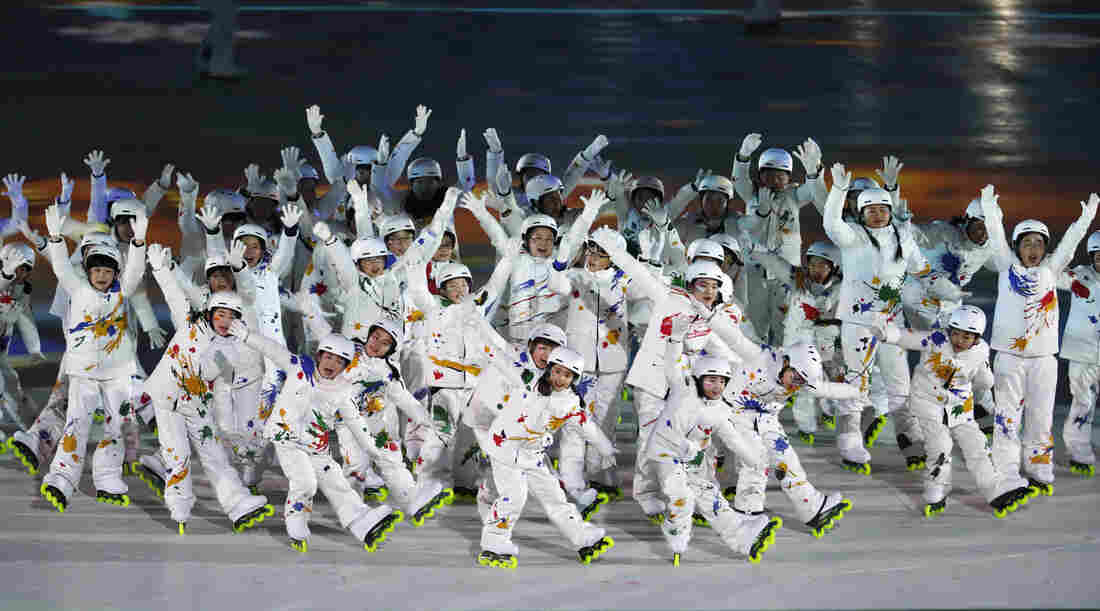
Children perform on roller blades at the beginning of the closing ceremony for the Pyeongchang 2018 Winter Olympics.

Damir Sagolj/Reuters

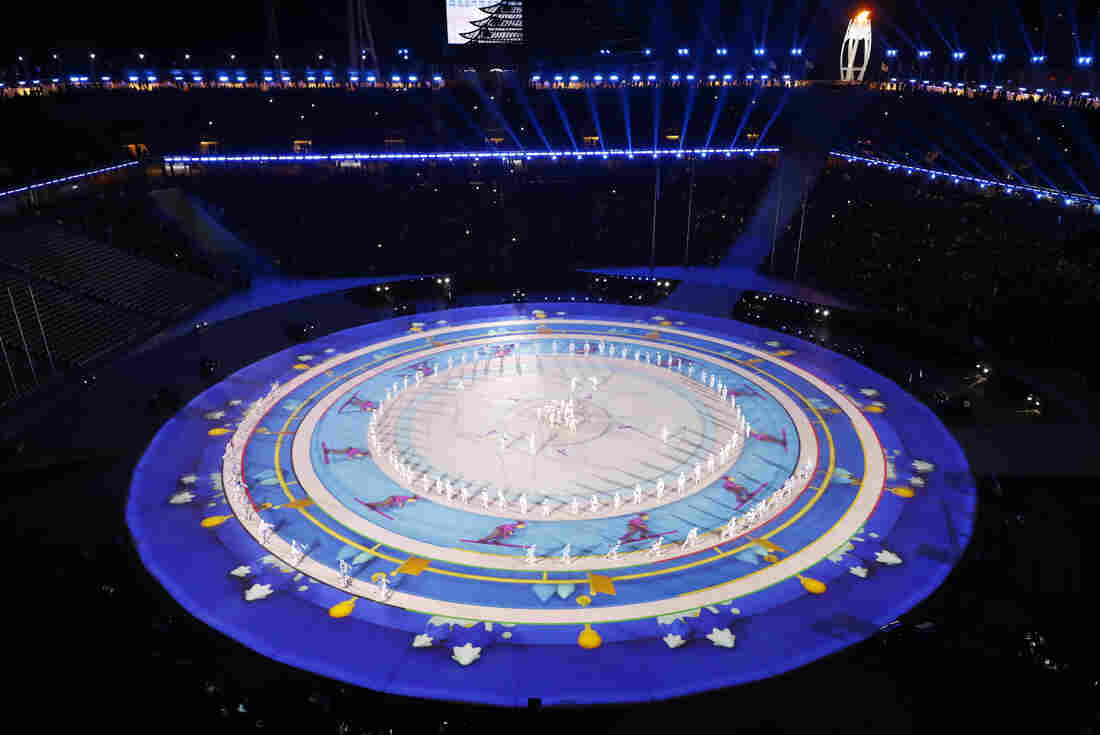
hide caption

toggle caption

Damir Sagolj/Reuters

Opening acts: first 16 minutes

It all starts with a montage of the achievements and notable moments of the Winter Games in Pyeongchang, in a four-minute video piece.

Then, the Korean national flag and anthem are presented, followed by a six-minute meditation and celebration of hallyu — the “Korean Wave” that represents the country’s progress on the international economic and cultural scene in recent decades.

In this section, guitarist Yang Taehwan, 13, plays a variation on “Winter” from Vivaldi’s The Four Seasons.

And then, from the program:

“On the sloped stage reflecting the image of a guitar, loop dancers perform a mesmerizing dance that defies gravity. Geomungo players perform together with the band Jambinai. Korean dancers present a modern interpretation of a traditional dance while a solo dancer performs Spring Dance of Nightingale.”

Kim Yong Chol, vice chairman of North Korea’s ruling Workers’ Party Central Committee (back right) watches the closing ceremony of the 2018 Winter Olympics with South Korean President Moon Jae-in (left), Moon’s wife Kim Jung-sook, and Ivanka Trump.

Michael Probst/AP

hide caption

toggle caption

Michael Probst/AP

… which leads to “The Light of Harmony and Solidarity: The lighting of the Prayer Pagoda unites everyone in the spirit of harmony and solidarity.”

This section of the ceremony features a unique musical instrument called the geomungo, which dates to the 4th century.

From the program guide:

“The round front plate of the instrument represents the sky, and the flat bottom part represents the earth; the instrument’s five Notes — gung, sang, gak, chi, and wu — symbolize the Five Elements. It has been traditionally played from a sitting position, but now it can be played from a standing position. Made of paulownia wood with twisted silk strings, the geomungo used in the Closing Ceremony are also carved with the traditional arabesque design.”

Parade of nations

Starting 16 minutes into the program, the Parade of Nations celebrates the athletes who competed and tried to live their dreams over the past 17 days.

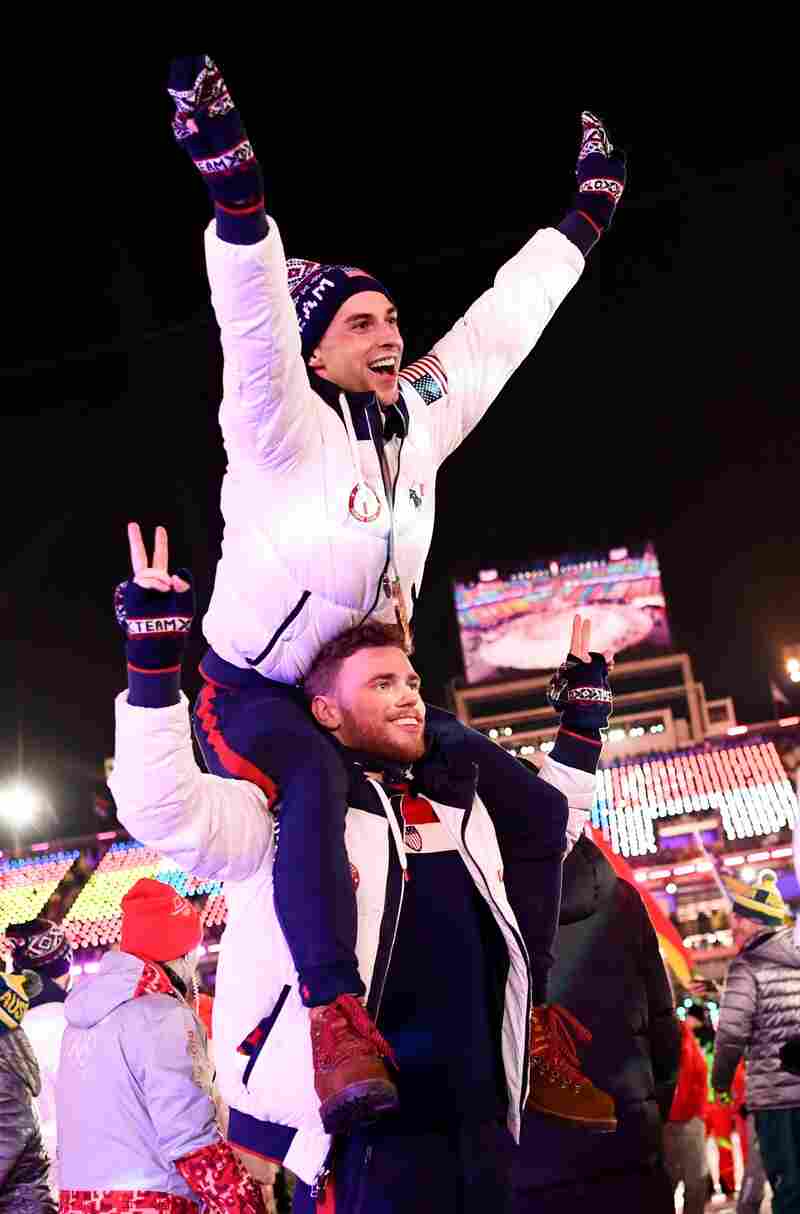
U.S. athletes Adam Rippon and Gus Kenworthy parade with other delegations during the closing ceremony of the Pyeongchang 2018 Winter Olympic Games.

Jonathan Nackstrand/AFP/Getty Images

hide caption

toggle caption

Jonathan Nackstrand/AFP/Getty Images

The oldest athlete at these Olympics: Canadian curler Cheryl Bernard, 51. The youngest: Chinese halfpipe skier Wu Meng, 15.

Remembering those not here

At 36 minutes in, the ceremony continues a tradition that started at the Rio 2016 Games, of providing a moment for everyone present to remember those who cannot join us.

In the Korean version, called “A Journey to Remember,” there are three sections:

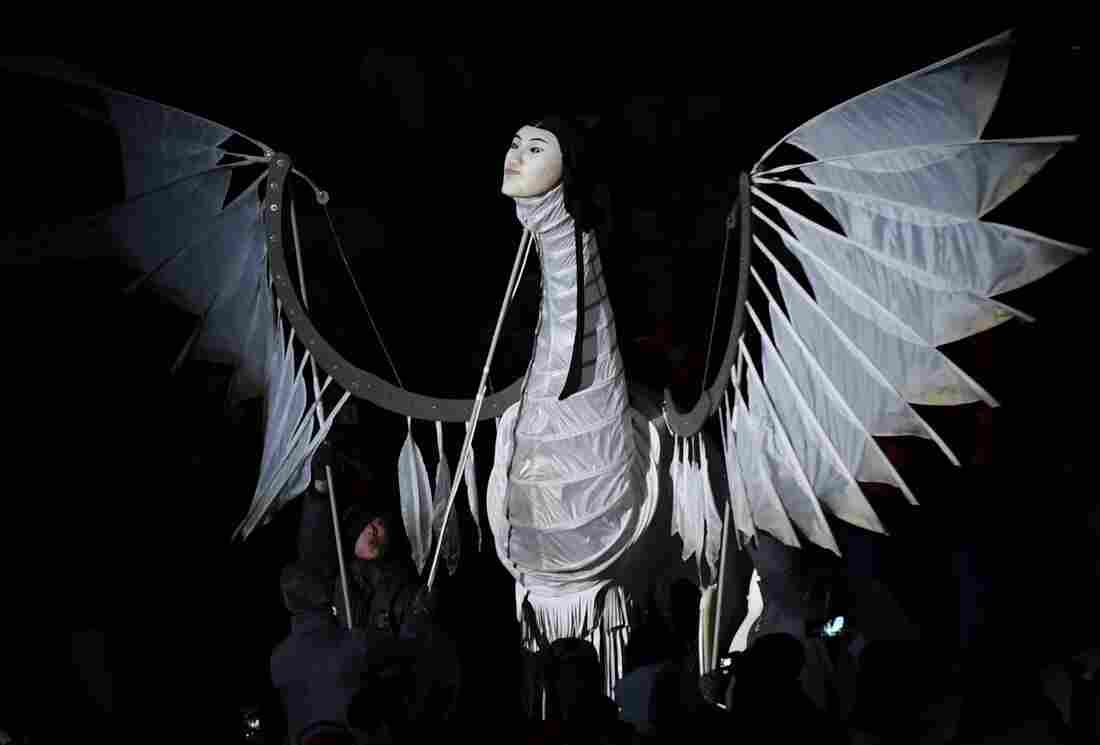
“Turtle and Kkoktu: Along with kkoktu puppets, the Turtle embarks on a journey across life and death. With the Turtle in the middle of the procession, the kkoktu puppets holding dandelions enter first, and they are followed by the dancing kkoktu puppets.

“The Time Tunnel: The Turtle journeys through the Time Tunnel, the boundary between life and death.

“Eternal Remembrance: The kkoktu puppets dance and bid farewell to the Turtle who is on his way to the heavens. Soon, the Turtle flies free into the sky.”

Victory ceremonies, and more

From 8:43 p.m. – 9:03 p.m. KT, the Olympics holds two medal ceremonies, announces new members of the International Olympic Committee athletes’ commission and recognizes volunteers. Medals are presented for the men’s and women’s mass start cross country ski races, in which Iivo Niskanen of Finland and Marit Bjoergen of Norway accepted gold.

Second hour: K-pop time

We can’t explain it better than the ceremony guide, although we could quibble with the second point:

Entertainers perform during the closing ceremony of the Pyeongchang 2018 Winter Olympic Game.

Wang Zhao/AFP/Getty Images

hide caption

toggle caption

Wang Zhao/AFP/Getty Images

“The singer CL enters the stage singing her song, ‘The Baddest Female’, with 20 dancers holding torches, representing passion and the venturing spirit. She also sings 2NE1’s hit song ‘I Am the Best’ to convey the message that everyone is a winner.”

The first song asks, “Where all my bad girls at?”

We’ll consider that rhetorical, because CL seems to have all the answers. The crowd is into this.

The transition begins

The Greek national anthem is played, and the national flag of Greece is raised. This is part of the tradition of retracting the Olympic spirit from one host and extending it to another (or at least, we think that sounds good).

Next, the Olympic flag is lowered and the Olympic anthem is performed.

Next time in China

In 2022, Beijing will become the first city to host both the Summer and Winter Olympic Games. It’s traditional for the host cities to focus on the next edition of the games they just held, so rather than touting Japan, China gets a boost here.

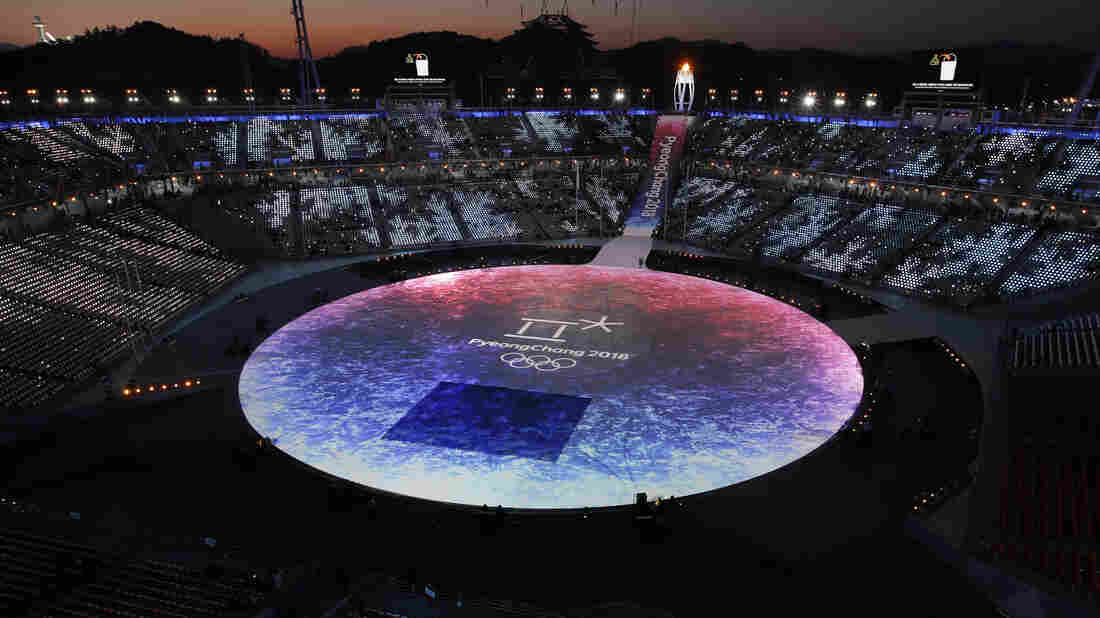
A view of the start of the closing ceremony at the Pyeongchang 2018 Winter Olympics.

Pawel Kopczynski/Reuters

hide caption

toggle caption

Pawel Kopczynski/Reuters

Beijing’s section of the program includes some reminders that China has pandas. Whales are also repping China, it turns out.

The video montage ends with Chinese President Xi Jinping issuing a message of warm welcome.

Then graphics in the stadium show Olympics past — and everything is assembled into an invitation to come to China.

And that brings us to:

Speeches

Lee Hee-beom, the president and CEO of the Pyeongchang Organizing Committee, speaks; so does IOC President Thomas Bach.

It’s been fascinating to watch the way South Korea and North Korea have interacted in the cause of the Pyeongchang Games, from the visit of Kim Yo Jong to cheer squads and athletes and staff. Bach says, “We are embracing these new horizons.”

To prove he’s down with these horizons, Bach takes a break to pose for one of the most improbable photo ops ever: alongside a North Korean, the Tongan Olympian Pita Taufatofua (shirtless, as is his wont, on this 26-degree night), and an assemblage of colorful mascots.

Bach then declares the Winter Games “closed.” He adds, “Thank you all, and bye-bye to Korea.”

Not all of these North-South interactions have taken place only at a high level: We spoke to a South Korean police officer last night who was very excited because she got the chance to speak with North Korean people visiting Pyeongchang. She described them as very polite and nice to talk to.

EXO Time

The band EXO was listed to perform earlier in the program; not sure if it’s a printing error or a schedule change, but they’re here now and doing their thing.

Building on a traditional gong and an electronic drum, EXO’s Kai sings against a backdrop of drawings by the artist Seonglip. The rest of EXO “appear riding on four-wheelers and singing their song ‘Growl’ with 43 dancers” — as you do.

Fireworks light up the night sky outside the closing ceremony.

Florian Choblet/AFP/Getty Images

hide caption

toggle caption

Florian Choblet/AFP/Getty Images

After that, they do “Power,” with its eponymous refrain.

If you’re curious: “Chrome-plated four-wheelers equipped with searchlights represent the future of K-pop as the genre lights a way for the world.”

“Farewell from a snowflake”

Yes, there is a segment in the ceremony titled “Farewell from a Snowflake.” Internet, start your engines.

As part of a gift from Pyeongchang, 10 Soohorang white tiger mascots follow a large present that’s escorted by a snowmobile (yes, a snowmobile).

We like this kind of stuff — maybe you do, too: “The surface is decorated with embossed carvings of traditional patterns, and each edge is also decorated with the traditional accessory called norigae.”

Then we see the return of the five children from the opening ceremony: When the children open the present, it reveals a snow globe. The organizers capitalized it: “Snow Globe” — an obvious ploy to get everyone on board with this imagery.

Aside: Personally, we find it unsettling to see multiple iterations of Soohorang all over the place. We enjoy being convinced of the Olympic mascot’s mythic and unique status.

The snowflake, it turns out, is lit: 400 performers come in holding LED balls in their hands, followed by giant balloons that refer to the globe. In case you’re starting to understand things, there are also balloons that resemble Winter Olympics athletes.

None of this is quite as restful and calm as we had imagined in reading it. The show is building toward a conclusion, rather than tapering.

The 2018 Winter Olympics closing ceremony at the Pyeongchang Olympic Stadium.

Christian Hartmann/REUTERS

hide caption

toggle caption

Christian Hartmann/REUTERS

Party time

From the program:

“With the EDM thumping under the brightly lit sky, DJ Raiden begins the party on the ground, joined by all the athletes for the finale of the ceremony. Raiden is followed by Martin Garrix, and the performers present the LED balls to the athletes. Raiden re-enters as DJ and continues the final segment of the closing.”

The athletes get out on the floor and dance. And that wraps things up. With the Olympic flame extinguished, the athletes leave the stadium and say “Annyeong” to the Pyeongchang Winter Games.

Let’s block ads! (Why?)