March Madness is over. After a devastating loss last year, Virginia beat Texas Tech in overtime Monday night to win its first NCAA title. The final score was 85-77.
RACHEL MARTIN, HOST:
March Madness came to a close last night, and it’s hard to imagine a more dramatic redemption story.
(SOUNDBITE OF ARCHIVED RECORDING)
JIM NANTZ: Rebound into the hands of Hunter. And Virginia with the all-time turnaround title.
MARTIN: That is the sound of Virginia beating Texas Tech, 85 to 77, in overtime. For the first time, the Cavaliers are the Division I men’s college basketball champions.
DAVID GREENE, HOST:
Yeah, and look back to just a year ago – UVA was the laughingstock of the tournament.
(SOUNDBITE OF ARCHIVED RECORDING)
NANTZ: Twenty-point lead and the greatest upset in the history of this tournament is going to happen – devastating.
GREENE: Yeah, really devastating. Last year, Virginia was at the top of its bracket, the University of Maryland, Baltimore County was at the bottom, and somehow, the UMBC Retrievers buried UVA. Virginia became the first No. 1 seed ever to lose to a No. 16 seed in the men’s tournament. This year, though, a total 180 for UVA.
MARTIN: But most of last night’s game was close. In the second half, Virginia pulled ahead by 10 points; that lead trickled away. They were behind by three late in the game, when UVA’s De’Andre Hunter took aim.
(SOUNDBITE OF ARCHIVED RECORDING)
NANTZ: Far side – Hunter…
BILL RAFTERY: Wow.
NANTZ: …Hits a 3 to tie it.
RAFTERY: Woo. Onions.
MARTIN: That shot sent the game into overtime, where the Cavaliers pulled ahead for good.
GREENE: And they won. UVA’s Ty Jerome reacted to the championship.
(SOUNDBITE OF ARCHIVED RECORDING)
TY JEROME: Unbelievable, man. I mean, this is the first time I just look around, take all this in. This is what you dream of.
GREENE: Later on, Jerome was talking to reporters, and he reflected on the team’s turnaround.
(SOUNDBITE OF ARCHIVED RECORDING)
JEROME: Last year, it drew us even closer together. So it wasn’t like a rush to get to this championship game and then win it so we could prove all you guys wrong; it was more just, you know, we grew even more united.
GREENE: In his words, quote, “we came together when everyone counted us out.”
NPR transcripts are created on a rush deadline by Verb8tm, Inc., an NPR contractor, and produced using a proprietary transcription process developed with NPR. This text may not be in its final form and may be updated or revised in the future. Accuracy and availability may vary. The authoritative record of NPR’s programming is the audio record.
Chris Davis went 0-for-3 in his first three plate appearances in a 12-4 win over the Oakland A’s Monday night. That extends his hitless streak to 47 consecutive at-bats — a Major League record.
Virginia’s Kyle Guy celebrates after helping his team defeat Texas Tech in the NCAA championship tournament. The title game finished in overtime – a first since the University of Kansas beat the University of Memphis in 2008.
Announcers called it the “all-time turnaround title.”
On Monday night in Minneapolis, the Virginia Cavaliers took home the NCAA tournament championship title in a dramatic 85-77 overtime defeat of the Texas Tech Red Raiders.
“This is a great story,” said Virginia’s coach, Tony Bennett in a post-game interview. “The credit goes to these young men.”
It was a big comeback after last year’s tournament, when the University of Virginia team lost to University of Maryland, Baltimore County in an early round – the first time a No. 16 had ever beat a No. 1 seed team.
As the overtime clock hit 0:00, Virginia player De’Andre Hunter – who scored a career-high 27 points – threw the basketball into the air in celebration. Confetti rained down, then the winning team cut down the basketball net, fulfilling an NCAA championship tradition.
The road to this moment was rocky for both teams. Virginia had close calls against Purdue and Auburn, and Texas Tech made it to the playoffs after losing their first conference tournament game.
But both teams showed up in full force on Monday night. So did their fans. Notable alumni from both schools came out to support their teams, including NFL quarterback and Texas Tech University alumni Patrick Mahomes, and University of Virginia-grad Katie Couric, AP reported.
At one point, a fan threw a tortilla – a Texas Tech school tradition – that landed on the elevated court, causing play to stop temporarily.
NCAA title game stopped briefly because a tortilla got launched into the court from the Texas Tech student section. Not the first to fly and now security is starting to confiscate a bunch. pic.twitter.com/q18K93dTp4
It was an evening of a few other “firsts.” Both teams made their NCAA championship debuts, and the University of Virginia won it’s first-ever national title at the tournament. The last time the NCAA had a first-time champion was thirteen years ago when the University of Florida bested UCLA in 2006.
And a block from Virginia sent the championship game into overtime for the first time since the University of Kansas beat the University of Memphis in 2008, according to NCAA.com.
The teams also matched a previous record – 21 combined 3-pointers in a championship game, The Associated Press reported.
At the end of the night, the NCAA announced the Final Four’s all-tournament team; three spots went to Virginia players – De’Andre Hunter, Ty Jerome and Kyle Guy, who was voted ‘Most Outstanding Player’ after scoring 24 points in the title game. Jarrett Culver and Matt Mooney of Texas Tech also made the list.
The Trump administration has canceled an agreement that would have allowed Cuban baseball players in the U.S. without having to defect first. Officials say the agreement was illegal.
After 47 years in Oakland, the Golden State Warriors are moving to a shiny new arena across the bay in San Francisco. The Warriors are just the latest beloved sports team to leave the city.
As MLB’s Chief Diversity Officer, Renee Tirado oversees a number of initiatives to bring more women and people of color into all levels of the sport, from front offices to the field. She says, “there’s a lot to do.”
Alex Trautwig/Courtesy Major League Baseball
hide caption
toggle caption
Alex Trautwig/Courtesy Major League Baseball
Major League Baseball is staring down a gender problem. Despite initiatives meant to bring more women into its dugouts, executive offices and broadcast booths, everyone — including women in high-powered positions — believe things won’t change quickly enough.
“Look, I think there’s no sugar-coating this. There’s a lot to do,” said Renee Tirado, MLB’s chief diversity officer.
In 2018, MLB earned a gender grade of C on the yearly report card issued by The Institute for Diversity and Ethics in Sports. Essentially, that means 30 percent of employees in pro-baseball are women.
But MLB told KCUR that all across the leaguejust 188 women work in baseball operations roles, doing things like looking for the best talent, negotiating contracts or scouring data to optimize player skills. That encompasses jobs in the commissioner’s office plus all 30 teams and those teams’ minor league systems.
And in 150 years of Major League Baseball, no woman has been a general manager or a head coach.
New York Yankees’ Jean Afterman is one of only three women who’ve risen to the assistant general manager level.
“I’ve been honored to sometimes be referred to as a trailblazer, but it’s pretty exhausting when you blazed a trail and there’s nobody following up behind you,” said Afterman, who is 62.
Working to improve the numbers, for real
While the conversation about gender parity in major league sports may not be new, there’s a renewed focus. The NFL’s Tampa Bay Buccaneers just hired two women as assistant coaches. Notre Dame women’s basketball coach, Muffet McGraw, recently declared she was done hiring men for her staff and advocated for hiring more women as leaders in sports.
And ESPN analyst Jessica Mendoza, who like other women broadcasters, has been criticized for showing off her baseball smarts, joined the New York Mets’ baseball operations staff as an advisor about a month before the season started.
There is no single definition of “baseball operations” across Major League Baseball. Twenty-four of the 30 teams confirmed to KCUR how many women they had in such roles, though some teams counted the media relations crew, and most counted administrative assistants, who often help with contracts and other important front-office functions.
The Kansas City Royals are among the top five teams with women in baseball operations roles across the major and minor leagues, MLB said. But on the pro team, the Royals, there is just one woman: lead dietitian Erika Sharp.
“I would say other people notice it more than I do,” Sharp said. “We’ll be in a meeting with everybody, and they look around, they’re like, ‘Wow, you really are the only female. That’s weird.’
“But … it’s just a typical day and they all treat me like their little sister. They call me little sis sometimes,” she said.
Sharp, 30, is in her second season with the Royals, having previously worked with the San Francisco Giants, Arizona Cardinals and Phoenix Coyotes. She said she’s been lucky in that she hasn’t felt like her gender has been a determining factor, though she acknowledged that her profession as a dietitian is generally dominated by women.
Gender parity doesn’t feel like a large hurdle to overcome, Sharp said, but it’ll be key to build “the confidence of the upcoming working class and generation of females entering in, that there are positions and you can do these things. You just have to go in and work hard like everyone else does.”
Tirado, MLB’s chief diversity officer, said she is trying to evolve the game’s “culture to make this a sport of choice for women, whether it’s networking, the business side or baseball operations.”
MLB is trying to do that with the Diversity Pipeline Program and a fellowship program for baseball operations roles. Both are meant to equalize the league’s gender and racial hiring. Roughly 20 percent of MLB’s workforce is racially diverse, earning it a B+ for racial diversity in the institute’s report card.
It’s a change from how MLB did things under former Commissioner Bud Selig. Afterman, the Yankees executive, referenced the “Bud Selig rule.” As she described it, “if you are going to hire anybody in a senior position in a baseball operations department or a manager, you had to interview a diverse candidate, and all that was was ticking a box without any meaning to it.”
Emma Tiedemann is the Lexington Legends’ play-by-play announcer and director of media relations for the team, which is the low-A affiliate of the Kansas City Royals. She’s been broadcasting sports since she was 15.
Courtesy Emma Tiedemann
hide caption
toggle caption
Courtesy Emma Tiedemann
She said teams would just report back to the commissioner that, ‘I did exactly what you told me to … and I’m going to just hire the white guy that I wanted to.'”
MLB’s goal now, according to Tirado, is “always to improve the numbers, but not improve the numbers for the numbers’ sake.”
‘Change comes very slowly’
Diversity programs may not always work as expected. A 2016 Harvard Business Journal report noted that as initiatives to promote diversity proliferated in the U.S., the percentage of white women who became managers increased by 7 percent from 1985 to 2000 and black men only budged by .3 percent from 1985 to 2014.
And by diversity, “we’re talking about who is part of the organization and who is not a part of the organization,” said Geraldine Cochran, an assistant professor of physics at Rutgers University who has written about and advocates for diversity and inclusion efforts.
The Harvard report said that the most effective diversity initiatives rely on recruiting, mentoring and a diverse management staff, but Cochran insisted there’s another component, too: examining whether the efforts are making a difference.
“There is no-one size fits all diversity plan that’s going to work at every organization. It needs to be an iterative process of making the changes, and then doing research to see if those changes were actually successful, and doing research to find out where the actual problems in the organization are,” she said.
Rare to see a woman
Diversity initiatives weren’t a thing when Greg Pryor played in the majors in the 1970s and 1980s with the Texas Rangers, New York Yankees, Chicago White Sox and the Royals.
“I came through baseball when it was very rare to see a woman in the front office or very visible as they’ve been in regards to a baseball,” said Pryor, who remembers when women in the media were just being let into clubhouses. The only woman he said he dealt with from a team standpoint was Nancy Faust, the organist at Comiskey Park in Chicago.
“A lot of times in baseball, that change comes very slowly,” Pryor said. He said he thinks fathers are encouraging more daughters to go into the sports they love. Pryor’s youngest daughter, for instance, works in the NFL.
San Diego Padres Assistant General Manager Josh Stein started out with the team in 2003, and he had the rare chance to work with a high-ranking woman — Priscilla Oppenheimer, who was the director of minor league operations. But, he noted, the Padres dropped off the radar for a little bit.
“Definitely there was, I would say, a little bit of a gap in terms of women working in the Padres’ front office,” he said. “We’ve really seen an influx over the last few years of more and more applicants, more and more hires and some women doing great work in our baseball operations.” Currently, six women work in baseball operations for the Padres.
Stein said that the key to bringing more women into the game is having them start in entry-level roles.
“I think if you look at, regardless of gender, the folks in professional sports that have risen to the top, it typically starts with internships. It starts with very basic coaching positions or scouting positions,” he said. “And it tends to be a long, slow journey to the top.”
Among the up-and-comers is Emma Tiedemann, who is with the Royals’ low-A minor league team in Kentucky. The 26-year-old has broken the gender barrier a couple of times already: in 2014 with the Alaska Baseball League and in 2018 in the South Atlantic League. Today, She does both the play-by-play and color during radio broadcasts for the Lexington Legends.
It runs in the family. Her grandfather was the broadcaster for the University of Texas at Dallas and at 15, Tiedemann joined him in the booth to keep score.
“[He] just handed me the headset and said, ‘You know basketball, if you want to talk about what’s going on in the game, feel free. But if you’re too shy … that’s fine also.’ I talked to the whole game … and from there I was calling [NCAA] Division III athletics.”
But there were still barriers. She once had a minor-league baseball team tell her they wouldn’t hire her because she’s a woman.
“I was so taken aback that I was just kind of quiet and walked out of what I thought was going to be an interview just stunned,” she said. “But I used that to … bring me back down to reality of this career path is going to be a little bit harder for me than my friends.”
Continues to have to ‘justify herself’
The Yankees’ Afterman said she still feels it necessary to “sort of justify myself” in meetings, even though she’s a senior vice president, has been an assistant general manager for 18 seasons and negotiated contracts for star baseball players such as Hideo Nomo and Alfonso Soriano for several years before that.
Afterman sees potential in the emergence of analytics departments. Instead of trying to break in as a coach or a GM, women can develop ways to communicate advanced metrics to the coaches.
That was the route for Samantha Rack, who is with the Cincinnati Reds.
The 25-year-old previously worked in the health care sector as a developer, and said her experience since recently joining the Reds is that “nothing feels abnormal” because they’re working toward the same goal.
Even though she might have had worries about working in a field dominated by men, “I’ve not come across anything that would make me concerned,” she said.
But even with the MLB’s Diversity Pipeline Program, the fellowship program and an initiative called Take the Field , Tirado said progress will be slow. That’s because, she said, MLB is still at the foundational stage of this building this diversity.
Baseball is a small world. Teams like humans, prefer familiarity in the hiring process, and what’s familiar is men.
“I know that guy. And guy, I mean, literally. I know how he works, I know what he does, I know the way he thinks and it aligns with my philosophy,” Tirado said. “So we have to break through with that by giving women an opportunity to build out those relationships and show that they can compete at the same level as those men.”
Some of the encouragement is going to have to come from women like Tiedemann, who reaches out to any new woman broadcaster in baseball in hopes that they succeed and maybe even beat her to the major leagues, where currently there’s one woman who’s a color announcer — Suzyn Waldman with the Yankees’ WFAN team — and one woman who’s a public address announcer — Renel Brooks-Moon with the San Francisco Giants.
“I would love to not be a story,” Tiedemann said, adding she wants to be “just background noise.”
Like a player’s walkup song or the call of a hot dog vendor a section or two over — just part of the game.
Baylor won the championship by a single point Sunday night, 82-81. Fans watching the men’s championship Monday night between Virginia and Texas Tech are hoping for similar drama.
Lauren Cox (#15) of the Baylor Bears shoots over Brianna Turner (#11) of the Notre Dame Fighting Irish at Amalie Arena Sunday night in Tampa, Fla.
Ben Solomon/NCAA Photos via Getty Images
hide caption
toggle caption
Ben Solomon/NCAA Photos via Getty Images
Baylor gave up a double-digit lead but hung on in the final minutes to win the NCAA women’s title game against defending champs Notre Dame by a single point Sunday night in Tampa, Fla.
With the 82-81 victory, the Lady Bears clinched their third NCAA women’s basketball championship — joining UConn and Tennessee as the only Division I programs with three or more titles. The last time Baylor clinched the title was in 2012 against the Fighting Irish.
Baylor kept a comfortable lead for the first half, before Notre Dame closed the gap to tie the game in the last five minutes of the fourth quarter.
With 3.9 seconds left, point guard Chloe Jackson drove past Notre Dame’s defense to put Baylor ahead at 82-80. Then Notre Dame called a timeout and inbounded to tournament standout Arike Ogunbowale. The Irish had a chance to turn the game around when Ogunbowale was fouled going for a layup. But, lucky for the Lady Bears, Ogunbowale missed her first free throw in the remaining 1.9 seconds, leaving Baylor to hold on to the 1-point lead.
Baylor managed the final stretch without star forward Lauren Cox, who injured her knee in the third quarter. Cox, who hobbled to the sidelines on crutches to celebrate with her teammates after the final buzzer, told ESPN that she’s unsure about the severity of her injury.
Cox, who contributed 8 points and 8 rebounds to Baylor’s 62-50 lead before getting rolled off the court in a wheelchair, has remained a crucial player throughout Baylor’s 37-1 season. Her early exit in the final raised the stakes for her teammates.
“We had to do it for LC,” Chloe Jackson, referring to Cox, told reporters after the game. “She got us here. We had to finish the job for her.”
The win brought Baylor coach Kim Mulkey to tears. “I’m emotional for a lot of reasons, but mostly for Lauren Cox, and I’m so happy,” Mulkey said. “These are tears of joy, but they’re also tears of thinking about injuries.”
The NCAA reports its highest attendance in 15 years at the Women’s Final Four and regional playoffs. That record fanfare was evidenced by the more than 20,000 fans that filled Tampa’s Amalie Arena for the final game, as reporter Bradley George of member station WUSF reports.
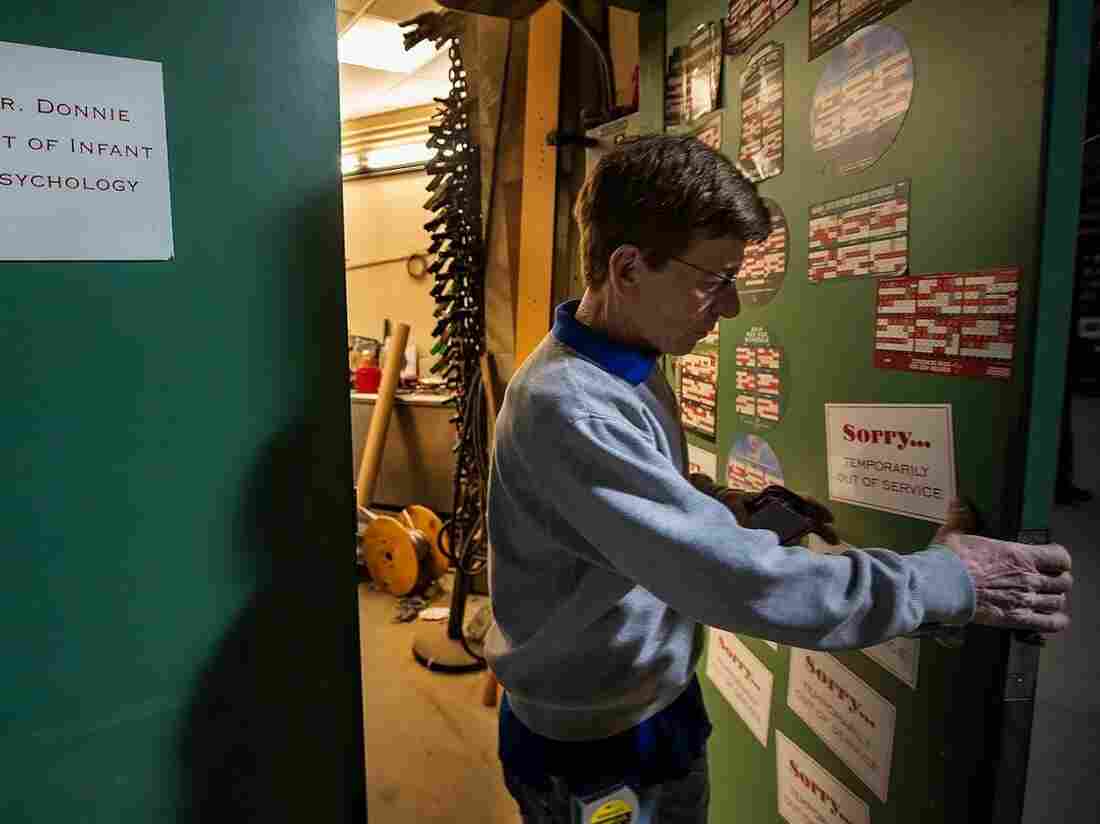
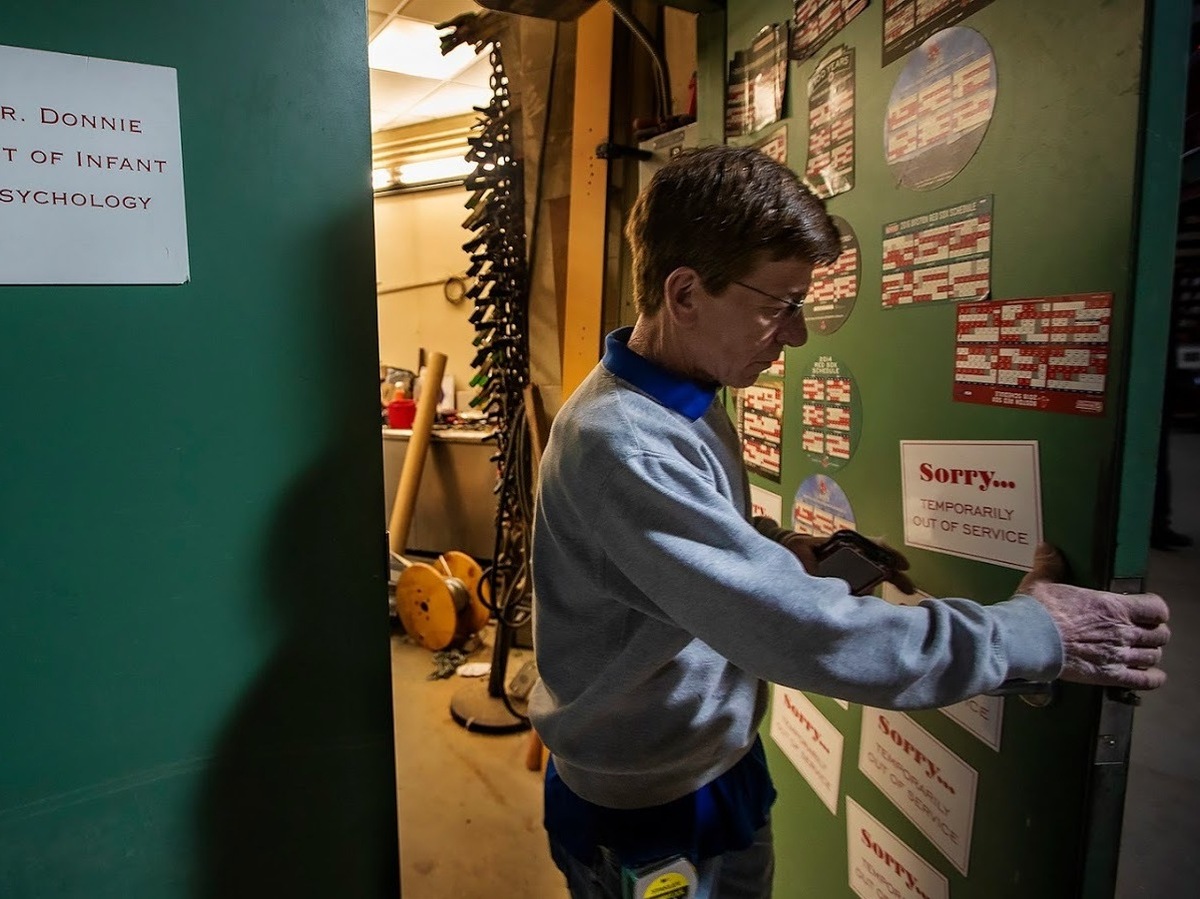
Donnie Gardiner works behind the scenes at Fenway Park to keep the ballpark operating smoothly.
Jesse Costa/WBUR
hide caption
toggle caption
Jesse Costa/WBUR
One of the toughest jobs in Major League Baseball might belong to Donnie Gardiner.
He’s the facilities superintendent at Fenway Park, the iconic 107-year-old home of the Boston Red Sox. It’s the oldest ballpark in Major League Baseball, and Gardiner’s job is to keep the place running.
That’s no small undertaking: Fenway Park has undergone major renovations in past years, including fixes to the field to help prevent flooding and the addition of more than 14,000 new seats.
To maintain the park, Gardiner puts in hundred-hour weeks, and occasionally sleeps in his office.
The season just started for the Red Sox. Ahead of the team’s home opener on Tuesday, Gardiner has had little time to waste. Water needed to be turned on to the concession stands, generators needed to be tested, emergency lighting needed to be checked and construction needed to be finished.
He bustled around Fenway, moving from the park’s new hot tub room, to the new training room, to the new video coaching room, getting updates and giving advice to workers.
“We have city inspections we have to worry about,” he said. “We have construction we have to finish up. We have just all kinds of things going on right now.”
As he talked, a racket of whirring equipment sounded around him — workers were installing walls, putting ceilings back together, painting, sanding, sawing and hammering.
Some of the challenges in renovating the ballpark are unpredictable, but Gardiner takes it all in stride. After all, he has worked at the ballpark for three decades.
Sometimes, Gardiner must work around brass waterlines that have stood the test of time. Other times, he uncovers remnants from Fenway’s past.
“When we ripped up the concourse a few years ago it was like an archaeological dig, finding the old nip bottles, is what we call them today, old shoes,” he said. “And the place was, I’m assuming, heated by coal because we found a lot of coal ash out in center field.”
Though soft-spoken, Gardiner has a commanding presence. He is constantly making important decisions about the park’s upkeep, and with an area as small as Fenway’s, every decision, every inch, matters.
Gardiner likes to say he’s playing a “game of inches.” With almost every decision, he has to figure out how to make the best use of limited space while preserving the park’s character.
“Everything we’ve done to this place has not taken away from the allure of the park … The feel is still there,” he said. “This building has a feel to it. It does for me personally. I’ve touched every inch of this place at one time or another.”
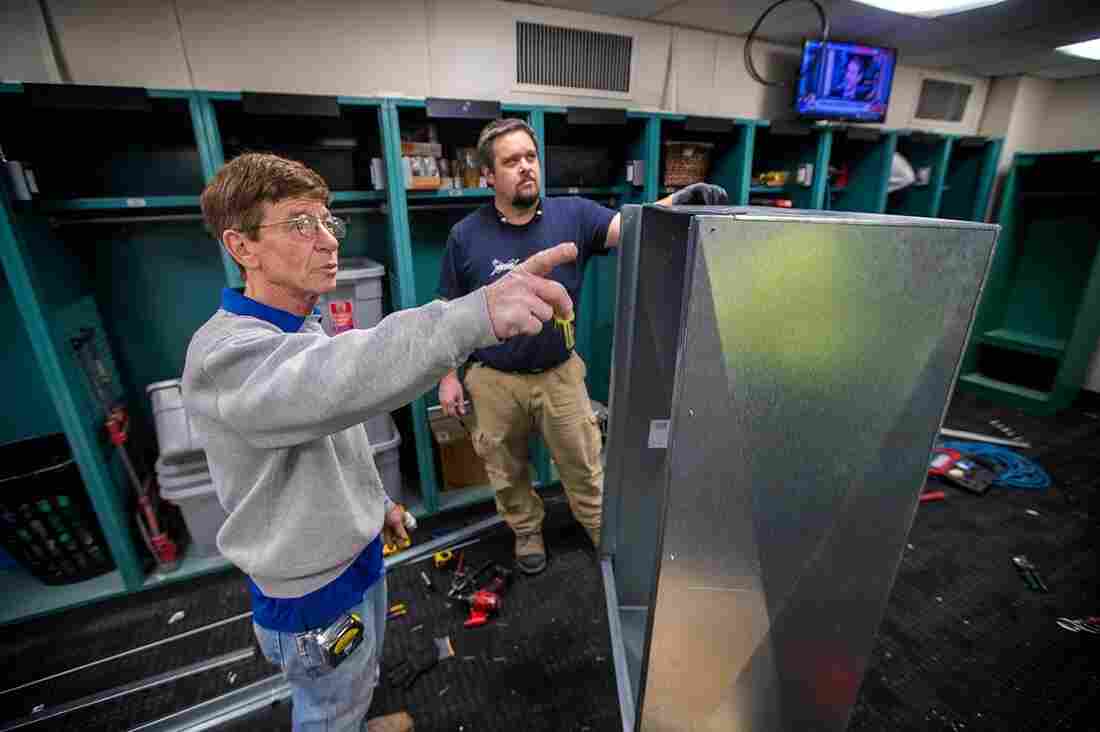
Fenway Park facilities superintendent Donnie Gardiner discusses construction work in the visiting team’s clubhouse with a contractor.
Jesse Costa/WBUR
hide caption
toggle caption
Jesse Costa/WBUR
Aside from fitting in more seats, another upgrade Gardiner has overseen at the ballpark is renovating the clubhouses.
Many teams have outgrown Fenway’s cozy clubhouses, so there’s always plenty of work for Gardiner to do on both the Red Sox’s team clubhouse and for the visiting team’s clubhouse area. All the renovations at the park are done equally.
“I’m not playing one side over the other. Whatever we do for one we do for the other,” he said.
Now that a new season has started, Gardiner’s focus has shifted from renovations to preventative maintenance.
“Game days are actually easier for the most part. If we do our job right the building runs itself.”
Still, Gardiner is typically too busy monitoring what’s happening off the field to pay attention to the game itself.
He takes pride in the green painted walls, the rows and rows of seats crammed onto every space imaginable and the bright stadium lights that shine down on it all.
“It’s unlike any other building,” Gardiner said of Fenway Park. “It’s not Joe’s Pizza. It’s not a high rise. It’s not a supermarket. It’s a very unique building. And the way it’s used is very unique. That’s what I love about it. I’d get bored anywhere else.”
NPR’s Amanda Morris produced this story for digital.
Who has the toughest job in baseball? Maybe Donnie Gardiner, the facilities superintendent at Fenway Park. He’s responsible for getting the 107-year-old ballpark ready for the Red Sox home opener.
LULU GARCIA-NAVARRO, HOST:
So who has the toughest job in baseball? It might just be Donnie Gardiner. He’s the facility superintendent at Fenway Park in Boston. That means he makes sure that the oldest ballpark in Major League Baseball keeps running. Shira Springer of member station WBUR visited Gardiner as he got ready for another Red Sox season.
DONNIE GARDINER: Come on in. Welcome to Fenway.
SHIRA SPRINGER, BYLINE: Donnie Gardiner greets me at Gate D, then quickly walks to the visitors’ clubhouse. He doesn’t want to waste time, not with the Red Sox home opener fast approaching.
GARDINER: We have city inspections we have to worry about. We have construction we have to finish up. We have just all kinds of things going on right now.
SPRINGER: When you step into the visitors’ clubhouse, you see what he means.
(SOUNDBITE OF CONSTRUCTION TOOLS RUNNING)
SPRINGER: Workers are installing walls, putting ceilings back together, painting, sanding, sawing, hammering. As Gardiner moves from the new whirlpool room to the new training room to the new video coaching room, he gets updates and gives advice.
GARDINER: Now we’ve just got to see if we can find some room up there to change the filters.
UNIDENTIFIED PERSON #1: It’ll be close. We’ll get them in.
GARDINER: Everything’s been close.
UNIDENTIFIED PERSON #2: I would wait on this because I don’t know where we’re going to cut the line. But I think we’re going to cut the line.
SPRINGER: The same thing happens when he visits the Red Sox clubhouse area and checks on manager Alex Cora’s new larger office and other upgrades. Teams have outgrown Fenway’s cozy clubhouses. So there’s always plenty of work to do for the Red Sox and the visitors.
GARDINER: I’m not playing one side over the other. Whatever we do for one, we do for the other.
SPRINGER: Donnie Gardiner is 5-foot-3 and a soft-spoken but commanding presence in the clubhouses. It’s clear he knows how to handle the unpredictable challenges that come with renovating a 107-year-old ballpark. He should. He’s worked there for three decades.
GARDINER: You know, everything we’ve done to this place has not taken away from the allure of the park. The feel is still there. This building has a feel to it. I mean, it does for me personally. You know, I’ve touched every inch of this place at one time or another.
SPRINGER: And with a footprint as small as Fenway’s, every inch matters. Gardiner likes to say he plays a game of inches. He’s constantly figuring out how to make the best use of limited space, especially in the clubhouse areas. Sometimes he’s also working around brass waterlines that have stood the test of time. And during offseason renovations, sometimes he’s uncovering remnants from Fenway’s past.
GARDINER: When we ripped up the concourse a few years ago, we were – it was like an archeological dig, you know, finding the old nip bottles, old shoes. And the place was, I’m assuming, heated by coal because we found a lot of coal ash out in centerfield.
SPRINGER: When the ballpark reopens for business each season, Gardiner’s focus shifts from renovations to preventative maintenance.
GARDINER: Game days are actually easier for the most part. If we do our job right, the building runs itself.
SPRINGER: But before the games begin again, there’s a lot to do – turn on the water to concession stands, test generators, check emergency lighting, finish the construction in both clubhouses. The punch list goes on and on. And Gardiner’s busy staying on top of it all.
GARDINER: It’s unlike any other building. It’s not Joe’s Pizza. It’s not a high-rise. It’s not a supermarket. It’s a very unique building. And the way it’s used is very unique. And that’s what I love about it. I’d get bored anywhere else.
SPRINGER: Even if that means putting in 100-hour weeks and occasionally sleeping in his office. One thing Donnie Gardiner doesn’t do – watch the Red Sox play. He’s too busy monitoring what’s happening off the field. For NPR News, I’m Shira Springer in Boston.
NPR transcripts are created on a rush deadline by Verb8tm, Inc., an NPR contractor, and produced using a proprietary transcription process developed with NPR. This text may not be in its final form and may be updated or revised in the future. Accuracy and availability may vary. The authoritative record of NPR’s programming is the audio record.