2 Men Killed In San Diego Paragliding Crash

Witnesses looked on in horror as two paragliders collided in midair and fell about 75 feet to their death over the weekend.

The men have been identified as 61-year-old Raul Gonzalez Valerio of Laguna Hills, Calif., and 43-year-old Glenn Johnny Peter Bengtsson of Carlsbad, Calif. They were paragliding off Torrey Pines, a popular cliff-side launching spot near the northern coast of San Diego, when the accident happened on Saturday afternoon.

One paraglider was flying south when he allegedly made a hard right turn, placing himself in the path of the other man, San Diego Lifeguard Lt. Rich Stropky told the San Diego Union-Tribune. Stropky said the lines from the harnesses to their canopies became tangled.

It is unclear which man crossed the other’s path. One of the men was an experienced paraglider who was certified to fly on his own; the other was training for an advanced certification.

The two were about 35 feet in the air when they crashed into each other. They twirled as they fell, witness Ryan Bloum told the Union-Tribune. “Almost like a leaf falling,” he said.

“They started spinning out and they went into the mountain,” witness Rami Abuhamra told NBC 7 San Diego.

Authorities said they didn’t know if the fatal injury happened in the initial crash, or when they hit the steep cliff face about 45 feet below the edge.

San Diego firefighters had to use a helicopter to lower medics to the cliff face. Both men were pronounced dead at the scene.

“We share our sorrow at the loss of two members of our close-knit soaring community,” the Torrey Pines Gliderport said in a statement.

Let’s block ads! (Why?)

Instead Of Wrestling A Girl, High Schooler Chooses To Forfeit State Wrestling Match

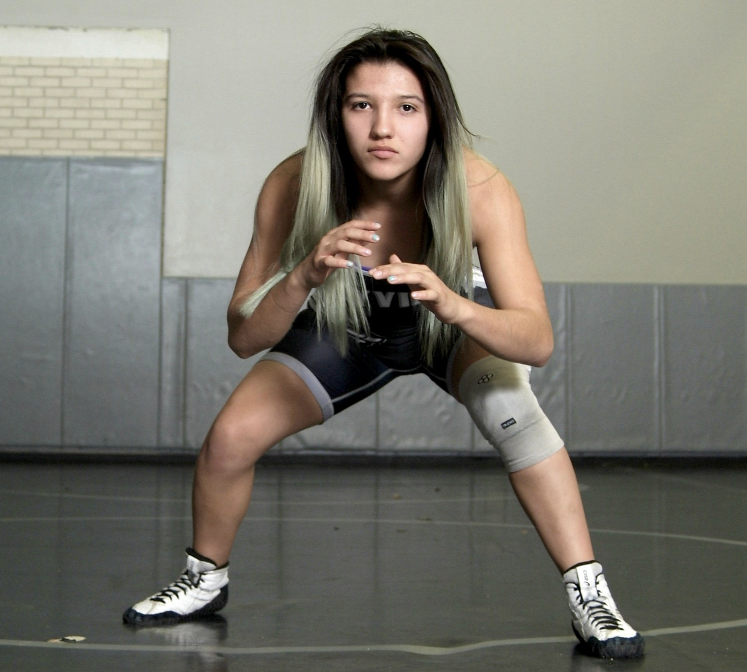
Jaslynn Gallegos settles into her wrestling stance.

Courtesy of Delfino Rodriguez


hide caption

toggle caption

Courtesy of Delfino Rodriguez

When high school senior and wrestler Brendan Johnston realized he had to face Jaslynn Gallegos, a high school senior, and Angel Rios, a high school junior, in last month’s Colorado state wrestling championship, he knew his shot at a state title was over.

Johnston refused to compete against Rios and Gallegos because they are both girls.

Gallegos went on to place fifth in that tournament, and Rios was fourth — marking the first time girls have placed at a Colorado state wrestling tournament.

Despite her success, Gallegos finds it frustrating when she is treated differently as an athlete because of her gender. Her would-be opponent, Johnston, told reporters that he was uncomfortable wrestling females, in part because of his Christian beliefs.

“I’m not really comfortable with a couple of things with wrestling a girl,” Johnston told The Denver Post. “The physical contact, there’s a lot of it in wrestling. And I guess the physical aggression too. I don’t want to treat a young lady like that on the mat. Or off the mat. And not to disrespect the heart or the effort that she’s put in. That’s not what I want to do either.”

[embedded content]


Colorado High School Activities Association
YouTube

But while Gallegos said she respected his decision, she doesn’t understand it.

“I just want to be a wrestler, not necessarily defined as a girl wrestler, so it kind of hurt me a little bit,” she told NPR’s Scott Simon. “I just want to be this wrestler, and my gender is holding me back.”

A senior at Skyview High School in Thornton, Colo., Gallegos plans to continue the sport in college, where she will be competing against other women.

But wrestling someone of either gender doesn’t faze Gallegos. She has been wrestling girls, and boys, since she was 5 years old.

“When I wrestle, it’s literally all muscle memory, because I practice my shots, and my stand-ups, and my sit-outs, and my pinning combinations so often, I don’t even have to think when I wrestle,” she said.

Jaslynn Gallegos (left) stands after winning a match at Colorado’s state wrestling championship.

Courtesy of Delfino Rodriguez


hide caption

toggle caption

Courtesy of Delfino Rodriguez

She joins an increasing number of girls who are participating in the sport. Since 1994, the number of female high school wrestlers has grown from 804 to 16,562, according to the National Wrestling Coaches Association. But only 12 states have approved girls wrestling programs with sanctioned state championships, according to the association.

Colorado may soon join those ranks. In February 2018, the Colorado High School Activities Association approved girls wrestling for pilot seasons, which is the first step toward officially sanctioning the sport within the state.

Since girls wrestling is not a sanctioned sport in Colorado, girls have the right to participate alongside boys at the state tournament. This year was the first time for the state’s pilot program, which allowed for a female state wrestling bracket. But Gallegos decided she wanted to compete with the boys.

When Gallegos steps up to the mat, her eyes are trained on her opponent. The minute the referee blows the whistle, she keeps her elbows in and moves quickly to ensnare her opponent, then wrangle her competitor down onto the mat.

The wrestling matches are a tangle of limbs — Gallegos’ and her opponent’s — arms and legs slipping out of holds or locking the other’s in place. In the twisting and pushing, eventually one wrestler comes out on top; the victor grinds the opponent’s face down against the mat, keeping tight control of a writhing, wriggling opponent until they hear the referee’s whistle.

[embedded content]


USA Wrestling
YouTube

For such a physical sport, some males may express concerns over applying force on a female or pressing against a female opponent in the era of the #MeToo movement.

But, Gallegos said, the concerns are a nonissue because she knows exactly what she’s signing up for every time she steps up to the mat.

“It’s kind of unheard of in the wrestling community for a girl to say something happened during a match,” she said. “It’s wrestling, and I think we all understand that it’s a very physical sport. You’re literally fighting someone to put them to their back.”

In her hundreds of matches against guys, Gallegos said, she has never experienced those sorts of issues. She encourages men to approach wrestling female athletes the same way they would with male athletes.

“You know you might get pinned. You might win by one or two points. You might even pin me,” Gallegos said. “But, I’m definitely worth giving a match to.”

Her message for male wrestlers who might be reluctant to face off with her?

“Just wrestle me.”

Let’s block ads! (Why?)

Jaslynn Gallegos On Being A Woman In Wrestling

NPR’s Scott Simon talks with high school wrestler Jaslynn Gallegos of Brighton, Colo. A male wrestler refused to face off against her at a state championship.


SCOTT SIMON, HOST:

A high school wrestler named Brendan Johnston refused to compete against two opponents and forfeited those matches at the Colorado State Wrestling Championship last month. Those two opponents, Angel Rios and Jaslynn Gallegos, are women. Brendan Johnston told reporters he wasn’t comfortable wrestling with women. Jaslynn Gallegos went on to win in fifth place in that tournament. She is a senior at Skyview High School and joins us now from Brighton, Colo. Ms. Gallegos, thanks so much for being with us.

JASLYNN GALLEGOS: Yeah. No problem.

SIMON: First, congratulations.

JASLYNN: Thank you.

SIMON: How did you feel when Brendan Johnston declined to compete against you?

JASLYNN: Well, one of my things is I just want to be a wrestler, not necessarily defined as a girl wrestler. So it kind of hurt me a little bit because, you know, I just want to be this wrestler. And my gender is holding me back.

SIMON: Brendan Johnston told reporters, quote, “I don’t want to treat a young lady like that on the mat or off the mat and not to disrespect the heart or the effort that she’s put in. That’s not what I want to do.” Do you accept that?

JASLYNN: Yeah, I mean, everybody has their own beliefs. But at the same time, it’s not just black and white. Like, you can’t really change what somebody believes. Like, for me, I believe that I’m just a wrestler. And he believes that you’re not just a wrestler. You know, you’re a female wrestler.

SIMON: Now, let me ask. You know what’s going on in this country and around the world. Can you see in this day and age why a young man just may not want to put himself in the position of applying force on a woman or pressing against her even if it’s in a public athletic competition?

JASLYNN: You know, I feel like that whole situation is something that the wrestling community has gone past, especially, like, since I’ve wrestled hundreds of guys. Like, that’s not an issue here, you know? It’s kind of unheard of in the wrestling community for a girl to say something happened during a match.

It’s wrestling, and I think we all understand that it’s a very physical sport. You’re literally fighting someone to put them to their back. It’s – you’re not thinking about anything else at the time because you’re trying to win a match. For me, when I wrestle, it’s literally all muscle memory because I practice my shots and my stand-ups and my sit-outs and my pinning combination so often I don’t even have to think when I wrestle.

SIMON: Anything you’d like to say to boys who might be reluctant to wrestle you?

JASLYNN: You know, just wrestle me. You know, you might get pinned. You might win by one or two points. You might even pin me. But I’m definitely worth giving a match to, you know?

SIMON: And I gather your brothers are wrestlers, too, right?

JASLYNN: Yes. My older brother, he wrestled his whole life, as well – qualified for state. And then my two little brothers, they are currently wrestling.

SIMON: Bet you can beat them.

JASLYNN: Oh, yeah, definitely – both of…

SIMON: (Laughter).

JASLYNN: …Them at the same time.

SIMON: (Laughter) I gather you started wrestling when you were 5.

JASLYNN: Yes. I did.

SIMON: Well, so you’ve been at it a while. Anything you would like to tell young women who want to wrestle?

JASLYNN: You know, just like anything, there’s going to be points where it gets really hard, and you don’t know if you can do it. But, you know, if you push yourself and just keep going, especially if you love it, it’s worth it in the end to just keep on doing it.

SIMON: Jaslynn Gallegos, a wrestler at Skyview High School in Thornton, Colo., thanks so much for being with us.

JASLYNN: Yeah. No problem.

(SOUNDBITE OF VETIVER SONG, “BACKWARDS SLOWLY”)

Copyright © 2019 NPR. All rights reserved. Visit our website terms of use and permissions pages at www.npr.org for further information.

NPR transcripts are created on a rush deadline by Verb8tm, Inc., an NPR contractor, and produced using a proprietary transcription process developed with NPR. This text may not be in its final form and may be updated or revised in the future. Accuracy and availability may vary. The authoritative record of NPR’s programming is the audio record.

Let’s block ads! (Why?)

Saturday Sports: Women's Soccer Lawsuit, LeBron James, Celtics

NPR’s Scott Simon talks about this week’s sports headlines with ESPN’s Howard Bryant.


SCOTT SIMON, HOST:

And I come to work every week just say it’s time for sports.

(SOUNDBITE OF MUSIC)

SIMON: The Boston Celtics play LeBron’s LA Lakers tonight. But who cares? Neither team’s had a stellar year, and the U.S. women’s soccer team has filed a lawsuit against U.S. Soccer just ahead of the FIFA Women’s World Cup. ESPN’s Howard Bryant joins us. Howard, thanks so much for being with us.

HOWARD BRYANT, BYLINE: Good morning, Scott. How are you?

SIMON: I am fine thanks.

BRYANT: And, by the way, of course you care. It’s still Celtics-Lakers. It doesn’t make a difference what year it is.

SIMON: I agree.

BRYANT: It’s Celtics-Lakers.

SIMON: And you know I care about LeBron. I’d care about LeBron if he was playing for a high school team, particularly if he was playing…

BRYANT: He actually is playing for a high school team this year.

SIMON: Oh, oh wow, wow, wow, wow.

BRYANT: That’s Boston shade for you.

SIMON: Well, tell us – 538 gives the Lakers a less than 1 percent chance of making the playoffs. If LeBron had stayed with Cleveland, he might have been – they might have made it to the playoffs. And I’m beginning to wonder, Howard, is anybody going to want to see “Space Jam 2?”

BRYANT: Well, it’s been an interesting year for the Lakers and especially when LeBron James comes and joins the – one of the iconic, one of the two iconic franchises in the NBA that this was supposed to be a magical year, and it’s been a massive disappointment. The Lakers are 30 and 35. They’re out of the playoff race right now. Let’s not forget what LeBron James has done. He’s not only made the playoffs every year for the last eight years, he’s made the finals every year for the last eight years. There’s only one other guy superstar level who has done that, and it’s Bill Russell back in the 1960s when they won eight straight championships. And so looking at what the Lakers have done – it’s really fascinating, too, because LeBron has actually been part of the problem. His defense has been terrible. He’s actually been really unprofessional in a couple of different examples…

SIMON: Kicking the ball.

BRYANT: …Rolling the ball down court and having it knocked out of – he’s just not focused. And it’s been really strange to see. It’s not impossible that they could go on a little streak and make the playoffs maybe as an eighth seed. But, you know, they’d play the Warriors in the first round and pretty much get hammered, so this has been a lost season for the Lakers.

SIMON: And what about the Celtics? They just haven’t gelled.

BRYANT: Well – and the Celtics were supposed to be the team that was going to – they were going to play the – they were going to play the Warriors in the finals. And they’re 10 games behind Milwaukee. They’ve been inconsistent all season long. And I really do think that one of the big problems that they’ve had, and the Lakers have had the exact same problem, is they had this public love fest trying to acquire Anthony Davis.

And I think in the Celtics’ case, they’ve gone out of their way to sort of alienate their own team. I mean, what – how do you really get a team to get up and play for you when you’ve pretty much signaled to the world that you’re willing to trade everybody on the roster for a guy you don’t even have? And so it’s been a really difficult gelling process for them. Kyrie Irving can leave at the end of the season. People are saying whether he’s going to join the Knicks or go sign with another team. So they have all kinds of distractions. And it really has not come together.

I think another thing that happened with them is that when you are told that you are a great team before you play your first game of the season, it’s kind of hard to adjust to the fact that maybe you’re not that good and you really have to grind every single day. And we’ll see what they do. However, they did beat the Warriors in Oakland last week by 33 points, so it does show you what they’re capable of.

SIMON: Twenty-eight members of the U.S. women’s soccer team are suing the federation for gender discrimination, demanding equal pay. They feel that almost nothing was done of their previous complaint back in 2017. They’re picking an especially propitious time to make the case, too, aren’t they?

BRYANT: Well, as they should. This is what we call leverage. You’ve got the World Cup coming. They’re a three-time World Cup champion. This is ongoing, and this is one of the issues that we’ve seen over the last several years in terms of equal pay. They want equal pay compared to the men. They want – they’re the better team of the two.

SIMON: Yeah, and they’re the crowd pleasers, too.

BRYANT: They’re the crowd pleasers and yet they get fewer – they get demonstrably fewer bonuses. They get demonstrably worse playing conditions. They feel like second-class citizens. And let’s not forget we were in the same situation two years ago when the women’s hockey team had to boycott or threaten to boycott not playing in the world championships to strike a deal with USA Hockey. So when this is happening right now – you know, Scott, I watched “Captain Marvel” last night. And it was just so wonderful to see that – and it’s a great movie. Marvel makes better movies than DC. But the real issue is all of this is a pander if you’re going to talk about women being upfront and being out front if you’re not going to pay them. It’s got to be equal pay.

SIMON: Howard Bryant, thanks so much.

BRYANT: Thank you.

Copyright © 2019 NPR. All rights reserved. Visit our website terms of use and permissions pages at www.npr.org for further information.

NPR transcripts are created on a rush deadline by Verb8tm, Inc., an NPR contractor, and produced using a proprietary transcription process developed with NPR. This text may not be in its final form and may be updated or revised in the future. Accuracy and availability may vary. The authoritative record of NPR’s programming is the audio record.

Let’s block ads! (Why?)

U.S. Women's Soccer Team Sues U.S. Soccer For Gender Discrimination

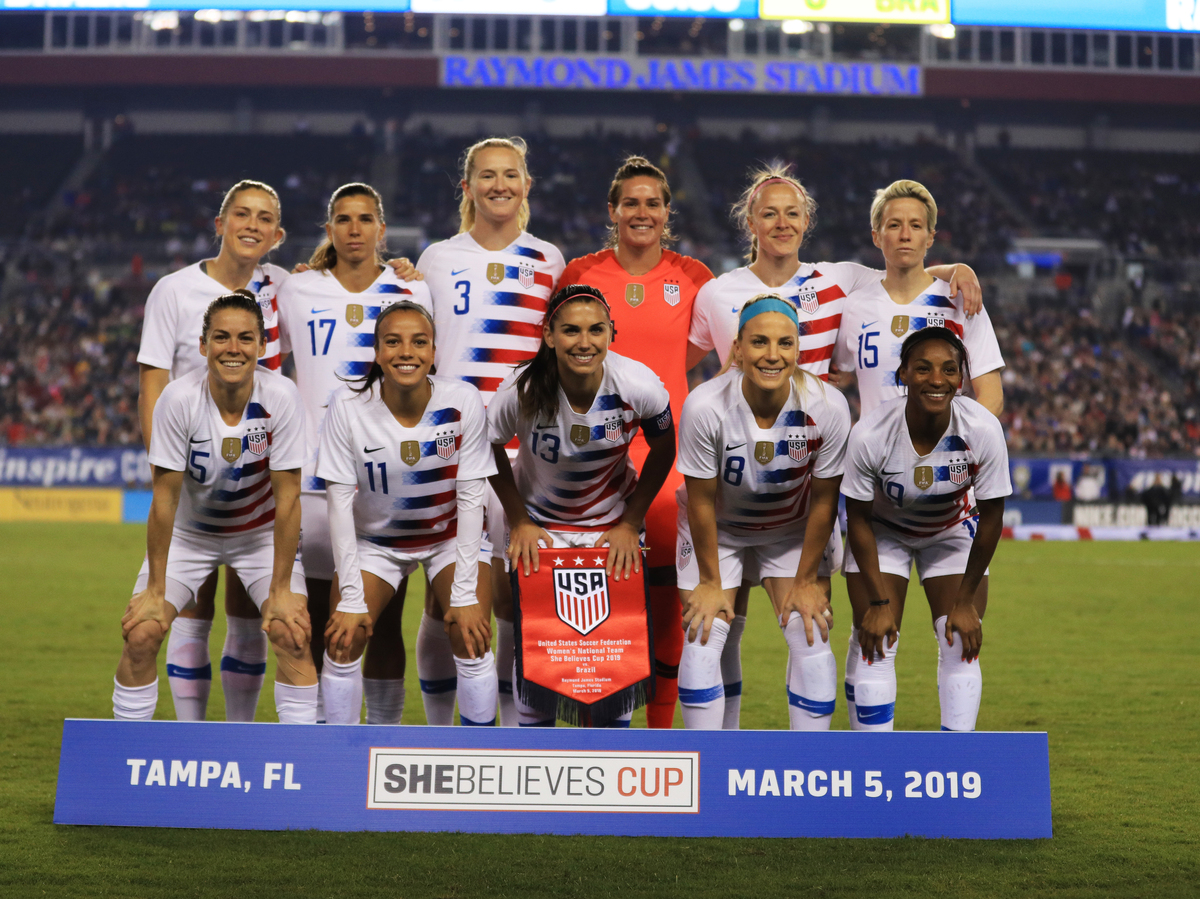
The members of the U.S. women’s national soccer team filed a lawsuit Friday against U.S. Soccer, accusing it of gender discrimination. The starting 11 are seen here before playing Brazil earlier this week in Tampa, Fla.

Mike Ehrmann/Getty Images


hide caption

toggle caption

Mike Ehrmann/Getty Images

Updated at 2:22 p.m. ET

The U.S. women’s soccer team has filed a lawsuit against U.S. Soccer, accusing it of gender discrimination.

The complaint, filed Friday in California district court, argues that U.S. Soccer “has a policy and practice of discriminating” against members of the women’s national team on the basis of gender, by paying them less than similarly situated members of the men’s team.

Twenty-eight members of the women’s team are named as plaintiffs, including many of the sport’s biggest stars: Alex Morgan, Carli Lloyd and Megan Rapinoe. The lawsuit seeks to be a class action, representing other women who’ve played for the U.S. national team and who may have been denied equal pay for substantially equal work.

The issue of unequal pay has been a highly contentious matter in recent years, and the U.S. women’s team has kept the pressure on U.S. Soccer. The women’s team reached a new collective bargaining agreement with the federation in 2017.

Four of the plaintiffs — Morgan, Lloyd, Rapinoe and Becky Sauerbrunn — filed a charge of discrimination with the Equal Employment Opportunity Commission in 2016, on behalf of themselves and similarly situated players. But no progress was made, and last month, the EEOC issued letters giving the four the right to sue.

“Each of us is extremely proud to wear the United States jersey, and we also take seriously the responsibility that comes with that,” Morgan said in a statement reported by The Associated Press. “We believe that fighting for gender equality in sports is a part of that responsibility. As players, we deserved to be paid equally for our work, regardless of our gender.”

U.S. Soccer declined to comment on the pending litigation.

The filing comes on International Women’s Day – and less than three months before the Women’s World Cup kicks off in France. The U.S. women’s team, currently ranked No. 1 in the world, hopes to defend the World Cup it won four years ago.

The U.S. Women’s National Team, or USWNT, has consistently been more successful than the men’s team. The U.S. women have won the World Cup three times and are four-time Olympic champions. The men’s team has never won either tournament and failed to qualify for the 2018 World Cup.

Despite their success and popularity, the women are paid less by U.S. Soccer than the men. The lawsuit details how the pay gap plays out in myriad ways: Women’s players paid less for each “friendly” match, they’re paid less for making the team’s World Cup roster, and they’re paid much less for their performance at the World Cup.

“A comparison of the WNT and MNT pay shows that if each team played 20 friendlies in a year and each team won all twenty friendlies,” the complaint says, “female WNT players would earn a maximum of $99,000 or $4,950 per game, while similarly situated male MNT players would earn an average of $263,320 or $13,166 per game against the various levels of competition they would face.” In other words, a top-tier women’s player would earn just 38 percent of the compensation of a similarly situated player on the men’s team.

But direct comparisons of compensation between the men and women can be tricky, as The New York Times notes: “Each team has its own collective bargaining agreement with U.S. Soccer, and among the major differences are pay structure: the men receive higher bonuses when they play for the United States, but are paid only when they make the team, while the women receive guaranteed salaries supplemented by smaller match bonuses.”

The lawsuit points out that for their success in winning the 2015 Women’s World Cup, the U.S. women were paid less than a third of what the U.S. men were paid for losing in the Round of 16. The pools of bonus money are meted out to countries by FIFA, soccer’s international governing body, but it’s up to U.S. Soccer to decide how the money is divvied up.

FIFA plans to double the prize money it awards nations at this summer’s Women’s World Cup, but the purse will still be a fraction of what the men collect.

The union representing the members of the U.S. Men’s National Team, whose own collective bargaining agreement expired last year, issued a statement supportive of the USWNT’s efforts to be paid equally. “Specifically, we are committed to the concept of a revenue-sharing model to address the US Soccer Federation’s ‘market realities’ and find a way towards fair compensation. An equal division of revenue attributable to the MNT and WNT programs is our primary pursuit as we engage with the US Soccer Federation in collective bargaining.”

Let’s block ads! (Why?)

Fans Of Phillies, Padres: What Do You Think Of Harper, Machado?

Bryce Harper of the Philadelphia Phillies.

Mike Ehrmann/Getty Images

Major League Baseball’s biggest free agents have found a home. Manny Machado signed a 10-year, $300 million contract with the San Diego Padres in February. Bryce Harper signed a 13-year, $330 million contract with the Philadelphia Phillies last week. Harper’s contract — which does not include any opt-outs and has a no-trade clause — is the largest in MLB history.

Are you a fan of the Phillies or Padres? If so, NPR’s Morning Edition want to hear your thoughts on your team signing either Harper or Machado. Tell us what you think in the form below — or here. An NPR producer may reach out to you for an upcoming story.

<!–
If possible, insert the following lines into your .
–>

<!– Insert everything below in the . –>This form requires JavaScript to complete.
Powered by Screendoor.

Let’s block ads! (Why?)