U.S. Olympic Committee Moves To Decertify USA Gymnastics

The U.S. Olympic Committee has moved to revoke USA Gymnastics’ status as a “national governing body.” The move comes as the organization has botched its reorganization following a sex-abuse scandal.


AILSA CHANG, HOST:

There’s been a major development in the world of Olympic sports. The U.S. Olympic Committee has moved to decertify USA Gymnastics, the sport’s governing body. This so-called nuclear option comes after a widening sexual abuse scandal involving athletes and a former team doctor. In announcing the decision, the head of the Olympic Committee said today that the sport deserves better.

Alexandra Starr has been regularly reporting on USA Gymnastics for NPR, and she joins us now. Welcome.

ALEXANDRA STARR, BYLINE: Thank you. Good to be here.

CHANG: So why did the USOC ultimately decide decertifying USA Gymnastics was its only option at this point?

STARR: The organization has been in a freefall since last year when the former team doctor, Larry Nassar, was sentenced to the equivalent of life in prison for molesting hundreds of athletes over the course of decades. And in the last 20 months, the organization has cycled through three leaders, one of whom – Steve Penny – was arrested last month for allegedly tampering into the investigation into Nassar. So it’s just been kind of a big dumpster fire for a while.

CHANG: Right. And explain exactly what is USA Gymnastics. I mean, it’s the governing body of the sport, but what does that mean?

STARR: They select the athletes who serve on the national team. So that’s a very important role. They develop marketing plans and strike sponsorship deals – another big deal. They also work to decide, like, which clubs are members.

So all of those are legitimate, important roles. And, you know, for the last year and a half, it’s basically been leaderless. I mean, they’ve just gone through scandal after scandal, and they can’t seem to find their footing.

CHANG: So what does this decertification mean for gymnasts across the country? How will they individually feel this as they’re going to practice, trying to train?

STARR: I think there’s a big difference between USA Gymnastics and the female team, which is extraordinary. There was just – the world championships just wrapped…

CHANG: Right.

STARR: …This week. Simone Biles won a record four gold medals.

CHANG: Wow.

STARR: She’s extraordinary.

CHANG: Yeah.

STARR: So in a sense, you know, the paradox here is that the female team has really never been stronger, and at the same time, the national governing body just can’t get it together. I would argue that the example of these women has kind of allowed the organization to coast by. And we’ll see now if the leadership becomes more or less commensurate with the team that they’re supposed to be fronting and representing.

CHANG: Now how temporary is this – the U.S. Olympic Committee taking over? Is it just until a brand-new governing body can be formed and put into place, or is this kind of the way it will be for indefinitely?

STARR: There was – this happens very rarely, but the U.S. Olympic Committee did take over USA Taekwondo. And that so-called receivership – they were on, like, probation for about two years. I don’t know if the same thing will repeat in this circumstance, but it could be a while.

And the fact that they’re resorting to this just shows how bad things were because they do not do this often.

CHANG: Right. I was going to ask you, like, how unprecedented is this to see the governing body of a sport be decertified?

STARR: It’s happened four times. But it’s happened to organizations – this is just the fourth time that it’s happened. It’s happened to organizations like USA Handball and USA Taekwondo. Honestly, those sports do not have big followings. For this to happen to, like, such a star sport like gymnastics…

CHANG: Yeah, yeah.

STARR: …Is a very big deal.

CHANG: That’s reporter Alexandra Starr. Thank you very much.

STARR: Thank you.

Copyright © 2018 NPR. All rights reserved. Visit our website terms of use and permissions pages at www.npr.org for further information.

NPR transcripts are created on a rush deadline by Verb8tm, Inc., an NPR contractor, and produced using a proprietary transcription process developed with NPR. This text may not be in its final form and may be updated or revised in the future. Accuracy and availability may vary. The authoritative record of NPR’s programming is the audio record.

Let’s block ads! (Why?)

Secret Service Protects Estonia's President As She Runs U.S. Marathon

The Secret Service protects U.S. presidents and also visiting heads of state. Estonia’s President Kersti Kaljulaid was in the New York City Marathon — two agents had to run with her.


DAVID GREENE, HOST:

Good morning. I’m David Greene. Secret Service protects U.S. presidents but also visiting heads of state. So when the president of Estonia, Kersti Kaljulaid, was here, they were on duty. You know, stick close during her meetings, her meals. Oh, and her 26-mile run. President Kaljulaid was in the New York City Marathon so two agents had to run alongside her. They seemed undaunted. One agent, already training for another marathon, said, I just added 10 miles to my training day. It’s MORNING EDITION.

Copyright © 2018 NPR. All rights reserved. Visit our website terms of use and permissions pages at www.npr.org for further information.

NPR transcripts are created on a rush deadline by Verb8tm, Inc., an NPR contractor, and produced using a proprietary transcription process developed with NPR. This text may not be in its final form and may be updated or revised in the future. Accuracy and availability may vary. The authoritative record of NPR’s programming is the audio record.

Let’s block ads! (Why?)

No, Athletes Will Not 'Shut Up And Dribble' — And They Never Have

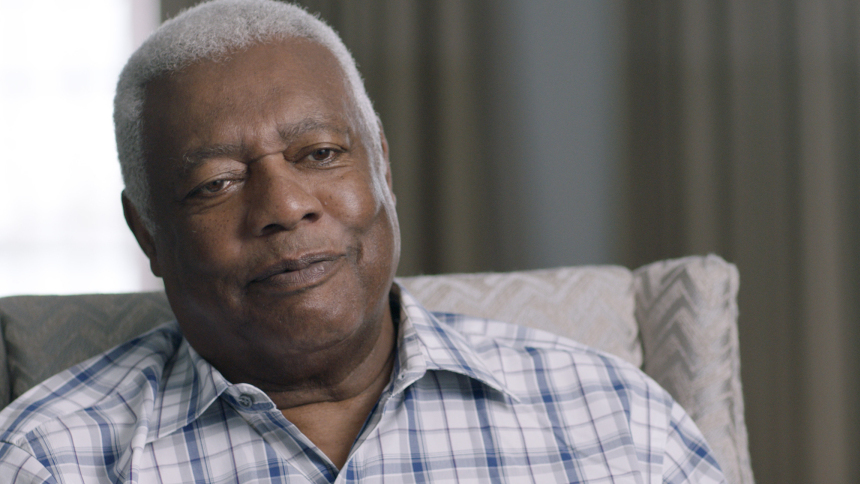
Oscar Robertson is one of the athletes who’s interviewed in the new documentary series Shut Up and Dribble.

Showtime


hide caption

toggle caption

Showtime

The new documentary series Shut Up and Dribble, which premiered the first of its three parts this weekend on Showtime, is a response to commentator Laura Ingraham’s dismissive February 2018 sneer in the direction of LeBron James, one of the series’ executive producers. Don’t take my word for it that it’s a direct response: watch the opening sequence in which Ingraham, disgusted by James and other black athletes speaking out against President Donald Trump, says that nobody elected them, nobody wants to hear from them, and they should, yes, just “shut up and dribble.”

The idea that athletes — or actors, or writers — shouldn’t be politically active in the public sphere is surprisingly widely held. The point of the series is to demonstrate that in the case of black athletes, holding the game at a distance from the society in which it’s played is not only contrary to history but impossible. And, perhaps, that it would be irresponsible.

Narrated by writer Jemele Hill and directed by Gotham Chopra, Shut Up And Dribble uses its first installment to chronicle several of professional basketball’s early standouts who collided with the wider world in different ways: Bill Russell, Kareem Abdul-Jabbar, Oscar Robertson, and Isaiah Thomas. It follows the NBA through a period in the 1970s when some worried that the increasing number of black players was alienating white audiences — a crisis the end of which it credits to the hugely popular rivalry between Magic Johnson and Larry Bird. To that picture, Shut Up and Dribble adds the story of the Detroit Pistons and of Thomas, whose comments on how racism influenced the perception of Bird became very controversial, to the point where the broader observation he was making — about who is considered simply a “natural talent” and who is considered a “smart player” — was lost.

People who have watched a lot of NBA documentaries, or who have watched projects like O.J.: Made in America that try to look at the intersection of sports and the world at large, will know a good number of these stories, maybe including the stories of Russell and Robertson, and how Bird was called “the great white hope” whether he wanted to be or not, and how his rivalry with Johnson had — as one commentator wildly understates it — a “tinge” of racial dynamics in it. But there are good segments in the first installment that might be less familiar about the way the ABA and the NBA presented basketball very differently, the way labor issues among players were (and are) inextricably linked to race, and the way Abdul-Jabbar — now a columnist, a comic book writer, and a writer on the upcoming revival of Veronica Mars — decided to decline to try out for the 1968 Olympics.

The next two installments follow the NBA through later phases, up to the present. They consider the era of Michael Jordan and the explosion of endorsement deals — which, the film’s interviewees suggest, tamped down public discussions of politics as protection of each athlete’s personal brand became critical. They examine the career of Allen Iverson, whose path to the NBA — and his clothes and hair and tattoos and connections to hip-hop — made him a beloved figure to a lot of fans who perhaps didn’t relate to Michael Jordan or Magic Johnson.

Critically, the series at one point turns its attention to the 2004 Pacers-Pistons fight — the one that spilled into the stands — that led to long suspensions, including for Metta World Peace (who then went by Ron Artest). It’s a necessary chapter in part because it’s impossible to consider the public activism, and the significance of public activism, of black athletes without recalling how easily after this incident commentators slipped into calling players “thugs,” and how that fight seemed to surface ugly attitudes about players that had been simmering in sports media and in the NBA itself. Again, players have never had the option of shutting up and dribbling; they, like everyone, live and work in a particular social context. And it’s a context in which racism affects the way they’re talked about, the way they’re treated, and the way their behavior is received.

And yes, we eventually reach the Obama years, and then the 2016 election. We reach Trayvon Martin and Eric Garner, and we learn that LeBron James’ decision to go to the Miami Heat — not the ill-advised TV special, but the choice itself — may have affected the power balance between players and owners in a way that’s made activism for players safer. That, of course, goes back to Oscar Robertson’s fight for free agency chronicled in the first episode, too.

This is what good documentaries do: they provide an overview, but they also make interesting connections between specific pieces of the story. While it’s about activism and racism, much of this series is about power. Power accumulated by players, whether it’s the economic power of endorsements or the bargaining power of free agency, directly enables them to use their platforms without worrying that they’ll be, for instance, let go from their teams and unable to get new jobs because a political stand they consider crucial proves to be unpopular, or makes them targets. An unspoken thesis of the series is that the concept of athletes not belonging in politics is about discomfort with, and resentment of, that considerable power.

It’s a strange idea, this expectation that players must entertain and not speak. The NBA is a business that makes ridiculous money for mostly white owners from the work of many black athletes. It’s fed by the NCAA, which makes ridiculous money for schools from the work of many black athletes. It’s covered by a disproportionately white sports media, and it’s regulated by a mostly white political system. Shut Up and Dribble is a good exploration of all the ways that black athletes couldn’t remain apart from racism or politics even if they wanted to — which, as it happens, many of them don’t.

Let’s block ads! (Why?)

Kenya's Mary Keitany And Lelisa Desisa Of Ethiopia Win New York City Marathon

First place finishers Mary Keitany of Kenya, left, and Lelisa Desisa of Ethiopia pose for a picture at the finish line of the New York City Marathon on Sunday.

Seth Wenig/AP


hide caption

toggle caption

Seth Wenig/AP

At the New York City Marathon on Sunday, the race’s top long-distance runners greeted an ideally brisk and sunny fall morning with near record times.

It was a day of many personal firsts, as a field of more than 50,000 sought to push their way through the city’s five boroughs in the annual race.

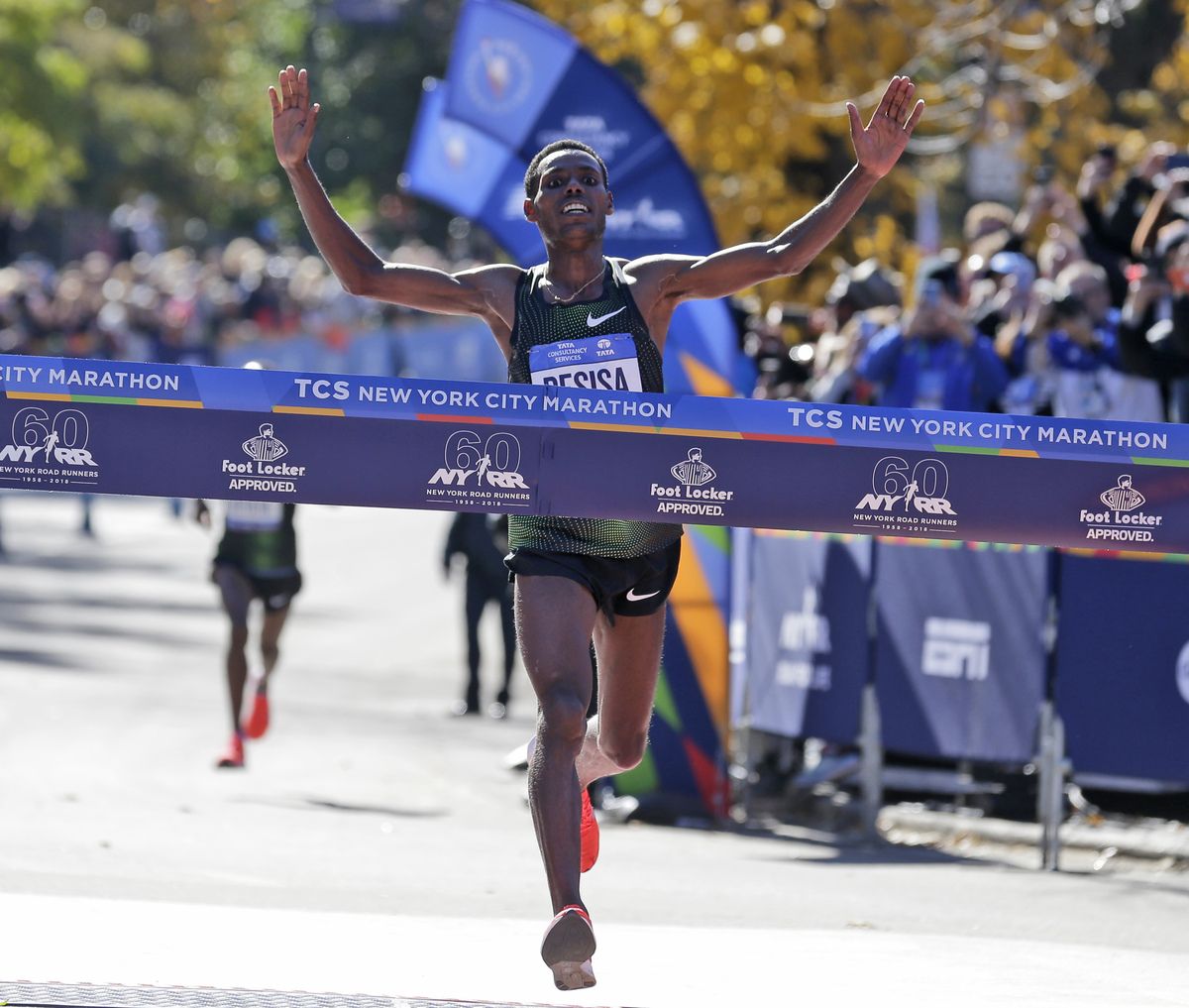
Lelisa Desisa of Ethiopia won the men’s race — his first in New York — in 2 hours, 5 minutes, 59 seconds.

Lelisa Desisa, of Ethiopia, crosses the finish line first in the men’s division of the NYC Marathon.

Seth Wenig/AP


hide caption

toggle caption

Seth Wenig/AP

“This is my dream,” Desisa, 28, said after the race, The Associated Press reported. “To be a champion.”

Shura Kitata, also of Ethiopia, took second place in the men’s race with a time of 2:06:01. Last year’s title defender, Kenya’s Geoffrey Kamworor, was favored to win going into the race, but ultimately placed third with a time of 2:06:26.

In the women’s race, fellow Kenyan Mary Keitany, 36, became the third person to win the NYC marathon four times, according to The New York Times. She ran the course in 2:22:48, the second fastest time for a female runner in NYC marathon history. Kenya’s Margaret Okayo’s record of 2:22:31 from 2003 remains unbroken.

Mary Keitany of Kenya is first to finish the women’s NYC Marathon.

Seth Wenig/AP


hide caption

toggle caption

Seth Wenig/AP

Keitany said that setting a course record was never on her mind, according to the AP. She just wanted to win.

“For me, winning was the most important,” she said.

Keitany outran Vivian Cheruiyot, 35, of Kenya, who came in at 2:26:02. American Shalane Flanagan, 37, who finished third with a time of 2:26:22, ran faster than last year when she won the race.

In the wheelchair division, Daniel Romanchuk became the first American to win the men’s race, finishing in 1:36:21. Switzerland’s Marcel Hug trailed about one second behind Romanchuk, followed by David Weir of Britain, to round out the top three.

Daniel Romanchuk of the United States poses for a picture after crossing the finish line first in the men’s wheelchair division.

Seth Wenig/AP


hide caption

toggle caption

Seth Wenig/AP

Manuela Schar of Switzerland won the women’s wheelchair division for the second time, at 1:50:27. Tatyana McFadden of the U.S. finished as runner-up at 1:50:48 and Lihong Zou of China came in third.

Let’s block ads! (Why?)

Saturday Sports: University Of Maryland Football Team Controversy

NPR’s Scott Simon speaks to ESPN’s Howard Bryant about the recent controversy surrounding the University of Maryland’s football team.


(SOUNDBITE OF MUSIC)

SCOTT SIMON, HOST:

And controversy continues to surround the University of Maryland’s football program following the death of a player after a practice last spring. We’re going to turn now to Howard Bryant of espn.com and ESPN The Magazine. Howard, thanks so much for being with us.

HOWARD BRYANT, BYLINE: Good morning, Scott.

SIMON: And this is a controversy, we don’t want to forget, that began with a tragedy – a 19-year-old player, Jordan McNair, died of heat stroke five months ago following a practice. The Maryland coach, D.J. Durkin, was put on administrative leave, returned this week, then fired. There seems to be what amounts to an uprising or standing up to the coach on the team, doesn’t there?

BRYANT: Well, not just standing up on the members – on the part of the members of the team but also from the university students. And I think that’s one of the things that’s been very interesting watching this is the impunity in which the regents – the board of regents at the University of Maryland seem to believe that D.J. Durkin would be allowed to come back and have there be no repercussions. I think that when you watch this story and especially if you take this story and you combine it with what’s been taking place in the university systems across the country – whether it’s Ohio State, whether it’s Michigan State with the Larry Nassar case, whether it is Baylor University – that the role of athletics and sports, the power that these athletic departments have is so enormous that they really do believe they’re invincible. And the thing that bothered me most about this, Scott, was the notion that the players and the family, the McNair family, and that the entire country would just sit and expect this to be normal, that this football coach would come back and that there would be no repercussions at all for a 19-year-old dying on the field.

SIMON: I mean, does it all trace back to the money?

BRYANT: It always traces back to the money. And I think that this goes back to this question that we’ve been having whenever we talk about this for the last dozen years that I’ve been on this show. We talk about the power of sports, the power – the money that these universities bring in from basketball and from football. The fact that the players are unpaid and the fact that the players have – I’m sorry – that the coaches have so much power. And D.J. Durkin – when you look at his settlement…

SIMON: And they’re paid plenty, the coaches.

BRYANT: And they’re paid plenty. And I was just about to say, he’s got a five-million-dollar settlement that they’re working out right now. And so who runs the show over here? And you have this battle – it’s a very intense one – of, does the university control sports, or does sports – or do sports control the university?

SIMON: And, I mean, I think it also raises a question about, you’ve got to ask, what is a coach? Coaches are supposed to take care of their players, aren’t they, especially at the college level?

BRYANT: Well, exactly, especially at the college level. And when you look at these recruiting stories and the trips that they make to these families, the very first thing that they say is we are here to take care of your child, not only as a star athlete but as a person. We’re going to grow them as people, as men, these great leaders of men. You hear all of this. And it just rings so hollow when you recognize that what this is really all about is money. And also on top of that, I think that the more important thing or even the equally important thing that I saw from Maryland was the fact that the students see through this and that they were out in force. And when we talk about change and challenge to systems, you have to be out in the street. And I think that the University of Maryland, whether it was the players being vocal online, with the students being vocal online and also the students being vocal out in the university campus, you can’t ignore those numbers. Without those numbers, without people talking, nothing happens.

SIMON: Howard Bryant, thanks so much.

BRYANT: Thank you.

Copyright © 2018 NPR. All rights reserved. Visit our website terms of use and permissions pages at www.npr.org for further information.

NPR transcripts are created on a rush deadline by Verb8tm, Inc., an NPR contractor, and produced using a proprietary transcription process developed with NPR. This text may not be in its final form and may be updated or revised in the future. Accuracy and availability may vary. The authoritative record of NPR’s programming is the audio record.

Let’s block ads! (Why?)

NFL Cheerleader Kneels During National Anthem

Military planes fly over Levi’s Stadium on Thursday during the playing of the national anthem. A cheerleader took a knee during the pre-game anthem, and may be the first NFL cheerleader to do so.

Jeff Chiu/AP


hide caption

toggle caption

Jeff Chiu/AP

A cheerleader for the San Francisco 49ers knelt during the U.S. national anthem on Thursday evening, just before a game against the Oakland Raiders. The woman has not been identified, and her decision to kneel echoes player protests against racism and police brutality.

Football player Colin Kaepernick started the protests when he kneeled during a pre-game anthem in 2016. He is a former player for the 49ers.

Spectators photographed the cheerleader kneeling while the rest of her squad held up pom-poms in unison during the Star Spangled Banner.

One of the Niners cheerleaders is taking a knee. pic.twitter.com/DW5SJqh9zj

— 2004 never happened (@GatorLenny) November 2, 2018

NBC reporter Damian Trujillo also tweeted a shot of the cheerleader kneeling on one knee, with her hands on her hips.

Close up:@49ers cheerleader takes a knee during #NationalAnthem pic.twitter.com/f4PC0p9IPf

— Damian Trujillo (@newsdamian) November 2, 2018

This may be the first time an NFL cheerleader has kneeled during the anthem. Cheerleaders for college-level football teams have kneeled in protest before. Last year five members of Kennesaw State University’s cheerleading squad in Georgia knelt during the national anthem. A local NBC affiliate reported that four of the five cheerleaders were not asked back on the team.

Kaepernick left the 49ers in 2016, and still has not signed on with another team. He is suing the NFL for allegedly freezing him out of playing professional football because of his activism.

Let’s block ads! (Why?)

Not His Job: 'Wait Wait' Host Peter Sagal Writes A Book About Running

The avid runner and author of The Incomplete Book of Running moonlights as Peter Sagal, host of NPR’s Wait Wait … Don’t Tell Me!

Kyle Cassidy


hide caption

toggle caption

Kyle Cassidy

You may know Peter Sagal as the host of the NPR news quiz, Wait Wait… Don’t Tell Me! which just celebrated its 20th anniversary. But he is not here to talk about the show.

He came to talk about his other pursuit — one that pays even less than public radio.

Peter Sagal is a serious runner, with 14 marathons under his belt and a personal best under 3:10. (“I’m so glad you brought that up, because otherwise I would have had to,” he says.) He’s a regular columnist for Runner’s World magazine, and now he has a new book, The Incomplete Book of Running.

He never thought he would do any of these things — until he turned 40.

“When I turned 40, some years ago, I was transfixed by the panic that people who are turning 40 often have, which is, ‘Oh my God, I’m turning 40. That means I’m going to die,’ ” he says. “And I said to myself, ‘Well I know, I will run a marathon, and thus I will not die.’ And it doesn’t make any sense, but it has worked so far. What was unusual and unexpected, in my case, is that when I finished the marathon, instead of saying, ‘OK, that’s done, now I shall buy a sports car or go trekking in Nepal,’ I said, ‘I wonder if I could do that faster.’ “


Interview Highlights

On the observation that runners rarely talk about the greatest elite runners

Yeah, it’s a little weird. I technically have “raced” Meb Keflezighi — the finest American runner of our generation — twice. And yet at the same time, those of us who do run really don’t pay a lot [of] attention to the people who are best at it. And that is, I think, because this is something that we do by ourselves and for ourselves. And what people are looking for out of running is much more complex than merely a winning time.

On the line: “To simply run makes excellent sense. To run a marathon is to go beyond sense”

I remember once — I think it was after my second or third marathon — and I came home, as I often did in those days, as if coming back from the war. You know, limping and miserable. And my then-wife said to me, “Why do you do this when it hurts so much?” And I said, “I think that’s kind of the point.” And certainly, there was a time when, like a lot of people, I thought that suffering was the point. Because our lives are pretty comfortable compared to, well, any other time in human history. We don’t even have to walk anyplace if we don’t want to. So I think that for a lot of people, to actually do something difficult, to physically suffer, is in a weird way, to feel alive, to rise to some challenge that you might feel is missing?

But I have actually, I think, grown away from that perspective, that suffering is the point. Running long distances is not an opportunity to see how much you can suffer, but see how much you can prepare, to see how much you can apply discipline and practice and mindset. I’ve come to think of it as a much more meditative endeavor, with the rewards of meditation — of mindfulness, of being in the moment you’re in, rather than gritting your teeth and seeing how long you can stand it.

On running without listening to music or podcasts

I don’t [listen] anymore — certainly not in races. And that’s also part of the whole mindfulness thing. … I’ve met people who say, “Well, I can run, but I can only do it on a treadmill while watching movies ’cause it’s so boring.” And nobody else talks about any other kind of activity as if “this is something I love to do, but it’s so terrible, I can’t think about that fact that I’m doing it. I have to distract myself.” And so I honestly believe that to the extent that we can, we should be mindful of what we’re doing, including something that seems mindless, like running.

On what’s next for his pursuit of running

I had started seriously running at age 40 — which is when, according to all the studies, your athletic performance begins to decline, no matter what else you do. And it became very important to me to see if, in fact, I could at least delay that. And I did it. And it remains inspirational to me. But now that I’m some years older, I know that kind of time is behind me. So my emphases these days are different. I’m not running as fast as I used to, or as long as I used to, but I’m still doing it almost every day. And I think that in the future, although I will run until somebody or something stops me, I’ll be doing it for different reasons. And those reasons will have more to do with getting out of my head, where I spend way too much time; and getting outside, where I don’t spend enough time; and trying to unplug, maybe, and just be — which is something that’s becoming increasingly difficult for all of us.

Tim Peterson and Bridget Kelley produced and edited this interview for broadcast. Patrick Jarenwattananon adapted it for the Web.

Let’s block ads! (Why?)

U. Of Maryland Board Of Regents Chair Resigns, Fallout Continues From Athlete's Death

James Brady, chairman of the University System of Maryland Board of Regents, speaking at a news conference on Oct. 30, resigned on Thursday after days of outrage over the board’s recommendation that football head coach DJ Durkin retain his job.

Patrick Semansky/AP


hide caption

toggle caption

Patrick Semansky/AP

The chairman of University System of Maryland’s Board of Regents resigned on Thursday amid outrage from faculty, trustees and students after the board’s handling of an investigation into a football player’s death earlier this year.

“In my estimation, my continued presence on the board will inhibit its ability to move Maryland’s higher education agenda forward. And I have no interest in serving as a distraction from that important work,” James Brady wrote in a statement Thursday afternoon.

“Accordingly, I will step down from the Board of Regents immediately,” he said.

Brady informed the board of his plans to step down in a closed-door meeting following days of public outcry for the chair to resign. His announcement is the latest in a whirlwind of personnel decisions this week at the University of Maryland, involving the football head coach and the university president.

On Tuesday the board said it would allow DJ Durkin to resume his position running the football program. He had been on paid administrative leave. Durkin was forced to step aside as President Wallace Loh launched investigations into allegations that the football program fostered a “toxic culture” and into the events surrounding the death of offensive lineman Jordan McNair. The sophomore collapsed of heatstroke during a team workout in May. He died two weeks later.

Also on Tuesday, Loh revealed he would resign as of June, and he apparently still intends to do that.

Both decisions led to widespread condemnation of the board of regents and a day later Loh fired Durkin. In a statement, Loh said he had met with student organizations, deans and campus leaders who “expressed serious concerns about Coach DJ Durkin returning to the campus.”

“This is a difficult decision, but it is the right one for our entire University,” Loh added.

The move, however, did not stem the backlash against the regents from members of the University of Maryland College Park Foundation Board of Trustees, who, on Thursday, claimed the regents “evidently forced” Loh into retirement.

They are calling for Loh to remain at the helm of the university.

In a Thursday letter to regents chair James Brady, Foundation Chair Geoff Gonella slammed the regents for their handling of the aftermath of the young football player’s death. He accused them of deliberately taking steps designed to undermine Loh and “create the false impression that Dr. Loh had mismanaged the issues surrounding the death of Jordan McNair.”

The regents had overreached by “meddling” in the “hiring or firing of football coaches on campus or any other personnel for that matter,” Gonella wrote, adding that its actions may have derailed the university’s fundraising efforts for the state’s flagship campus.

“Let us remind you that we are in the middle of a $1.5 billion campaign to raise funds for the Flagship of the System. … You may have dealt our efforts a fatal blow,” Gonella said.

Also on Thursday, university Provost Mary Ann Rankin and more than a dozen deans expressed similar sentiments in a letter to the regents.

“Through its intervention, the Board of Regents usurped the President’s authority and intervened in the ability of the President to carry out his full duties and responsibilities. Neither the by-laws of the Board of Regents nor state law give authority to the Regents to take such actions,” Rankin wrote.

She also called for Loh to rescind his resignation: “We believe Dr. Loh’s leadership is critical for the university at this challenging time and we call upon the Board of Regents and the Chancellor to publicly affirm its support for Dr. Loh’s continued leadership of the state’s flagship university.”

Maryland Gov. Larry Hogan, who originally appointed Brady to the board of regents, had called on Brady to resign in the wake of the board’s recommendation to retain Durkin, saying in a statement that he was “deeply concerned about how they could have possibly arrived at the decisions announced.”

Upon learning that Brady had quit on Thursday, Hogan’s spokeswoman Amelia Chasse told NPR, “The governor believes that the university system must move forward in an open and transparent manner to restore public trust in Maryland’s flagship university.”

Let’s block ads! (Why?)