Maryland Fires Football Coach

The University of Maryland has dropped Coach DJ Durkin, who was accused of abusing players, including one who collapsed and died. Rachel Martin speaks with Barry Svrluga, Washington Post columnist.
The University of Maryland has dropped Coach DJ Durkin, who was accused of abusing players, including one who collapsed and died. Rachel Martin speaks with Barry Svrluga, Washington Post columnist.

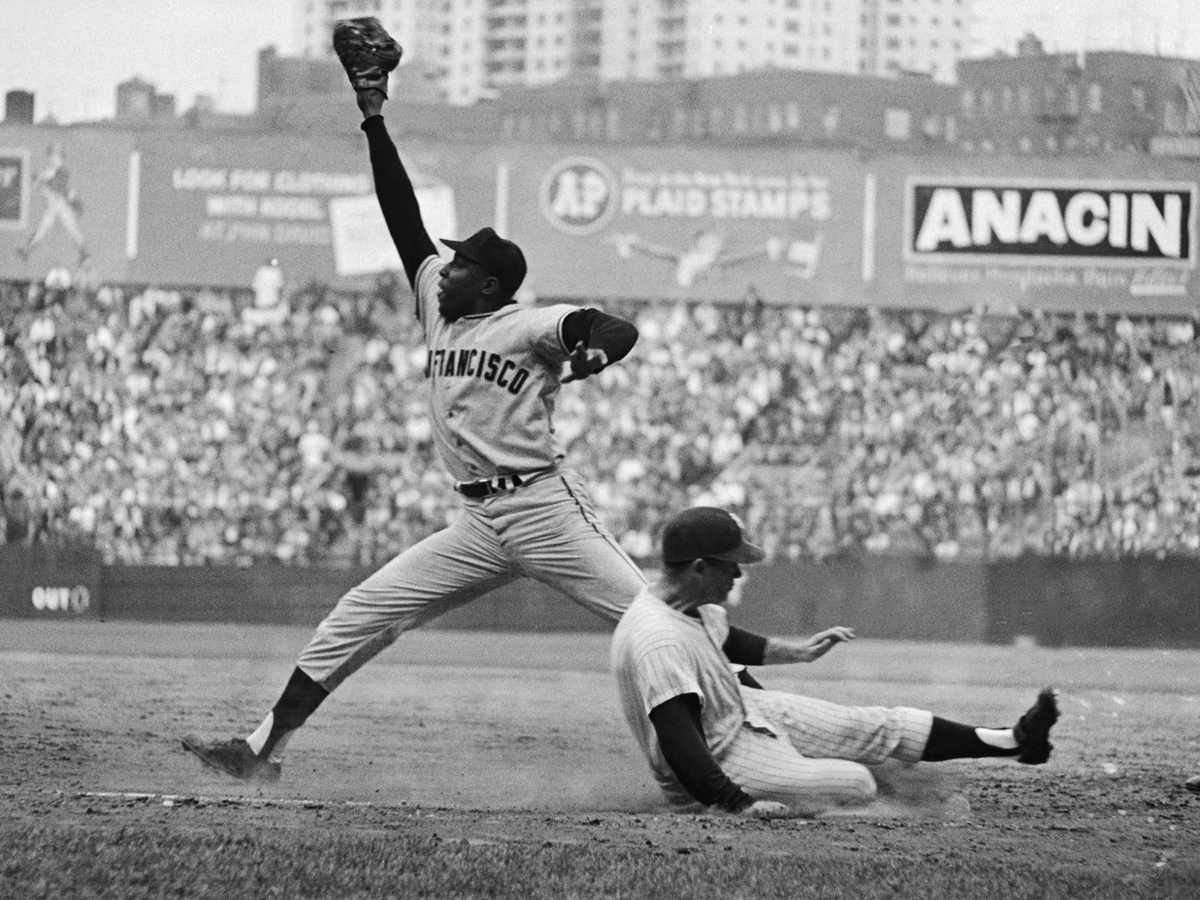
Willie McCovey stretches for a throw during the 1962 World Series between the San Francisco Giants and New York Yankees.
Bettmann/Bettmann Archive
hide caption
toggle caption
Bettmann/Bettmann Archive
Hall of Fame first baseman and one of the most beloved former members of the San Francisco Giants, Willie McCovey died Wednesday.
His death at age 80 was announced by the Giants. The team didn’t specify an exact cause of death, citing instead “on-going health issues.”
McCovey was nicknamed “Stretch” because his height at 6-foot-4. Left-handed throwing made him a natural at first base. He was best known for his 521 career home runs, 18 of which were grand slams — the most by any player who spent his career exclusively in the National League. McCovey was the National League’s home run leader three times and RBI king twice in his 22-season career. He played 13 of those years on the Giants with teammate Willie Mays and together they formed one of the most powerful hitting duos in baseball history.
It is with great sadness that we announce that San Francisco Giants Legend and Hall of Famer Willie McCovey passed away peacefully this afternoon at the age of 80 after losing his battle with ongoing health issues. #Forever44 | #SFGiants pic.twitter.com/ooOYg4ESol
— San Francisco Giants (@SFGiants) October 31, 2018
A native of Mobile, Ala., McCovey announced his arrival in baseball’s major leagues in July 1959 when he debuted batting 4-for-4, hitting two triples and two singles, scoring three runs and batting in two other runs. He batted .354 overall and won the National League’s Rookie of the Year award despite playing only 59 games that season.
Ten years later in 1969, McCovey was the NL’s Most Valuable Player, after leading the league with 45 home runs, 126 RBIs and an on-base percentage of .453.
McCovey spent 19 of his 22 major league years with the Giants. He was traded to the San Diego Padres in 1973 and then played briefly with the Oakland A’s in 1976. He returned to the Giants in 1977 hitting 28 home runs and winning the Sporting News NL Comeback Player of the Year award.
As ESPN reports,
“One honor that eluded McCovey was a World Series ring. He came close in 1962, coming up short in a nail-biting seven-game series against the Yankees. McCovey went to the plate with two outs in the bottom of the ninth inning, his team down 1-0, with runners on second and third base. McCovey sliced a hit toward right field that looked like it could drive in the winning run but instead was caught by Yankees second baseman Bobby Richardson to end the game and the series. The moment was so iconic that it was featured in a Peanuts comic strip.”
That comic strip is shown here.
McCovey retired in 1980 and voted into the Hall of Fame in 1986, and stands tied for 20th on the league’s all-time home run list.
He remained a fan favorite over the years, making frequent appearances at AT&T Park and always projecting an easy-going, dignified demeanor. In 1980, the Giants established the “Willie Mac” Award, an honor bestowed on the player who “best exemplifies the spirit and leadership” shown by McCovey.
The San Francisco Bay water just beyond the right field wall at the park is known as “McCovey’s Cove” even though he never played in that stadium. A statue of McCovey stands at the mouth of the Cove.

University of Maryland head coach DJ Durkin was fired on Wednesday, a day after officials announced he could keep his job. He is pictured in November 2016.
Gregory Shamus/Getty Images
hide caption
toggle caption
Gregory Shamus/Getty Images
A day after they said they wouldn’t, the University System of Maryland’s board of regents has fired DJ Durkin as coach of the Terrapins, university president Wallace Loh announced in a statement on Wednesday.
“A departure is in the best interest of the University, and this afternoon Coach Durkin was informed that the University will part ways,” Loh wrote in a letter addressed to the University of Maryland community.
Severing ties with Durkin was a “difficult” decision, Loh said, but added, “it is the right one for our entire University.”
Durkin has been accused of fostering an unhealthy culture of bullying among the team, before the death of offensive lineman Jordan McNair earlier this year.
“The chair of the Board of Regents has publicly acknowledged that I had previously raised serious concerns about Coach Durkin’s return. This is not at all a reflection of my opinion of Coach Durkin as a person,” Loh wrote.
The decision to fire Durkin is a complete reversal from an announcement by the board on Tuesday, following months of investigation into the university’s football culture after McNair’s death. That announcement cleared the path for the coach to resume running the football program after months of paid administrative leave.
Also on Tuesday, Loh said he himself would retire as of June, and he apparently still intends to do that.
The fate of Athletic Director Damon Evans, remains unclear. On Tuesday the board said Evans could keep his job but Loh’s Wednesday statement made no mention of Evans.
McNair, who was sophomore, died on June 13, weeks after collapsing from heatstroke during a team workout on May 29.
Hundreds of students were expected to gather in the heart of campus on Thursday to protest Durkin’s reinstatement, The Baltimore Sun reported.
By choosing “I agree” below, you agree that NPR’s sites use cookies, similar tracking and storage technologies, and information about the device you use to access our sites to enhance your viewing, listening and user experience, personalize content, personalize messages from NPR’s sponsors, provide social media features, and analyze NPR’s traffic. This information is shared with social media services, sponsorship, analytics and other third-party service providers.
See details.
By choosing “I agree” below, you agree that NPR’s sites use cookies, similar tracking and storage technologies, and information about the device you use to access our sites to enhance your viewing, listening and user experience, personalize content, personalize messages from NPR’s sponsors, provide social media features, and analyze NPR’s traffic. This information is shared with social media services, sponsorship, analytics and other third-party service providers.
See details.
By choosing “I agree” below, you agree that NPR’s sites use cookies, similar tracking and storage technologies, and information about the device you use to access our sites to enhance your viewing, listening and user experience, personalize content, personalize messages from NPR’s sponsors, provide social media features, and analyze NPR’s traffic. This information is shared with social media services, sponsorship, analytics and other third-party service providers.
See details.
By choosing “I agree” below, you agree that NPR’s sites use cookies, similar tracking and storage technologies, and information about the device you use to access our sites to enhance your viewing, listening and user experience, personalize content, personalize messages from NPR’s sponsors, provide social media features, and analyze NPR’s traffic. This information is shared with social media services, sponsorship, analytics and other third-party service providers.
See details.
By choosing “I agree” below, you agree that NPR’s sites use cookies, similar tracking and storage technologies, and information about the device you use to access our sites to enhance your viewing, listening and user experience, personalize content, personalize messages from NPR’s sponsors, provide social media features, and analyze NPR’s traffic. This information is shared with social media services, sponsorship, analytics and other third-party service providers.
See details.
By choosing “I agree” below, you agree that NPR’s sites use cookies, similar tracking and storage technologies, and information about the device you use to access our sites to enhance your viewing, listening and user experience, personalize content, personalize messages from NPR’s sponsors, provide social media features, and analyze NPR’s traffic. This information is shared with social media services, sponsorship, analytics and other third-party service providers.
See details.
By choosing “I agree” below, you agree that NPR’s sites use cookies, similar tracking and storage technologies, and information about the device you use to access our sites to enhance your viewing, listening and user experience, personalize content, personalize messages from NPR’s sponsors, provide social media features, and analyze NPR’s traffic. This information is shared with social media services, sponsorship, analytics and other third-party service providers.
See details.