How Rick Santorum Got A Haircut And Revived The GOP's Obamacare Repeal Effort
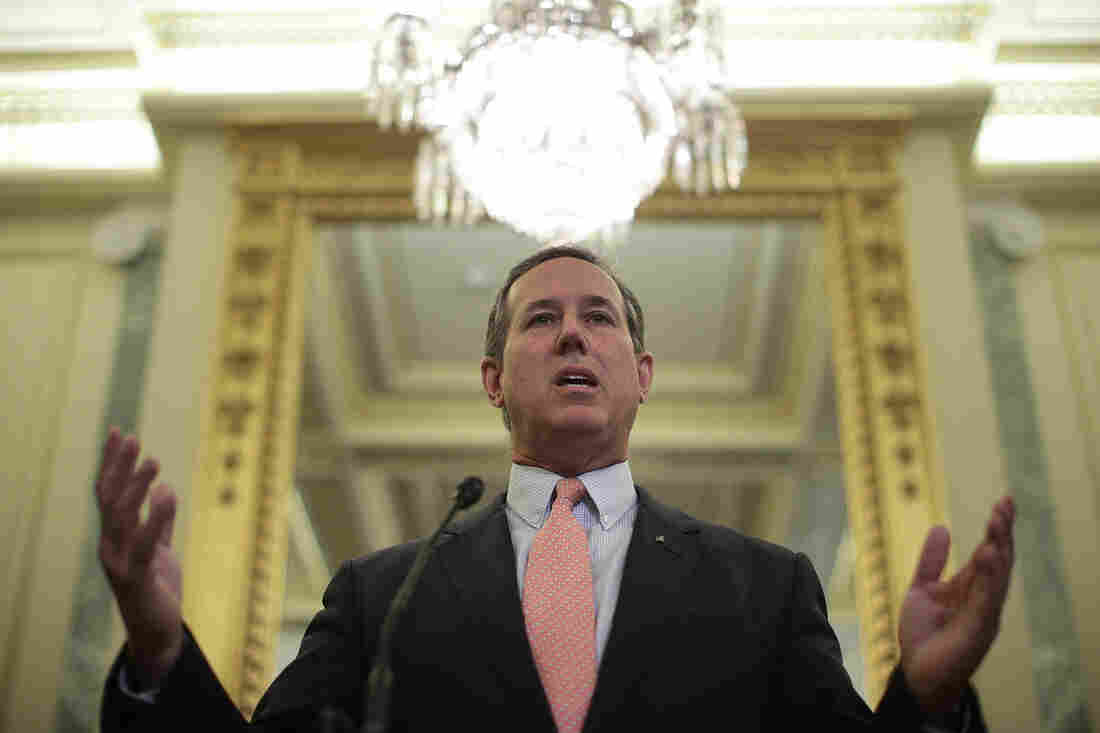
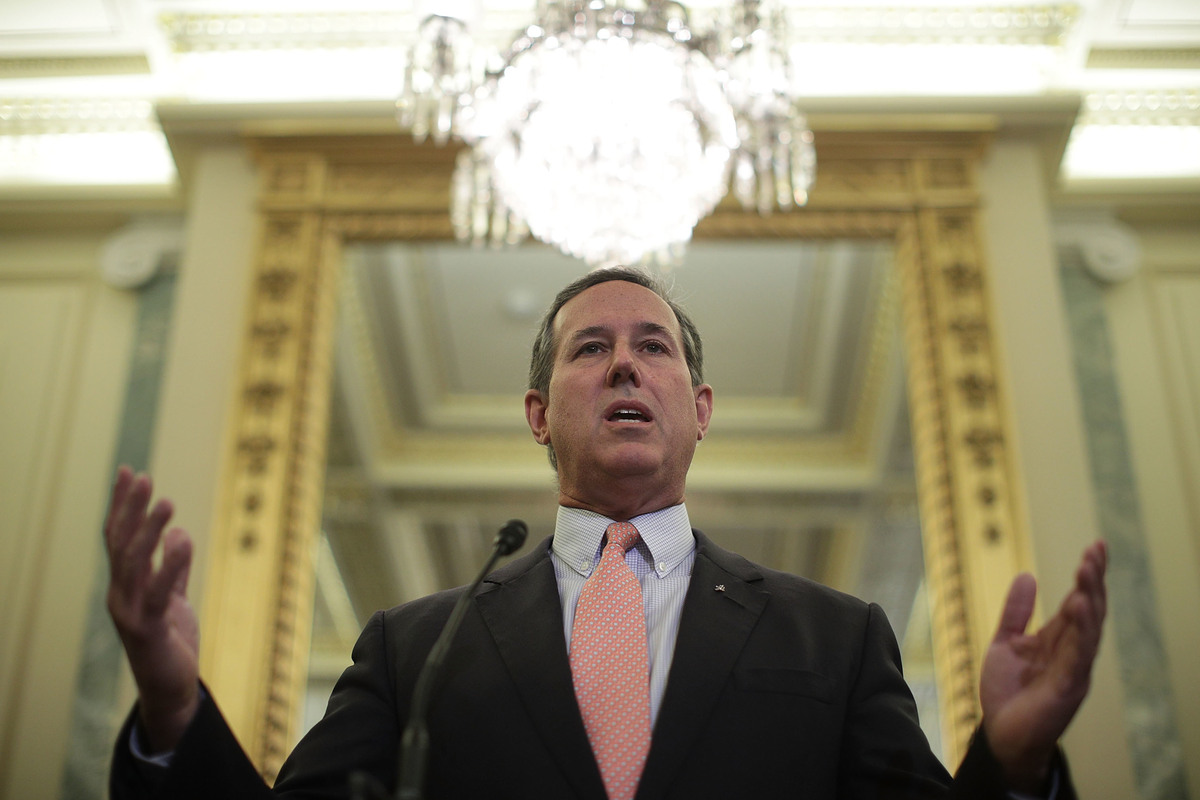
Former Sen. Rick Santorum, R-Penn., speaks on Capitol Hill Sept. 13, at the unveiling of the latest Republican bill aimed at dismantling the Affordable Care Act.
Alex Wong/Getty Images
hide caption
toggle caption
Alex Wong/Getty Images
There’s a chance Republicans wouldn’t be so close to repealing and replacing the Affordable Care Act if former GOP Sen. Rick Santorum, of Pennsylvania, hadn’t dropped into the Capitol barbershop this spring.
“I was up on the Hill, I happened to just go by the barbershop to see if I could get a haircut, and Lindsey was in the chair,” Santorum said. “And Lindsey asked me what I was doing, and I thought to myself, ‘well, let me just bounce it off Lindsey.'”
“Lindsey” was Sen. Lindsey Graham, R-S.C., and “it” was an idea Santorum had just begun talking about with several members of the House Freedom Caucus — repealing large parts of Obamacare and replacing it with a system that’s long been a Republican favorite, block grants of funding to states that come with far fewer federal mandates.
Santorum’s been mostly absent from Washington since he lost to Democrat Bob Casey in 2006. “I haven’t been to the Capitol, really other than just to say hi and take friends through tours, in the last 10 years,” he said. Santorum was the runner-up in the 2012 GOP presidential primaries behind Mitt Romney, and didn’t make it beyond the Iowa caucuses in 2016.
But he’s long been drawn to the health care debate, and Santorum thought he had something to add to Republican repeal efforts. The block grant approach comes from a major welfare reform law that Santorum helped author in 1996. The reform, signed by Democratic President Bill Clinton, stands as the rare successful rollback of a previously-issued government entitlement.
Santorum made his pitch to Graham in the barber chair, Graham liked it and suddenly the two presidential also-rans were on a mission. Except, not quite. “It was always a back burner until it was apparent in July that [Senate Majority Leader Mitch McConnell’s Obamacare repeal bill] wasn’t going to pass,” Santorum said.
After that, talks continued behind the scenes until the bill was rolled out in a Capitol press conference last week. And there was Santorum, who hadn’t held office since 2007, not only standing alongside four current Republican senators, but jumping into the mix and answering questions.
Santorum argued the bill is much more politically viable than previous repeal efforts, because it doesn’t quite repeal the current health care system. “We don’t cut as much as the McConnell bill does,” he said. “We recognized that there’s a need out there and there’s an entitlement in place, like the welfare issue. To be able to remove a broad-based entitlement is, in my mind, impossible to do.”
Critics say the measure would do much more than tweak the current system. While it would loosen many current federal health insurance requirements and turn money over to states, many states would see major shifts in their current funding levels. Obamacare defenders worry this would lead to unstable markets, and not a whole lot of protection for people with expensive or preexisting medical conditions.
Read a full analysis of the bill from NPR’s Alison Kodjak here.
With this bill, Santorum is back in the mix in Washington — enough that, for a brief moment, someone recently floated the idea that maybe Santorum could step in as House speaker, if conservatives revolt against Rep. Paul Ryan, R-Wis.
Santorum said he’s not interested, and that he prefers the current role that he frames as a “little bit of a special agent coming in and trying to help out.” But his initial answer to what he made of that brief, low-flying trial balloon wasn’t the type of laughing dismissal that many politicians would give.
Santorum said, “I think that came about because we’re putting together a plan here in health care that people are looking at and saying, gee, why couldn’t our leadership do something like that?”
On Tuesday, Santorum was back on Capitol Hill, pitching Senate Republicans on the bill, called “Graham-Cassidy.” It’s gone from an idea in a barber’s chair, to something that now appears to have a shot of passing.
After 10 Years Away From Senate, Rick Santorum At Center Of Health Care Debate

The latest GOP effort to repeal the Affordable Care Act is picking up steam in the Senate. Former Pennsylvania Sen. Rick Santorum has been a key player promoting it, a decade after leaving office.
41 States To Investigate Pharmaceutical Companies Over Opioids
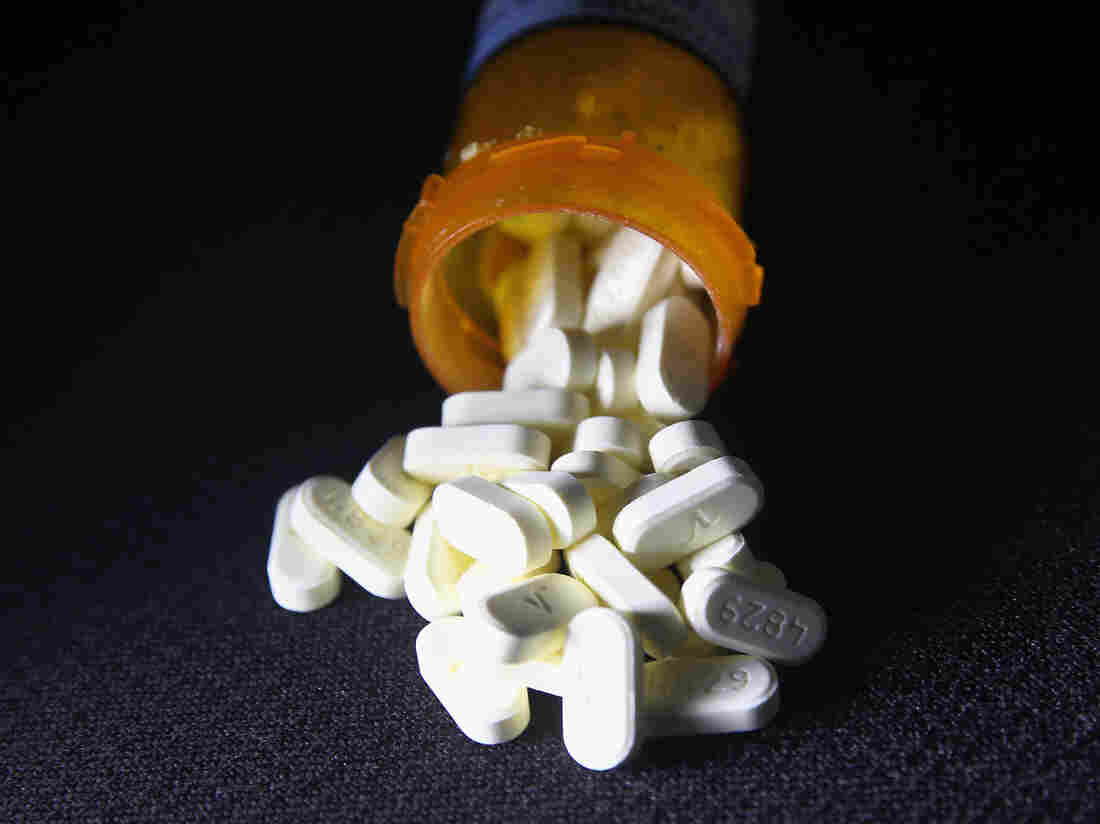
The opioid industry expanded in the 1990s in response to the medical community’s push to better treat pain and chronic pain with drugs such as oxycodone.
John Moore/Getty Images
hide caption
toggle caption
John Moore/Getty Images
The attorneys general of 41 U.S. states said Tuesday that they’re banding together to investigate the makers and distributors of powerful opioid painkillers that have, over the past decade, led to a spike in opiate addictions and overdose deaths.
The coalition issued subpoenas seeking information from opioid manufacturers Endo International, Janssen Pharmaceuticals, Teva Pharmaceuticals and Allergan, as well as additional subpoenas to Purdue Pharma. In addition, the group is demanding documents from distribution companies AmerisourceBergen, Cardinal Health and McKesson.
“Our subpoenas and letters seek to uncover whether or not there was deception involved, if manufacturers misled doctors and patients about the efficacy and addictive power of these drugs,” New York Attorney General Eric Schneiderman said during his press conference announcing the investigation. “We will examine their marketing practices both to the medical community and the public.”
The pharmaceutical industry already faces dozens of lawsuits brought by cities, counties and states — including Ohio, Missouri and Oklahoma. Some are trying to recoup the costs incurred from the surge in emergency response from spikes in opioid-related overdoses. The strategy is reminiscent of the successful litigation brought by states and municipalities three decades ago against tobacco companies.
The opioid drug industry expanded in the 1990s in response to the medical community’s push to better treat pain and chronic pain.
As Schneiderman noted, millions of opioid users became addicted to opioids, or heroin, after being prescribed the medication by doctors.
Many doctors, in turn, said they were assured by the drugmakers that the opioids were less addictive or even not addictive.
“My investigations have shown that drug companies pressure physicians into prescribing powerful, addictive drugs without regard for the law or patients’ well-being,” said Illinois Attorney General Lisa Madigan, who is also party to the new investigation.
Now, the state prosecutors say they will examine whether the industry was complicit in creating the epidemic and whether it should now be responsible for helping pay for the damage caused to many communities.
Allergan said it was “working cooperatively” with the attorneys generals on their requests for information. The other companies being investigated did not immediately issue statements, and industry lobbying group PhRMA didn’t respond to a request for comment.
The number of opioid prescriptions has declined in recent years, after federal regulators placed new limits on the drugs. That reduced the amount of opioids prescribed by 18 percent in 2015, from a peak in 2010, according to the Centers for Disease Control and Prevention.
Still, as the state attorneys general and other community leaders note, the slowdown in prescriptions has been offset by greater demand for cheaper alternatives such as heroin.
“For millions of Americans, their personal battle with opioid addiction did not start in a back alley with a tourniquet and syringe,” Schneiderman said. “They got hooked on medicine they were prescribed for pain or that they found in a medicine cabinet.”
Latest GOP Effort To Replace Obamacare Could End Health Care For Millions

Sen. Lindsey Graham, R-S.C. (right), and Rick Santorum, former senator from Pennsylvania, listen during a health reform news conference on Capitol Hill last week.
Andrew Harrer/Bloomberg/Getty Images
hide caption
toggle caption
Andrew Harrer/Bloomberg/Getty Images
It wasn’t that long ago that the effort to repeal and replace the Affordable Care Act died once and for all in the Senate.
Or so many thought.
But like the killer robot in TheTerminator or the undead fighters in Game of Thrones, the repeal effort has risen once again from the ashes in the form of a bill known as Cassidy-Graham.
The bill, introduced Sept. 13 by Sens. Bill Cassidy, R-La., and Lindsey Graham, R-S.C., with little hope of going anywhere, has gained steam in its short life and now looks like it may actually come to a vote in the Senate in the coming days.
Many opponents say the bill will result in millions of people losing their insurance coverage.
“The Graham-Cassidy plan would take health insurance coverage away from millions of people, eliminate critical public health funding, devastate the Medicaid program, increase out-of-pocket costs and weaken or eliminate protections for people living with pre-existing conditions,” says Georges Benjamin, executive director of the American Public Health Association, in a statement.
Here’s what it does:
Cassidy-Graham essentially deconstructs all of the major programs created by the Affordable Care Act, gathers up the money and hands it over to states to run their own health care programs.
It gets rid of both the subsidies that help people buy individual health insurance policies and the reimbursements to insurance companies for offering price breaks on copayments and deductibles to the lowest-income customers.
It rolls back the Obamacare Medicaid expansion that was adopted by 31 states and Washington, D.C., and it eliminates the Basic Health Program that was created under the ACA and implemented in New York and Minnesota.
All the money that currently goes to those initiatives would instead be distributed to the states as block grants that would particularly benefit those states that did not expand Medicaid earlier and those states with lower health care costs.
Loading…
“Overall, this is a resuscitation of past bills aimed at repealing the Affordable Care Act,” says Daniel Dawes, author of the book 150 Years of Obamacare, who recently moved from Morehouse School of Medicine to Nova Southeastern University. “It would have the same, if not a worse, effect on vulnerable populations across the United States.”
Graham and Cassidy say they want to get the federal government out of the health care business.
“If we give the states the flexibility to come up with their own solutions, they will find solutions that will work better for their states than the Affordable Care Act,” Cassidy said in a speech in the Senate last week.
There’s no official government analysis of the plan. The Congressional Budget Office hasn’t completed one yet.
But many experts say the bill would have an impact similar to earlier Republican proposals for repealing the Affordable Care Act. Cassidy-Graham would eliminate coverage for many low-income people who gained insurance through the Medicaid expansion and could gut protections for people with existing medical conditions because states would be encouraged to seek waivers from the federal government’s rules on what must be covered.
Those cuts to Medicaid were one of the main reasons that some Republican senators refused to vote for a similar bill last time around.
The left-leaning Center on Budget and Policy Priorities says in its own analysis that Cassidy-Graham would lead to 32 million people losing coverage over 10 years. It would cut federal funding for health care by more than $400 billion over 10 years, the groups says.
And the liberal Center for American Progress says premiums for people with pre-existing conditions could rise by thousands of dollars because states could let insurers charge that population more.
Graham and Cassidy say their plan restores fairness to a system where currently more than a third of the money spent on the Affordable Care Act goes to just four states: Massachusetts, Maryland, New York and California.
Those states now get a disproportionate share of federal money because they have large populations, have expanded Medicaid and have high health care costs in general.
“We equalize how much each American receives toward her care, irrespective of where she lives,” Cassidy said on Sept. 14.
Timothy Jost, a professor at Washington & Lee University School of Law who wrote a widely used textbook on health law, says the proposed change also has political benefits for Republicans.
“In general, the legislation would over time move money away from states, predominantly Democratic, that have expanded Medicaid and aggressively pursued enrolling their lower income populations in Medicaid and exchange coverage,” he wrote in a Health Affairsblog post. “Money would move toward states, predominantly Republican, that have not expanded Medicaid.”
States could use the block grant money to offer their residents subsidies to buy insurance, create high-risk pools to cover people with expensive medical conditions, lower out-of-pocket costs, and help pay for more care for Medicaid recipients.
At two hearings earlier this month at the Senate Committee on Health, Education, Labor and Pensions, governors and insurance commissioners from several states said they support giving more power to states to run their own health care systems.
But a few balked at the cuts in funding that would very likely go along with the bill.
The path to passage of this bill is narrow. If three senators vote no, it can’t proceed. And that vote has to happen before Sept. 30, when the bill authorizing Senate Republicans to work on ACA repeal expires.
Republican Sens. Susan Collins of Maine and Lisa Murkowski of Alaska opposed earlier repeal bills because they did too much damage to Medicaid. And Sen. John McCain, R-Ariz., voted no because lawmakers didn’t go through the normal hearing and consideration process.
This bill doesn’t fix any of those problems.
When Irma Arrived, Most Florida Health Care Facilities Were Ready

One of many medical vans heads to the Rehabilitation Center at Hollywood Hills in south Florida to evacuate patients last week after a power outage.
Jon Hamilton/NPR
hide caption
toggle caption
Jon Hamilton/NPR
Another hurricane, another health care horror story.
At least that’s how it looked when eight patients died at a nursing home in Hollywood, Florida. The facility lost its air conditioning several days after Hurricane Irma struck.
That event conjured memories of the scores of elderly who died in Louisiana hospitals and nursing homes following Hurricane Katrina in 2005.
But it would be misleading to attribute the Florida deaths primarily to Irma. And it would be a mistake to assume that most other health care facilities in southern Florida were unprepared for a hurricane.
Here’s what I saw as a reporter who covered the Florida nursing home deaths, but also visited Miami-area hospitals, clinics, shelters for people with medical problems, and even the area’s largest dialysis center.
First, the nursing home, called the Rehabilitation Center at Hollywood Hills.
Yes, it experienced a partial loss of power after Irma. But the real problem appeared to be that the staff didn’t act quickly enough after the air conditioning failed and patients became overheated and dehydrated, according to police, emergency responders, and family members of patients.
By the time emergency responders got there, the facility’s second floor was “extremely hot,” some patients were already dead, and others were near death, Hollywood Police Chief Tom Sanchez told reporters.
Also, help was just a few steps away. Memorial Regional Hospital, which is right across the street, had power and a fully functioning emergency room when the deaths occurred.
When the hospital finally learned what was happening, dozens of workers rushed over to help, says Randy Katz, an Emergency Medicine specialist at Memorial.
It’s worth noting that the nursing home deaths are being investigated as a potential manslaughter case, not a sad consequence of Hurricane Irma.
Meanwhile, other health care facilities in Florida did pretty well after the hurricane. Just 10 of the state’s more than 300 hospitals were closed by the storm.
But 150 of the state’s 700 nursing homes still lacked full power three days after Irma struck, according to the Florida Health Care Association, which represents nursing homes. Most had backup generators, though, the group says.
Meanwhile, the Miami area’s largest dialysis center was able to reopen just hours after the winds began to die.
“We knew we had generator backup and we knew it was a safe location on the fifth floor,” says Sandra Sol, a social worker at the DaVita Miami Campus dialysis center near downtown Miami.
So DaVita diverted hundreds of dialysis patients from other centers to this one. The decision was critical because dialysis patients usually need treatment several times a week to prevent toxins and fluid from building up in their bodies.
When I visited the dialysis center two days after Irma swept through, the pace was frenetic. All 36 dialysis chairs were filled.
One contained Miguel Lobera, 51, a cheerful, energetic man who has been on dialysis for four years. “A day after the storm I called my tech and he says come tomorrow at the regular time,” Lobera tells me.
Like a lot of dialysis patients, Lobera has a range of illnesses in addition to kidney disease. “I’m an encyclopedia of health problems,” he says. “Diabetes since I was a little kid, stroke, neuropathy, a heart attack or two.”
“These people are the best,” Lobera says. “They take care of my health. I have truly been blessed when it comes to medicine.”
Irma did make it hard for some patients to get to the dialysis center, Sol says. “We had a few patients that came short of breath. But as soon as you get them on that machine and start pulling that fluid out, they start feeling a lot better.”
DaVita had planned ahead. When the Miami Campus center realized that hurricane weather would start arriving in the area Saturday, it asked patients scheduled for visits that day to come on Friday instead, Sol says. And staff had already been stockpiling supplies in anticipation of huge demand after the storm.
The planning paid off. “So far everything has gone very smoothly,” she says.
Thousands of patients with other medical problems were taken to more than 90 “special needs” shelters around the state, according to the Florida Division of Emergency Management.
I visited one of these shelters, on the first floor of an office building at Florida International University. It featured more than 100 cots set up as makeshift hospital beds, 24-hour nursing, and doctors on call.
“I couldn’t ask for anything better,” says Barbara Strong, a patient there. Strong is frail and has balance problems, though she is quick to point out she is “off balance physically, not mentally.”
“It’s very comfortable, we get three meals a day, and the nurses are excellent,” Strong says.
The special needs center at FIU was caring for “diabetics, amputees, heart patients, and people that are on oxygen,” Strong says.
Across campus at the general shelter, which housed several hundred residents at its peak, people with medical needs give mixed reviews.
“I went to the hospital twice already,” says Sabrina Dupont, who is 35 weeks pregnant and lives in Key West. “They got me right in and out,” she says.
But Jessica Dawn, a transgender woman with diabetes from Key West, said the shelter didn’t provide healthful food or a place to refrigerate her medications. “I haven’t been on my testosterone blockers for five days now,” she says.
A tour of Miami-area health care facilities found some closed, but many others open.
Several community health centers were locked and appeared not to have power. And the offices of several home health care companies were closed during regular business hours.
But every hospital appeared to have power and a working emergency room.
As Federal Government Cuts Obamacare Ads, Private Insurer Steps Up

Health insurance company Oscar has started its own ad campaign for the Affordable Care Act.
Oscar Health
hide caption
toggle caption
Oscar Health
Open enrollment for Affordable Care Act insurance doesn’t start for another six weeks. But the quirky insurance startup Oscar Health is launching an ad campaign Monday aimed at getting young people to enroll.
The company is boosting its ad spending after the Trump administration announced it would slash its ACA advertising budget by 90 percent.
On Monday morning, commuters in New York City were met with posters blanketing the subway system that showed actual Oscar customers touting the benefits of having insurance coverage.
One poster shows a pregnant woman holding her belly with a bandage on it that says “we’re covered.”
Oscar Vice President Sara Rowghani says the company is stepping up in part because the government is pulling back.
“Particularly in this year of uncertainty, it’s really important for us to be in market early and and reassure the 22 million folks that are insured that it is really important to get covered,” she tells Shots.
Rowghani says the early message focuses on reminding people about open enrollment. The ads include the dates enrollment starts and ends, with the Oscar logo much less prominent.
“What we’re really communicating is this message of getting coverage — get covered, ” she says.
The company declined to say how much it’s spending on the ads, but did say it’s a multi-million dollar campaign. It will run in the six states where Oscar does business, and will be on TV, radio and in subways and buses. That includes in New York state, where open enrollment runs from Nov. 1 through Jan. 31, 2018.
But advertising from private insurers won’t be able to match the power of the advertising in years past by the federal government, says Lori Lodes, who ran outreach for the Affordable Care Act during the Obama administration as director of Communications for the Centers for Medicare and Medicaid Services.
“The reality is there’s only so much that issuers and advocates and other folks can do from the outside, because the government, historically, has been a very trusted messenger,” she says.
Trump’s Department of Health and Human Services says it’s cutting the advertising budget for open enrollment from $100 million down to $10 million. And it will cut back on grants for navigators who help people sign up for a health plan by about 40 percent to $36 million.
The state of California, which runs its own insurance exchange, spent $110 million on advertising around its open enrollment period last year.
HHS officials say that most consumers are already aware of the Affordable Care Act and that the outreach isn’t as effective as when the law was new.
However, the agency this year has made major changes, including cutting the open enrollment period for the 35 states that use the federal website, Healthcare.gov, to six weeks from three months. Open enrollment for those customers starts on November 1 and ends December 15.
The plan is to eliminate expensive television advertising and instead focus on e-mail and text message outreach.
Lodes says that’s a bad idea.
“Television not only was the number one driver of enrollment, but it made all those other channels of communication that much more effective,” she says.
Cutting ACA Advertising by 90% is evidence-based policy … if policy goal is sabotage. https://t.co/5Y0Yt7CB0T
— Daniel Polsky (@healthecon_dan) September 1, 2017
She says the agency tracked which methods of communication were most effective and television came out on top, by far. She says all that research is available to the current HHS leadership.
Critics of the move say cutting the advertising and outreach budget while making changes to the open enrollment dates add up to an act of sabotage by Trump and Health and Human Services Secretary Tom Price, who have been vocal critics of the ACA.
“Cutting ACA Advertising by 90% is evidence-based policy … if policy goal is sabotage,” Daniel Polsky, executive director of the Leonard Davis Institute of Health Economics at the University of Pennsylvania, said On Twitter.
The move fits into a pattern of actions by the Trump administration that have destabilized the health insurance markets and boosted uncertainty over the future of the program.
State officials are also concerned. At a hearing earlier this month in the Senate, several state governors said the cuts will likely lead to declines in enrollment.
“The idea that we’ll cut 90 percent of the education dollars and 40 percent of the navigator dollars when what we need to do is draw these people in, doesn’t make sense,” Montana Gov. Steve Bullock said
Gov. Charlie Baker of Massachusetts, which has run its own exchange for more than a decade, told the senators that the outreach and advertising in his state was effective. But he added that the state made adjustments along the way.
“It’s at least as important what you’re doing as what you spend it on,” he said. “We’ve tried to do things that move the needle on enrollment and drop the things that don’t.”
Oscar is the first private insurance company to step in to try to make up for government’s advertising cuts. Whether others join them — and whether they’re effective — will only be clear when open enrollment ends, and the numbers are tallied sometime early next year.
The Problem With Free Menstrual Pads

Girls in Uganda hold reusable menstrual pads, which they received after a reproductive health presentation at school.
Amy Fallon
hide caption
toggle caption
Amy Fallon
Sanitary pads are expensive. And in some parts of the world, hard to come by. So why not give pads away for free?
It’s an idea that a number of governments have considered this year. Several African countries, including Kenya, Uganda and Zambia, have taken steps toward giving free sanitary pads to girls. In August, Botswana joined the club. And it’s not just happening in low- and middle-income countries. In July, the Scottish government launched a project to distribute tampons and pads to women who can’t afford them.
For some governments, the goal is to boost school attendance for girls. Perhaps free pads would make it easier and more comfortable for girls to manage their periods at school. Others hope that the pads could reduce anxiety about periods — less worry about stains or how to get the next pad, for example.
While menstrual health researchers say it’s encouraging that more countries are talking about periods at the highest levels of power, some question the motivations.
Some critics in Kenya chalk up the plans as campaign promises, and aren’t sure the government will follow through. In June, Kenyan President Uhuru Kenyatta signed an amendment about sanitary pads into law, less than two months before the country’s presidential election. The law said the government would give pads to all girls in public schools who’ve reached puberty and make sure they have a way to dispose of the pads.
Jane Otai, an adolescent health advisor in Kenya for the Johns Hopkins University-affiliated nonprofit Jhpiego, commends the new law. But the timing of its signing tempers her enthusiasm. “Any promises coming from politicians at this time — you take with a pinch of salt,” she says. “My worry is: are they going to follow up on these promises?”
In Uganda, the answer was no. In April, the government backtracked on its plan to give out pads. The reason: a tough economic climate, said President Yoweri Museveni.
Infuriated, Ugandan activist and academic Stella Nyanzi spoke out. On her Facebook wall, she wrote a message directed to the president, his wife and his supporters: “For the children, I refuse your silence, your inertia and your sweet hollow words.” Her sharp criticism landed her in jail, NPR’s Eyder Peralta reported.
And though governments have said that giving pads to girls will improve school attendance, researchers say this step may not be enough to keep them from missing school.
Giving out pads is only part of what needs to be done to help girls manage their periods. It’s not a “silver bullet solution,” says Bethany Caruso, a postdoctoral fellow at Emory University.
“In addition to sanitary pads, we have issues of water and sanitation within the schools,” Otai says. “If the toilets are not habitable, girls will find it difficult to get to school and be able to continue their education if they cannot visit the toilet during her monthly period.”
Toilets — and having a safe, private place for girls to change their pads — get a lot less attention than sanitary pads, says Marni Sommer, a professor at Columbia University’s Mailman School of Public Health.
In schools with latrines, it can be embarrassing for girls to throw their pads into the pit, and other people — like boys — might see the pads and tease girls about them.
To address that issue, some girls use reusable pads so there are no issues with disposal. But this method has its own set of problems. Girls need a little bag to take the pads home to be washed.
That crucial detail was forgotten in an effort to give out reusable pads to girls at a refugee camp in Tanzania, says Sommer. “The [girls are] going to be embarrassed about what to do with their used pad,” she says.
“You think you’ve thought of everything, but they hadn’t thought about the little baggie to go with the reusable pad,” says Sommer. “There’s an essential need to consult girls. What do they need? What do they think?”
Courtney Columbus is a multimedia journalist based in the Washington, D.C. area. She covers science, global health and consumer health. Her past work has appeared in the Arizona Republicand on Arizona PBS. Contact her @cmcolumbus11.
After Hurricane Katrina, Many People Found New Strength

A Houston resident walks through waist-deep water while evacuating her home after severe flooding following Hurricane Harvey in north Houston.
Win McNamee/Getty Images
hide caption
toggle caption
Win McNamee/Getty Images
Long after the floodwaters recede and the debris is cleared, the mental health impacts of disasters like hurricanes can linger.
Psychologist Jean Rhodes of the University of Massachusetts-Boston has spent more than a decade studying what happens to people years after a natural disaster — in this case, Hurricane Katrina.
She and her team had been studying the health of young parents attending community college in New Orleans starting in 2003. After Katrina hit in 2005, they found themselves with a unique opportunity: they had health data from before and after the natural disaster. The researchers were able to measure Katrina’s mental health impacts in a project called the Resilience in Survivors of Katrina Project (RISK).
Most people fare well in the long term, they found, but some are still struggling years later.
Ailsa Chang, guest host of All Things Considered, spoke with Rhodes about the project and what lesson those people’s experiences may hold for people dealing with Hurricane Harvey and Hurricane Irma. Excerpts of the interview follow, edited for length and clarity.
Interview Highlights
How did going through a major disaster like Katrina affect people’s mental health long term?
Well, here’s some good news. About 60 percent — more than 60 percent if you look at their mental health over time — have returned to where they were prior to the storm. We often hear that there are these long-term consequences. There are, for about 20 percent, we see actually their anxiety and depression went up, and it stayed up. For some there was actually an improvement, they’re actually doing better than before.
They’re doing better?
Yes, so there’s two ways in which they are doing better. Their psychological functioning, about 3 to 5 percent were doing better on indices of anxiety and depression. There’s also this other interesting unexpected finding. That’s something called post traumatic growth; this is really the flip side of post-traumatic stress. They often go hand in hand.
Stress can often precipitate changes in our perspective about life. We begin to appreciate life more and feel a personal sense of strength of having endured the trauma. We see new possibilities. We begin to value relationships over things. And really have a spiritual awakening that psychologists have begun to appreciate comes often hand in hand with post-traumatic stress.
In aftermath of Katrina, some people in the study got access to mental health care for the first time in their lives — that turned out to be crucial for them. Since then, have you see a greater push to get mental health services out to people faster after a natural disaster?
Yes, I’ve seen a much broader, more integrated mental health response to the survivors of Harvey and Irma in ways that I think are going to have long term consequences.
One of the things that we know about exposure to natural disasters is that there’s kind of this critical period where if you’re not exposed to additional stressors and you can begin to process and make sense of what happened, you can begin to heal. It’s almost like a concussion — if you are continuously hit with new stressors after the initial stressor, it makes it much harder to heal.
I think that the responses in Houston and Florida have been much quicker and have really tried to minimize additional stressors that will have long-term implications for survivors’ mental health.
You say pets were a surprisingly big factor. Why is that?
One thing that was different from Katrina is that there was a lot less pet loss. Shelters were much more open to including pets, and people weren’t put in this forced choice between staying with their pets versus evacuating. Because of that, there was less exposure and less trauma.
Five years out of Hurricane Katrina, we saw that the loss of a pet was one of the three biggest predictors of depression and anxiety. Because we didn’t have as much separation between pets and their owners, we probably will be seeing less of that particular stress.
All Things Considered associate producer Selena Simmons-Duffin contributed to this report. Greta Jochem is an intern on NPR’s Science Desk.
Rural Hospitals Struggle To Stock Expensive Drugs That Could Save Lives
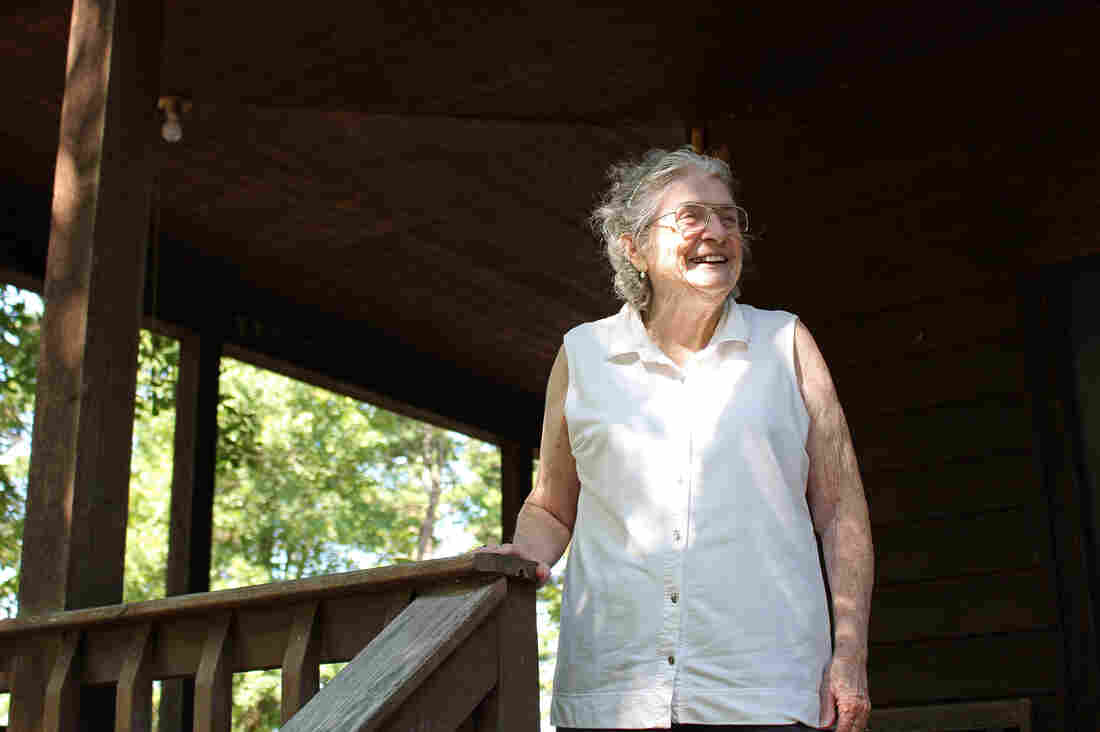
Lulabelle Berry surveys the 600 acres she and her husband, Jimmy, own in the Ozarks near Mountain View, Ark. Berry walks laps on her porch to aid her recovery from a stroke. She says she’s grateful for the drug that saved her life. “It’s been a good life,” she says.
Sarah Jane Tribble for Kaiser Health News
hide caption
toggle caption
Sarah Jane Tribble for Kaiser Health News
Hospital pharmacist Mandy Langston remembers when Lulabelle Berry arrived at the emergency center of Stone County Medical Center in Mountain View, Ark., last year.
Berry couldn’t talk. Her face was drooping on one side. Her eyes couldn’t focus.
“She was basically unresponsive,” Langston recalls.
Berry, 78, was having a severe ischemic stroke. Each passing second made brain damage more likely. So, Langston reached for the clot-busting drug Activase, which must be given within a few hours to work.
“If we don’t keep this drug [in stock], people will die,” Langston says.
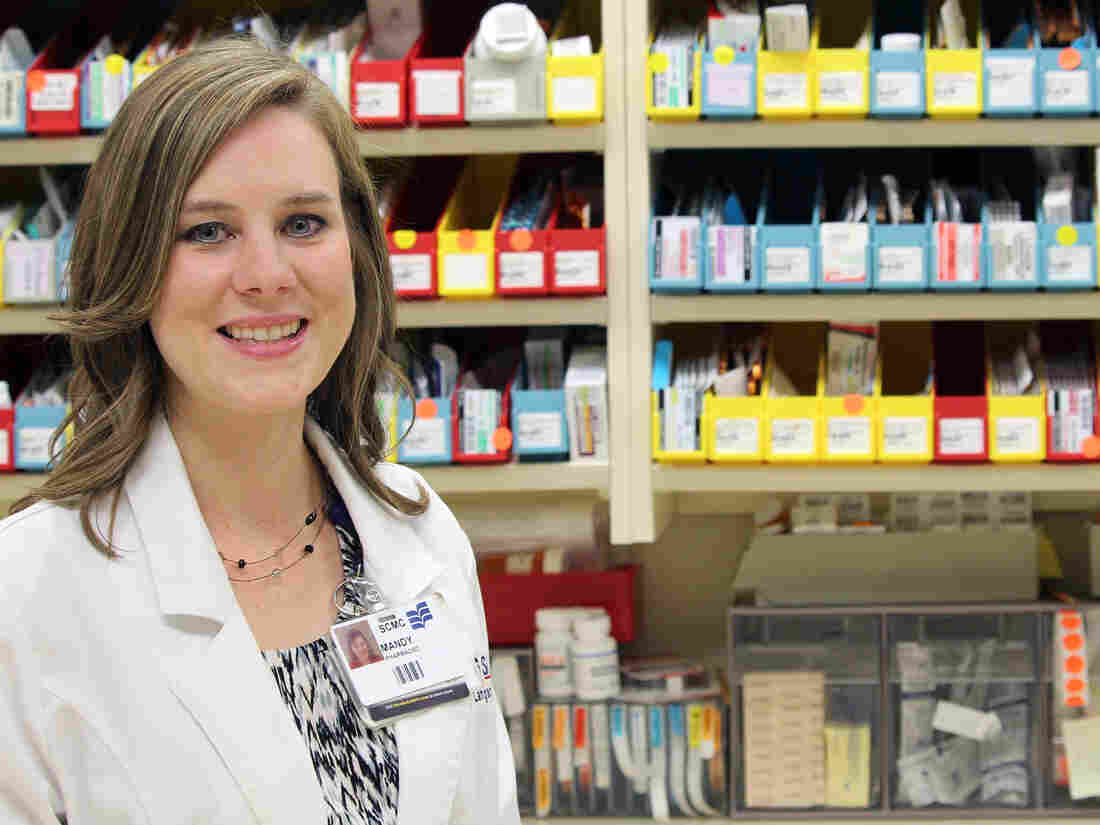
Stone County Medical Center pharmacist Mandy Langston, who has worked at the Mountain View, Ark., hospital for nine years, says she seen the way a stroke patient receiving the clot-busting drug Activase can go “from a vegetable to living within 30 minutes of getting the drug.”
Sarah Jane Tribble for Kaiser Health News
hide caption
toggle caption
Sarah Jane Tribble for Kaiser Health News
Berry survived. But Langston fears others could die because of an unintended bias against rural hospitals built into the U.S. health law. An obscure Obamacare provision forces rural hospitals like Langston’s to pay full price for drugs that many bigger hospitals buy at deeply discounted rates.
For example, Langston’s 25-bed hospital pays $8,010 for a single dose of Activase — up nearly 200 percent from $2,708 a decade ago. Yet, just 36 miles down the road, a bigger regional hospital gets an 80 percent discount on the same drug. White River Medical Center, a 235-bed facility in Batesville, Ark., buys Activase for about $1,600 per dose.
White River participates in a federal drug discount program Congress approved in the early 1990s. The program offers significant price breaks on thousands of drugs to hospitals that primarily serve low-income patients.One federal report found the average discount ranged from 20 to 50 percent, though as illustrated with Activase, it can be much higher.
Rural hospitals have long wanted to be part of the 340B program, too, but were blocked from participating until theAffordable Care Act of 2010. The law added rural hospitals to the program, but, unlike bigger hospitals, rural hospitals can’t get discounts on expensive drugs that treat rare diseases because of a last-minute exclusion written into the ACA.
That has left rural hospital pharmacists and health care workers struggling to keep medicines in stock, and wondering if they will be able to adequately care for patients.
Arkansas, for example, is in the “stroke belt,” where medical staff depend on Activase to help them battle one of the highest rates of stroke deaths in the country. When Langston went to restock Activase this year, it was so expensive she left a reorder unfilled for more than week, anxiously keeping only one dose on hand.
In Atlantic, Iowa, pharmacy director Crystal Starlin sparingly stocks oncology drugs at Cass County Memorial Hospital. Newly diagnosed cancer patients might have to wait a couple of days to start treatment.
“We just can’t keep the extra [drugs] on hand,” Starlin says.
In Vermont, North Country Hospital closed its infusion center this spring due to the soaring cost of medicines.
“That was one area we could not afford to be in,” says chief executive Claudio Fort. North Country is the only hospital in a two-county region along the Canadian border, and its roughly dozen active chemotherapy patients now must drive 45 minutes for treatment.
The rare-disease exclusion was not publicly debated before being added into the Affordable Care Act. Rather, it was tucked into the health law at the very end of the process. How it wound up there is still a bit of a mystery.
Former PhRMA chief executive Billy Tauzin says he doesn’t recall negotiating the exclusion. But, he says, the industry has consistently raised concerns about the drug discount program’s reach.
“It’s a question of how deeply you can afford to discount drugs that are expensive,” says Tauzin, who stepped down just before the ACA passed.

The small Ozark town of Mountain View, Ark., known for its crafts and music scene, is about two hours north of Little Rock. Arkansas reports some of the nation’s highest rates of stroke deaths.
Sarah Jane Tribble for Kaiser Health News
hide caption
toggle caption
Sarah Jane Tribble for Kaiser Health News
After the health law passed, PhRMA battled for years — in federal court — to keep rural hospitals from getting discounts on rare-disease drugs.
Congressman Peter Welch, a Democrat from Vermont, says it is clear whom the law hurts and helps.
“The pharma lobbyists pay attention, and their lawyers pay attention to the fine print,” Welch says. The pharmaceutical industry “changes that fine print … [and] many legislators don’t even realize [that it] will have this adverse impact on hospitals in their communities.”
The rare-disease exclusion means that certain types of hospitals —including critical access, sole community and rural referral centers — cannot get discounts on rare-disease drugs. Rare-disease drugs are also known as “orphan drugs,” which is a federally approved category of drugs that treat a disease affecting fewer than 200,000 people. Often, they carry price tags of up to $100,000 a year or more.
The Food and Drug Administration gives the orphan drug designation to a medicine as a first step when it agrees with a drugmaker’s request to study whether the medicine can be used to treat a specific rare disease. And this can happen even if a drug is already FDA-approved and on the market for use in treating a common condition.
In fact, the popular clotbuster Activase has not won final approval to treat a rare disease. But, on two separate occasions — in 2003 and 2014 — the FDA granted it the orphan designation while research into possible uses for rare conditions is ongoing.
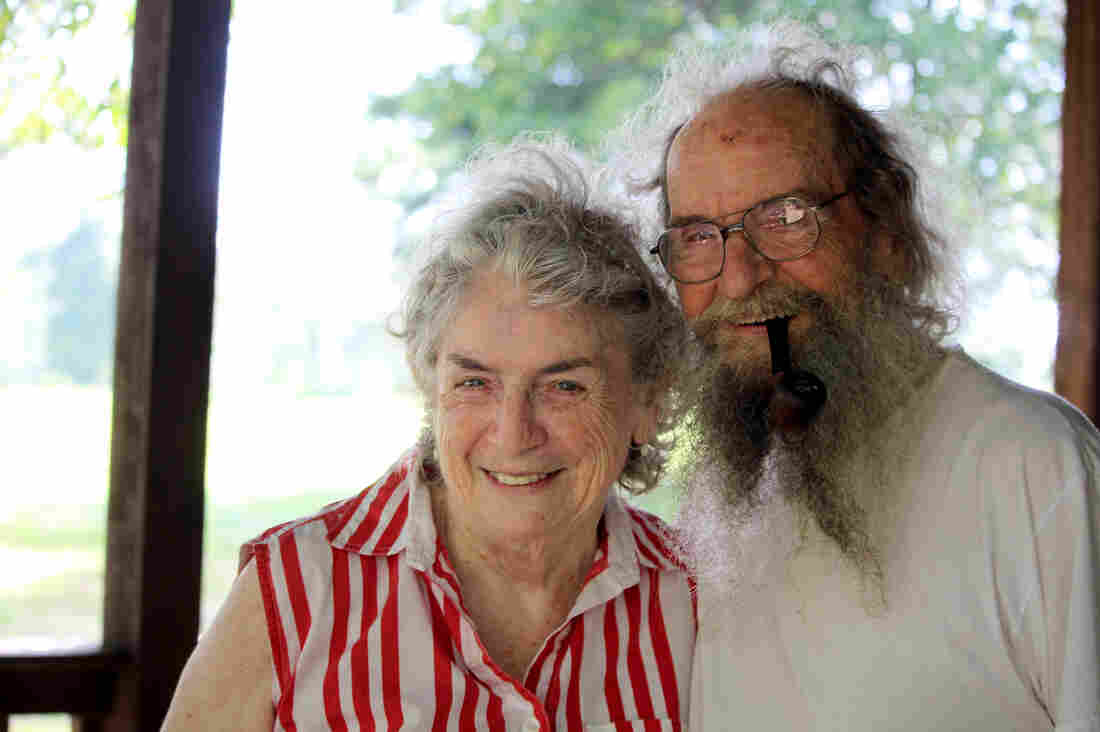


Lulabelle Berry (right) and her husband Jimmy at their home in Mountain View, Ark. Jimmy found Lulabelle having a stroke and got her to the emergency department where she received the clot-busting drug Activase.
Sarah Jane Tribble for Kaiser Health News
hide caption
toggle caption
Sarah Jane Tribble for Kaiser Health News
The FDA has approved about 450 drugs to treat particular rare conditions, but thousands of other drugs have that designationand more are identified every week. The list includes generic drugs such as prescription versions of the hormone melatonin and the autoimmune drug abatacept — in other words, medicines used to treat everything from sleep troubles to arthritis have ended up with the designation.
Some drugmakers, such as Janssen Pharmaceuticals, have voluntarily offered discounts to rural hospitals on all of their orphan drugs including Remicade, which is used to treat a number of autoimminune disorders, including Crohn’s disease, psoriasis and rheumatoid arthritis. In contrast, drugmaker Genentech sent letters to rural hospitals on Jan. 1 listing dozens of drugs that would not qualify for discounts — including Activase and cancer drug Avastin.
Susan Willson, a Genentech spokeswoman, says the company is “deeply committed to ensuring that people have access to the medicines they need.” But, she added, the company believes the federal drug discount program has “grown well beyond its original intent.”
Several federal reports in recent years from the Medicare advisory board, as well as the Government Accountability Office and the Office of Inspector General, have evaluated the federal drug discount program’s growth. About 40 percent of U.S. hospitals now participate in the program and House Republicans held a hearing this summer questioning the program’s growth.
But for Dana Smith, director of pharmacy at Dallas County Medical Center in Fordyce, Ark., the discount program’s growth and problems are a separate issue.
“Basically, Genentech is saying to me that rural health care and the patients in rural America are not as important as patients in urban areas,” Smith says, adding that the pharmaceutical industry “knows we have less manpower to fight them.”
At Stone County Medical Center, emergency room medical director Dr. Barry Pierce well remembers the tense days when his hospital had just one dose of Activase on hand. Stone County now keeps two doses of the stroke drug available.
Stone County is at least 45 minutes away from the next nearest hospital, Pierce notes. “If we don’t have the drugs we need, people will die.”
Paul Knoepfler: What Are The Unintended Consequences Of Human Gene Editing?

Part 3 of the TED Radio Hour episode Future Consequences.
About Paul Knoepfler’s TED Talk
New gene editing tools hold a great deal of promise, but biologist Paul Knoepfler says we should be cautious. He warns altering DNA can have dire consequences, including a new form of eugenics.
About Paul Knoepfler
Paul Knoepfler is a biologist and a professor at UC Davis School of Medicine. His research examines stem and cancer cells including new genetic modification technology’s capacity to transform these cells.
He is the author of GMO Sapiens: The Life-Changing Science of Designer Babies and runs the popular science blog, The Niche.