Get Ready! Medicare Will Mail New Cards to 60 Million People

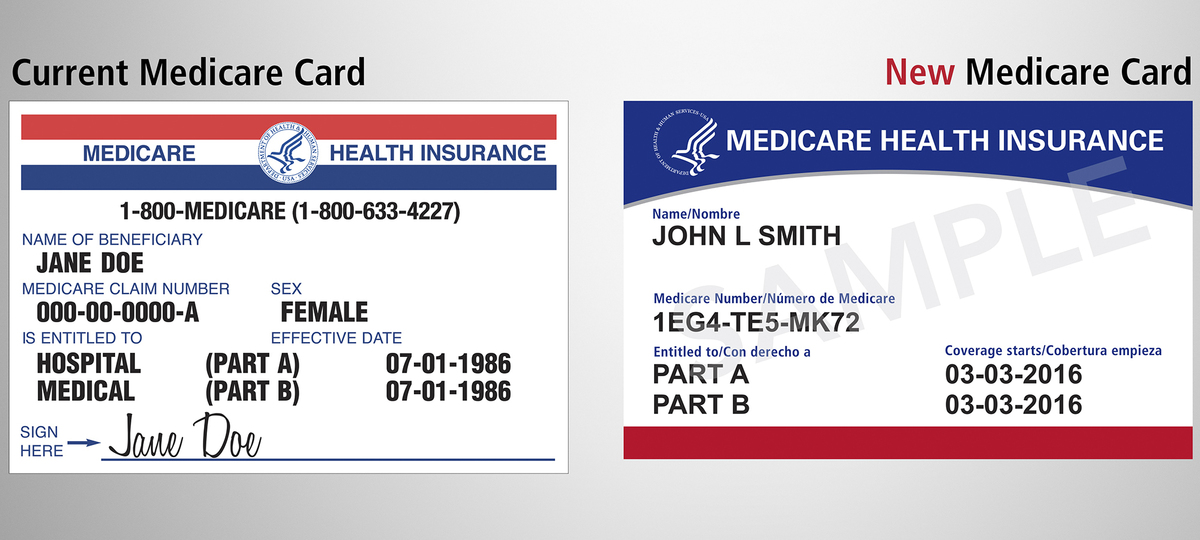
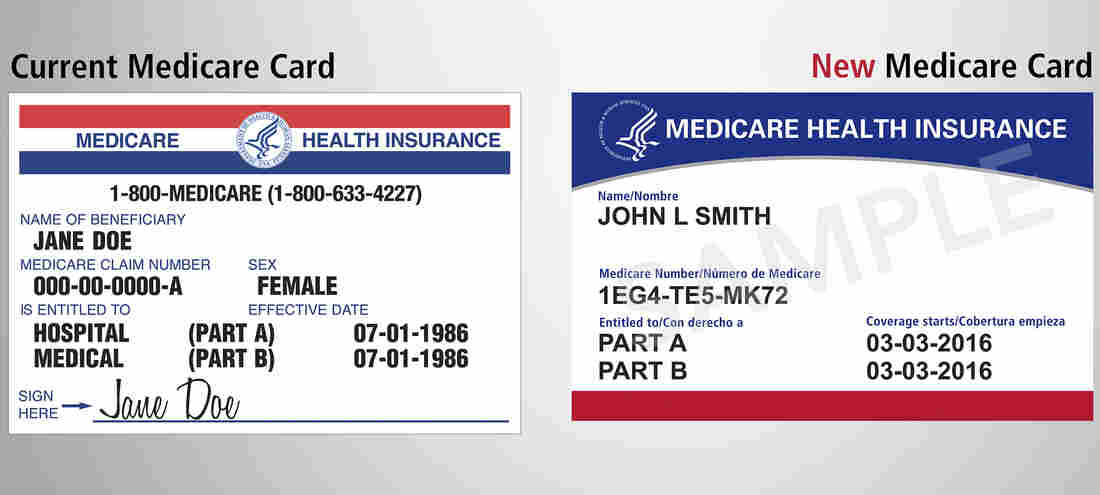
The new Medicare cards, right, will not use Social Security numbers for identification. Instead they will have random sequences of letters and numbers.

Centers for Medicare & Medicaid Services /AP

hide caption

toggle caption

Centers for Medicare & Medicaid Services /AP

It’s an administrative task for the ages.

Medicare is getting ready to issue all 60 million of its beneficiaries new cards with new ID numbers as way to combat identity theft and fraud.

The rollout begins next April, but the agency is already beginning its outreach campaign.

“We want to make this process as easy as possible for everybody involved,” said Seema Verma, the administrator of the Centers for Medicare and Medicaid Services, on a conference call Thursday.

The agency has set up a web site, is sending out handbooks to all enrollees, and has call centers ready to answer questions from beneficiaries and doctors.

Until now, Medicare used people’s Social Security numbers. But Congress in 2015 passed a law requiring the agency to change that as a way to protect seniors from identity theft. The new identifiers will be a randomly generated sequence of 11 numbers and letters.

“Changing numbers for nearly 60 million people on Medicare may be a hassle, but it’s a good idea given the bigger hassles that come with identity theft,” says Tricia Neumann , director of the Program on Medicare Policy at the Kaiser Family Foundation.

AARP has long advocated for the change because of concerns that seniors’ identities would be stolen. The group actually advises seniors not to carry their original Medicare card, but only a copy with the last four digits of their Social Security number blotted out.

Congress allocated $242 million for the switchover, spread across four fiscal years.

During the transition to the new cards, “Medicare beneficiaries don’t need to do anything, other than look out for scams,” said Andrew Skolnick of AARP’s Federal Health and Family Team.

Verma says the new cards will begin to be mailed next April, and the transition will continue into 2019.

Let’s block ads! (Why?)

Florida Nursing Home Case: Many Questions, And Few Answers, After 8 Patients Die

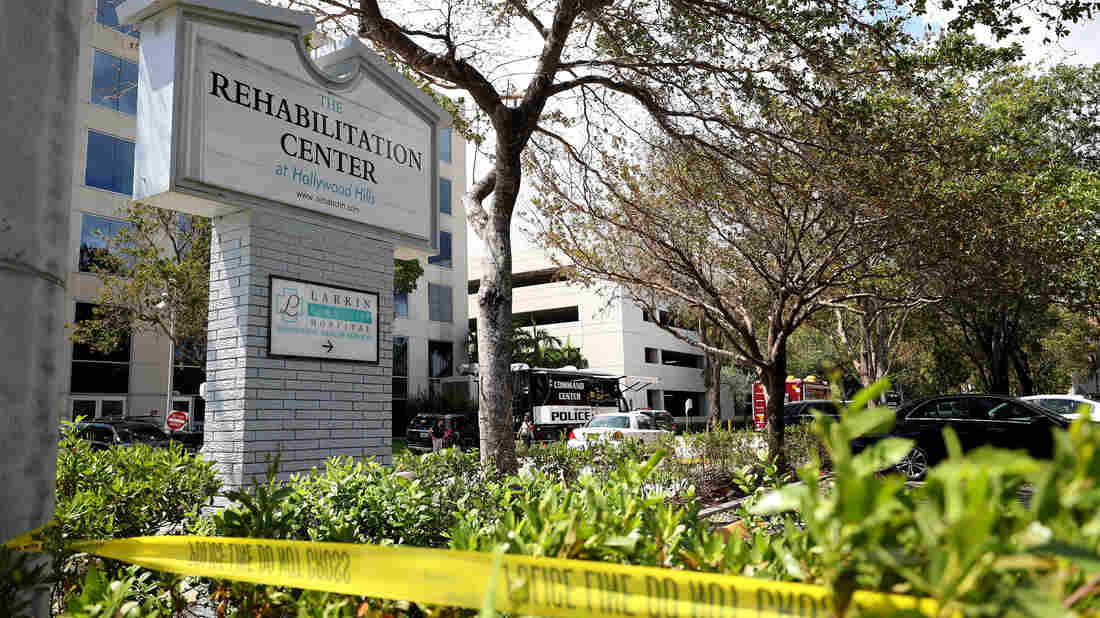
Police surround the Rehabilitation Center at Hollywood Hills, which had no air conditioning after Hurricane Irma knocked out a transformer, in Hollywood, Fla.

John McCall/Sun Sentinel/TNS via Getty Images

hide caption

toggle caption

John McCall/Sun Sentinel/TNS via Getty Images

The shocking news that eight people who were residents of the Rehabilitation Center at Hollywood Hills in Hollywood, Fla., died at the facility in the aftermath of Hurricane Irma has sparked many questions about how such a thing could happen. It has also led to nearly 150 patients being taken to local hospitals.

“The Hollywood Police Department has been granted a search warrant for this property,” Raelin Storey, the city’s public affairs director, said at a news conference outside the nursing home Thursday morning.

Others investigating include Florida’s Agency for Health Care Administration and the Department of Children and Families. No arrests have been made in the criminal probe, according to police in the city just north of Miami.

Officials initially said as many as 158 people had been moved from the center; on Thursday, police clarified that 145 patients were sent to Memorial Regional Hospital — 141 from the center and four from an adjoining facility.

The Rehabilitation Center never lost power — but a transformer that drove its air conditioning unit was knocked out, the facility’s administrator said Wednesday. The outage left the center’s elderly and frail residents vulnerable to the heat and humidity.

There are currently no patients at the center. Florida Gov. Rick Scott has ordered an “immediate moratorium” to prevent it from receiving any patients; officials are also checking on other assisted-care facilities and evacuating them if they’ve lost power.

Key details of the Hollywood Hills incident remain unknown, even after officials delivered an update Thursday morning. Among them:

  • How much time elapsed between the transformer failure and the first calls to 911?
  • How hot did it get inside the nursing home?
  • Was the center’s backup generator capable of powering the air conditioning system?
  • How many staff members stayed at the facility — and did that number include doctors?

Officials acknowledged many of those questions at Thursday’s briefing, but they also said they’re still working on definitive answers.

As patients suffered at the Rehabilitation Center, help wasn’t far away: The facility is located across the street from a medical complex that includes the Memorial Regional Hospital — where the center’s patients were taken after the scope of the problem became evident.

“We are managing 115 patients throughout the Memorial hospitals,” Memorial Healthcare System spokesperson Kerting Baldwin said Wednesday. “Generally, we are treating dehydration, heat exhaustion and severe respiratory conditions, and we do have some critical patients.”

The first of the eight patients who died at the Rehabilitation Center at Hollywood Hills had a do-not-resuscitate clause and died Tuesday, police say. That person was taken to a funeral home. But after more deaths sparked new questions about conditions at the center, the body was claimed by the medical examiner.

Police have released a list of the patients who died:

1. Carolyn Eatherly, DOB 8-13-39
2. Gail Nova, DOB 2-22-46
3. Estella Hendricks, DOB 1-4-46
4. Bobby Owens, DOB 5-16-33
5. Miguel Franco, DOB 9-5-25
6. Manuel Mendieta, DOB 8-26-21
7. Albertina Vega, DOB 10-10-17
8. Betty Hibbard, DOB 1-11-33

“The suspicion is that these deaths should not have occurred,” NPR’s Jon Hamilton reported from the scene Wednesday. He added: “As of Tuesday, [the facility] was reporting that everything was OK, that it was using portable air conditioners and fans.”

[embedded content]

Outlining the center’s preparations for Hurricane Irma, which struck Florida with a storm surge, heavy rains and high winds on Sunday, administrator Jorge Carballo said:

“In compliance with state regulations, the Center did have a generator on standby in the event it would be needed to power life safety systems. The Center also had seven days of food, water, ice and other supplies, including gas for the generator.”

Detailing the problems identified this week by the Agency for Health Care Administration, member station WLRN reports, “In its complaint, the healthcare agency said that on Sept. 10 the rehab center ‘became aware that its air conditioning equipment had ceased to operate effectively.’ … But between 1:30 a.m. and 5 a.m. Wednesday, ‘several residents suffered respiratory arrest or cardiac distress,’ the complaint said.”

WLRN says the Rehabilitation Center had a history of poor performance in state regulators’ inspections.

Scrutiny has also settled on the nursing home’s owner, Dr. Jack Michel. The Sun-Sentinel reports that Michel “has history of fraud charges.”

Summarizing a high-profile federal and state health care case against Michel, the newspaper says:

“Dr. Jack Michel in 2006 settled claims after he and five others were accused of agreeing to send patients to his Miami hospital, Larkin Community, for unnecessary treatment, according to the Department of Justice. Federal prosecutors said that Michel received kickbacks as part of the deal and that some of the patients came from assisted living facilities that he owned.”

That 2006 case involved a $15.4 million settlement. Along with Michel, the Justice Department named Philip Esformes — whose name arose again last summer, when he was indicted after federal prosecutors accused him of leading “a complex and profitable health care fraud scheme that resulted in staggering losses — in excess of $1 billion.”

Larkin Community Hospital, which Michel still owns, is also part of the current story. Police say that the 145 patients who were sent to Memorial Regional Hospital include four from Larkin Community Hospital Behavioral Health Services — a facility that shares a building with the Rehabilitation Center.

In Broward County, more than 212,000 electricity accounts were without power Thursday morning, state officials said.

With millions of people in Florida still lacking power, officials are urging those who need a break from the heat to visit cooling centers and drink water.

The city of Hollywood got a bit of good news on Thursday, as officials lifted a mandatory boil-water notice that had been instituted on Sunday. The move came after workers repaired three water main breaks.

Let’s block ads! (Why?)

Here's What's In Bernie Sanders' 'Medicare For All' Bill

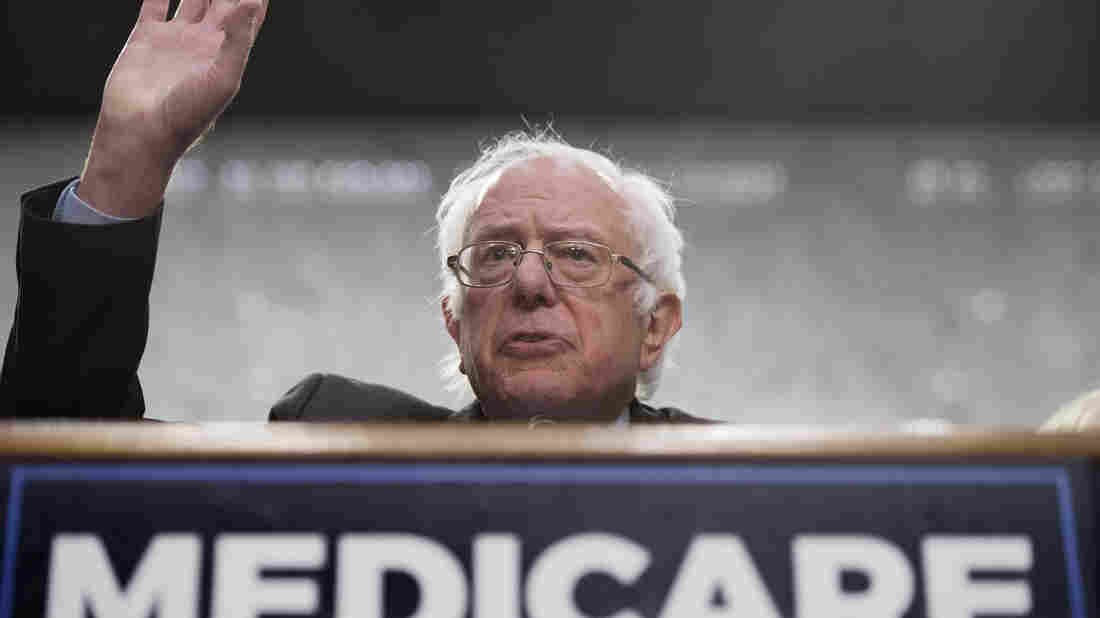
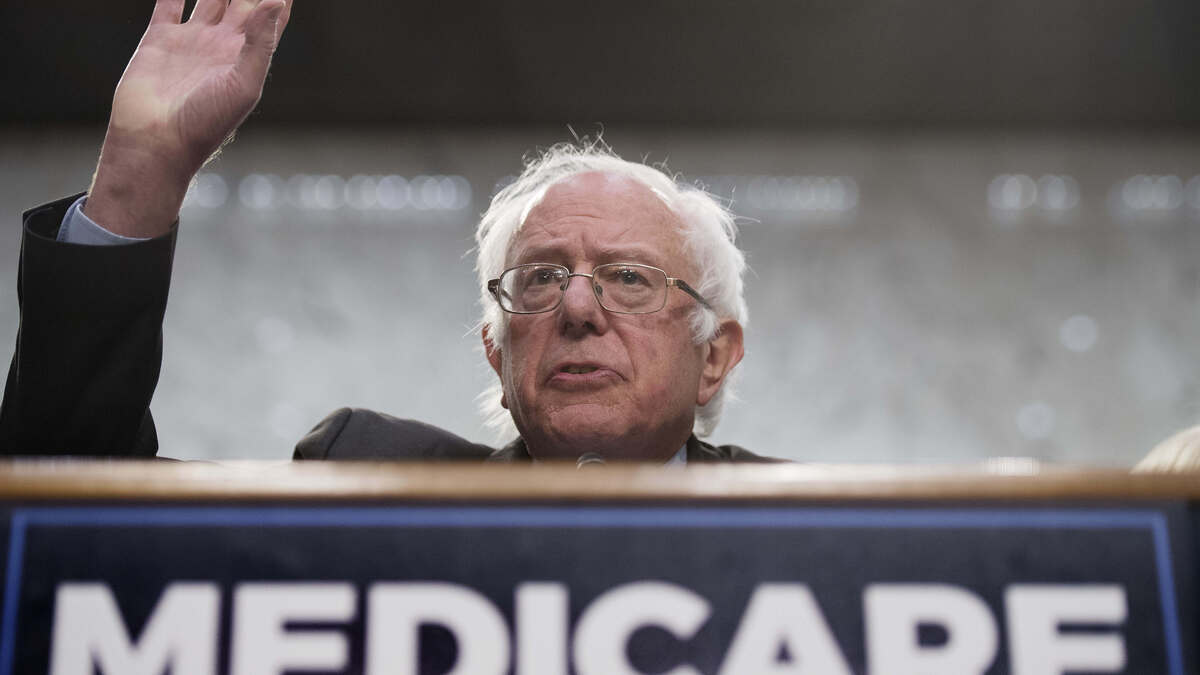
Sen. Bernie Sanders, I-Vt., discusses his “Medicare for All” legislation on Capitol Hill on Wednesday.

Jim Watson/AFP/Getty Images

hide caption

toggle caption

Jim Watson/AFP/Getty Images

The Capitol Hill health care fight sure seemed dead. After Republican proposals to overhaul the Affordable Care Act, also known as Obamacare, failed to pass a Republican-controlled Congress, lawmakers looked poised to move on to other topics, like a tax overhaul. But this week, proposals from both the left and the right are grabbing headlines. (Meanwhile, some members are also wrangling over how they can stabilize Obamacare.)

On Wednesday came a “Medicare for All” bill from Vermont Independent Sen. Bernie Sanders — his attempt to push single-payer health care, long one of his favorite causes.

In a Wednesday op-ed in the New York Times, the former presidential candidate wrote about single-payer health care as a moral issue, giving it his familiar populist framing.

“We remain the only major country on earth that allows chief executives and stockholders in the health care industry to get incredibly rich, while tens of millions of people suffer because they can’t get the health care they need,” he wrote. “This is not what the United States should be about.”

Spoiler: It’s not going to pass this Congress. But with 2020 (already) on people’s minds, single-payer seems primed to be something Democrats will be talking about for the next few years.

So here’s a quick primer on what is in Sanders’ bill — and why it matters, despite being dead on arrival.

The basics

Sanders’ plan is a “single-payer” plan. That means the government will be the “single payer” on any health expenses. Right now, there are lots and lots of payers in the U.S. health care system — insurance companies, the federal government, states and so on.

“Medicare for All”? Not quite. Sanders calls his plan “Medicare for All,” but that’s more of a handy slogan than reality, as this plan would greatly expand Medicare and overhaul it — for example, it would greatly expand the type of coverage offered and also eliminate deductibles, copays and premiums. Private insurance companies are also currently a part of the Medicare system. That wouldn’t be the case under Sanders’ plan.

Phased in over time. The Sanders plan wouldn’t extend insurance to all Americans immediately; rather, it would do it over four years (and would, as stated above, greatly change the program). The first year, the Medicare eligibility age would be lowered to 55. That would move to 45 and then to 35 over the following two years, until finally, in the fourth year, everyone would be covered.

Covers all sorts of things. Sanders proposes generous coverage that goes well beyond what Medicare currently covers, and even well beyond what many people’s private insurance plans cover. His plan would cover dental and vision care, for example, which are, for the most part, not covered by Medicare.

Payment is unclear. A generous plan that covers all Americans is going to require more revenue. There’s no exact plan for how to pay for Sanders’ bill, but he did on Wednesday afternoon release a list of potential payment options. Among the proposals: a 7.5 percent payroll tax on employers, a 4 percent individual income tax and an array of taxes on wealthier Americans, as well as corporations. In addition, Sanders’ plan says the end of big health insurance-related tax expenditures, like employers’ ability to deduct insurance premiums, would save trillions of dollars.

But even with all of those potential revenue-boosters, Sanders may still fall far short of the total amount of money needed to pay for his ambitious program. Altogether, his estimates of how much money his funding mechanisms would generate totals up to around $16 trillion over 10 years. In a 2016 report on his presidential campaign’s “Medicare for All” plan, the Urban Institute estimated that the plan would cost $32 trillion over 10 years.

What problems would it solve?

Reducing the number of uninsured. (Duh.) A byproduct of universal health care is that … well … people are universally covered.

Out-of-pocket spending: up or down? This would most likely vary from person to person, according to one health care expert.

“The dollars they’re currently paying out of pocket would go down, but government costs would go up substantially,” said Linda Blumberg, a senior fellow in health policy at the Urban Institute, a Washington think tank. “So depending on the person’s income and the way the program is financed, which is not in this proposal yet, people’s taxes are likely to go up substantially.”

For some people, the tax increase will exceed what they’re saving on out-of-pocket costs — looking at Sanders’ proposed taxes, this may apply to high-income people. For other people, the savings could exceed any tax increases.

Health care costs: up or down? It’s hard to answer this one, as some aspects of this plan would push costs down, while others would push it up.

“The single-payer, government-run system has the potential to control prices much better than our current system,” said Larry Levitt, a senior vice president at the Kaiser Family Foundation. With a simpler system would come lower administrative costs, making health care much more efficient, for example; and the government would negotiate drug prices, bringing health care costs down, as well as the price per service.

On the other hand, getting rid of those out-of-pocket costs has the potential to push overall spending up.

“More people would be covered — and that would drive up spending — and having no deductibles and copays will sound great to patients, but it means that people will be going to the doctor a lot more than they are now, and that will drive spending up,” he said.

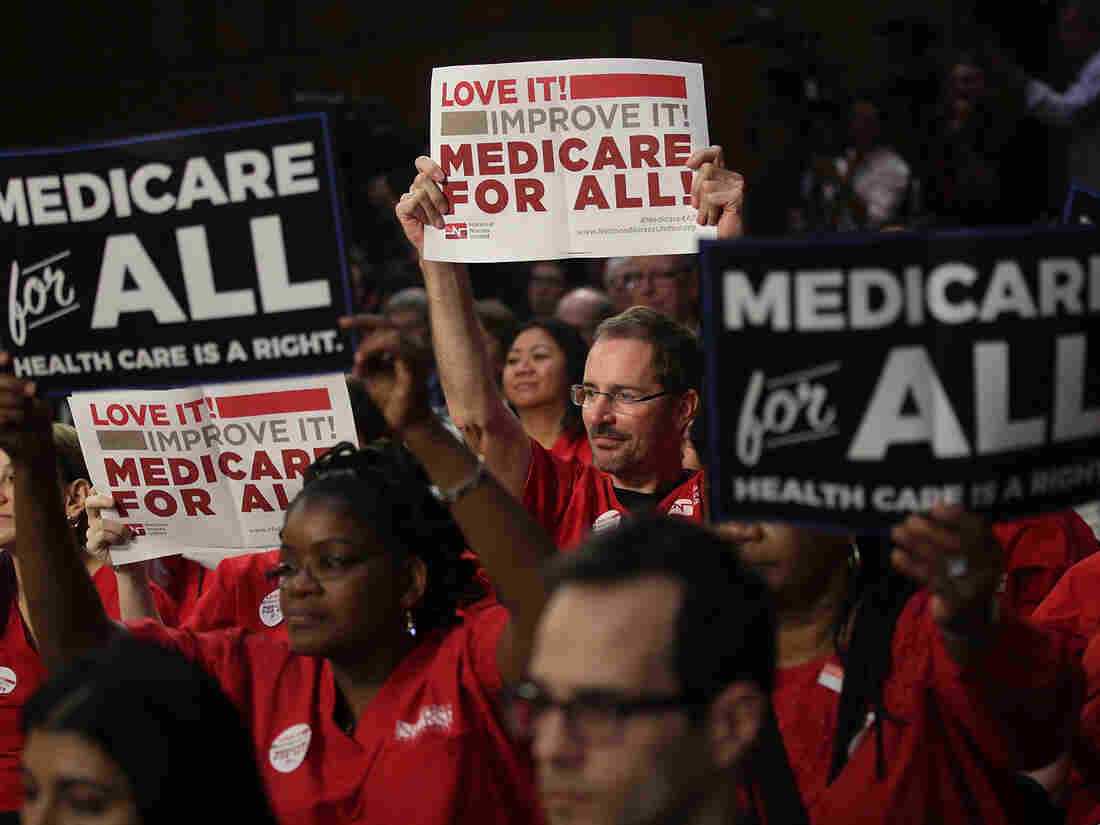
Supporters of Sen. Bernie Sanders, I-Vt., hold signs Wednesday during an event on health care on Capitol Hill.

Alex Wong/Getty Images

hide caption

toggle caption

Alex Wong/Getty Images

The politics

This bill will not pass. … And Sanders knows it, as NPR’s Scott Detrow wrote in August. “The whole thing is more about political framing — getting Democrats to the point where this would be a top priority whenever the party is back in power,” Detrow wrote.

Political signaling. Sanders’ bill is the latest piece of evidence that Democrats are moving further and further to the left on health care. Sanders is an independent who considers himself a “democratic socialist,” but he caucuses with the Democrats. His popularity in the 2016 Democratic primary signaled a party willing to move further left.

Sanders didn’t win over a single co-sponsor when he introduced a similar measure in 2013. On Wednesday, he had 16, including several other high-profile Democratic senators who are being talked about as potential 2020 presidential candidates, including California’s Kamala Harris, Massachusetts’ Elizabeth Warren, New Jersey’s Cory Booker and New York’s Kirsten Gillibrand.

Positioning themselves as proponents of socialized medicine could help Democratic candidates win over some voters in the party’s base. Now they each have video for their possible 2020 primary campaign ads, speaking next to Sanders during Wednesday’s rollout in support of his bill.

But people on the left disagree on how central single-payer should be to Democrats’ messaging going forward.

“A commitment to universal health coverage — bringing in the people currently falling through Obamacare’s cracks — should definitely be a litmus test,” wrote Paul Krugman in the New York Times in August. “But single-payer, while it has many virtues, isn’t the only way to get there.”

Single-payer has grown more popular, but polling is tricky. Recent polls have shown that the idea of single-payer has grown more popular in recent years. But as with a lot of issue polling, people’s opinions on single-payer are pretty movable, as NPR reported in July. Tell them about the potential for higher taxes, and support for single-payer slips substantially. Tell them about the potential for lower administrative costs, and support grows.

Republicans appear eager to do that. On Wednesday they were already branding “Berniecare” as the latest Democratic push for socialized medicine and higher taxes. Sen. John Barrasso, R-Wyo., called it “a complete Washington takeover of America’s health care system.”

Sanders dismissed those attacks. “You, the Republican Party, have no credibility on the issue of health care,” he said Wednesday. “In the last few months, you, the Republican Party, have shown the American people what you stand for when you voted for legislation that would throw up to 32 million Americans off the health insurance they have.”

NPR congressional reporter Scott Detrow contributed to this report.

Let’s block ads! (Why?)
Montanans Pitch In To Bring Clean Air To Smoky Classrooms

Smoke plumes rise from the Rice Ridge Fire in August, behind Montana’s Seeley Lake Elementary School, in Seeley Lake, Mont.

Eric Whitney/MTPR

hide caption

toggle caption

Eric Whitney/MTPR

More than a million acres of Montana forests and rangeland have burned this year, so far, causing unhealthy air across the state since mid-July.

In August the Missoula County health department took the unprecedented step of advising the entire town of Seeley Lake to evacuate due to smoke; air there has been classified as “hazardous” levels for 35 days in August 1.

Now that fire season has extended into the school year, many western Montana schools have been keeping kids inside because of heavy smoke. But that doesn’t mean they’re breathing clean air. Some community partnerships are springing up to try to get air filters into more classrooms.

Air quality has also been poor in Frenchtown, which is on the far west side of Missoula county; Seeley Lake is on the eastern side. On a recent afternoon, recess was in full swing at Frenchtown Elementary School, and the students were all indoors. About 60 kids swarmed around the smaller gym. Bouncy balls sailed overhead and a blur of jump-ropes narrowly missed swiping limbs.

Juliana Palen-Goodsell describes the scene the way only a 9-year-old can.

“It’s kind of like a lot of red ants,” she says. “They’re all running around, hitting people with balls. It’s really crazy.”

It’s a little too much for Goodsell, so she opts to watch a movie instead, with more than 100 other 4th graders packed into one very warm classroom.

Smoke from wildfires raging around the region has kept Frenchtown students inside almost all week. There’s no air conditioning.

Administrators have to make quick decisions throughout the school day about whether it’s safe for kids to play outside. Assistant Principal Ashley Parks relies on updates from the state Department of Environmental Quality that monitor the concentrations of fine particulate matter in the air.

“Every hour we check it,” Parks says. “On a day like today we don’t need to check it because we know it’s terrible, and we know it’s going to be bad all day.”

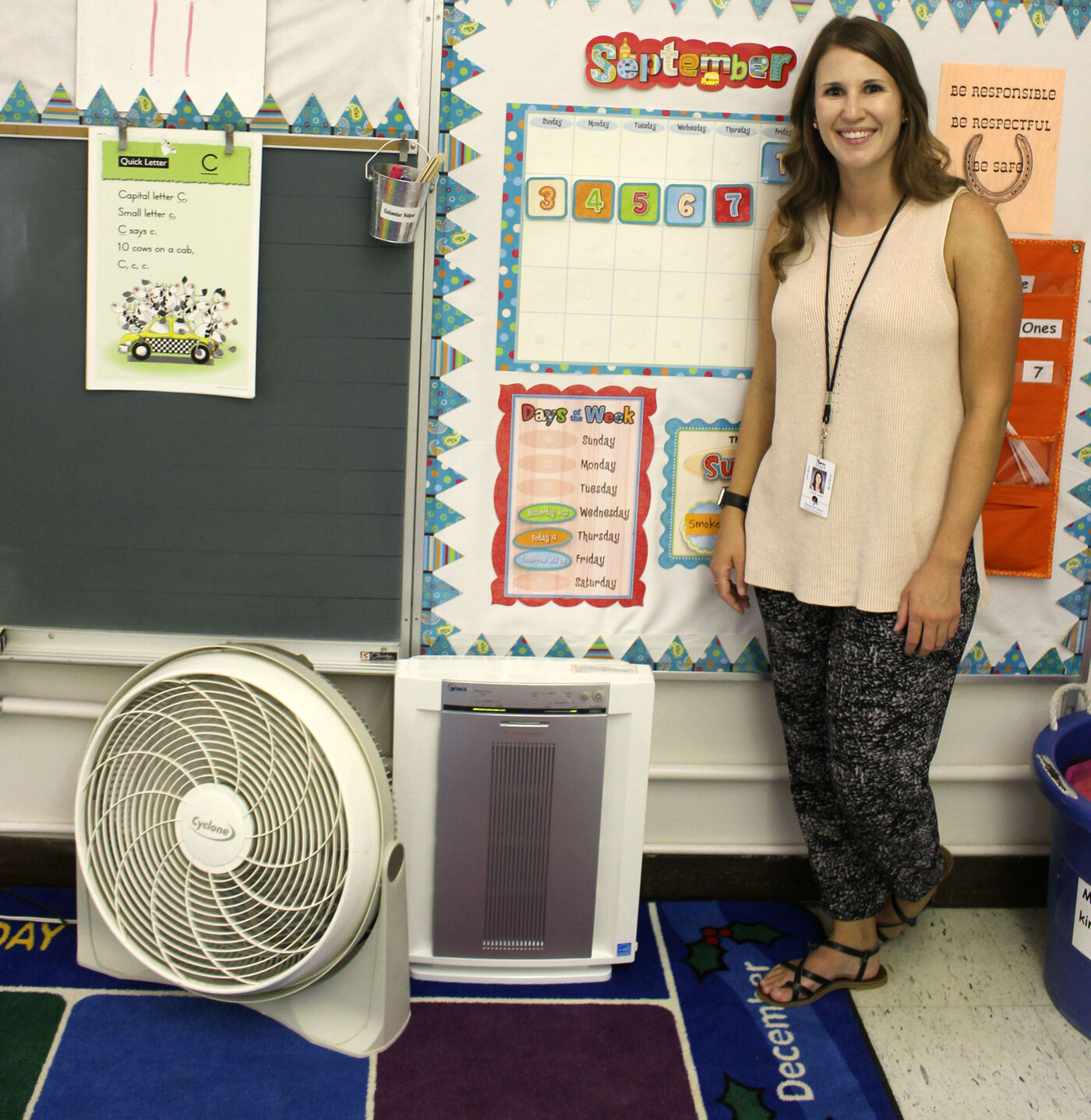
Frenchtown kindergarten teacher Justine Luebke shows off a brand new HEPA air filtration unit that will help purify the air in her classroom.

Nora Saks/MTPR

hide caption

toggle caption

Nora Saks/MTPR

That’s because burning trees release tiny particles and gases into the air, which are bad for everyone’s respiratory systems. Children are especially vulnerable because their lungs are still developing.

Even keeping the windows shut and the kids indoors isn’t a complete fix. Only a special type of filter can actually purify the air by scrubbing the particulate matter from smoke out of it.

Filters cost around $130 per unit, and it takes two units to clean the air in one classroom. But, most schools in Missoula County don’t have them.

This situation distresses Sarah Coefield, a Missoula County Health Department air quality specialist. She says this wildfire season hit with a force that no one was expecting.

“It caught us somewhat unprepared, and it has felt like a lot of scrambling, a lot of throwing band-aids with air filters and trying to catch up,” she says.

That’s in part because there’s no readily available funding source dedicated to creating safe air spaces. The county is now tapping into a fund set aside for public health emergencies.

Coefield has been trying to get out in front of the problem. Earlier this year, the health department teamed-up with Climate Smart Missoula, a local nonprofit, with the aim of distributing air filters to the elderly. But when this year’s fire season started to stretch into the beginning of the school year, blanketing some towns like Seeley Lake in catastrophic levels of smoke, they saw another need.

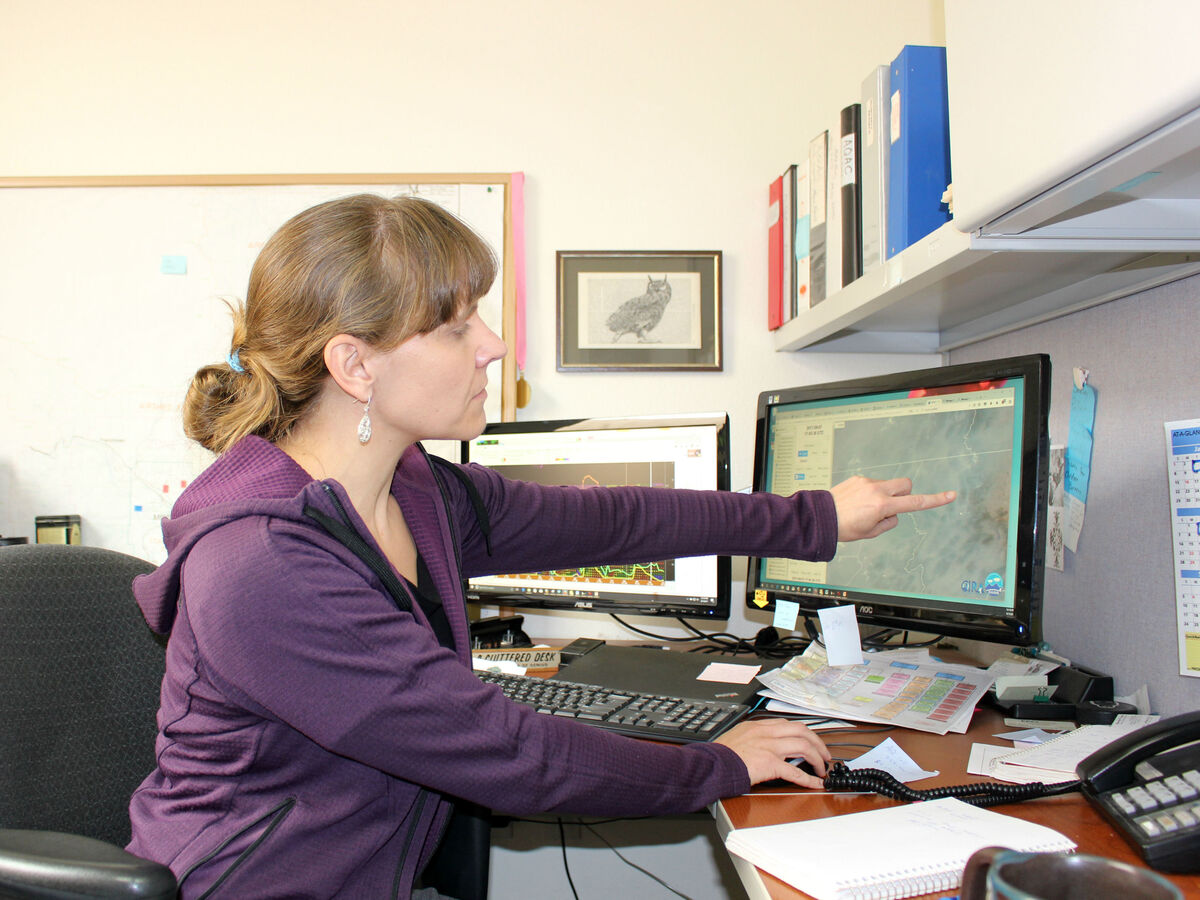
Sarah Coefield, with the Missoula County Health Department, says she and her colleagues are scrambling to help schools get air filters into classrooms.

Nora Saks/MTPR

hide caption

toggle caption

Nora Saks/MTPR

“These kids are going to be expected to sit in the smoke. All day. And go in the morning to classrooms where it’s incredibly smoky. The morning smoke is just horrendous in Seeley Lake,” Coefield says.

For the last few weeks, the collaborators’ priority has shifted to getting as many air filters as possible into classrooms in areas with the most hazardous air quality.

With help from schools and groups like United Way, the partners have pooled enough resources to supply HEPA air filtration units to several schools. They’re currently out of units but are working on getting more.

Sarah Coefield is hopeful they’re laying better groundwork for a future in which wildfires and smoke are only likely to get worse, but it still feels like triage.

“To be able to put filters in some classrooms makes it feel like we’re doing something,” she says. “I’m not just screaming into the void, ‘It’s bad, it’s bad, it’s bad!’ We’re trying to do something and be more proactive — intervention. It’s not enough, though.”

But, their work is inspiring others to take similar action. Back at Frenchtown Elementary, a shipment of brand new HEPA air filtration units has just arrived and two by two, they’re being delivered to each classroom.

These appliances are thanks to the efforts of parent named Melissa Reynolds-Hoagland, who has two kids that go there.

“After that first day that I dropped them off at school and I saw what was going on, I just personally purchased two air purifiers for my children’s classes. And then I went home that night and thought, ‘What about the other kids?’ “

When she found out the school couldn’t afford to buy air purifiers because of state budget cuts, and the county health department was focused on more acute areas, she took the matter into her own hands.

Through Bear Trust International, the conservation nonprofit she runs, Reynolds-Hoagland, launched a campaign called Clean Air for Classrooms. They raised almost $10,000 — enough to buy filters for every classroom at Frenchtown Elementary and intermediate school. The company supplying the filters for the schools is selling them at a discount.

“I know everyone is financially tapped and everyone’s got a job to do,” says Reynolds-Hoagland. “I knew I had an opportunity, and so I just wanted to see if I could rally our community. And it worked. People are good — they want to help. This just provided a platform for everyone to pitch in.”

This story is part of a reporting partnership with NPR, Montana Public Radio and Kaiser Health News.

Let’s block ads! (Why?)
For Many Women, Cervical Cancer Screening May Get A Lot Simpler

Testing for changes in cells of the cervix or for presence of the HPV virus are both good ways to screen for cervical cancer, health organizations say.

GARO/Canopy/Getty Images

hide caption

toggle caption

GARO/Canopy/Getty Images

Women ages 30 to 65 may decide how often they want to get screened for cervical cancer depending on the test they choose, according new draft recommendations for cervical cancer screening from the U.S. Preventive Services Task Force. Testing every three years requires a Pap smear, and testing every five years requires a test for human papillomavirus (HPV), the virus that causes nearly all cervical cancers.

“A woman going to her provider for a visit would want to talk with her doctor about the last time she was screened, what type of screening she had, which one to have next and what the timing of that should be,” says Maureen Phipps, chair of obstetrics and gynecology at the Warren Alpert Medical School of Brown University in Providence, R.I., and a member of the task force. The draft recommendations update the 2012 USPSTF recommendations.

Every year in the US, nearly 13,000 women develop cervical cancer and just over 4,000 die from it, according to the American Cancer Society. “We really want to emphasize that cervical cancer is a devastating disease and that screening is very important,” Phipps says. “We want to catch it at an early stage so we can begin treatment.”

Cervical cancer screening is one of the greatest success stories in cancer prevention history: widespread screening cut the cancer’s incidence and mortality in half over three decades. An estimated 2.3 women per 100,000 died from the disease in 2011, compared to 5.6 women per 100,000 in 1975. Screening currently saves more than 4,000 lives a year, the American Cancer Society estimates.

Both the Pap test and the HPV test are done on a sample of cells collected from the cervix. The Pap test (named for the scientist who pioneered the technique) looks for abnormal cell growth that may indicate cancerous or precancerous conditions. The HPV test looks for types of the virus that can cause cancer in women and men.

The USPSTF is an independent panel of unpaid experts who review existing evidence for preventive measures, such as disease screenings and counseling services, to create national evidence-based recommendations. The recommendations often influence what services and medications insurance companies will pay for.

“We encourage public comment because we want to be sure we get it right,” Phipps says. The public comment period runs from September 12 through October 9. Then the task force will decide whether to adopt the draft recommendations or issue a revised version of them.

Cervical cancer screening recommendations differ by age, and the USPSTF is only recommending a change for middle-aged women. Previous recommendations remain in place:

  • Cervical cancer screening should not begin until at least age 21 regardless of sexual history, unless a person has an HIV infection or another immunocompromising condition.
  • People ages 21 to 29 should not receive an HPV test, but should receive a Pap test every three years.
  • People over age 65 do not need screening unless they fall into a high risk group, such as an inadequate history of negative screening, a history of high-grade dysplasia or prenatal diethylstilbestrol (DES) exposure.

If adopted, the new USPSTF recommendations would more closely align with guidelines from the American College of Obstetricians and Gynecologists (ACOG), the American College of Physicians (ACP) and similar organizations. The main difference is that those organizations recommend the Pap test every three years or co-testing — a Pap with an HPV test — every five years for people ages 30 to 65. The USPSTF is the first to include a recommendation for an HPV test without the Pap.

One HPV test is currently FDA-approved as a stand-alone cervical cancer screening tool. It can detect 14 strains of the virus, including HPV 16 and 18, which account for 70 percent of all cervical cancers.

“Most of the value of co-testing is from the HPV test because it’s specific —when it’s negative, it’s really negative — and it’s very sensitive, so if you have a positive test, we’re not going to miss people who have pre-cancer or cancer,” says Kevin Ault, an assistant professor of OB-GYN at the University of Kansas Medical Center. “We’ve known for at least a couple decades that the Pap smear by itself misses some women with precancerous change. Some women have negative Pap smear but do have something, so we added the HPV test to catch it.”

But a positive HPV test does not guarantee a person will develop cervical cancer. HPV is extremely common: about 79 million people have it at any given time, and nearly all sexually active people contract it at least once. Most infections clear on their own. But certain strains carry a higher risk for cervical cancer. It takes 10 to 30 years for an HPV infection to develop into cancer, though, so testing more often than once every five years would not catch cancer any earlier and may lead to unnecessary interventions. The HPV test is not recommended for screening younger women because the virus is so widespread that its use would likely lead to overtesting and overdiagnosis.

“As we go further down in the age range, you’re going to find a lot of infections that probably never will grow up to be cervical cancer,” Ault says. “You’re going to scare women to death, and they’re going to have a lot of extra tests and surgery at a young age that may not be necessary.”

Another concern about the HPV test is stigma, Ault says. With his patients, he explains what HPV test results mean (and don’t mean) before women have one so he can answer questions and clear up misconceptions. A positive test will most likely lead to retesting, plus a Pap smear 12 months later and/or subtyping to see if the infection is a high-risk strain.

If a positive test accompanies an abnormal Pap smear, the physician does a colposcopy, looking at the cervix with a scope. If a woman has precancerous cells, several treatment options exist.

“Once we’ve treated you, and your HPV test is negative, you’re back to a normal risk,” Ault says.

Ault expects the HPV test to become more routine, but said it typically takes three to five years to change clinical practice. A rapidly evolving understanding of the disease, however, has led to frequent, sometimes inconsistent changes to screening guidelines. Guidelines from all groups — USPSTF, ACOG, ACS, American Society for Colposcopy and Cervical Pathology (ASCCP), American Society for Clinical Pathology (ASCP) and Society of Gynecologic Oncology (SGO) — are very similar, but all are more complex than the previous standard.

“It wasn’t that long ago that annual Pap smears were an option, and then we’ve changed those guidelines every few years,” Ault says. “It’s been hard to stabilize clinical practice because we’ve changed so frequently. You can imagine how confusing it is for patients.”

The danger of that confusion is missed screenings, particularly among those with low health literacy or limited access to health care.

“We still have to get women into these screens,” Ault says. “We have to figure out how to reach those groups if we’re really going to drive down cervical cancer rates in this country.”

Let’s block ads! (Why?)

What To Do When Your Health Insurance Won't Pay The Bills

Sometimes customers are surprised when their insurance coverage changes, but there is help available to sort it out.

Tetra Images/Getty Images

hide caption

toggle caption

Tetra Images/Getty Images

Understanding your health plan benefits and what isn’t covered is crucial for consumers. But that isn’t always easy. Readers’ questions this month center around what insurance companies need to tell customers about their benefits and when. For example, does my insurer have to give advance notice if it changes my benefits? And does my plan have to issue a written excuse if it denies coverage for services? What if the coverage doesn’t meet federal health law standards? Here are some answers.

Q: My father’s health insurance coverage through his company was reduced without him being aware of the change. The insurance company continued to cover my parents’ bills until 10 months after the change. Now it’s trying to charge my parents for all of my mother’s doctor visits to manage her multiple sclerosis during that time. This will result in thousands of dollars in repayments. Can the insurer do that?

You may need to do some digging to figure out what’s going on here. Health plans can reduce the benefits that they offer or increase cost sharing during the plan year, but under the ACA, they generally have to notify enrollees 60 days before any changes become effective.

That doesn’t always happen, says Dania Palanker, an assistant research professor at Georgetown University’s Center on Health Insurance Reforms.

“It is very possible that something was done incorrectly, particularly if you have a self-funded employer that’s doing all the claims processing in-house,” says Palanker, a former health plan administrator.

Since the health plan continued to pay the claims for your mother’s multiple sclerosis for 10 months after the change, this may not be a notification problem, however.

“It suggests that the insurance company did a claims audit and determined that they should never have been paying these claims,” Palanker says. Such audits are common. “They do it routinely to try to identify fraud and abuse.”

Some states don’t allow insurers to retroactively adjust claims except in cases of fraud.

Your first step should be to contact the health plan to find out why the claims were denied retroactively.

You could also enlist your dad’s human resources department to help resolve the problem Or you may need to file an appeal with the health plan, complain to your state insurance regulator, or to the federal Department of Labor.

Q: As a longtime self-employed businesswoman, I’ve bought coverage on the individual market for years. I was unaware that the short-term health insurance policy I’d been sold didn’t meet ACA requirements. The pricing was similar. Don’t people have to agree in writing that they understand the limitations of those policies? Is there anything I can do?

As of last January, short-term health plan enrollment applications and related materials were required to prominently display a warning that the plan doesn’t satisfy the health insurance coverage requirements under the ACA. There’s no requirement that people acknowledge in writing that they understand what they’re buying, however. Since these short-term plans aren’t considered adequate coverage, you may have to pay a penalty just like people who don’t buy any insurance.

In your case, you may have purchased the plan before that requirement went into effect, says Timothy Jost, professor emeritus at Washington and Lee law school.

As for remedies, fortunately the open enrollment period for 2018 starts Nov. 1. You can sign up for a more comprehensive plan at that time on your state marketplace for coverage that begins Jan. 1.

Q: I was hospitalized with a traumatic brain injury, had surgery, and spent two months in the intensive care unit. Now my insurer is no longer covering some of my medical care. Does my insurer have to notify me of this change, or is it sufficient that the hospital insurance case manager verbally informed me?

Health plans have to notify you in writing when they deny a claim. But in your case, there may not have been an actual denial, Palanker says.

Hospital staff are typically in constant communication with a patient’s insurer about what services are covered, whether a particular treatment requires prior authorization from the health plan, or similar issues.

It’s not uncommon for a doctor to want a patient to remain in the hospital, for example, while the insurer maintains that it’s not medically necessary, Palanker says. The insurer may want the patient moved to an inpatient rehabilitation center or be discharged home instead.

In these cases, there’s not an actual adverse determination and thus no requirement that the insurer notify you. The hospital case manager would likely be the one to inform you of the change.

You still have a right to that information. Talk to the case manager about their discussions with the insurer, says Palanker. The hospital’s patient advocate or caseworker can help put together the necessary paperwork to request a determination and file an appeal with the insurer, if necessary.

Kaiser Health News is an editorially independent news service that is part of the nonpartisan Henry J. Kaiser Family Foundation. Follow Michelle Andrews on Twitter: @mandrews110.

Let’s block ads! (Why?)

Sept. 11 First Responder Fights On Behalf Of Others Who Rushed To Help

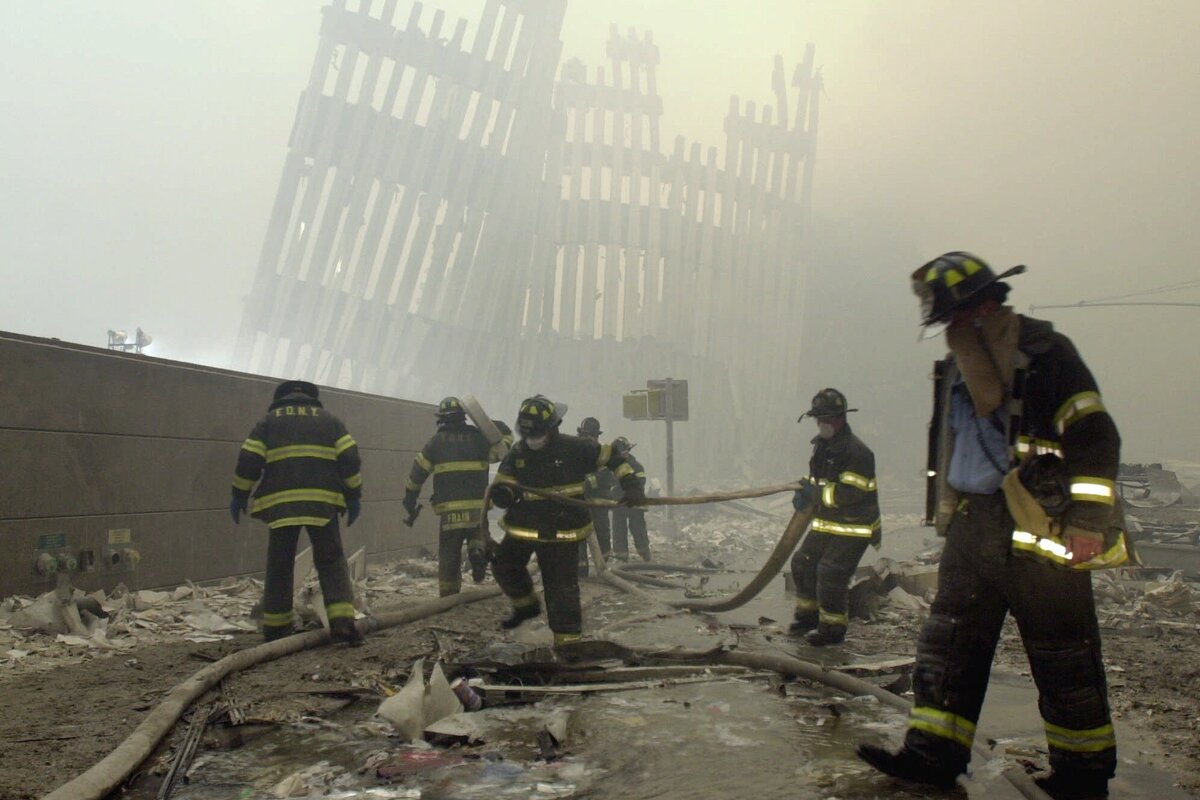
Firefighters work beneath the vertical struts of the World Trade Center’s twin towers, in Lower Manhattan, following the attacks of Sept. 11, 2001.

Mark Lennihan/Associated Press

hide caption

toggle caption

Mark Lennihan/Associated Press

Following the attacks of Sept. 11, 2001, first responders rushed to ground zero in Manhattan, where they braved dangerous conditions to rescue people buried in the rubble, retrieve the remains of the dead and clear the debris. Among them was demolition supervisor John Feal.

Feal arrived at ground zero on Sept. 12; just five days later, he was seriously injured when an 8,000-pound piece of steel fell and crushed his foot.

He became septic from the deeply infected wound, and nearly died. The accident cost Feal half his foot — and his job. His despair grew deeper when the government denied him medical compensation for his injury.

Speaking with other first responders, Feal realized that he was not alone. Not only were others also being denied money to help pay for their injuries and illnesses, but the trauma was ruining people’s lives.

“They were losing their homes,” he says. “They were getting divorced, or separated, or their kids were in rehab for drugs because Daddy or Mommy were miserable.”

Feal formed the FealGood Foundation, which advocates on behalf of emergency personnel. He also began working to pressure Congress to pass a bill that would provide compensation for medical care and monitoring for first responders. On Dec. 22, 2010, the James Zadroga 9/11 Health and Compensation Act was passed.

Looking back, Feal thinks about the injury he suffered at ground zero with mixed emotions: “At the time, it was devastating. It altered my life and I thought it was for the worst. But I look back now and it gives me a chance to show everybody how my mother raised me, so I’m thankful.”


Interview Highlights

On injuring his foot while working at ground zero

Roughly 8,000 pounds of steel crushed my left foot. … I jumped and I didn’t get all the way out of the way. It caught my left foot. The guy next to me fainted, because the blood was shooting out of my foot about 6 feet in the air. I made a tourniquet. … I took his belt off and I made a tourniquet below my knee.

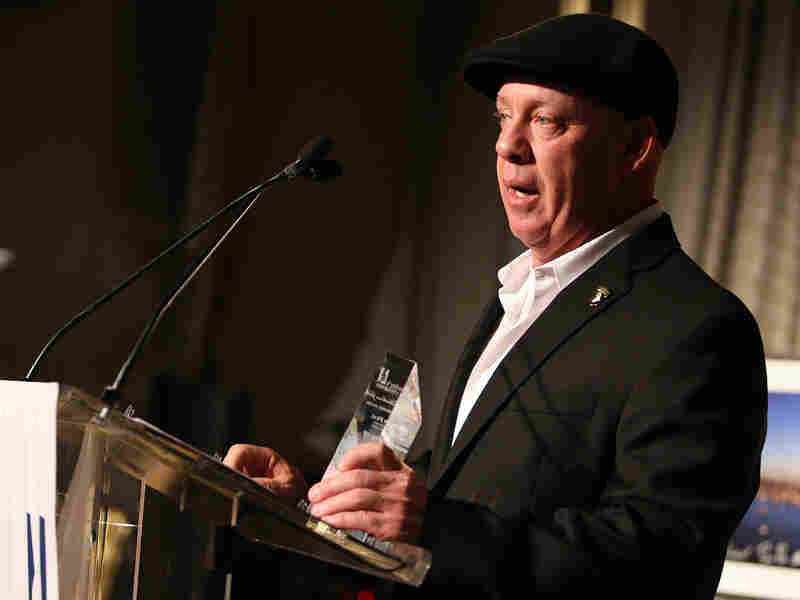
John Feal has received recognition nationally for his work helping first responders get medical compensation and other support for the trauma, illnesses and injuries they suffered from their work related to Sept 11.

Paul Morigi/Getty Images for Tuesday’s Child

hide caption

toggle caption

Paul Morigi/Getty Images for Tuesday’s Child

Before 9/11, in my mind, I was the world’s greatest athlete and I was John Wayne. I was that cool. I didn’t think I could even be hurt — and that was a rude awakening for me, physically and mentally. But I was able to get to safety. … By that time the fire department was there and they put a towel in front of me, I was yelling at everybody to get back to work — “I’ll be back in an hour,” you know — and it was a very humbling experience.

On remembering the moment the steel beam hit his foot

I can block out my injury. I can block out my five days there [at ground zero]. I can’t block out the smell. Probably why I don’t sleep enough. When I close my eyes, I can smell ground zero. Everybody always asks what [did] it smell like? There’s not a word invented yet that describes the smell of ground zero. … It’s a smell that I’ve never smelled before or [since]. It’s a smell of destruction, devastation, carnage. It was everything combined in one that created the smell.

It’s not just me saying this. This is other 9/11 responders and first responders or volunteers who will say the same thing. Especially this time of the year, when I shut my eyes, that smell comes back and it’s like it’s putting its hand over my mouth and nose, and it gets tough.

On the reoccurring nightmare he had after Sept. 11

This time of the year, this anniversary … it’s tough. Not just for me — it’s tough for all 9/11 responders and volunteers and survivors and people who lived and worked down in ground zero. They call these “scars” — they’re not scars, they’re scabs, and these scabs get pulled right off round this time of the year. It’s tough.

You know, when I was going to therapy back in 2002 and ’03 and ’04 and ’05, I had these same recurring nightmares … where I would see the plane crash; and one day I’d be sitting on a park bench with my dog, the plane would be driving by and I couldn’t do anything. Then it was personal. The next day I’m sitting on the park bench with my dog and I would see my mother in the window of the plane waving. Then, little by little, after doing therapy, I was able to get off the park bench and get up and, like Superman, stop the plane from crashing into the building.

On how he became an activist, working to get medical compensation for Sept. 11 first responders

When I was not only going for individual counseling, right after Sept. 11 … I started going to support groups and I started meeting other 9/11 responders. …

And then I was telling people about my experience on workmen’s comp or social security, and I started helping them. And I started going to their hearings. And then, the next thing you know, I started taking other Sept. 11 responders to somebody else’s hearings, and then the judges and the lawyers were like, “Oh here comes Feal, with his crew!”

I look back and it was primitive, but it was effective. Again, at the end of the day I don’t apologize or second guess myself, because we’re talking about human life. We’re talking about human beings who are trying to put food on their table for their kids, or pay their utilities, or put gas in their car to get to a chemotherapy appointment. So it didn’t matter what elected official or what lawyer or what judge or what doctor I pissed off, because the only thing I care about at the end of the day is helping people.

On how going to so many funerals has shaped his thoughts on death

I’m not so much into all that biblical religious stuff, but I do believe there’s a God. I believe we’re here for a purpose, and I believe when we leave there’s also a purpose. I think our energy goes to other people and our energy continues. I’m not afraid of dying, no. Listen … I went to therapy when I wanted to kill myself after getting out of the hospital; those thoughts creep up. I do have my bad days. Would I do it? No. Am I strong enough to stop myself? Yes. But I am not afraid to die, and there are times where I wish I would have died instead of a friend or somebody who left behind four kids. I begged God — my God totake me instead of them.

On the importance of remembering the sacrifice of first responders

Most people think on this anniversary that two buildings came down that day and 2,753 innocent lives were lost [in New York City]. … But since then, about 2,000 [more] people have died because of their illnesses. They, too, are heroes. And in many ways — I talk to a lot of them — they wish they would have died that day, because what they have had to go through and fight, not only their illnesses but the bureaucracy and the poor leadership, and to see their other friends pass away from Sept. 11-related illnesses. These men and women have been through the ringer, through the mill. …

We call ourselves the greatest nation in the world. But yet we have a strange way of repeating history, and letting veterans come home from war, or 9/11 responders, or just responders now across the nation, how they sacrifice themselves and then we don’t take care of them. That’s sad.

Amy Salit and Thea Chaloner produced and edited the audio of this interview. Bridget Bentz and Molly Seavy-Nesper adapted it for the Web.

Let’s block ads! (Why?)