Home Visits Help Parents Overcome Tough Histories, Raise Healthy Children

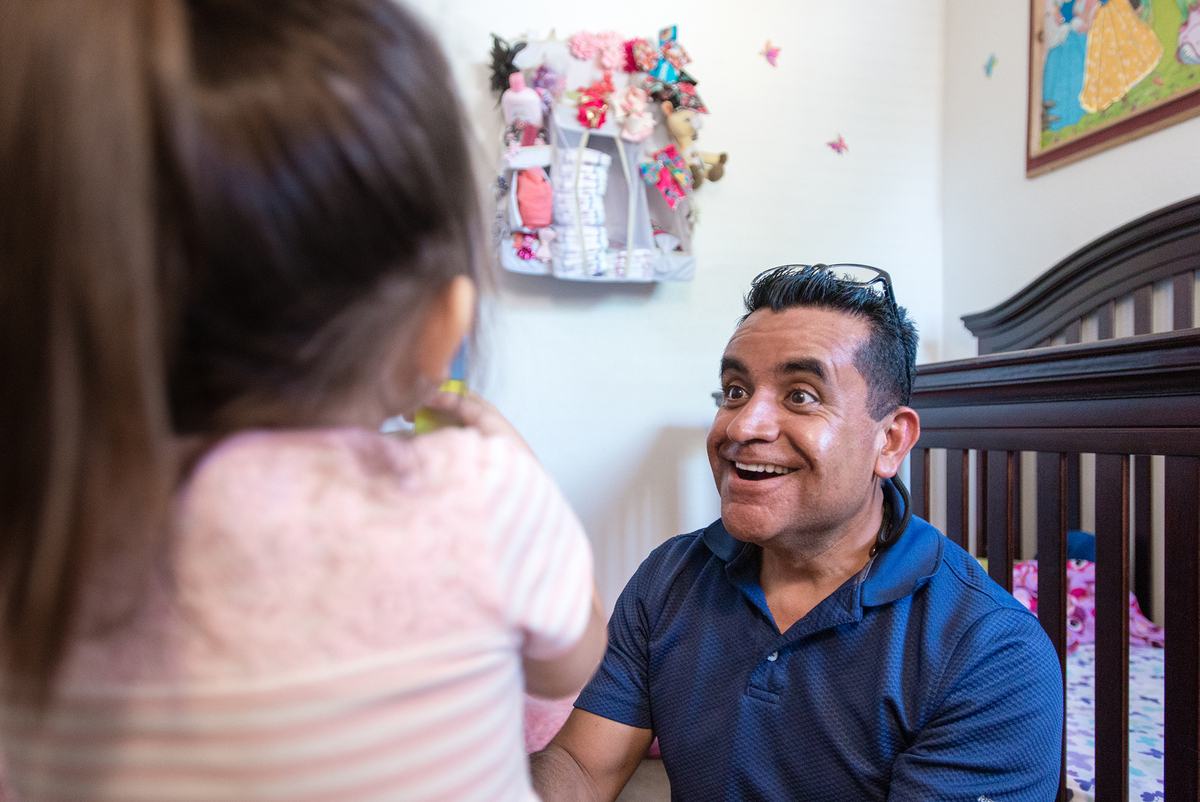
Rosendo Gil, a family support worker with the Imperial County, Calif., home visiting program, has visited Blas Lopez and his fiancée Lluvia Padilla dozens of times since their daughter was born three years ago.

Heidi de Marco/Kaiser Health News

hide caption

toggle caption

Heidi de Marco/Kaiser Health News

Seated at a kitchen table in a cramped apartment, Rosendo Gil asks the parents sitting across from him what they should do if their daughter catches a cold.

Blas Lopez, 29, and his fiancée, Lluvia Padilla, 28, are quick with the answer: Check her temperature and call the doctor if she has a fever they can’t control.

“I’m very proud of both of you knowing what to do,” Gil says, as 3-year-old Leilanie Lopez plays with a pretend kitchen nearby.

Padilla says that’s not a question they could have answered when Leilanie was born. “We were asking question after question after question,” she recalls.

Gil, who worked as a nurse in his native Mexico, is now a family support worker with the Imperial County Home Visiting Program. He has visited the El Centro, Calif., family dozens of times since Leilanie’s birth. At each visit, Gil teaches the couple a little more about child development and helps them cope with the stresses of work, school, relationships and parenting.

Gil and other home visitors around the nation face a daunting task: to help new parents raise healthy children and overcome poverty, substance abuse, depression and domestic violence.

Home visiting organizations operated out of the national limelight for decades until the Affordable Care Act created a nationwide program in 2010 to support them. The federal Maternal, Infant and Early Childhood Home Visiting program now awards $400 million in annual grants to help new families with young children and couples who are expecting.

The Imperial County, Calif., program serves roughly 100 families with its $630,000 annual budget from the federal government. Nationwide, federally-funded home visitors reached 160,000 parents and children in 2016, according to the Health Resources & Services Administration.

Funding for the program is set to expire at the end of September unless Congress acts to reauthorize it. With the deadline looming, advocates and providers are urging federal lawmakers to reauthorize it for five more years at double the current funding level. Two bills are pending in the House.

“Expiration is just not an option,” says Diedra Henry-Spires, chief executive officer of the nonprofit advocacy organization Dalton Daley Group and one of the leaders of the nationwide Home Visiting Coalition. “Too many families are relying on these services across the country.”

Rosendo Gil plays with 3-year-old Leilanie Lopez. He’s encouraged her parents to read to her every day.

Heidi de Marco/Kaiser Health News

hide caption

toggle caption

Heidi de Marco/Kaiser Health News

Studies have shown that home visiting programs get results – they help reduce child abuse and neglect and improve child and maternal health, for example. Researchers say home visiting also saves money that would otherwise be spent later on the child welfare system, special education, medical care and other services.

Organizations that provide home visits fear that some programs may have to reduce the number of families they serve, while others may have to close altogether if the funding is not renewed in time.

Chicago-based Healthy Families America sends social workers, nurses and others into homes in 35 states. Its national director, Cydney Wessel, hears from many participants who say they want to avoid the mistakes their own parents made and raise their children in homes without violence or substance abuse.

“Under stressful situations, parents often revert to how they were parented” if they don’t have somebody to help guide them along a different path, Wessel says.

Lopez and Padilla were determined to discipline Leilanie without spanking her. “I don’t want to follow that same pattern,” Padilla says.

The couple credits Gil with teaching them much about babies over the past three years — for example, that holding them a lot doesn’t make them clingy. Gil recently brought Leilanie a book called “Mommy’s Best Kisses,” reiterating to the parents the importance of reading to her every day.

“He’s like a friend,” says Lopez, a former migrant worker who is studying to get his high school diploma. “We have counted on him.”

Gil has also helped the couple live on their own and communicate better with each other, Lopez says. He helped them find services when Leilanie’s speech was delayed and encouraged Lopez, who has Crohn’s disease, to take his medicine.

Rosendo Gil, who was a nurse in his native Mexico, works to build trust with all of his clients. Blas Lopez and Lluvia Padilla say Gil has taught them how to better care for their daughter and themselves.

Heidi de Marco/Kaiser Health News

hide caption

toggle caption

Heidi de Marco/Kaiser Health News

Gil says it is crucial to gain the trust of his clients, which he sometimes does by telling them about his own alcoholic father or the challenges he faced raising his daughters. “It opens the door,” says Gil.

And over time, he sees changes and feels grateful he played a part.

“I see parents going back to work and back to school,” he says. “I see parents breaking the cycle on substance abuse. I see families becoming role models to other families. … This is so great to see.”

Kaiser Health News, a nonprofit health newsroom whose stories appear in news outlets nationwide, is an editorially independent part of the Kaiser Family Foundation.

Let’s block ads! (Why?)

As Rain Keeps Falling, Sierra Leone Scrambles To Find Mudslide Survivors

Search and rescue team members and soldiers work near a mudslide site and a damaged building near Freetown, Sierra Leone, on Tuesday.

Mohamed Saidu Bah /AFP/Getty Images

hide caption

toggle caption

Mohamed Saidu Bah /AFP/Getty Images

Sierra Leone, a country that has been battered by Ebola, civil war and massive floods, suffered yet another tragedy this week. Government and international aid workers are racing the clock to find survivors after a mudslide struck capital city Freetown early Monday morning.

Some 600 people are still missing, and there are reports that some people are still alive, trapped in their homes underneath the mud.

At the same time, aid groups are trying to support roughly 9,000 people — who were injured, displaced, or found their lives disrupted by the devastation — and avert a potential public health crisis.

To make matters worse, rain keeps falling and it is not expected to slow down until next month, raising the risk for more mudslides. As it is, hospital morgues can’t keep up with the more than 200 victims’ bodies so far. Health facilities are also struggling to keep up with the hundreds of people treated for injuries related to the mudslide.

The Sierra Leonean government leads the response and is working with nonprofit organizations to fill in the gap. Groups like Oxfam and UNICEF are helping to determine what people who lost their homes to the mudslide need. And the government asked Catholic Relief Services to help with burials.

NPR spoke with Idalia Amaya, the deputy head of programs and the emergency response coordinator for CRS in Freetown, about the ongoing rescue effort, the challenges faced by aid groups on the ground and how the Ebola outbreak that struck Sierra Leone in 2014 helped prepare for the mudslide response. This interview has been edited for length and clarity.


Interview Highlights

What is the biggest challenge right now?

The rain. August is the peak of the rainy season in Sierra Leone. The timing of this is really horrible because every day it is raining and it will continue through the end of the month. It makes the emergency response slower.

We are getting reports that family members are receiving text messages and calls from people trapped in the mud. They are still inside their homes that were swept away by the mudslide. Attempts to reach them are hampered because there is not enough equipment to dig people out, and the continued rain makes the operation dangerous for the rescuers. There are concerns that people will get trapped themselves.

How are aid groups like Catholic Relief Services dealing with the response?

Floodwaters rage past a damaged building in Freetown, Sierra Leone, on Monday.

Mohamed Saidu Bah /AFP/Getty Images

hide caption

toggle caption

Mohamed Saidu Bah /AFP/Getty Images

Being that Ebola happened a couple of years ago, there is a big international presence in the country. So it’s a blessing in disguise because there are so many groups already here that can get the boots on the ground to get the immediate assistance of food, water, shelter, mattresses and more to people.

What lessons were learned from the Ebola response?

Instead of setting up a parallel system like was done during the Ebola outbreak, it is led and owned by the government. Of course, there have been some challenges, but the international community is ready to help. They identified the need for burial teams, so CRS stepped up and said we can fill that role.

Are there other problems caused by the mudslide?

Because the morgue and the central hospital has been overwhelmed with bodies, the bodies have been laying outside. The bodies are decomposing and fluids are streaming into public water areas. We need to do dignified burials as quickly as possible.

People are also trying to move the bodies themselves without the proper training, using regular gloves and aprons. Government health officials said cholera is a leading concern during an infection prevention control meeting, due to the fact that drinking water for thousands of people in Freetown is affected by the mudslide.

How do you balance dignity and urgency when performing the burials?

We don’t want to retraumatize the community. There was an outcry when the mass graves were done during the Ebola outbreak and it became a public health hazard when people blocked the burials.

We are balancing it with a lot of education saying that we need to bury the bodies in a timely fashion and in a dignified way. We do that by making sure there is a religious leader accompanying the burial team to give the final rights to the individuals buried. It is also important that the president is expected to lead a funeral procession where some of the caskets are draped in the country’s flag.

What makes you optimistic about Sierra Leone?

The people here have survived a civil war, Ebola, cholera outbreaks. Regardless of this tragedy and their religious beliefs, they are coming together as a community. People are waking up each morning and getting out to help each other each day since the mudslide. Here, they are strong and tall and they will survive.

Tom Murphy is a journalist focused on foreign aid and development. His work has appeared in Foreign Policy, GlobalPost, Humanosphere and the Guardian. Tweet him @viewfromthecave.

Let’s block ads! (Why?)

Many Nurses Lack Knowledge Of Health Risks To Mothers After Childbirth

The maternal mortality rate in the U.S. is the highest among affluent nations. Researchers believe that with better education, postpartum nurses could help mothers identify life-threatening complications.

Mart Klein/Getty Images

hide caption

toggle caption

Mart Klein/Getty Images

In recent months, mothers who nearly died in the hours and days after giving birth have repeatedly told ProPublica and NPR that their doctors and nurses were often slow to recognize the warning signs that their bodies weren’t healing properly.

A study published Tuesday in MCN: The American Journal of Maternal/Child Nursing substantiates some of those concerns. Researchers surveyed 372 postpartum nurses nationwide and found that many of them were ill-informed about the dangers mothers face after giving birth.

Needing more education themselves, they were unable to fulfill their critical role of educating moms about symptoms like painful swelling, headaches, heavy bleeding and breathing problems that could indicate potentially life-threatening complications.

By failing to alert mothers to such risks, the study found, nurses may be missing an opportunity to help reduce the maternal mortality rate in the U.S., the highest among affluent nations. An estimated 700 to 900 women die in the U.S. every year from pregnancy- and childbirth-related causes. Another 65,000 nearly die, according to the Centers for Disease Control and Prevention. The rates are highest among black mothers and women in ruralareas. A recent CDC Foundation analysis of data from four states found that close to 60 percent of maternal deaths were preventable.

Nearly half of the nurses who responded to the survey were unaware that maternal mortality has risen in the U.S. in recent years, and 19 percent thought maternal deaths had actually declined. “If [nurses] aren’t aware that there’s been a rise in maternal mortality, then it makes it less urgent to explain to women what the warning signs are,” says study co-author Debra Bingham, who heads the Institute for Perinatal Quality Improvement and teaches at the University of Maryland School of Nursing.

Only 12 percent of the respondents knew that the majority of maternal deaths occur in the days and weeks after delivery. Only 24 percent correctly identified heart-related problems as the leading cause of maternal death in the U.S.

In fact, cardiovascular disease and heart failure — which, according to recent data, account for more than a quarter of maternal deaths in this country — were “the area that the nurses felt the least confident in teaching about,” says Patricia Suplee, an associate professor at the Rutgers University School of Nursing in Camden, N.J., and the lead researcher on the study.

Nurses also said they spent very little time — usually 10 minutes or less — instructing new moms about warning signs of potential complications. Many of the nurses said they were only likely to discuss such life-threatening conditions as pre-eclampsia (pregnancy-related high blood pressure), blood clots in the lungs or heart problems “if relevant,” though it was unclear what that meant. As the study noted, “it is impossible to accurately predict which women will suffer from a post-birth complication.”

The post-delivery education provided by nurses is particularly important because once a mother leaves the hospital, she typically doesn’t see her own doctor for four to six weeks. Up to 40 percent of new moms, overwhelmed with caring for an infant and often lacking in maternity leave, child care, transportation and other kinds of support, never go back for their follow-up appointments.

Figuring out the best way to instruct new mothers is all the more crucial, the survey noted, because the first days after giving birth are “exhausting, emotionally charged and physiologically draining” — hardly an ideal learning environment. But like so many other important aspects of maternal health care, postpartum education has been poorly studied, Bingham says.

The respondents, of whom nearly one-third had master’s or doctoral degrees, were members of the Association of Women’s Health, Obstetric and Neonatal Nurses, the leading professional organization for nurses specializing in maternal and infant care. The association began looking at the education issue in 2014, when Bingham was the association’s vice president of nursing research and education. “We had to start really from the ground up, because we didn’t know exactly what women were being taught,” she says.

In focus groups conducted in New Jersey and Georgia, two states with especially high rates of maternal mortality, researchers discovered that postpartum nurses spent most of their time educating moms about how to care for their new babies, not themselves. The information mothers did receive about their own health risks was wildly inconsistent and sometimes incorrect, Bingham says. The written materials women took home often weren’t much better.

Some nurses were uncomfortable discussing the possibility that complications could be life-threatening. “We had some nurses come out and say, ‘Well you know what, I don’t want to scare the woman. This is supposed to be a happy time. I don’t want to seem like all I want to talk about is death,’ ” Bingham says.

But the researchers also found that nurses could be quickly educated with short, targeted information. Using insights from the focus groups, an expert panel developed two standardized tools: a checklist and script that nurses could follow when instructing new mothers and a one-page handout of post-birth warning signs that mothers could refer to after they returned home, with clear-cut instructions for when to see a doctor or call 911.

Those tools were tested in four hospitals in 2015. “Very quickly, we started hearing from the nurses that women were coming back to the hospital with the handout, saying, ‘I have this symptom,’ ” Bingham says.

One of them was a Georgia mom named Sarah Duckett, who had just given birth to her second child. A week later, she recognized the warning signs of what turned out to be a blood clot in her lung, a postpartum complication that can be fatal. “Those were anecdotes, but they were very powerful anecdotes,” Bingham says. “I’ve led multiple projects over the years, and rarely do I get such immediate feedback that something is working.”

The shortcomings documented by the national survey could foster wider use of these tools, suggests Mary-Ann Etiebet, executive director of Merck for Mothers, which funded the study as part of a 10-year, $500 million initiative to improve maternal health around the world. “Something as simple as creating educational and training programs for nurses … can have a real impact,” she says.

Let’s block ads! (Why?)

Federal Appeals Court Says Arkansas Can Block Medicaid Payments To Planned Parenthood

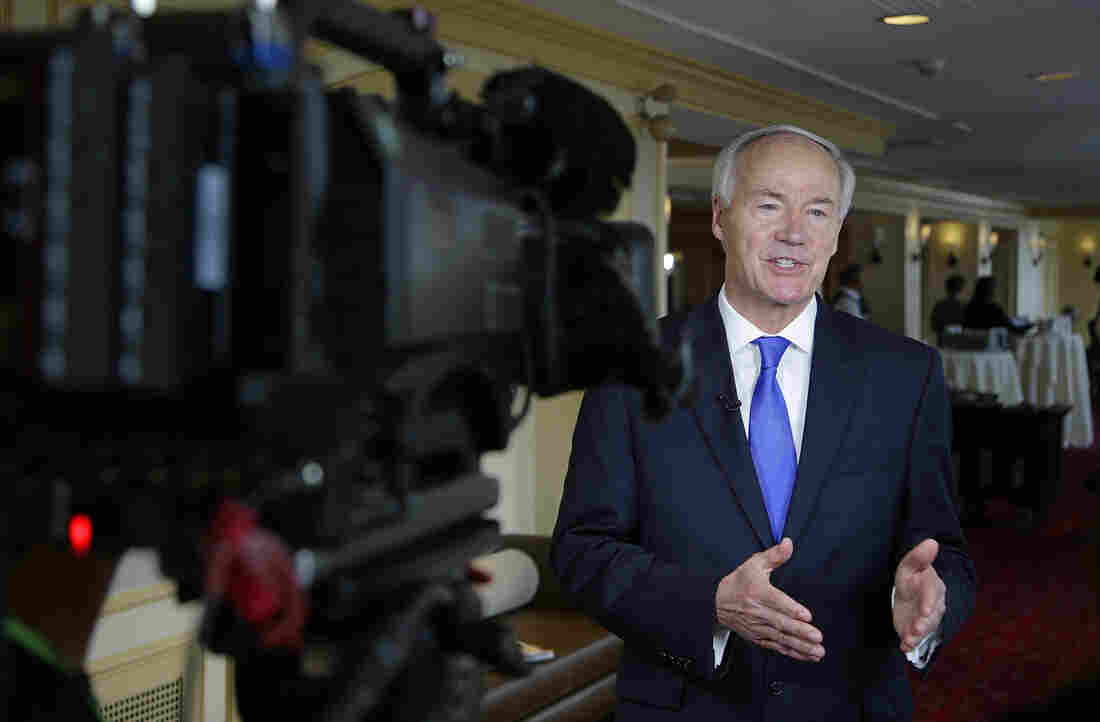
Arkansas Gov. Asa Hutchinson, pictured here during an interview last month, ended the state’s Medicaid contract with Planned Parenthood two years ago. He praised the circuit court’s decision.

Stephan Savoia/AP

hide caption

toggle caption

Stephan Savoia/AP

A federal appeals court has sided with the state of Arkansas against Planned Parenthood, saying it can block Medicaid payments to the medical provider. It reversed earlier injunctions that forbade the state from suspending the money in the wake of a controversial leaked video of Planned Parenthood staff.

That video, leaked by anti-abortion activists, purports to show Planned Parenthood staff outside Arkansas discussing fetal tissue sales. Planned Parenthood has said the tapes are fraudulent and multiple investigations have deemed the allegations as false.

In 2015, citing the video, Arkansas Gov. Asa Hutchinson terminated the state’s Medicaid provider agreements with Planned Parenthood’s local affiliate.

Then, three unnamed Planned Parenthood patients sued the director of the Arkansas Department of Human Services, saying that it was violating their federal right to choose any qualified provider offering the services they were seeking.

A district court then blocked the state from cutting off payments to Planned Parenthood for these three patients. A second injunction expanded that to an entire class of Medicaid beneficiaries in Arkansas who used Planned Parenthood services.

Today, in a 2-1 decision, the U.S. Court of Appeals for the Eighth Circuit vacated those injunctions. U.S. Circuit Judge Steven Colloton wrote that in the provision of the Medicaid Act cited by the plaintiffs, it is not clear that Congress intended to create a judicially-enforceable right for individual patients to choose any qualified provider that offers the services they seek.

He said that it would create a “curious system” to review a provider’s qualifications. “Under the Jane Does’ vision, while the provider is litigating its qualifications in the state courts, or after the provider unsuccessfully appeals a determination that it is not qualified, individual patients separately could litigate or relitigate the qualifications of the provider in federal court,” Colloton wrote.

At the same time, Colloton says “the lack of a judicially enforceable federal right for Medicaid patients does not mean that state officials have unfettered authority to terminate providers,” and notes that providers whose contracts are cancelled have the right to appeal.

In a dissenting opinion, Circuit Judge Michael Melloy notes that four other circuit courts and numerous district courts have ruled the opposite way, finding that there is a “private right of enforcement” to choose any qualified provider, such as Planned Parenthood.

The decision does not comment on the video as the rationale that Hutchinson provided for seeking to end the contract.

Planned Parenthood says it is “evaluating all options to ensure our patients receive uninterrupted care.”

“This is not over,” said Planned Parenthood Federation of America Chief Medical Officer Raegan McDonald-Mosley. “We will do everything in our power to protect our patients’ access to birth control, cancer screenings, and other lifesaving care. Extreme politicians are trying to defund and shut down Planned Parenthood — and this is not what Americans want.”

In a statement, Hutchinson described this as “a substantial legal victory for the right of the state to determine whether Medicaid providers are acting in accordance with best practices and affirms the prerogative of the state to make reasoned judgments on the Medicaid program.”

Jerry Cox, the executive director of the Family Council, an Arkansas-based conservative group, tells KUAR’s Michael Hibblen: “The videos aside, the question is should the state of Arkansas do business with an organization that aborts babies when they don’t need to.”

According to The Associated Press, “the state has said Planned Parenthood received $51,000 in Medicaid funds in the fiscal year before Hutchinson’s decision to terminate the contract,” and “none of the money paid for abortions.”

Let’s block ads! (Why?)

Federal Appeals Court Says Arkansas Can Block Medicaid Payments To Planned Parenthood

Arkansas Gov. Asa Hutchinson, pictured here during an interview last month, ended the state’s Medicaid contract with Planned Parenthood two years ago. He praised the circuit court’s decision.

Stephan Savoia/AP

hide caption

toggle caption

Stephan Savoia/AP

A federal appeals court has sided with the state of Arkansas against Planned Parenthood, saying it can block Medicaid payments to the medical provider. It reversed earlier injunctions that forbade the state from suspending the money in the wake of a controversial leaked video of Planned Parenthood staff.

That video, leaked by anti-abortion activists, purports to show Planned Parenthood staff outside Arkansas discussing fetal tissue sales. Planned Parenthood has said the tapes are fraudulent and multiple investigations have deemed the allegations as false.

In 2015, citing the video, Arkansas Gov. Asa Hutchinson terminated the state’s Medicaid provider agreements with Planned Parenthood’s local affiliate.

Then, three unnamed Planned Parenthood patients sued the director of the Arkansas Department of Human Services, saying that it was violating their federal right to choose any qualified provider offering the services they were seeking.

A district court then blocked the state from cutting off payments to Planned Parenthood for these three patients. A second injunction expanded that to an entire class of Medicaid beneficiaries in Arkansas who used Planned Parenthood services.

Today, in a 2-1 decision, the U.S. Court of Appeals for the Eighth Circuit vacated those injunctions. U.S. Circuit Judge Steven Colloton wrote that in the provision of the Medicaid Act cited by the plaintiffs, it is not clear that Congress intended to create a judicially-enforceable right for individual patients to choose any qualified provider that offers the services they seek.

He said that it would create a “curious system” to review a provider’s qualifications. “Under the Jane Does’ vision, while the provider is litigating its qualifications in the state courts, or after the provider unsuccessfully appeals a determination that it is not qualified, individual patients separately could litigate or relitigate the qualifications of the provider in federal court,” Colloton wrote.

At the same time, Colloton says “the lack of a judicially enforceable federal right for Medicaid patients does not mean that state officials have unfettered authority to terminate providers,” and notes that providers whose contracts are cancelled have the right to appeal.

In a dissenting opinion, Circuit Judge Michael Melloy notes that four other circuit courts and numerous district courts have ruled the opposite way, finding that there is a “private right of enforcement” to choose any qualified provider, such as Planned Parenthood.

The decision does not comment on the video as the rationale that Hutchinson provided for seeking to end the contract.

Planned Parenthood says it is “evaluating all options to ensure our patients receive uninterrupted care.”

“This is not over,” said Planned Parenthood Federation of America Chief Medical Officer Raegan McDonald-Mosley. “We will do everything in our power to protect our patients’ access to birth control, cancer screenings, and other lifesaving care. Extreme politicians are trying to defund and shut down Planned Parenthood — and this is not what Americans want.”

In a statement, Hutchinson described this as “a substantial legal victory for the right of the state to determine whether Medicaid providers are acting in accordance with best practices and affirms the prerogative of the state to make reasoned judgments on the Medicaid program.”

Jerry Cox, the executive director of the Family Council, an Arkansas-based conservative group, tells KUAR’s Michael Hibblen: “The videos aside, the question is should the state of Arkansas do business with an organization that aborts babies when they don’t need to.”

According to The Associated Press, “the state has said Planned Parenthood received $51,000 in Medicaid funds in the fiscal year before Hutchinson’s decision to terminate the contract,” and “none of the money paid for abortions.”

Let’s block ads! (Why?)

Often Missing From The Current Health Care Debate: Women's Voices

U.S. Sen. Susan Collins, R-Maine, and other female senators were excluded from the Senate leadership health task force this summer.

Justin Sullivan/Getty Images

hide caption

toggle caption

Justin Sullivan/Getty Images

Women have a lot at stake in the fight over the future of health care.

Not only do many depend on insurance coverage for maternity care and contraception, they are struck more often by autoimmune conditions, osteoporosis, breast cancer and depression. They are more likely to be poor and depend on Medicaid, and to live longer and depend on Medicare. And it commonly falls to them to plan health care and coverage for the whole family.

Yet in recent months, as leaders in Washington discussed the future of American health care, women were not always invited. To hammer out the Senate’s initial version of a bill to replace Obamacare, Majority Leader Mitch McConnell appointed 12 colleagues, all male, to closed-door sessions – a fact that was not lost on female Senators. Some members of Congress say they don’t see issues like childbirth as a male concern. Why, two GOP representatives wondered aloud during the House debate this spring, should men pay for maternity or prenatal coverage?

As the debate over health care continues, one of the challenges in addressing women’s health concerns is that they have different priorities, depending on their stage in life. A 20-year-old may care more about how to get free contraception, while a 30-year-old may be more concerned about maternity coverage. Women in their 50s might be worried about access to mammograms, and those in their 60s may fear not being able to afford insurance before Medicare kicks in at 65.

To get a richer sense of women’s varied viewpoints on health care, we asked several women around the country of different ages, backgrounds, and political views to share their thoughts and personal experiences.

Now retired, Patricia Loftman, 68, sits on the board of the American College of Nurse-Midwives and advocates for better care for minority women.

Courtesy of Patricia Loftman

hide caption

toggle caption

Courtesy of Patricia Loftman

Patricia Loftman, 68, New York City

Loftman spent 30 years as a certified nurse-midwife at Harlem Hospital Center and remembers treating women coming in after having botched abortions.

Some didn’t survive.

“It was a really bad time,” Loftman says. “Women should not have to die just because they don’t want to have a child.”

When the Supreme Court ruled that women had a constitutional right to an abortion in 1973, Loftman remembers feeling relieved. Now she’s angry and scared about the prospect of stricter controls. “Those of us who lived through it just cannot imagine going back,” she says.

A mother and grandmother, Loftman also recalls clearly when the birth control pill became legal in the 1960s. She was in nursing school in upstate New York and glad to have another, more convenient option for contraception. Already, women were gaining more independence, and the Pill “just added to that sense of increased freedom and choice.”

To her, conservatives’ attack on Planned Parenthood, which has already closed many clinics in several states, is frustrating because the organization also provides primary and reproductive health care to many poor women who wouldn’t be able to get it otherwise.

Now retired, Loftman sits on the board of the American College of Nurse-Midwives and advocates for better care for minority women. “There continues to be a dramatic racial and ethnic disparity in the outcome of pregnancy and health for African-American women and women of color,” she says.

Terrisa Bukovinac, 36, serves as president of Pro-Life Future of San Francisco and participates in anti-abortion demonstrations.

Courtesy of Terrisa Bukovinac

hide caption

toggle caption

Courtesy of Terrisa Bukovinac

Terrisa Bukovinac, 36, San Francisco

Bukovinac calls herself a passionate pro-lifer. As president of Pro-Life Future of San Francisco, she participates in marches and protests to demonstrate her opposition to abortion.

“Our preliminary goal is defunding Planned Parenthood,” she says. “That is crucial to our mission.”

As much as the organization touts itself as being a place where people get primary care and contraception, “abortion is their primary business model,” Bukovinac says.

She said the vast majority of abortions are not justifiable and that she supports a woman’s right to an abortion only in cases that threaten her life. “We are opposed to what we consider elective abortions,” she says.

Bukovinac says she also tries to help women in crisis get financial assistance so they don’t end their pregnancies just because they can’t afford to have a baby. She supports women’s access to health insurance and health care, both of which are costly for many. “Certainly, the more people who are covered, the better it is” for both the mother and baby.

Bukovinac herself is uninsured because she says the premiums cost more than she would typically pay for care. Self-employed, Bukovinac has a disorder that causes vertigo and ringing in the ear and spends about $300 per month on medication for that and for anxiety.

She doesn’t know if the Affordable Care Act is to blame, but she said that before the law “I was able to afford health insurance and now I’m not.”

Irma Castaneda, 49, says the bright side of becoming eligible for Medicaid was her family now faces fewer out-of-pocket expenses for health care.

Courtesy of Irma Castaneda

hide caption

toggle caption

Courtesy of Irma Castaneda

Irma Castaneda, 49, Huntington Beach, Calif.

Castaneda is a breast cancer survivor. She’s been in remission for several years but still sees her oncologist annually and undergoes mammograms, ultrasounds, and blood tests.

The married mom of three, a teacher’s aide to special education students, is worried that Republicans may make insurance more expensive for people like her with pre-existing conditions. “They could make our premiums go sky high,” she says.

Her family previously purchased a plan on Covered California, the state’s Obamacare exchange. But there was a high deductible, so she had to come up with a lot out-of-pocket money before insurance kicked in. “I was paying medical bills up the yin yang,” she says. “I felt like I was paying so much for this crappy plan.”

Then, about a year ago, Castaneda’s husband got injured at work and the family’s income dropped by half. Now they rely on Medicaid. At least now they have fewer out-of-pocket expenses for health care.

Whatever the coverage, Castaneda says, she needs high-quality health care. “God forbid I get sick again,” she says. And she worries about her daughter, who is transgender and receives specialized physical and mental health care.

“Right now she is pretty lucky because there is coverage for her,” Castaneda says. “With the Trump stuff, what’s going to happen then?”

Celene Wong, 39, Boston

The choice was agonizing for Wong. A few months into her pregnancy, she and her husband learned that her fetus had chromosomal abnormalities. The baby would have had severe special needs, she said.

“We always said we couldn’t handle that,” Wong recalls. “We had to make a tough decision, and it is not a decision that most people ever have to face.”

The couple terminated the pregnancy in January 2016, when she was about 18 weeks pregnant. “At the end of the day, everybody is going to go away except for your husband and you and this little baby,” she says. “We did our research. We knew what we would’ve been getting into.”

Wong, who works to improve the experience for patients at a local hospital, says she is fortunate to have been able to make the choice that was right for her family.

“If the [abortion] law changes, what is going to happen with that next generation?” she wonders.

Lorin Ditzler, 33, says concerns about insurance coverage could play a role as she and her husband decide whether to have a second child.

Courtesy of Lorin Ditzler

hide caption

toggle caption

Courtesy of Lorin Ditzler

Lorin Ditzler, 33, Des Moines, Iowa

Ditzler is frustrated that her insurance coverage may be a deciding factor in her family planning. She quit her job last year to take care of her 2-year-old son and was able to get on her husband’s plan, which doesn’t cover maternity care.

“To me it seems very obvious that our system isn’t set up in a way to support giving birth and raising very small children,” she says.

While maternity benefits are required under the Affordable Care Act, her husband’s plan is grandfathered under the old rules, which is not uncommon among employers that offer coverage. Skirting maternity coverage might become more common if Republicans in Congress pass legislation allowing states to drop maternity coverage an “essential benefit.”

Ditzler looked into switching to an Obamacare plan that they could buy through the exchange, but the rates were much higher than what she pays now.

If she goes back to work, she could get on a better insurance plan that covers maternity care. But that makes little sense to her. “I would go back to a full-time job so I could have a second child, but if I do that, it will be less appealing and less feasible to have a second child because I’d be working full time.”

Ashley Bennett, 34, says she voted for Trump in the 2016 election because he was the anti-abortion candidate.

Courtesy of Ashley Bennett

hide caption

toggle caption

Courtesy of Ashley Bennett

Ashley Bennett, 34, Spartanburg, S.C.

Bennett describes herself as devoutly Christian. She is grateful that she was able to plan her family the way she wanted, with the help of birth control. She had her daughter at 22 and her son two years later.

“I felt free to make that choice, which I think is an awesome thing,” she says. She’s advised her 12-year-old daughter to wait for sex until marriage but has also been open with her about birth control within the context of marriage.

But she draws the line at abortion. “I just feel like we’re playing God. If that conception happens, then I feel like it was meant to be.”

Bennett had apprehensions about Trump but voted for him because he was the anti-abortion candidate. “That was the deciding factor for me, [more than] him yelling about how he’s going to build a wall.”

For her, opposition to abortion must be coupled with support for babies once they are born. She supports adoption and is planning to become a foster parent.

She also is concerned about the mental and physical well-being of young women. Bennett teaches seventh-grade math and coaches the school’s cheerleading and dance teams.

She watches the girls take dozens of photos of themselves to get the perfect shot, then add filters to add makeup or slim them down.

“There’s going to be an aftermath that we haven’t even thought about,” she says. “I worry we’re going to have more and more kids suffering from depression, eating disorders and even suicide because of the effects of the social media.”

Maya Guillén says she worries Republican efforts to defund Planned Parenthood could prevent young girls, especially those in predominantly Hispanic communities like hers, from getting access to contraceptives.

Courtesy of Maya Guillén

hide caption

toggle caption

Courtesy of Maya Guillén

Maya Guillén, 24, El Paso, Texas

When Guillén was growing up, her family spent years without health insurance. They crossed the border into Juárez, Mexico, for dental care, doctor appointments, and optometry visits.

Guillén is now on her parents’ insurance plan under a provision of the Affordable Care Act that allows children to stay on until they turn 26. She’s been disheartened by Republicans’ proposed changes to contraception and abortion coverage, she says.

In high school, Guillén received abstinence-only sex education. She watched her friends get pregnant before they graduated.

When it came time to consider sex, she thought she’d be able to count on Planned Parenthood, but the clinic in El Paso closed, as have 20 other women’s health clinics in Texas. She worries that if Republicans defund Planned Parenthood, more young girls, especially those in predominantly Hispanic communities like hers, will not be able to get contraceptives.

Jaimie Kelton, 39, poses with her wife and their daughter.

Courtesy of Suzanne Fiore

hide caption

toggle caption

Courtesy of Suzanne Fiore

Jaimie Kelton, 39, New York City

When Jaimie Kelton’s wife gave birth to their baby 3½ years ago, she thought the country was finally becoming more open-minded toward gays and lesbians.

“Now I am coming to realize that we are the bubble and they are the majority and that’s really scary,” says Kelton, now pregnant with her second child.

Kelton says it seems as though Republicans have launched a war against women in general, with reproductive rights and maternity care at risk.

“It is crazy to think that most of the people making these laws are men,” she said. “Why do they feel the need to take away health care rights from women?”

This story was produced by Kaiser Health News, which publishes California Healthline, an editorially independent service of the California Health Care Foundation. Gold can be reached @JennyAGold on Twitter and Gorman @AnnaGorman.

Let’s block ads! (Why?)

Hippos, Anthrax And Hunger Make A Deadly Mix

A hippo walks through the South Luangwa National Park in eastern Zambia, where an anthrax outbreak occurred in 2011.

Wolfgang Kaehler/LightRocket via Getty Images

hide caption

toggle caption

Wolfgang Kaehler/LightRocket via Getty Images

A few years ago in Zambia, hippos were dropping dead by the dozens. Soon after the hippos fell ill, people started getting sick, too.

Between August and September of 2011, at least 85 hippos died in a game management area along the South Luangwa River near the border with Malawi. It turns out the hippos were the victims of anthrax, the same bacteria used in a series of letter attacks that killed five people in the weeks after Sept. 11. The anthrax outbreaks in hippos and humans in Zambia however, weren’t part of some sinister terrorist plot. Instead, they were driven by hunger.

“Anthrax infection in wildlife is actually fairly common,” says epidemiologist Melissa Marx, an assistant professor of international health at the Johns Hopkins Bloomberg School of Public Health who investigated the 2011 anthrax incidents in Zambia.

“There have been recently documented [animal] outbreaks all over the world including Italy, Russia, Spain, Zambia, South Africa, Zimbabwe.”

Marx was working for the Centers for Disease Control and Prevention when the Zambia outbreak occurred. It was the dry season — also known as the lean season, when food is in short supply for both hippos and humans. It’s a time when the hippos will chomp grasslands down to almost bare dirt and rip out clumps of grass, unearthing spores of anthrax.

In 2011, as the hippos succumbed to the anthrax infections, local villagers butchered their carcasses for their meat.

Soon more than 500 human anthrax cases were reported in the area and at least five people died.

This was a major outbreak. Local health officials were even pulling in foreign disease experts including Marx to respond to it. Despite this, Marx and her colleagues found that nearly a quarter of the local residents said that the rash of cases wouldn’t stop them from continuing to butcher dead hippos.

“People said they’d eat the meat again even knowing that it could give them anthrax,” Marx says.

Meat is in short supply in this game management area in Zambia. Because the wildlife is protected, the locals aren’t allowed to hunt for food. But scavenging is different.

“For them finding a dead animal when they’re running low on food reserves at home seems like a good thing. This is why a lot of people took the risk even though they might get anthrax,” she says. “But my feeling is they weren’t thinking about that risk. They were thinking about how nice it would be to feed their family.”

Part of their willingness to take that risk may also have been because anthrax is easily treatable with antibiotics. Those drugs were readily available at the local health clinic. If the hippos had been dying of some other infection, the human fatality rate may have been far higher.

As millions of people in Africa face severe food shortages this summer, the roots of this hippo anthrax outbreak in Zambia are worth pondering. Earlier this year, the United Nations warned that in just four countries — Nigeria, South Sudan, Somalia and Yemen — nearly 20 million people are facing starvation. The U.N. called it the worst humanitarian crisis since World War II, and that’s just four countries.

In many other parts of Africa, including Ethiopia, the Democratic Republic of Congo, Kenya and yes, parts of Zambia, food shortages could also reach crisis levels. The transmission of anthrax from dead hippos to hundreds of people in this 2011 incident underscores that people who are desperate will take incredible risks to acquire food.

And that could have major public health consequences. This studypublished Wednesday by Marx and her colleagues in the CDC journal Emerging Infectious Diseases, shows how a lack of food can lead directly to a human disease outbreak.

In this outbreak, it was anthrax. But somewhere else, hunger could drive people to hunt sick monkeys or dying bats that are harboring some other scary pathogen. Scientists suspect this could be how the Ebola virus pops up occasionally in humans.

Marx’s study concludes that “food insecurities appear to be the primary reason for handling and consuming meat from animals found dead.”

Marx says the 2011 anthrax flare-up in Zambia shows the need for a more collaborative, comprehensive and preemptive approach to preventing new disease outbreaks.

“The thing about anthrax outbreaks is that the animal outbreaks are predictable — and in Zambia they’re seasonal. They happen in the dry season,” Marx says. “The authorities can pinpoint areas that are prone to outbreaks. They can warn people who live there to avoid dead animals.”

And she adds, “There does need to be more focus on food insecurity.”

Adequate food reduces the risk of an outbreak by making it less likely that people will eat dodgy bush meat. Chalk this up as one more reason to feed the hungry.

Let’s block ads! (Why?)

'Body Brokers' Get Kickbacks To Lure People With Addictions To Bad Rehab

Dillon Katz, at home in Delray Beach, Fla., says recovering drug users in his group counseling meetings frequently used to offer to help him get into a new treatment facility. He suspects now they were recruiters — so-called “body brokers” — who were receiving illegal kickbacks from the corrupt facility.

Peter Haden/WLRN

hide caption

toggle caption

Peter Haden/WLRN

About five years ago, Dillon Katz, entered a house in West Palm Beach, Fla.

“I walked in and the guy was sitting at this desk — no shirt on, sweating,” Katz says.

The man asked Katz for a smoke.

“So I gave him a couple cigarettes,” Katz says. “He went around the house and grabbed a mattress from underneath the house — covered in dirt and leaves and bugs. He dragged it upstairs and threw it on the floor and told me, ‘Welcome home.’ “

The house was a sober living house or “sober home” — a kind of privately owned halfway house intended to integrate recovering drug and alcohol users back into community life and help them stay on the right path. It was one of the first sober homes Katz lived in. He’s been in and out of drug treatment ever since.

Some sober homes are good places. But others see a person who has an addiction as a payday.

Amid the nation’s growing opioid crisis, South Florida has become a mecca for drug treatment. And as more people arrive looking for help, there’s more opportunity for corruption and insurance fraud. There are millions to be made in billing patients for unnecessary treatment and tests, according to officials investigating the problem.

The first step for unscrupulous rehab centers: Recruiting clients who have good health insurance. That’s created a whole new industry — something called patient brokering or “body brokering.”

Staci Katz, Dillon’s mom, keeps the bills for his five years of on-and-off drug treatment in three large binders. The total charges now exceed $600,000.

Peter Haden/WLRN

hide caption

toggle caption

Peter Haden/WLRN

The corrupt owner of a drug treatment center might pay $500 per week in kickbacks to the operators of sober homes who send them clients with health insurance — clients like Dillon Katz.

At her home in Boynton Beach, Fla., Dillon’s mom, Staci Katz, pulls out three huge binders where she keeps track of his medical bills. She’s tallied up the charges for the five years her 25-year-old son has been in-and-out of treatment: more than $600,000 dollars.

“You could see by the billing — this was very lucrative,” Staci says.

There are charges for all kinds of things — nutrition counseling, acupuncture and chiropractic care among them. But the big expenses were for testing — urine testing.

“When they had charged $9,500 for five urinalyses,” she says, “I was like, ‘Huh! Now I get it.’ “

State and federal officials have been cracking down on fraudulent rehab centers.

The Palm Beach County Sober Home Task Force has has arrested and charged more than 30 operators of addiction treatment centers and sober homes with body brokering in the past 10 months.

In July, U.S. Attorney General Jeff Sessions announced the arrest of Eric Snyder, the 30-year old owner of a Delray Beach rehab center. Prosecutors say he billed insurance companies for more than $58 million in bogus treatment and tests, and recruited addicts with gift cards, drugs and visits to strip clubs.

Dillon Katz was staying at a sober home across the street when Snyder’s place was raided.

Katz alternates between an easy smile and a piercing gaze. He was diagnosed with Tourette’s syndrome and attention deficit hyperactivity disorder at a young age. In high school, he loved acting and music but struggled socially. It was after high school that his drug use escalated — from cocaine to crack to heroin. And his behavior went off the rails.

“I ended up throwing my suitcase out of the window,” Katz says. “I was punching the garage. My hands were bloody. I was flipping out.”

His mom eventually decided she’d had enough of the chaos.

“I said, ‘If you want help, then I will help you,’ ” Staci remembers. “We had no idea what we were up against.”

Delray Beach authorities say body brokers used to target recovering drug users hanging out on the patio of a local Starbucks. The coffee shop restricted access to the patio in 2015, after a meeting with the city officials and the police department.

Peter Haden/WLRN

hide caption

toggle caption

Peter Haden/WLRN

That’s when their drug treatment rollercoaster started. For the next five years, her son went from one treatment center, to another, to another.

“The people my group counseling meetings would offer to help get me into a new place,” he says. “But they always asked first, ‘What’s your insurance like?’ “

He’s pretty sure now that they were doing it for the money.

Body brokering is a source of frustration for legitimate providers of drug rehab services.

“Kids are literally being bought and sold.” says Andrew Burki, founder of Life of Purpose — an addiction treatment center on the Florida Atlantic University campus in Boca Raton. “You want $500? Sell a friend! I mean, that’s crazy, right? But that’s literally what’s happening.”

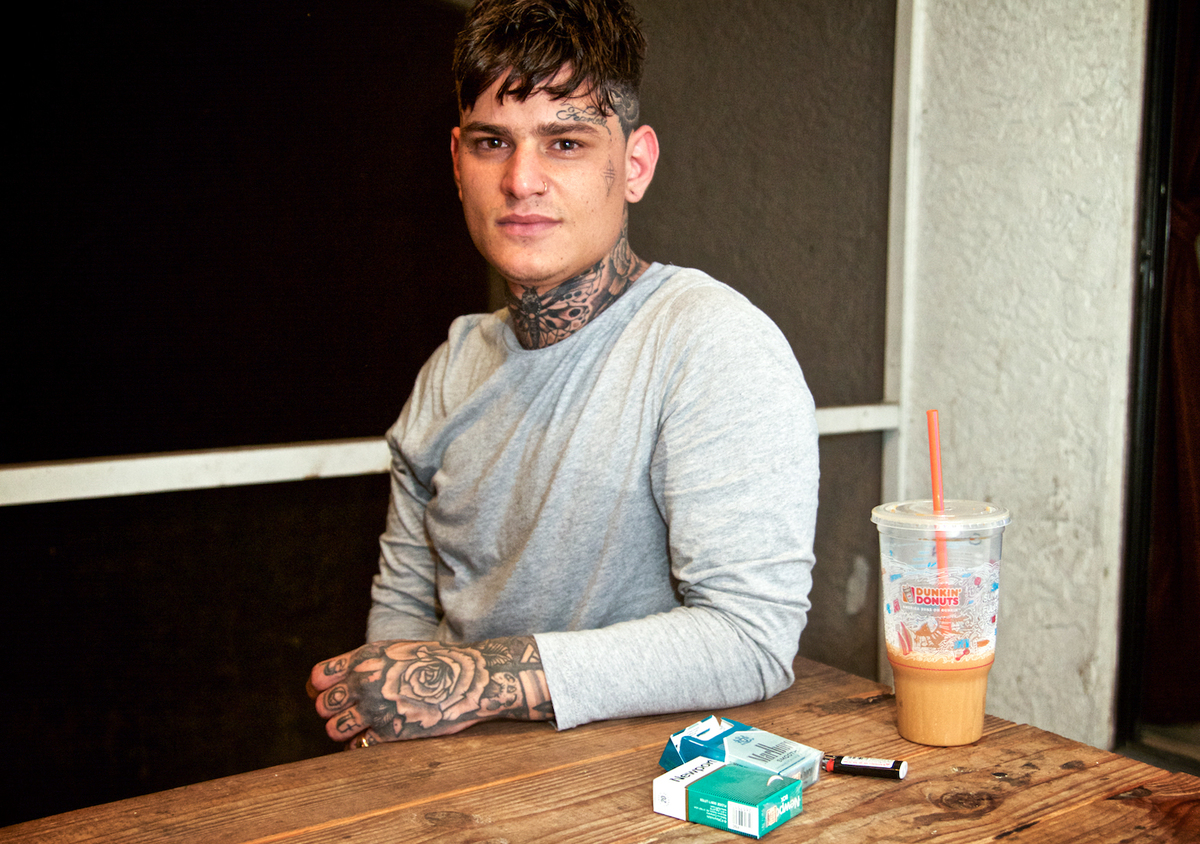
Dillon Katz now lives in Port Saint Lucie in a house he shares two roommates. They hang out on the back patio, smoking Marlboro Menthols and cracking wise.

He’s doing well, he says — he’s been clean for eight months now and he’s a tattoo artist, a job he likes.

After the unsuccessful rehab stays, an arrest and stint in jail ultimately landed him in drug court — that means his incentive for staying off drugs now includes the need to convince a judge that he’s clean. Katz says he’s found that, for him, the best support is through a recovery fellowship.

“Any kind of spiritual program,” Katz says. “That’s the answer.”

And, he adds, there’s no insurance required.

Let’s block ads! (Why?)

CBO Predicts Rise In Deficit If Trump Cuts Payments To Insurance Companies

An analysis by the Congressional Budget Office released Tuesday found that ending cost-sharing reduction payments to insurers, a move that President Trump is contemplating, would raise the deficit by $194 billion over 10 years.

Melina Mara/The Washington Post/Getty Images

hide caption

toggle caption

Melina Mara/The Washington Post/Getty Images

If President Trump decides to cut off payments to insurance companies called for under the Affordable Care Act, it’s going to cost him.

Or, more accurately, it’s going to cost taxpayers — about $194 billion over 10 years.

The cost is “eye-poppingly large,” says Nicholas Bagley, a professor of health law at the University of Michigan. “This single policy could effectively end up costing 20 percent of the entire bill of the ACA.”

The deficit figure comes from the Congressional Budget Office, which on Tuesday released an estimate of the budget impact of ending what is known as cost-sharing reduction payments. Those are payments the federal government makes to insurance companies to reimburse them for the discounts on copays and deductibles that they’re required by law to give to low-income customers.

The reports also says premiums for benchmark plans sold on the Affordable Care Act exchanges will rise about 20 percent next year and about 25 percent by 2020. The cost to consumers, however, would stay the same or even decline, because the premium increases would be offset by tax credits, which we explain further below.

Trump threatened repeatedly to cut off the payments, which he has called “bailouts,” during the unsuccessful effort by Senate Republicans to repeal and replace the Affordable Care Act, also known as Obamacare.

If a new HealthCare Bill is not approved quickly, BAILOUTS for Insurance Companies and BAILOUTS for Members of Congress will end very soon!

— Donald J. Trump (@realDonaldTrump) July 29, 2017
More recently, the president has remained mute on the topic, and insurers have been left to wonder whether they will receive a check this month for the discounts they paid out in July.

Bagley says there is no good policy reason to cut off the payments. “If you can cover roughly the same number of people for about $200 billion less, why wouldn’t you want to do that?” he asks.

Cutting the cost-sharing payments ends up costing the government more because insurance companies say they will raise rates in response. Under the Affordable Care Act, people with lower incomes who buy insurance on the exchanges get a tax credit, so their costs remain stable as a share of their income. That means that when premiums rise, those government subsidies rise as well.

The CBO says for people with incomes below 200 percent of the federal poverty level, the out-of-pocket cost of insurance would remain about the same because of the bigger tax credits. For those with incomes between 200 percent and 400 percent of the federal poverty level, the cost to buy insurance could actually get cheaper.

Last year, about 85 percent of people who bought Obamacare insurance got a tax credit, according to the Centers for Medicare and Medicaid Services.

“The CBO analysis makes clear that ending cost-sharing subsidies would be a perfect example of cutting off your nose to spite your face,” says Larry Levitt, a vice president at the Kaiser Family Foundation. “Premiums would rise, and the government would end up spending more in the end through tax credits that help people pay their premiums.”

The CBO report confirms earlier analyses, including this one by Kaiser and this one from the consulting firm Oliver Wyman, that suggested eliminating the cost-sharing payments could make policies cheaper for some individuals.

Some insurers may decide to leave the ACA markets altogether if the subsidies were to disappear “because of the substantial uncertainty about the effects of the policy on average health care costs,” the CBO says. The agency estimates about 5 percent of the population would not have access to insurance through the ACA markets next year if Trump ends the payments.

But the agency says insurers would come back over the next two years.

Timothy Jost, a professor emeritus of health care law at Washington and Lee University School of Law, says that picture may be a bit too rosy.

He says the CBO assumes that state insurance commissioners will allow insurance companies to set premiums in ways that would be most advantageous to them, thereby ensuring they continue to sell policies on the Obamacare exchanges. But that may not happen, Jost warns.

“CBO assumes that things will work out rationally, and there will be a smooth landing,” he says. “It could be much more chaotic than that.”

Last Friday, the Department of Health and Human Services extended the deadline for insurance companies to decide which health plans to offer on the Obamacare exchanges and what to charge.

The cost-sharing payments have been at the center of a political battle over the Affordable Care Act since before Trump took office.

House Republicans opposed to the health law sued then-President Barack Obama, saying the payments were illegal because Congress hadn’t appropriated money for them. A judge agreed but allowed the administration to continue making the payments during an appeal.

Now that Trump is in the White House but GOP efforts to repeal and replace the Affordable Care Act have failed, many Republicans are urging the president to continue the payments rather than undermine the health care markets.

Let’s block ads! (Why?)