Can My Boss Make Me Pay The Tax On My Great Health Plan? Maybe Yes

People with high-value health plans may not be able to get out of paying the tax bill.

Gary Waters/Getty Images/Ikon Images

hide caption

toggle caption

Gary Waters/Getty Images/Ikon Images

Do I have to pay the health law’s so-called “Cadillac tax” because I have good health insurance?When can I get Trumpcare plans for my kids? And what can I do if my insurance plan choices don’t include a specialist who is the only doctor in the area that can treat my cancer? Here are the answers to some recent questions about health insurance from readers.

Q: My company has asked employees to pay the Cadillac tax rather than putting the burden on the company. They are also telling us not to worry because it will never happen, but want us to agree that if it does, we will take on the cost. Can they do that?

Let’s step back for a minute. The Cadillac tax is a 40 percent surcharge on the annual cost of health plans above $10,200 for single coverage and $27,500 for family plans. While these plans are sometimes considered the health plans for well-to-do professionals, some union plans and other group plans with a pool of older, sicker enrollees may also fall into this category.

A few months ago when it looked as if the Affordable Care Act was going to be replaced, many employers believed, as yours apparently still does, that the Cadillac tax would never become effective: Both the House and Senate bills would have delayed the tax until 2026. But with the collapse of those efforts to repeal the ACA, the tax is on the front burner once again, says J.D. Piro, who leads the health and law group at benefits consultant firm Aon Hewitt. Unless Congress addresses it, the tax will take effect in 2020.

By law, insurers or employers would be responsible for paying the tax, but analysts say the costs would likely be passed through to enrollees, whether or not employees like you explicitly agree to absorb them.

So it may not matter how you respond to your employer in this case.

Also, employers who don’t want to pay the surcharge might sidestep the issue altogether by reducing the value of the plans they offer, says Piro. For example, they could increase employee deductibles and other cost-sharing, make coverage less generous, or they could shrink the provider network.

“That’s simplest way to avoid the tax,” he says.

Q: I have a rare disease, and there is literally only one specialist in my area with the expertise needed to treat me. I am self-employed and have to buy my own insurance. What do I do next year if there are zero insurance plans available that allow me to see my specialist? I cannot “break up” with my sub-specialty oncologist. I must be able to see the doctor that is literally saving my life and keeping me alive.

If the plan you pick covers out-of-network providers, you can continue to see your cancer specialist, although you’ll have to pay a higher percentage of the cost than if you were seeing someone in your plan’s network.

But many plans these days don’t provide any out-of-network coverage. This is certainly true of plans sold on the health insurance exchanges.

The situation you’re concerned about — that a specialist you consider crucial to your care isn’t in a plan’s provider network — isn’t uncommon, says Sabrina Corlette, a research professor at Georgetown University’s Center on Health Insurance Reforms. And, unfortunately, you probably can’t get any coverage assurance before you sign up.

If this happens, you can contact your plan and make the case that this particular provider is the only one who has the expertise to meet your needs.

Then ask your plan to make an exception and treat the out-of-network specialist as if she were in-network for cost-sharing purposes. So, if in your plan, an in-network specialist visit requires a $250 copayment, for example, the plan could agree that’s what you’d be charged to see your out-of-network specialist.

Or not. It’s up to officials who administer the health plan, and they may argue that someone in-network has the expertise you need. If you disagree, you can appeal that decision.

But it may not come to that, says Corlette.

“Plans are prepared for this — the good ones are, anyway,” she says. “My understanding is that it’s pretty routine to grant exceptions for narrow subspecialties.”

Q: I need to purchase affordable health insurance for my two daughters who are 19 and 17. Is Trump insurance available yet? I need something I can afford and everything is so expensive.

President Donald Trump never put forward a proposal to replace the ACA. Instead, he backed the House and Senate replacement versions, which ultimately failed. But those versions might not have addressed your concerns, anyway, and you may have several options through the ACA.

“Coverage wouldn’t necessarily have been cheaper,” says Judith Solomon, vice president for health policy at the Center on Budget and Policy Priorities.

Under the Senate bill, for example, the average 2018 premiums for single coverage would have been 20 percent higher than this year’s, according to an analysis by the nonpartisan Congressional Budget Office. In 2020, under the Senate bill, premiums would have been 30 percent lower than under current law, on average. But deductibles and other out-of-pocket costs would have been higher for most people, the CBO predicted

Premiums for young people would generally have declined. The bill would have allowed insurers to vary rates to a greater degree based on age, resulting in lower premiums for young people. In addition, premium tax credits generally would have increased for young people who have incomes above 150 percent of the poverty level.

Your current coverage options under the ACA depend on your family situation. If you have coverage available to you through your employer, you can keep your daughters on your plan until they turn 26. For many parents, this is the most affordable, comprehensive option.

If that’s not a possibility, assuming the three of you live together and you claim them as dependents on your taxes, you may qualify for subsidized coverage on the health insurance marketplace next year. Your household income would need to be no more than 400 percent of the federal poverty level (about $82,000 for a family of three). You can apply for that coverage in the fall.

If you live in one of the 31 states plus the District of Columbia that have expanded Medicaid coverage to adults with incomes below 138 percent of the poverty level (about $28,000 for a family of three), you could qualify for that program. You can sign up for Medicaid anytime.

Kaiser Health News is an editorially independent news service that is part of the nonpartisan Henry J. Kaiser Family Foundation. Michelle Andrews is on Twitter @mandrews110.

Let’s block ads! (Why?)

Trump Administration Extends Deadline For Insurers To Decide On Obamacare Markets

President Trump at a listening session with health insurance executives at the White House earlier this year.

Aude Guerrucci/Bloomberg/Getty Images

hide caption

toggle caption

Aude Guerrucci/Bloomberg/Getty Images

The Trump administration is giving insurance companies an extra three weeks to decide whether to offer insurance plans through the Affordable Care Act markets, and how much to charge.

The extension comes as insurance companies wait for President Trump to decide whether he will continue to make payments to insurance companies that are called for under the Affordable Care Act but that some Republicans have opposed.

The payments — known as cost-sharing reduction payments — reimburse insurance companies for discounts on copayments and deductibles that they’re required by law to offer to low-income customers. The Congressional Budget Office estimates the payments this year would be about $7 billion.

Trump has said he may end the reimbursements, which he calls “bailouts,” and has been leaving insurers to wonder month to month about whether they will receive a check.

A White House spokesman says Trump is “working with his staff and his Cabinet to consider the issues raised by the CSR payments.”

The U.S. Department of Health and Human Services says it is offering the extra time so insurance companies can plan ahead in case the government decides to end the payments. In a memo Friday, the agency said many states are now requiring companies to file their rates for 2018 on the assumption that they won’t be reimbursed.

Several companies say that without the cost-sharing payments, their rates will see double-digit increases. For example, Blue Cross Blue Shield of North Carolina says ending the payments would push its rates up 14.1 percent.

And Marc Harrison, CEO of Intermountain Healthcare, which covers 173,000 people on the ACA exchanges in Idaho and Utah, says premium increases could be “astonishing.”

Still, he says, his company will stick with the Obamacare markets. “These are our patients. We’re not going anywhere. We’re going to keep trying to figure this out.”

The HHS memo says “there have been no changes regarding HHS’s ability to make cost-sharing reduction payments to insurers.”

But it then says the agency intends to change the ACA’s risk adjustment program to compensate for the loss of cost-sharing payments.

The changes are technical and complex, but Timothy Jost, professor emeritus at Washington & Lee University’s law school, says in a Health Affairs blog that the memo just deepens the confusion.

“We still do not know if all of this is needed or not — the Trump administration has not made up its mind,” he says.

The cost-sharing payments have been at the center of a political battle over the Affordable Care Act since before President Trump took office.

House Republicans opposed to the health law sued then-President Barack Obama, saying the payments were illegal because Congress hadn’t appropriated money for them. A judge agreed but allowed the administration to continue making the payments during an appeal.

Now that Trump is in the White House, and Republican efforts to repeal and replace the Affordable Care Act have failed, many Republicans are urging the president to continue the payments rather than undermine the health care markets.

Let’s block ads! (Why?)

Nurse Wins Prize For Research On Benefits Of Faster Tuberculosis Testing

Researcher Chenai Mathabire, center, takes part in an HIV awareness campaign in Malawi in 2016.

Courtesy of MSF

hide caption

toggle caption

Courtesy of MSF

There was a time when Chenai Mathabire read Vogue, watched beauty pageants on TV and fantasized about being a supermodel. Today she helps the sick and injured as a nurse and epidemiologist.

Last month, the 35-year-old Zimbabwean received an International AIDS Society prize for showing thata faster tuberculosis test could be implemented at health centers in southeast Africa. Her work will help save the lives of HIV-positive patients who contract TB.

“Nursing is often looked down upon and people just think you are there to be the maid of the doctor or do the dirty work. But teachers made me realize that nurses have a big role to play,” says Mathabire.

In Zimbabwe’s bustling capital, Harare, Mathabire earned high enough points in her studies to pursue a degree in physiotherapy, occupational therapy or nursing at university. She chose to become a nurse — the first nurse in her family. In 2008, she was between jobs and Zimbabwe was facing economic problems. Mathabire decided to apply for a job at Doctors Without Borders.

The work took her into some of Africa’s grimmest situations. She helped diagnose malnourished children with HIV, tuberculosis, pneumonia and malaria in Zimbabwe. Then she supervised workers who were teaching HIV-positive pregnant women how to protect their children from the virus. After that, she worked in a mobile hospital in South Sudan, treating gunshot wounds during a tribal war.

In 2015, she was recruited for her first research assignment at Doctors Without Borders, work that would eventually earn her an International AIDS Society prize. She knew that TB was the No. 1 killer of HIV-positive patients from her previous work, but she didn’t know about the rapid tuberculosis test until she read the study’s protocol. She was eager to get started on the project.

For two years, Mathabire and a team explored how easilyhealth clinics and hospitals in the Chiradzulu District of Malawi and the Chamanculo District of Mozambique could implement the tuberculosis test for HIV patients, who are more susceptible to the infection.

In Malawi and Mozambique, HIV is the leading cause of death. It is often spread through unprotected sex, and it has wiped out 27 percent of Malawi’s and 24 percent of Mozambique’s populations according to the Centers for Disease Control and Prevention.

Finding out whether an HIV-positive person has tuberculosis is a matter of life and death. Mathabire remembers a Malawi man in his early 30s who left a clinic untreated. The rapid test, which analyzes a molecule in the patient’s urine with a paper strip, had shown that he had TB. A coughing test didn’t. But doctors weren’t referring patients for the rapid test in their assessment of the man. It hadn’t yet been approved by the Ministry of Health which was awaiting the World Health Organization’s policy guidance. The man died before he could go back to get help.

His story wasn’t unique, Mathabire says. “It’s very sad but then you realize why you are doing the study — to prevent this from happening,” she says. “You start to realize the urgency of what you are doing.”

Under normal circumstances, patients are given cough tests or chest X-rays to test for TB. Mathabire’s team found that it takes an average of two to four days for results, but the wait could drag on for months.

Though the government of Malawi pays for certain medical care, including tuberculosis treatment, patients might not have the money to pay for a bus ride to the hospital or clinic for follow-up visits. And more remote clinics don’t always have the resources to transport samples to hospitals.

With the rapid TB test, sick patients could begin treatment the same day. Mathabire’s data showed that the test provided results in less than an hour. Staff in Malawi and Mozambique could be trained to administer the test in just a few hours. And doctors, nurses and clinical officers said it was easy to interpret the bands on the test strips.

Mathabire also found that patients weren’t skeptical of a new method. They really wanted to take the high-tech test. Mainly peasant farmers, they took the words of the health workers seriously. “Everybody basically knew somebody that had died ofHIV [and opportunistic infections] in a terrible way,” she says. It was like that in Zimbabwe too.

The team’s findings, published by Doctors Without Borders this year, has led some of the health centers where the aid group works to embrace rapid TB testing. It could pave the way for more facilities to incorporate the test it into their health systems, meaning faster care for the sickest of HIV patients.

In a statement, International AIDS Society president Linda-Gail Bekker said that Mathabire’s research will “support the next generation of investigators whose work can help to change the course of this epidemic.”

Mathabire still works for Doctors Without Borders and is considering conducting more research on HIV and tuberculosis. But her award-winning research isn’t the only major event of her summer.

She moved to Falun, central Sweden, to marry an infectious disease specialist whom she worked with in Zimbabwe. True to her early love of fashion, she’s sewing her own wedding dress, with glass beads, silk and lace.

Sasha Ingber is a multimedia journalist who has covered science, culture and foreign affairs for such publications as National Geographic, The Washington Post Magazine and Smithsonian. You can contact her @SashaIngber.

Let’s block ads! (Why?)

Navigating The 'Aisle Of Confusion' To Whiten Your Teeth

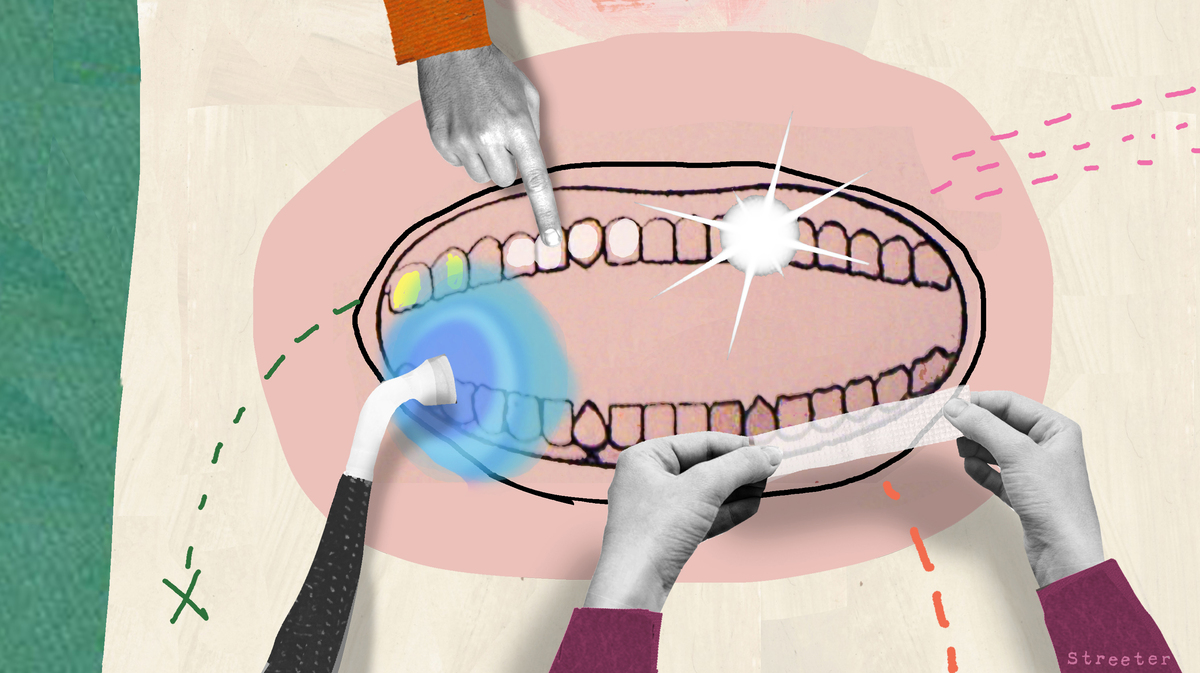
Surface stains from things like coffee, tea, tobacco and red wine can be lightened with routine brushing, flossing and professional cleaning in the dental office. But deeper stains that come with age and damage to the tooth require bleaching agents or veneers.

Katherine Streeter for NPR

hide caption

toggle caption

Katherine Streeter for NPR

Walk down the aisle of your local pharmacy or grocery store and you’ll be bombarded by a dizzying array of bleaching products, from gels and strips to paint-on bleach.

Cosmetic tooth bleaching is a $3.2 billion global industry, according to market analysts, and it’s getting bigger fast. It’s easy to see why. Strikingly white, bright smiles dominate TV and social media, and people tend to prefer the bright teeth of youth rather than those that have been yellowed by trauma or age.

But if you decide that you, too, want a brighter smile, it’s hard to know where to start.

“I’m a dentist, but I’m also a consumer and I can certainly get confused by all the products,” says Ruchi Sahota who practices in Fremont, Calif. A colleague of hers describes the tooth product aisle in stores as the “dental aisle of confusion,” because there are so many options. “You can easily get bewildered standing there trying to figure out which option is the best,” she says.

The dilemma isn’t helped by regulators. Tooth whitening products don’t need approval from the Food and Drug Administration before hitting the market, because the agency considers them “cosmetic,” a designation that’s much more lightly regulated than drugs. And, the FDA says it has not determined that any ingredients contained in currently marketed products are unsafe.

The American Dental Association does offer some guidance in choosing a bleaching product — its ADA seal of acceptance. “The seal is rooted in science,” says chemist Jamie Spomer, director of the ADA’s seal of acceptance program; she notes that when a manufacturer applies for the seal, an independent panel of dentists analyzes the company’s data and sometimes performs studies of their own.

The seal is a “symbol that an independent panel reviewed and approved the product for its safety and effectiveness,” Spomer says. Many toothpastes carry the ADA seal. So far only one over-the-counter-bleaching product does — Crest 3D White Glamorous White Whitestrips.

Even so, Sahota says many over-the-counter products that don’t carry the seal can still be effective if used as directed. Most cause some tooth sensitivity during the bleaching process, but that goes away once the process is complete, she says. Depending on which product is used, bleaching can take anywhere from two to six weeks.

And, if you’re not careful, Sahota says the products can leak onto the gums, causing inflammation and “extra sensitivity” to pressure, temperature and touch.

A safer but more costly option might be to buy a custom-made tray from your dentist, Sahota says. Unlike the one-size-fits-all trays sold over the counter, a dentist makes the tray “just for you” she says.

The tray hugs the teeth and ensures the gel is kept where it should be and is evenly applied. The kits cost about $400; this at-home whitening process can take up to four weeks, depending on how stained the teeth are to begin with. Generally, the trays are worn for one or two hours a day.

If you want an even faster route, you’ll have to pay more. Bleaching in the dental office can run more than $1,000, but results are quick and more dramatic. Dentists use bleaching gels that rely on high concentrations of hydrogen peroxide (up to 40 percent hydrogen peroxide, compared to a 5 to 6 percent concentration in drugstore kits and a 10 to 15 percent solution in the home-kits from dentists).

So the whole process in the dentist’s office can take just an hour or two to complete. And because the peroxide concentrations used there are much higher, the results can be many shades lighter than with take-home kits and over-the-counter products.

An important caveat: Insurance companies consider in-office teeth whitening “cosmetic” so the procedures are almost never covered.

Nonetheless, more Americans are opting for in-office whitening. In 2015, in-office bleaching procedures rose 29 percent over the year before, according to an American Academy of Cosmetic Dentistry survey. And there’s at least a little evidence that the whiter the smile the more attractive the person – in a 2012 study both men and women said they prefer white teeth when choosing a mate.

But go to the dentist before you start bleaching, says Ada Cooper, a New York City dentist.

“Tooth discoloration can be caused by cavities and other oral problems,” she says. “It’s more important to maintain healthy teeth.”

It’s also important to note that not all stains are the same. Some are mostly on the surface of the teeth and come from consuming lots of dark colored liquids like coffee, tea and red wine, as well as foods with vibrant yellow spices like turmeric. The tar and nicotine from cigarettes are also huge culprits. Often surface stains can be diminished by routine brushing, flossing and biannual professional cleaning in the dentist’s office.

Unfortunately, there are deeper stains you just can’t avoid by being careful about what you eat and drink. These come with aging and years of chewing, which causes millions of tiny cracks in the outer enamel of the tooth. These cracks can fill up with stain. On top of that, the thinning enamel can allow the yellow core of the tooth to become more visible. Grinding teeth at night and brushing too hard can also weaken and thin tooth enamel. Bleaching agents can penetrate these deeper stains and turn the tooth whiter — typically two to seven shades lighter.

There are some discolorations that just can’t be bleached away. Trauma to a tooth — such as a chip or break — can also permanently discolor it from the inside, and stains from ingesting the antibiotic tetracycline or large amounts of fluoride are also permanent. In these cases, the only option for whiter teeth is a crown or veneer.

All types of bleaching — whether over-the-counter, take-home kits or in the dental office — are temporary, requiring touch-ups at some point. As for homespun remedies promoted online, in social media and in magazines as being “natural whitening” agents (including charcoal, baking soda or lemon juice), the ADA says there is no evidence these methods work.

Let’s block ads! (Why?)

You Can Order a Dozen STD Tests Online — But Should You?

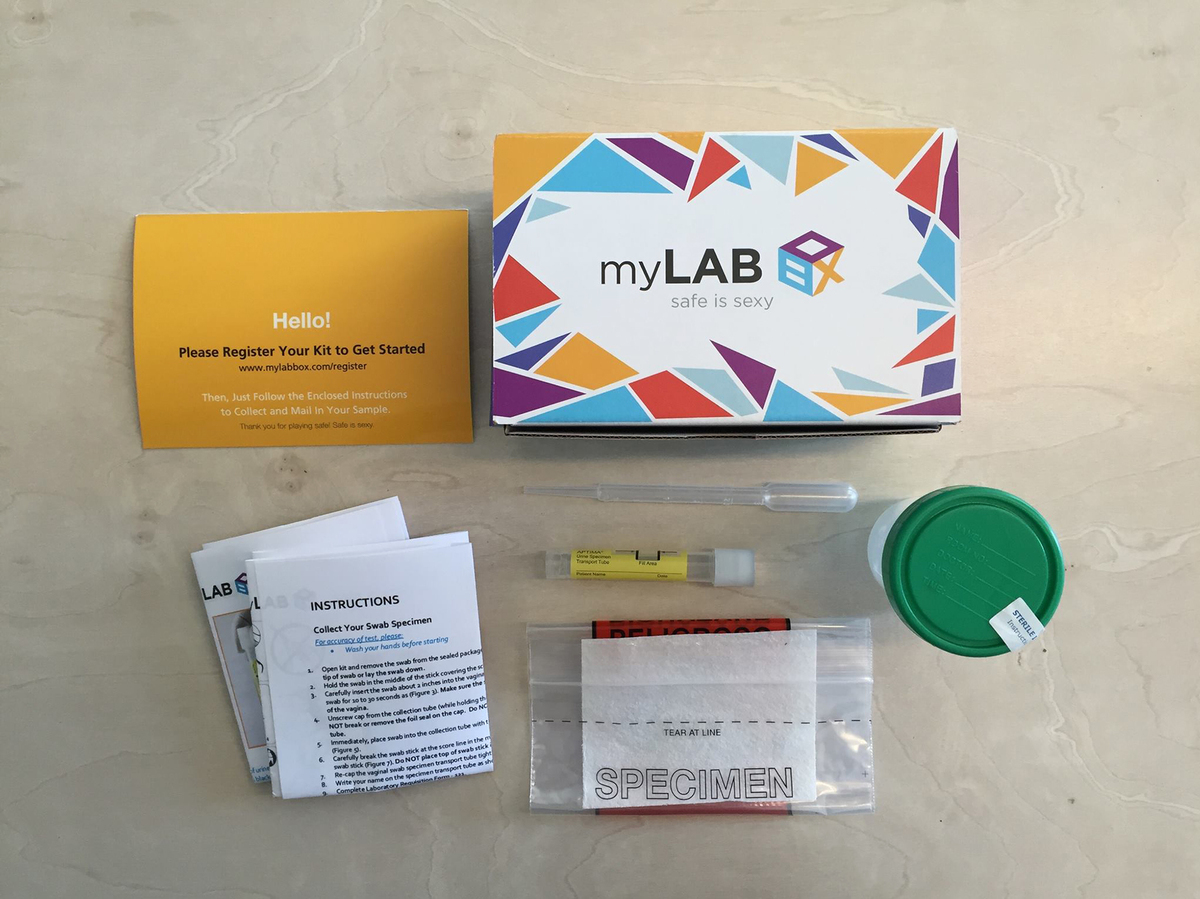
An STD testing kit from myLAB Box allows users to gather samples at home and mail them back to the company.

Courtesy of myLAB Box

hide caption

toggle caption

Courtesy of myLAB Box

America is losing the battle against sexually transmitted infections. Cases of chlamydia, gonorrhea and syphilis all hit record-high numbers in 2015. Tens of thousands contract HIV every year in the U.S., and oral cancers caused by human papillomavirus are increasing.

So startups are popping up online to help serve what they see as unmet demand for STD testing. One advertises that you can “get a sexy deal” by ordering.

The question is whether those companies can survive — at least one left the market before its product even launched — and whether the services they offer get the right tests to the right people.

Although encouraging people to get tested is a simple enough public health message, that doesn’t mean it’s simple to carry out, says Kevin Ault, a professor of obstetrics and gynecology at the University of Kansas Medical Center in Kansas City, Kan.

“You have to make the appointment at the doctor’s office, drive to the doctor’s office, give the sample to the doctor, the doctor sends it to the lab, you wait for the results to come back, and then you wait for the doctor to call you,” Ault says. And the Centers for Disease Control and Prevention recommend that people in some at-risk groups do all that several times a year.

“The biggest advantage of home tests in general is if you catch HIV or chlamydia early on, you can change the natural course of the disease,” Ault says.

Few options exist to make the process easier. So far, there is just one test approved that gives rapid results in the home, and it’s for HIV. The startups are hoping that being able to collect samples at home will be enough to encourage people to get tested.

“The concept of providing the possibility of a self-sampling approach to test for STDs is really going to be our future in terms of diagnostic testing,” says Jennifer Smith, an associate professor of epidemiology at the University of North Carolina Gillings School of Global Public Health in Chapel Hill. Hill also consults for myLAB Box, one of companies offering these services. “Getting the actual test to the patient is going to be a way of not only increasing access and improving acceptability, but also cutting down on unnecessary medical visits,” Smith says.

Big increases in people infected with STDs

A sobering report from the CDC last October revealed just how much new approaches are needed to combat increasing infection rates. More than 1.5 million people contracted chlamydia in 2015, an increase of 5.9 percent from the year before. Similarly, gonorrhea cases jumped 12.8 percent to almost 400,000 cases. The nearly 24,000 new cases of primary and secondary syphilis (the two most infectious disease stages) represented a 19 percent increase.

Aside from early symptoms that several STDs can cause — such as painful urination, discharge, bleeding, swelling or pain — long-term symptoms in people who don’t receive treatment can be serious. Untreated gonorrhea, for example, can cause infertility and long-term pelvic or abdominal pain in men and women as well as ectopic pregnancies, which can be fatal. If syphilis is not treated, it can damage the brain, eyes and nervous system, potentially resulting in severe headaches, poor muscle coordination, paralysis, numbness, dementia or blindness. In rare cases, syphilis can cause death 10 to 30 years after infection.

STDs also have downstream consequences for the next generation. Cases of congenital syphilis, which can cause severe illness and stillbirth, has increased in newborns 38 percent from 2012 to 2014, according to the CDC, even though women don’t even represent 10 percent of new infections overall.

New HIV infections have been steadily dropping, but 2015 still saw more than 39,500 new cases. And although HPV, the most commonly transmitted STD, resolves on its own in most people, it still causes about 31,500 new cancers annually.

“When something affects millions of people, even a low rate of serious outcomes translates to a lot of people,” says H. Hunter Handsfield, a professor emeritus at the University of Washington who consults for the CDC on STDs and spent a quarter of a century directing the STD control program for Seattle’s public health department. “We have an ongoing and important public health problem of people getting HIV and getting cervical and other HPV-related cancers. The numbers of those actual cancers are small, but that’s a big deal for each of those people.”

Startups See An Opportunity

The idea of online STD testing isn’t new, but most services so far have been localized, limited in test options or still require visiting a lab or pharmacy.

For example, residents of Maryland, Washington, D.C., and Alaska can request kits to be mailed to them with self-collection instructions and materials for genital and/or rectal swabs, but only for gonorrhea, chlamydia and trichomoniasis. Planned Parenthood has begun offering similar services but only for gonorrhea and chlamydia and only in Idaho, Minnesota and Washington. More than a dozen commercial companies nationally let consumers order STD testing kits online for other infections, but buyers still have to visit a local lab for sample collection.

The online businesses aim to offer many more tests without customers needing to go anywhere except the mailbox. The two business models are subscription-based or one-off orders: Consumers order the test, receive it in the mail, collect their own blood, urine, genital and/or rectal samples, mail samples back in a prepaid envelope and then wait until results are available to check online.

One company, GetTested, still has a live website but has ceased operation, according to a spokesperson. Another, Mately, doesn’t appear operational and did not respond to multiple attempts to request an interview. That leaves myLAB box, which has been tweaking its services and procedures since its launch in December 2013 as executives learn what does and doesn’t work.

The CDC generally supports the idea of at-home STD testing, according to John Papp, a microbiologist in the CDC’s Division of STD Prevention and author of CDC’s lab testing recommendations for gonorrhea and chlamydia.

“From our perspective in public health, we want people to have access,” Papp says. “The concept of greater access, however that looks, if it’s by a website or a van down by the river, is always a good thing. But the regulatory piece needs to be adhered to.”

But little regulation exists for online, at-home STD testing. The labs where tests are performed should meet the standards of the Clinical Laboratory Improvement Amendments, and the tests themselves should be FDA-approved when available. The tests offered by myLAB Box meet both those requirements.

“There’s no FDA indication for at-home collection and sending it into a laboratory,” Papp says. “Having said that, if the specimen is collected properly, regardless of the setting, the test is probably being performed adequately.”

Most of the tests detect some piece of the organism itself. Three others, for hepatitis C, syphilis and herpes simplex type II, test for the body’s antibodies made in response to the infection. The HIV test looks for both the virus and antibodies. The tests have been shown to work even with samples exposed to extreme temperatures, so having a blood spot and urine sample sitting in a Florida mailbox in August shouldn’t affect results, Handsfield says.

Reaching the right people

But Handsfield says online tests don’t reach the people who need testing and treatment the most.

“It’s a good idea, with a giant caveat that it reaches the wrong people,” Handsfield says about online services. “The highest infection rates are in people with lesser education or lower income, in inner cities or the rural kid in a red state immersed in a methamphetamine world.”

He would like to see public health departments partner with online sites and subsidize the cost to promote home self-testing for a broader population of high-risk, lower-income people. The CDC’s October report, for example, showed that 15- to 24-year-olds make up half of gonorrhea cases and almost two-thirds of all chlamydia ones. “These are not the same people who are paying money to buy tests online,” Handsfield says.

MyLAB Box offers three pricing tiers: the “Safe Box” for $189 (HIV, chlamydia, gonorrhea and trichomoniasis); the “Uber Box” for $269 (adds hepatitis C, herpes simplex type II and syphilis); and the “Total Box” for $399 (adds HPV, Mycoplasma genitalium and ureaplasma plus rectal and throat testing for chlamydia and gonorrhea). Each test can also be purchased individually for $79.

But Gary Richwald, myLAB Box’s medical director and chief scientific officer, says the company is reaching the right people. He says their rates of positive tests are on par with or higher than what he saw when he ran STD clinics for Los Angeles County, the largest such program in the U.S., from 1989 to 2000. For example, 7.3 percent of myLAB Box clients’ tests for chlamydia were positive in February. Community rates at L.A. clinics two decades ago, where the population would presumably have been high risk, ranged from 4 percent to 5 percent, Richwald says, with family planning clinic rates lagging just behind that.

“The data show in every study that people who voluntarily go somewhere to be tested have higher rates than the general population who might be tested door to door,” Richwald says. And yet “the vast majority of people with STDs never get tested, and they are the principal source of new infections.”

Richwald describes the company’s customer base as people mostly in their mid- to late 20s, with many in their 30s and 40s as well, and often at a transitional stage in their life, such as having recently ended a relationship or gotten divorced. Economically, they seem to hover between lower middle class and middle upper class, he says. Customers include residents of areas with doctor shortages, where getting tested requires going to urgent care or the ER; single mothers without time to get to a clinic or doctor’s office; and individuals with previous unsatisfactory health care experiences.

They also tend to have three other characteristics: comfort and familiarity with using the Internet, a desire for convenience — “I can’t tell you how many people said they collected their specimen after midnight,” Richwald says — and concerns about privacy.

“With this election and general concerns about privacy in this country, people are afraid that even their request for a test, much less their positive, would end up in some place that collects health-related information,” Richwald says. A number of customers include those in the health care field themselves, he says, such as physicians, dentists and nurse practitioners.

Choosing the right tests

One big question is what to test for.

Public health clinics generally offer free testing of gonorrhea, chlamydia, syphilis and HIV, with some offering various additional tests, such as trichomoniasis, HPV or herpes type II. Few public health clinics test for ureaplasma, hepatitis C or Mycoplasma genitalium.

A person’s first instinct may be to test for “everything,” especially if they have a sexual history or recent sexual experience that could be a concern. But not everybody should be tested for every infection.

Hepatitis C, for example, is currently among the tests offered by myLAB Box, but it’s not considered a sexually transmitted disease for anyone other than men with HIV who have sex with men, Handsfield says. (All individuals born between 1945 and ’65 are recommended to be tested once for hepatitis C, however.) And men are not typically tested for HPV because no treatment exists for the infection, and it’s unclear what to do with a positive result.

MyLAB Box company co-founder Lora Ivanova says the company trusts the consumer to do the homework on what tests to order.

“Our role is to make it as easy as possible for the person who has decided to get tested to get the test they want,” Ivanova says. “For a long time, consumers have been limited to the tests they can take based on the medial debate. We’re taking the position that the consumers ultimately have the right to know. We don’t see why we as providers should limit their access to care.”

But if doctors and public health policymakers cannot agree on who should be tested for infections like Mycoplasma genitalium and ureaplasma, Handsfield says, then how would a consumer make that decision?

“The issue of who to test and what tests to do continues to be a question that’s very important but does not have an exact answer,” Richwald acknowledges. That’s partly why he was brought on, and Ivanova did say the company’s system “is in constant flux” based on “recommendations and available data.” The company doesn’t offer testing for herpes simplex type I, for example, because 60 percent to 70 percent of individuals already have antibodies, acquired non-sexually in childhood.

Richwald also says the company isn’t testing for ureaplasma anymore, but the test still appears on the company website. Mycoplasma genitalium presents a conundrum as well.

First, no FDA-approved diagnostic test for the bacteria exists. Experts disagree on how to interpret positive results, Handsfield says. It’s a common bacteria found in about 1 percent of the population, but most people don’t have symptoms. Treatment is challenging and not recommended for infections without symptoms. But for those with symptoms — vaginal pain or itching, discharge from the urethra, painful urination and painful or swelling joints — treatment can prevent pelvic inflammatory disease or worsening symptoms, Richwald says.

Another consideration people must weigh is when to test, because incubation periods vary by disease. If someone has been regularly sexually active, especially without using a condom, and has not been tested in the six months, timing is less relevant. But if someone is testing after a specific encounter, some infections, such as HIV, cannot be detected immediately.

“Often people get tested too soon, such as a week after exposure,” Handsfield says. Chlamydia and gonorrhea can usually be detected after several days (a week on the conservative side), but herpes and one HIV test require up to three months of delay before testing.

A chart on the myLAB Box site provides time frames for testing and, when necessary, retesting. It recommends that people wait until the end of the time frames listed before testing unless the person plans to retest. The ideal testing window for Mycoplasma genitalium, however, is unknown, Handsfield says.

“For the panel as a whole, I would say wait three months if you have no symptoms,” Handsfield says. “If you have symptoms — if you’re having urethral discharge, unexplained vaginal discharge, abdominal pain — online testing is not for you. You need to see a doctor.”

Handling positive tests, whether true or false positives, also requires careful consideration. The newest syphilis tests, for example, are known for giving a lot of false positives, Handsfield says, and that can lead to increased anxiety between a first test and a retest, although the same concern would exist at a community clinic. At myLAB Box, Richwald personally calls all customers with a positive HIV result and ensures they get an appointment with an HIV specialist group. Immediate treatment can dramatically reduce their infectiousness while improving their health, he says. A positive result for syphilis requires confirmation at a clinic in person, and someone with chlamydia and symptoms of pelvic pain, for example, would be told to go to a clinic or urgent care.

MyLAB Box regularly reviews new research to inform their decisions, but it remains a tricky line to walk: making tests widely available to the public while trying to guide them toward the best tests for their situation without driving them away.

“There’s a lot of fear, hesitation and confusion, and I think what it has ultimately done is turn people to the point where they’re sweeping it under the rug,” Ivanova says. “At the end of the day, it’s about getting the person to get tested. If we lose that one single time in a year or in two or five years that they have mustered the courage to get online and get the tests, they might spend the next five years infecting every partner they have.”


Tara Haelle is the co-author of The Informed Parent: A Science-Based Resource for Your Child’s First Four Years. She’s on Twitter: @tarahaelle

Let’s block ads! (Why?)

From Alaska To Florida, States Respond To Opioid Crisis With Emergency Declarations

Overdoses from heroin and other opioids have led six states to declare public health emergencies.

Marianne Williams/Getty Images

hide caption

toggle caption

Marianne Williams/Getty Images

Public health officials and others concerned about the nation’s opioid crisis are hailing President Trump’s decision to declare it a national emergency. A Presidential commission on opioids said in its interim report that an emergency declaration would allow the administration to take immediate action and send a message to Congress that more funding is needed.

But while the Trump administration prepares the presidential order, governors in six states have already declared emergencies to deal with opioids. They range from Alaska and Arizona in the West to Florida, Virginia, Maryland and Massachusetts in the East.

In Maryland, where 550 overdose deaths were reported in just the first three months of this year, Gov. Larry Hogan declared opioids a public health emergency in March.

“It’s a call to order and a call to action,” says Clay Stamp, head of Maryland’s Opioid Operational Command Center. Stamp comes to the job with a background as an emergency manager and compares this effort to the state’s response to a hurricane.

“We need all the right people in the room to make sure we can make a decision in time to move people out of harm’s way, shelter them and everything else,” he says. “This is no different.”

Since declaring an emergency, Maryland has tightened practices for those prescribing opioids and received a waiver to allow Medicaid to pay for residential drug treatment.

Massachusetts was the first state to declare opioids a public health emergency in 2014. Then-Gov. Deval Patrick acted on the recommendations of a special task force, says Michael Barnett, an assistant professor of health policy and management at the Harvard T.H. Chan School of Public Health.

The recommendations were “to open up funding for the Department of Public Health — for instance, to open up more treatment beds, to create funding and make it easier for … first responders to use naloxone, which reverses opioid overdoses in the field,” he says.

Making naloxone freely available and putting it in the hands of more people has helped save lives. That has been one of the most immediate impacts of emergency declarations in states that have issued them.

Arizona Gov. Doug Ducey declared a public health emergency in June. Will Humble, executive director for the Arizona Public Health Association says with that declaration, the state began gathering badly needed data on the crisis.

“Who it’s hitting, where it’s hitting, who is doing the prescribing, what portion of it are fentanyl and heroin and what portion are prescribed pills,” he says. “And, as you get that more complete information, it allows you to craft better public policy.”

In Florida, the emergency declaration issued in May enabled Gov. Rick Scott to quickly allocate some $27 million in federal funds for drug treatment and prevention.

Palm Beach County, Fla., saw nearly 600 fatal overdoses last year, mostly related to opioids. Alton Taylor, executive director of the county’s Drug Abuse Foundation says although the emergency declaration was welcome, Palm Beach County and the rest of the state still don’t have enough publicly-funded beds available to treat people with opioid addictions.

“Today as I’m talking to you, we have over 200 people on a waiting list,” he says. “These are people where we’ve done a clinical assessment of them and determined them to be in need of that service.”

Despite the emergency declaration, Florida, unlike some other states, hasn’t tapped Medicaid to help pay for drug treatment. Taylor says he’s hopeful President Trump’s emergency declaration, when finalized, will free up more money to treat people in recovery from opioid addictions.

Let’s block ads! (Why?)

What Could Happen If Trump Formally Declares Opioids A National Emergency

At his golf club in Bedminster, N.J., on Thursday President Trump called the opioid epidemic a national emergency and said his administration was drawing up papers to make it official.

Evan Vucci/AP

hide caption

toggle caption

Evan Vucci/AP

Opioid abuse is a crisis, but is it an emergency?

That’s the question gripping Washington after President Trump’s Commission on Combating Drug Addiction and the Opioid Crisis recommended that the president declare the epidemic a national emergency.

On Tuesday, before getting a briefing on the commission report, Trump called it “a tremendous problem.”

“We’re going to get it taken care of,” he said.

Later that day, Health and Human Services Secretary Tom Price backed off from the need for an emergency declaration.

“We believe that, at this point, that the resources that we need, or the focus that we need to bring to bear to the opioid crisis can be addressed without the declaration of an emergency,” he said, adding that the option was still on the table.

On Thursday, the president availed himself of that option.

“The opioid crisis is an emergency, and I’m saying officially right now: It is an emergency,” Trump said at an impromptu press briefing at his golf club in Bedminster, N.J.

The White House followed up with a press release saying the president “has instructed his Administration to use all appropriate emergency and other authorities to respond to the crisis caused by the opioid epidemic.”

So while the president has announced an emergency, he and his administration haven’t formally declared one – a process that comes with specific legal authority and brings specific sets of powers and access to money.

You can see a series of formal public health emergency declarations here.

If the president does move ahead and declare the opioid crisis an emergency, here’s what could happen.

1. FEMA money could be available to states.

The president could use authority under the Stafford Act to declare an emergency. That would open up resources that are usually reserved for natural disasters like hurricanes or floods, including FEMA’s disaster relief fund, which had about $1.5 billion available as of July.

2. Public health workers could be redeployed.

The president could ask HHS Secretary Price to declare an emergency under the Public Health Service Act. Unlike FEMA, HHS doesn’t have a standing emergency fund (although during last year’s Zika virus scare, many people urged that one be established), but money could be freed up. Right now, public health workers and researchers are working on projects defined by grants from HHS. If Price were to declare an emergency, those workers could be redeployed temporarily, from working on AIDS outreach for example, to work on substance abuse issues.

3. Access to medication-assisted treatment could get a boost.

In a public health emergency, the HHS secretary could make it easier to get medications to counter addiction. For example, Price could allow “standing orders” for the drug naloxone, used to reverse overdoses, which would allow certain populations to get the medication without a prescription. He could also waive the restrictions on doctors who want to administer methadone or buprenorphine to patients with opioid addictions. Those medications currently require a prescribing doctor to have special certification, and there are limits to the number of people doctors can treat.

4. Medicaid could pay for more treatment.

A public health emergency would also allow HHS to waive certain regulations. One major target could be a rule that restricts where Medicaid patients can get inpatient drug treatment. If HHS waived that rule, then Medicaid beneficiaries might find it easier to get treatment.

5. Congress could appropriate money.

Congress doesn’t need an emergency declaration to appropriate money for more drug treatment and intervention. But if the Trump administration were to issue such an order, it would put a lot of pressure on Congress to back it up with money. Last year, lawmakers passed a law to address addiction issues but refused to include $1.1 billion that President Barack Obama requested to expand treatment programs.

6. States could request aid.

Six states have already declared opioid emergencies. A federal emergency could open up paths for those states to request federal grants for specific purposes. Maryland, for example, has a tool that tracks overdoses in real time so emergency responders can identify where particularly potent synthetic opioids may be on the streets. Federal money could potentially allow other states to follow suit.

Let’s block ads! (Why?)

Bernie Sanders Knows His Medicare-For-All Bill Won't Pass. That's Not The Point

Sen. Bernie Sanders, I-Vt., pauses while speaking about health care on Capitol Hill on June 26.

Drew Angerer/Getty Images

hide caption

toggle caption

Drew Angerer/Getty Images

Vermont Sen. Bernie Sanders will introduce a bill next month to create a government-run, single-payer health care system. And he knows it’s going to fail.

“Look, I have no illusions that under a Republican Senate, and a very right-wing House, and an extremely right-wing President of the United States, that suddenly we’re going to see a Medicare-for-all, single-payer passed,” he said recently, sitting in his Senate office. “You’re not going to see it. That’s obvious.”

The point of the bill, Sanders says, is to force a conversation: “Excuse me: why is the United States the only major country on earth not to guarantee health care to all people? Why are we spending far, far more per capita on health care than any other nation? Why do we pay the highest prices in the world for prescription drugs?”

Single-payer was a major policy plank of Sanders’ 2016 presidential campaign, and he’s been ready all year to put it into legislation. He was just waiting, first, for Republicans to wrap up their effort to repeal and replace the Affordable Care Act.

That means Sanders has been waiting for a while.

Despite President Trump’s continued calls for Congress to repeal Obamacare, House and Senate Republicans appear to have moved on to other priorities. That means when Congress returns to Washington, D.C., next month, Sanders will roll out his bill.

The measure is the latest example of how Sanders’ is trying to push the Democratic Party — a party he is not formally a member of as an independent — to the left.

Sanders and his staff are confident a substantial number of Democratic senators will co-sponsor the measure. But many Democratic Party leaders continue to hold the idea of single-payer at arm’s length. DNC Chairman Tom Perez regularly pivots to a broader answer about health care policy when he’s asked whether he backs a single-payer plan.

“We believe that health care is a right for all, and not a privilege for a few,” Perez recently told NPR. “And right now, in Washington, D.C., in the political climate in which we live, preserving the Affordable Care Act is a major victory.”

House Minority Leader Nancy Pelosi was more direct earlier this year when she was asked whether Democrats should run on a single-payer platform in 2018.

“No,” Pelosi said. “I say to people, you want to do that, do it in your states.”

“The comfort level with a broader base of the American people is not there yet. Doesn’t mean it couldn’t be. States are a good place to start,” she added.

Democrats in Pelosi’s home state of California tried to pass a single-payer bill this year. The measure passed the state Senate but stalled in the Assembly, despite complete Democratic control in Sacramento.

The resistance from Pelosi and other Democratic leaders is tactical, not ideological. It took decades to pass something like Obamacare, and their concern is that, despite what polls might suggest, something as aggressive as single-payer just isn’t politically feasible right now.

In fact, the Congressional leaders you hear talking about single-payer are often Republicans, not Democrats. House Speaker Paul Ryan and other Republicans regularly float it as a worst-case Democratic alternative.

“Ultimately it’s very clear that they’re more interested in a single-payer system, which means government-run health care,” Ryan said during the Senate push to repeal Obamacare. “Government-run health care is not in our nation’s interest.”

Senate Republicans even forced a vote on a single-payer option on the Senate floor last month, hoping to get Democrats on record supporting the idea.

Most Democratic senators voted ‘present.’ No one voted ‘yes.’

“I urged my colleagues to vote present because we are not going to dance to the tune of right-wing Republicans, who of course were not prepared to support a single-payer,” Sanders said. “For them, it was just a political moment that they thought would be advantageous for them.”

Polls show single-payer is gaining support. A recent Pew Research survey showed the number of respondents favoring government-run health care has gone up 5 percentage points this year alone, and is 12 points higher than it was in 2014.

A more important metric — more than half of House Democrats signed on to co-sponsor a single-payer bill earlier this year.

Jeff Weaver, a longtime advisor to Sanders, argues Democrats should be more aggressive on health care after a stretch where broad swaths of voters organized against the GOP’s Obamacare repeal effort. “This is a very powerful issue, in that people are prepared to be mobilized in support of their health care,” Weaver said.

Like Sanders readily admits, this bill isn’t going anywhere any time soon.

The whole thing is more about political framing — getting Democrats to the point where this would be a top priority whenever the party is back in power.

That’s how progressive activists like Adam Green, the co-founder of the Progressive Change Campaign Committee, are viewing Sanders’ impending bill roll-out.

“If we left this debate with 20 senators on the record supporting single-payer, and the entire Senate Democratic caucus uniting around giving every American the option of buying into Medicare if they want to, that would be a wonderful place to land,” Green said.

Let’s block ads! (Why?)

Nearly 1 In 5 Hospice Patients Discharged While Still Alive

A recent study shows a link between high discharge rates for live patients and hospice profit margins.

Gary Waters/Getty Images/Ikon Images

hide caption

toggle caption

Gary Waters/Getty Images/Ikon Images

Hospice care is for the dying. It helps patients manage pain so they can focus on spending their remaining time with loved ones. But in recent years, nearly one in five patients have been discharged from hospice before they die, according to government reports.

A study published last month in the journal Health Affairs finds that hospices with the highest rate of so-called “live discharges” also have the highest profits. The lead author is Rachel Dolin, a David A. Winston fellow researching health policy. Her paper found an association between high live discharge rates and high profit margins, but it didn’t determine the cause.

“It’s important to continue to study this area to get a better sense as to whether profits are driving the decision to discharge patients from hospice, rather than patient preferences and needs,” says Dolin.

To qualify for hospice care, two doctors must certify that a patient is expected to live no more than six months. But patient James B. Nelson discovered that sometimes the doctors are wrong.

“It was decided that I was not dying fast enough,” he told Arizona Public Media in 2015. “And so, to put it most succinctly, I flunked the hospice program.”

Nelson died a few months after giving that interview, but his situation isn’t all that unusual.

Government reports show that the median rate of hospice patients discharged before death has climbed steadily since at least 2000, peaking in 2012 and 2013 at almost one patient in five, though more recently the percentage has declined somewhat. But the rate actually varies widely from one care organization to another. Some hospices discharge less than 2 percent of their patients prior to death, while others discharge more than 80 percent. Non-profits have lower rates of live discharge than for-profit hospices. Regionally, live discharge rates are highest in the South.

It’s important to understand, though, that when patients are discharged from hospice, they don’t necessarily go anywhere. Hospice agencies, whether they are independent or affiliated with an institution like a hospital, usually deliver services to patients in their homes.

Medicare pays the bills for the vast majority of patients receiving hospice care, at a cost to the government of at least $15 billion a year. Federal regulators have questioned whether high rates of live discharge mean that hospices are making money by admitting patients who aren’t actually dying.

But these decisions aren’t that clear cut, says Dr. Joe Rotella, chief medical officer for the American Academy of Hospice and Palliative Medicine. “We see more and more patients that have conditions like Alzheimer’s disease or Parkinson’s disease that don’t always follow a predictable course,” says Rotella.

Some who study aging are concerned that certain hospices are gaming the system. That’s a worry of Susan Enguidanos, an associate professor in the Leonard Davis School of Gerontology at the University of Southern California. For example, she says that some hospices may be trying to avoid paying for costly treatments by discharging patients temporarily when they need to go to the hospital.

“Individuals that are going in for these very brief health issues are coming out and then, they’re being readmitted to those [same] hospices,” says Enguidanos.

That’s not a good reason to discharge someone, says John Keyserling, senior vice president for communications and policy at the National Hospice and Palliative Care Organization, the trade association for hospice providers.

“Any association between profit margins and clinical decision making is inappropriate and not something that the hospice community supports,” Keyserling says.

That hospice community has nearly doubled in size since 2000. Susan Enguidanos says it’s also changed a lot.

“Hospice organizations started as grass root efforts and were largely non-profit for a long time,” she says. “Now we’ve had a huge increase in for-profit hospices.” There’s a concern, says Enguidanos, that by discharging patients early, some hospices may be “trying to avoid costs that they should be responsible for.”

Whatever the short-comings of some hospices may be, Keyserling says that his biggest worry is that people who could be helped by hospice aren’t taking advantage of it in time. He says about half of patients die within 17 days of being admitted. And that turns hospice into “crisis care” instead of the comfort care it’s intended to be.

Let’s block ads! (Why?)