Whistleblowers Come Forward Over Problems At New Hampshire VA Hospital

A dozen whistleblowers at the Manchester, N.H., VA hospital have exposed inadequate patient care and incompetence, leading to staff dismissals and an investigation.
A dozen whistleblowers at the Manchester, N.H., VA hospital have exposed inadequate patient care and incompetence, leading to staff dismissals and an investigation.
Journalist Bill Moyers once worked as the special assistant to President Johnson, where he witnessed first-hand the political maneuvering that resulted in the landmark health care legislation.
TERRY GROSS, HOST:
This is FRESH AIR. I’m Terry Gross. The failure of the latest attempt to repeal and replace the Affordable Care Act coincided with the 52nd anniversary of the passage of Medicare and Medicaid. My guest Bill Moyers has written a new article about how President Lyndon Johnson coaxed, cajoled, badgered, buttonholed and maneuvered Congress into enacting Medicare for the aging and Medicaid to help low-income people. At the time, Moyers was a special assistant to Johnson.
Later, from 1965 to ’67, Moyer’s served as Johnson’s press secretary. He was a journalist before entering the political sphere and after leaving the Johnson administration, Moyers returned to journalism. He hosted public TV shows from 1971 until just a couple of years ago. He racked up about 36 Emmys and nine Peabody Awards. Although he’s retired from hosting his own shows, he’s the managing editor of billmoyers.com, where his article about the passage of Medicare is published. Bill Moyers, welcome back to FRESH AIR. It is great to have you back again.
BILL MOYERS: And I’m delighted to be here.
GROSS: So Medicare – the idea of health coverage for older people – took a long time to pass, but it dates back to 1935, when FDR proposed it. What was his proposal?
MOYERS: He wanted to get health insurance included as part of Social Security. Social Security was quite popular but health care was not. And the Republican Party and conservative Democrats and doctors around the country and an early form of the American Medical Association won that victory. It took us 40 years and four Democratic presidents before we finally accomplished Medicare 50 years ago in 1967.
GROSS: In your article, you describe what health care was like in your family. Why don’t you tell us about that? At the time. And we’re talking about the mid-’30s.
MOYERS: Well, in 1935, when Roosevelt made his proposal, I was a 1-year-old. My family was poor. The Great Depression had robbed my father of being a tenant farmer. He took a job for a dollar a day helping to build a highway in southeastern Oklahoma, a highway I think from Dallas to Oklahoma City. And my mother was marked all of her life by the fact that she had lost twin girls, one at birth and one some months later. I don’t remember just how many because the nearest doctor – the only doctor – was too far away to get through the countryside in his horse and buggy in time to help.
So eventually, my mother and dad moved into town. And to pay the doctor who did deliver me, my father carried by hand very large sandy stones to the site that the physician had bought to build his first office. It’s still there. This was exactly at the time, Terry, when, as I said earlier, those Republicans and conservative Democrats and the AMA were winning their fight to sink President Roosevelt’s proposals. So all through my life, I was reminded of what it had meant to my parents and my family and, of course, to many others of that generation and beyond who didn’t have coverage and good health care when they most needed it.
GROSS: Truman tried and failed to pass a version of Medicare. Then, Kennedy and LBJ made it a plank in their platform. You write that, you know, Kennedy’s death helped Lyndon Johnson actually enact that agenda. How did LBJ use Kennedy’s death to try to unite people behind the passage of Medicare?
MOYERS: Well, they knew that Kennedy’s program was – his proposals on health care and civil rights and others were very important but were stalled in Congress. And on the plane back from Dallas – on Air Force One coming back from Dallas with the new president, a small coterie of aides and friends in the front compartment, and LBJ intuitively felt that this was the moment to try to move what had been a stalled agenda in the Congress. And so in a very – his first major address to Congress a few days after the funeral of Kennedy, Johnson at the end of it said in that slow Texas drawl of his but with genuine conviction, let us continue.
And that kind of sparked the awakening of America from their deep grief and a realization that life had to go on. Government had to work. We had a new president. Let’s back him as he does what he feels he needs to do. And he felt he needed to act not on some new agenda but on an agenda that had been much discussed, much very carefully conceived and stalled in Congress. And that’s how it came about that he pulled the lever and sent us into action to do what eventually came to be known as the Great Society legislation, although I often had some doubts about that sort of grandiose term. But it nonetheless was the most aggressive legislative agenda since Franklin Roosevelt and Harry Truman, who – whose New Deal was a very important part of his surprise upset victory in 1948.
GROSS: So you became Lyndon Johnson’s press secretary. So you were his press secretary during the passage of Medicare, right?
MOYERS: Well, the first two years in the White House – I came back with him from Dallas, went right to the White House with him, stayed in his home for a few days. And then although I at the time was the deputy director of the Peace Corps and wanted to go back to the Peace Corps, he insisted I stay. And my first major assignment – I had two major assignments in 1964. One was to manage the – his campaign for election in November in his own right.
But the most important assignment I had was to put together the task forces that would lead to the legislative program of 1965. That included, by the way, the Public Broadcasting Act, which was passed in 1967 to include education. It included poverty, and it included health insurance. So for 15 months, I worked intensely on helping to shape that legislation including Medicare. Then, in the mid part of 1965, as he had run through two or three press secretaries, he insisted that I take that job, and I did reluctantly.
GROSS: Why were you reluctant?
MOYERS: I loved what I was doing. I mean, I loved – at first, I wanted to go back to the Peace Corps when I could first get free. Secondly, I thought creating this legislation and working with some of the best minds in government and from around the country was exhilarating. It was exhausting, but it was exhilarating, and there was something coming out of it. There was something being created that would make a real difference in the lives of Henry and Ruby Moyers in Marshall, Texas, and millions of people like them that I liked doing that.
I liked the anonymity of it. It was easier to get things done when you were not Scaramucci or Bannon or somebody like that. And the second thing is I did not want to be press secretary. I mean, the third time he asked me, I couldn’t say no. I said no twice. The third time, he insisted. And I still have a sore shoulder from that encounter.
And I went home. And that night, I said to my wife as we went to bed, well, this is the beginning of the end. And she said, why? And I said, because – obviously appealing to the New Testament with which I was familiar – no man can serve two masters. And I just didn’t want to get caught in the middle between the press and the president. I loved what I had been doing. And I didn’t covet that job. And the truth of the matter is in time, as I anticipated, our credibility was so bad we couldn’t believe our own leaks.
GROSS: That was in part because of the war in Vietnam, right?
MOYERS: Yes – mainly. It was also because Lyndon Johnson, you know, was a – 13 of the most complex people I ever knew. And it was – you had to deal with a different persona from day to day or from week to week. And sometimes it was difficult to figure out who he was at that particular time. And you’d find yourself contradicting yourself, even though you hadn’t intended to.
When I took the job, when it was announced, my father sent me a telegram. And he said, Bill – telegram, most of your listeners don’t know what a telegram is, but it was the end – a tweet that took a long time to come by wire and paper. But he said, Bill, tell the truth if you can. But if you can’t tell the truth, don’t tell a lie. And I tried very hard to walk that line, sometimes I felt like on the wrong side of it, but I – it was a tough and tenuous assignment.
GROSS: If you’re just joining us, my guest is journalist Bill Moyers, who’s received about 36 Emmys and nine Peabodys. And he retired from hosting his own PBS shows, but he’s still writing and is the managing editor of billmoyers.com, where his latest piece was just published. It’s about how LBJ launched Medicare 52 years ago in spite of the opposition. Moyers was LBJ’s press secretary from ’65 to ’67 and was a special assistant to LBJ before that. We’ll be back after a break. This is FRESH AIR.
(SOUNDBITE OF DJ RADE’S “FREAK OUT”)
GROSS: This is FRESH AIR. And if you’re just joining us, my guest is journalist Bill Moyers, who is now the managing editor of billmoyers.com, in which he has a new piece about how LBJ launched Medicare 52 years ago in spite of the opposition. And it’s a very interesting piece to read in the light of the attempts by Republicans and the Trump administration to repeal and replace Obamacare. One of the people trying to influence public opinion against Medicare was Ronald Reagan. He was a spokesperson for the AMA at the time. What was his role in the debate?
MOYERS: He was hired by the AMA to be their pitchman for the campaign to stop Medicare. He was not yet in politics. He would not run for governor of California for two more years. This was 1964, remember. And he would travel the country making speeches to organize groups. And then he also cut a very persuasive audio and film – short film – that was circulated by an organization composed mainly of doctors’ wives, who in their local communities – where they knew everybody because mostly small towns in those days and small and medium-sized towns – they would get together their neighbors and the patients of their doctors – husbands and play this audio or this little film clip if they had the means to do so.
And Ronald Reagan was very persuasive on that. Not persuasive enough to stop the Medicare legislation, but he was probably our most effective adversary. And Barry Goldwater, who was in 1964 the Republican presidential candidate – and I thought about this, by the way, when John McCain flew up from Arizona recently to make his stand – Barry Goldwater interrupted his campaign in the fall of 1964, flew to Washington and voted against the Medicare legislation we were then advocating. And we lost by four votes. His was one of those four votes. But Reagan was clearly – he could touch people in those days, just as he did when president. He was a superb communicator, as the saying goes.
GROSS: Well, embedded in your article about LBJ and Medicare, you have a short excerpt of the recording Ronald Reagan made when he was a spokesperson for the AMA trying to persuade people against Medicare. So thanks to you, let’s hear a short excerpt of that recording. This is Ronald Reagan in 1964?
MOYERS: Yes.
GROSS: OK.
(SOUNDBITE OF ARCHIVED RECORDING)
RONALD REAGAN: Behind it will come other federal programs that will invade every area of freedom as we have known it in this country. Until one day, as Norman Thomas said, you and I are going to spend our sunset years telling our children and our children’s children what it once was like in America when men were free.
GROSS: That sounds kind of familiar to me, the whole idea that, like, government’s going to take over medicine and then it’s going to take over your life. And that’s going to be the end of freedom in America.
MOYERS: Well, that’s a consistent conservative refrain, and it has been from the very beginning. It’s not a – it’s not one you can dismiss frivolously because none of us want to live in George Orwell’s state, a state in which government is totalitarian, tyrannical and we’re under constant surveillance. And you could hold out those fears of what was then, you know, the Stalinist, Communist state in Russia as a dystopian vision of America’s future. And, of course, none of us want to be dictated to by anyone. And it was an argument that struck home with Americans who had – with many Americans who had a strong sense of individualism.
The country was founded in no small part on liberty and justice for all and each, therefore. So it was an argument that persuaded people, particularly when their local doctors and their doctors’ local wives were saying, well, this is going to put the United States government – it’s going to put Roosevelt or Truman or Kennedy or Johnson between you and your doctor. I mean, Reagan, who voted several times for Franklin Roosevelt, by the way, didn’t seem to think then that his vote was going to diminish his freedom. And so conservatives had taken that article to a very extreme level.
I mean, there are many, many countries in the world who have some form of universal health care, even single-payer health care. And on the whole, there are always complaints because you can’t have one policy that does fit all. On the whole, most people in Norway and Sweden and Taiwan and Canada and Japan and places where they do have a form of single payer or universal health care, they don’t seem to feel that they’ve lost their freedom. It was an alarmist but effective argument.
GROSS: So Johnson had quite a reputation for being, like, a brilliant tactician in Congress. Give us an example of an arm he twisted or a deal he made to get an essential vote.
MOYERS: Well, he had very effective powers of persuasion. He knew how to phrase an issue or a challenge so that it would connect to people who had to vote on it in the House and Senate. I mean, when we were working on our bill in 1965, I and others had urged that the Medicare bill include a provision for a retroactive increase in Social Security payments because they would be an economic stimulus, and we sort of needed that at the moment. And he called me on the phone. And he said, well, I think it’s fine to be retroactive, but I think it can be defended. I think Medicare can be defended on a hell of a better basis in Congress than this. I mean, we do know that it affects the economy. It helps in that respect. And here’s a direct quote from that telephone call to me, “that’s not the basis to go to the Hill, Moyers. It’s not the justification. We’ve just got to say that, by God, you can’t treat grandma this way. She’s entitled. And we promised it to her.”
And when he talked like that to members of Congress, they got it. I mean, he could tailor his appeal to the interests and prejudices of the member of the Senate or House in front of him, but he knew how to get them to see it differently than the arcane language in the bill itself. And at one point, we were paralyzed again on the Medicare bill. We’d gotten a good bill out of the House, and it was in the Senate. And there was a conflict between the House and the Senate. And we went to him, said, how do you want us to sell it? We’re down to the last round. And if we get the argument right, we can get a good majority in the Senate and a good majority in the House.
And he said, give everybody bragging rights. He said, you go to them and you say, one day, their grandson or their granddaughter is going to look back and say – I’m paraphrasing here – my grandfather was in the Congress when they passed Medicare. And he said, you know, those grandchildren are going to be so grateful to you, and their parents are going to be so great for you because they didn’t have to find the money to pay for grandma and grandpa in the nursing home. So you go to them and say they can brag that they were there when the moment came to decide for their parents and their own generation.
And you know what? I can tell you one after – I saw the light go off in one congressional face after another when that argument was made. You’re writing history. You can brag about it to your grandchildren. That was how he did it. And then, of course, he knew how to play the tough game of threats against members of Congress who didn’t vote for it. He could offer a dam. You know, he knew – Lyndon Johnson was a genius in knowing everyone’s price. And he knew that some senators just wanted to bring their wives to dinner at the White House. Some senators wanted a photograph of them with the president. Some senators wanted a dam built on a river in their home state. He knew how to trade.
He once said to us, you know, the cardinal rule of what you’re doing up in Congress is if you don’t got something to give, you’re not going to get something to get. In other words, you got to trade. And that was his mandate. When you go up to see Wilbur Mills, the chairman of the House – powerful conservative Democrat who was chairman of the House Ways and Means Committee who could have killed this bill at any moment and did for some time kill the Medicare bill – you’ve got to give him something for what you want to get from him. That was his genius.
I mean, what all of this shows is that it takes a president who is informed and engaged and active in the legislative process respecting the differences between the branches. But it takes somebody who knows what’s going on, who cares about the details of the bill, who is willing to sit one-on-one. I mean, I can see right now Lyndon Johnson having individual and collective members of Congress to have coffee in the morning, lunch at noon, a drink at 6 o’clock, even dinner sometimes. And then he would invite in the head of the Chamber of Commerce, the head of the AFLCO (ph), very important to passage of Medicare. They brought their 14 million members to back it. That’s how he worked at it.
You know, he had a large persona. He was out doing bawdy things in public, making speeches and that sort of thing, but he on Medicare preferred to work quietly and behind the scenes because he did not want the public to think he was dominating Congress. And he wasn’t dominating Congress. He was persuading Congress.
GROSS: My guest is Bill Moyers. His article about how LBJ convinced Congress to pass Medicare is published on billmoyers.com. After we take a short break, we’ll talk about some of his experiences as LBJ’s press secretary, his thoughts about President Trump’s spokespeople. And he’ll reflect on his life at the age of 83. I’m Terry Gross, and this is FRESH AIR.
(SOUNDBITE OF TED NASH’S “WATER IN CUPPED HANDS – AUNG SAN SUU KYI”)
GROSS: This is FRESH AIR. I’m Terry Gross, back with Bill Moyers. His latest article is about how President Johnson managed to convince Congress to pass Medicare. The latest attempt to repeal and replace Obamacare coincided with the 52nd anniversary of the passage of Medicare and Medicaid. Moyers worked as LBJ’s special assistant and press secretary. After leaving the administration, Moyers returned to journalism. He hosted public TV series from 1971 until just a couple of years ago. He’s now managing editor of billmoyers.com, where his article about Medicare is published.
You left the LBJ administration during the period when the war in Vietnam was at the center of American politics. And my understanding is when you left the administration, when you left your job as press secretary, that you and LBJ never spoke again. Why?
MOYERS: We didn’t. That was in – well, that was in January of 1967. I had been press secretary for over a year. He was escalating the war in Vietnam. I wish I could tell you that I had been a moral prophet and warning against the war. I wasn’t. As the war went on and the damage was evident, it began to be deeply troubling. I was an advocate for stopping the bombing of North Vietnam. When I used to come to meetings in the cabinet room late, as I was often late because I was also press secretary and somebody had me cornered, he would sort of half-amusedly and half-cynically say, here comes Ban-The-Bomb Bill.
And – but mainly, Terry, I had, as I said earlier, been working on the domestic legislation. It was deeply satisfying to deal with the work on education reform and health reform and a better tax system and the war on poverty and all of that. And as the war escalated, more and more of the resources that the president intended to commit to these domestic programs, to a healthier, saner society, were going to war. If you wanted to make creative policy, it was not a good time and – to be in government because of the war was consuming everybody’s energy, everybody’s passion and everybody’s time. And it was very hard to be constructive in such a destructive era. And I left.
GROSS: I understand that as a reason for leaving but not necessarily as a reason for never talking to LBJ again.
MOYERS: Well, this is difficult to talk about personally, but some people said he and I had a father-son relationship. And I don’t know if that was true. I mean I never mistook him for Henry Moyer, who’s my father whom I love deeply and who loved me. But he always had some young men recently graduated from college working for him because he had been head of the National Youth Administration for Franklin Roosevelt in Texas. That was a Depression-era organization that found jobs for young people, mostly young men. And he believed in nurturing the next generation of political leaders in Texas. And he saw in me possibly a politician of the future.
And we had a very special relationship. And I think both of us were heartbroken when we parted, with some other people feeding some rumors and some gossip and speculating, you know, what had caused us to part. And it just never – I mean I wrote him two or three letters, and he would respond tepidly but appropriately. And then – I did see him when we – at the dedication of the LBJ Library. I think that was in 1971. We just said hello, and a year – 18 months later, he was dead. And I – we never had a chance to talk again.
GROSS: Since you were the press secretary, I am really interested in hearing your reactions to what’s been happening at the White House Communications Office. So what’s your impression of how first Spicer and now Sanders has dealt with difficult questions from the press?
MOYERS: Well, let me say that I’m wary of criticizing my successors as press secretary. It’s a hard job under any circumstance, and I certainly didn’t handle the press secretary job beautifully or perfectly when I was there. You know, Terry, to be very frank, it’s very hard to be a journalist today because we are supposed to observe behavior, not examine motives or psychological issues inside the people we’re watching.
And it’s hard to be a journalist because I don’t have the language to describe adequately for my viewers or readers the malevolent furies that have been released into our body politic. This penchant for chaos, which is at the – a dagger being twisted in the heart of our political process – I don’t get it, and I don’t know how to explain it to people.
You have to watch – I watched the briefings of Sean Spicer to see if I could understand and explain the chaos that was there. It goes to the character and persona of the person they’re trying to help communicate to the public. And I cannot explain satisfactorily as a journalist – perhaps I could as a psychoanalyst or a psychiatrist – what we’re seeing.
But what we’re seeing is a kind of chaos we don’t have – have not have had. We’ve had failed presidents and brilliant and unsuccessful press secretaries. We’ve never had this situation where the president is living in a different reality from everybody else, including those who are trying to serve him in the White House. And penetrating that reality and helping the country – even his own administration – understand it is almost an impossible job. It’s like that movie “Arrival” where the aliens come from beyond and try to communicate with humans. And because neither humans can communicate with the aliens, nor the aliens with the humans, it’s a tragic exercise and a failed effort.
That’s where we are right now. This is an alien force in the persona and presence of our president. And I feel for the people who try to serve him. I mean obviously they do it because they want to, and they’re willing to put up with it. But it’s very, very difficult to understand. Sean Spicer didn’t have to do it. He could have quit. But he wanted to. He obviously felt drawn to. He wanted to try to make a difference. And it’s impossible.
And there – the fact that you have a new chief of staff – the new chief of staff is not going to change the character of the principal whom he’s trying to help. So it’s a weird, bizarre and very, very tumultuous situation that is very difficult to decipher.
GROSS: So in one of your articles, you called Kellyanne Conway the Queen of Bull.
MOYERS: Yeah, absolutely.
GROSS: So when you hear one of the White House spokespeople saying things that you know are factually not true and, say, you hear it on TV, how would you like to see it treated? I think so many journalists are just struggling to keep up with correcting misstatements that are coming out during live interviews.
MOYERS: And that’s very difficult because it changes the relationship of the conversation. But I really wish all of our interrogators, our interviewers, our hosts would, you know, try to learn from the BBC, which although it’s a state-sponsored, taxpayer-paid-for system, they really are tougher on politicians than we are. And they’re really harder on the propagandas for the other side.
And look; I was not a perfect press secretary. I made a lot of mistakes, but I did feel that the job was to try to help the reporters get what they needed to tell their stories and help the president understand what the reporters were trying to do. I never did think of myself as a propagandist for the administration or the White House. But these people I’m listening to and have been watching in the Trump administration are really just – you know, they’re lying. They’re deceiving us. And if you don’t call that out, then the lie becomes a part of the lived experience of the people who are watching or listening.
And it’s true. We haven’t found a way to deal with the Kellyanne Conways or the Sean Spicers who deliberately are lying in behalf of their president. I wouldn’t have lasted. Pierre Salinger wouldn’t have lasted. James Hagerty wouldn’t have lasted. We wouldn’t have lasted six weeks if we had said we were going to lie for the president that we served.
GROSS: If you’re just joining us, my guest is Bill Moyers. And his latest piece on his website, billmoyers.com, is about how LBJ launched Medicare 52 years ago in spite of the opposition, a piece that’s interesting to read in the light of the attempts to repeal and replace the ACA. We’re going to take a short break, and then we’ll be right back. This is FRESH AIR.
(SOUNDBITE OF MARCO BENEVENTO’S “GREENPOINT”)
GROSS: This is FRESH AIR. My guest is journalist Bill Moyers, who’s received about 36 Emmys and 9 Peabodys. He hosted several public television shows over many years. Now he’s the managing editor of billmoyers.com, where his latest piece was published. It’s about how LBJ launched Medicare 52 years ago in spite of the opposition. And Moyers was LBJ’s press secretary from ’65 to ’67 and, before that, was a special assistant to President Johnson.
Let’s talk about you. You’re 83 now. It’s an age most people are retired. Now, you’re not doing your TV shows anymore, but you’re still writing and serving as managing editor of the website billmoyers.com. Why have you chosen to not fully retire?
MOYERS: Well, you know, I took on a weekly series when I was 70. And I kept it going until I was 82. And it was exhilarating, and it was satisfying. And it gave me – I didn’t think of it as a treatment for old age. I just thought of it as a challenge of every day. And I’m lucky with my DNA. My mother lived to be in her early 90s. My grandmother lived that long. My father lived into his late-80s. I just have the DNA in me. Some of us are blessed that way, and some of us aren’t.
And as long as you can – as long as there’s something useful to do every day and something that’s – is satisfying and challenging, I don’t see any reason to give it up. I did give up the show because there’s some other things I do want to do, including writing, as you say. But I just think being engaged in the life of the mind, and the life of your country and the life of your craft is the greatest blessing that a man or woman can have. And I am blessed that way. And I’m going to do what I can every day to contribute to my grandkids’ future.
GROSS: What did the 80s mean to you when you were considerably younger?
MOYERS: I didn’t know. When I was growing up, Terry, sick people in their 60s were very old to me.
GROSS: Yeah, me too, yeah, mmm hmm.
MOYERS: They seemed very old. I didn’t think my – of myself old when I turned 60 or 70 or 75 or 80. You know, I retired three times from my work as a television journalist and came back not for any sense of distress – out of any sense of distress but just because I had a more – another opportunity to do it.
You know, we’ve raised every penny of every production that we have created, my wife and I, over these years. She was my business partner as well as my marital partner of the last 62 years. And there were times when it was more difficult to raise money than other times, so we’d take a hiatus. And during that hiatus, we’d raise more funds and come back and do something interesting.
But I never thought of the 80s as a downward slope. I mean I’m quite aware. I mean I’ve done seven eulogies in the last couple of years for dear friends of mine who are my age. I’m quite aware that every step is a potential last step. I’m well aware that I may not see tomorrow’s dawn. On the other hand, I might see 10 more. I might be one of those Lyndon Johnson anticipated would live to be 100. I want to find something every day to do to keep me alive and with the world. And it’s just – it’s not something I gave a great deal of thought to – becoming 80. I might when I become 90.
But I’m very – one of my dearest friends is Norman Lear. At 94, he’s still producing situation comedies out in California and still actively engaged through his organization People For the American Way. He’s lucky. I’m lucky. I’m going to keep at it as long as I can.
GROSS: You’ve mentioned the eulogies that you’ve given lately. Do you find yourself thinking more about mortality?
MOYERS: No. I find myself wondering what it’s like not to be here.
GROSS: Mmm hmm.
MOYERS: I mean I’ve been around a long time. I have no idea where I came from. I have no idea where I’m going. But being here has been remarkable. And it’s difficult to imagine not being here. But I sometimes think about that. What will it be like (laughter) not to be here? And of course, like any officer in the military who’s had a long career in that, he doesn’t want to quit before the next war begins. And I don’t want to quit before the next big story or the next big evolution in American democracy happens. But of course I will be. And I’m accustomed to it. I can’t tell you what it’s going to be. I mean I’m just reading this wonderful memoir on dying.
And, you know, Judith and I did a – one of our most popular series, believe it or not, was about death and dying. It was called “On Our Own” and how most Americans want to choose the way they go. I occasionally think about what it will be like in the last hours or days or weeks of one’s life. But for the moment, I can’t see that far ahead. I can only see the challenge of the next day on the website, the next essay, the next special.
We just did a very important documentary called “Rikers: An American Jail” about the culture of cruelty in New York’s largest and meanest jail, Rikers Island, here between Queens and Manhattan. That kept me engaged fully for two years with young men and women who had been brutalized at Rikers. I mean I can’t think of not having done that documentary over the last two years between my 81st and 83rd birthday.
I can’t think of what documentary I don’t want to do between 83 and 85. And if I die in the – halfway through it, somebody will finish it. That I know. The work will go on. The world will go on. And there will be other people as concerned and more concerned about democracy than I am.
GROSS: You said you have no idea where you came from or where you’re going. You had been a Baptist minister. You’re very well-read in the Bible. You’re very well-schooled in other religions as well. You’ve done a lot of programs about faith and reason. Do you feel like all of your immersion in religion has not given you answers to where you came from or where you’re going? And do you mind that it hasn’t given you answers?
MOYERS: No, I think that – you know, seminary was where I got my questions answered. And life is where I got my answers questioned.
GROSS: (Laughter).
MOYERS: And I mean that. I mean that. The experience of life is remarkable. And you learn far less than you want to learn and far more than you expected to. And the big questions that religious – people ask me, why do you keep covering religion so much? And by the way, I do as much expose – investigative journalism of corruption and wrongdoing and Wall Street and all that as anybody else. But I do keep coming back to religion because I know that religion is a powerful, animating force in people’s lives, far more than I think many of us who live in a secular world of journalism understand.
But religion is a motivator of behavior. It’s a motivator of – you know, probably more wars have been fought over religion than for any other reason. But also more hospitals have been built for – from people convicted to a good thing, who are religious. Religion is a mixed blessing in our lives. But it’s a powerful presence in the lives of millions of millions of people. And for a journalist to ignore it would be irresponsible. Or it would – not irresponsible, but it would be unfortunate because that journalist would be overlooking the powerful intuitions that come from faith.
GROSS: Bill Moyers, it’s been great to talk with you again. Thank you so much for coming back to our show.
MOYERS: Thank you, Terry, for being who you are.
GROSS: Thank you. Bill Moyers’ latest article about how LBJ convinced Congress to pass Medicare is published on billmoyers.com. After we take a short break, David Edelstein will review the new film “Wind River,” starring Jeremy Renner and Elizabeth Olsen. This is FRESH AIR.
(SOUNDBITE OF MUSIC)
Copyright © 2017 NPR. All rights reserved. Visit our website terms of use and permissions pages at www.npr.org for further information.
NPR transcripts are created on a rush deadline by Verb8tm, Inc., an NPR contractor, and produced using a proprietary transcription process developed with NPR. This text may not be in its final form and may be updated or revised in the future. Accuracy and availability may vary. The authoritative record of NPR’s programming is the audio record.
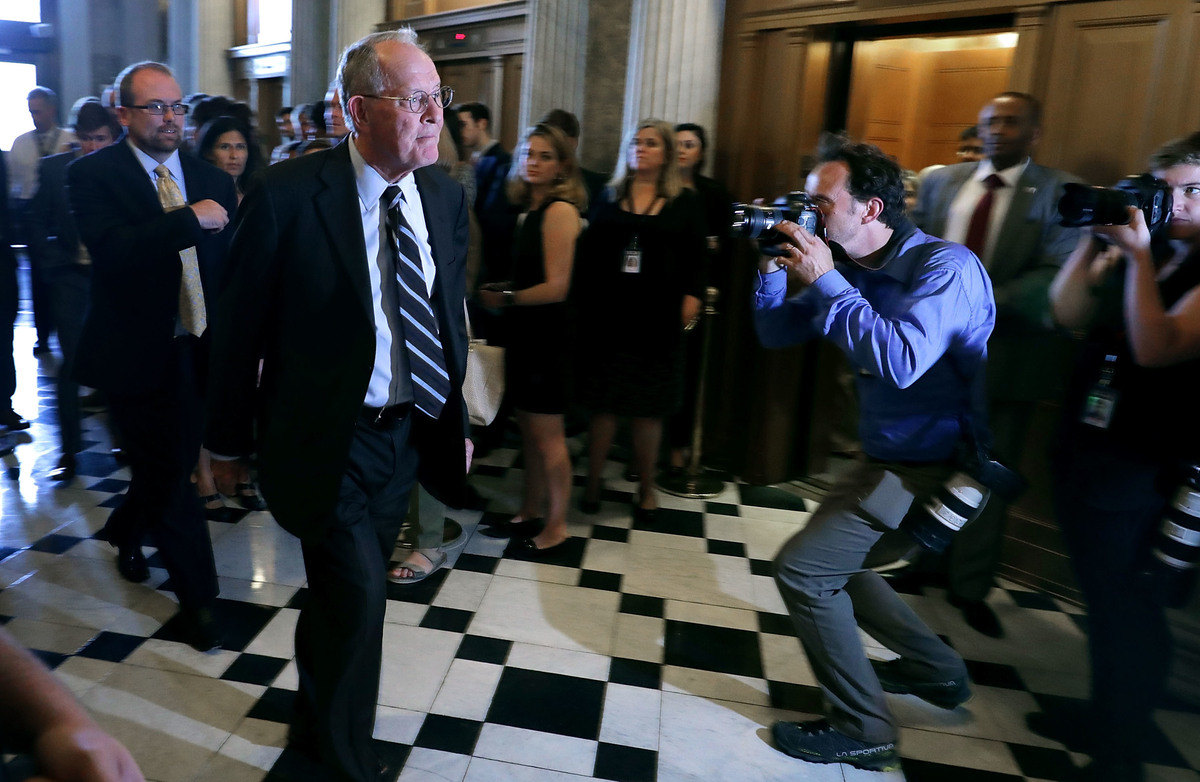
GOP Sen. Lamar Alexander has organized bipartisan hearings aimed at preventing a “death spiral” on the health insurance market. David Greene talks to Democratic Sen. Maggie Hassan of New Hampshire.
DAVID GREENE, HOST:
It turns out not all Republicans think they should let the Affordable Care Act implode. That was President Trump’s advice to lawmakers after the Senate failed to repeal Obamacare last week. Instead, there are signs of bipartisanship. Republican Senator Lamar Alexander has organized bipartisan hearings next month aimed at preventing a so-called death spiral on the health insurance market next year. Senators are concerned about President Trump’s threat to withhold subsidies that help pay for the health care of low-income Americans. Here is what President Trump’s budget director, Mick Mulvaney, said on CNN last weekend.
(SOUNDBITE OF ARCHIVED RECORDING)
MICK MULVANEY: The president’s attitude is fairly simple. If people are suffering, and they are, and you – and they will continue to suffer because we have not repealed or replaced Obamacare, why shouldn’t insurance companies similarly suffer?
GREENE: Senator Maggie Hassen of New Hampshire is a Democrat who sits on the health committee and joins us on the line. Good morning, Senator.
MAGGIE HASSAN: Good morning. Thanks for having me, David.
GREENE: Well, thanks for coming on. So are we seeing an outbreak of bipartisanship in Washington?
HASSAN: Well, I’m really encouraged that the Senate Health, Education, Labor & Pensions Committee on which I serve is going to hold bipartisan hearings on how to bring stability to the health insurance markets. Certainly, you know, when I was governor of New Hampshire, we reached across the party aisle and found a way to build a bipartisan Medicaid expansion program. And it’s really critical right now that we continue to work to ways on lowering costs for all Americans. It’s really important that the Trump administration drop its efforts to sabotage the health insurance markets, especially as Republicans and Democrats are working together to make improvements.
GREENE: And you’re talking about the subsidies that the president’s threatened to cut there, right?
HASSAN: That’s right. Just as you covered, yeah.
GREENE: Well, I do want to ask you about those because it’s – the president’s threatening to cut those subsidies. These are subsidies to insurance companies that help lower – cover lower-income people. Is there really agreement among Republicans and Democrats on your committee right now to protect those subsidies?
HASSAN: Well, what we’re going to focus on in these hearings is our joint concern that we need to lower costs for the American people. And certainly, what we’re hearing from insurers is that with the uncertainty that these threats by the administration are causing, that they are increasing their premium prices as a result.
There are other things that we’ve also been focusing on, a number of proposals, including a bill I introduced with Senator Shaheen to help lower those health insurance premiums by ensuring the cost-sharing reduction payments. That helps lower out-of-pocket expenses and deductibles and co-pays. And we also know that there is more we can do in terms of lowering prescription drug costs and addressing the so-called income cliff in the bill.
GREENE: Sounds like you’re not just talking about these subsidies. I mean, this is a – this is going to be a larger conversation about the Affordable Care Act and where to go from here. But I just do want to ask you, you know, President Trump when referring to these subsidies has used the term bailout. And I wonder if there is – might be some truth to this. If there is some flaw in the system as it is now, is there some other better way you might come up with in a bipartisan fashion to cover lower-income people without having government subsidies go to insurance companies?
HASSAN: Well, look. I – we are going to have these bipartisan hearings to get all ideas from all corners on the table. That’s what good bipartisan hearings do. I’m looking forward to that. If there are ideas other than cost-sharing reductions in the long term, certainly open to hearing that. But what we know right now is that we have a system that anticipated that these cost-sharing reductions would be made. They’re in the original law. That’s the way the insurance industry has been pricing its premiums with the understanding that that would help keep premium costs for middle income and working families lower.
And right now, the uncertainty that the Trump administration’s threats is causing is driving those prices up for families all across our country. So it’s really important that the administration stop taking these actions that are destabilizing the market. Uncertainty drives costs up. And then we need to continue our discussion about how we can build on and improve the Affordable Care Act and the health care system that we have. We’ve got to lower prescription drug costs. And we’ve got to lower costs overall.
GREENE: When it comes to continuing that discussion, let me just ask you, I mean, Senator Bernie Sanders not so long ago almost sounded mocking of Republican efforts to, you know, repeal, replace the Affordable Care Act. He used slogans like make America sick again. And he whipped up a lot of support among, you know, Democratic voters. Are you really – are you and the party really ready to compromise and say, you know, maybe the Affordable Care Act is flawed in many ways, let’s all sit down and talk about how to find something better?
HASSAN: I think you’ve been hearing us say that for a long time. I took office on January 3. And since that time, Democrats have been saying that we would like to be included in a bipartisan process, that we have ideas and we want to hear the ideas from others. We have sponsored bills. We’ve been on the Senate floor talking about ways we can shore up the Affordable Care Act to improve it and improve our health care system overall, including focusing on lowering the cost of prescription drugs, which is one of the other big cost drivers right now. So we are very interested in working with our colleagues and looking forward to it.
GREENE: That’s New Hampshire Senator Maggie Hassan, a Democrat. Thank you.
HASSAN: Thank you very much for having me. Take care.
Copyright © 2017 NPR. All rights reserved. Visit our website terms of use and permissions pages at www.npr.org for further information.
NPR transcripts are created on a rush deadline by Verb8tm, Inc., an NPR contractor, and produced using a proprietary transcription process developed with NPR. This text may not be in its final form and may be updated or revised in the future. Accuracy and availability may vary. The authoritative record of NPR’s programming is the audio record.
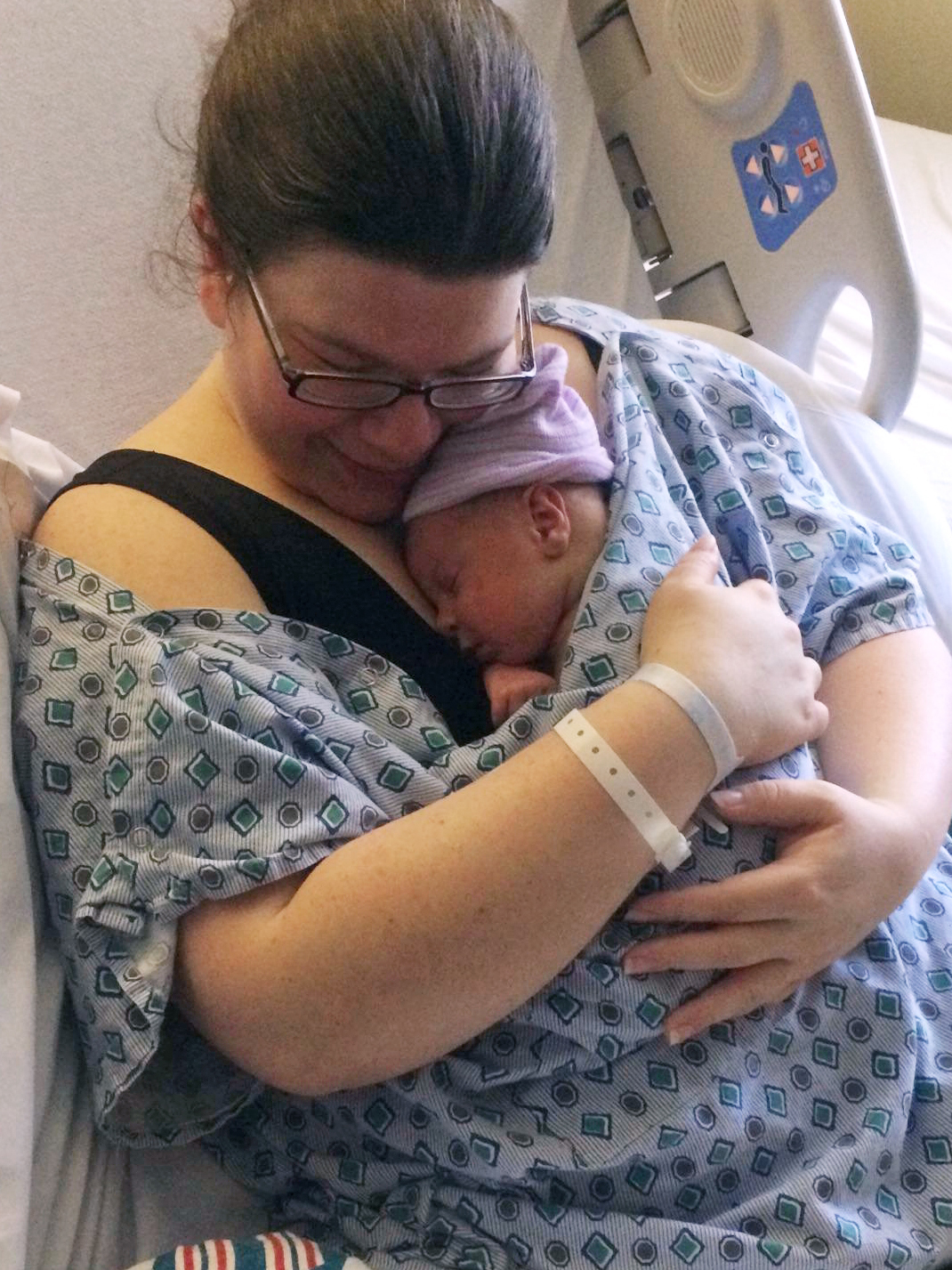
Marie McCausland holds her newborn shortly after delivery. A ProPublica/NPR story about preeclampsia prompted her to seek emergency treatment when she developed symptoms days after giving birth.
Courtesy of Marie McCausland
hide caption
toggle caption
Courtesy of Marie McCausland
This story was co-published by NPR and ProPublica.
Four days after Marie McCausland delivered her first child in May, she knew something was very wrong. She had intense pain in her upper chest, her blood pressure was rising, and she was so swollen that she barely recognized herself in the mirror. As she curled up in bed that evening, a scary thought flickered through her exhausted brain: “If I go to sleep right now, I don’t know if I’m gonna be waking up.”
What she didn’t have was good information about what might be wrong. The discharge materials the hospital sent home with her were vague and confusing — “really quite useless,” she said. Then she remembered a ProPublica/NPR story she had read recently about a New Jersey nurse who died soon after childbirth.
The nurse, Lauren Bloomstein, had developed severe preeclampsia, a dangerous type of hypertension that often happens during the second half of pregnancies — and can also emerge after the baby is delivered, when it often is overlooked, accounting for dozens of maternal deaths a year. McCausland realized that she might have preeclampsia, too.
The 27-year-old molecular virologist and her husband bundled up their newborn son and raced to the nearest emergency room in Cleveland. The ER doctor told her that she was feeling normal postpartum symptoms, she said, and wanted to send her home even as her blood pressure hovered at perilous heights. Several hours passed before he consulted with an ob/gyn at another hospital and McCausland’s severe preeclampsia was treated with magnesium sulfate to prevent seizures.
Without Bloomstein’s story as a warning, McCausland doubts she would have recognized her symptoms or persisted in the face of the ER doctor’s dismissive approach.
“I had just come home with the baby and really didn’t want to go back to the hospital. I think I probably would have just wrote it off.” In that case, she said, “I don’t know if I’d be here. I really don’t.”
McCausland’s experience is far from unique. In the months since ProPublica and NPR launched our project about maternal deaths and near-deaths in the U.S., we’ve heard from 3,100 women who endured life-threatening pregnancy and childbirth complications, often suffering long-lasting physical and emotional effects.
The Leapfrog Group provides performance data on more than 1,800 hospitals and publishes an annual Maternity Care Report.
Consumer Reports offers C-section data from more than 1,300 hospitals by ZIP code.
The California Maternal Quality Care Collaborative‘s “toolkits” of protocols to treat life-threatening obstetric complications include infographics, checklists and lengthy backup materials but require (free) registration for access.
The Alliance for Innovation on Maternal Health’s “bundles” offer similar information in a condensed, easily downloadable form.
The Health4Mom site, from the Association of Women’s Health, Obstetric and Neonatal Nurses, has a“Save Your Life” campaign, including a one-page checklist, to help new mothers recognize postpartum warning signs.
The Institute for Perinatal Quality Improvement offers these resources for medical professionals.
Childbirth Connection provides evidence-based information on maternity care. The Preeclampsia Foundation’s “Wonder Woman” posts (here and here) put the U.S. maternal mortality numbers in context and offer more strategies for self-advocacy.
Postpartum Support International offers many resources for women with pregnancy-related depression, anxiety and mood disorders.
Facebook is a gathering place for thousands of women who’ve experienced life-threatening complications, but many groups are condition-specific and/or closed to nonsurvivors. One open group worth checking out: The Unexpected Project.
Social justice groups are also becoming active around the issue of maternal deaths and near-deaths, with a focus on why African-American women are disproportionately affected. They include the Black Mamas Matter Alliance and Moms Rising.
The same themes that run though McCausland’s story echo many of these survivors’ recollections. They frequently told us they had known little to nothing about the complications that nearly killed them. Even when the women were convinced something was terribly amiss, doctors and nurses were sometimes slow to believe them. Mothers especially lacked information about risks in the postpartum period, when medical care is often disjointed or difficult to access and the baby is the focus of attention.
“Every single nurse, pediatrician and lactation consultant dismissed my concerns as hormones and anxiety,” wrote Emily McLaughlin, who suffered a stroke and other complications after giving birth in Connecticut in 2015.
Hospitals, medical organizations and maternal safety groups are introducing a host of initiatives aimed at educating expectant and new mothers and improving how providers respond to emergencies. But as McCausland’s experience illustrates, self-advocacy is also critically important.
We asked survivors: What can people do to ensure that what happened to Lauren Bloomstein doesn’t happen to them or their loved ones? How can they help prevent situations like Marie McCausland’s from spiraling out of control? What do they wish they had known ahead of their severe complications? What made a difference in their recovery? How did they get medical professionals to listen? Here is a selection of their insights, in their own words.
“A lot of data on specific doctors and hospitals can be found publicly. Knowing how your physician and hospital rates as compared to others (cesarean rates, infection rates, readmission rates) can give you valuable insight into how they perform. ‘Liking’ your doctor as a person is nice, but not nearly as important as their and their facility’s culture and track record.”
— Kristen Terlizzi, 35, survived a placenta accreta (a disorder in which the placenta grows into or through the uterine wall) in 2014, co-founder of the National Accreta Foundation
“Key pieces of information every woman should know before choosing a hospital are: What are their safety protocols for adverse maternal events? No one likes to think about this while pregnant, and providers will probably tell you that it’s unlikely to happen. But it does happen, and it’s good to know that the hospital and providers have practiced for such scenarios and have proper protocols in place.”
— Marianne Drexler, 39, survived a hemorrhage and emergency hysterectomy in 2014
“Ask your doctors if they have ever experienced a case of an amniotic fluid embolism [an abnormal response to amniotic fluid entering the mother’s bloodstream] or other severe event themselves. If a birthing center is your choice, discuss what happens in an emergency — how far away is the closest hospital with an ICU? Because a lot of hospitals don’t have them.Another thing many women don’t realize is that not every hospital has an obstetrician there 24/7. Ask your doctors: If they’re not able to be there the whole time you’re in labor, will there be another OB-GYN on-site 24 hours a day if something goes wrong?”
— Miranda Klassen, 41, survived amniotic fluid embolism in 2008, founder/executive director of the Amniotic Fluid Embolism Foundation
“While my doctor was amazing, we live in a smaller town and [the hospital didn’t] carry enough blood/platelets on hand for very emergent situations. They have patients shipped to larger hospitals when they need more care. Had I been aware of that, we would have decided to deliver at a larger hospital so in case something happened to me or our daughter, we wouldn’t be separated — which we were when I was life-flighted out.”
— Kristina Landrus, 26, survived a hemorrhage in 2013
“My best advice for getting a medical professional to listen is to keep searching for one that is willing to listen. Because of my insurance and personal circumstances at the time, I felt I had no option but to take whoever my providers [assigned] me, despite several red flags even before my delivery. I was not aware of my right to change providers until it was too late.”
— Joy Huff, 39, survived a blood infection in 2013
“A conversation about possible things that could go wrong is prudent to have with your doctor or in one of these childbirth classes. I don’t think that it needs to be done in a way to terrify the new parents, but as a way to provide knowledge. The pregnant woman should be taught warning signs and know when to speak up so that she can be treated as quickly and accurately as possible.”
— Susan Lewis, 33, survived multiple blood clots and severe hemorrhage in 2016
“Always have somebody with you in a medical setting to ask the questions you might not think of and to advocate on your behalf if your ability to communicate is compromised by being in poor health. … And get emotional support to steel you against the naysayers.It may feel really unnatural or difficult to push back [against doctors and nurses]. Online forums and Facebook groups can be helpful to ensure you’re not losing your mind.”
— Eleni Tsigas, survived preeclampsia in 1998 and 1999, executive director of the Preeclampsia Foundation
“Know your rights. Know what kind of decisions you might have to make and what you want to do before you go. Doctors and nurses are there to make quick decisions — they’re not worried about how you will feel about it afterward. They are worried about a lawsuit, whether they can get you stable quickly so they can move on. I’m not saying they are heartless — far from it, my mother is a nurse, I know what sort of heart goes into that profession. But they have a lot to do and a lot to worry about. Your feelings are not at the top of that list. At least not as far as they are concerned in the moment.”
— Carrie Anthony, 36, survived two pregnancies with placenta accreta and hemorrhage in 2008 and 2015
“It isn’t just important to know how you feel about blood transfusions and life-saving measures — you have to communicate these things to your spouse or family member.I was given six blood transfusions, but I was barely conscious when asked if I wanted them. Of course I wanted any life-saving measures, but my husband should have been consulted, given that I was not of a clear mind.”
— Rachel Stuhler, 36, survived a hemorrhage in 2017
“In case you ever are unable to respond, someone needs to step in and be your voice! Know as much thorough medical history as possible, and let your spouse or support person know [in depth] your history as well.”
— Kristina Landrus
“Also be sure your spouse and your other family members, like your parents or siblings, are on the same page about your care. And if you aren’t married, who will be making the decisions on your behalf? You should put things in order, designate the person who will be the decisionmaker and give that person power of attorney. Other important things to have are a medical directive or a living will — be sure to bring a copy with you to the hospital. I also recommend packing a journal to record everything that happens.”
— Miranda Klassen
“Make a list of your questions and make sure you get the full answer. I went to every appointment the second time around with a notebook. I would apologize for being ‘that patient,’ but I had been through this before and I wasn’t going to be confused again. I wanted to know everything. Honestly, it was as harmful as it was helpful — I knew what I was getting into, which made it much scarier. The first time, my ignorance was bliss. I didn’t realize I almost died until two weeks after I had left the hospital. I didn’t even start researching what had happen to me until months later. The second time I was an advocate for myself. Medical journals and support groups were a part of every single visit. And thankfully I was in good hands.”
— Carrie Anthony
“Write down what each specialty says to you. When I was hospitalized for six weeks prior to giving birth, I was visited two to three times a week by someone from each department that would be involved in my life-saving surgery. This means that I saw someone from the neonatal intensive care unit as well as reps from gynecologic oncology, maternal fetal medicine, interventional radiology, and anesthesiology. They paraded in on a schedule, checked up on me, asked if I had any questions. I always did, but I regret not writing down what each said each time (along with names!). I got so many different answers regarding how I would be anesthetized, and on the day it all had to happen in an emergency, there were disagreements above me in the O.R. between the specialists. It was like children arguing on a playground, and my life was in danger. Had I kept a more vigilant record of what each specialty reported to me, perhaps prior to the day I could have confronted each with the details that weren’t matching up.”
— Megan Moody, 36, survived placenta percreta (when the placenta penetrates through the uterine wall) in 2016
“People should know that they have a right to ask for more time with the doctor or more followup if they feel something is not right. The OB-GYNs (at least in Pennsylvania) are so busy, and sometimes appointments are quite quick and rushed. Make the doctors slow down and take the time with you.”
— Dani Leiman, 37, survived HELLP syndrome (a particularly dangerous variant of preeclampsia) in 2011
“You have a legal right to your medical records throughout pregnancy and anytime afterwards. Get a copy of your lab results each time blood is drawn, and a copy of your prenatal and hospital reports. Ask about concerning or unclear results.”
— Eleni Tsigas
“Understand the system. Ask a nurse or a trusted loved one in the ‘industry’ how it all works. I’ve found that medical professionals are more likely to listen to you if you demonstrate an understanding of their roles and the kind of questions they can/cannot answer. Know your ‘silos.’ Don’t ask an anesthesiologist how they plan on stitching up your cervix. Specialists are often incredibly impatient. You need to get the details out of them regarding their very specific roles.”
— Megan Moody
“Let doctors know you care about your health and safety as much as they do. Tell them you want to be a partner in your health care. Do not act as an adversary to your doctor.”
— Tricia Fitzgerald, 40, survived a hemorrhage caused by severe preeclampsia in 2014
“First you have to be armed with concrete knowledge with examples about your illness and have a firm attitude. This is why it is important to know your body. Do your research before your appointment, but make it personal. Do not present your case as if you just went on WebMD for the information. Create a log of your health activities. This log should contain all illnesses you are concerned about, when they occurred and how did you feel. Have your questions and concerns written down. You should always carry a list of your medications, dosage and milligrams. Include any side effects. Ask concrete questions and have the doctors present their findings to you in a language you can understand. If you do not agree [with what one doctor tells you], ask another doctor. Remember, knowledge is power and you must have that power.”
— Anner Porter, 55, survived postpartum cardiomyopathy in 1992, founder of the advocacy organization Fight PPCM
“If your provider tells you, ‘you are pregnant, what you’re experiencing is normal,’ remember — that may be true. [But it’s also true] that preeclampsia can mimic many normal symptoms of pregnancy. Ask ‘what else could this be?’ Expect a thoughtful answer that includes consideration of ‘differential diagnoses’ — in other words, other conditions that could be causing the same symptoms.”
— Eleni Tsigas
“They only listen if the pain is a 10 or higher. Most of us don’t understand what a 10 is.I’d always imagined a 10 would feel like having a limb blown off in combat. When asked to evaluate your pain on a scale of 1 to 10, when you are in your most vulnerable moment, it is very hard to assess this logically, for you and for your partner witnessing your pain. I later saw a pain chart with pictures. A 10 was demonstrated with an illustration of a crying face. You may not actually be shedding tears, but you are most likely crying on the inside in pain, so I suggest to always say a 10. My pain from the brain hemorrhage was probably a 100, but I’m not sure if I even said 10 at the time.”
— Emily McLaughlin, 34, survived a postpartum stroke in 2015
“Crying! I’m only slightly kidding. I truly think the only way to get them to listen is to be adamant and don’t back down. I had a situation where I felt no one was paying attention to me, and I cried out of frustration over the phone. Then they listened to me and snapped into action.”
— Dani Leiman
“So many women do speak up about the strange pain they have, and a nurse may brush it off as normal without consulting a doctor and running any tests.Be annoying if you must — this is your life. … Thankfully, I never had to be so assertive. I owe my life to the team of doctors and nurses who acted swiftly and accurately, and I am eternally grateful.”
— Susan Lewis
“Insist that doctors tell you what happened. I was not told what happened during surgery by a professional. Instead it was my husband trying to describe what happened when I asked why I was receiving transfusions. He was still in shock himself and no one told him what was happening even as he stood there watching my torso hemorrhage, as several other surgeons were called in and efforts were made to find the source and stop the bleeding. All he knew was that it was a lot of blood and something was wrong. No one spoke with us. I had started to feel very dizzy and sick and asked the anesthesiologist what was going on. He stood up to look over the sheet and immediately sat back down, offered to crank up the pain meds, and paged his supervisor (he didn’t know either, he just saw that there was clearly a problem).”
— Kristy Kummer-Pred, 44, survived amniotic fluid embolism and cardiac arrest in 2012
“If you have a hemorrhage, don’t clean up after yourself! Make sure the doctor is fully aware of how much blood you are losing. I had a very nice nurse who was helping to keep me clean and helping to change my (rapidly filling) pads. If the doctor had seen the pools of blood himself, rather than just being told about them, he might not have been so quick to dismiss me.”
—Valerie Bradford, 30, survived hemorrhage in 2016
Paying attention to your symptoms
“I had heard of preeclampsia but I was naïve — [I believed] that it was something women developed who didn’t watch what they ate and didn’t focus on good health prior and/or during pregnancy. I was in great health and shape prior to getting pregnant, during my pregnancy, I continued to make good food choices and worked out up until 36 hours before the baby had to be taken. I gained healthy weight and kept my BMI at an optimum number. I thought due to my good health, I was not susceptible to anything and my labor would be easy. So althoughI had felt bad for 1 1/2 weeks, I chalked it up to the fact that I was almost 8 months into this pregnancy, so you’re not supposed to feel great. … I walked into my doctor’s office that Friday and not one hour later, I was in an emergency C-section delivering a baby. I had to fully be put under, due to the severity of the HELLP, so I didn’t wake up until the next day.”
— Kelli Davis, 31, survived HELLP syndrome in 2016
“Understand that severe, sustained pain is not normal. So many people told me that the final trimester of pregnancy is sooo uncomfortable. It was my first pregnancy, I have a generally high threshold for pain, and my son was breech so I thought his head was causing bad pain under my ribs [when it was really epigastric pain from the HELLP syndrome]. I kept thinking it was normal to be in pain, and I let it go until it was almost too late.”
— Dani Leiman
“I wish I would have known what high blood pressure numbers were. I had a pharmacist take my blood pressure at a pharmacy and let me walk out the door with a blood pressure of 210/102. She acted like it was no big deal (‘it’s a little high’), and so I believed her. Even after telling my husband, we really thought nothing of it.”
— Melissa McFadden, 36, survived preeclampsia in 2013
“Know the way your blood pressure should be taken. And ask for the results. Politely challenge the technician or nurse if it’s not being done correctly or if they suggest ‘changing positions to get a lower reading.’ Very high blood pressure (anything over 160/110) is a ‘hypertensive crisis’ and requires immediate intervention.”
— Eleni Tsigas
“Please ask for a heart monitor for yourself while in labor, not just for the baby. I think if I had one on, seconds or minutes could have been erased from reaction time by the nurses. They were alerted to an issue because the baby’s heart stopped during labor, and while the nurse was checking that machine, my husband noticed I was also non-responsive. That’s when everything happened (cardiac arrest due to AFE).”
— Kristy Kummer-Pred
“My swelling in my hands and feet never went away. My uterus hadn’t shrunk. I wasn’t bleeding that bad, but there was a strange odor to it. My breasts were swollen and my milk wasn’t coming in. I was misdiagnosed with mastitis [a painful inflammation of the breast tissue that sometimes occurs when milk ducts become plugged and engorged]. The real problem was that I still had pieces of placenta inside my uterus. Know that your placenta should not come out in multiple pieces. It should come out in one piece. If it is broken apart, demand an ultrasound to ensure the doctors got it all. If you have flu-like symptoms, demand to be seen by a doctor. If you don’t like your doctor, demand another one.”
— Brandi Miller, 32, survived placenta accreta and hemorrhage in 2015
“There is a period in the days and weeks after delivery where your blood pressure can escalate and you can have a seizure, stroke or heart attack, even well after a healthy birth. You should take your own blood pressure at home if your doctor doesn’t tell you to. … Unfortunately, I went home from [all my postpartum] appointments with my blood pressure so high that I started having a brain hemorrhage. Not one single person ever thought of taking my blood pressure when I was complaining about my discomfort and showing telltale warning signs of [preeclampsia].”
— Emily McLaughlin
“The ER doctor that I had was not treating me as a postpartum case. He was just thinking of me as a 27-year-old with high blood pressure. I think, if you have the opportunity, the ideal thing would be to go back to the same hospital where you had your baby, because they have a labor and delivery unit and they have your records. But if the closest emergency room isn’t at the hospital where you delivered, then you have to be more vigilant. Make sure they know you just gave birth. If you know something is wrong with you, don’t take no for an answer. Just keep saying, ‘I think this is something serious’ and don’t let them discharge you, especially if it’s someone who isn’t familiar with pregnant women.”
— Marie McCausland
“The postpartum period is when a lot of pregnancy-related heart problems like cardiomyopathy emerge. If there is still difficulty breathing, fluid buildup in ankles, shortness of breath and you are unable to lie flat on your back, go see a cardiologist ASAP. If you have to go to an emergency room, request to have the following tests performed: echocardiogram (echo) test, ejection fraction test, B-type natriuretic peptides (BNP), EKG test and chest X-ray test. These tests will determine if your heart is failing and will save your life.”
— Anner Porter
“Rest as much as possible — for as long as possible. Being in too big a rush to get ‘back to normal’ can exacerbate postpartum health risks. Things that are not normal: heavy bleeding longer than 6 weeks or bleeding that stops and starts again, not producing milk, fevers, severe pain (especially around incision sites), excessive fatigue, and anxiety/depression. If you don’t feel like yourself, get help.”
— Amy Barron Smolinski, 37, survived preeclampsia, postpartum hemorrhage and other complications in three pregnancies in 2006, 2011 and 2012; executive director of Mom2Mom Global, a breastfeeding support group
“Know that your preexisting health conditions may be impacted by having a baby (hormone changes, sleep deprivation, stress). Record your health and your baby’s in a journal or app to track any changes. Reach out to the nurse or doctor when there are noticeable changes that you have tracked.”
— Noelle Garcia, 33, survived placental abruption (placenta separating from the uterine wall during pregnancy) in 2007
“If your hospital discharges you on tons of Motrin or painkillers, be aware that this can mask the warning signs of headache, which is sometimes the only warning sign of preeclampsia coming on postpartum.”
—Emily McLaughlin
“I wish I had known that postpartum PTSD was possible. Most people associate PTSD with the effects of war, but I was diagnosed with PTSD after my traumatic birth and near-death experience. Almost 6 years later, I still experience symptoms sporadically.”
— Meagan Raymer, 31, survived severe preeclampsia and HELLP syndrome in 2011
“I recommend therapy with a female therapist specializing in trauma. Honestly, I avoided it for 8 months. I was then in therapy for 12 months. I still have ongoing anxiety … but I would be in a very bad place (potentially depression and self-harm due to self-blame) were it not for therapy. It was so hard to admit [what was happening]. I started to get a suspicion when I heard an NPR story about a veteran with PTSD. I thought … that sounds like me. And I started Googling.”
— Jessica Rae Hoffman, 28, survived severe sepsis and other complications in 2015
“The emotional constructs our society puts around pregnancy and childbirth make the ideas of severe injury and death taboo. Childbirth is a messy, traumatic experience. … Many women don’t seek care even when they instinctively believe something is wrong because they’re supposed to ‘be happy.’ Awareness and transparency are so important.”
— Leah Soule, 33, survived a hemorrhage in 2015
“Having an incredible support network made the greatest impact with my near-death experience, but my family and friends needed their own support as they coped.My mom didn’t leave my side, but she also had a team of friends supporting her so that she could let her guard down and cry when she needed to do so. My husband was at my bedside or with the baby constantly that first week, but he was also suffering from the trauma of everything and was having a really hard time coping and needed to leave the hospital environment. My best friend is an ICU nurse and quickly became the person everyone asked clarifying questions, but she didn’t want to be a nurse in that moment but rather someone who was scared for her friend.”
— Susan Lewis
“I wish I had understood how significant the impact was on my husband. Emotionally, the experience was much more difficult and long-lasting for him than for me, and it continued to affect his relationship with both me and our baby for quite a while, at a time when I didn’t think it was a thing at all.”
— Elizabeth Venstra, 44, survived HELLP syndrome in 2014
“I would suggest establishing yourself ahead of time with a doula or midwife that can make postpartum visits to your home, which can promote health even if everything goes smoothly. Many communities have those services available if you can’t afford them. [A doula] wasn’t covered through our insurance, but the social worker at the hospital arranged for someone paid for by [San Diego County] to come and do several checks on me and my son, which was very reassuring to both my husband and me.”
— Miranda Klassen
“If you’re given a diagnosis of a life-threatening pregnancy complication, line up a therapist immediately so can start getting the support you need as soon as you give birth. Don’t wait until your six-week [postpartum] appointment when they do a depression screen and you realize you’re not coping well. You’ll have to wait at least another week for the appointment to be made. Why not have that in place? I wish I did.”
— Megan Moody
“Don’t assume everyone gets it. Don’t assume everyone wants to hear it. My story is scary. Some soon-to-be moms have looked horrified by my story. Some already moms have been scared away by it. Most people are happy to listen, like to be informed, but some do not. Some people are happier thinking, ‘It’s all going to be OK, not me, I’ll be fine.’ They should at least know, but that’s their choice. You can’t force people to open their eyes. Be there. Offer help. But don’t force it.”
— Carrie Anthony

Philip Kirby says he felt pressured into taking Vivitrol for his heroin addiction by his drug court treatment program. “Like I couldn’t come into the program until I got it,” he says.
Jake Harper/Side Effects Public Media
hide caption
toggle caption
Jake Harper/Side Effects Public Media
Philip Kirby says he first used heroin during a stint in a halfway house a few years ago, when he was 21 years old. He quickly formed a habit.
“You can’t really dabble in it,” he says.
Late last year, Kirby was driving with drugs and a syringe in his car when he got pulled over. He went to jail for a few months on a separate charge before entering a drug court program in Hamilton County, Ind., north of Indianapolis. But before Kirby started, he says the court pressured him to get a shot of a drug called Vivitrol.
Vivitrol is a monthly injection of naltrexone, which blocks opioid receptors in the brain. It’s one of three medications approved by the Food and Drug Administration for treating opioid addiction. While it’s effective in some people, it’s not for everyone. Patients have to be ready to be opioid-free, and some patients won’t do well on it. It can also have side effects, which Kirby says he experienced.
“I had sinus problems, chest problems for the whole month I was on it,” Kirby says. “I couldn’t shake it.”
He says he also got a rash — another possible reaction to Vivitrol, according to the product’s warnings. Months after he had the shot, he still had white splotches on his arms, which he attributed to the drug. But even with those symptoms, Kirby says the court urged him to stick with the medication for a couple more months. “They were way too pushy about it,” he says.
More than 130,000 Americans will go through drug courts this year, according to the National Association of Drug Court Professionals. Drug courts are designed to allow some people whose crimes stem from addiction to get treatment instead of jail time. But the treatment that is offered varies from court to court and is entirely at the judge’s discretion.
Some courts offer participants a full range of evidence-based treatment, including medication-assisted treatment. Others don’t allow addiction medications at all. And some permit just one: Vivitrol.
Prime targets for marketing
One reason for this preference is that Alkermes, the drug’s manufacturer, is doing something nearly unheard of for a pharmaceutical company: It is marketing directly to drug court judges and other officials.
The strategy capitalizes on a market primed to prefer their product. Judges, prosecutors and other criminal justice officials can be suspicious of the other FDA-approved addiction medications, buprenorphine and methadone, because they are themselves opioids. Alkermes promotes its product as “nonaddictive.”
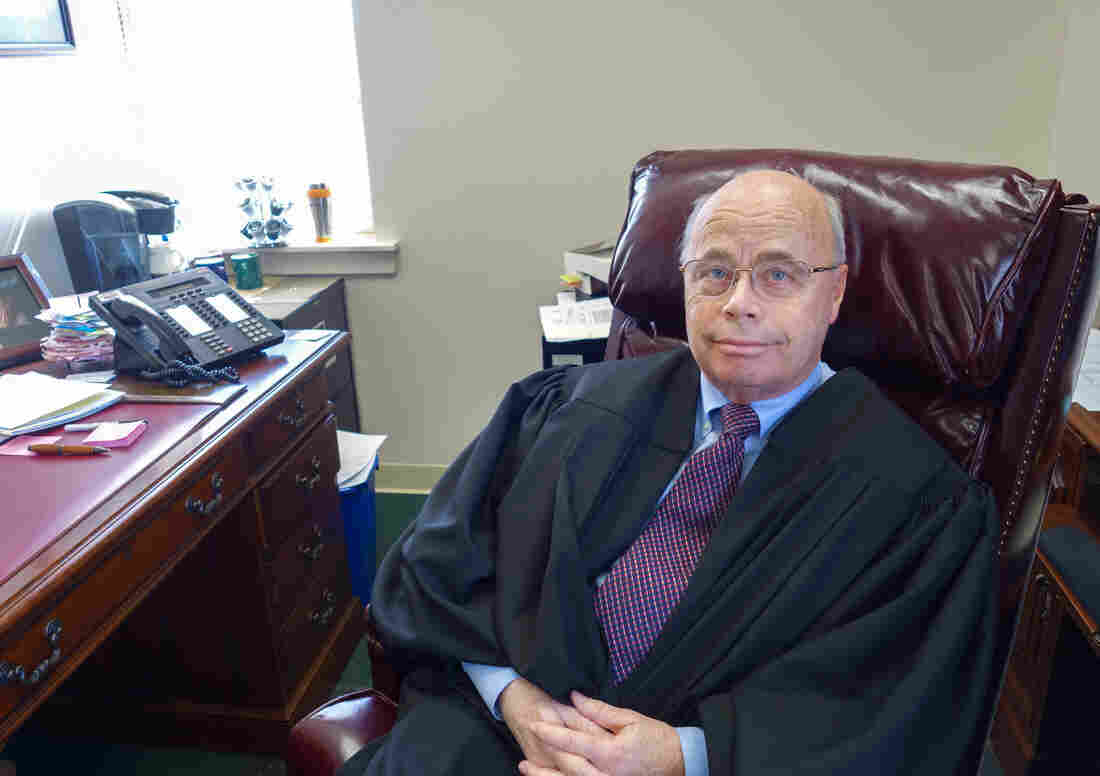
The argument worked for Judge Lewis Gregory, who heads the city court in Greenwood, Ind. About a year and a half ago, Gregory didn’t allow participants to start on addiction medications while in the program. “We were failing miserably with the heroin population,” he says.
Judge Lewis Gregory, head of the city court in Greenwood, Ind., began allowing drug court participants to begin taking Vivitrol after meeting with an Alkermes sales representative.
Jake Harper/Side Effects Public Media
hide caption
toggle caption
Jake Harper/Side Effects Public Media
At the time, Gregory was only familiar with buprenorphine and methadone. Both are opioid medications that can prevent withdrawals, reduce cravings and ultimately help people maintain a stable recovery. When they are properly prescribed and administered, patients don’t get a euphoric feeling or a “high.”
Buprenorphine and methadone have been the standard of care for opioid addiction for years, but because they’re opioids, it is possible to misuse them. They’re also sold illegally on the street.
“I was certainly not going to do a medication-assisted treatment program with drugs which people use to get high,” Gregory says, adding that he would not order someone to stop buprenorphine treatment if it were legally prescribed by a physician, a situation he rarely sees.
Then he received some Vivitrol literature in the mail and a phone call from an Alkermes sales representative. “So we ended up meeting in the early part of 2016, and she began educating me a bit,” he says.
Six months later, his court began a Vivitrol program, permitting some participants to use the drug. A sales representative sometimes sits in on the court’s treatment team meetings, Gregory says.
Many treatment specialists say allowing judges and other criminal justice officials with no medical training to exert influence over medical decisions is problematic. The power makes them prime targets for Vivitrol marketing, they say.
“You would think it would be more appropriate to go after physicians,” says Basia Andraka-Christou, who researches drug courts at the Fairbanks School of Public Health at Indiana University.
“What this is implying is that the judges in these cases are actually making a lot of the medical decisions, and that should be very concerning to everyone,” she says.
Adriane Fugh-Berman, who researches pharmaceutical marketing at Georgetown University, says she has not heard of another drug company going after judges. She says it’s not just unique — it’s inappropriate and could ultimately be damaging to patients. “They’re not health care providers. They don’t know data. They don’t know research,” she says.
A company strategy
The drug court Kirby went through doesn’t allow medications other than Vivitrol for treating addiction. In fact, NPR and Side Effects Public Media have identified at least eight courts out of the several dozen in Indiana that say they only allow Vivitrol treatment.
NPR and Side Effects Public Media have learned that Alkermes sales reps have also marketed the drug to court officials in Missouri and Ohio. A report from ProPublica found that extensive marketing is leading judges to favor Vivitrol around the country.
The company is open about this part of its sales strategy. At an investor event last year, policy director Jeff Harris said that drug courts are a huge market for Vivitrol.
“We’re making progress but still just barely scratching the surface on the need that exists across the country,” Harris said in a presentation. “There are over 3,000 counties in the United States, and there are over 3,000 drug courts.”
A shot of Vivitrol costs around $1,000, making it pricier than the other addiction treatments. In many cases, the drug is paid for through Medicaid or other public funds. And marketing to criminal justice settings seems to have paid off for the company, whose earnings have grown significantly since its introduction. Vivitrol sales reached $209 million in 2016 — up from just $30 million in 2011. Sales have continued to climb this year.
Alkermes goes beyond marketing to judges. It also lobbies state and national policymakers to write laws that favor Vivitrol — and in some cases, hamper access to other addiction medications. The company has said it supports the use of all medications for addiction, but in practice, it doesn’t.
The company supported one law in Indiana that encourages the use of Vivitrol in drug courts. Signed in 2015, the bill allows judges to require medication as a condition of participating in a drug court, and the language specifically highlights Vivitrol treatment.
Alkermes declined repeated interview requests. In a written statement, the company defended the practice of marketing in criminal justice settings by noting that judges don’t actually prescribe their product.
No one-size-fits-all solution
Drug court judges interviewed for this story say they don’t mandate Vivitrol treatment, and that people can say no.
“We encourage it, but we never force anybody,” says Judge Gail Bardach of the Hamilton County, Ind., drug court, where Philip Kirby was a participant.
But facing potential jail time and court officials who really believe in Vivitrol, participants say getting the shot doesn’t always feel like a choice.
“They made it seem like they were forcing it upon me, like I couldn’t come into the program until I got it,” Kirby says.
For some patients, Vivitrol does help. Jeremy Templin went through the Hamilton County drug court program a few years ago after he was arrested for theft. He said the decision to go on Vivitrol seemed like it was made without him, but he credits his recovery, in large part, to the drug.
“I don’t know what it would have been like without it, but I know that I did have it, and here I am today,” he says. “I’m still alive.”
But Vivitrol is far from a one-size-fits-all solution. It’s not ideal for patients who are dealing with chronic pain on top of their addiction, or for pregnant women. It’s expensive. Furthermore, relapse rates for all kinds of opioid addiction treatment are high, and after a period of not using, tolerance for opioids is low. Treatment with Vivitrol, which contains no opioid ingredients, could make someone more likely to overdose if they relapse, addiction specialists warn.
Dan Mistak, an attorney with Community Oriented Correctional Health Services, says courts should allow all medication options and let doctors make treatment decisions — including whether or not someone should use medication in their recovery.
“We rely on outside experts all the time in the judicial system. We don’t ask a judge to come in and be an expert in arson,” for example, he says. “This is a responsibility that a judge doesn’t want.”
The federal government and the National Association of Drug Court Professionals agree that courts should allow all three FDA-approved opioid addiction medication options.
“Especially with this exploding opioid use epidemic, we have to make available, as much as we can, whatever interventions are out there that are likely to be effective,” says Dr. Terrence Walton, chief operating officer for the NADCP, which lists Alkermes as one of its biggest donors.
For some judges, limited access to buprenorphine and methadone shapes their decisions about what to allow in drug court programs. The medications are heavily regulated, and many communities lack providers who can prescribe and dispense the drugs. Judge Bardach says she would consider allowing participants to use methadone if there were a provider closer to the court.
A need for regulation?
Currently, there is no regulatory agency that can ensure that judges follow best practices.
“There are not that many ways to leverage accountability over these courts,” says Christine Mehta, a researcher at Physicians for Human Rights. Mehta recently authored a report on drug courts, focusing on three states. “Really the key is attaching restrictions and requirements to funding,” she says.
The federal government has put some requirements in place for courts receiving grants from the Bureau of Justice Assistance. They have to show that they “will not deny any eligible client access to the program because of their use of FDA-approved medications for the treatment of substance use disorders.” But only about 200 of the more than 3,000 drug courts nationwide operate with help from a BJA grant.
The Substance Abuse and Mental Health Services Administration has similar grant-making guidelines in place, but it currently funds only 172 courts.
Mehta says states and counties need to implement similar requirements and work to educate drug court officials about all addiction medication options. She argues that until drug courts allow all of the medications, they’re not fulfilling their promise.
“If drug courts say that they provide access to treatment instead of prison, they are inherently violating that by saying, ‘Well, we only provide Vivitrol,’ ” she says.
Mehta says Alkermes’ marketing would be less effective if judges were compelled to follow best practices.
Georgetown researcher Fugh-Berman thinks that pharmaceutical companies like Alkermes should be barred from marketing to court officials and lawmakers.
“It would be great if the [FDA] went after this,” she says. “I think it does fall under their jurisdiction, but I wouldn’t rely on that being enough.” She says Congress could pass a law preventing such marketing, as well.
Philip Kirby says his probation officer finally relented when he lifted his shirt and showed that his rash was covering his whole body.
That rash has since cleared up, but it has left a pattern of white spots on his arms.
“I don’t know if they’ll go away,” he says. “I hope they go away eventually.”
He says he wishes he’d never taken Vivitrol in the first place.
This story is part of a reporting collaboration with NPR, Side Effects Public Media, Kaiser Health News and WFYI. Esther Honig of WOSU in Columbus, Ohio, and Bram Sable-Smith of KBIA in Columbia, Mo., contributed reporting.

People with chronic illnesses were only slightly more likely than healthy individuals to put their wishes down on paper in a living will.
Jodi Jacobson/Getty Images
hide caption
toggle caption
Jodi Jacobson/Getty Images
Before being deployed overseas for the Iraq war in 2003, Army reservist Don Morrison filled out military forms that gave instructions about where to send his body and possessions if he were killed.
“I thought, ‘Wow, this is mortality right in your face,'” Morrison, now 70, recalls.
After that, his attention was keenly focused on how things might end badly. Morrison asked his lawyer to draw up an advance directive to describe what medical care he wanted if he were unable to make his own decisions.
One document, typically called a living will, spells out Morrison’s preferences for life-sustaining medical treatment, such as ventilators and feeding tubes. The other, called a health care proxy or health care power of attorney, names a friend to make treatment decisions for him if he were to become incapacitated.
Not everyone is so motivated to tackle these issues. Even though advance directives have been promoted by health professionals for nearly 50 years, only about a third of U.S. adults have them, according to a recent study.
People with chronic illnesses were only slightly more likely than healthy individuals to put their wishes down on paper.
For the analysis, published in the July issue of Health Affairs, researchers reviewed 150 studies published between 2011 and 2016 that looked at the proportion of adults who completed advance directives. Of nearly 800,000 people, 37 percent completed some kind of advance directive. Of those, 29 percent completed living wills, 33 percent filed health care proxies and 32 percent remained “undefined,” meaning the type of advance directive wasn’t specified or was combined.
People older than age 65 were significantly more likely to complete any type of advance directive than younger ones — 46 percent of older people, versus 32 percent of those who were younger. But the difference between people who were healthy and those who were sick when they filled out the directive was much smaller — 33 percent compared with 38 percent.
To encourage more physicians to help people to plan for their care, the Medicare program began reimbursing them in January 2016 for counseling beneficiaries about advance-care planning.
This study doesn’t incorporate data from those changes. But it can serve as a benchmark to gauge improvement, says Dr. Katherine Courtright, an instructor of medicine in pulmonary and critical care at the University of Pennsylvania. She is the study’s senior author.
There are many reasons that people are reluctant to sign a living will. “Many people don’t sign advance directives because they worry they’re not going to get any care if they say they don’t want [cardiopulmonary resuscitation],” says Courtright. “It becomes this very scary document that says, ‘Let me die.’ “
Living wills also don’t account for the fact that people’s wishes may change over time, says Dr. Diane Meier, a geriatrician and the director of the New York-based Center to Advance Palliative Care.
“In some ways, the public’s lack of excitement about this is related to the reality that it’s very hard to make decisions about the kind of care you want in the future when you don’t know what that will be like,” she says.
Sometimes as patients age and develop medical problems, they’re more willing to undergo treatments they might have rejected when they were younger and healthier, Meier says.
“People generally want to live as well as they can for as long as they can,” she says. If that means going on a ventilator for a few days in order to get over a bout of pneumonia, for example, many may want to do that.
But if their living will says they don’t want to be put on a ventilator, medical staff may feel bound to honor their wishes. Or not. Although living wills are legal documents, medical staff and family members or loved ones can reinterpret them.
“At the moment, I’m very healthy,” Morrison says. If he were to become ill or have a serious accident, he’d want to weigh life-saving interventions against the quality of life he could expect afterwards. “If it were an end-of-life scenario, I don’t want to resuscitated,” he says.
If someone’s wishes change, the documents can be changed. There’s no need to involve a lawyer in creating or revising advance directives, but they generally must be witnessed and may have to be notarized.
While living wills can be tricky, experts strongly recommend that people at least appoint a health care proxy. Some even suggest that naming someone for that role should be a routine task that’s part of applying for a driver’s license.
“Treatment directives of any kind all assume we can anticipate the future with accuracy,” says Meier. “I think that’s an illusion. What needs to happen is a recognition that decisions need to be made in real time and in context.”
That’s where the health care proxy can come in.
But to be effective, though, people need to have conversations with their proxy and other loved ones about their values and what matters to them at the end of life.
They may tell their health care proxy that they want to die at home, for example, or that being mobile or able to communicate with their family is very important, says Jon Radulovic, a vice president at the National Hospice and Palliative Care Organization.
Some may opt to forgo painful interventions to extend their lives in favor of care that keeps them comfortable and maintains the best quality of life for the time that remains.
“The most important thing is to have the conversation with the people that you love around the kitchen table and to have it early,” says Ellen Goodman, a Pulitzer Prize-winning writer who founded The Conversation Project, which provides tools to help people have conversations about end-of-life issues.
Morrison says he’s talked with his health care proxy about his wishes. The conversation wasn’t difficult. Rather than spell out precisely what he wants done under what circumstances, Morrison is leaving most of the decisions to his health care proxy if he can’t make his own choices.
Morrison says he’s glad he’s put his wishes down on paper. “I think that’s very important to have. It may not be a disease that I get, it may be a terrible accident. And that’s when [not knowing someone’s wishes] becomes a crisis.”
Kaiser Health News, a nonprofit health newsroom, is an editorially independent part of the Kaiser Family Foundation. Follow Michelle Andrews on Twitter @mandrews110.

For months now, the GOP push to replace the Affordable Care Act has consumed Washington.
Still, for many consumers, the top concern has been the rising cost of prescription drugs. And that brings us to the topic of pharmacy benefit managers.
PBMs, as they’re known, are not well understood and often go unnoticed.
Given how important they are to the prescription drug pricing pipeline, we wanted to remedy that.
Here’s a video that explains how these multimillion-dollar corporations came to be, and how they impact drug costs and access.
Kaiser Health News is a nonprofit health newsroom, an editorially independent part of the Kaiser Family Foundation. You can follow KHN senior correspondent Julie Appleby on Twitter @Julie_Appleby.
Dave Anderson, CEO of HealthNow New York, talks with Steve Inskeep about lawmakers’ plans to hold bipartisan hearings on health insurance exchanges. NPR’s Scott Horsley has details and analysis.
Sen. Lamar Alexander, R-Tenn., walks to the Senate Chamber for a vote in the U.S. Capitol on July 26. He and Democratic Sen. Patty Murray of Washington announced Tuesday they would begin to hold health care hearings in September.
Chip Somodevilla/Getty Images
hide caption
toggle caption
Chip Somodevilla/Getty Images
Senate Republicans don’t appear to be too worried about President Trump’s latest round of threats.
“If a new HealthCare Bill is not approved quickly, BAILOUTS for Insurance Companies and BAILOUTS for Members of Congress will end very soon!” Trump said on Twitter over the weekend. He followed that tweet with a similar threat Monday, writing, “If ObamaCare if hurting people, & it is, why shouldn’t it hurt the insurance companies & why should Congress not be paying what the public pays?”
And yet, the Senate is clearly moving on from health care — at least for now. Tuesday, Majority Leader Mitch McConnell laid out his short-term priorities: confirming presidential nominees and passing bills related to the Department of Veterans Affairs and the Food and Drug Administration. In September, McConnell says, the Senate will turn its attention to a tax bill.
In other words: not health care.
Underscoring the end of the deadline-driven push for repealing the Affordable Care Act: Sens. Lamar Alexander, R-Tenn., and Patty Murray, D-Wash., announced the Senate Committee on Health, Education, Labor and Pensions would begin holding health care hearings in September. The hearings won’t focus on a broad repeal of the current health law, but rather on smaller-scale measures needed to stabilize Obamacare marketplaces.
What “bailouts” was Trump referring to? The “insurance company bailouts” are known as cost-sharing reductions, or CSRs. As NPR’s Alison Kodjak explains, the federal government’s monthly payments “reimburse insurance companies for discounts the law requires them to give to low-income people who buy insurance through the Affordable Care Act exchanges. The federal money that goes to insurers in these payments … offsets the money insurers lose by lowering the deductibles and co-payments they require of these policyholders.”
The Trump administration decides whether or not to make these payments on a monthly basis, and White House officials have repeatedly threatened to cut them off. Many Republicans are urging them not to. “It’s absolutely essential that the cost sharing reductions be continued,” said Maine Republican Sen. Susan Collins. “When I hear them described as an insurance company bailout, that is just not an accurate description. The reason we have CSRs is to help low-income people.”
As for the congressional “bailouts” — that’s a bit more complicated. The Affordable Care Act required members of Congress and their staff to receive their health insurance through Obamacare exchanges. But an unintentional loophole in the language initially threatened to drive up costs for lawmakers and staffers by substantial margins, compared to other federal employees.
In 2013, the federal Office of Personnel Management ruled that lawmakers and the tens of thousands of affected staffers would continue to receive the same cost-sharing benefit as before: The government would fund 75 percent of health insurance costs, with the employee paying the rest.
In other words, congressional staff and lawmakers would purchase insurance on the District of Columbia insurance market, but continue to effectively receive the same employer-contribution that most people covered by their workplace use to pay for the bulk of insurance costs.
So technically, the Trump administration could order the Office of Personnel Management to reverse that ruling, and leave lawmakers and staffers to fully fund their health insurance costs themselves.
Most lawmakers dismissed the tweet. “I’m not exactly sure what he’s talking about,” said South Dakota Republican Sen. Mike Rounds. Asked whether he thinks Trump would follow through on the threat, Rounds said, “I don’t know. You’d have to ask the president. I respect the office of the presidency and know he has a number of tools available to him.”
Rounds pushed back against Trump’s suggestion that Senate Republicans are “quitting” on Obamacare repeal. “Just recognize that we really are trying to get to someplace where we help people that are going to be hurt if we don’t do something to stabilize and bring these premiums down,” he said.
Trump’s threat did get support from an occasional GOP critic: South Carolina Sen. Lindsey Graham. “We should pay a price” for not passing a repeal bill, Graham said. “We haven’t tried all our options yet.”
“The idea that Congress should pay a price for failing here probably resonates with 90 percent of the country, so I think he’s on to something.”
But with Senate leaders making it clear they’re moving on to other issues, the question is now whether Trump follows through on his threat.
Tennessee Insurance Commissioner Julie Mix McPeak talks with NPR’s Ari Shapiro about cost sharing reductions — federal reimbursements to insurance companies that are key to the Affordable Care Act.