Tips For Staying Healthy When Traveling Abroad
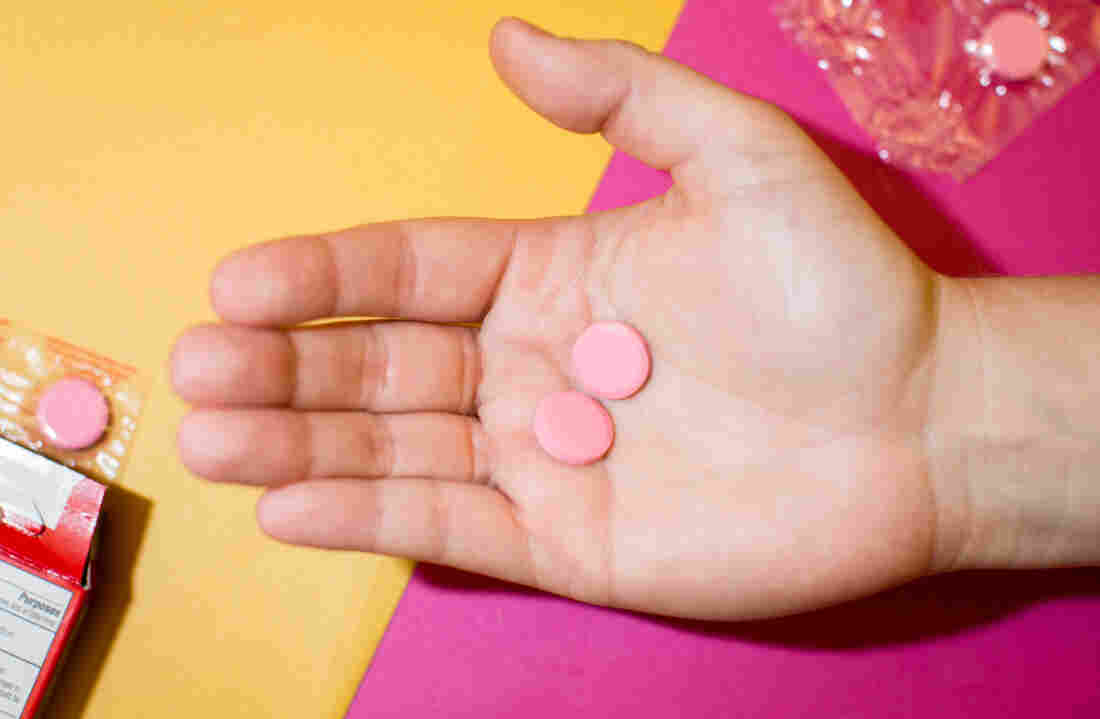
Heading someplace where you could get traveler’s diarrhea? Try packing some prophylactic pills containing bismuth subsalicylate, such as Pepto Bismol.

Meredith Rizzo/NPR

hide caption

toggle caption

Meredith Rizzo/NPR

When planning a summer trip abroad, it’s easy to think, “Oh, I’ll just hop over to a travel clinic, and they’ll tell me everything I need to know — and do — to keep from getting sick.”

But that’s not always the case.

A study published last week in the Annals of Internal Medicine found that travel clinics missed giving the measles vaccine to about half of eligible travelers.

For nearly a third of the missed cases, doctors or nurses simply didn’t offer the vaccine, even though measles is a problem in many parts of the world, including Western Europe and Mexico.

“That’s very unfortunate,” says Capt. Gary Burnett, who leads the Traveler’s Health branch at the Centers for Disease Control and Prevention. “A traveler can be very easily exposed to measles around the world. That risk is very real.”

With international travel, Burnette says it’s best to figure out what you need before you go to the clinic, and then discuss the items with your doctor.

So, to kick off the summer travel season, we’re offering two tips that are often overlooked by clinicians.

1. Pack the pink pills

Let’s start with what you’re most likely to suffer from while traveling: food poisoning. About a quarter of travelers will get gastrointestinal problems within the first two weeks of an international trip, studies have found.

The major advice clinics give is, “Watch what you eat.” The CDC even has an app to help you decide whether or not to put that raw cheese or carnitas into your mouth.

The app is appropriately name “Can I Eat This?”

That strategy won’t hurt, but also might not help. Science just doesn’t back it up, says Daniel Leung, an infectious disease doctor at the University of Utah.

“There have been only a few studies on the topic, and they’ve shown that dietary discretion does not seem to change the risk of getting traveler’s diarrhea,” Leung says. “Even people who are eating street food or aren’t being very careful may not be at higher risk.”

But science does support another strategy; a prophylaxis that clinicians often overlook. We even missed it when we reported on this topic back in 2015.

It’s cheap, safe and … it’s a beautiful pink color.

Yep, I’m talking about Pepto Bismol, or any generic alternative with the same active ingredient, bismuth subsalicylate.

Back in 1987, a study found that two tablets of Pepto Bismol tablets, taken four times a day, cut the risk of traveler’s diarrhea by more than 60 percent. The pills dropped the risk from 40 percent to only 14 percent.

The study wasn’t super big, just 182 students traveling to Guadalajara, Mexico, but it was a randomized, placebo-controlled study, which is the gold standard design for medical trials. And it showed a dose-dependent effect. A lower dose of one tablet, four times a day reduced the risk by 40 percent rather than 60 percent.

“The findings showed fairly clearly that Pepto Bismol is effective at preventing diarrhea,” Leung says.

So why don’t we hear more often about this strategy?

“For one thing, the study is old,” Leung says. “A second might be because drug companies don’t widely market Pepto Bismol.”

And some travelers might find it tough to take pills four times a day, he says.

But even less frequent doses might be helpful, Leung says. Bismuth subsalicylate is known to have antimicrobial properties, and it may actually form a protective layer on top of the intestinal wall.

If you do get sick, Leung says, the pink pills may come in handy again. Bismuth subsalicylate can shorten the duration of a bout of diarrhea, and is a good alternative to antibiotics, Leung says.

2. Remember the routine vaccines

There’s a good chance you might need a vaccine, says Burnette, even if you’re just headed for a quick trip to Europe or the U.K.

That’s because the CDC recommends that all international travelers be up to date on “routine vaccines,” no matter the destination.

“You know, we try to stress this, with both travelers and clinicians, because some clinicians won’t check to see if you’ve completed routine vaccinations, such as the measles,” Burnette says.

Routine immunizations are the ones we get as children. The list is long. It includes about a dozen vaccines, everything from the pneumonia and whooping cough vaccines to those for Hepatitis A and B.

When you add onto this list any shots recommended for your specific destination, the list of possible vaccines can get complicated.

Plus, the CDC’s recommendations often get updated. Just a few weeks ago, the agency officially started recommending the cholera vaccine for travelers headed to places with ongoing outbreaks. And last month, they warned of a potential yellow vaccine shortage.

To make sure your clinician gets the list right for your specific trip, Burnette recommends using the CDC’s new travel app, called Trav Well.

Users type their destination and time of travel into the app, and it tells them what they need to do to prepare.

“It will suggest the vaccines and medications you probably need, and it will ask you to take those recommendations to your doctor about four to six weeks before you travel,” Burnette says. “I think it’s very helpful and can certainly make the whole process of preparing for trip a lot easier.”


Let’s block ads! (Why?)

Health Care Industry Drives Job Growth At The Expense Of Efficiency

As the debate over health care continues in Washington, one thing not in dispute is that health care industry employment has been going up steadily over the past decade. In Ohio, health care industry jobs now outnumber those in manufacturing. The jobs are good news to state and local economies, but some analysts also say it’s a reflection of the high costs and complexity of health care.

Let’s block ads! (Why?)

Poll: Doctors Are Still Prescribing Lots Of Opioids For Low Back Pain

Millennials are more apt to treat low back pain themselves, and with treatments like exercise and massage.

Getty Images/iStockphoto

hide caption

toggle caption

Getty Images/iStockphoto

More than half of people say they’ve suffered lower back pain in the past year, according to the latest NPR-Truven Health Analytics Health Poll.

That’s not a surprise; low back pain is very common, and one of the biggest reasons that people seek medical care. But people told us that they’re making very different choices in how they treat that pain, with some stark differences among age groups and income levels.

And doctors often aren’t giving people advice based on the best medical evidence, instead prescribing treatments that don’t relieve back pain and can expose people to serious risk, including addiction.

Fifty-five percent of people polled said they treated the back pain themselves without going to a doctor. That makes sense; most back pain gets better on its own, and the self-prescribed remedy that people say they reach for more often, over-the-counter medications like ibuprofen, can offer some relief without significant risk.

Still, the current advice is stay active and try non-pharmaceutical remedies such as a heating pad first, before even Advil or Aleve, according to clinical guidelines published in April by the American College of Physicians. Those guidelines also said there’s evidence of benefits from massage, acupuncture or chiropractic.

When people do go to a doctor, the treatment most commonly recommended to survey participants was prescription painkillers, at 40 percent. That includes opioids, which are overprescribed and have fueled the nation’s epidemic of opioid dependence, addiction and overdose deaths.

In March 2016, the Centers for Disease Control and Prevention recommended that opioids not be the first choice for chronic pain, saying that patients should try things like exercise and non-steroidal pain pills first.

“Many more patients are getting opioids than you would expect,” says Dr. Anil Jain, vice president and chief health informatics officer for Truven Health Analytics and IBM Watson Health.

Survey participants said doctors also recommended injections 20 percent of the time and surgery 12 percent of the time.

Add that up and it means that someone going to a doctor for back pain has a good chance of getting a treatment that probably won’t help, and comes with risks like addiction or surgical complications, according to Dr. Anna Lembke. She’s a Stanford University psychiatrist and author of Drug Dealer M.D., which chronicles how opioid pain pills have been promoted to physicians.

“We have a serious problem with our health-care delivery system where physicians are highly incentivized to prescribe pills and perform procedures because that’s what pays,” Lembke says. “They’re also motivated to please patients, but don’t have much time to manage complex medical conditions.”

The survey finding show a disconnect between what medical organizations recommend and what doctors and patients are doing, says Dr. Steven Atlas, a low back pain specialist at Massachusetts General Hospital who wrote an editorial accompanying the April guidelines.

“The simplest thing to do is to take a medicine for pain,” Atlas says. “But these guidelines are more focused on the fact that back pain is often a reflection of our physical well-being.”

We’re overweight, we don’t exercise and we’re sedentary in our work, Atlas says. That makes us more prone to low back pain. “Even if medication does well, it’s not treating the underlying problem and it can come back.”

Millennials were least likely to go to a doctor for back pain, the survey found, with 64 percent saying they treated it themselves. They were also much more likely to use evidence-based treatments like exercise and massage.

That could be because that generation is more consumer-driven and likely to research treatments themselves, Jain says, or it could be because their back pain is caused by recreational activities like sports and they don’t see it as needing a doctor’s care.

Overall, 70 percent of those surveyed said their back pain got better or went away completely; just 4.7 percent said it got worse.

But there were startling differences in who benefited. People with incomes over $50,000 a year were much more likely to say the pain went away completely, with 24.7 percent of those with incomes between $50,000 and $99,999 saying they were pain free, and 45.4 percent of those making over $100,000 a year.

Recovery also correlated with education level: People who hadn’t graduated from college were more likely to say they were still dealing with pain.

That could reflect differences in access to care; the survey found that high-income people were more likely to seek medical care, and also more likely to use massage or exercise, treatments that typically aren’t covered by insurance and take time.

It will take time to change the perceptions of patients and doctors that the go-to treatment for low back pain is pills, Atlas says. “Still, the emphasis on patients taking control and understanding what counts for back pain is important.”

That’s a challenge in his own practice, Atlas says. “I saw a patient today who really wanted medicine; that was their conceptual model. Being a good doctor, I gave them medicine. But I also said, ‘You’ve had back pain in the past, it would be really good to focus on physical activity. Walking is good for it, even if it makes it a little more sore.’ “

You can find the questions and full results of the latest poll here. For previous polls, click here.

Survey Methodology

The Truven Health Analytics-NPR Health Poll is powered by the Truven Health Analytics PULSE® Healthcare Survey, an independently funded multimodal (landline, cellphone, Internet) survey that collects information from approximately 80,000 U.S. households annually. The results depicted here represent responses from 3,002 survey participants interviewed from March 1–16, 2017. The margin of error is plus or minus 1.8 percentage points.

Let’s block ads! (Why?)

Fact Check: 'We Don't Have Health Care In This Country,' Trump Says

In a news conference with Colombian President Juan Manuel Santos in the White House on Thursday, President Trump said the Affordable Care Act “is collapsing.”

Andrew Harnik/AP

hide caption

toggle caption

Andrew Harnik/AP

President Trump gave a eulogy on Thursday for the Affordable Care Act, also known as Obamacare.

“Obamacare is collapsing. It’s dead. It’s gone,” Trump said in a news conference with Colombian President Juan Manuel Santos.

“There’s nothing to compare it to because we don’t have health care in this country,” he went on.

That left some Obamacare customers scratching their heads — figuratively — on Twitter.

Doktor Zoom, for example, wondered why he’s still paying a premium.

Damn, Obamacare is dead and gone? Funny, i’m still paying my premium, seeing my doctor, and filling my prescriptions. I could be wrong.

— Doktor Zoom (@DoktorZoom) May 18, 2017

In fact, we do have health care in this country — quite a lot of it. The U.S. spent about $3.2 trillion on health care in 2015, or nearly $10,000 per person. It accounts for 17.8 percent of GDP.

But the president wasn’t talking about health care per se. He was talking about Obamacare, which Republicans are trying to replace with legislation currently in the hands of the Senate.

Even the picture of the current health law isn’t as bad as Trump tried to paint it, though. In the years since the Affordable Care Act went into effect, the uninsured rate fell toabout 10 percent, the lowest level in U.S. history. About 10 million people have bought insurance through the exchanges created by the health care law. Another 10 million got coverage through the expansion of Medicaid.

.@realDonaldTrump: “#Obamacare is dead…a fallacy…nothing there…it’s gone.” I;m sure the 20+million ppl on it will disagree w/u. #trump

— Andy Ostroy (@AndyOstroy) May 18, 2017

That’s not to say the Obamacare marketplaces aren’t struggling. In some states insurers are pulling out of the markets because they’re losing money, as Trump pointed out.

“Aetna just pulled out. Other insurance companies are pulling out,” he said.

That’s true. Aetna pulled out of all the Obamacare exchanges. In some states — Tennessee and Iowa, for example — there are areas that risk having no insurer at all. And premiums have been rising across the country.

Still, the overall Obamacare picture isn’t so stark.

Standard & Poors, for example, said last month that insurance companies that offer health plans on the exchanges are losing less money than ever, and the markets are becoming more stable. The Kaiser Family Foundation says more than half the population has the choice of three or more insurers if it wants to buy a policy on the exchanges. And most people who get insurance through the Affordable Care Act receive subsidies to offset the rate increases.

Several insurance companies, however, have said the uncertainty caused by Republican efforts to repeal the law have led them to either pull out of the markets or raise their rates for next year.

So when Trump says, as he did today, “Obamacare is a fallacy. It’s dead,” that’s not exactly true.

But he hopes to help make it so.

Let’s block ads! (Why?)

Women Opt To Skip Pelvic Exams When Told They Have Little Benefit

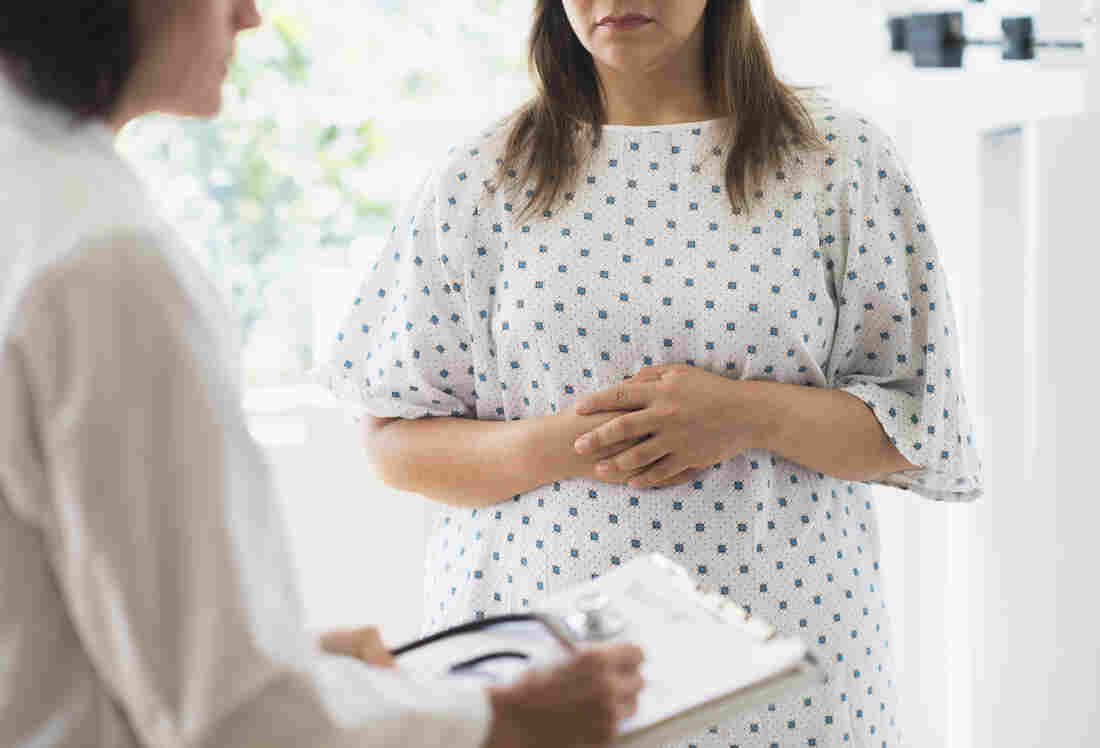
Woman in doctor's office.

Tetra Images/Getty Images/Tetra images RF

This is a story about conflicting medical advice.

One group of doctors, represented by the American College of Obstetricians and Gynecologists, recommends yearly pelvic exams for all women 21 years of age and older, whether they have symptoms of disease or not.

But the American College of Physicians, representing doctors of internal medicine, says that potential harms of the exam outweigh benefits and recommends against performing pelvic examinations unless a woman is pregnant or has symptoms of disease such as bleeding, pain or signs of infection.

In March, the influential U.S. Preventive Services Task Force concluded there just wasn’t adequate evidence to recommend for or against annual exams.

A study published Thursday says that when women were told that one prominent medical association strongly recommends against yearly exams, the number of women opting to have the exam dropped from 82 percent to 39 percent.

“This is a dramatic, enormous effect for a five-minute education intervention,” says Dr. George F. Sawaya, an obstetrician-gynecologist at the University of California, San Francisco one of the study authors.

Saway and his colleagues wanted to know whether a woman’s decision to have a pelvic exam might be influenced by knowledge about a particular medical society’s recommendations.

They showed 190 women visiting health clinics at UCSF and Zuckerberg San Francisco General Hospital and Trauma Center illustrations of a pelvic examination. Then they were randomly assigned to review the summary of one of the two medical groups’ recommendations.

The summary by the ACP noted there are no known benefits of the exam, and included information about the potential for false-positive test results which could lead to unnecessary follow-up surgery. Sawaya says this typically means discovery of an enlarged ovary and possible removal of the ovary.

The summary by ACOG noted no known benefits of the exam, but did not mention the possibility of false alarms and unnecessary surgery. The study was published in the American Journal of Obstetrics & Gynecology.

The pelvic exam is typically performed by an obstetrician-gynecologist or other primary care provider and is done to manually check the overall health of a woman’s reproductive organs, including the vagina, cervix, uterus, fallopian tubes and ovaries.

Sawaya says the reason most physicians give for the yearly exam is to detect ovarian cancer. But the ACP says there’s no good evidence the exam actually picks up ovarian cancer. ACOG, however, stands by its recommendation that yearly pelvic exams are warranted for all women 21 years of age and older.

Every year, millions of women have pelvic exams. “Given the potential public health impact of our findings, we think there is a pressing need for improving patient counseling concerning this exam,” says senior study author Miriam Kuppermann, a UCSF professor in the departments of obstetrics, gynecology and reproductive sciences, and epidemiology and biostatistics.

The vast majority of women in the study, more than 90 percent, said that potential benefits and harms should routinely be discussed with patients prior to the examination.

But most doctors “probably don’t discuss pros and cons of the exam with their patients,” says Sawaya, adding that will likely change as debate about the value of the exams becomes more public. “I think this whole thing is going to go the way of extinction,” he says. “We’re just going to stop talking about it and stop doing it.”

However, there is one recommendation both medical groups and federal health officials agree on: Every woman age 21 to 65 who has a cervix should get a Pap smear every three to five years. Sawaya says there is good evidence that the periodic Pap test (which is often done in conjunction with a pelvic exam), can be a highly effective screening test for cervical cancer.

Let’s block ads! (Why?)

Common Lead Test Can Give False Results, FDA Warns

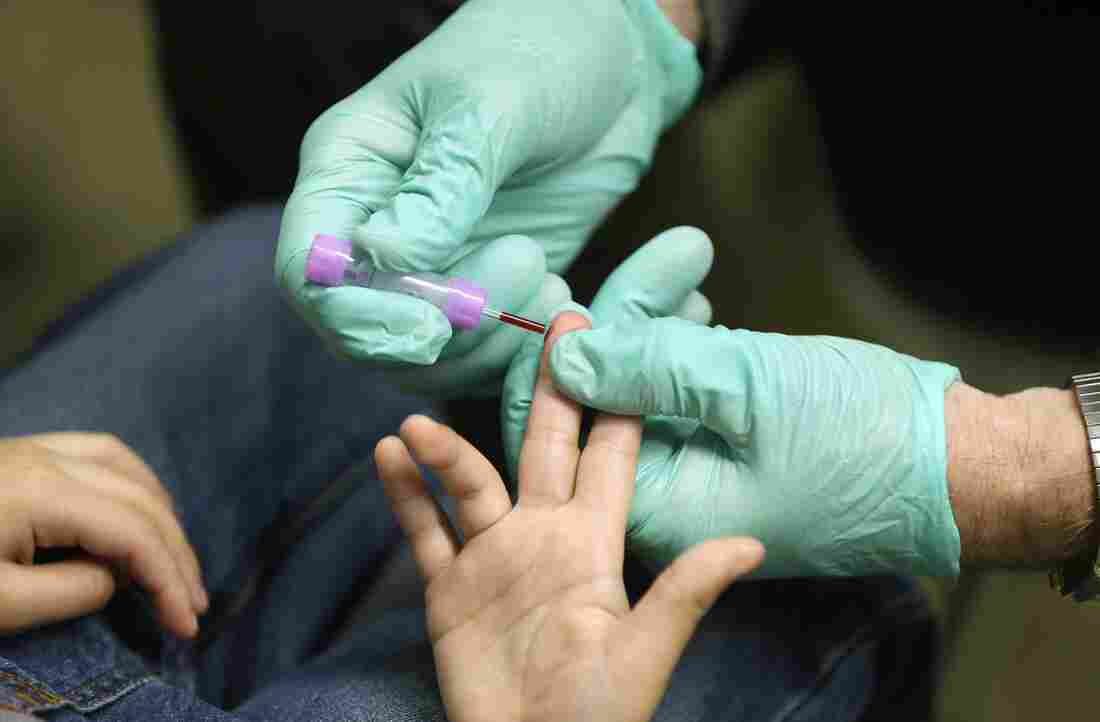
The FDA says blood lead tests manufactured by Magellan Diagnostics can give falsely-low results if they are used with blood drawn from a vein, as opposed to a finger or heel prick.

Carlos Osorio/AP

hide caption

toggle caption

Carlos Osorio/AP

Common blood tests for lead can give falsely-low results in certain cases, according to a new warning from the Food and Drug Administration.

The tests, manufactured by Magellan Diagnostics, are commonly used in doctors’ offices and clinics, and on its website the company calls itself “the most trusted name in lead testing.” But the FDA now says that its tests can give inaccurate results when used to test blood drawn from a vein.

The majority of lead tests are not conducted with that kind of blood sample, but rather blood from a heel or finger prick, says Dr. Jeffrey Shuren, director of the FDA’s Center for Devices and Radiological Health.

“We have no evidence that Magellan’s tests, when used with blood obtained from a finger or heel stick, are impacted,” says Shuren. “We believe most people will not be affected by this issue.”

For example, in 2016, the Centers for Disease Control and Prevention recommended that all children under the age 6 years in Flint, Mich., get re-tested as part of the response to the crisis there. Patrick Breysse, director of the CDC’s National Center for Environmental health, says they have a lot of information about that testing, and have determined that “less than one percent, perhaps, might be at risk for being under-estimated because they were a venous draw that were tested on the Magellan system.”

Officials are recommending retesting for certain children, pregnant women and nursing mothers who did get tested using blood from a vein.

And the FDA says it’s aggressively investigating why these tests can give inaccurate results.

Officials say the company first became aware of a potential problem through complaints received in the fall of 2014, and developed a mitigation plan, which was to basically just delay processing of the sample for 24 hours.

“And that completely resolved the problem. They communicated with their customers, their customers acknowledged receipt, and that was it,” says Shuren.

But earlier this year, when FDA officials became aware of the problem, Shuren says the agency believed that the company had underestimated the risk to the public, and that the data supporting the mitigation plan wasn’t sufficient.

Between the beginning of 2014 to today, officials say, an estimated 8 million blood lead tests have been run using the Magellan systems, and the majority of those were for capillary blood from finger or heel sticks.

“From a coverage perspective, particularly for those kids on Medicaid, we would expect that the Medicaid programs in those states would be covering and paying for the retesting,” says Timothy Hill, the Acting Director for the Center for Medicaid and CHIP Services, which is part of the Centers for Medicare and Medicaid Services. “For those who are covered privately, we would encourage folks to consult with their health plan.”

Asked why taxpayers or insurance companies should have to pay for retesting, Hill said the first priority is to get kids retested if they need retesting, and officials do not want reimbursement to hold that up.

“It’s my understanding that the, sort of, conversations with Magellan are ongoing,” says Hill. “Speaking as to whether or not Magellan has liability or not is not something I can speak to.”

In response to NPR’s inquiries, a spokesperson with Magellan pointed to a letter to its customers that the company published this morning.

Let’s block ads! (Why?)

Ethics Of Aid: Should Donated Health Dollars Go To 'Children First'?

Last week, it was your editors at Goats and Soda who were the curious goats.

We published a story on the huge gap in health care dollars for young and old in the developing world. A study looked at the $36.4 billion allocated by development agencies and nonprofit donors and found that a major share goes to children under 5.

The authors of the study didn’t take a position on whether this is an appropriate allocation. But they’ve heard opinions from lots of people.

We wanted to know what our audience thinks. Is it right that children get most of the health aid in poor countries? Or should more money be spent on diseases of old age? Using our comment tool at the bottom of the story, they shared their perspective.

Over the past week, we received dozens of responses from our readers. Here’s a sampling, edited for length and clarity.

Children first

“As a mother, I would use my last dollar to pay a dentist to pull my son’s painful tooth even if it meant not being able to pay for my cancer medicine.If you have to choose between saving your mother or your daughter, with tears in your eyes and a torn heart, you choose your child. And your parent would forgive you.” -Marie

Spend it on the workforce

“Rationally, the highest attention should be directed to adults 20 to 50 years old, who are the most productive members of society.” –Elaine Eckerle

Don’t forget the moms

“If you don’t take care of the mother’s health and keep her alive, you lose the most vital component of the family, the village, the community — and her children will suffer. Children without a mother may be subject to malnutrition, stunting, sexual abuse, child labor, child trafficking, etc.” -Marlene LaPorte

More resources to older adults

“As aging populations grow, the incidence of chronic disease rises and so do health care costs. Unless more resources are devoted to taking care of older adults, countries will face massive financial and societal challenges in the years ahead.” -Susan Peschin

‘Spread some extra wonderful on us’

“I love children. I’ve worked in the health field for over 22 years and have seen first hand the good work on them, which is wonderful, But spread some extra wonderful on us. We’re your parents, grandparents, aunts, uncles, neighbors.” -D.A. Woods

Invest in the future

“Children are the true goal of development. Treating a geriatric woman with Alzheimer’s or diabetes will do very little for the future trajectory of the country.” -Kishore Joshi

Make it proportional to health needs

“I think it’s fair that children get a large share of the pie. But that pie should be divided more evenly among other age groups. The funding pool should drop to its lowest [for adults] between 20 to 40 [years old], while increasing around age 50 to deal with chronic health issues for aging patients.” -Liam Alden Smith

Thank you to everyone who participated in this month’s #CuriousGoat.

Let’s block ads! (Why?)

Secret To Maine's Touted High-Risk Pool? Enough Money

The Maine Legislature established a high-risk pool for insuring patients with expensive medical conditions, partly funded with a surcharge on all policyholders in the state.


J. Stephen Conn/Flickr
hide caption

toggle caption


J. Stephen Conn/Flickr

As the GOP health bill moves to the U.S. Senate, many consumers and lawmakers worry that people who have pre-existing conditions won’t be able to find affordable health coverage if the bill becomes law.

There are a number of strategies under consideration, but one option touted by House Republicans borrows an idea that Maine used several years ago. It’s called an invisible high-risk pool — “invisible” because people in Maine didn’t even know when they were in it.

The program existed from 2012 until 2014, closing with the advent of the Affordable Care Act’s insurance exchanges.

The Maine pool earned higher marks than most state high risk pools because it had a key ingredient: enough money.

“The problem is that in order to do the Maine model — which I’ve heard many House people say that is what they’re aiming for — it would take $15 billion in the first year and that is not in the House bill,” Sen. Susan Collins, R-Maine, told Politico. “There is actually $3 billion specifically designated for high-risk pools in the first year.”

Maine’s program worked like this: When a resident applied for health insurance, they had to fill out a questionnaire. If they had certain medical conditions known to be costly, their application was flagged for the high-risk pool. To consumers, it was seamless. They paid regular premiums and got the same sort of coverage as any other enrollee in their chosen health plan.

As Mitchell Stein, an independent health policy consultant in Maine, explains it, the cost of these patients’ more expensive health bills was paid by a nonprofit entity set up by the state — the Maine Guaranteed Access Re-insurance Association, or MGARA.

The money to pay for these high-cost patients came from two sources: the insurance policy premiums paid by patients within that high-risk pool, and a $4-a-month surcharge on all policyholders in the state.

This invisible high-risk pool was just one part of a larger health reform law in Maine, Stein says, and that makes a straight-up assessment of how well the strategy worked difficult. But it’s “a great theory,” he says, “and can be an appropriate way to handle these things.”

Eric Cioppa, superintendent of Maine’s Bureau of Insurance, agrees with Stein. “In Maine, for the period of time it was operating, it worked very well,” Cioppa says.

Though only in effect for a brief period, Cioppa says, the invisible high-risk pool did keep costs down in the individual market, where Anthem was the largest insurer.

Without the invisible high risk pool, Cioppa says, Anthem would, by its own estimates, have increased rates more than 20 percent. Instead, the rates went up less than 2 percent.

But Steve Butterfield, policy director of the Maine-based advocacy group Consumers for Affordable Health Care, cautions that there was a crucial aspect of Maine’s invisible high-risk pool that fueled its success: It was well-funded. The version proposed in the House GOP health bill, he says, is not.

“An analysis that was done on what this program would need showed that it would need $15 billion to $20 billion per year to have any kind of reasonable impact on premiums,” Butterfield says.

The GOP bill does allocate about $15 billion to $20 billion — but that is for almost a full decade, not per year.

“One of our concerns,” Butterfield says, “is if the feds are going to put this in place and only kick in a token amount of money, is it going to be up to the states to pick up the slack — pick up the tab, and pay into this thing to make it work?”

Furthermore, Butterfield says, as the law stands now, under the Affordable Care Act, there’s no need for high-risk pools of any sort. The idea to use invisible high-risk pools is a solution to a problem that the GOP health care bill creates. Right now people can buy insurance regardless of their health status, whether or not they have a pre-existing condition. It’s the GOP bill that would allow states to opt out of that Obamacare rule.

“I don’t understand,” Butterfield says, “why it would be a good idea to, on the one hand, say, ‘Well, we’re worried about pre-existing conditions, so we’re going to throw not enough money at a problem we’re creating. At the same time, we’re going to allow insurance companies to charge sick people more.’ “

And the invisible high-risk pool, says Stein, is just one small proposal within the larger health bill.

“There’s nothing inherently wrong with it,” Stein says, “but it doesn’t really fix all the other problems of the bill.”

Those, he says, include cuts to Medicaid, and potential changes to what have been, under Obamacare, a guaranteed set of essential benefits.

This story is part of NPR’s reporting partnership with local member stations and Kaiser Health News.

Let’s block ads! (Why?)

Hey, Millennials: Want to Help The Underserved? Sign Up For Insurance

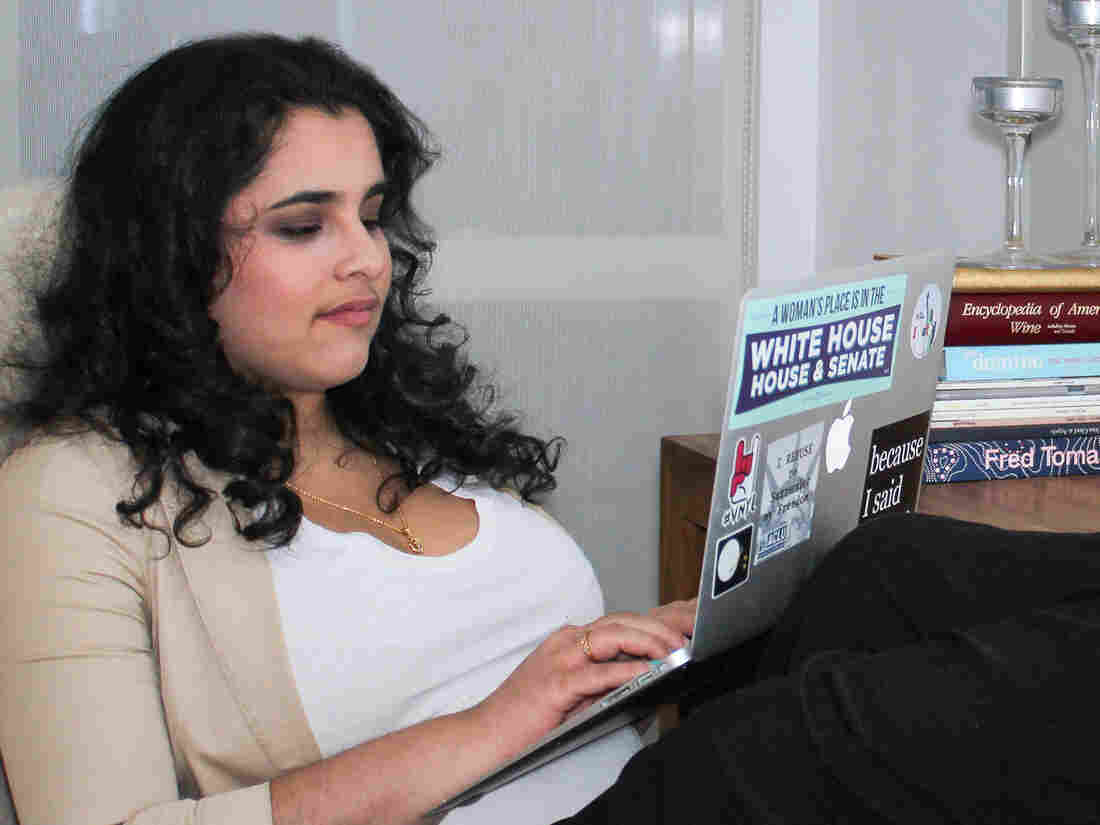
Tapping into millennials’ compassion and activism might be the best way to motivate them to buy health coverage, says Aditi Juneja, a New York University law student.

Ashley Pridmore/Courtesy of Youth Radio

hide caption

toggle caption

Ashley Pridmore/Courtesy of Youth Radio

In the spring of my first-year of law school, while taking an exam, I had a grand mal seizure — the type of seizures people see in the movies with spasms on the floor. My memory is fuzzy from that time. I remember a few of my classmates offering me water afterward. I was told that many stopped taking the exam to make sure that I didn’t injure myself while having a seizure, sitting in my chair.

It was a remarkable showing of solidarity, kindness and collegiality. Keep in mind that these were students in their first year of law school at New York University. They’d been told that their grades would determine whether they’d be selected for prestigious internships and jobs. In that moment, my classmates didn’t know whether there would be adjustments to the way the exam was graded, or if they’d be penalized for showing up for me. And yet, they decided to help anyway.

I was grateful at the time. Looking back on it now, though, I wish I could tell them, “If you really want to help sick people like me, you’ll sign up for health insurance.”

I want my peers to realize that what keeps health care affordable for people like me is for those with fewer medical needs to sign up for insurance. Health insurance functions kind of like splitting a cab ride — the more people in the pool, the less it costs any one person.

I have epilepsy, and that makes me one of roughly 117 million people in the U.S. with a chronic health condition – it’s a “pre-existing condition” in the language of insurance companies.

My first memories of having seizures are from when I was 10 years old. I was doing my math homework and kept losing my place. I did the same calculations over and over again as if my brain was hitting a reset button.

Now, at 26, I have been seizure-free for 18 months with the assistance of a combination of medications that I take three times a day. I have tried to come off of medications in the past but have always ended up having another seizure. Right now, it looks as though I will have to take medicine every day for the rest of my life.

Fortunately, I am among the two-thirds of people with epilepsy who can control their seizures with medicine. But without insurance coverage, the drugs that allow me to function at my full capacity would cost me hundreds of dollars a month out of pocket. I would end up having to make hard choices between food, rent and medicine.

My focus in law school is criminal law. However, this past November, after the election of President Trump and his promise to repeal and replace Obamacare with something “better,” I quickly had to become an expert on health care policy. Because of my seizure disorder, my ability to function in school and in society depends on access to health care — and health insurance.

Even with Obamacare’s individual mandate to buy insurance, many people my age have chosen to go without health coverage.

That’s a gamble — young, healthy people sometimes get cancer, too, or can be hit by a car and need expensive medical care. Still, if the Republicans’ plan to remove the mandate passes the Senate, it’s likely even fewer young people will become insured.

Many actuaries say that, for the individual health insurance market to be stable, 40 percent of enrollees need to be young and healthy. In 2014, that number was only 28 percent. The percentage stayed the same through 2016.

I was surprised to learn that part of the reason the Affordable Care Act was not as initially successful as it could have been, is that not enough young people signed up to keep premiums at an affordable price.

Getting healthy young people to care about health care is a battle politicians know well, and have handled with varying degrees of success. I chuckle thinking back to President Obama’s chat with Zach Galifianakis on Between Two Ferns, and the many other efforts he made to reach young people where they are.

I often wonder why President Obama, when he was promoting the Affordable Care Act to millennials, didn’t bring out a young person like me to help my peers understand why it matters. Rather than trying to sell us on the affordability of enrollment, or relying on humor, or reminding us that we are not invincible, he could have relied on the compassion we exhibit one-on-one in supporting each other.

After all, Barack Obama, relied on the youth vote to win both of his campaigns. He didn’t use gimmicks then — he spoke to young people as though we were capable of understanding our importance in the world. The 2016 election, which lacked substance and focused on negative campaigning, also saw a decrease in voter turnout among young people.

As politically aware, or “woke” as my peers seem to me, I worry that making the effort to understand and sign up for health insurance is low on people’s priority list.

And I get it. There is a lot to be afraid of right now and a lot of areas needing attention. It’s almost too much to bear. I understand the impulse to look away, change the channel, or unfollow. But in the same way that people my age are galvanized to organize — whether that’s knitting a sea of pink hats, protesting in the streets, or calling their elected representatives — they can show up for the current- and future-sick by going online, and signing up for health insurance.

Aditi Juneja, 26, graduates this week from NYU Law School. This essay was produced byYouth Radio.

Let’s block ads! (Why?)