In Rural Alaska, A Young Doctor Walks To His Patient's Bedside

Dr. Adam McMahan has been practicing medicine in rural Alaska for three years. It’s the kind of intimate, full-spectrum family medicine the 34-year-old doctor loves.

Elissa Nadworny/NPR

hide caption

toggle caption

Elissa Nadworny/NPR

In rural Alaska, providing health care means overcoming a lot of hurdles.

Fickle weather that can leave patients stranded, for one.

Also: complicated geography. Many Alaskan villages have no roads connecting them with hospitals or specialists, so people depend on local clinics and a cadre of devoted primary care doctors.

I followed one young family physician, Dr. Adam McMahan, on his regular weekly visit to the clinic in the village of Klukwan.

It’s a speck of a town alongside the Chilkat River in Southeast Alaska, framed by snowy mountains that loom in the distance.

The village of Klukwan is populated mostly by Alaska Natives of the Tlingit tribe, and has fewer than 100 residents. It sits along the Chilkat River in Southeast Alaska.

Elissa Nadworny/NPR

hide caption

toggle caption

Elissa Nadworny/NPR

The clinic staff drives up to Klukwan twice a week from the bigger town of Haines, 22 miles to the south.

Our Land is a project from special correspondent Melissa Block. She’s spending the next few months traveling the country, capturing how people’s identity is shaped by where they live. Help her decide where to go and who to spend time with by filling out this form.

On our drive, McMahan points out the clouds of dust blowing off sandbars along the river: “Likely today we’ll see somebody with a lung issue because of the sand coming off the river.”

Klukwan is populated mostly by Alaska Natives of the Tlingit tribe, fewer than 100 people in all, with a few hundred more people in the surrounding area.

Over the three years that he’s been practicing medicine in Klukwan, McMahan has come to know his patients well, and that becomes clear as he begins the day’s consultations.

With patient Lani Hotch, along with reviewing her cholesterol and blood sugar levels, McMahan remembers that she has a new dog. “What type of puppy did you get?” he asks her. (A yellow Lab.)

With fisherman Henry Chatoney, he wonders, “Hey, did you find a deckhand?”

And knowing that Everett Simons grows great potatoes and has been put on a low-starch diet for his diabetes, the doctor joshes, “How often are you sneaking a potato?”

The Klukwan clinic is open on Tuesdays and Thursdays, and includes two exam rooms, a dental suite and a small lab for basic diagnostics. It’s part of the Southeast Alaska Regional Health Consortium, or SEARHC.

Elissa Nadworny/NPR

hide caption

toggle caption

Elissa Nadworny/NPR

This is the kind of intimate, full-spectrum family medicine the 34-year-old doctor loves.

“I know that Everett, he’s an amazing potato farmer,” he says. “I know that Henry is full of adventures and has fished Bristol Bay for longer than I’ve been alive. You get to know your patients as human.”

McMahan can trace his inspiration to become a physician back to a striking series of black-and-white photographs he saw in a magazine when he was a teenager. His grandfather was a pediatrician and had a 1948 issue of Life magazine on a shelf in his office. The photo essay by W. Eugene Smith, “Country Doctor,” shows a dedicated general practitioner tending to his patients in rural Colorado: making house calls, taping up broken ribs, stitching wounds.

“Those stills were really captivating,” McMahan says. “I was looking at those the other day and they’re not that different than what we do now here in Alaska.”

Everett Simons and Lani Hotch chat in the waiting room at the health clinic.

Elissa Nadworny/NPR

hide caption

toggle caption

Elissa Nadworny/NPR

The Klukwan clinic is open on Tuesdays and Thursdays. It’s part of the Southeast Alaska Regional Health Consortium, or SEARHC.

The clinic has two exam rooms, a dental suite and a small lab for basic diagnostics.

“A lot of it is doing the best we can in the moment with limited resources,” McMahan says. “I can’t send you down the street to go see a cardiologist. I can’t get a CT [scan] done in 10 minutes.”

On the day we visit, McMahan is seeing mostly elderly patients, including one, a Tlingit elder named Evelyn Hotch, who is confined to her bed after a stroke.

So with stethoscope looped around his neck, McMahan walks down the road to pay her a house call.

Once we’re inside her home, the first thing Evelyn Hotch does is offer all of us a snack: dried red seaweed. “You came to an Indian house,” she says, “and this is what Indians like to eat!”

It’s only after McMahan has shared her seaweed and inquired about the grandchildren whose photos cover just about every inch of her walls that he turns to her medical issues, asking about pain and what supplies she needs. “We’ll see you next week, OK?” he says as he heads out.

McMahan pays a house call on a Tlingit elder named Evelyn Hotch, who is bedridden after a stroke.

Elissa Nadworny/NPR

hide caption

toggle caption

Elissa Nadworny/NPR

The goal with regular primary care like this is to keep people out of the emergency room. But in such a small, remote town, what happens in an emergency? There’s a volunteer ambulance squad that will drive up from Haines, about a half hour away.

Haines doesn’t have a hospital, though, so critically ill or injured patients might need to be medevacked by Coast Guard helicopter from Haines to Juneau.

“The vibratory effect of that, when your heart rate’s beating fast and you’ve got a really sick patient, hearing the helicopter, hearing the blades, is such a relief,” McMahan says.

Once a patient makes it to Juneau, he or she might still need to be flown by air ambulance to bigger hospitals in Anchorage or Seattle, hundreds of miles away.

“The Rubik’s Cube of resource coordination and transport is probably one of our biggest challenges,” McMahan says.

In part because of these complicated logistics, Alaska has some of the highest health care costs in the country.

For people who don’t have health insurance, “it’s often cause for catastrophe, financially,” McMahan says.

McMahan and medical student Jesse Han head back to the clinic after a home visit.

Elissa Nadworny/NPR

hide caption

toggle caption

Elissa Nadworny/NPR

But, he adds, since Alaska expanded its Medicaid program in September 2015 under the Affordable Care Act, he is able to treat patients now who had gone for years without access to primary care.

More than 32,000 Alaskans have gained health coverage through Medicaid expansion.

McMahan worries about what might happen to his patients if the ACA is repealed and replaced by Congress: “I think if the Medicaid expansion is undercut, people will go without care,” he tells me. “They’re not going to be able to afford it.”

Even though the current health care debate is taking place thousands of miles away from his clinic, it hits home.

“It’s amazing how politics impact my day-to-day life when it comes to just getting somebody basic, basic care,” he says.

For now, though, Dr. McMahan turns to his immediate concerns: He has more patients to see, and more stories to hear.

The “Our Land” series is produced by Elissa Nadworny.

Let’s block ads! (Why?)

Elizabeth Lesser: Why Is It So Hard To Ask For — And Offer — Forgiveness?

[embedded content]

Part 3 of the TED Radio Hour episode Forgiveness.

About Elizabeth Lesser’s TED Talk

Before donating bone marrow to her sister — Elizabeth Lesser and her sister undertook a process of seeking forgiveness from each other. She says forgiveness is hard but necessary for our well-being.

About Elizabeth Lesser

Elizabeth Lesser is the co-founder of Omega Institute, where she focuses on holistic education, meditation, and cross-cultural understanding. Lesser is also the co-founder of Omega’s Women’s Leadership Center.

She has written several bestselling books. Her latest book is Marrow: A Love Story, a memoir about Elizabeth and her younger sister, Maggie, and the process they went through when Elizabeth was the donor for Maggie’s bone marrow transplant.

Let’s block ads! (Why?)

Thordis Elva And Tom Stranger: How Do You Move Forward After Sexual Violence?

[embedded content]

Part 2 of the TED Radio Hour episode Forgiveness.

About Thordis Elva and Tom Stranger’s TED Talk

Tom Stranger raped Thordis Elva when they were dating in high school. Years later, they started a painful and painstaking dialogue about accountability and reconciliation.

About Thordis Elva and Tom Stranger

Thordis Elva is a writer, journalist and activist. Her work focuses on gender equality, fighting online bullying, and ending the silence associated with sexual violence. She has spoken to the United Nations and the Nordic Council of Ministers. Thordis is a co-author of South Of Forgiveness, a non-fiction dialogue between her and the man who raped her in high school.

Tom Stranger is the co-author of South Of Forgiveness. He hopes that telling his story will contribute to the growing public discourse about sexual violence. Tom will be donating all his profits from the book to a women’s shelter in Iceland.

Let’s block ads! (Why?)

Communities Key To Fighting Opioid Crisis, HHS Secretary Says

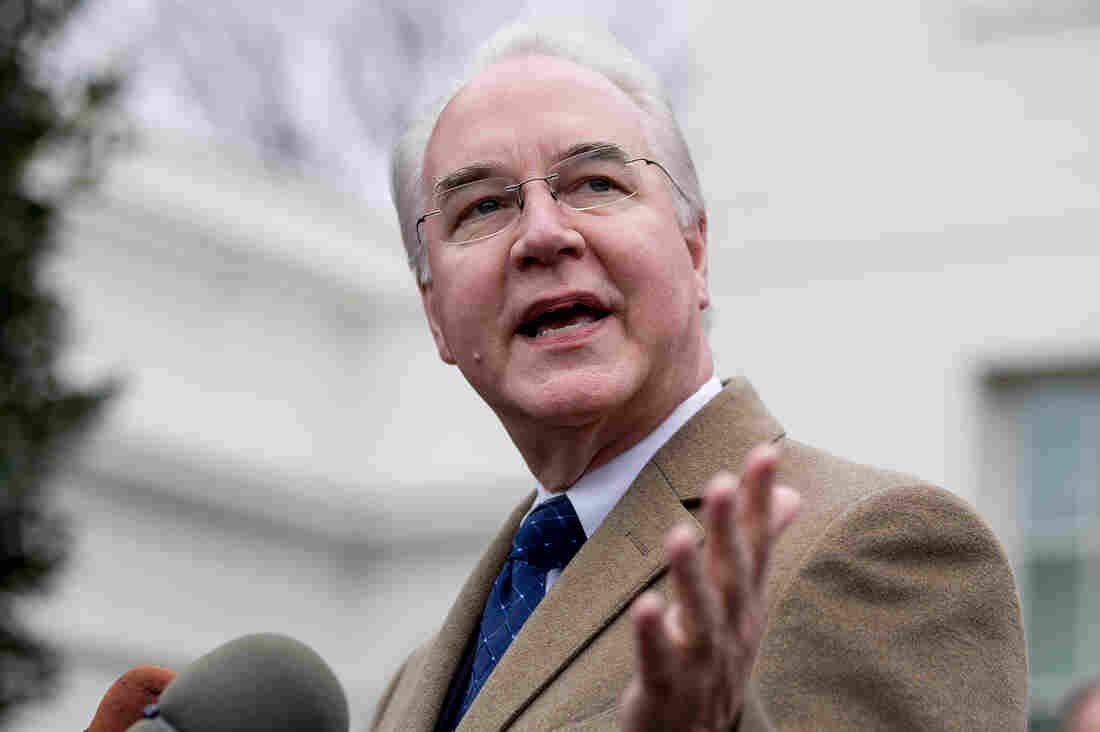
Health and Human Services Secretary Tom Price says “We’re losing as a nation,” when it comes to opioid abuse.

Andrew Harnik/AP

hide caption

toggle caption

Andrew Harnik/AP

In March, President Trump called opioid abuse in the U.S. “a total epidemic,” and issued an executive order creating a commission focused on combating the opioid crisis.

On Wednesday, the White House announced it would appoint Massachusetts Gov. Charlie Baker, North Carolina Gov. Roy Cooper, former Rhode Island Rep. Patrick Kennedy and Harvard Medical School researcher Bertha Madras to the commission, which is headed by New Jersey Gov. Chris Christie.

Now, the secretary of health and human services, Tom Price, is touring communities that have been hit especially hard by painkiller and heroin overdoses.

Price spoke to NPR’s Rachel Martin shortly after visiting West Virginia. He talked about his agency’s role in combating drug addiction, as well as the potential impact of the health care bill recently passed by House Republicans. The interview has been edited for length and clarity.


Interview Highlights

On the administration’s approach to opioid abuse in the U.S.

The purpose of this tour is to punctuate the president’s commitment to solving the opioid crisis. The numbers, as you know, were absolutely astounding: 52,000 overdose deaths in 2015, [and] 33,000 of those by opioid overdose. So what we’re trying to do is to learn from folks on the ground. What are their best practices? What kinds of things are they doing that are working to solve this crisis?

On the resources being promised to state governments

Well, this administration’s commitment to this is unparalleled. There are hundreds of millions of dollars that are coming forth to fight the opioid crisis. Just two or three weeks ago we let, from the federal government over, about, $485 million of grants to states. So resources are important but they’re not everything, because we’re still losing as a nation in this arena.

On President Trump’s budget proposal to reduce funding for the Office of National Drug Control Policy by 95 percent

Yeah, this is an office within the White House — not within the Department of Health and Human Services, but within the White House. I think if you step back and look at the entire federal spending on the opioid crisis, folks will see that, in fact, hundreds of millions of dollars more [in] spending is occurring on the opioid crisis. …

The budget’s a work in progress, so I don’t know that any final decisions have been made [about funding], but the president’s commitment to this challenge is unquestioned.

On the health care bill recently passed by House Republicans

Well, the health care proposal itself is an effort to try to save the health care system from the challenges that it currently has. Premiums are going up; deductibles are going up. So, it’s failing the very people that it’s supposed to help.

The goal of the of the new health care legislation is to improve that system so that every single American has access to the kind of coverage that they want for themselves and for their families.

On the current loophole in the Republican health bill that would allow states to stop requiring insurers to cover essential benefits, including substance abuse treatment

No, what [the bill] does is stipulate where those decisions should be made. Should those decisions be made at the federal level or should they be made at the state level? And there’s a mountain of evidence that demonstrates that, when those decisions are made at the state level, they’re more responsive to the … constituents.

Let’s block ads! (Why?)

Heroin Epidemic Is Driving A Spike In Hepatitis C Cases, CDC Says

Used syringes rest in a pile at a needle exchange clinic in St. Johnsbury, Vt. The CDC says needle exchanges like this one, where users can obtain clean needles, help reduce the rates of death and transmission among those suffering from hepatitis C.

Spencer Platt/Getty Images

hide caption

toggle caption

Spencer Platt/Getty Images

The number of new Hepatitis C cases leaped nearly 300 percent from 2010 to 2015, according to a report released Thursday by the Centers for Disease Control and Prevention. And the CDC points to the likely culprit behind the spike in cases of the infectious disease: the use of heroin and other injection drugs.

And despite the existence of therapies that can cure more than 90 percent of infections, the organization says the disease remains a deadly threat. In 2013, for instance, the CDC says some 19,000 people died of their infections.

“Hepatitis C is associated with more deaths in the United States than 60 other infectious diseases reported to CDC combined,” the researchers write.

States that have struggled most with the unfolding opioid crisis also tended to have worst rates of new Hepatitis C infections. All of the seven states that have rates of infection at least twice the national average — Indiana, Kentucky, Maine, Massachusetts, New Mexico, Tennessee and West Virginia — have seen a statistically significant increase in drug overdose deaths in recent years, as well.

The CDC evinces little doubt that statistics like these are intimately related.

“Injection drug use is the primary risk factor for new HCV infections,” the researchers write, referring to the disease by its initials and recommending that lawmakers “create and strengthen public health laws” to fight the disease.

In particular, the CDC says some of the best ways to combat its spread are ways to boost access to clean needles — such as syringe exchange programs and decriminalization of the possession of paraphernalia.

“State laws that increase access to syringe exchange programs and clean needles and syringes, and policies that facilitate access to HCV treatment through state Medicaid programs can reduce HCV transmission risk,” the CDC says.

Of all 50 states, the CDC found that only Massachusetts, New Mexico and Washington had both a “comprehensive set of laws and a permissive Medicaid treatment policy that might affect access to both HCV preventive and treatment services for persons who inject drugs.”

Let’s block ads! (Why?)

Is Rape A Pre-existing Condition? Not Exactly.

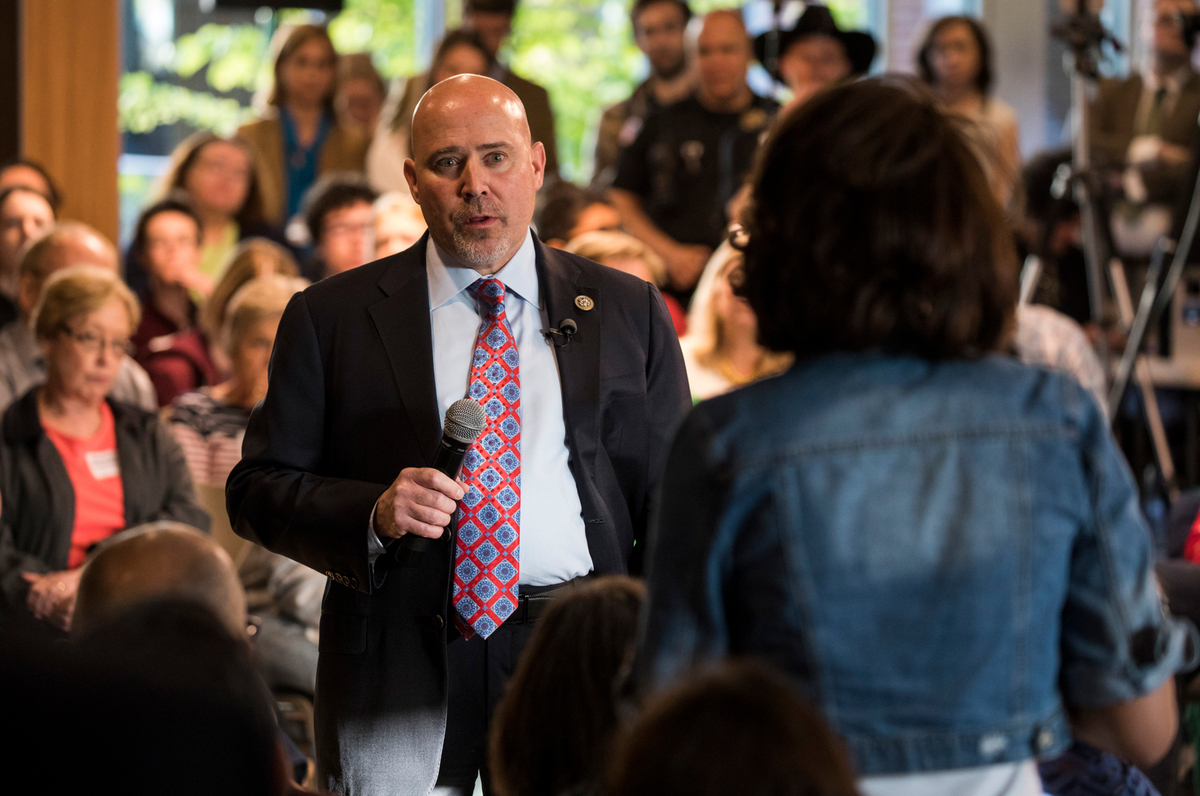
Rep. Tom MacArthur, R-N.J., faces angry constituents at a town hall meeting Wednesday in Willingboro, N.J. MacArthur wrote a key amendment to the American Health Care Act.

Dominick Reuter/AFP/Getty Images

hide caption

toggle caption

Dominick Reuter/AFP/Getty Images

At a town hall meeting in Willingboro, N.J., on Wednesday, U.S. Rep. Tom MacArthur was confronted by angry constituents who demanded to know how the Republican health care bill that he helped write would affect rape victims.

A young man named Joseph said he understood that the bill would allow insurance companies to deem rape a pre-existing condition and deny coverage to people who have been raped.

He demanded MacArthur defend his support of the bill, which, he said, would “force women to choose between justice and silence to protect their affordable health care.”

MacArthur tried to assure the crowd that rape victims would be protected under the bill. He said the notion that rape could be treated as a pre-existing condition had been debunked.

A Constituent Question

0:43

  • <iframe src="https://www.npr.org/player/embed/527938951/527957454" width="100%" height="290" frameborder="0" scrolling="no" title="NPR embedded audio player">

Rep. MacArthur’s Response

0:59

  • <iframe src="https://www.npr.org/player/embed/527938951/527986502" width="100%" height="290" frameborder="0" scrolling="no" title="NPR embedded audio player">

“You cannot be denied or charged more because of having been raped,” MacArthur told the booing crowd.

But that didn’t satisfy the crowd, which was worked up by the idea that a rape victim could be denied health care. It’s a notion that has caught fire nationwide through social media.

Later at the town hall meeting, another young woman asked the congressman a similar question.

“Is rape considered a pre-existing condition under your amendment? Yes or no?” demanded a 17-year-old named Daisy, drawing cheers from the crowd. “Yes or no, yes or no? One word, please!”

But, as with most things in health care, the reality is too complex to reduce to yes-and-no questions, or simple statements.

Before the Affordable Care Act

Before the Affordable Care Act was passed in 2010, insurance companies didn’t specifically include rape as a pre-existing condition that would allow them to deny victims coverage or charge them more. But a handful of conditions and interventions that can follow a sexual assault could have led people who were raped to be excluded from buying policies.

“What could happen, and we don’t know for sure, is that the ways people access the health care system after an assault could be flagged by some insurance companies as high risk,” says Dr. Diane Horvath-Cosper, an OB-GYN who is the reproductive health advocacy fellow at Physicians for Reproductive Health.

Horvath-Cosper says some rape victims are given medications after the assault to prevent them from contracting HIV or other sexually transmitted infections. And some people who are sexually assaulted seek mental health counseling for post-traumatic stress disorder or other conditions.

Before the Affordable Care Act, also known as Obamacare, people could be denied coverage or charged more for insurance if they took medications to treat HIV/AIDS or had existing mental health conditions. For example, seeking treatment for depression was listed as a “permanent decline” in a pre-Obamacare underwriting guide for the insurance company Humana. Underwriting guides from before the ACA for four insurance companies all show AIDS as a “declinable” condition.

An investigation published by the Huffington Post Investigative Fund in 2010 showed that many victims of rape were denied coverage because they contracted a sexually transmitted disease or took medications to prevent one, or they were denied coverage of mental health care to treat the psychological effects of the assault.

That all changed with the Affordable Care Act.

Under the ACA, insurance companies must provide comprehensive coverage, as defined by a list of “essential health benefits,” including mental health care, prescription drug coverage and maternity care. And insurers are required to charge everyone of the same age and living in the same community the same price.

What’s in the House GOP bill

The bill passed by House Republicans last week, called the American Health Care Act, retains the “essential health benefit” language in federal law, as Health and Human Services Secretary Tom Price said in an interview with NPR’s Rachel Martin scheduled to air Friday on Morning Edition.

“There’s a specific statement within the proposed legislation itself, that went through the House and is now in the Senate, that says that no insurance company can decrease the access to coverage for anybody based upon a pre-existing condition,” Price said.

However, the bill includes a huge loophole. States are allowed to apply for waivers to exempt them from many of those federal rules. States could redefine the essential benefits to allow insurers to offer less comprehensive policies and could allow insurance companies to charge people more money for pre-existing conditions.

“By dismantling all those consumer protections, essentially you leave people in the market and insurance companies could return back to those discriminatory practices of the past,” says Janel George, director of federal reproductive rights and health at the National Women’s Law Center.

The loophole in the Republican bill could lead women to routinely pay more for health insurance, as they did before the Affordable Care Act. Some of the conditions women may seek care for, such as pregnancy and mental health disorders, were among those that cost more or were not covered before the ACA.

Let’s block ads! (Why?)

Arthroscopic Surgery Doesn't Help With Arthritis Knee Pain

Arthritis of the knee is very common, and isn’t helped by arthroscopic surgery, a study finds.

BSIP/UIG via Getty Images

hide caption

toggle caption

BSIP/UIG via Getty Images

An international panel of surgeons and patients has challenged the effectiveness of one of the most common orthopedic procedures and recommended strongly against the use of arthroscopic surgery for patients with degenerative knee problems.

The guidelines, published Wednesday in the journal BMJ, reviewed 13 studies involving nearly 1,700 patients and found the surgery did not provide lasting pain relief or improve function for most of them. Those studies compared the surgery with a variety of options, including physical therapy, exercise and even placebo surgery.

Fewer than 15 percent of patients felt an improvement in pain and function three months after the procedure, and that those effects disappeared after one year, the review found. In addition, the surgery exposed patients to “rare but important harms,” such as infection.

Casey Quinlan, 64, who had the surgery in 2003 and was on the panel issuing the guidelines, said her orthopedist told her the procedure would not only help restore mobility in her knee after a nasty ski accident but also improve her arthritis.

Quinlan, of Richmond, Va., said the procedure did not deliver, since her arthritis remained unchanged. “It was not what I was told to expect,” she says.

In an arthroscopic knee surgery, physicians make several small incisions around the joint and insert a tiny camera that allows them to see inside the knee as well as insert small instruments to correct problems they identify. Often the surgery is performed to remove part of a damaged meniscus, a disc of cartilage that helps cushion the knee.

The panel said meniscal tears “are common, usually incidental findings, and unlikely to be the cause of knee pain, aching or stiffness.”

The panel said the surgery is performed more than 2 million times a year across the globe, and in the United States alone costs more than $3 billion annually.

The panel’s recommendations are counter to guidelines from a number of medical groups. Most of those organizations have recommendations against arthroscopy for patients solely with arthritis that can be seen through an X-ray. But many still promote the procedure for people with ailments such as meniscal tears, which are frequently present in arthritic patients.

The American Academy of Orthopaedic Surgeons does not recommend the treatment for patients with arthritis, said David Jevsevar, chairman of orthopedics at the Dartmouth Geisel School of Medicine and chair of the AAOS Council on Research and Quality. He said the BMJ assessment is in line with current evidence, but he also cautioned that generalizing a variety of randomized trials does not necessarily take into account the circumstances of individual patients.

“Guidelines don’t apply to every patient,” Jevsevar says. “There’s always going to be an exception.”

Reed Siemieniuk, a physician in Ontario, Canada, and the lead author of the panel’s statement, said he understands the frustration some people may have about the guideline — especially those who have seen an improvement with surgery.

The strongest evidence of a procedure’s benefit is a randomized controlled trial, Siemieniuk notes, “Despite those personal experiences that say it might be doing good, the evidence suggests that it might not be doing any good.”

Siemieniuk said that the panel’s reading of the studies suggests that “on average, the pain relief that you’re getting is not going to be important to you at all.”

The BMJ assessment is the latest in a string of studies that have raised concerns about the surgery. The journal also published a study in 2015 by researchers in Denmark showing that arthroscopic repair of the meniscus for middle-aged people was not much better than exercise in relieving pain and carried a risk of rare but debilitating side effects.

The surgery was questioned in 2002 after researchers reported in The New England Journal of Medicine that in a randomized trial of older veterans with osteoarthritis in their knees, arthroscopic surgery was no more effective in treating pain than a placebo surgery in which patients had incisions made but no instruments were inserted into the knee. At least three other studies in that journal since then have also found arthroscopy is not better than sham surgery or physical therapy in relieving arthritis pain in the knees of older adults.

Kaiser Health News is an editorially independent program of the Henry J. Kaiser Family Foundation, a nonprofit, nonpartisan health policy research and communication organization.

Let’s block ads! (Why?)

How To Do A Really Good Job Washing Your Hands

Yes, soap is good. It helps dislodge those microbes. But some experts say: Wet your hands first, then add soap.

Ulrich Baumgarten/Getty Images

hide caption

toggle caption

Ulrich Baumgarten/Getty Images

If, like many of us, you are reading this article on the toilet — then we’ve caught you at the perfect time.

When you’re done with your business, perhaps you’ll do a thorough hand washing. Or maybe just a quick rinse. Or maybe you’ll skip it altogether.

Failure to wash is a problem for ordinary folks. Germs on your unwashed hands can get into your body when you touch, say, your eyes or mouth. And into your food, too.

It’s a problem for health workers as well. The Centers for Disease Control estimates that medical staffonly remember to do so about half the times they’re supposed to. The CDC states: “This contributes to the spread of healthcare-associated infections that affect 1 in 25 hospital patients on any given day.” Worldwide, one in 10 patients acquires an infection while receiving health care.

So this month, the Centers for Disease Control is ramping up its campaign to get doctors, nurses and other medical staff to wash up.

But the question for medical workers (and really, for everyone) is: Do you do a good job?

CDC offers straightforward instructions: soap up, scrub and rinse. The process should take 35 seconds — about the time it takes to sing the alphabet song twice.

The World Health Organization has its own instructions. The process takes a tiny bit longer – 42.5 seconds. And there are six very specific steps.

WHO’s technique is a deliberate process to get rid of germs in all the nooks and crannies of the hands. First, rub your palms against each other, then rub the back of each hand against your palms. Rub your palms together with your fingers interlaced, rub your palms against each other while your fingers are interlocked, rub your fingers around each of your thumbs, and finally, rub each palm with the tips your fingers.

The six steps of proper hand-washing, according to the World Health Organization.

WHO

hide caption

toggle caption

WHO

Both the CDC and WHO methods, which have been around for decades, are also taught at elementary schools (to germy kiddos) and restaurants (to staff who handle your food).

Recently, researchers wanted to compare them to see which was the best way to minimize bacteria.

In a small study recently published in the journal Infection Control and Hospital Epidemiology, researchers at the Glasgow Caledonian University in Scotland watched carefully as 42 doctors and 78 nurses cleaned their hands using either the CDC or WHO routine. They found that the WHO technique reduced the average bacterial count on the medical workers’ hands slightly more than the CDC’s method.

In any case, both organizations’ work really, really well, says study author says Jacqui Reilly, a professor of infection prevention and control at Scotland’s Glasgow Caledonian University who led the study.

The real issue is that health care workers aren’t cleaning their hands as often and as thoroughly as they should — basically every time they touch their faces or touch anything that isn’t sterile.

And when it comes to doing a good job, even having a set of directions doesn’t guarantee good results. In Reilly’s study, only 65 percent of the 120 participants completed the two techniques properly, despite having instructions right in front of them.

Reilly herself says she’s been using the six-step method since she was first taught it at medical school. “I don’t think about it consciously anymore,” she says.

She highly recommends you try it out after using the toilet. And if you don’t, at the very least, she says, remember that “any time you wash your hands, it should take at least 15 seconds.”

And avoid the making the rookie mistake of rubbing soap onto dry hands and then rinsing it off. If you wet your hands, first, Reilly says, the water works to dislodge any microorganisms clinging onto your skin, so that the soap can scrub them off:“So always wet your hands first.”

Let’s block ads! (Why?)

Fact-Checking Republicans' Defense Of The GOP Health Bill

People attending Rep. Rod Blum’s town hall event in Dubuque, Iowa, this week held up red sheets of paper to show disagreement with what the Republican congressman was saying, and green to show they concurred. The GOP health care bill was a major concern of many.

Scott Olson/Getty Images

hide caption

toggle caption

Scott Olson/Getty Images

Town hall meetings got loud for some Republican members of Congress this week, as they defended the passage of the American Health Care Act by the House of Representatives. Constituents have been asking a lot of questions, and we’ve been fact-checking the answers given by some leading GOP lawmakers.

Tom Reed, R-N.Y., at a town hall meeting in his district:

“The pre-existing reform is not repealed by this legislation.”

Fact check: That’s not the whole truth

Reed was responding to a constituent who was concerned about a child with severe allergies: “His co-pays and deductibles will be through the roof,” the parent told Reed, “because he’s going to be in a high-risk pool — because he has a pre-existing condition.”

“No, no, no,” Reed told the parent.

The bill does have language that says insurers cannot deny people coverage or charge them more just because they have a pre-existing condition.

However, the GOP bill also has an enormous loophole in that regard. The plan allows states to apply for waivers from the federal government that gets them out of many of the regulations put in place under the Affordable Care Act – including one that bans insurance companies from charging people with pre-existing conditions more for a health plan. A waiver would allow insurance companies to consider a person’s health status when determining what to charge for coverage. And that means that although someone with a pre-existing condition who lives in a state that got a waiver would have to be offered a policy, it could be very expensive.

Steve Scalise, R-La., on Fox News this week:

“No matter what kind of plan you have today,” Scalise told Fox News, “if you have a pre-existing condition, under our bill, you cannot be denied coverage and you cannot be charged more than anybody else.”

Fact check: Not exactly true

Scalise, like Reed, is pointing to the language in the bill that retains the Obamacare rules that prohibit insurers from charging people with expensive medical conditions more than their neighbors of the same age for an insurance policy.

But the state waivers allow insurers a way around that guarantee.

Before the Affordable Care Act, insurance companies denied coverage or charged more if the person who wanted insurance had any of a long list of conditions — including arthritis, diabetes heart disease, muscular dystrophy, obesity and sleep apnea, according to a list compiled by the Kaiser Family Foundation from insurers’ underwriting guidelines.

Insurers also could refuse to cover many medications, including drugs that treat cancer, diabetes, AIDS or arthritis, according to Kaiser.

If you have cancer and buy insurance that doesn’t pay for your cancer treatment, your pre-existing condition is effectively excluded.

Rod Blum, R-Iowa, at a town hall in Dubuque:

“If you’re getting your insurance through the group health care marketplace — your employer — nothing changes,” Blum told constituents this week. “If you’re getting your health insurance through Medicare, nothing’s going to change. If you’re currently getting your health insurance through Medicaid, nothing’s going to change.”

Fact check: Partly false

Blum’s statement refers to a couple of big things — employer coverage and Medicaid.

As to employer coverage, whether your insurance would change under the GOP bill depends on whether your company is based — and buys its insurance — in a state that gets a waiver.

In “waiver states,” employers’ insurance policies might no longer be subject to Obamacare regulations around so-called essential health benefits — the minimal benefits that must be included in a policy.

They also might no longer be subject to restrictions on annual and lifetime spending caps.

That means, in those states, your employer-sponsored health insurance policy could deny coverage for some categories of care, such as mental health care or maternity coverage. And the health plan could impose annual or lifetime limits on insurance benefits. So workers with very expensive conditions, or their family members with such conditions, could see their costs pile up — even if they have health coverage through work.

Before Obamacare, about 60 percent of employers had lifetime limits on their health plans.

Blum’s second statement – the one in regards to Medicaid — is false. The GOP health bill makes major changes to Medicaid, first by rolling back the expansion of the program over time.

The bill allows people to keep their expanded Medicaid as long as they remain eligible. But people at or near the poverty level often see their incomes fluctuate, making them temporarily ineligible for the health care program. Under the GOP bill, once they leave the Medicaid rolls, they would not be able to return, even if their income declines.

In addition, the bill fundamentally changes how the U.S. government finances Medicaid. States would receive a fixed amount of money from the federal government for each beneficiary, rather than an amount that varies according to the numbers of Medicaid beneficiaries and their health care needs.

Most analysts say that, over time, the level of services Medicaid could provide would decline if the GOP health bill becomes law, and the states would have to cut back on services. That forecast is borne out by the Congressional Budget Office, which said the changes to Medicaid would cut the costs of the program by $880 billion over 10 years.

Many services provided by Medicaid today, including home health care and services for people with disabilities, are considered “optional” under the GOP health bill. Those are also the services that help keep people out of hospitals and nursing homes.

Let’s block ads! (Why?)