The Global Gap In Health Care Dollars For Young And Old Is Huge

The United States spends a lot of money taking care of the health needs of old people.

In 2010, for example, each person 65 and older received $18,424 in health care services. That’s five times more than the $3,628 in spending per child under 18, and three times more than the $6,125 per working-age adult, according to the Centers for Medicaid and Medicare Services.

“In the developed world, people live longer with very intense disease — and costly treatment,” says Vegard Skirbekk, professor at Columbia University’s Aging Center.

In the developing world, some countries are making great strides in life expectancy. People in poor countries lived an average of nine years longer in 2014 than in 1990, according to WHO statistics. And while illness can strike at any age, the longer people live, the greater their risk of getting one of the big three diseases of aging — cancer, heart disease and diabetes.

But in poor countries, the money for their treatment may not be there.

A new study in the journal Health Affairs broke down the $36.4 billion spent on health assistance from development agencies and nonprofit donors to low- and middle-income countries. Ninety percent is spent on people under the age of 60. “The lion’s share of assistance is going to children,” says Joseph Dieleman, professor at the Institute for Health Metrics and Evaluation at the University of Washington, Seattle, and an author of the study.

“There has always been a preference in funding for younger age groups in the developing world,” says Skirbekk, lead author of the study. “In 2013, assistance benefited people younger than five the most, with spending over three times more than any other age group.” The money goes for maternal and newborn health, for childhood immunizations and to fight malaria and TB in children, among other things, the report says.

That effort has paid off. Deaths of children and adolescents have been cut nearly in half, from 14.2 million in 1990 to 7.3 million in 2015.

The preference for health-care funding for children and young people makes intuitive sense. Children are the future, and it’s natural to want to protect them, says Dieleman: “The social norm is to want to prevent illness in young children.”

In addition to wanting to protect children, wealthy nations have a self-interest in preventing the communicable diseases children and young adults in poor countries often get. Those diseases, like TB and malaria and new emerging infectious diseases, can spread in a country’s population — and from one country to another.

Authors of the report suggested other reasons that health funding focuses on the young. “Children are seen as innocent. Whereas there’s a perception that diseases of older age are an outcome of lifestyle choices,” says Skirbekk. “Those kinds of attitudes are quite common.”

Whether it’s age discrimination or the attitude that diseases of the old are their own fault, the result is a gap in care of older people in the developing world.

“Older adults are the ones that increasingly need support,” Skirbekk says.

And it’s not just physical health. Some mental health conditions are increasingly common as people age — Alzheimer’s, dementia, depression and anxiety, the report says. Yet, those mental health conditions receive only 0.3 percent of the development money the world provides to treat disease, according to the report.

The paper and its authors take no stand on the issue of age and disease. They don’t conclude that it’s right for donors and poor countries to continue to spend more health care money on children and working age adults — or that more money should be allocated for the diseases of old age.

But global citizens are weighing in. Since publication of the paper this month, the authors have heard from people with strong opinions. “We’ve gotten emails complaining that this is horrible, it’s age discrimination,” says Dieleman. “We’ve also gotten emails saying this is as it should be, it’s important to take care of children.”

“The question of what should the global community fund is a complicated one and not one we addressed in this paper,” says Dieleman.

Skirbekk adds, “I hope our report will stimulate discussions on just that issue.”


Your Turn: What’s Your Stance On Health Care Spending In The Developing World?

Children get the largest share of any age group. Is that fair when people are living longer and facing diseases of aging? Tell us what you think. Submit your perspective in the tool below. Try to keep under 100 words. We’ll feature some of the comments on Goats and Soda in a special #CuriousGoat post next week.

Let’s block ads! (Why?)

Medicare Didn't Investigate Suspicious Reports Of Hospital Infections

Hospital-acquired infections are a big risk in health care, especially for older or seriously ill patients.

Dana Neely/Getty Images

hide caption

toggle caption

Dana Neely/Getty Images

Almost 100 hospitals reported suspicious data on dangerous infections to Medicare officials, but the agency did not follow up or examine any of the cases in depth, according to a report by the Health and Human Services inspector general’s office.

Most hospitals report how many infections strike patients during treatment, meaning the infections are likely contracted inside the facility. Each year, Medicare is supposed to review up to 200 cases in which hospitals report suspicious infection-tracking results.

The IG said Medicare should have done an in-depth review of 96 hospitals that submitted “aberrant data patterns” in 2013 and 2014. Such patterns could include a rapid change in results, improbably low infection rates or assertions that infections nearly always struck before patients arrived at the hospital.

The IG’s report, released Thursday, was designed to address concerns over whether hospitals are “gaming” a system in which it falls to the hospitals to report patient-infection rates and, in turn, the facilities can see a bonus or a penalty worth millions of dollars.

The bonuses and penalties are part of Medicare’s Inpatient Quality Reporting program, which is meant to reward hospitals for low infection rates and give consumers access to the information at the agency’s Hospital Compare website.

The report zeroes in on a persistent concern about deadly infections that patients develop as a result of being in the hospital. A recent report in the journal BMJ identified medical errors as the third-leading cause of death in the U.S. Hospital infections particularly threaten senior citizens with weakened immune systems.

Rigorous review of hospital-reported data is important to protect patients, says Lisa McGiffert, director of the Consumers Union’s Safe Patient Project.

“There’s a certain amount of blind faith that the hospitals are going to tell the truth,” McGiffert says. “It’s a bit much to expect that if they have a bad record they’re going to ‘fess up to it.”

Yet there are no uniform standards for reviewing the data that hospitals report to Medicare, says Dr. Peter Pronovost, senior vice president for patient safety and quality at Johns Hopkins Medicine.

“There are greater requirements for what a company says about a washing machine’s performance than there is for a hospital on quality of care, and this needs to change,” Pronovost said. “We require auditing of financial data, but we don’t require auditing of [health care] quality data, and what that implies is that dollars are more important than deaths.”

In 2015, Medicare and the Centers for Disease Control and Prevention issued a joint statement cautioning against efforts to manipulate the infection data. The report said CDC officials heard “anecdotal” reports of hospitals declining to test apparently infected patients — so there would be no infection to report. They also warned against overtesting, which helps hospitals assert that patients came into the hospital with a preexisting infection, thus avoiding a penalty.

In double-checking hospital-reported data from 2013 and 2014, Medicare reviewed the results from 400 randomly selected hospitals, about 10 percent of the nation’s more than 4,000 hospitals. Officials also examined the data from 49 “targeted” hospitals that had previously underreported infections or had a low score on a prior year’s review.

All told, only six hospitals failed the review, which included a look at patients’ medical records and tissue sample analyses. Those hospitals were subject to a 0.6 percent reduction in their Medicare payments. Medicare did not specify which six hospitals failed the data review, but it did identify dozens of hospitals that received a pay reduction based on their reports on the quality of care.

The new IG report recommends that Medicare “make better use of analytics to ensure the integrity of hospital-reported quality data.”

A response letter from Centers for Medicare & Medicaid Services Administrator Seema Verma says Medicare concurs with the finding and will “continue to evaluate the use of better analytics … as feasible, based on [Medicare’s] operational capabilities.”

Questions about truth in reporting hospital infections have percolated for years, as reports have trickled out from states that double-check data.

In Colorado, one third of the central-line infections that state reviewers found in 2012 were not reported to the state by hospitals, as required. Central lines are inserted into a patient’s vein to deliver nutrients, fluids or medicine. Two years later, though, reviewers found that only 2 percent of central-line infections were not reported.

In Connecticut, a 2010 analysis of three months of cases found that hospitals reported 23 of the 48 central-line infections that made patients sick.

New York state officials have a rigorous data-checking system that they described in a report on 2015 infection rates. In 2014, they targeted hospitals that were reporting low rates of infections and urged self-audits that found underreporting rates of nearly 11 percent.

Not all states double-check the data, though, which Pronovost says underscores the problem with data tracking the quality of health care. He said common oversight standards, like the accounting standards that apply to publicly traded corporations, would make sense in health care, given that patients make life-or-death decisions based on quality ratings assigned to hospitals.

“You’d think, given the stakes, you’d have more confidence that the data is reliable,” he said.

Kaiser Health News (KHN) is a national health policy news service. It is an editorially independent program of the Henry J. Kaiser Family Foundation.


Let’s block ads! (Why?)

GOP Health Bill Leaves Many 'Pre-Existing Condition' Protections Up To States

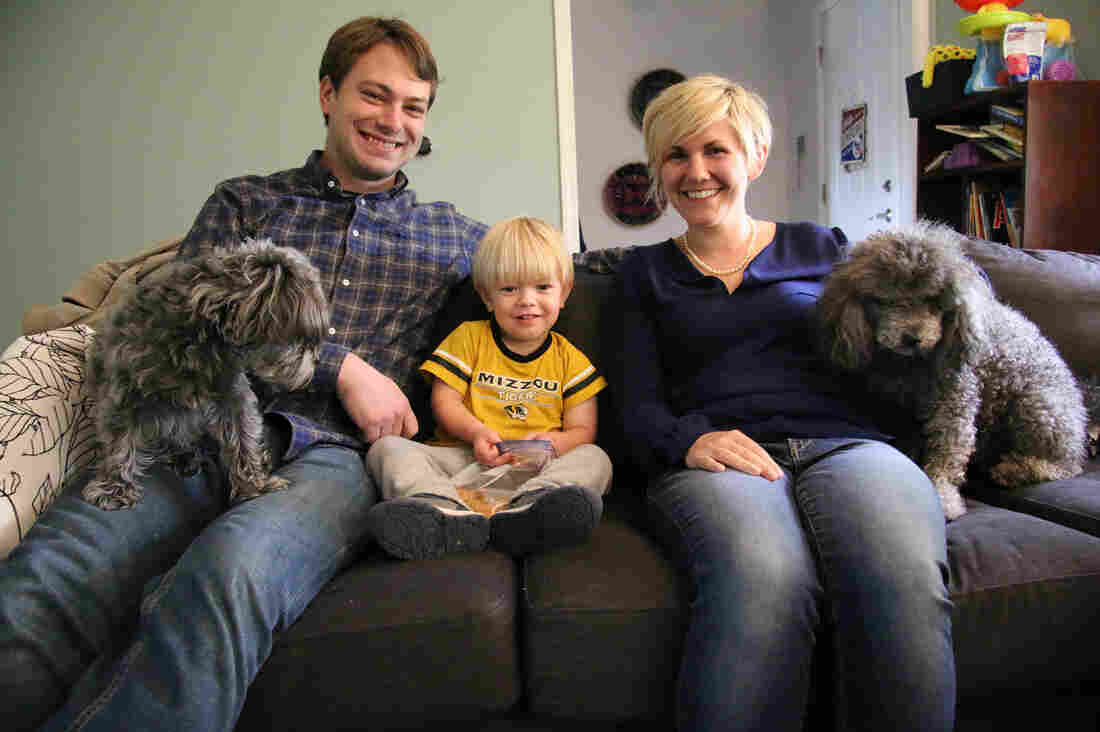
Two-year-old Ryan Lennon Fines was born with a condition called esophageal atresia that requires expensive medical treatment. His family worries the new GOP health bill would make it harder for Ryan to get insurance in the future because of his “pre-existing medical condition.”

Bram Sable-Smith/KBIA/Side Effects Public Media

hide caption

toggle caption

Bram Sable-Smith/KBIA/Side Effects Public Media

Ryan Lennon Fines seems like a typical 2-year-old. He and his parents, Scott Fines and Brianna Lennon, flip through a picture book of emergency vehicles. Ryan is looking for the motorcycle, but a photo of an airplane catches his dad’s eye.

“That’s an air ambulance,” Fines tells him, “you’ve been on one of those.”

When Ryan was born in 2014, his mouth wasn’t connected to his stomach. It’s a condition known as esophageal atresia. After three months in a hospital in St. Louis, the family flew to Boston, where Ryan had surgery.

The surgery worked. Ryan is active and can eat normally — he had two big pieces of fruit leather and some crackers in the 45 minutes I was there. But all that time in the hospital was expensive. In the first six months of his life, Ryan’s insurance plan was billed $750,000. The family had to pay only $5,000 of that — Ryan’s maximum out-of-pocket expenses, under his insurance plan, for 2014 and 2015.

“We were lucky we had a really good, employer-provided [health insurance] plan,” Lennon says.

Now, the family is worried about Ryan’s future. He’ll still need between $20,000 and $30,000 of medical care every year. They have insurance through Fines’ work, but the health care bill that Republicans passed in the House last week could affect Ryan’s care.

All six Republicans from Missouri — including Rep. Vicky Hartzler from the district where Scott, Brianna and Ryan live — voted for the bill, which unwinds many of the provisions and protections of the Affordable Care Act, known as Obamacare. In a video posted to Twitter, Hartzler says passing the bill was an important first step to replacing the ACA.

“It covers pre-existing conditions,” she says, “still retains the ability for young people to stay on their parents’ policies, and makes sure that there are no lifetime caps.”

That’s true, but the bill also gives states the authority to allow insurers a number of exemptions from the federal law. For example, while the GOP bill retains the ACA provision that people, like Ryan, who have pre-existing conditions cannot be denied coverage, there’s a potential loophole. In a last-minute amendment proposed by Rep. Tom MacArthur, R-N.J., a state could seek permission to allow insurance companies to charge patients more (based on their health history) if their coverage lapses for more than 63 days.

That provision in the GOP bill would tremendously weaken the ACA protections, says Larry Levitt, senior vice president of the Kaiser Family Foundation.

“This would guarantee access to insurance for people with pre-existing conditions in theory, but not really in practice — because they could be charged astronomically high premiums,” says Levitt.

Before the Affordable Care Act was enacted in 2010, he says, it was common for people with pre-existing conditions to be charged much higher premiums or to be denied coverage altogether. If a state decides to waive the federal law’s protections, this could happen again.

Scott Fines and Brianna Lennon were able to keep medical costs for their son, Ryan, in check through employer insurance. Though Ryan’s health is good now, he still needs between $20,000 and $30,000 of medical care every year.

Bram Sable-Smith/KBIA/Side Effects Public Media

hide caption

toggle caption

Bram Sable-Smith/KBIA/Side Effects Public Media

The amendment would require that states seeking a waiver must also help people who have high health care costs. High-risk pools are the most commonly cited type of program to do this, but they were often underfunded and expensive for consumers and states.

Missouri Gov. Eric Greitens, a Republican, supported the GOP health plan in March. His office didn’t respond to NPR’s questions about whether he supports the current version of this bill or whether he’d want Missouri to seek permission to opt out of some of the provisions. Levitt says it would likely be conservative states, like Missouri and the 18 other states that did not expand Medicaid, that may try to opt out.

Those states, Levitt says, “made a decision to not go along with the Affordable Care Act, and I think that those states are facing a similar kind of decision here.”

Scott Fines and Brianna Lennon say they face tough decisions if this bill becomes law.

“We would have to either move to a state that didn’t waive community protections or out of the country entirely if we could,” Fines says. “I’m not going to risk my son’s health on the political whims of Jefferson City.”

But before any decisions are made in Missouri’s state capital, the GOP bill is in the hands of the U.S. Senate, where it could change before becoming federal law.

This story is part of NPR’s reporting partnership with KBIA, Side Effects Public Media and Kaiser Health News.

Let’s block ads! (Why?)

Public Restrooms Become Ground Zero In The Opioid Epidemic

A public restroom on the platform of the Central Square MBTA station in Cambridge, Mass., which people have used as a place for getting high.

Jesse Costa/WBUR

hide caption

toggle caption

Jesse Costa/WBUR

A man named Eddie threads through the mid-afternoon crowd in Cambridge, Mass. He’s headed for a sandwich shop, the first stop on a tour of public bathrooms.

“I know all the bathrooms that I can and can’t get high in,” says Eddie, 39, pausing in front of the shop’s plate glass windows, through which we can see a bathroom door.

Eddie, whose last name we’re not including because he uses illegal drugs, knows which restrooms along busy Massachusetts Avenue he can enter, at what hours and for how long. Several restaurants, offices and a social service agency in this neighborhood have closed their restrooms in recent months, but not this sandwich shop.

“With these bathrooms here, you don’t need a key. If it’s vacant you go in. And then the staff just leaves you alone,” Eddie says. “I know so many people who get high here.”

At the fast food place right across the street, it’s much harder to get in and out.

“You don’t need a key, but they have a security guard that sits at the little table by the door, directly in front of the bathroom,” Eddie says. Some guards require a receipt for admission to the bathroom, he says, but you can always grab one from the trash.

A chain restaurant a few stores down has installed bathroom door locks opened by a code that you get at the counter. But Eddie and his friends just wait by the door until a customer enters the restroom, then grab the door and enter as the customer leaves.

“For every 10 steps they use to safeguard against us doing something, we’re going to find 15 more to get over on their 10. That’s just how it is. I’m not saying that’s right, that’s just how it is,” Eddie says.

Eddie is homeless and works at a restaurant. Public bathrooms are one of the few places where he can find privacy to inject heroin. He says he doesn’t use the drug often these days. Eddie is on methadone, which curbs his craving for heroin, so he only uses the drug occasionally to be social with friends.

He understands why restaurant owners are unnerved.

“These businesses, primarily, are like family businesses; middle class people coming in to grab a burger or a cup of coffee. They don’t expect to find somebody dead,” Eddie says. “I get it.”

Managing public bathrooms is “a tricky thing”

Many businesses don’t know what to do. Some have installed low lighting — blue light, in particular — to make it difficult for people who use injected drugs to find a vein.

The bathrooms at 1369 Coffee House in the Central Square neighborhood of Cambridge, Mass., are open for customers who request the key code from staff at the counter. The owner, Joshua Gerber, has done some remodeling to make the bathrooms safer. There’s a metal box in the wall next to his toilet for needles and other things that clog pipes. And Gerber removed the dropped ceilings in his bathrooms after noticing things tucked above the tiles.

1369 Coffee House owner Josh Gerber opens the bathroom door which has a combination lock given to patrons at the front counter.

Jesse Costa/WBUR

hide caption

toggle caption

Jesse Costa/WBUR

“We’d find needles or people’s drugs,” Gerber says. “It’s a tricky thing, managing a public restroom in a big, busy square like Central Square where there’s a lot of drug use.”

Gerber and his staff have found several people on the bathroom floor in recent years, not breathing.

“It’s very scary,” Gerber says. His eyes drop briefly. “In an ideal world, users would have safe places to go [where] it didn’t become the job of a business to manage that and to look after them and make sure that they were OK.”

There are such public safe-use places in Canada and some European countries, but not in the U.S., at least not yet. So Gerber is taking the unusual step of training his baristas to use naloxone, the drug that reverses most opioid overdoses. He sent a training invitation email to all employees last week. Within 10 minutes he had about 25 replies.

“Mostly capital ‘Yes’ exclamation point, exclamation point, ‘I’ll be there for sure!’ ‘Count me in!’ ” Gerber recalls with a grin. “You know, [they were] just thrilled to figure out how they might be able to save a life.”

Safe spaces and hospital bathrooms

Last fall, a woman overdosed in a bathroom in the main lobby of Massachusetts General Hospital in Boston. Luckily, naloxone has become standard equipment for security guards at many hospitals in the Boston area, including that one.

“I carry it on me every day, it’s right here in a little pouch,” says Ryan Curran, a police and security operations manager at Massachusetts General Hospital, pulling a small black bag out of his suit jacket pocket.

The woman who overdosed survived, as have seven or eight people who overdosed in the bathrooms since Curran’s team started carrying naloxone in the last 12 to 18 months.

“It’s definitely relieving when you see someone breathing again when two, three minutes beforehand they looked lifeless,” Curran says. “A couple of pumps of the nasal spray and they’re doing better. It’s pretty incredible.”

Massachusetts General Hospital began training security guards after emergency room physician Dr. Ali Raja realized that the hospital’s bathrooms had become a safe haven for some of his overdose patients.

“There’s an understanding that if you overdose in and around a hospital that you’re much more likely to be able to be treated,” Raja says, “and so we’re finding patients in our restrooms, we’re finding patients in our lobbies who are shooting up or taking their prescription pain medications.”

Many businesses, including hospitals and clinics, don’t want to talk about overdoses within their buildings. Curran wants to be sure the hospital’s message about drug use is clear.

“We don’t want to promote, obviously, people coming here and using it, but if it’s going to happen, then we’d like to be prepared to help them and save them and get them to the [Emergency Department] as fast as possible,” Curran says.

Ryan Curran, the day shift operations manager of police and security at Massachusetts General Hospital, stands in front of the bathrooms in the main lobby.

Jesse Costa/WBUR

hide caption

toggle caption

Jesse Costa/WBUR

Speed is critical, especially now, when heroin is routinely mixed with fentanyl. Some clinics and restaurants check on bathroom users by having staff knock on the door after 10 or 15 minutes, but fentanyl can deprive the brain of oxygen and cause death within that window. One clinic has installed an intercom and requires people to respond. Another has designed a reverse motion detector that sets off an alarm if there’s no movement in the bathroom.

Limited public discussion

There’s very little discussion of the problem in public, says Dr. Alex Walley, director of the Addiction Medicine Fellowship Program at Boston Medical Center.

“It’s against federal and state law to provide a space where people can use [illegal drugs] knowingly, so that is a big deterrent from people talking about this problem,” he says.

Without some guidance, more libraries, town halls and businesses are closing their bathrooms to the public. That means more drug use, injuries and discarded needles in parks and on city streets.

In the area around Boston Medical Center, wholesalers, gas station owners and industrial facilities are looking into renting portable bathrooms.

“They’re very concerned for their businesses,” says Sue Sullivan, director of the Newmarket Business Association, which represents 235 companies and 28,000 employees in Boston. “But they don’t want to just move the problem. They want to solve the problem.”

Walley and other physicians who work with addiction patients say there are lots of ways to make bathrooms safer for the public and for drug users. A model restroom would be clean and well-lit with stainless steel surfaces, and few cracks and crevices for hiding drug paraphernalia. It would have a biohazard box for needles and bloodied swabs. It would be stocked with naloxone and perhaps sterile water. The door would open out so that a collapsed body would not block entry. It would be easy to unlock from the outside. And it would be monitored, preferably by a nurse or EMT.

There are very few bathrooms that fit this model in the U.S.

Some doctors, nurses and public health workers who help addiction patients argue any solution to the opioid crisis will need to include safe injection sites, where drug users can get high with medical supervision.

“There are limits to better bathroom management,” says Daniel Raymond, deputy director for policy and planning at the New York-based Harm ReductionCoalition. If communities like Boston start to reach a breaking point with bathrooms, “having dedicated facilities like safer drug consumption spaces is the best bet for a long-term structural solution that I think a lot of business owners could buy into.”

Maybe. No business groups in Massachusetts have come out in support of such spaces yet.

This story is part of a reporting partnership with NPR, WBUR and Kaiser HealthNews.

Let’s block ads! (Why?)

Life Expectancy Can Vary By 20 Years Depending On Where You Live

Longevity age gap

There’s more grim news about inequality in America.

New research documents significant disparities in the life spans of Americans depending on where they live. And those gaps appear to be widening, according to the research.

Notes

You can see an interactive version of this map here.

Source: vizhub.healthdata.org/subnational/usa

“It’s dramatic,” says Christopher Murray, who heads the Institute for Health Metrics and Evaluation at the University of Washington. He helped conduct the analysis, published Tuesday in JAMA Internal Medicine.

Health experts have long known that Americans living in different parts of the country tend to have different life spans. But Murray’s team decided to take a closer look, analyzing records from every U.S. county between 1980 and 2014.

“What we found is that the gap is enormous,” Murray says. In 2014, there was a spread of 20.1 years between the counties with the longest and shortest typical life spans based on life expectancy at birth.

In counties with the longest life spans, people tended to live about 87 years, while people in places with the shortest life spans typically made it to only about 67, the researchers found.

The discrepancy is equivalent to the difference between the low-income parts of the developing world and countries with high incomes, Murray notes.

For example, it’s about the same gap as the difference between people living in Japan, which is among countries with the longest life spans, and India, which has one of the shortest, Murray says.

The U.S. counties with the longest life expectancy are places like Marin County, Calif., and Summit County, Colo. — communities that are well-off and more highly educated.

Counties with the shortest life expectancy tend to have communities that are poorer and less educated. The lowest is in Oglala Lakota County, S.D., which includes the Pine Ridge Native American reservation.

Many of the other counties with the lowest life expectancy are clustered along the lower Mississippi River Valley as well as in parts of West Virginia and Kentucky, according to the analysis.

There’s no sign of the gap closing. In fact, it appears to be widening. Between 1980 and 2014, the gap between the highest and lowest life spans increased by about two years.

“With every passing year, inequality — however you measure it — has been widening over the last 34 years,” Murray says. “And so next year, we can reliably expect it’ll be even more than 20.”

“That is probably the most alarming part of the analysis,” he adds.

The reasons for the gap are complicated. But it looks as if the counties with the lowest life spans haven’t made much progress fighting significant health problems such as smoking and obesity.

“It’s this steady process where many parts of the country have been steadily getting better, and then there’s a segment of America where things have not progressed in a generation and a half,” Murray says.

Counties in central Colorado, Alaska and along both coasts experienced much larger increases in life expectancy, according to the researchers, while some southern counties in states stretching from Oklahoma to West Virginia saw little, if any, improvement between 1980 and 2014.

Researcher Ellen Meara, who studies health policy at the Dartmouth Institute, speculates that the findings could be another manifestation of the economic inequality plaguing areas of the country. She was not involved with the study.

“One of the things we’ve seen in this country is that for some groups, their possibilities look worse than those of their parents, and that’s after generations of always doing better than the previous generation,” Meara says.

“And in a situation like that, smoking — relative to not smoking — looks more appealing [and] having a diet and a lifestyle that leads you to be obese looks more appealing than giving up things,” she says.

The study comes on the heels of other research that found death rates rising dramatically among middle-aged white Americans, a trend researchers Anne Case and Angus Deaton call “deaths of despair.”

Let’s block ads! (Why?)

Fresh Food By Prescription: This Health Care Firm Is Trimming Costs — And Waistlines

Miniature oranges spill out of a pill bottle.

BigFishDesign/iStockphoto/Getty Images

The advice to eat a healthy diet is not new. Back around 400 B.C., Hippocrates, the Greek doctor, had this missive: Let food be thy medicine.

But as a society, we’ve got a long way to go. About one out of every two deaths from heart disease, stroke and Type 2 diabetes in the U.S. is linked to a poor diet. That’s about 1,000 deaths a day.

There are lots of places to lay the blame. Calories are cheap, and indulgent foods full of salt, sugar and fat are usually within our reach 24/7.

So, how best to turn this around? Consider Tom Shicowich’s story. It begins with a toe. His left pinky toe.

“One day I looked down and it was a different color … kind of blue,” Shicowich says. And he began to feel sick. “I thought I was coming down with the flu.”

The next day he was on the operating table. A surgeon amputated his toe, and it took two weeks of intravenous antibiotics to fend off the infection.

Registered dietitian Anna Ziegler counsels Tom Shicowich, who has a Type 2 diabetes. Since enrolling in the Fresh Food Pharmacy program, Shicowich has lost about 45 pounds. His A1C level has dropped significantly.

Allison Aubrey/NPR

hide caption

toggle caption

Allison Aubrey/NPR

All told, he spent a month in the hospital and a rehab facility. “Oh, I tell you, it was a bad year,” Shicowich recalls.

But this wasn’t just bad luck. His toe emergency was somewhat predictable. Foot infections are a common complication of Type 2 diabetes — often due to nerve damage and poor blood flow, especially when the disease isn’t well controlled.

He racked up about $200,000 in medical charges from his toe emergency. The portion he had to pay out-of-pocket drained his savings account.I did shell out $23,000 to the hospital, so that was a kick in the head,” Shicowich tells us.

It was also a wake-up call.

Shicowich was more than 100 pounds overweight. He was was fighting nerve damage, high blood pressure and kidney problems — all complications of diabetes.

“So I knew it was time for a change,” he told me. And last year he found the help – and the motivation – he was looking for: a new program that has helped him overhaul how he eats.

Welcome to the food pharmacy

“Folks, good morning, and welcome to the ribbon cutting and opening of the Fresh Food Pharmacy,” intoned Sam Balukoff, the master of ceremonies at Geisinger Health System’s recent debut of a new food pharmacy located on the grounds of a hospital in central Pennsylvania.

At this event, Shicowich was one of the stars of the show. Over the last year, he and about 180 patients with Type 2 diabetes have been participating in a pilot program aimed at getting them to to change their diets and lose weight. They receive free groceries of healthy foods every week.

Shicowich has lost about 45 pounds, and he’s now much more active.

The Geisinger Fresh Food Pharmacy is stocked with healthy pantry staples, like oatmeal and peanut butter, as well as fresh produce.

Allison Aubrey/NPR

hide caption

toggle caption

Allison Aubrey/NPR

Each week, Shicowich and the other participants come to the food pharmacy. In its new incarnation, it looks more like a grocery, with neatly stocked shelves filled with healthy staples such as whole grain pasta and beans. The refrigerators are full of fresh produce, greens, low-fat dairy, lean meats and fish.

The participants meet one-on-one with a registered dietitian. They’re given recipes and hands-on instruction on how to prepare healthy meals. Then, they go home with a very different kind of prescription: five days worth of free, fresh food.

Shicowich says it’s a huge change from his old habit. “I would stop at a Burger King or a McDonald’s or buy a frozen Hungry-Man dinner, basic bachelor food, you know, heat and eat.”

But those days are over. Now, he and his girlfriend cook meals at home. He says now it’s much easier to climb a flight of stairs or take a walk with his girlfriend.

‘It’s life-changing’

And his health has improved. His blood sugar and blood pressure have dropped so much that if he keeps on track, his doctors say they’ll reduce his medications.

“It’s life-changing,” David Feinberg, the president and CEO of Geisinger Health System, says of the results they’ve seen.

He says, so far, all the patients in the pilot program have made similar improvements. “It’s mind-blowing,” he says. And he says the range of support patients are offered — everything from dietary counseling to wellness classes and workshops — can help them succeed.

Take, for instance, the significant declines in patients’ hemoglobin A1C levels. This is a blood test used to track how well patients with diabetes are controlling their blood sugar.

A year ago, Shicovich’s A1C was close to 11. Now it’s down in the high-6 range. Anything under 6.5 is considered below the threshold of Type 2 diabetes, according to the Mayo Clinic. Feinberg says this means that Shicowich – and other participants in the program — have a much better chance of avoiding many complications of diabetes, if they can maintain their A1C levels down in this range.

“[They] won’t go blind, [they] won’t have kidney disease, amputations,” Feinberg says. “The list goes on and on.”

Cheaper than paying for complications

When this program started, some questioned the premise of giving away free, fresh food to patients with diabetes. But keep in mind, the costs associated with diabetes in the U.S. now exceed $240 billion a year.

Once you consider this huge price tag, Geisinger’s program can look like a bargain. Over the course of a year, the company will spend about $1,000 on each Fresh Food Pharmacy patient. All of the participants in the program are low-income, so the gift of the food eliminated a key obstacle to eating well.

Patients enrolled in the Fresh Food Pharmacy program receive about a week’s worth of free, fresh produce and other items.

Allison Aubrey/NPR

hide caption

toggle caption

Allison Aubrey/NPR

But would this lead to a reduction in health care costs?

Feinberg says as his team tracks hemoglobin AIC levels in the pilot participants, they’re also assessing the number of medical visits, sicknesses and the overall cost of caring for these patients.

It’s still early days, and they plan to fully analyze their first year of data. But here’s what they estimate so far: “A decrease in hemoglobin A1C of one point saves us [about] $8,000,” Feinberg says.

And many of the participants have seen a decline in hemoglobin A1C of about 3 points. “So that’s [about]$24,000 we’re saving in health care costs, “Feinberg says. “It’s a really good value.” Geisinger is now in the process of expanding the program to new locations within Pennsylvania.

Is prevention medicine the future?

This program is an example of the booming interest in prevention-oriented medicine.

The current health care system in the U.S. is often more aptly described as a disease-care system. “It’s reactive,” says Mitesh Patel, a physician and assistant professor of health-care management at The Wharton School at the University of Pennsylvania. “We wait until people get sick and then spend lot of resources helping them get better.”

But Patel says there are signs this is beginning to change. “I think the paradigm shift has already begun,” he told us. I asked Patel to review the concept of Geisinger’s new Fresh Food Pharmacy program. His take: It includes the kind of financial and social incentives that can help motivate people to make changes.

For instance, the Fresh Food Pharmacy gives free, fresh food not just to the patients enrolled but to everyone in their household as well.

“The way we behave is really influenced by others around us,” says Patel. So, promoting a group effort could “make the program a lot more sticky and more likely to succeed.”

It’s always a challenge to get people to stick with lifestyle changes over the long-term. But Patel says, “if you get the entire family to change the way they eat, you’re much more likely to improve health.”

A Coca-Cola truck drives past a Burger King in Northumberland County, Pa. More than 40 percent of residents have conditions that put them at risk of diabetes, and 14.2 percent of households are food insecure.

Allison Aubrey/NPR

hide caption

toggle caption

Allison Aubrey/NPR

The evidence that lifestyle-modification programs can reduce health care costs is starting to accumulate.

Earlier this year, researchers published findings in the journal Health Affairs that evaluated the medical expenses of Medicare patients with pre-diabetes. The patients had completed a one-year diabetes prevention program focused on healthy eating and increased physical activity. The researchers found, overall, the average health-care savings was about $300 per person, per quarter — compared with patients who hadn’t been through the program.

Let’s block ads! (Why?)

Democrats Promise A Bruising Senate Battle Over Health Care

NPR’s Lulu Garcia-Navarro asks Democratic Sen. Debbie Stabenow of Michigan about her plans to oppose the GOP’s health care bill.

LULU GARCIA-NAVARRO, HOST:

The Senate is now the center of the fight over health care in America. That’s where the House bill to repeal the Affordable Care Act is headed, and it’s already sowing deep divisions among Republicans. Several Senate Republicans have said they will ignore the House version of the bill and write their own instead. And for their part, Democrats are promising a bruising battle. On the line now is Democratic Senator Debbie Stabenow of Michigan.

Good morning, Senator.

DEBBIE STABENOW: Well, good morning.

GARCIA-NAVARRO: You’ve announced you’ll, quote, “strongly oppose this Republican plan in the Senate.” Can you tell me how?

STABENOW: Well, no question. And let me just say that in your news report you were just talking about Warren Buffett – that big tax cut that he would get under this plan would be paid for by taking away nursing home care for seniors, raising dramatically the prices on insurance for other seniors that were below age 65 – that’s why AARP is so strongly opposed to it. It would, in Michigan, affect over 2.3 million people who now are able to take their children to the doctor because of Medicaid insurance rather than into the emergency room. And I’m…

GARCIA-NAVARRO: Senator…

STABENOW: Yes.

GARCIA-NAVARRO: …There clearly are problems with the bill. The Republican senators have said that they will make changes. But what exactly will you do to oppose this bill?

STABENOW: Well, I’m going to speak out like I am today. All of my colleagues are. We’re going to do what we did the first time around. You know, they – the day after we were sworn in in January, they started this process. And the good news is, is that even though they passed a resolution saying that they would do the repeal by January 27, they haven’t been able to do it, and that’s because of Women’s Marches and people speaking out and town hall meetings and everything that’s happened. So we’re going to continue to speak out and to engage the public, let them know what this is really all about, funding big tax cuts on the backs of people that need medical care.

And at the same time, I do want to stress that we want – if the Republicans are willing to just put this in the garbage can, we are willing and want to sit down and talk about how to make insurance better, how to lower costs. There are premiums and co-pays that are too high. Certainly there are drug prices that are too high. So we need to sit down together and focus on ways to make health care more affordable and more available but not rip apart the entire health care system and put more than 24 million people in a situation where they can’t get health care and health insurance.

So bottom line, I mean, we’re going to speak out – we know that if they want to, they’ve set up a process. It only takes 51 votes, and the Republicans can pass this in the Senate if they want to. They can. They can pass it this week if they want to. But we’re going to speak out in the loudest way possible. On Wednesday, I am chairing a hearing that we’ve put together through a Democratic policy committee to hear directly from citizens as well as a CEO in Michigan who is the CEO of a small world hospital…

GARCIA-NAVARRO: Senator…

STABENOW: …That would likely close.

GARCIA-NAVARRO: Senator, just briefly – we don’t have much more time – but when your Republican colleagues were in the minority, Democrats complained that they were just obstructionists, always blocking everything. Now that your party is in the minority, Republicans say that you’ve adopted the same tactic. I’m just curious, how long is the Senate going to let American health care – the American health care system just limp along? I mean, is there something that…

STABENOW: Well, first of all…

GARCIA-NAVARRO: …We can do?

STABENOW: First of all, let me say, you’re buying the assumption that it’s limping along when we have tens of millions of more people today that can get health insurance. Do you know because of passing Obamacare, 97 percent of the children in Michigan can now see a doctor? That’s actually a really good thing. Our state, because they expanded Medicaid, health care is going to save over $400 million in their budget because people are going to the doctor, not the emergency room.

So their premise – and they’ve done everything they can to undermine the reimbursements to insurance companies, to scare insurance companies off, to do everything they can to undermine this system – I don’t – I wish they’d put half that energy into helping us make it better. But it is not true that we are looking at a situation that is completely, you know, unraveling. They’re unraveling it. Let’s work together to make it better.

GARCIA-NAVARRO: Thank you, Senator Debbie Stabenow, Democrat of Michigan.

STABENOW: Thanks.

Copyright © 2017 NPR. All rights reserved. Visit our website terms of use and permissions pages at www.npr.org for further information.

NPR transcripts are created on a rush deadline by Verb8tm, Inc., an NPR contractor, and produced using a proprietary transcription process developed with NPR. This text may not be in its final form and may be updated or revised in the future. Accuracy and availability may vary. The authoritative record of NPR’s programming is the audio record.

Let’s block ads! (Why?)

Don't Count On The Senate To Save Obamacare, Or To Save The House

House Speaker Paul Ryan speaks in the Rose Garden at the White House on Thursday, May 4, 2017, after the House passed a Republican health care bill.

Evan Vucci/AP

hide caption

toggle caption

Evan Vucci/AP

In the Rose Garden last week President Trump and the House Republican leadership celebrated their vote to repeal and replace the Affordable Care Act as though it had actually repealed and replaced the 2010 law colloquially known as Obamacare.

It had not, of course. Several more giant steps remain in the process. And more than a few of these same Republicans may well be grateful.

The House, its leaders and rank-and-file alike know that what they have done so far is not yet law. It may not even qualify as a rough draft.

In reality, the House has shoveled a mammoth pile of problems off its porch and onto that of the U.S. Senate. That chamber has announced it is writing its own bill. That is common knowledge, and more than a few House votes were cajoled with assurances that “the Senate will fix” this problem or that.

For those concerned about the policy itself, the prospect of the Senate taking over was a mixed bag. Would they make it better in fact?

Such debates aside, most of the House members were asking: Would the Senate make it less explosive politically?

Most seemed to believe the Senate would take the pressure off the House in the short run. And just maybe, with luck, it might take the onus off the House in the long run as well.

Here’s how it works: If both House and Senate pass their own separate bills, there will be a conference committee that strives to “compose their differences.” (This might take weeks.) The report on this hybrid must then pass a revote in both chambers in identical form, as the Constitution demands.

So whatever happens now, the House folks figure the spotlight is shifting to the Senate. And it ought to stay there.

Option One: The Senate can fail to pass anything at all. Then the whole enterprise dies on their doorstep, just as it seemed likely to do on the House’s doorstep last week.

Option Two: The Senate can also pass something that is so wildly different from the House bill that the conference cannot produce a hybrid of the two. That too could be blamed on the Senate. Like, hey, everything was fine when we did it in the House back in May; didn’t you see that celebration in the Rose Garden?

Option Three: The Senate can pass something and the conference committee can do its thing and then the Senate can refuse to approve the conference report. Senate at fault again.

Option Four: If the conference report does pass the Senate, well maybe then the House can approve it and point a finger at the changes the Senate insisted on.

Option Five: The Senate approves the conference compromise and it fails in the House. Uh-oh. But, think again, this can be sold as the House playing Horatius at the Bridge — the valiant tribune of the people. Wouldn’t it be the Senate in this scenario that was guilty of ruining a perfectly good House product? (See reference to Rose Garden celebration above.)

Any way you look at it, the House is better off with the ball in someone else’s court.

In a way, this reliance on the Senate to save the day dovetails with the confidence in the Senate shown by Obamacare’s defenders.

They have a litany of reasons to believe the Senate will not gut the Affordable Care Act (the law’s formal name and preferred by many). It begins with the close partisan division of the Senate, where Republicans have just 52 seats and so just two votes to spare. (Vice President Pence would be expected to break any tie in favor of the GOP.)

If three or more Republicans turn against any version of the repeal-and-replace bill in the Senate, the bill falls.

Moreover, it is possible the Senate parliamentarian will limit how much of the legislation can be passed by simple majority. Matters in the bill that are not strictly tax-and-spend issues are not eligible for simple-majority votes, which are reserved for budgets and fiscal matters that the chamber needs to keep moving (without filibusters).

Democrats in 2010 finished passing the ACA using these same simple-majority procedures for part of it — but not all.

If Republicans need to move some elements of repeal-and-replace by the usual procedure, they will need not 50 votes but 60. That would require perfect unity among the Republicans and at least eight Democratic crossovers. Right now that is extremely hard to imagine.

Considering all this, and adding in the evident distaste of senators in both parties for what the House did, what chance does repeal-and-replace have in the Senate? It might seem to be slim to none.

But not so fast. All these difficulties are real, but none is insurmountable. The Senate is not the end of the line for repeal-and-replace, it’s just the graveyard for the House version just passed.

The right kind of leadership, wily and shrewd and steeped in Senate micro-maneuvering, might just find a way to bring a few Democrats on board. And if you are looking for that kind of leadership, untrammeled by ideological purity or other forms of fuzzy thinking, you need look no further. I give you Senate Majority Leader Mitch McConnell, Republican of Kentucky.

It would require negotiating with those Democrats; of course, it would require giving them something. And anything of value and substance might cost you some Republican votes. The calculus will need to be fine indeed.

But, in the end, there will be enormous pressure from the history of the last eight years, from the expectations of the broader ranks of Republicans, from the donors and the volunteers and the true believers. They do not want to be told that Obamacare cannot be repealed.

And do not underestimate the power of momentum, which is what the House just snatched back from the vanishing point. Do not underestimate what President Trump may be able to do in rallying support for whatever emerges as the party’s legislative product in the end.

It may not matter at all what is in the actual bill. Trump on Thursday embraced the House’s market-based, tax-cutting, Medicaid-shredding approach in the afternoon. In the evening, he told the Australian prime minister his country had a better health care system than the U.S. — and Australia has government-run, single-payer health care for all.

Given all these realities, it is possible the Senate could surprise us all with something that becomes The Bill, and that will then be The Only Way. And with the combined energy and will of the present Republican moment, that bill may be irresistible in conference and in the consideration of that conference’s report.

Let’s block ads! (Why?)

Ideas Behind Health Care Policy Ignite Passions

Senate Minority Leader Chuck Schumer, joined by fellow congressional Democrats on Jan. 4, brands what Republicans are trying to do when it comes to health care as “Make America Sick Again.”

Evan Vucci/AP

hide caption

toggle caption

Evan Vucci/AP

Debates about health care are complicated, and it’s easy to get overwhelmed when complicated things like premiums, block grants, state waivers, Medicaid and Medicare are the main topics.

But what are the ideas driving this debate? And why do debates get so heated when we’re talking about something so technical?

To get some clarity about this topic, Michael Cannon, director of health policy studies at the libertarian Cato Institute, and Dr. Kavita Patel of the centrist Brookings Institution and a practicing primary care internist at Johns Hopkins Medicine spoke to Michel Martin on Weekend All Things Considered.

Interview highlights have been edited for clarity and length.


Interview Highlights

On health care as a human right vs. free market arguments

Cannon: It’s not like we have one side that wants people to have health care and one side that doesn’t want people to have health care. But the free market approach to this problem says, “Actually, a lot of the things that the government is doing to provide health care to people are preventing people from accessing health care.” Because what markets do is they identify and they disseminate innovations that fill in the cracks in our health care sector so fewer people fall through — innovations that make health care better and more affordable — and when the government gets involved it causes those cracks to widen.

Patel: I think one of the ideas that’s really at tension here is actually whether we believe health care is a human right. So you have people — I put myself in that category, a lot of physicians do as well — we think everyone should have access to health care. Now, there’s a lot of details to that. What does that mean? Who pays for it? But we feel very strongly, and many do in this country, that there are basic rights that people are entitled to, and access to health care is a right that all people in this country deserve.

On the American Health Care Act that just passed the House

Cannon: I don’t take positions on legislation, but Republicans have traditionally neglected health care as an issue. It’s just not a Republican issue, and as a result they haven’t been able to articulate why it is that their own principles would deliver better health care. What they’ve done here is, they’ve just tried to pass something that they can say is repeal, even if it doesn’t repeal the Affordable Care Act. And in the process, they may actually be making the Affordable Care Act worse and setting themselves up for a lot of electoral defeats in 2018, which would then, I think, cause the pendulum to swing back in the direction of the Affordable Care Act or maybe even a single-payer system.

Patel: I’m definitely opposed to the legislation. We will not see premiums come down for everyone. In fact, we know that premiums will go up for people who are older or have chronic conditions. This isn’t even repealing the Affordable Care Act. This is actually worse than what care was before.

On why politicians argue about health care so much

Patel: I think health care just touches on something that’s so personal to everyone, and then this sense of, “You’re taking away my hard-earned money and giving it to someone who doesn’t care about their health, and that’s wrong.” That’s tapping into something that’s really basal.

Cannon: Health care is a very emotional issue because we rely on health care at the most vulnerable points in our life — and that’s not just when we’re sick, it’s when a loved one is sick or a child is sick. If it appears that someone is trying to take health care away from you or from someone you love, you get a really strong fight-or-flight response from people. And usually it’s a fight response.

Let’s block ads! (Why?)

As GOP Health Care Push Moves To Senate, White House Questions Value of CBO Analysis

President Donald Trump celebrates with House Speaker Paul Ryan in the White House Rose Garden Thursday after the House voted to pass the American Health Care Act.

Evan Vucci/AP

hide caption

toggle caption

Evan Vucci/AP

After the GOP-controlled House passed a Republican-drafted health care bill Thursday without waiting for an analysis of the bill’s costs and impacts by the nonpartisan Congressional Budget Office, the White House is signaling that Washington’s official legislative scorekeeper could be its next political foil.

Sarah Huckabee Sanders, a spokeswoman for President Trump, told reporters Friday the White House feels “very confident in where the plan is, and moving it forward.”

“I think I know the gospel pretty well,” she also said, “and I’d say the CBO is not the gospel.”

Sanders’ comments came a day after Doug Elmendorf, who ran the CBO from 2009-2015 during the Obama administration, told Politico that the House’s decision to vote on the GOP health care bill before the CBO could score the latest version of the legislation was “a terrible mistake.”

“The members will have to explain why they supported something with a range of effects that people aren’t gonna like,” Elmendorf said. “At least if they waited for the estimate, they could make further changes to the bill that might respond to concerns. To go ahead with a vote before you know the effects of what you’re voting for is a terrible mistake.”

But Douglas Holtz-Eakin, another former CBO head who ran the agency from 2003-2005 in the George W. Bush administration, suggested that the changes to the bill weren’t substantial enough to change the CBO’s original analysis.

“I don’t view this as a particularly unusual event,” Holtz-Eakin told Politico. “They scored the base bill, and everyone knows what that looked like.”

The CBO’s analysis of the original GOP bill concluded that version of the legislation could leave as many as 24 million additional people without health insurance in the next decade while reducing the deficit by $337 billion during the same period.

After that original score, House Republicans changed the bill in an effort to win enough votes from both their most conservative and their moderate members in order to pass the bill without any support from House Democrats.

On Thursday, they narrowly passed their amended bill and Elmendorf argued that the changes were enough to justify waiting for another CBO analysis.

“For the House leadership to proceed to a vote without an estimate, they are essentially arguing that the bill is so much like the previous one they don’t need an estimate, and yet, it is so much different that many more people should vote for it,” Elmendorf also told Politico. “I don’t see how you can argue that combination of things at the same time with a straight face.”

But Sanders seemed to question the validity of any score the CBO might provide.

“They’ve been wrong before and they can certainly be wrong again,” she also said during Friday’s White House press briefing.

The decision by House Republicans to move forward to a vote without an updated analysis has placed that issue — along with the GOP’s push to overhaul health care legislation more generally — in the Senate’s hands. And Congress’ other chamber is making it clear it’s not in nearly the same rush the House was.

Among other things, Senate Majority Leader Mitch McConnell said Thursday the chamber will first await the CBO analysis before proceeding.

Indeed, the agency’s score of the bill passed in the House — especially its analysis of the bill’s costs and potential impact on the deficit — would seem to be necessary before the Senate parliamentarian can determine whether Senate Republicans can use reconciliation procedures and potentially pass health care legislation with just 51 votes.

Let’s block ads! (Why?)