This Med School Teaches Health Policy Along With The Pills

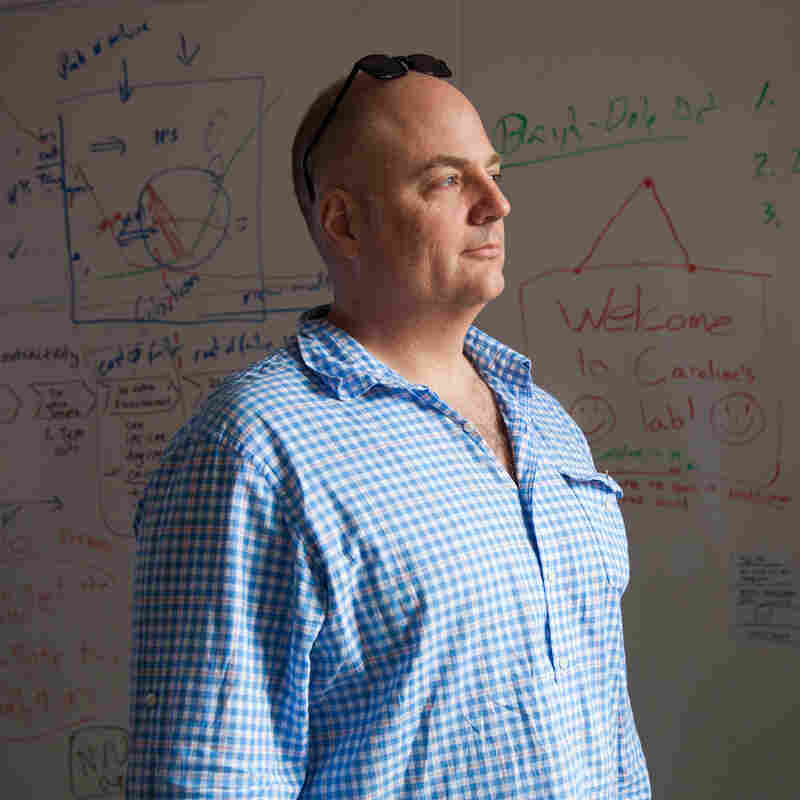
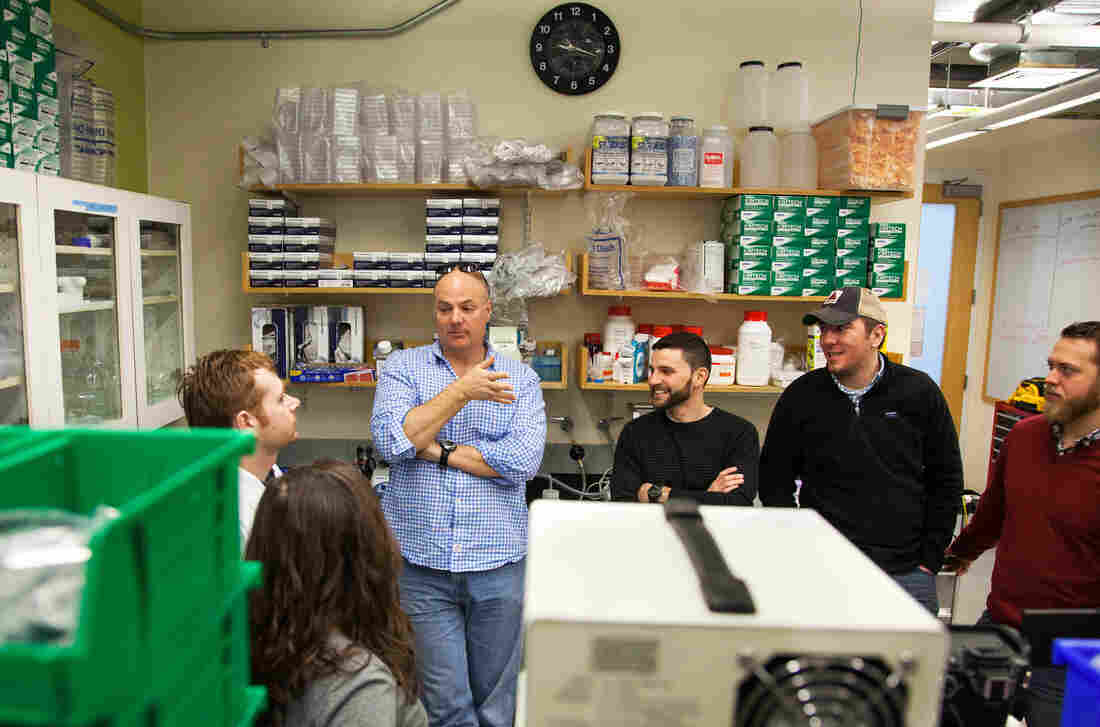
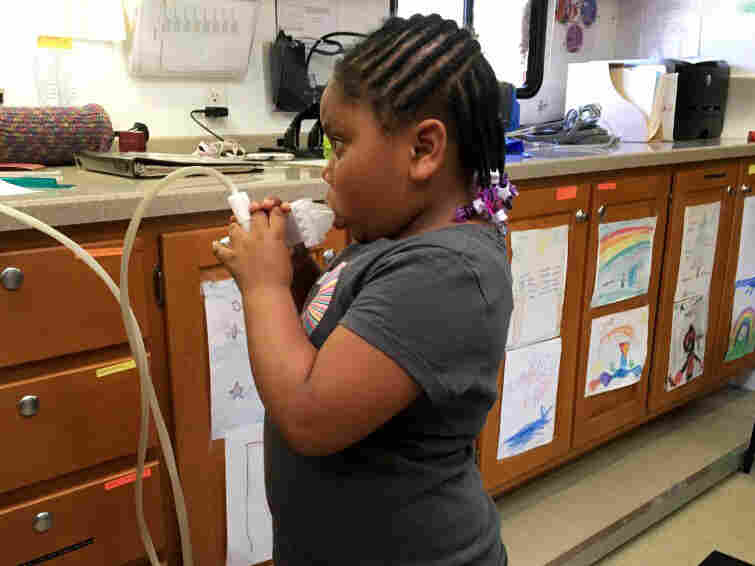
Medical students at George Washington University met with residents of Washington, D.C., to find out what challenges they face in managing asthma.

Medical students at George Washington University met with residents of Washington, D.C., to find out what challenges they face in managing asthma. Sarah Miknis/GW School of Medicine and Health Sciences hide caption

toggle caption Sarah Miknis/GW School of Medicine and Health Sciences

Medical students cram a lot of basic science and medicine into their first two years of training. But most learn next to nothing about the intricacies of the health care system they will soon enter.

That’s something the medical school at George Washington University in Washington, D.C., is trying to remedy.

“Clinicians today have to graduate being great providers of individual care,” says Dr. Lawrence Deyton, the senior associate dean who’s spearheading the new curriculum. “But they also have to recognize and be able to act on the fact that their patients, when they leave the clinic or leave the hospital, are going home [and] living in situations where there are all kinds of factors that promote and perpetuate chronic disease.”

The idea behind the new curriculum is to more closely link medicine with the policy and public health issues that directly affect it. So after learning about the lungs and pulmonary system, for example, the students do a project on controlling childhood asthma.

That’s what brought the entire first-year class to an auditorium on a rainy Wednesday in May. One by one, small groups of students presented their proposals for how to help control asthma in children in Washington, D.C., especially in some of the city’s lower-income areas.

“The app gives the mother the chance to be able to really manage the disease,” says first-year student Erin Good, describing a concept her group came up with. Called “AsthMama,” it’s a bracelet that would be worn by a child with asthma that transmits information to an app on a parent’s smartphone.

How exactly would it work? “Either the child or the bracelet itself can detect problems,” Good explains. “Maybe the child pushes it because they feel like they’re having an asthma attack.” The bracelet would automatically notify a parent or the school nurse, or both, before the problem escalates.

Good’s group suggested to the panel of experts, including local doctors, parents and city health officials, that the project could be initially paid for by grants, and, if it works, eventually covered by the Medicaid program.

It’s important to put those policy issues right alongside the clinical medical training, Deyton says, helping students understand everything that influences a patient’s health.

“So as they’re learning about diseases and conditions, they’re recognizing those public health and population health and social determinants of health factors,” he said.

That emphasis on the not-strictly-medical part of medicine appeals to students like Jeffrey Roberson, who was a social worker before coming to GWU.
When he talks to friends at other medical schools, says Roberson, “They think it’s fascinating … that we sit and we learn about how our health care system is paid. Other schools don’t do that. So you’ll have physicians that have no idea how insurance works.”

The medical school has some built-in advantages when it comes to teaching policy, among them its location in the heart of the nation’s capital. At the end of their first semester, after learning about infectious diseases, the students did a three-day “deep dive” into AIDS and HIV policy. And they presented their proposals directly to the national AIDS czar — at the White House.

“It was really just a powerful day to see all of our colleagues, just one semester into medical school, with really innovative ideas, at the White House, and getting feedback from the AIDS czar, from all these major directors of health policy for individual states,” Roberson said.

Deyton says one of the ideas presented that day — a reminder system to help HIV patients in Tennessee take their medication — might become actual policy.

As the students were presenting their proposal, he said, “The director of AIDS for Tennessee was writing all this down.” And it turns out she was sitting next to the federal official who would be in charge of getting it covered by Medicaid.

“And that person leaned over to her and said, ‘You know if you propose that I’ll probably approve it,'” Deyton said.

Teaching health policy in medical school isn’t actually new. Many schools have been doing it for years. But Neel Shah, a physician and policy researcher at Harvard, says what is new is integrating policy and practice.

“For example, I remember when I was learning about health care costs for the first time the whole conversation was about the GDP,” he said, referring to how much of the nation’s gross domestic product goes toward health care.

But, said Shah, “nobody goes to medical school to treat the GDP. There’s like a huge gap between the macro-level understanding of health care economics and what matters to patients and clinicians at the bedside.”

It’s that gap that today’s medical educators are trying to fill. One class at a time.

This story was produced as part of a partnership between NPR and Kaiser Health News.

Let’s block ads! (Why?)

Legal Medical Abortions Are Up In Texas, But So Are DIY Pills From Mexico

Luis Alberto de la Rosa says he sells lots of misoprostol, a drug used in abortions and in ulcer treatment, to women from Texas who come to his Miramar Pharmacy in Nuevo Progreso, Mexico.

Luis Alberto de la Rosa says he sells lots of misoprostol, a drug used in abortions and in ulcer treatment, to women from Texas who come to his Miramar Pharmacy in Nuevo Progreso, Mexico. John Burnett/NPR hide caption

toggle caption John Burnett/NPR

Women who want an abortion in deeply conservative Texas have slightly more choice these days than they had a few months ago. In March, the Food and Drug Administration simplified rules on abortion medication, allowing patients to take the standard regimen of abortion drugs later in a pregnancy.

However, the recent spike in the number of women choosing legal, non-surgical abortions in U.S. clinics has not slowed brisk sales of abortion drugs south of the border, in Mexican pharmacies. One of the two medications in the regimen – misoprostol – is easy to get without a prescription in Mexico and significantly less expensive there.

More and more young women from Texas are walking across the international bridge for risky, do-it-yourself medical abortions with misoprostol that lack the second drug, mifepristone, and also lack the guidance and supervision by a doctor that the women would get in the U.S.

A surgical abortion ends an undesired pregnancy by removing the fetus and placenta from the woman’s uterus. A medical abortion in the U.S. is usually prescribed as a combination of mifepristone (Mifeprex) and misoprostol that, when taken in a two-step process over 48 hours or so, stops a pregnancy from developing and induces a miscarriage. (These drugs are not to be confused with the emergency contraception often called the morning-after pill or Plan B.)

The two-drug combination, when taken in this way, has a 95 percent success rate, studies show.

[embedded content]

A 25-year-old childcare worker who asks to be identified by her initials, H.D., has opted to terminate her seven-week pregnancy under a doctor’s care in San Antonio. She sits in a black easy chair in a room with soothing mauve walls at a Whole Woman’s Health clinic.

Like more and more women who choose abortion in Texas, she’s decided against surgery.

“The reason that I would choose the pill versus the surgical procedure is the comfort of your home,” she says, “without you having to deal with coming to the office and then being hounded outside by protestors or what have you. And a lot of times you don’t want too many people knowing what’s going on. With the pill I feel like it’s more to-yourself.”

Texas is hostile territory for abortion rights. In 2013, the Republican-controlled statehouse passed the Texas Omnibus Abortion Bill, imposing sweeping new restrictions on surgical and medical abortions.

The Texas law requires clinics that perform abortions to meet the same strict standards as ambulatory surgical centers, and requires doctors at the clinics to have admitting privileges at a nearby hospital. And, according to the law, all abortions — medical as well as surgical — must be done at the clinic.

The Texas law, which is now before the U.S. Supreme Court, had the effect of closing more than 20 abortion clinics in the state.

Believing the long-time FDA rules on abortion pills were plenty strict, the Texas legislators also included in the law a requirement that doctors strictly follow the agency’s guidance.

The lawmakers’ strategy worked. Use of the abortion drug regimen in Texas fell sharply after the law passed.

But the FDA’s current label on abortion medication, updated in March, now requires fewer doctor visits, meaning women can take most of the pills at home. The dosage of mifepristone is lower. And they can take the medication regimen up to ten weeks into a pregnancy; before, it was only seven weeks. Effectively, the FDA’s updated labeling gave Texas women an end-run around the state legislature’s anti-abortion posture.

The response was immediate.

Staff of Whole Woman’s Health, which has three Texas clinics that perform abortions, say they have seen requests for medical abortions jump from 1 in 10 patients to more than half of all patients.

And Planned Parenthood has noted a four–fold increase in women seeking the abortion drug regimen at its five clinics in Texas.

“Many women felt that it was a more natural feeling, a more personal experience that didn’t have to be so clinical and surgical,” says Rachel Bergstrom-Carlson, manager of the Planned Parenthood clinic in Austin. “They were in their home; they were in charge of their own bodies.”

Mifepristone was first available in Europe as RU-486, and approved by FDA in 2000 for use in medical abortions in the United States. Today, in the U.S., just over a third of women who get abortions in the first nine weeks use medication, according to the Guttmacher Institute, a nonprofit that studies abortion issues. And the number is climbing. Researchers say more women are asking for it and more abortion providers are offering it.

To abortion foes, both procedures are equally bad. On a recent weeknight, a group of Catholic women march around the Whole Woman’s Clinic in McAllen, Texas, praying the rosary.

“We’re against abortion in any way. We’re against the pill,” says Rosita Rodriguez, wearing a red T-shirt with the words “Keep Calm and Pray On.” “We’re against anything that goes against the moment of conception. That’s why we’re praying.”

Meanwhile, embattled abortion rights advocates in Texas and outside groups that support them see the FDA’s updated guidelines as a rare a bit of good news.

“This is definitely a positive step for women — the FDA label change and increased availability of medication abortion,” says Janet Crepps, senior counsel at the Center for Reproductive Rights in New York. “But it’s not addressing the root problem, which is all of the unnecessary regulations that are closing clinics and placing obstacles in the path of women seeking abortion.”

The heavy regulations on Texas clinics that provide abortions, coupled with the cost of an abortion — medical or surgical — is driving some women in South Texas to cross the Rio Grande to visit one of an estimated 200 pharmacies in the city of Nuevo Progreso, Mexico.

Pharmacies that line the main street of Nuevo Progreso, Mexico, sell many medicines over the counter that would require a prescription in the U.S. That's made the stores popular with visitors from nearby Texas.

Pharmacies that line the main street of Nuevo Progreso, Mexico, sell many medicines over the counter that would require a prescription in the U.S. That’s made the stores popular with visitors from nearby Texas. John Burnett/NPR hide caption

toggle caption John Burnett/NPR

In the crowded, chaotic sidewalks, it’s all here for the asking: dental work, eyeglasses, pirated DVDs, tequila shots, prostitutes and cheap, plentiful medicine. Drugs that are highly restricted in the U.S. — like Xanax, Ritalin, and Valium — are sold like aspirin in Nuevo Progreso pharmacies. Misoprostol is a big seller.

A fleshy man with gold caps on his teeth named Roberto Gonzales says he worked as a clerk in a Nuevo Progreso pharmacy until recently. He remembers the constant stream of customers asking for misoprostol — sold here under the brand-name Cytotec.

“We sold it like hot bread,” he says, chuckling. “The girls in Texas came over to buy this treatment — 8 to 10 tablets for a pregnancy of nine weeks. It works the fastest.”

Gonzales now makes a living washing cars and hustling on the streets of Matamoros. But for the eight years he worked in Nuevo Progreso, he says, he learned a few things about the drugs he sold.

“They’d ask me how to use it and I tell them what I’d heard,” he continues. “Many times the instructions inside the box tell them how to do it, how to induce an abortion. I would warn them it’s dangerous. Lots of time there’s heavy bleeding.”

Gonzales’s advice to customers highlights the risks of improvised, do-it-yourself abortions.

Instructions inside boxes of the drug sold in Mexico actually only explain how to use it for treating gastric ulcers, and don’t say anything about how to take Cytotec to abort an embryo.

Because abortion is illegal in every state in Mexico, Cytotec is only sold as an ulcer medicine. That leaves customers to pick up instructions from friends, off the internet, or from untrained pharmacy employees like Gonzales.

“Now I’m looking for work in another pharmacy,” he says, before walking back to his parking lot.

“That’s just a terrifying state of affairs — that women would turn to someone like that to give them that advice,” says Crepps, upon hearing Roberto’s story.

“It’s the 2016 version of the back-alley abortion,” she says. “And it’s a very sad state of affairs.”

Misoprostol-only abortions — the kind offered in Mexico — are “significantly less effective” than the two-drug, combination regimen prescribed in the U.S., according to the American Congress of Obstetricians and Gynecologists.

Priscilla found this out the hard way.

She’s a law student in Matamoros, Mexico, who says she was 18 years old when she bought some misoprostol to “bring my period back.” NPR has agreed to use only her first name, to protect her privacy.

“I was at home and I took the pills, then I started to hemorrhage,” she says. “I felt awful. I thought the medicine was working, but it didn’t.”

In Mexico, women have been prosecuted for going to a public hospital showing symptoms of an attempted abortion. So, Priscilla says, she found a doctor in her town who performs surgical abortions confidentially.

“He took me into a room,” she says, “put me to sleep, and terminated the embryo. I was so scared, so confused.”

Medical and surgical abortions are, of course, legal in the United States. So if there’s a clinic performing abortions in the border city of McAllen, Texas, why are U.S. women going to pharmacies in Nuevo Progreso?

First, it’s a matter of cost. The Rio Grande Valley of Texas is one of the poorest regions in the country. A medical or surgical abortion in McAllen costs $500 compared to a pack of pills in Mexico for under $50. Second, some women may not want to put up with all the abortion regulations in Texas. They have to get an ultrasound and have the doctor describe what he sees, and they have to see the same doctor for three appointments.

Finally, women in South Texas may not be aware the McAllen clinic is still open. After the Texas legislature passed the abortion law, the clinic was forced to close. Eleven months later, a federal judge told the center’s staff they could reopen.

“The point is you’re pregnant and you don’t want to be,” says Andrea Ferrigno, corporate vice president of Whole Woman’s Health. “And what are the options available to you next? The last thing you heard is that the clinic is closed and there’s some sort of case before the Supreme Court about it. It’s confusing.”

The Texas legislature passed the anti-abortion law with the stated goal of protecting the health and safety of Texas women. Critics say it’s having the opposite effect in South Texas.

I asked Joe Pojman, executive director of Texas Alliance for Life, and a big supporter of the state’s anti-abortion law, if he was concerned that the harder it is to get an abortion in Texas, the more women will cross the border to get do-it-yourself abortions without a physician’s care.

“I just don’t see a time when abortion is not readily available in Texas,” Pojman says. “That is just not our goal. We have a goal of protecting innocent human life from conception until natural death, using peaceful, legal means and by promoting compassionate alternatives to abortion.”

Both sides in the abortion battle are watching the U.S. Supreme Court closely, awaiting a landmark ruling on the constitutionality of the Texas Omnibus Abortion Bill — a decision is expected this month. Abortion rights supporters say if the justices uphold the law, regardless of the FDA label changes, more clinics will close and the Mexican pharmacies will get even more business.

Let’s block ads! (Why?)

In Texas, Strict Laws On Clinics Drive Demand For Abortion Pill

The abortion pill is booming in Texas. Since the FDA loosened restrictions, more women are circumventing strict state laws on Texas abortion clinics by taking the pill as an alternative to surgery.

Transcript

ARI SHAPIRO, HOST:

Women who seek an abortion in Texas have slightly more choice these days. In March, the Food and Drug Administration simplified rules on abortion medication. Texas is deeply conservative with some of the most restrictive abortion laws in the nation. But as NPR’s John Burnett reports, there has been a sharp increase in women choosing nonsurgical abortion.

JOHN BURNETT, BYLINE: The waiting room at Whole Woman’s Health Clinic in San Antonio has big, black easy chairs and soothing mauve walls hung with feminist posters. A young woman who asked to be identified by her initials, H.D., says she’s here to terminate a seven-week presidency. Like more and more women in Texas, she’s asking for a small, white tablet.

H D: The reason that I would choose the pill versus the surgical procedure is the comfort of your home without you having to deal with coming to the office and then being hounded outside by, you know, protestors or what have you. And a lot of times you don’t want too many people knowing what’s going on. With the pill, I feel like it’s more kind of to yourself.

BURNETT: Texas is hostile territory for abortion rights. In 2013, the GOP-controlled State House passed a sweeping bill that medical experts say is unnecessary. It imposed new restrictions on surgical and medical abortions. Believing the FDA rules on abortion pills were plenty strict, lawmakers told women to start following the federal protocol. It worked. Use of the abortion drug in Texas fell sharply. Then

in late March, the federal agency relaxed its rules, effectively giving women an end run around the legislature’s anti-abortion posture. The new FDA label on abortion medication requires fewer doctor visits, meaning women can take most of the abortion pills at home. The dosage is lower, and they can take the medication for a pregnancy of up to 10 weeks. Before, it was seven weeks.

The response was immediate. Whole Woman’s Health, which has three Texas abortion clinics, has seen requests for the abortion bill jump from 1 in 10 patients to more than half of all of its patients. Planned Parenthood has noted a of four-fold increase in women seeking the abortion drug at its five clinics in Texas. Rachel Bergstrom-Carlson manages the Planned Parenthood clinic in Austin.

RACHEL BERGSTROM-CARLSON: Many women felt that it was a more natural feeling, a more personal experience that didn’t have to be so clinical and surgical. They were in their home. They were in charge of their own bodies.

BURNETT: Medication abortion is a combination of two pills, Mifepristone and Misoprostol, that stop a pregnancy and induce a miscarriage. Taken together, the pills have a 95 percent success rate. The abortion pill became legal in the United States in 2000. Today in the U.S., just over a third of women who get abortions in the first nine weeks use medication according to the Guttmacher Institute, a non-profit that studies abortion issues.

And the number is climbing. Researchers say more women ask for it, and more abortion providers offer it. To abortion foes, both procedures are equally bad. On a recent weeknight, Rosita Rodriguez stands with a group of Catholic women holding a vigil outside an abortion clinic in McAllen.

ROSITA RODRIGUEZ: We’re against abortion in any way. We are against the pill, and we are against everything that goes against the moment of conception. That’s why we’re praying.

BURNETT: The new FDA guidelines are a rare bit of good news embattled abortion rights advocates in Texas, but it’s far from a cause for celebration, says Janet Crepps. She’s senior counsel at the Center for Reproductive Rights in New York.

JANET CREPPS: This is definitely a positive step for women – the FDA label change and the increased availability of medication abortion. But it’s not addressing the root problem, which is all of the unnecessary regulations that are closing clinics and placing obstacles in the path of women seeking abortions.

BURNETT: Both sides are now watching the Supreme Court, awaiting a landmark ruling on the constitutionality of Texas’ controversial anti-abortion law that’s expected this month. Observers say whether the justices strike down the law or uphold it will dramatically affect access to both types of abortion – medication and surgical. John Burnett, NPR News, Austin.

SHAPIRO: Tomorrow on MORNING EDITION, John reports on the growing number of women crossing the border into Mexico to buy pills for do-it-yourself abortions.

Copyright © 2016 NPR. All rights reserved. Visit our website terms of use and permissions pages at www.npr.org for further information.

NPR transcripts are created on a rush deadline by Verb8tm, Inc., an NPR contractor, and produced using a proprietary transcription process developed with NPR. This text may not be in its final form and may be updated or revised in the future. Accuracy and availability may vary. The authoritative record of NPR’s programming is the audio record.

Let’s block ads! (Why?)

An Army Buddy's Call For Help Sends A Scientist On A Brain Injury Quest

Katherine Du/NPR

Katherine Du/NPR

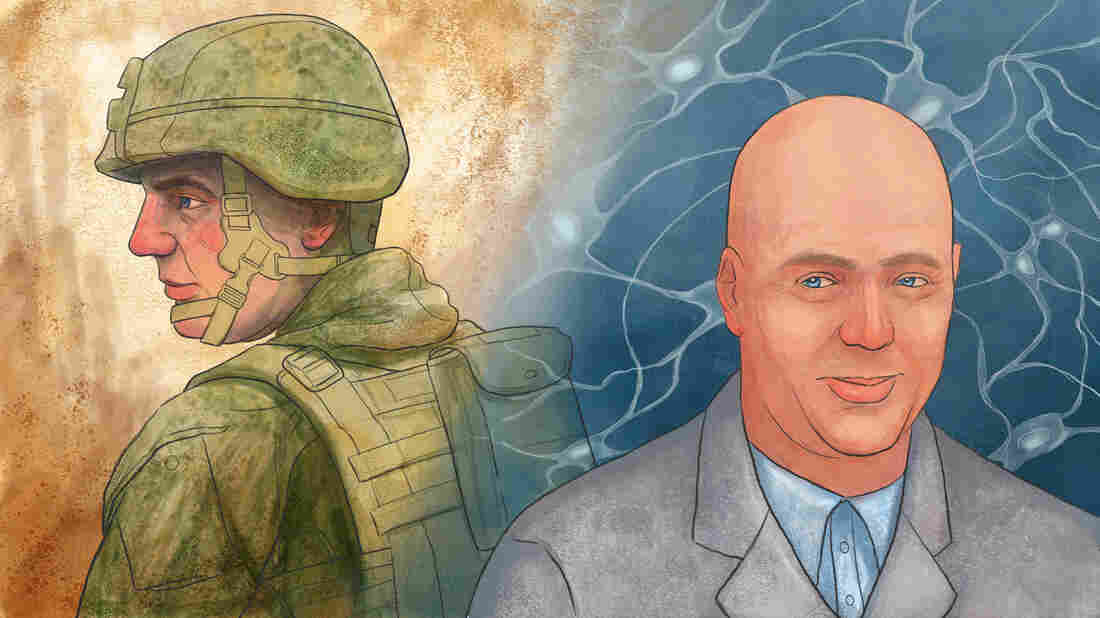
The first time Kit Parker’s phone rang, everything seemed fine. It was January 2006, and Parker’s old Army buddy Chris Moroski was calling to say hi.

Parker and Moroski had jumped out of airplanes together in the 1990s when they were paratroopers in the National Guard. But after the attacks on Sept. 11, Parker had been deployed to Afghanistan, his friend to Iraq. They’d lost touch.

Parker had come back from his tour in 2003 to start a new job as a biophysicist on the faculty at Harvard. At 6-foot-5, with a shaved head and a booming drawl, he’d never exactly blended in on campus. But he’d avoided talking about military stuff. And he’d worked obsessively to establish his scientific credentials as an expert on heart muscle cells.

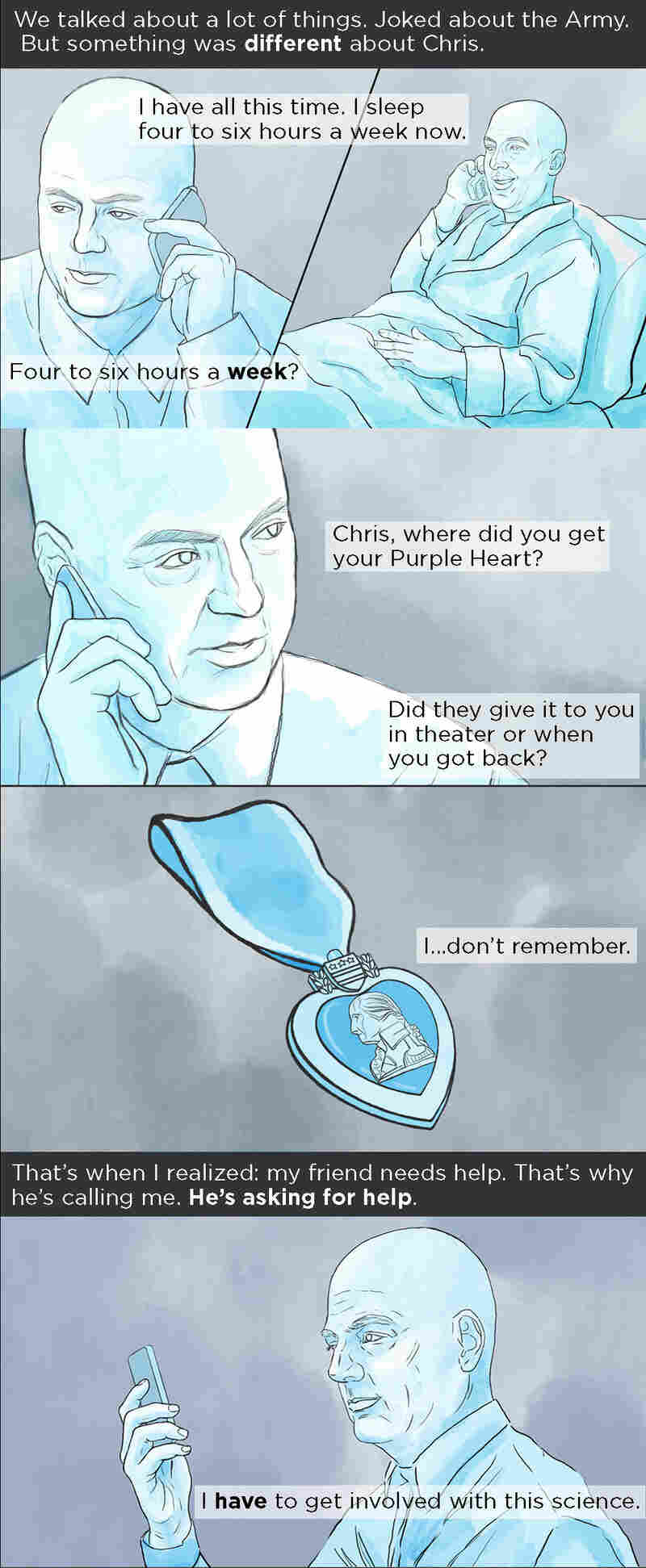
Now Moroski was back too. But his return had been rougher. He was calling from Dwight D. Eisenhower Army Medical Center at Fort Gordon, Ga. He’d ended up there after an IED had blown up his vehicle during a patrol near Ramadi. Moroski had been hurt, but his doctors promised he’d recover.

The men made small talk, exchanged insults and joked about the Army. Then they hung up.

A couple of days later, Parker got a second call from his friend. A few days after that, there was a third call. Something about Moroski wasn’t right.

Katherine Du/NPR

Katherine Du/NPR

“He’d lose his train of thought,” Parker says. “He couldn’t remember stuff,” including events a soldier would never forget. Parker asked Moroski whether he’d received the Purple Heart in Iraq. Moroski didn’t know. “That’s when I realized something’s wrong here,” Parker says.

The details came slowly. Moroski was the kind of soldier who didn’t talk about his troubles. And Parker was the kind of friend who didn’t push.

“Somehow I realized he’s asking for help,” Parker says. “It’s not being verbalized, but that’s why he’s calling.”

Parker would spend the next decade answering that call. He would reset the trajectory of his career. And ultimately, he would make a discovery that changed scientists’ understanding of the battlefield brain injuries sustained by hundreds of thousands of troops in Iraq and Afghanistan.

But Parker’s first step was to learn everything he could about what had happened to Moroski in Iraq.

Blast Wave Meets Brain

In 2005, Moroski had been in charge of a team that often went to Tamim, a neighborhood outside Ramadi along the Euphrates River. They would leave in the dark in an M113 armored personnel carrier, arrive well before dawn, then watch the sun rise over the desert.

They were part of an effort to win over the hearts and minds of the Iraqis.

The team spent its days handing out coloring books, crayons and soccer balls to boys who would flock to the American tank as if it were an ice cream truck. For cultural reasons, male soldiers rarely interacted with Iraqi women or girls. But one afternoon, after running out of soccer balls, Moroski spotted a girl of 4 or 5 standing by the road. He grabbed two fabric dolls, and stepped out of the M113.

“I left my rifle inside because I’m 6-foot-3 and scary enough,” he says. Moroski got on his knees to offer the dolls. The girl took them with a huge smile. “It was a human connection,” Moroski says. “It was awesome.”

The next day, in the same neighborhood, Moroski’s vehicle rolled over an IED. As the team leader, he was riding with his head just far enough out of the hatch to scan the road ahead. The vehicle’s armor deflected the heat and shrapnel from the bomb, but not the blast wave.

A blast wave is a pulse of highly compressed air that expands outward from an explosion faster than the speed of sound. The force ruptured one of Moroski’s eardrums and hurled him back into the vehicle.

The result was the signature wound of the wars in Iraq and Afghanistan: a mild traumatic brain injury, or TBI, caused by a bomb blast.

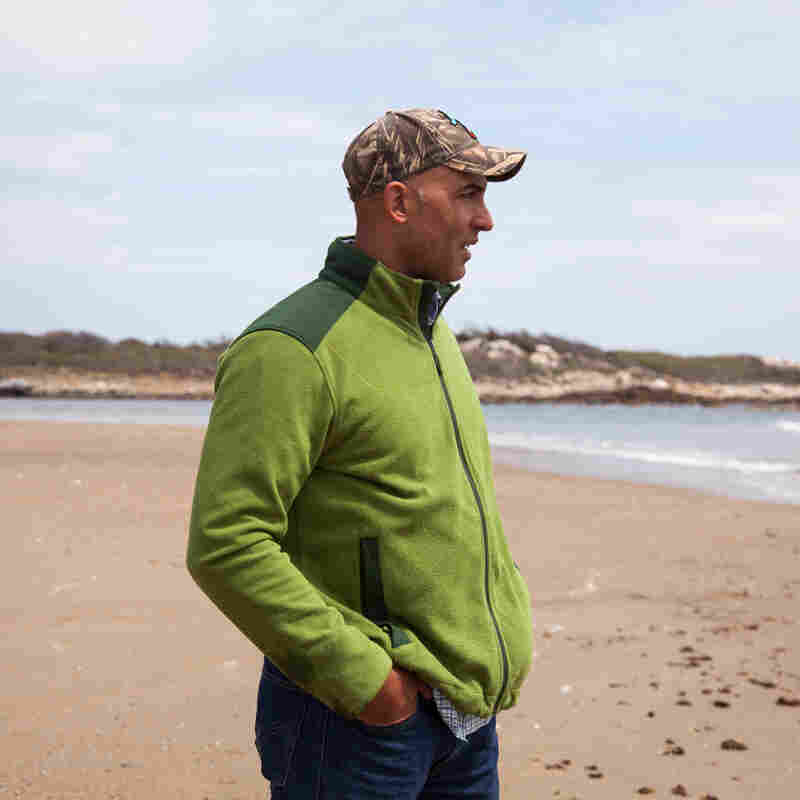
Chris Moroski walks the beach near his home in Narragansett, R.I. Moroski, who was injured by an IED blast in 2005 while on patrol in Iraq, has almost no memory of what happened.

Chris Moroski walks the beach near his home in Narragansett, R.I. Moroski, who was injured by an IED blast in 2005 while on patrol in Iraq, has almost no memory of what happened. Ellen Webber for NPR hide caption

toggle caption Ellen Webber for NPR

Like a lot of service members, Moroski experienced several concussions during his time in combat. Being hit by a blast wave, he says, is a bit like getting tumbled by a big ocean wave: “You can’t control your body or what’s happening until you come to rest, and then everything hurts.”

After each of the earlier blasts, Moroski had been able to shrug off his symptoms and go back on patrol. But this had been a bigger bomb at closer range.

Moroski has almost no memory of the hours just after the explosion, though he was told he took part in a firefight. He does remember being unable to hear much or perceive colors.

In the coming days and weeks, Moroski had unrelenting headaches. He felt dizzy and vomited frequently. He couldn’t think clearly or remember things. And he couldn’t sleep.

“At the time, head injuries weren’t really a thing,” Moroski says. “No one really considered why I was vomiting all the time. No one considered that it was probably from a concussion.”

As was often the case with a TBI caused by a blast wave, Moroski had no sign of physical injury, other than his burst eardrum. Military doctors assured him he was fine.

And Moroski wasn’t a complainer. “You want to go back to work,” he says. “You don’t want to let anyone down.”

When Moroski didn’t get better after a few weeks, medical personnel began to suggest the problems were not from the force of the blast, but from the fear it induced. In other words, his wounds were purely psychological. They began to talk about things like combat stress reaction and post-traumatic stress disorder.

Eventually, he got sent to Fort Gordon. There, another group of doctors seemed baffled by his symptoms and suspicious of their origin. “They were saying, ‘This can’t be a head injury; there’s some psychological reason you’re acting this way,’ ” Moroski says.

He spent months in a dormitory-like building separate from the hospital. The doctors gave him pain pills for his headaches and motion sickness medication for his dizziness. But he says the only real treatment plan seemed to be waiting.

Moroski hit a low point over the Christmas holidays, when maintenance workers apparently forgot there were still patients in the building. “They turned the heat off, and I felt very alone,” he says. “I kept thinking, ‘I’m not faking this, and no one believes me.’ “

When Chris Moroski was hurt in 2005, “head injuries weren’t really a thing,” he recalls. “No one really considered why I was vomiting all the time. No one considered that it was probably from a concussion.” Ellen Webber for NPR hide caption

toggle caption Ellen Webber for NPR

Diagnosis Missed

The military doctors had labeled Moroski a head case. But they didn’t know Moroski. Parker did. And the Moroski he knew had been sharp and focused, and never seemed to get rattled.

Still, Parker was perplexed. His friend’s persistent symptoms were what you might expect with a more severe head injury, one that caused obvious bleeding and swelling in the brain. But Moroski just had a concussion. He’d had his bell rung. Or at least that’s what everyone kept telling him.

One night, after yet another phone conversation with Moroski, Parker sat in his Cambridge apartment and stared at the wall. “I was infuriated by the whole thing,” he says.

The next day, he used his military contacts to get Moroski moved to Walter Reed Army Medical Center in Washington, D.C., where doctors finally gave him medications that helped him sleep. Before long he would be well enough to return home to Rhode Island.

But what about Moroski’s brain? There had to be a scientific explanation for what had happened. Parker decided he would launch a mission to find it. “I had to bring the battlefield into the lab,” he says.

It was a decision that would merge Parker the soldier with Parker the scientist. And ultimately, it would lead him to a discovery about the brain that came directly from his years of research on the heart.

From Heart Cells To Brain Cells

At Harvard, Parker had been studying the structure and function of heart muscle cells. He’d published several groundbreaking papers on how these cells respond to mechanical forces, like the stretching that occurs when blood pressure goes up.

Now, though, Parker was planning to take on a problem affecting a different organ, one considered the most complex object in biology. “What I knew about brain injury was zero,” he says.

Even so, Parker wasn’t intimidated. As a boy growing up in the cows-and-cotton landscape of central Texas, he’d dissected roadkill to figure out how animals worked. Later, he’d chosen biophysics because it allowed him to study life at every level, from atoms to environments. He was used to big questions.

Parker began to ponder what he did know: the heart. And he came up with a hunch about how blast waves were causing brain injury.

How A Blast Wave Affects The Brain

The integrin protein (red) connects the outermost layers of a cell to the structures inside. The shock wave from a blast can cause the integrin to send unhealthy and sometimes fatal signals to the structures inside cells.

TBI GIF

Source: Harvard University

Credit: Katherine Du/NPR

By a twist of fate, Parker’s doctoral thesis had looked at a potentially lethal injury known as cardiac concussion. The victim is typically a healthy young athlete struck by a baseball or some other projectile, just over the heart.

“A hockey puck hits someone and they go down, sudden cardiac death,” Parker says. “A single blow to the heart causes an electrical irregularity, and they can die.”

Parker had investigated how this sort of blow — a brief mechanical force — could affect the behavior of heart cells. And his research had led him to proteins called integrins, which connect the outermost layers of a cell to the structures inside.

When a force is applied to the outside of a heart cell, integrins convert the energy into chemical signals. Usually, these signals are helpful. For example, when integrins detect physical stresses associated with exercise, the proteins produce signals that cause heart muscle to become thicker and stronger.

But Parker had discovered that certain forces, like being struck in the chest by a hockey puck, can cause the integrins in heart cells to send signals that are unhealthy, sometimes even lethal.

Now he was wondering whether a brain concussion might be a bit like a cardiac concussion. “The blast wave hits the head — BOOM! — and these signaling pathways inside the cell are pathologically activated,” he says.

The heart guy had come up with a hypothesis about the brain. Now he needed money and researchers to test it.

Science On A Starbucks Napkin

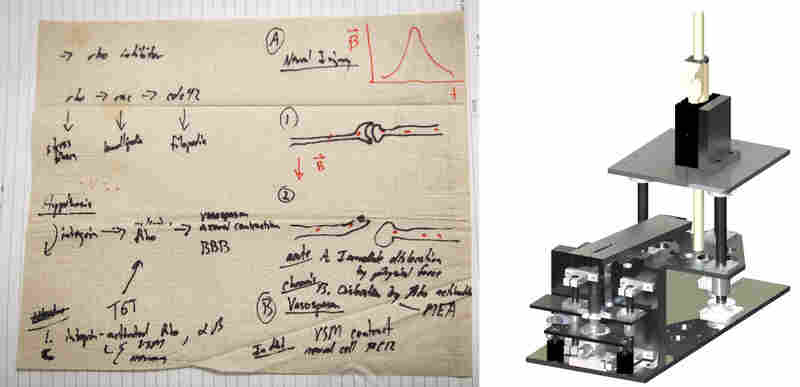
At 6 a.m. on Oct. 27, 2006, Parker met with Borna Dabiri, an undergrad from his lab. They sat down at a table in a Starbucks, and Parker began sketching out his hypothesis on paper napkins.

On a set of napkins, Kit Parker sketched out his theory about blast wave damage to the brain. His team then designed experimental equipment to test the effects of blast waves on cells in the lab.

On a set of napkins, Kit Parker sketched out his theory about blast wave damage to the brain. His team then designed experimental equipment to test the effects of blast waves on cells in the lab. Ellen Webber for NPR; Courtesy of Harvard University hide caption

toggle caption Ellen Webber for NPR; Courtesy of Harvard University

By the end of the meeting, “I had this stack of napkins,” Dabiri says. “So I stapled all those napkins into my lab notebook.”

Dabiri’s assignment was to build instruments that would allow the lab to subject living brain cells to the same forces produced by an IED blast wave. And pretty soon Dabiri had come up with devices that could stretch and twist and compress cells just as an explosion does.

Next, Parker needed to see whether applying blast-wave-like force to brain cells really did change the signals coming from integrin proteins. He didn’t have the time or money to do a lot of preliminary experiments. “We had to go for broke from the beginning,” Parker says.

He assembled a small team that included Dabiri and Josh Goss, a Marine who had served in Iraq. For four years, they tweaked living brain cells in every way imaginable.

Back In Combat

In 2009, Parker returned to Afghanistan. This time, he was deployed as a scientist as well as a soldier, helping the Center for Army Lessons Learned figure out how to protect troops from IEDs.

On March 22, he was with a platoon in the Tangi Valley looking for explosives along a narrow, twisting road carved into the side of a cliff. They found one — the hard way.

“We had an IED blow up a [mine-resistant, ambush-protected] vehicle,” Parker says. “Four dudes inside. Four brain injuries. Some of these guys had already been blown up a dozen times.”

A mine-resistant, ambush-protected vehicle, or MRAP, that was leading a patrol in Afghanistan's Tangi Valley in 2009 was upended by a 500-pound homemade explosive. Minutes later, a rocket-propelled grenade hit the cliff wall above, initiating a firefight that pinned down Kit Parker and the rest of the platoon.

A mine-resistant, ambush-protected vehicle, or MRAP, that was leading a patrol in Afghanistan’s Tangi Valley in 2009 was upended by a 500-pound homemade explosive. Minutes later, a rocket-propelled grenade hit the cliff wall above, initiating a firefight that pinned down Kit Parker and the rest of the platoon. Courtesy of Kit Parker hide caption

toggle caption Courtesy of Kit Parker

The 500-pound bomb that caused those injuries was just the beginning of an ambush that pinned Parker and the rest of the platoon against the cliff. Most of them didn’t get out until the next day.

Parker’s second tour made him realize how bad things had become. In 2005, the year Moroski got hurt, the Department of Defense reported 15,530 TBIs among service members. By 2011, that number had increased to 32,907. By the time the wars in Iraq and Afghanistan were winding down, about 1 in 6 combat troops and a total of more than 300,000 service members had sustained some sort of concussion or traumatic brain injury, often from a blast wave.

When U.S. troops began using heavier armor on their vehicles, the insurgents simply made bigger bombs. “They have a great weapon because it hits us at our scientific weak point,” Parker says. “And that’s the brain.”

The military medical system still didn’t see it that way, though. It had been working under the assumption that most concussions weren’t causing physical damage to the brain. As a result, troops who’d been near a blast but had no obvious injury were routinely returning to combat, where many got blown up again.

Parker wanted to change that by providing evidence that the military couldn’t ignore.

When Parker returned from Afghanistan, nearly five years after Chris Moroski had called him asking for help, the integrin experiments were nearly done. Finally, the team had results. “And we were right,” Parker says. “We nailed it.”

In 2011, Parker’s lab published a paper that showed how a blast wave could cause integrins to send signals that would disrupt the connections among brain cells. “When that happens, it affects the networks that allow you to recognize your grandmother’s face or count your change at the fast-food restaurant,” Parker says.

Harvard scientist Kit Parker realized the calls from a friend he'd served with in the National Guard were more than they seemed. His friend couldn't remember things a soldier would never forget.

Harvard scientist Kit Parker realized the calls from a friend he’d served with in the National Guard were more than they seemed. His friend couldn’t remember things a soldier would never forget. Ellen Webber for NPR hide caption

toggle caption Ellen Webber for NPR

“It was a fundamental insight,” says Dr. Geoffrey Ling, who was considered the Army’s leading expert on traumatic brain injury before he retired in 2012.

Parker’s research had shown how a blast wave could produce an injury that might be invisible but was indisputably real. And, at about the same time, another team of researchers found a way to finally reveal some of these hidden injuries.

That team, led by David Brody of Washington University in St. Louis, studied the brains of 63 military personnel with blast-related TBIs. In about a quarter of them, a special type of MRI scan showed “definitive evidence of injury,” Brody says. The images showed damage to the connections in the brain, which was precisely what Parker’s work on integrins had predicted.

The Gray Team

The next time Parker returned to Afghanistan, he was a member of the Gray Team, an elite group of doctors and scientists working to change the military’s entire approach to battlefield TBIs. In 2011, they spent time in hospitals and clinics making sure a new protocol for detecting and treating concussions was being used and was actually helping soldiers recover.

The Gray Teams (there would be four in all) had been created by Adm. Mike Mullen, the chairman of the Joint Chiefs of Staff. “We would tolerate multiple blasts, deployment after deployment,” Mullen says. “I was determined to see if I could do something about this.”

To run the Gray Team, Mullen selected Christian Macedonia, a military doctor who had seen the concussion problem up close while serving in Iraq. Macedonia then picked a handful of doctors and scientists he called his “Super Friends.”

“Quite simply, the Gray Team was there to establish ground truth with respect to traumatic brain injury,” Macedonia says.

That meant challenging assumptions that went back to World War I, when shell shock was labeled a psychological or moral failing. And one finding of the first Gray Team was that in 2009, Macedonia says, military doctors were still following the dictum: “If you don’t have blood coming out of your head, if you don’t have a penetrating injury, you’re fine, everything’s OK, have a nice day.”

Dr. Christian Macedonia led the military’s Gray Team of doctors and scientists charged with finding the “ground truth” about traumatic brain injuries. Now, he’s a maternal and fetal health specialist at Lancaster General Health’s Women and Babies Hospital in Lancaster, Pa. Meredith Rizzo/NPR hide caption

toggle caption Meredith Rizzo/NPR

Macedonia’s in-your-face style and relentless campaigning for change within the Pentagon infuriated many senior military medical officers. “He really stirred things up, and they came after him,” Mullen says.

Gray Team members say Macedonia never wavered. “Chris Macedonia doesn’t give a f*** what people think about him if he thinks he’s on the right course,” Parker says.

Ultimately, the military did an about-face on blast-induced TBIs. By the time Parker returned in 2011, it had adopted a protocol that required screening and a 24-hour rest period for any service member within 50 meters of a blast or with symptoms of a head injury. The protocol, put in place in 2010, also provided clinical algorithms for treatment of mild traumatic brain injuries, including multiple concussions. It had combat troops wear blast-wave sensors. And it began placing concussion clinics near the battle zone.

Rest, time and sleep can make a big difference. After Parker intervened for his friend Chris Moroski, he improved. Today, Moroski still has memory problems, but has recovered enough to fly Black Hawk helicopters.

Now nearly all troops with battlefield brain injuries get that chance to heal. “If I got a concussion in 2011,” Parker says, “I’d rather have been treated in Afghanistan than the U.S.”

Searching For A TBI Treatment

Injured troops are less likely to be sent back into combat right away. But treatment options remain extremely limited. When the lab published its research on integrins, Parker thought drug companies would see the potential for new treatments. If faulty integrin signals were causing the problem, why not develop a drug that could block the signals or interrupt some other part of the cascade of events that damaged the brain?

A treatment that works on blast-induced TBI would be likely to help people with brain injuries caused by a car wreck, or a fall, or a collision on a football field. And, if given soon enough after the injury, it would treat the problem in a way that no currently available drug can.

But the pharmaceutical industry has lost billions of dollars trying to develop drugs for other brain diseases, especially Alzheimer’s. And the companies evidently weren’t ready to take on the costly search for a drug that might help people with traumatic brain injury. “I was surprised,” Parker says. “No one wanted to get in the fight.”

His frustration peaked during a phone conversation with representatives of Johnson & Johnson. Parker was speaking from a forward operating base in Afghanistan at the time.

The purpose of the call was to discuss a discovery his lab had made involving heart cells. But Parker wanted to talk about the brain injury problem he was seeing all around him: “I was on the battlefield saying, ‘Why don’t you think about TBI?’ ” he says. “That seemed to have no impact.”

A Band of Soldier-Scientists

On a brisk January morning in Woods Hole, Mass., Parker, still an active reservist, is barking orders at several dozen scientists. They’re shuffling around in identical gray hooded sweatshirts that say “Disease Biophysics.”

“Come on,” he tells them. “Take bold steps. Only the bold win.”

He’s joking. Parker is just trying to get the scientists from his lab to line up for a group photo as part of the lab’s annual retreat. But it’s a moment that reveals how completely Parker has integrated his soldiering and his science.

The Disease Biophysics Group talks over progress in their research. John Doyle (from left), Stacey Fitzgibbons, Kit Parker, Ian Perkins, Jonathan Wood and John Ferrier are all veterans of the U.S. military.

The Disease Biophysics Group talks over progress in their research. John Doyle (from left), Stacey Fitzgibbons, Kit Parker, Ian Perkins, Jonathan Wood and John Ferrier are all veterans of the U.S. military. Ellen Webber for NPR hide caption

toggle caption Ellen Webber for NPR

At lunch, Parker points to some of his researchers who are also combat veterans. “Stacey got back about a year ago from Afghanistan,” he says. “Angie Greer was in Iraq and got a Bronze star over there. John Ferrier was in the Air Force in Afghanistan.”

Parker says he feels a special bond with the veterans in his lab. “It’s pretty strong. I don’t know really how to describe it,” he says. “You love them.”

And Parker is counting on them to help turn a scientific discovery into something that will actually make a difference to people with brain injuries, including civilians. “Success is that a quarterback doesn’t suffer from dementia after being sacked,” he says. “Success is that brain injury is no longer the leading cause of death of children. Success is a war fighter gets blown up in some Third World rathole somewhere and he can still count his change at Burger King afterwards.”

So Parker’s TBI team is sifting through thousands of proteins in the brain, trying to identify an easy target for drugmakers. It’s painstaking work, and the lab no longer has much grant money to support it. But Parker says there’s no chance they’ll give up.

“It’s a very personal issue for us,” he says. “This is not an occupation. This is an obsession.”

Listen for more stories from Jon Hamilton about Kit Parker’s research on NPR and NPR One in the coming weeks.

Let’s block ads! (Why?)

FDA Moves To Speed Access To Compassionate-Use Drugs

Medicine

ZhangXun/Getty Images

The Food and Drug Administration has reduced an obstacle from its compassionate use policy, streamlining paperwork that physicians must submit to obtain experimental drugs for patients with life-threatening illnesses.

Doctors will now file an application for FDA approval that contains just 11 questions, 15 fewer than the old form. They should be able to complete this new version in 45 minutes, the FDA said. The new form is simpler because it was designed for individual patients, replacing an all-purpose format that had been used by doctors acting on behalf of individuals or groups of patients.

There had been concerns that doctors might have been deterred from applying for compassionate access, which is also known as expanded access, says FDA spokeswoman Sandy Walsh.

The policy is intended to help patients with incurable diseases who have tried all standard therapies and hope to extend their lives by taking experimental drugs not yet approved by the FDA, says Dr. Edward Kim, chair of the Department of Solid Tumor Oncology at the Carolinas HealthCare System’s Levine Cancer Institute.

The FDA’s old form was a “pretty laborious process,” Kim said. When doctors are serving patients whose time is running out, every minute saved on paperwork can help, he said.

In streamlining its path to approval, the FDA has bolstered a larger movement to make experimental drugs more accessible. Currently, 20 states have “right to try” laws aimed at improving terminally ill patients’ access to experimental treatments, according to the Regulatory Affairs Professionals Society.

Despite benefits for time-pressed physicians, the FDA’s slimmed-down application form might not do much to speed those drugs to patients whose time is running out.

Doctors still must first obtain a letter of authorization from that drug’s manufacturer. The FDA can’t compel drugmakers to grant permission. Manufacturers might reject requests because they’re worried about liability if the drug causes harm or they might consider the drug unsuited for a particular patient.

“There has been a tendency to focus on this FDA paperwork as the significant part of gaining access to drugs, but where most requests stop is with the company making the drug,” says Mark Fleury, a policy analyst at the American Cancer Society Cancer Action Network.

After doctors get manufacturers’ consent, they next submit an application to the FDA. The agency has approved 99 percent of the applications filed for the past six years, FDA figures show. Only 14 out of 1,430 applications were rejected in fiscal 2015.

Expanded access is intended for patients unable to get drugs that are being tested in clinical trials. Sometimes a patient is unsuited for the trial or there might not be a trial to enter at the time the patient needs the drug.

Investigational drugs aren’t without risk. The FDA hasn’t vouched for the safety of these drugs and they could cause unexpected and potentially deadly side effects, such as liver damage.

They may also be ineffective. Just because a drug is working for one patient in a clinical trial doesn’t mean it will work for someone else.

But in situations like these, it’s hard not to hope.

This story was created as part of a collaboration between NPR and Kaiser Health News.

Let’s block ads! (Why?)

Students Fill A Gap In Mental Health Care For Immigrants

Access to mental health care can be especially tough for new immigrants.

Access to mental health care can be especially tough for new immigrants. Gary Waters/Ikon Images/Getty Images hide caption

toggle caption Gary Waters/Ikon Images/Getty Images

Patricia Becerril comes to Bethesda Health Center in Charlotte, N.C., every other week. And it’s a slog.

“It takes her two hours to get here,” says University of North Carolina at Charlotte master’s student Katherine Wilkin, translating from the Spanish as Becerril speaks. “She takes two buses, so coming here, she’s definitely devoted to getting this treatment. She comes every time.”

Wilkin is Becerril’s mental health counselor, and Becerril says Wilkin has helped her deal with depression.

“With therapy, she’s gotten able to organize her thoughts and feelings, and she feels better, not frustrated, less stress,” Wilkin says.

Becerril initially came to this free clinic for diabetes treatment. Director Wendy Pascual says primary care is often the starting point for patients here, most of whom are immigrants.

“One thing we have been seeing year after year is that many patients came here with physical problems that really are mental health problems,” Pascual says.

Meanwhile, UNC Charlotte counseling professor Daniel Gutierrez had been looking for a way to get more involved in the community. A mutual friend put him in touch with Pascual, and Gutierrez suggested his master’s and Ph.D. students could offer counseling services.

He and Pascual set up a partnership last year, and now about eight students provide treatment. They’re unpaid — it’s part of their training. Some speak Spanish, some use an interpreter.

Gutierrez says they see a variety of issues.

“The big three we keep finding are depression, high levels of anxiety, and then high levels of trauma,” he says. “At one point, about 85 percent of the folks were experiencing some level of some of that.”

That’s of everyone coming to the clinic for any kind of health care.

The clinic’s focus on the immigrant community means treating many people who are uninsured and often here illegally.

“Latinos, although they’re experiencing a lot of these mental health concerns, they are among the least likely to be able to get services,” Gutierrez says.

Universities in many parts of the country are recognizing that reality. Virginia Commonwealth University, the University of Georgia and the University of Denver all have similar partnerships.

Texas has several, including one between that state’s flagship university and Austin’s Travis County Integral Care.

“The need is enormous,” says Kathleen Casey of the Austin mental health provider.

“We know that there’s great health disparities, lots of stigma overall, and other types of cultural barriers that make it incumbent upon us to do our very best for outreach and engagement to that population,” Casey says.

Latino counselors say the stigma around mental health can be particularly strong in that community. There’s also the language barrier. And the actual border crossing can be traumatic, especially for those who cross illegally.

Shahana Koslofsky, a clinical supervisor at Pacific University in Beaverton, Ore., says some immigrants she treats suffer from PTSD.

“There are stories of sexual assaults and rapes that happen during border crossings,” she says. “And then there’s more cumulative experiences of growing up in poverty or dealing with drug cartels or gangs or some people have difficult experiences in their country of origin.”

Pacific University has around 20 master’s and Ph.D. students providing counseling at any given time. Even with that staffing, she says Latinos face waiting lists for treatment.

Back in Charlotte, people lined up outside Bethesda in the rain recently. It was the one day a week Ana Farrera signs up new patients. “The thing is that rain must have scared them away today,” she says, “because usually we have like, last week we had 10 people, so I had to turn five away.”

Farrera says there have been some mornings where 20 people line up before she opens the door. They’re mostly waiting for primary care, but Farerra says many will get referred to the UNC Charlotte students for counseling.

Clinic leaders say the students are making a big difference at the clinic. Student Katherine Wilkin says it works the other way, too.

“For me it’s been good because that experience hasn’t been just the easiest client I can think of that we read about in textbooks,” Wilkin says. “I feel very comfortable building up from this.”

So do UNC Charlotte professors. The university plans to scale up the partnership with Bethesda.

This story is part of a reporting partnership with NPR, WFAE and Kaiser Health News.

Let’s block ads! (Why?)

Scientists Seek Genetic Clues To Asthma's Toll In Black Children

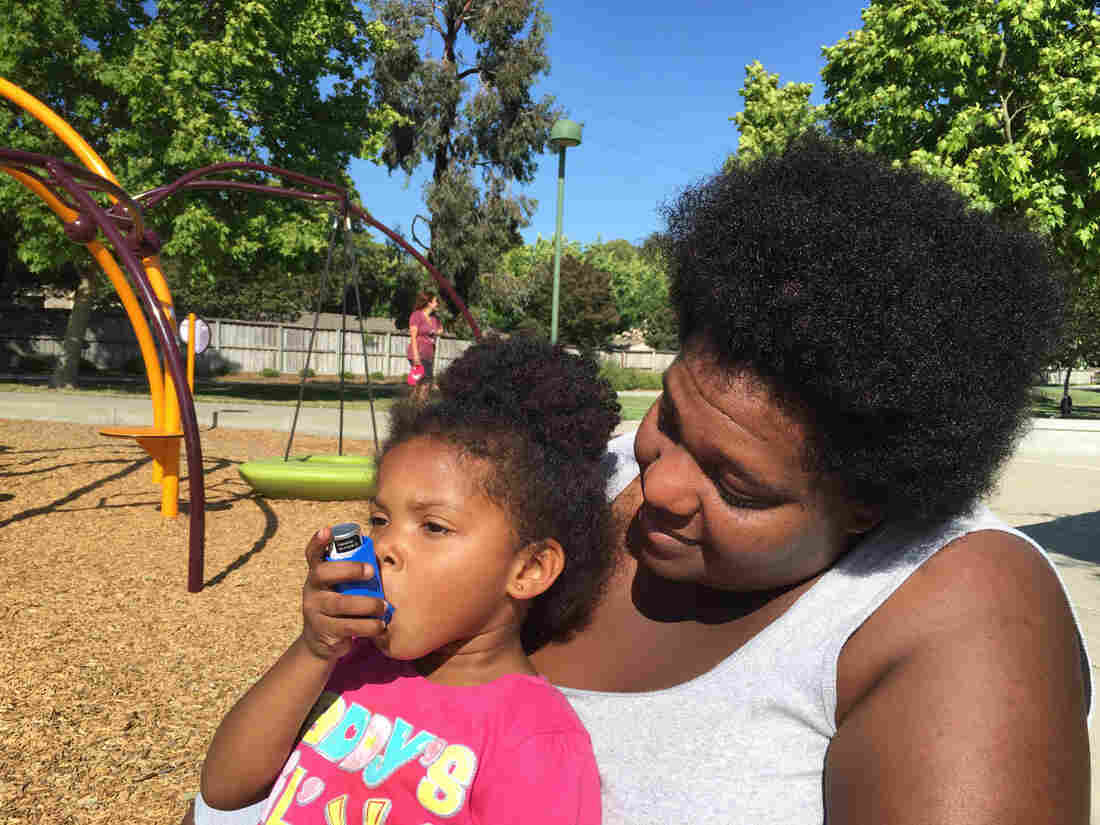
Zunika Crenshaw helps her 3-year-old daughter Jhase Crenshaw Bass with an asthma inhaler.

Zunika Crenshaw helps her 3-year-old daughter Jhase Crenshaw Bass with an asthma inhaler. Lesley McClurg/KQED hide caption

toggle caption Lesley McClurg/KQED

Zunika Crenshaw cringes as a tire swing whips her children around in circles just a little too fast. It’s a sunny afternoon in the park, in Pleasanton, Calif. As her children play, she keeps a close watch on their breathing.

She says asthma is in her genes.

“You have a family, a person who has four kids, and all of them have it, including me,” she says. “And then my mom has it, and my sister’s two kids.”

A little girl, 3-year-old Jhase, runs over to her, wheezing. Crenshaw grabs an inhaler, and her daughter breathes deeply from it.

“Perfect!” says Jhase. She lays her head against her mother’s chest, then runs back to her brothers.

Crenshaw drops the inhaler in a pile of medications in her purse. She points to various pill bottles.

“Zyrtec, and this is ClariSpray. And there’s albuterol and Dulera.”

There are more drugs at home.

Asthma is the leading chronic disease among children, but it hits some populations harder than others.

According to the federal Centers for Disease Control and Prevention, black children are twice as likely to have asthma as white children. And black children are 10 times more likely than white kids to die of complications from asthma.

A team of scientists at the University of California, San Francisco, is on a mission to understand why. The researchers are digging into genetic clues that may have been overlooked until now.

Geneticist Marquitta White just published a study finding that the majority of genetic information scientists have on asthma patients doesn’t apply to African-Americans.

“The majority of genetic studies, not just in asthma but in most diseases, are done in Caucasian- or European-descent populations,” White explains. “The longest studies do not really include very many minority populations, which means that most patients aren’t getting the best care, because we don’t really know what the disease etiology is in their particular population.”

Medications also work differently in different populations, according to Esteban Buchard, a pulmonologist at UCSF. As an example, he points to the small print on the instructions for a common asthma medication called Advair.

“It specifically says that if you’re African-American and you take this, you have an eightfold risk of dying,” he says.

Zunika Crenshaw packs her purse full of asthma and allergy medications for her children when they go to the park near their house in Pleasanton, Calif.

Zunika Crenshaw packs her purse full of asthma and allergy medications for her children when they go to the park near their house in Pleasanton, Calif. Lesley McClurg/ KQED hide caption

toggle caption Lesley McClurg/ KQED

The UCSF team is analyzing the genes of black, Mexican-American, and Puerto Rican children to better understand drug responses in each population.

“One of our hypotheses is that what’s underlying this huge mortality in African-American children is the fact that the most commonly prescribed drug for asthma is albuterol,” says White. “The problem is that not everyone responds to albuterol the same way. And actually, Puerto Rican and African-American children have the worst drug response. So you’re looking at two populations with the worst drug response with the highest mortality. We have a feeling those things might be related.”

The Right Drugs Matter

Good treatment is key to preventing the kinds of serious asthma attacks that keep kids home sick.

The Crenshaw children are missing fewer school days since they started visiting the Breathmobile, a long motor home converted into an asthma clinic. The clinic is run by a nonprofit called the Prescott-Joseph Center. It travels throughout the East Bay offering free treatment to low-income families.

Inside, a medical assistant tests the lungs of a 5-year-old girl who’s fiddling with her tight braids. The clinician pauses several times so the girl can blow her nose.

A lung test on the Breathmobile finds that 5-year-old Brooklyn Turner's pulmonary function is compromised by her asthma.

A lung test on the Breathmobile finds that 5-year-old Brooklyn Turner’s pulmonary function is compromised by her asthma. Lesley McClurg/KQED hide caption

toggle caption Lesley McClurg/KQED

Pat Granberg, a pediatrician, asks the girl’s mother about their living conditions, their neighborhood and their financial situation, to determine likely triggers for asthma. The disease can be caused by a number of factors, including obesity, air pollution, access to health care, molds, mildews, pets, perfumes and smoking. But Granberg begins an assessment by asking whether asthma runs in the family, because there’s usually a genetic link.

One Size Doesn’t Fit All

“On average, 60 percent of what’s going to determine whether or not you have asthma is going to be due to genetic factors,” says White. She says depending on the population, that number could range from 35 to 90 percent.

“I think that what we should be striving for is equal care for everyone,” says White, “and in order to do that you have to know what the disease is doing in everyone. That’s step one.”

Buchard believes a lot of health disparities could be explained if more minorities were included in genetic research. To illustrate his point, he looks back to when researchers studied heart disease only in men.

“Women present differently than men do for heart attacks,” says Buchard. “So a whole generation of physicians were misclassifying and misdiagnosing women simply because women were not involved in the original clinical trials.”

In 1993, Congress passed legislation requiring that publicly funded medical studies include more minorities. But a 2015 review of lung disease studies found only 5 percent of publicly funded research included patients of color.

This story originally appeared on KQED’s blog Future of You.

Let’s block ads! (Why?)
For Doctors And Patients, 'Veterans Choice' Often Means Long Waits

Psychologist Diane Adams devotes a portion of her private practice in Renton, Wash., to veterans. But she said the bureaucracy involved in the Veterans Choice program has proved frustrating and veterans have had a hard time getting approval to see her.

Psychologist Diane Adams devotes a portion of her private practice in Renton, Wash., to veterans. But she said the bureaucracy involved in the Veterans Choice program has proved frustrating and veterans have had a hard time getting approval to see her. Patricia Murphy/KUOW hide caption

toggle caption Patricia Murphy/KUOW

When clinical psychiatrist Cher Morrow-Bradley and other health care providers call the Veterans Choice program, they are greeted with a recorded, 90-second “thank you” from Veterans Affairs Secretary Bob McDonald.

It’s not having the intended effect.

“Why don’t you make this easier? The process is so cumbersome, and I have to listen to you thanking me for spending all this time and then I get put on hold,” says Morrow-Bradley, adding that she hasn’t figured out how to skip the message.

She and many others say this is emblematic of the Veterans Choice program that was intended to quickly work through the backlog of vets waiting for medical care. Anyone more than 40 miles from a Veterans Affairs facility or waiting more than 30 days for an appointment could go get private care outside the VA system.

But nearly two years in, there are more vets waiting than before. Health care providers are frustrated with the program, which makes it hard to keep them in the network. Without enough providers to see them, vets end up waiting anyway.

Or, in Morrow-Bradley’s case, the vets get the care and the doctors don’t get paid in a timely fashion, if at all.

She moved to North Carolina to work with veterans, first at the VA and now in a small private practice. Previously she gave VA patients care as a private doctor through a program called PC3. When Veterans Choice started in 2014, she was happy to participate, because she knows VA mental health specialists are overwhelmed.

A Satisfied Patient

One Afghanistan vet, Jacob Hansel, gives Morrow-Bradley a rave review.

“I believe therapy is stronger than medicine,” says the former Marine, who returned from deployment with serious anxiety and depression issues. When the local VA told him it would be a four-month wait for a therapist, he used the Choice program to see Morrow-Bradley.

“I have days when I almost have panic attacks. … A lot of it is just realizing when the anxiety comes; she’s helped me figure how to keep it under control,” says Hansel.

Morrow-Bradley has treated Hansel since last year, along with others in the Choice program. She has submitted her bills to a company called Health Net, which administers Veterans Choice across most of the Eastern United States.

“I just assumed I was being paid. I found out six months later I had five, six [thousand dollars] outstanding to Veterans Choice,” says Morrow-Bradley.

It took her most of a year to get paid. Health Net refused requests for an interview.

Dr. David Shulkin, the head of the Veterans Health Administration, acknowledges this problem has hindered the Choice program in getting providers big and small.

“One thing I know is that when you perform a service, when you see a patient, you want to be paid. And these hospital systems don’t have the cash flow to be waiting around for months and months to get paid,” he says.

Shulkin points to one rule that has been scrapped to speed up reimbursement — originally providers wouldn’t get paid until they had returned an updated medical record to the VA.

Challenges In Getting Certified

Other providers say they want to join the Veterans Choice program but can’t jump through the hoops to get certified.

Psychologist Diane Adams devotes a portion of her practice in Renton, Wash., to veterans, saying it’s something she considers important.

She sees patients at her home office at the midpoint of a steep winding hill. Adams has provided counseling to veterans as part of the VA’s community care programs for nearly a decade.

Last July, she got a letter inviting her to join the Choice program, from TriWest Healthcare Alliance, the company that administers Veterans Choice in most of the Western U.S.

Adams went online together to begin the credentialing process. It all seemed pretty straightforward.

“We checked that box and waited and waited,” Adams said.

In December, after hearing nothing for five months, Adams finally gave TriWest a call.

“I spoke with somebody and yes, they had received my information and they thought, well maybe it’s just taking a long time for the contractual process,” Adams said.

Adams called back again in January and March. Each time a courteous TriWest representative took a message. No one called back.

Tri West’s chief medical officer, Frank Maguire, acknowledges the Veterans Choice program isn’t exactly nimble.

“Things have gotten much better but I’ll tell you we still have persistent educational confusion issues. The program itself is not uncomplicated,” Maguire said.

As a result, small mistakes can mean big problems. Turns out, way back, when Adams filled out the first form, she checked the wrong box. And that held everything up. Finally, in March, Adams was informed that she’d been credentialed since January and should have gotten a welcome letter. It never arrived.

Maguire says the program is still new and may need more time.

“We think we’ve done consistently a much better job as time has gone on,” Maguire said. “At the same time there’s not a lot of patience. People want it perfect right away and it’s a new program. I think still needs more time to mature.”

Now that she’s in, Adams faces a new hurdle: Some of her regular veteran patients can’t get Veterans Choice to approve visits to see her.

Vets are supposed to be able to call the number on the back of their Choice card and get an appointment. But so far it’s been like climbing that steep winding hill to her office — more phone calls, more faxing, more forms.

“I guess what I’m worried about is what happens to the veterans who can’t handle it and they just don’t have the internal resources to put up with it and so they throw up their hands and they give up,” Adams said.

Interrupting Care

A possible interruption in treatment is a particular problem for mental health care, where continuity is paramount.

It’s no accident that both Adams and Morrow-Bradley are mental health care providers. That’s one of the areas in shortest supply at the VA. Unfortunately the Choice program hasn’t been well-suited to fixing that problem.

In North Carolina, Morrow-Bradley keeps seeing her Choice patients. Some come free. Others use secondary insurance that at least pays some of the bill. She says she can’t just halt treatment.

“It’s not like I’m a dentist. If I start working on your teeth then you could go [elsewhere to] be seen and the work would be completed,” she said. “Post-traumatic stress disorder work is very sensitive. You need to have a relationship with the person; it’s stressful for the therapist and the client.”

And Healthnet won’t authorize enough visits at a time, she says. For patients she needs to see twice a week it would take a new authorization almost every month.

“People have been not very interested in participating,” said Chuck Ingoglia, with the National Council on Behavioral Health, a group of 2,800 mental health organizations nationwide.

He says the Choice program doesn’t cover much beyond basic therapy. If you do anything additional you won’t get reimbursed.

“Participating in the Vets Choice program would limit the kind of robust mental health and substance use treatment they have historically been able to provide to veterans.”

For those reasons and others, at least two states, Maine and Montana, have taken the extraordinary step of excluding mental health care from their Choice program. They use other programs to pay for it and have sent harshly critical letters to the VA about the Choice program.

Let’s block ads! (Why?)
Bright Lights, Big Hassles For Children In The Hospital

Children who get more sleep while in the hospital need less sedation and anesthesia, researchers have found.

Children who get more sleep while in the hospital need less sedation and anesthesia, researchers have found. Sebastian Rose/Getty Images hide caption

toggle caption Sebastian Rose/Getty Images

At home, parents try to keep their children on a regular sleep schedule, with the evening bedtime transition marked by rituals like reading stories, flipping on night lights and getting tucked in with favorite stuffed animals.

But the difference between night and day blurs in hospitals, making it more difficult for young patients to rest when they need it the most.

Between the fluorescent lights, the chatter of on-duty doctors and nurses, and being roused for baths and vitals checks, getting eight hours of shut-eye is challenging. So now, with research increasingly highlighting the link between sleep and good health, children’s hospitals are rethinking just how they work at night.

“If we’re going to try to heal kids, we need to try to have them do the one thing that’s so important for their brain development. And that’s optimizing their sleep,” said Dr. Sapna Kudchadkar, an assistant professor of anesthesiology, critical care and pediatrics at Johns Hopkins Children’s Center in Baltimore. She launched an initiative to improve sleep in the hospital’s pediatric intensive care unit a year ago.

Children’s hospitals are now adopting some of the strategies used to foster better sleep at hospitals serving adults. For example, some are enforcing quiet hours after dark, clustering things like overnight blood draws and medication doses to minimize interruptions, and bringing in white noise machines to promote a soothing environment.

Activities such as bathing children are shifted to daylight hours. Also, playtime is promoted in the afternoon to help maintain a sense of normalcy and contrast nighttime rest. The hope is that children will sleep better and heal faster.

Physicians and hospital administrators are starting to recognize that “we’re doing some stuff in our hospitals that doesn’t really reflect what we’re telling people to do at home,” said Dr. Jennifer Jewell, a pediatric hospitalist at the Barbara Bush Children’s Hospital in Portland, Maine, who chairs the American Academy of Pediatrics’ Committee on Hospital Care.

Children’s hospitals aren’t yet held to the same patient satisfaction standards as other facilities. But there is growing interest in better catering to both children and their parents, doctors said. There’s the competitive element, noted Heather Walsh, a registered nurse who coordinates some of the quality improvement training for clinical staff at Children’s National Health System in Washington, D.C. If families don’t like the care they get, they can go elsewhere.

And doctors are starting to realize that poor sleep isn’t just inconvenient. It can make children sicker.

In the intensive care unit, for instance, children who aren’t disturbed at night don’t need as much sedation or anesthesia, Kudchadkar said. That matters, she noted, since some of those drugs — benzodiazepines and prescription opioids — can be more dangerous for young patients to take. Kids who rest well at night are also more likely to get up and move around in the daytime.

In addition, because many children’s hospitals encourage parents to spend the night in their child’s room, late-night interruptions — whether a temperature check or the cleaning machine in the hallway — wake them, too. As a result, parents aren’t rested when getting instructions for kids’ follow-up care. It’s easier to mishear or misremember a complicated medication instruction, said Lisa Meltzer, associate professor of pediatrics at National Jewish Health in Denver. Meltzer has also researched sleep quality in children’s hospitals.

“There’s more evidence really showing a direct link between insufficient and poor quality sleep and negative outcomes,” she said.

The changes can seem small. At Hopkins, blinds are typically lowered between 8 p.m. and 8 a.m., though nurses might adjust that based on a particular family’s needs and habits.

Parents are asked about their children’s favorite music to sleep to. The ICU’s child life staff will find those songs to play on portable radios. One teenager requested Tupac, while some patients might bring in the soundtracks from their favorite video games. In a number of rooms, many alerts no longer trigger loud beeps blasted from overhead speakers. Instead, they’re sent straight to the relevant nurse’s phone. He or she can see to the child’s need, but the noise doesn’t disturb the whole unit.

Finding a balance can be tough. With very sick children, doctors and nurses do need to wake them more often at night. Some tests and medications can’t wait, especially in the ICU, said Patricia Hickey, vice president of cardiovascular and critical care services at Boston Children’s Hospital.

Plus it’s hard to accommodate what patients need at different ages. Think of the habits of a 2-year-old versus a teenager. One goes to sleep and wakes early. The other may be unable to sleep before 11 p.m. Hospitals need to accommodate both.

The jury’s still out on how effective these strategies are. It’s difficult to prove reduced chatter leads to shorter hospital stays for kids. But there’s anecdotal support. At Boston Children’s, which launched its sleep-promotion campaign last summer, hallways are markedly quieter, and families have said they appreciate the attention, Hickey said. The hospital’s conducting a survey this fall to better assess that, she added.

But challenges remain. Foremost is teaching doctors and nurses to be quiet and considerate.

“For some people, the night is no different than the day — that’s when they work,” said Myke Federman, a critical care pediatrician who started a sleep initiative at Mattel Children’s Hospital UCLA in Los Angeles.

Curbing the nighttime ruckus requires continued attention, she said. Mattel, which launched its program in 2015, is trying to bring its noise levels down. So far, they haven’t budged significantly from 50 decibels at night. That’s north of their goal: 30 to 40 decibels, the sound of a quiet library.

Many nighttime interruptions — like bathing a child at 3 a.m. — happen because they suit the staff’s schedule, Hopkins’ Kudchadkar said. Getting away from that required a major recalibration of the ICU’s workflow and culture. At Hopkins, it took about a year, she added. The ICU used to be as loud as an emergency department. Now, the staff speaks in hushed whispers, even by day.

Changes haven’t been easy but they are taking root.

“The bottom line is, ‘How do you create a peaceful, healing environment?'” she said. “We’re getting there.”

Kaiser Health News is an editorially independent news service that is part of the nonpartisan Henry J. Kaiser Family Foundation. You can follow Shefali Luthra on Twitter:@shefalil.

Let’s block ads! (Why?)