Opioid-Makers Face Wave of Lawsuits in 2019

Oxycodone pain pills prescribed for a patient with chronic pain.

John Moore/Getty Images

The next 12 months might just redefine the way America thinks about and responds to the opioid epidemic that now claims more than 40,000 lives each year. The nation’s biggest drugmakers and distributors face a wave of civil lawsuits that could total tens of billions of dollars in damages.

Thousands of state and local governments, including cities and tribal governments, are demanding that companies like Purdue Pharma, Walmart and Rite-Aid compensate them for the costs of responding to the crisis. They’re also pushing companies to reveal far more internal documents, detailing what they knew about the risks of prescription pain medications.

“Our next battle is to get the documents that are being produced made available to the public instead of everything being filed under confidentiality agreements so we can get the facts out,” said Joe Rice, an attorney representing local governments suing the drug industry.

How we got here

Some of that internal information could be explosive, changing the way America views the opioid crisis. We know already that in the 1990s there was growing pressure in the health care industry to treat pain more aggressively. Purdue Pharma created a game-changing, long-acting opioid called Oxycontin. The company marketed the drug aggressively to doctors as a safe medication that provided long-term relief.

“In fact, the rate of addiction amongst pain patients who are treated by doctors is much less than one percent,” claimed one of the company’s advertisements at the time, aimed at convincing skeptical physicians. “These drugs should be used much more than they are for patients in pain.”

In their lawsuits, local and state governments claim that dozens of companies — including drugmakers, suppliers and pharmacies — made billions of dollars flooding the U.S. with a variety of prescription pain pills. Critics also say there was a concerted effort by firms to mislead the public and physicians about the dangers.

One of the arguments being made is that pharmacies and drug distributors, including Walgreens, Walmart and CVS, knew that they were selling too many pills, helping to create dangerous levels of addiction and a new black market.

We now also know that the public health risk was severe.

Since 1999, millions of Americans have abused prescription opioids. The federal government reports that more than 130 people now die each day from opioid overdoses, though not all of those drugs were obtained by prescription.

The growing number of people who became addicted also overwhelmed many government agencies, from law enforcement to drug rehab clinics to foster care programs. That’s where a lot of these lawsuits come in. Thousands of local and state governments, tribes and cities argue that companies should pick up the tab for battling the epidemic.

Loading…

Don’t see the graphic above? Click here.

“We are still in the throes of a public health crisis in Summit County,” said Greta Johnson, a county official helping to coordinate the response in Akron, Ohio. She argued that the drug industry should be financially responsible for programs designed to ease the suffering in communities like hers. “We’re confident the court will see it that way as well.”

Paying the price for recovery

Public officials hope for an outcome similar to the massive tobacco settlement of the 1990s. Cigarette-makers have paid out more than $100 billion over the past 20 years to compensate Americans for high rates of illness and public health costs tied to smoking. Some of that money went to programs aimed at helping smokers quit.

Local and state officials say they desperately need that kind of cash settlement to solve this crisis. A lot of the worst opioid abuse is happening in poor, cash-strapped communities. A settlement worth tens of billions of dollars could revolutionize the national response, creating more drug rehab programs, detox beds, and more training for first responders.

Many claims will be tossed

NPR talked with experts who predicted that many of the specific claims in these lawsuits will eventually be tossed out for technical legal reasons. In court filings, companies have argued that local and state governments are the wrong entities to seek financial damages from the epidemic and that statutes of limitations have expired in many jurisdictions.

The industry has also argued that the epidemic was caused by numerous factors, including the actions of government regulators and policymakers, suggesting that firms profiting from opioid sales shouldn’t be held liable for misuse. They’ve also changed their marketing strategies in response to escalating rates of addiction.

Loading…

Don’t see the graphic above? Click here.

“Earlier this year we ended our practice of promoting opioid medications to prescribers through sales representatives,” Purdue Pharma announced on its website in 2018.

But legal scholars following these cases say evidence has emerged already that suggests significant wrongdoing by some of these companies, which could leave them vulnerable financially.

“The judge has made it clear that he wants a settlement ultimately from this, along the lines of the tobacco settlement,” said Richard Ausness, a law professor at the University of Kentucky who follows these cases closely. “If that is indeed the way that he feels, he is probably not going to let the defendants off the hook.

He was referring to Judge Dan Polster, whose federal court in Ohio is handling one of the largest test cases, which includes hundreds of consolidated lawsuits. Last month, Polster referred to the opioid crisis as a “man-made plague,” but so far no national settlement has materialized.

That sets the stage for big court fights around the country over the next year.
Let’s block ads! (Why?)

How Sen. Orrin Hatch Shaped America's Health Care In Controversial Ways

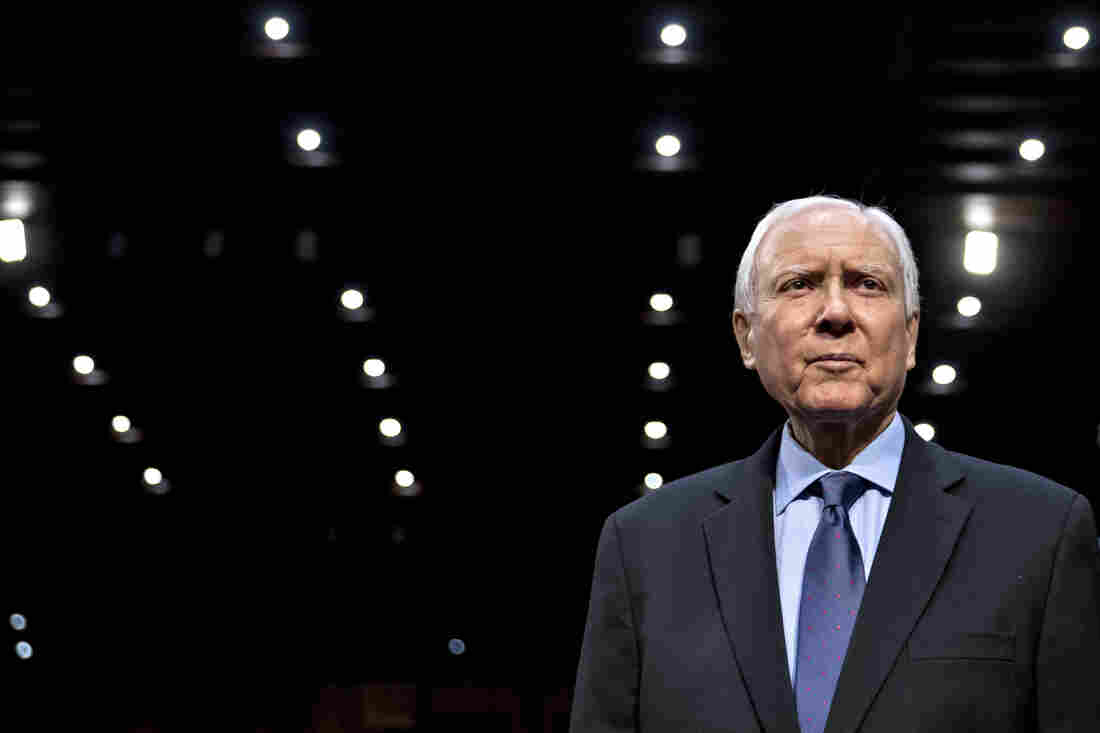
Though his politics are right of center and he lobbied hard against the Affordable Care Act, Republican Sen. Orrin Hatch also has been key to passing several landmark health laws with bipartisan support.

Bloomberg/Getty Images


hide caption

toggle caption

Bloomberg/Getty Images

Sen. Orrin Hatch, a Utah Republican retiring from 42 years in the Senate as a new generation is sworn in, leaves a long list of achievements in health care. Some were less controversial than others.

Hatch played key roles in shepherding the 1983 Orphan Drug Act to promote drug development for rare diseases, and the 1984 National Organ Transplant Act, which helped create a national transplant registry. And in 1995, when many people with AIDS were still feeling marginalized by society and elected leaders, he testified before the Senate about reauthorizing funding for his Ryan White CARE Act to treat uninsured people who have HIV.

“AIDS does not play favorites,” Hatch told other senators. “It affects rich and poor, adults and children, men and women, rural communities and the inner cities. We know much, but the fear remains.”

Hatch, now 84, cosponsored a number of bills with Democrats over the years, often with the late Sen. Ted Kennedy of Massachusetts. The two men were sometimes called “the odd couple,” for their politically mismatched friendship.

In 1997 the two proposed a broad new health safety net for kids — the Children’s Health Insurance Program.

“This is an area the country has made enormous progress on, and it’s something we should all feel proud of — and Senator Hatch should too,” says Joan Alker, executive director of Georgetown University’s Center for Children and Families.

Before CHIP was enacted, the number of uninsured children in America was around 10 million. Today, it’s less than half that.

Hatch’s influence on American health care came partly from the sheer number of bills he sponsored or co-sponsored — more than any other living senator — and because he was chairman of several powerful Senate committees.

“History was on his side because the Republicans were in charge,” says Dr. David Sundwall, an emeritus professor in public health at the University of Utah and Hatch’s health director in the 1980s.

When Ronald Reagan was elected president in 1981, the Senate became Republican-controlled for the first time in decades. Hatch was appointed chairman of what is now known as the Health, Education, Labor and Pensions Committee, which has oversight of the Food and Drug Administration, Centers for Disease Control and Prevention and the National Institutes of Health.

“He was virtually catapulted into this chairmanship role,” Sundwall says. “This is astonishing that he had chairmanship of an umbrella committee in his first term in the Senate.”

In 2011, Hatch was also appointed to the influential Senate Finance Committee, where he later became chairman. There he helped oversee the national health programs Medicare, Medicaid and CHIP.

Hatch’s growing influence in Congress did not go unnoticed by health care lobbyists. According to the watchdog organization Center for Responsive Politics, in the last 25 years of political campaign funding, Hatch ranks third among all members of Congress for contributions from the pharmaceutical and health sector. (That’s behind Democratic senators who ran for higher office — President Barack Obama and presidential nominee Hillary Clinton).

“Clearly, he was PhRMA’s man on the Hill,” says Dr. Jeremy Greene, referring to a trade group that represents pharmaceutical companies. Green is a professor of the history of medicine at Johns Hopkins University School of Medicine. Though Hatch did work to lower drug prices, Greene says, the senator’s record was mixed in the regulation of drug companies.

For example, an important piece of Hatch’s legislative legacy is the 1984 Hatch-Waxman Act, drafted with then Rep. Henry Waxman, an influential Democrat from California. While the law promoted the development of cheaper, generic drugs, it also rewarded brand-name drug companies by extending their patents on valuable medicines.

The law did spur sales of cheaper generics, Greene says. But drugmakers soon learned how to exploit the law’s weaknesses.

“The makers of brand-name drugs began to craft larger and larger webs of multiple patents around their drugs,” Greene says, aiming to preserve their monopolies after the initial patent expired.

Other brand-name drugmakers preserved their monopolies by paying generic manufacturers not to compete.

“These pay-for-delay deals effectively hinged on a part of the Hatch-Waxman Act,” Greene says.

Hatch also worked closely with the dietary supplement industry. The multibillion-dollar industry specializing in vitamins, minerals, herbs and other “natural” health products, is concentrated in his home state of Utah. In the early 90s there was disagreement about whether supplements should be regulated like foods or more strictly like drugs.

“There was really no place for these natural health products,” says Loren Israelsen, president of the United Natural Products Alliance and a Hatch staffer in the late 1970s.

In 1994 Hatch sponsored the Dietary Supplement Health and Education Act, known as DSHEA.

“It was necessary to have someone who was a champion who would say ‘All right, if we need to change the law, what does it look like,’ and ‘Let’s go,’ ” Israelsen says.

Some legislators and consumer advocacy groups wanted vitamins and other supplements to go through a tight approval process, akin to the testing the Food and Drug Administration requires of drugs. But DSHEA reined in the FDA, determining that supplements do not have to meet the same safety and efficacy standards as prescription drugs.

That legislative clamp on regulation has led to ongoing questions about whether dietary supplements actually work and concerns about how they interact with other medications patients may be taking.

DSHEA was cosponsored by Democrat Tom Harkin, then a Senator from Iowa.

While that kind of bipartisanship defined much of Hatch’s career, it has been less evident in recent years. He was strongly opposed to the Affordable Care Act, and in 2018 called supporters of the heath law among the “stupidest, dumb-ass people” he had ever met. (Hatch later characterized the remark as “a poorly worded joke.”)

In his farewell speech on the Senate floor in December, Hatch lamented the polarization that has overtaken Congress.

“Gridlock is the new norm,” he said. “Like the humidity here, partisanship permeates everything we do.”

This story is part of a reporting partnership that includes KUER, NPR and Kaiser Health News.

Let’s block ads! (Why?)

Affordable Care Act Can Stay In Effect While Under Appeal, Judge Says

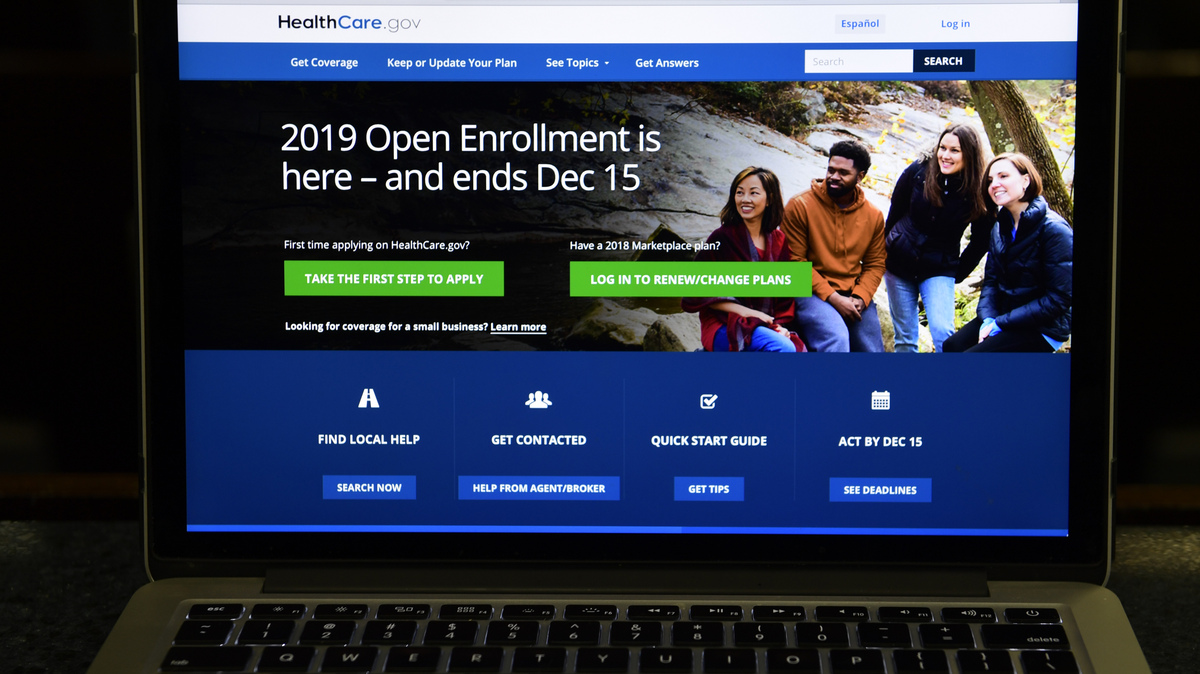
The federal website where consumers can sign up for health insurance under the Affordable Care Act is shown on a computer screen in Washington, D.C., last month. The federal judge in Texas, who earlier this month ruled the Affordable Care Act unconstitutional, said that the law can remain in effect while under appeal.

AP


hide caption

toggle caption

AP

The federal judge in Texas who ruled the Affordable Care Act unconstitutional earlier this month said that the law can remain in effect while under appeal.

U.S. District Court Judge Reed O’Connor wrote in his ruling filed on Sunday that “many everyday Americans would otherwise face great uncertainty during the pendency of appeal.”

But O’Connor still stands by his initial decision, he wrote, that a recent change in federal tax law that eliminated the penalty on uninsured people, in turn, invalidates the entire health care law, which is also referred to as Obamacare.

Before issuing the stay, O’Connor struck down the ACA on Dec. 14, siding with a group of 19 Republican attorneys general and a governor, led by Texas Attorney General Ken Paxton.

As Julie Rovner of Kaiser Health News wrote for NPR following the district court judges decision, “The plaintiffs argued that because the Supreme Court upheld the ACA in 2012 as a constitutional use of its taxing power, the elimination of the tax makes the rest of the law unconstitutional.”

Judge O’Connor agreed with that reasoning.

“In some ways, the question before the Court involves the intent of both the 2010 and 2017 Congresses,” O’Connor wrote in his 55-page decision. “The former enacted the ACA. The latter sawed off the last leg it stood on.”

Democrats, meanwhile, say they plan to challenge O’Connor’s partial judgment. A spokesperson for California Attorney General Xavier Becerra — who’s joined by 16 other states defending the ACA — said his state is “prepared to appeal the December 14 decision imminently.”

“We’ve always said we’re going to protect the healthcare of Americans and make clear that the ACA is the law of the land,” Becerra said in a statement emailed to NPR. “Today the judge granted what we asked for when we filed our expedited motion but at the end of the day, we’re working to keep healthcare affordable and accessible to millions of Americans, so we march forward.”

Let’s block ads! (Why?)

How To Help Kids Overcome Their Fear Of Doctors And Shots

Half of the parents of young children in a recent survey said their kids fear going to the doctor, and dome admit skipping vaccines and needed appointments.

Ryan Johnson for NPR

Like many kids, Lisa Sparrell’s daughter never liked getting shots at the doctor’s office. “At first she’d cry some, but was quickly placated with rewards like a lollipop or a sticker,” says Sparrell, who lives in Honolulu.

But last year, Sparrell’s 10-year-old daughter was diagnosed with a heart defect. In preparation for surgery, the little girl’s trips to the doctor sharply increased –and so did her anxiety.

“The frequency of appointments — many of which included blood draws and IV placements — made her fears worse,” Sparrell says.

The concerned mom tried bringing electronics and books to medical appointments, hoping distraction might short-circuit her daughter’s fear. She also tried addressing the worries by asking the child, ahead of appointments, “OK, what’s our plan?”

None of these tactics worked. In fact, her daughter’s medical anxiety became so severe that she’d scream, “Please don’t do this to me!” whenever a health care provider tried to prick her with a needle.

That might sound extreme, but results of a nationally representative survey, released earlier this year by researchers at the University of Michigan, suggest that a significant number of young children fear doctor visits. In fact, of the 726 parents surveyed, roughly half said their kids disliked going to the doctor.

Not surprisingly, 66 percent of children between the ages of 4 and 5 hated getting shots, while 43 percent of 2- and 3-year-olds fear doctors as part of a more generalized stranger anxiety. The report also revealed that 1 in 25 parents surveyed had postponed a vaccine appointment because of their child’s medical anxiety.

Sparrell says she can relate. “When my daughter screams at the doctor’s office, I feel like I’m doing something terrible — even though it’s the right thing to do.” She, too, has delayed getting her daughter vaccinated against the flu this year, Sparrell admits, just to avoid that stress.

Seeing their child unhappy upsets many parents, especially when they can’t stop the pain. And witnessing an anxious kid’s tears and pleas to avoid getting pricked and probed can raise a parent’s anxiety levels, too.

When this happens, says Sasha Albani, a child and adolescent psychotherapist in San Francisco, many well-meaning parents either ignore the wails or jump into rescue mode. Both approaches can boomerang.

“Parents may avoid discussing the problem because they believe it will make things worse,” Albani says. “Sometimes, they cancel their child’s medical appointment.” Unfortunately, these behaviors undermine a child’s confidence that they can weather difficult situations, and only reinforce kids’ worries.

Children who withdraw from frightening situations or environments may be more likely to struggle with social anxiety, later in life, psychologists find. A 2018 report released by the Child Mind Institute suggests that untreated anxiety also can lead to depression, academic difficulties and substance use down the road.

But there’s hope! Albani suggests parents calm themselves and find age-appropriate ways to help children face their medical fears instead of fleeing them.

For very young kids, who have a hard time putting words to thoughts and emotions, imaginary play with mom or dad before the appointment can help, Albani says.

“Use a toy doctor kit to explain what will happen at the appointment and to discuss your child’s specific worries,” she advises.

Reading books and watching movies depicting children getting shots, going to the hospital, or visiting the doctor can remind kids they’re not alone, and introduce different ways of dealing with the anxiety.

Children under age 6 may benefit from the book, “Daniel Visits the Doctor” by Becky Friedman.

Kids with needle phobias may be helped by reading, “Lions Aren’t Scared of Shots: A Story for Children About Visiting the Doctor,” by Howard S. Bennett. And the book “Imagine a Rainbow: A Child’s Guide for Soothing Pain,” by Brenda S. Miles, may be useful for older kids between the ages of 8 and 10.

Playing The Coping Skills Board Game can bolster the confidence of preteens like Sparrell’s daughter, as it teaches techniques for handling life’s challenges. And smartphone apps like “Stop, Breathe & Think Kids” can be a fun way to learn mindful breathing techniques and other relaxation tips that help turn down the alarm of worrisome feelings.

Doctors have also had some success using more novel interventions with kids, like virtual-reality technology, says Dr. Tom Caruso, a pediatric anesthesiologist at Lucile Packard Children’s Hospital Stanford in Palo Alto, Calif.

“Virtual-reality technology can redirect a child’s attention by immersing them in a more calming experience,” says Caruso, who co-founded the hospital’s Chariot Program, a group dedicated to reducing the anxiety of hospitalized children.

Hospitals and clinics already have begun testing VR to soothe kids’ fears during a range of medical procedures, including IV placement, blood draws and vaccines. A 2017 review suggests the approach lessens pain and anxiety by diverting a child’s attention from the feared stimulus — and may be more effective than other distraction techniques.

But there’s no single best approach to easing fear, Caruso says. “It’s important to use tailored interventions. Children with mild worries may be calmed by listening to music, while others may be helped by virtual-reality techniques.”

Talk therapy can be helpful if anxiety persists or grows. Some children won’t outgrow their fears without such support, doctors find.

“Therapy doesn’t have to last forever,” Albani adds, “and brief cognitive-behavioral treatment or exposure therapy has been shown to help.”

Whatever strategy parents or other caregivers choose, acknowledging the child’s fear is the important first step, therapists say. Just like adults, kids feel validated when we acknowledge their worry, find them help and then let them know that everything is going to be OK.

And kids who learn to feel safe with their doctors early on are more likely to trust them with serious health concerns as they get older.

Let’s block ads! (Why?)

Safely Evacuating The Elderly In Any Emergency Takes Planning And Practice

Jay McAbee, a bus driver with the Greenville, S.C., school district, waits by his bus in Charleston, S.C., in October of 2016, for word of when to start evacuating the city’s residents in advance of Hurricane Matthew. Simply having enough buses to carry pets as well as people can be key to convincing residents they need to leave ahead of a big storm, emergency responders say.

Mic Smith/AP


hide caption

toggle caption

Mic Smith/AP

The benefits of retiring in South Carolina’s low country are clear to Joyce East. Her home, sandwiched between the Atlantic Ocean and downtown Charleston, overlooks 120 acres of lush marshland. Palm trees and Spanish moss dot the property.

But the drawbacks of retiring only a few meters above sea level have also become apparent to the 91-one-year-old retiree. Since 2016, her home within Charleston’s Bishop Gadsden Retirement Community has weathered one snow storm, one ice storm and three hurricanes. She has had to evacuate twice in two years.

For East, these evacuations are just the cost of growing old on the coast. Three decades ago, East and her husband decided they wanted to retire somewhere warm on the waterfront. Four days after arriving in Charleston, the couple was forced to flee inland as Hurricane Hugo ravaged the coast. East would evacuate again for Hurricane Matthew in 2016, and once more for Hurricane Florence this past September.

Joyce East (right) with fellow Bishop Gadsden resident Sarah Darwin during their evacuation from their community on the South Carolina coast in September 2018.

Courtesy of Bishop Gadsen


hide caption

toggle caption

Courtesy of Bishop Gadsen

“Now that we’ve done it this much, it’s more of a routine,” says East. She packs her belongings in a navy evacuation suitcase with her name printed on it in white lettering. “I have to kind of look at it as a mini-vacation now.”

As unpredictable weather starts to feel inevitable, staff at Bishop Gadsden have worked to make evacuations feel as routine to residents as Monday night’s pub trivia. This year’s personalized suitcases were a new touch.

“Our planning is 24/7, 12 months a year,” says Kimberly Borts, one of the staff members charged with ensuring Bishop Gadsden is ready to depart come hurricane season. “This isn’t just let’s get on a bus and go.”

When Governor Henry McMaster mandated residents evacuate in the lead up to Hurricane Florence, he set in motion a sequence of events staff had spent the year fine-tuning. Ambulances arrived at 2 a.m. to whisk away the 14 seniors too frail to make the journey upright. The remaining 111 residents boarded buses bound for a mountaintop inn. A U-Haul was loaded up with walkers and a bus carted off residents’ pets.

It’s high stakes logistics. Any hiccup — too few oxygen tanks, lost medication — would have been disastrous. But even a well-executed journey carries risks for Bishop Gadsden’s retirees, many of whom are accustomed to a regimented routine.

“When that schedule is altered, that’s when you begin to have some challenges,” says Borts. During this year’s departure, she saw anxious residents who traditionally require one oxygen tank per day go through two tanks or more. As the seniors made their journey inland, Borts noted more upset stomachs and more bathroom trips.

Immediately after they returned from the shelter, Borts says staff began plotting how to make the journey smoother for their seniors — next year.

“We would sort of say to our fellow staff members, ‘Well, next time we do this,’ or ‘Next year we need to do X,Y, Z,’ ” she recalls.

Statistics show there will be a next time. Far beyond the marshy coast of Charleston, emergency evacuations are starting to seem commonplace.

Susan Burns monitors evacuations for Sedgwick, a company that deals with insurance claims for senior-living communities across the U.S.

After nursing home owners made the fatal decision not to evacuate residents in advance of Hurricane Katrina, Sedgwick began offering to reimburse facilities for part of their evacuation costs. But, until recently, no facility had taken the company up on the offer.

“I had not seen this coverage triggered at all until last year,” says Burns. She traces the uptick in recent claims to the “amazing number of natural disasters back to back” that have ravaged states like Florida, California and Missouri.

“They’re just trying to recover some of the costs and lessen the financial blow,” she says. This year, Bishop Gadsden spent $350,000 on shelter and transportation. The facility had shelled out a similar amount in 2016 for Hurricane Matthew.

And they’re prepared to do it again.

“You take care of a residents during good times and bad times,” says Borts. “The most important thing we can do is plan to do this again.”

This story is part of NPR’s reporting partnership with Kaiser Health News, an editorially independent news service of the Kaiser Family Foundation. Rebecca Ellis is a Kroc Fellow at NPR.

Let’s block ads! (Why?)

Patients Are Turning To GoFundMe To Fill Health Insurance Gaps

Even for conventional medical treatments that are covered under most health insurance policies, the large copays and high deductibles have left many Americans with big bills, says a health economist, who sees the rise in medical fundraisers as worrisome.

Roy Scott/Ikon Images/Getty Images


hide caption

toggle caption

Roy Scott/Ikon Images/Getty Images

Tammy Fox wanted to help, after a friend took ill with a rare and difficult-to-diagnose autoimmune disorder that required many trips to the Mayo Clinic.

While Fox couldn’t do anything medically, she knew there was a way to ease some of the burden of medical bills and costs associated with doctor visits. She turned to the website GoFundMe and set up a site for her friend.

“You’ve got meals; you’ve got hotel stays,” she says. “And gas. So that all needed to be covered.”

Contributions came in from strangers, notes Fox, who lives in suburban Minneapolis. “It’s crazy cool how awesome people are and what they’re willing to give. People, when they come together, can just move mountains — and I think that’s awesome to see.”

GoFundMe, the largest online, crowdsourced fundraising platform, says contributors have raised more than $5 billion, all told, from 50 million donations in the eight years it has been in business.

Setting up a GoFundMe page has also become a goto way for people in need of help to pay their doctors and other health providers. Medical fundraisers now account for 1 in 3 of the website’s campaigns, and they bring in more money than any other GoFundMe category, says GoFundMe CEO Rob Solomon.

“In the old paradigm you would give $20 to somebody who needed help,” Solomon says. “In the new paradigm, you’ll give $20, you’ll share that and that could turn into 10, 20, 50 or 100 people doing that. So, the $20 could turn into hundreds, if not thousands, of dollars.”

Stories of tragic illness and financial hardship — all of them with pictures of those suffering — are easy to find in GoFundMe’s medical section.

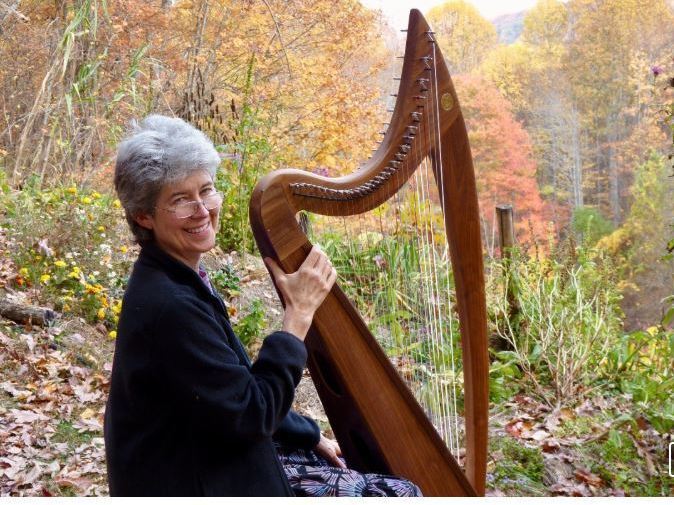
One such case is musician Carolyn Deal, from Marshall, N.C., who lost nearly all her hearing after a traumatic brain injury. Deal has raised nearly $25,000 for alternative treatments and procedures she would like to try that her health insurance won’t cover.

Carolyn Deal is hoping GoFundMe can help her with alternative treatments she wants to try in hopes of regaining some of her hearing. Here she is in 2016 with her 25-year-old double-strung harp.

Courtesy of Carolyn Deal


hide caption

toggle caption

Courtesy of Carolyn Deal

Americans’ confidence that they can afford health care is slipping, says Sara Collins, an economist at the Commonwealth Fund who studies American health care concerns. Even for conventional treatments that are covered under most health plans, the copays and high deductibles have left many people with health insurance they can’t afford to use.

Her organization recently surveyed working-age Americans, asking whether they felt they had the ability to pay an unexpected medical bill of $1,000 in 30 days. Nearly half said no.

“We find that underinsured people are nearly as likely to report problems paying their medical bills as people who don’t have any insurance,” she says. “And they also report not getting needed health care at rates that are nearly as high as those who are uninsured.”

So it shouldn’t be surprising that people are raising funds through crowdsourcing, Collins says.”But it really should be a deep concern for policymakers and providers.”

Solomon says there are challenges with how health insurance works and how people are covered.

“There’s just a lot of cost associated with the medical space, and it has become a very important category on GoFundMe,” he says.

Until about a year ago, GoFundMe kept 5 percent of fundraising proceeds in addition to collecting a nearly 3 percent credit card processing fee. It still charges the credit card fee but no longer collects the 5 percent surcharge.

This story is part of a reporting partnership with NPR, Minnesota Public Radio and Kaiser Health News.

Let’s block ads! (Why?)

Virtual Reality Helps Hospice Workers See Life And Death Through A Patient's Eyes

[embedded content]


Embodied Labs
YouTube

Sign up for the CommonHealth newsletter to receive a weekly digest of WBUR’s best health, medicine and science coverage.

You wait in the sterile purgatory of your oncologist’s office, between your spouse and your daughter, for the doctor to give you the verdict on your latest scans.

“I’m afraid it’s not good news,” she says quietly, hands clasped.

Your lung cancer has grown despite your recent chemotherapy. Surgery, chemo and other treatments, she tells you, will likely only make you sicker.

“How long?” asks your spouse.

Four to six months, the doctor answers.

A moment from Embodied Labs’ virtual reality video of Clay Crowder, a fictional 66-year-old man with incurable lung cancer. In this scene, Clay’s family gathers around his bed, reassuring him that it’s OK to let go of life.

Embodied Labs


hide caption

toggle caption

Embodied Labs

You may feel a surge of terror, confronted so starkly with news of your own death. You may also feel a welling-up of empathy.

And that’s the point of the exercise — the reason you’re wearing a heavy headset. You aren’t really dying, but you are looking out into a virtual world through the eyes of Clay Crowder, a fictional 66-year-old man who has incurable lung cancer.

The University of New England College of Osteopathic Medicine in Biddeford, Maine, and a nearby hospice are using this virtual reality simulation, developed by California-based Embodied Labs, to help nurses, other hospice workers and students learn about and empathize with patients at the ends of their lives.

“I was skeptical at first that a virtual reality tool could be so realistic,” says Daryl Cady, CEO of Hospice of Southern Maine. “But once I went through it, I realized what a viable method it could be, for not only teaching but also helping people understand [the] end of life better.”

The “Clay” virtual reality project is now used by some schools, hospice and senior care centers, including Comfort Keepers, a large system of in-home caregivers; Ohio’s Hospice of Dayton; and several locations of the Benedictine Health System’s elder care communities.

Researchers have discovered that virtual reality simulations like this one, can make viewers more empathetic to people they virtually embody: people of different races; people with colorblindness; even an avatar of an older version of themselves.

The United Nations has created about 20 virtual reality films, including one about a 12-year-old Syrian refugee and another profiling a Liberian woman whose family died from Ebola.

Last month, Stanford University’s Virtual Human Interaction Lab, which studies the link between virtual reality and empathy, found that people shown an immersive VR film built around the experience of a homeless man were more likely to sign a petition supporting affordable housing than people who read a narrative asking them to imagine themselves homeless.

In medicine, virtual reality has been used to reduce pain, help stroke victims recover, and allow doctors to plan and watch surgery.

Embodied Labs is one of the first companies whose videos have allowed viewers to “experience” dying. Elsewhere, virtual reality has been used directly with dying patients.

Hospitals and hospices have fitted patients with headsets to allow them to see realistic simulations of places on their bucket lists.

At the Royal Trinity Hospice in London, a dying woman and her husband revisited Venice, where they had gotten engaged — the simulation was part of a larger study about VR’s effect on physical and psychological symptoms at the end of life. Another woman walked the beaches of the Maldives. A third returned to Jerusalem, the city where she grew up.

What they’re going through

Carrie Shaw was 19 when her mother was diagnosed with early-onset Alzheimer’s disease. Five years later, when she hired caregivers for her mother, she wanted them to understand how brain atrophy had left her unable to see from the left sides of her eyes. So she covered one side of goggles with masking tape. This helped the aides understand, for instance, why her mother ate only the food on the right side of her plate.

Later, earning a master’s degree in biomedical visualization, Shaw used virtual reality to help health care providers feel what their patients felt. She founded Embodied Labs in 2016.

The company’s first virtual reality project was called “Alfred” Viewers don a VR headset to experience the world through the eyes of 74-year-old man with hearing loss, and vision loss from macular degeneration. Next, Shaw and her colleagues created the VR story of “Beatriz,” a fictional middle-aged woman who progresses through early and advanced stages of Alzheimer’s disease. “Clay” is their newest simulation.

“It’s so vitally important that people not fear hospice, but understand hospice,” says Cady, of Hospice of Southern Maine. “Virtual reality is appealing to the next generation. And if they take 30 minutes and put on the goggles and run through it and have even just a little sense of an understanding, just think of the change we might be able to make.”

Victoria Nguyen, a second-year medical student at the University of New England, experienced the “Clay” simulation at Gosnell Memorial Hospice House in Scarborough, Maine. As part of a geriatrics class, students can shadow hospice nurses for 48 hours.

Nguyen says experiencing the world as “Clay” made her think more about what dying patients might comprehend as they’re slipping away.

“I think it will help us become more empathetic with our patients,” she says. “Being able to experience the virtual reality kind of gives us an idea of what they might be going through and the frustration that comes along with it.”

Virtual reality may also encourage people to plan for the end of life, says Marilyn Gugliucci, director of geriatric education and research at the College of Osteopathic Medicine. Hospice of Southern Maine’s new building, expected to open in 2020, will have a simulation lab for families. Gugliucci has collaborated with the hospice; her geriatrics students, for instance, have the option of spending 48 hours at the hospice, shadowing nurses who care for the dying, and watching the VR video.

“People don’t really prepare for death,” Gugliucci says. “We’re trying to get more people doing advance directives and being thoughtful about what they want at the end of life, rather than being surprised by what’s going to happen. I think this lab really does that.”

Research suggests that as students progress through medical school, they tend to lose empathy for their patients. “So we definitely want to make sure they remain empathic,” Gugliucci said.

Real empathy, but for whom?

Not everyone believes that virtual reality is beneficial in that way. Researchers already know that simulations of being disabled must be constructed carefully to avoid creating prejudice.

Blindness simulations, for instance, can give a viewer an experience that’s more like becoming blind rather than the experience of a person who has adjusted to living with blindness. The initial experience might cause viewers to believe blind people are less capable than they are, critics say.

Yale psychologist Paul Bloom has been outspoken in his criticism of virtual reality being used to create empathy. Empathy, he argues, can be manipulated: A simulation could create empathy for a Syrian refugee — or for a man, “standing hungry in a food line” because a Syrian refugee took his job.

And more research is needed on whether these gains in empathy last.

In the last scene of the “Clay” simulation, Clay’s breath — yours — grows raspy and uneven. One of your daughters reads to you. Your wife tells you gently that you can go.

“It’s OK, honey,” she says. “You’ve got your girls here.”

You stop breathing. Your family kisses you goodbye. Aides push a gurney with your body, covered in an American flag, outside into the sunshine.Your wife and daughters walk behind you, a final procession.

The screen goes dark.


Kathleen Burge is writing about end-of-life care as part of a reporting fellowship on health care performance, sponsored by the Association of Health Care Journalists and supported by the Commonwealth Fund.

A version of this story originally ran on WBUR’s Common Health.

Let’s block ads! (Why?)

Insured, But Indebted: Couple Works 5 Jobs To Pay Off Medical Bills

Robert and Tiffany Cano of San Tan Valley, Ariz., have a new marriage, a new house and a 10-month-old son, Brody. Since Brody was born, the Canos have racked up nearly $12,000 in medical debt.

Heidi de Marco/Kaiser Health News


hide caption

toggle caption

Heidi de Marco/Kaiser Health News

Robert and Tiffany Cano of San Tan Valley, Ariz., have a new marriage, a new house and a 10-month-old son, Brody, who is delighted by his ability to blow raspberries.

They also have a stack of medical bills that threatens to undermine it all.

In the months since their sturdy, brown-eyed boy was born, the Canos have acquired nearly $12,000 in medical debt — so much that they need a spreadsheet to track what they owe to hospitals and doctors.

“I’m on these payment arrangements that are killing us,” said Tiffany Cano, 37, who has spent her lunch hours from her job at a regional bank on the phone negotiating payoff plans that now total $700 a month. “My husband is working four jobs. I work full time. We’re a hardworking family doing our best and not getting anywhere.”

The pair, who earn nearly $100,000 a year, are insured and have had no major illnesses or injuries. Still, the Canos are among the 1 in 4 Americans who report in multiple polls that the high cost of health care is the biggest concern facing their families. And they’re at risk of filing for bankruptcy; 62 percent of people who file do so, in part, because of medical bills.

“Oh, yes, that worry is always in the back of my mind,” Tiffany said.

The family is part of a struggling group: Middle-class folks who have followed the rules and paid for employer-based medical insurance, only to find that soaring health care costs — combined with high deductibles, high copayments and surprise medical bills — leave them vulnerable.

“I thought we’d be covered, and it’s just not enough coverage at all,” she said.

Robert Cano, also 37, had family health insurance for 2018 through his job as a manager at a large chain retail store, for which he pays nearly $500 per month. The plan’s $3,000 annual deductible and 40 percent coinsurance fees have added up faster than the Canos anticipated.

First came the nearly $4,000 bill from the in-network hospital where Brody was born Jan. 2, followed by separate fees from the anesthesiologist and the doctor who performed the routine delivery. Then, at 2 months, Brody was hospitalized with breathing problems that doctors said could be related to allergies or asthma. In May, Tiffany came down with a stomach virus that sent her to the emergency room for drugs to treat nausea and dehydration. Last month, the baby developed a bad case of bacterial conjunctivitis, or pinkeye.

“It’s been, like, $300 here, $700 there,” said Tiffany. “We had a hospital bill for him being sick of, like, $1,800.” Unable initially to find a pediatrician she liked, Tiffany has agonized over whether to use the ER when Brody gets sick. When he had pinkeye, she debated whether to take him in, hoping it would get better on its own.

Then he got worse, she said, pulling up a photo on her phone of her son with half-moons of red, puffy flesh under his dark eyes.

“I let him suffer for a day like that,” she said.

The Canos lost their first child, a girl, midway through her pregnancy in 2016. Tiffany acknowledges that experience has left her more anxious than the average first-time mom.

“It gave me so much fear that something would happen to him,” she said.

As for their own health care needs, the couple put themselves lower on the priority list. Tiffany has used a prosthetic limb since childhood, when her lower left leg was amputated because of a birth defect.

She needs a new prosthesis because her body changed during pregnancy, but she can’t see how to afford it.

A model suitable for the busy life of a working mom would easily cost $10,000 to $15,000, according to Tom Fise, executive director of the American Orthotic & Prosthetic Association.

“We’re a hardworking family doing our best and not getting anywhere,” said Tiffany Cano, with tears in her eyes.

Heidi de Marco/Kaiser Health News


hide caption

toggle caption

Heidi de Marco/Kaiser Health News

“I try to push through,” Tiffany said. “I put on that brave face of just walking, but it’s so painful to walk. I have bruises all over my leg. I get blisters all the time.” Lately, she has been wearing an old prosthesis, one she used in high school, because it’s a little bit more comfortable.

The Canos don’t know how exactly they fell into such debt, because they tried hard to make responsible decisions. After meeting three years ago, they knew quickly that they wanted to marry and have a family.

“I waited until I found the right guy,” said Tiffany, who was thrilled when, in 2016, they were able to afford a 2,500-square-foot, two-story home in one of the stucco-and-tile neighborhoods an hour outside Phoenix.

But, taken together, the medical payment plans and premiums are almost as much as their $1,300 monthly mortgage. All told, the Canos spend about 15 percent of their annual income on health care, almost three times the average for non-Medicare households in the U.S.

That leaves too little for day care, car payments, gas, food and dozens of other domestic expenses, Tiffany said.

For 17 years, Robert had comprehensive health insurance through his job as a soldier in the Army Reserve and paid little or nothing for medical care. He left the Army in 2017, however, after he learned he would be deployed for an extended time away from his wife and new son.

“I told them, ‘I have to be at home,’ ” he recalled. The Army insurance ended on Dec. 31, two days before Brody was born.

That meant moving to his employer’s insurance plan. Like more than 40 percent of 152 million Americans who get health insurance through work, the Canos are enrolled in a plan that demands thousands of dollars before any coverage kicks in.

The couple discovered that they earn too much to qualify for financial assistance from medical providers or for subsidies if they shifted their insurance to a plan under the federal health insurance exchange. She is a full-time bank compliance officer. He is a full-time store manager.

Tiffany wrote to Kaiser Health News after seeing stories about sky-high medical bills on TV.

Dr. Merrit Quarum, the chief executive of WellRithms, a health care consulting firm, reviewed the family’s medical bills and the responses from their health care providers.

Though Quarum had questions about some of the fees in the itemized bills — $4 for a 600-milligram ibuprofen tablet? $3,125 to place an epidural? — he found the charges were legitimate under the terms of the contract between the hospital and the Canos’ insurer.

Tiffany’s only recourse was to set up the five payment plans she navigates each month.

“I wish I could say it wasn’t so, but it is,” Quarum said.

Robert Cano works up to 120 hours a week, mostly to cover the extra costs of his family’s health care. Besides a retail job, he works as a substitute teacher, a nighttime security guard and as a sandwich deliveryman.

Heidi de Marco/Kaiser Health News


hide caption

toggle caption

Heidi de Marco/Kaiser Health News

Mostly to pay off that health care debt, Robert has taken several part-time gigs this year — as a substitute teacher, a nighttime security guard and a sandwich deliveryman for a fast-food chain in Scottsdale, 40 miles away, where tips are better. He said he sometimes works up to 120 hours in a week.

“I’m not ashamed or embarrassed, even as old as I am, to deliver sandwiches,” he said, pulling on his retail chain polo shirt before rushing to a Saturday morning shift. “I know people, they’d rather get food stamps and feel sorry for themselves. But I’m a fighter. I will not give up … If I can bring in an extra $400 a week or $800 a month, she can get what she needs for the baby.”

Often home after midnight, he keeps shampoo and shaving cream in his car and naps in parking lots between jobs, relying on Red Bull to stay alert.

That means on many nights, when Tiffany picks up Brody from day care after her 90-minute commute, she handles most of the chores at home.

“Sometimes I feel like a single mom because my husband is never around,” she said.

She carefully tracks the family’s medical expenses, trying to juggle them with ordinary outlays that can’t wait — like $500 for the brakes that went out on her car this month.

At the rate they’re going, the bills won’t be paid until Brody is 3, Tiffany said. The Canos are getting older and they would like to have another baby before it’s too late, but, for now, that seems impossible.

For 2019, the couple have decided to switch to a different plan offered through Tiffany’s employer. The premium is higher — $650 a month — but the deductible is $1,500 with just 10 percent coinsurance.

“It is going to be a lot more per paycheck, which is going to hurt us,” Tiffany said. “But after what just happened, I want to make sure we are prepared in case anything does occur.”

How to fix a health care system that burdens middle-class families so heavily is beyond her, she said.

“The only thing we can do is just keep working,” Tiffany said. “I always wonder: How does everybody else do it?”

Kaiser Health News is a nonprofit news service covering health issues. It is an editorially independent program of the Kaiser Family Foundation that is not affiliated with Kaiser Permanente.

Let’s block ads! (Why?)

How Working On Christmas Became A Privilege For 2 Young Doctors

Illustration of a young doctor trapped in a snowglobe by Katherine Streeter for NPR.

Katherine Streeter for NPR

In what has become a holiday tradition for Shots, we’re encoring a piece by Dr. John Henning Schumann that first ran in 2013. He reminisced then about a difficult assignment during his medical residency that helped him understand what it meant to be a good doctor.


December is supposed to be the time of year filled with family gatherings and holiday good cheer. For medical residents, quite the opposite is true.

There are no school breaks during residency. Being a medical resident is a real job, and a stressful one at that. Residents work long shifts, even with caps that max out at 16 hours for the newbies and up to 28 hours for those beyond the first year.

For many of our trainees — especially those fresh out of medical school — this will be the first holiday season without time off.

It’s well-known among residency program directors like me that interns, trainees in their first year, enter the doldrums as daylight wanes and they have to come to and leave the hospital in cold darkness.

At holiday time, interns are approaching the midpoint of their year. That’s long enough to feel committed to their chosen path but not nearly far enough along to see the finish line’s banners. Doubts amplify.

Combine the low emotional ebb with the knowledge that more of our patients die at this time of year, and interns feel understandably vulnerable. Many wonder at this point if they’ve made the right professional choice. In extreme cases, they wonder if they’ll survive.

I remember lamenting my first December having to work straight through. A wise mentor helped me reframe my self-pity. “It’s a privilege to work on Christmas,” he told me. “Our patients count on us. You may not want to be in the hospital, but think of what they’re going through.” He smiled, as if he were welcoming me to a special club, one that I wasn’t wholeheartedly ready to join. “Your mere presence helps reduce each patient’s sense of loss.”

I was rotating in intensive care, where the outlook for patients can be quite grim on any day, regardless of the season.

A 30-something patient I’ll call Will was brought in after paramedics found him unconscious on the street.

He was in a coma. We didn’t know the cause but set to work trying to give him every opportunity to arise from the slumber of his critical illness.

I was on the rotation with two other interns. We took turns spending nights in the hospital — each of us taking every third night on call. The first night, my buddy Paul spent the night at Will’s bedside trying to figure out a way to replenish his body with fluid, given the massive output that was draining into his urine bag.

Will had suffered a brain injury. One effect was diabetes insipidus, a condition that meant his kidneys couldn’t hold on to his body’s water. The result can be rapid dehydration and death.

Paul’s work saved him. Paul squeezed a few bags of IV fluid into Will to rehydrate him and administered a drug called desmopressin that restored his water balance.

I was certain I wouldn’t have known what to do.

It soon became clear that Will wouldn’t recover from his brain injury. His brain had simply been without oxygen too long before Will got medical attention.

When it was my turn on call, the instructions were simple: Keep Will alive until his relatives could come and say goodbye in person. Will’s grieving mother had expressed the wish, and we felt honor-bound to make it happen. We saw ourselves in Will, and his mother could easily have been our own.

Two days later, when everybody had said their goodbyes, we somberly withdrew the ventilator keeping Will alive. He died soon thereafter.

Years later, reflecting on my first holidays in the hospital, I realized that my mentor’s wisdom had been crucial. That December, Paul and I had started the long process of becoming professionals.


John Henning Schumann is a writer and doctor in Tulsa, Okla. He serves as president of the University of Oklahoma, Tulsa. He also hosts Public Radio Tulsa’s Medical Matters and is on Twitter: @GlassHospital

Let’s block ads! (Why?)