A Policy Knot Leaves Oklahomans From Marshall Islands Struggling To Get Health Care

Terry Mote (right) visits the home of Stanley and Lorit Jamor in Enid, Okla. Stanley was born on Bikini atoll, and is a descendant of Chief Juda, who was told in 1946 by Commodore Ben H. Wyatt, of the U.S. Navy, to give up the island homeland “for the good of all mankind.” Bikini was a main site for U.S. nuclear testing and is uninhabitable to this day because of radioactive contamination.
Sarah Craig for NPR
hide caption
toggle caption
Sarah Craig for NPR
The prairie town of Enid, Okla. — population 50,122 — is best known as the state’s “wheat capital.” Enid is also home to a community of around 2,000 people who were born in the Marshall Islands. Most are low-income and struggling to get health care.
After WWII and until the 1980s, their homeland in the South Pacific was a U.S.-administered territory, and for a part of that time, Americans used some islands in the region as a bombing range for testing nuclear weapons. Partly because of that history, a treaty now allows Marshallese to live and work in the U.S, as “indefinite legal residents.”
But in Oklahoma, as noncitizens, the Marshallese aren’t eligible for many state and federal health services. And that’s a big problem says 42-year-old Terry Mote, who was born on the islands, but moved to Enid in 2007.

Daina Judah, 18, wheels her grandmother, Daina Joseia, out of an exam room at St. Mary’s Hospital in Enid, Okla. Joseia checks in at the clinic weekly, so a health care provider can tend to a chronic sore on her back that’s a medical complication of her diabetes.
Sarah Craig for NPR
hide caption
toggle caption
Sarah Craig for NPR
“I just want my family to be treated like the rest of those who are eligible for Medicaid, says Mote, who works as a Micronesian health adviser at the Garfield County Health Department, and lives in Enid with his wife, Lynn, and their five kids. His mom, Mojina, lives with them, too.
“Why the government came to our island to do [testing of] 67 bombs,” Mote says, “and then they are just going to let us die over this?”
Between 1946 and 1958, after relocating whole villages to other islands to clear the way for weapons testing, the U.S. detonated 67 nuclear weapons at sites across the Marshall Islands and other territories.
Enid resident Daina Joseia is in her 60s. She has a childhood memory of what she later was told was the test of the Castle Bravo thermonuclear device on March 1, 1954 — the biggest and most destructive nuclear bomb detonated — 1,000 times as powerful as the bomb dropped on Hiroshima.
“It’s like a real bright color, like a fire,” Joseia says through a translator.
Clouds of radioactive, pulverized coral dust drifted across the islands, coating homes and people. Joseia says that, in the aftermath of the test, she remembers seeing people whose bodies were covered in burns, and others with their hair falling out.
In the following years, some people from the affected islands developed thyroid problems and cancer. Babies were born deformed.
Joseia sees a direct connection between her diabetes and the nuclear tests — not because there’s a link between nuclear radiation and diabetes, but because the bombs contaminated the Marshall Islanders’ traditional foods, like coconuts, fish and breadfruit. When their traditional diet too dangerous to eat, she explains, the Marshallese started to consume processed, imported foods — like spam and white rice.

Enid has a population of 50,000 and may be best known as the “wheat capital” of Oklahoma.
Sarah Craig for NPR
hide caption
toggle caption
Sarah Craig for NPR
Terry Mote is too young to remember the bombs being tested. He does, however, remember what they ate in the decades afterward.
“We begin to be [thinking] eating canned meat is a good thing,” Mote says. “But then, at the end of the day, it’s not good.”
Today the Marshallese have among the highest rates of diabetes in the world.
Like Joseia, Mote’s mother Mojina has diabetes, too. And like Joseia, she’s uninsured. For Mote and his family, this became a huge problem when his mother had to go into the hospital for treatment and ended up needing to stay there for months.
“We had little knowledge on, you know, when you stay in the hospital for certain days — the bill is running,” says Mote. “So by the time she got out from the hospital, I was so surprised.”
The bill for treating the complications of her diabetes was $50,000, Mote says, and he could only pay part of it. It was only when he tried to enroll his mom in Medicaid or Medicare, that he found out Marshallese don’t qualify for these programs.
The special relationship between the U.S. and the Marshall Islands — now the sovereign Republic of the Marshall Islands — is complicated, to say the least.
In 1983 the Marshall Islands, the Federated States of Micronesia and Palau signed the Compact of Free Association with the U.S., which allowed people from these island nations to settle in the U.S. with limited legal status.
This means that while a path to citizenship is available to them, those who resettled in the U.S. under the treaty were not automatically made citizens. Instead, they were classified as “nonimmigrants.” At the time the Marshallese and other COFA communities in the U.S. were eligible for federal health programs.
But that changed in 1996, when Congress passed the Personal Responsibility and Work Opportunity Act. This major piece of welfare legislation effectively reworked the eligibility of people who came to the U.S. under the COFA agreement, stripping Marshall Islanders and other similar communities of their federal health benefits.
After the 1996 legislation was passed, some states, including California and Oregon, used state funds to continue to provide health care services to COFA migrants, according to the Asian and Pacific Islander American Health Forum.
The state of Oklahoma did not choose to do so, which means even longtime legal residents of the state are not eligible for Medicaid and Medicare in Oklahoma if they happen to be Marshallese.
“People turned to me and ask for help,” Mote says. “And they said, ‘Hey, can the church help me pay my bills?’ So I’m like, ‘Hey, you know what? There’s a lot of problem here.’ “
Mote spends much of his time these days thinking about health problems in his community. He’s reached out to lawmakers for help, but his attempts to get state legislation introduced that would get health coverage for Oklahoma’s Marshallese community have so far failed.
It’s a hard sell, he says, because Marshallese can’t vote. And the path to citizenship, he says, is tough for a myriad of reasons.
Mote says most Marshallese in his community find the citizenship application process intimidating — and unaffordable. There’s the language barrier, he says, and, maybe because the community is close-knit, there tends to be little sense of urgency to assimilate.
Plus, Mote says, most Marshallese believe it’s taboo to talk about being sick.
“I feel frustrated,” he says. “Because these people need to be healthy — need to be treated like human beings.”
He is not giving up.
Mote says he is now applying for citizenship — because he wants to run for City Council and help give Marshallese in Enid a voice.
As Partial Shutdown Continues, FDA Prepares To Furlough Employees

Many Food and Drug Administration activities will continue despite the partial federal shutdown.
Andrew Harnik/AP
hide caption
toggle caption
Andrew Harnik/AP
The partial government shutdown that started Saturday will affect quite a few activities of the Food and Drug Administration.
Although most of the agency’s employees weren’t working over the weekend and on Monday and Tuesday because of federal holidays, FDA will furlough some 40 percent of its staff starting Wednesday.
However, much of the agency’s workforce will continue through the shutdown, with more than 10,000 FDA employees — nearly 60 percent — reporting to work, according to numbers released by the agency Friday.
The majority of those people are doing work funded by user fees paid by pharmaceutical and medical device companies, according to an analysis by the Alliance for a Stronger FDA, an advocacy group representing patient and consumer advocates as well as trade associations.
Here is a quick breakdown of how the shutdown will affect the agency’s work.
Activities that will continue during the shutdown
The FDA will continue work that’s critical to public health and safety. It will be able to respond to emergencies, like the flu and foodborne illnesses. It will continue recalls of any foods, drugs and medical devices that pose a high risk to human health.
As FDA Commissioner Scott Gottlieb tweeted over the weekend, the agency will also continue to screen “food and drug imports” and inspect any facilities that might pose “an imminent threat to health and life.”
Some criminal and civil investigations where there is an immediate risk to public health will also continue through the shutdown, as will all of the agency’s work that is funded by user fees.
THREAD: During the lapse in federal funding, #FDA‘s ongoing work will fall into three key areas: emergency work to save lives and protect property, criminal and some civil enforcement work, and work funded by user fees. pic.twitter.com/fxCIGUZDtW
— Scott Gottlieb, M.D. (@SGottliebFDA) December 22, 2018
For example, the agency will continue to oversee the manufacturing and distribution of all tobacco products. “The tobacco program is 100 percent user-fee funded,” says Steven Grossman, deputy executive director at the Alliance for a Stronger FDA.
Similarly, much of the agency’s work with new products is funded by fees paid by industry, so the FDA will continue reviewing and approving drugs and medical devices where the fees have already been paid. It will also continue to review requests for clinical research and issue any necessary guidance.
Activities that will stop during the shutdown
Broadly speaking, all activities that are less likely to have an immediate impact on health and safety of consumers will come to a halt. For example, routine regulatory and compliance work for medical products, animal drugs and most foods will be paused, according to a contingency staffing plan put forward by the Department of Health and Human Services.
Routine inspections of facilities and all work related to cosmetics and nutrition will also be paused during this period.
And the shutdown may affect some aspects of the drug review process as an estimated 30 percent of that work is funded by appropriations, according to the analysis by the Alliance for a Stronger FDA.
Should consumers be concerned about food and drug safety during the shutdown?
Probably not, at least not for now, says Grossman. “In the short term, consumers should not see much of an impact,” he says. That’s because “anything that could affect human health and safety [in the near term] will be staffed.”
If You Feel Thankful, Write It Down. It's Good For Your Health

Kristen Uroda for NPR
Over this past year, lifestyle blogger Aileen Xu has kept a monthly gratitude list.
Sometimes it was the big stuff: “I’m grateful that my family is so understanding. I’m grateful so many people care.”
And sometimes it was life’s little blessings: “July 2018: I’m grateful for good hair after I shower.”
Xu started making such lists when she was in college, “at a point when I was just not in a very good place in my life.” Now, the 28-year-old lifestyle blogger and YouTuber recommends the practice to her nearly 750,000 subscribers.
And it wasn’t a hard sell.
“I think just over the last few years there’s been more of a trend to focus on gratitude,” says psychologist Laurie Santos, who teaches a course on the science of well-being and happiness at Yale.
Gratitude is being endorsed by wellness blogs and magazines. You can buy different kinds of specific gratitude journals, or download apps that remind you to jot down your blessings.
“Those types of products can remind us to take time to be grateful,” Santos says. “But it’s also important to remember that gratitude is free.”
And noting your gratitude seems to pay off: There’s a growing body of research on the benefits of gratitude. Studies have found that giving thanks and counting blessings can help people sleep better, and lower stress and improve interpersonal relationships. Earlier this year, a study found that keeping a gratitude journal decreased materialism, and bolstered generosity among adolescents.
In another study from August, high school students who were asked to keep gratitude journals also reported healthier eating. There’s also some evidence it could lower your risk of heart disease and lower symptoms of depression for some people.
That’s why gratitude features heavily in Santos’ happiness class. “It’s one of the practices that really wins out from the field of positive psychology,” she says, because it takes very little time, and “the benefits are so powerful.”
Making gratitude lists is one way of accessing those benefits. You could thank God or the universe. You could keep your gratitude private, or share it with others. The best way of accessing and expressing gratitude may be different for each person.
Santos’ students, in addition to keeping gratitude journals, are asked to write a thank you letter, and then read it out loud to the recipient. “I can show measurable improvements in well-being even a month after you’ve done this,” Santos says.
What works for some people may not work for others. To find your best method, “[r]eally think about what feels right and what feels natural or meaningful to you,” says Sonja Lyubomirsky, a professor of psychology at the University of California, Riverside, who studies happiness and gratitude.
Some may find that a daily dose of gratitude in the morning can be transformative. “It helps me feel awake and abundantly joyful,” says Sam Khazai, a 38-year-old actor based in New York, who uses a journal that prompts him to list three things he’s grateful for each day.
“I know it sounds kind of meta,” he says. “But practicing gratitude, it brings me so much gratitude in and of itself.”
Although there have been times when he’s skipped a day or even several days when he’s felt especially down. “Or if I don’t skip those days, I’ve straight up lied to my own gratitude journal … I’ve filled it with things I hoped to be grateful for,” he says — but he didn’t feel grateful, and forcing it felt bad.
“Gratitude is a very rich emotion, but it’s also kind of a complicated one,” notes Lyubomirsky. “Sometimes when you express gratitude, you could also feel humbled or indebted or embarrassed. So it doesn’t always feel pleasant.”
In one study Lyubomirsky and her colleagues found that that counting blessings once a week boosted happiness, but doing so three times a week didn’t. “That suggests that for most people, at least on average, three times a week was too much,” she says. “And too much gratitude can sort of backfire.”
There’s also a lack of research on how gratitude exercises affect people with clinical depression, anxiety or suicidal tendencies, Lyubomirsky says. “If you’re depressed, and you’re asked to express gratitude … you might have trouble thinking of what you’re grateful for, or you may feel really guilty you haven’t paid back that person you’re grateful for.”
Indeed, for all the research on the broad benefits of expressing gratitude, there’s also evidence that it isn’t for everyone. And it isn’t a panacea — it can’t make injustice, loss, or pain disappear.
What gratitude can do is give us hope. “The research shows that focusing on the positive, in addition to the negative, can boost our mood more than we expect,” says Santos.
In Oakland, Calif., 31-year-old mental health counselor Zeyda Garcia agrees. During really tough times, like when she’d lost a job and was sleeping on her friend’s mom’s couch — she felt like she was reaching for reasons to be grateful.
But she still tried to find some. “Even if it’s just — I’m grateful for the sun that’s shining or being able to wake up,” she says. It felt hokey, and “kind of fake, a little bit.”
But ultimately, it helped. “It allowed me to ground myself,” she says. “It allowed me to remember what was going well, in a world full of chaos.”
How Helping Patients Get Good Care At Home Helps Rural Hospitals Survive

Charlotte Potts, who has a history of heart problems, lives within sight of Livingston Regional Hospital. After a recent stint there, she was discharged into the care of a home health agency, and now gets treatment in her apartment for some ailments.
Shalina Chatlania / WPLN
hide caption
toggle caption
Shalina Chatlania / WPLN
Rural hospitals close when they don’t have enough paying patients to care for, but they’re also dinged when the same patients show up over and over again. That puts outlying medical facilities in the precarious position of needing to avoid repeat customers.
Charlotte Potts is the type of patient some hospitals try to avoid. She lives in Livingston, Tenn. — a town of 4,000, tucked between rolling hills of the Cumberland Plateau.
“I’ve only had five heart attacks,” Potts says with a laugh. “I’ve had carotid artery surgery. Shall we go on? Just a few minor things.” She jokes that she’s “a walking stent.”
The heart trouble has affected the way Potts deals with her health problems. She spends much of her day in a recliner in her apartment, tethered to a pulsing oxygen machine, and listening to the radio.
Fortunately, her apartment sits within spitting distance of Livingston Regional Hospital — a 114-bed facility large enough to have a dedicated cardiac unit. But the hospital doesn’t want to see her every time her heart flutters.
So last time she landed in the ER, they helped her connect with a few companies that could provide care at home.
“If I’m going to have certain things going on here in my chest, I call for help, and they’re there,” Potts says of the home care team she chose.

Livingston Regional Hospital has cut readmissions by more than four percent in the last five years — more than any other rural hospital in Tennessee.
Shalin Chatlani / WPLN
hide caption
toggle caption
Shalin Chatlani / WPLN
A new era in hospital management
There were days when the hospital might have viewed a home health agency as a competitor. Not anymore.
“When I started this almost 40 years ago, the mission was different,” says Tim McGill, CEO of Livingston Regional. “We wanted patients in the hospital. That was the incentive. We were paid for it. Now you’re not.”
Hospitals used to run on a so-called fee-for-service model with virtually no limit to how many times they could see a patient. But, under pressure from private and government insurance programs, that model is transitioning to one in which hospitals are rewarded for safety and efficiency — which often results in a patient spending less time in the hospital.
Under the Affordable Care Act, Medicare began to ding hospitals if too many patients are readmitted to any hospital within 30 days of discharge. The measure is broadly unpopular with the hospital industry, since so much falls outside a hospital’s control. Medicare has even walked back the rules for safety-net facilities, which tend to treat a sicker population.
The penalty is meant to encourage hospitals to get it right the first time. In Livingston, the hospital operates on the thinnest of margins — just 0.2 percent in the most recent figures. And “readmissions” have been a drag on the bottom line.
One in five patients with heart failure was back within the month. The hospital has paid the maximum penalty in some years — nearly $200,000. So leaders started asking a basic, unifying question of other providers in town, McGill says: “What can we do together so they’ll stay out of the hospital and stay healthier in their home setting? That’s where the work is.”
Collaborating instead of competing
The work took the form of quarterly lunch meetings at the local library.
Mary Ann Stockton, a nurse at the hospital, invites all the home health agencies as well as hospice providers and the leaders of nursing homes.
At one meeting, she applauds the other providers for increasingly meeting patients inside the hospital before they’re discharged. She says it helps patients and families accept these home health workers.
“We know in our area, people don’t like to have a total stranger come into their home,” she says.
The group brainstorms how to generate the same kind of acceptance for hospice care, which — as one doctor in the meeting puts it — some families view as assisted suicide.
And on this day, the groups spends much of its time reviewing the value of flu shots, especially for the staff in nursing homes. Stockton says elderly patients with bad lungs become a hospital emergency room’s “frequent fliers.”
“Flu starts off, goes into pneumonia, COPD exacerbation — and they are a revolving door in our hospital,” Stockton says. “They’re hitting that ER a couple of times a week.”
Advance directives are on the agenda for next time — another way to keep people near the end of life from becoming ER regulars.
Livingston’s parent company, LifePoint Health, is launching this community approach in many of its 80-or-so markets, which are primarily in the Southeast and almost all rural. LifePoint vice president Cindy Chamness helps hospitals find willing partners.
“We were very frustrated for many years,” Chamness says, “because we weren’t able to impact readmissions just working on it by ourselves, as a hospital.”
“Are we saving ourselves right out of business?”
The solution looks different from one town to another. In Lake Havasu, Ariz., paramedics now visit discharged patients to make sure they’re following doctors’ orders. The house calls also cut down on government-funded ambulance rides.
It’s not just rural hospitals — all hospitals can be penalized for readmissions now. And threatening the bottom line in that way does seem to be effective. Readmissions have been falling across the board, according to the latest research.
But rural hospitals, which already treat fewer patients than urban hospitals, wonder if they’ll have enough patients to survive, says Michael Topchik of the Chartis Center for Rural Health.
“[A] CEO from Montana said to me, ‘The problem is, when we do the right thing, are we saving ourselves right out of business?’ ” says Michael Topchik of the Chartis Center for Rural Health.
The focus on cutting readmissions — by definition — cuts overall admissions too, he notes.
“So, this is the real inherent tension and challenge: Hospitals get reimbursed for doing ‘sick care,’ ” Topchik says. “But more and more they’re being asked to do population health, and really focus on ‘wellness.’ “
To make up the volume, the Livingston hospital is expanding its maternity ward and general surgery offerings.
There is also some immediate financial upside to reducing readmissions: Livingston Regional has cut readmissions more than any other rural hospital in Tennessee and even the nation, according to data compiled by Chartis.
As a result, the hospital’s Medicare penalty in the coming year will be reduced to 0.3 percent of its reimbursements — down from the maximum of 3 percent, which was roughly $200,000 a year.
That’s all because patients like Charlotte Potts now can safely stay home.
“I got a real bad tightness in the chest,” Potts recalls about a recent episode. She’d questioned whether to call an ambulance. “I was very uncertain about what was going on.”
But she phoned her home health agency, took a nitroglycerin pill as the agency advised, and instead of going to the ER, was able to get back to sleep.
Short-Term Health Plans Boost Profits For Brokers And Insurers

Selling short-term health plan is lucrative for brokers and insurers.
skynesher/Getty Images
hide caption
toggle caption
skynesher/Getty Images
Sure, they’re less expensive for consumers, but short-term health policies have another side: They’re highly profitable for insurers and offer hefty sales commissions for brokers.
Driven by rising premiums for Affordable Care Act plans, interest in short-term insurance is growing, boosted by Trump administration actions to ease Obama-era restrictions and possibly make federal subsidies available to consumers to purchase them.
Short-term plans can be far less expensive than ACA plans because they set annual or lifetime payment limits. Most of these plans exclude people with pre-existing medical conditions, don’t cover prescription drugs and exclude in fine print some conditions or treatments. Injuries sustained in school sports, for example, often are not covered.
These plans can be purchased at any time throughout the year, which is different than plans sold through the federal marketplaces. The open enrollment period for those ACA plans in most states ended Dec. 15.
The rising demand for short-term plans is boon for insurance brokers, who often see commissions on such policies hit 20 percent or more.
On a policy costing $200 a month, for example, that would translate to a $40 payment each month. By contrast, ACA plan commissions are often flat dollar amounts rather than a percentage of premium and can range from zero to $20 per enrollee per month.
“Customers are paying less, and I’m making more,” said Cindy Holtzman, a broker in Woodstock, Ga., who said she gets 20 percent on short-term plan sales.
Large online brokers also are eagerly eyeing the market.
Ehealth, one such firm, will “continue to shift our focus to selling short-term plans and non-ACA insurance packages,” CEO Scott Flanders told investors in October. The firm saw an 18 percent annual jump in enrollment in short-term plans this year, he added.
Insurers, too, see strong profits from plans because they generally pay out very little toward medical care when compared with the more comprehensive ACA plans.
Still, some agents like Holtzman have mixed feelings about selling the plans, because they offer skimpier coverage than ACA insurance. One 58-year-old client of Holtzman’s wanted one, but he had health problems. She also learned his income qualified him for an ACA subsidy, which currently cannot be used to purchase short-term coverage.
“There’s no way I would have considered a short-term plan for him,” she said. “I found him an ACA plan for $360 a month with a reduced deductible.” (A federal district court judge in Texas issued a ruling Dec. 14 striking down the ACA, which would among other things affect the requirements of ACA coverage and subsidies. The decision is expected to face appeal.)
Consequently, short-term insurers don’t have to pay as many medical bills, so they have more money left over for profits. In forms filed with state regulators, Independence American Insurance Co. in Ohio shows it expects 60 percent of its premium revenue to be spent on its enrollees’ medical care. The remaining 40 percent can go to profits, executive salaries, marketing and commissions.
A 2016 report from the National Association of Insurance Commissioners showed that, on average, short-term plans paid out about 67 percent of their earnings on medical care.
That compares with ACA plans, which are required under the law to spend at least 80 percent of premium revenue on medical claims.
Short-term plans have long been sold mainly as a stopgap measure for people between jobs or school coverage. While exact figures are not available, brokers say interest dropped when the ACA took effect in 2014 because many people got subsidies to buy ACA plans and having a short-term plan did not exempt consumers from the law’s penalty for not carrying insurance.
But this year it ticked up again after Congress eliminated the penalty for 2019 coverage. At the same time, the premiums for ACA plans rose on average more than 30 percent.
“If I don’t want someone to walk out of the office with nothing at all because of cost, that’s when I will bring up short-term plans,” said Kelly Rector, president of Denny & Associates, an insurance sales brokerage in O’Fallon, a suburb of St. Louis. “But I don’t love the plans because of the risk.”
The Obama administration limited short-term plans to 90-day increments to reduce the number of younger or healthier people who would leave the ACA market. That rule, the Trump administration complained, forced people to reapply every few months and risk rejection by insurers if their health had declined.
This summer, the administration finalized new rules allowing insurers to offer short-term plans for up to 12 months — and gave them the option to allow renewals for up to three years. States can be more restrictive or even bar such plans altogether.
Administration officials estimate short-term plans could be half the cost of the more comprehensive ACA insurance and draw 600,000 people to enroll in 2019, with 100,000 to 200,000 of those dropping ACA coverage to do so.
And recent guidance to states says they could seek permission to allow federal subsidies to be used for short-term plans. Currently, those subsidies apply only to ACA-compliant plans.
Granting subsidies for short-term plans “would mean tax dollars are not only subsidizing commissions, but also executive salaries and marketing budgets,” said Sabrina Corlette of Georgetown University Center on Health Insurance Reforms.
No state has yet applied to do that.
For now, brokers are focusing on getting their clients into some kind of coverage for next year. Commissions on both ACA and short-term plans are getting their attention.
After several years of declining commissions for ACA plans — with some carriers cutting them altogether a couple of years ago — brokers say they are seeing a bit of a rebound.
Among Colorado ACA insurers monthly commissions have ” gone from about $14 to $16 per enrollee to $16 to $18,” said Louise Norris, a health policy writer and co-owner of an insurance brokerage.
Rector, in Missouri, said an insurer that last year paid no commissions has reinstated them for 2019 coverage. For her, that doesn’t really matter, she said, because once carriers started reducing or eliminating commissions, she began charging clients a flat rate to enroll.
Norris noted that some states changed their laws so brokers could do just that.
At least one state, Connecticut, ruled that insurers had to pay a commission, which she thinks is protective for consumers.
“Insurance regulators need to step in and make sure brokers are getting paid,” said Norris, or some brokers, “out of necessity,” might steer people to higher-commission products, such as short-term plans, that might not be the best answer for their clients.
Her agency does not sell short-term or some other types of limited-benefit plans.
“I don’t want to have a client come back and say I’ve had a heart attack and have all these unpaid bills,” she said.
Kaiser Health News is a nonprofit news service covering health issues. It is an editorially independent program of the Kaiser Family Foundation that is not affiliated with Kaiser Permanente.
5 Ways Nixing The Affordable Care Act Could Upend The Entire U.S. Health System

Philadelphia demonstrators protested earlier moves by Republicans to repeal the Affordable Care Act last February. If the ACA is indeed axed as unconstitutional, health policy analysts say, millions of people could lose health coverage, and many aspects of Medicare and Medicaid would change dramatically.
NurPhoto/via Getty Images
hide caption
toggle caption
NurPhoto/via Getty Images
https://www.npr.org/sections/health-shots/2011/08/23/139892320/medicare-trying-bundled-payments-to-save-money-improve-careIf last Friday’s district court ruling that the Affordable Care Act is unconstitutional were to be upheld, far more than the law’s most high-profile provisions would be at stake.
In fact, canceling the law in full — as Judge Reed O’Connor in Fort Worth, Texas, ordered in his 55-page decision — could thrust the entire health care system into chaos.
“To erase a law that is so interwoven into the health care system blows up every part of it,” says Sara Rosenbaum, a health law professor at the George Washington University School of Public Health. “In law they have names for these — they are called super statutes,” she says. “And [the ACA] is a super statute. It has changed everything about how we get health care.”
O’Connor’s decision is a long way from implementation. He still must rule on several other aspects of the suit brought by 18 Republican attorneys general and two GOP governors. And a group of state Democratic attorneys general has promised to appeal O’Connor’s decision, which would send it to the 5th Circuit Court of Appeals and, possibly, the U.S. Supreme Court. The high court has rejected two previous efforts, in 2012 and 2015, to find the law unconstitutional.
Meanwhile, here are five ways that eliminating the ACA could upend health care for many, if not most, Americans:
Millions could lose coverage directly
More than 20 million Americans who previously were uninsured gained coverage from 2010 to 2017. Some of that was due to an improving economy, but many also gained the ability to buy their own coverage, thanks to the law’s federal subsidies to defray the cost of insurance. Other provisions of the Affordable Care Act played a significant role, including its ban on restrictions for people with preexisting medical conditions, expansion of the Medicaid program to more low-income adults and allowing adult children to stay on their parents’ health plans until reaching age 26.
If the law were reversed, federal funding for Medicaid and individual insurance subsidies would stop, and insurers could once again refuse coverage to or charge more for people who have health problems.
Fundamental changes to the health care system could be stymied
The impact of eliminating the ACA could be felt well beyond those people who are the direct beneficiaries of the law.
Gail Wilensky, who ran the Medicare and Medicaid programs under President George H.W. Bush, says such a change “would be very disruptive because so much [of the ACA] has affected the way health care is organized and delivered, and the way insurance is provided.”
For example, says Rosenbaum, the increase in health coverage meant that “suddenly it became possible for health care systems to care for, by and large, an insured population.”
Previously many hospitals, doctors and other health providers spent considerable time and effort figuring out how to treat — without going broke —people who lack insurance.
After the ACA kicked in, these providers began to worry less about whether they would get paid. And the federal government started pushing them to create new initiatives aimed at improving the quality of care.
Those include, for example, measures that base some federal payments on patients’ health outcomes rather than on each individual procedure performed. Under the ACA, the government also encouraged strategies that improve health across the U.S. — like improving the availability of healthful food, bicycle paths and preventive care.
If millions of people lost insurance, Rosenbaum says, those health providers “would have to go back to wondering how they will be able to pay their bills.”
Medicare and Medicaid would be dramatically altered
The popular Medicare program — which covers an estimated 60 million seniors and people with disabilities — was a major focus of the ACA.
Elimination of the federal health law would take away some popular benefits the ACA conferred — everything from free preventive care to the closing of the “doughnut hole” in Medicare’s prescription drug coverage. The doughnut hole refers to a coverage gap that had previously exposed large numbers of beneficiaries to thousands of dollars in drug costs.
The law also changed the way Medicare paid for hospital, home health and outpatient care. Many current payment policies are based on authority provided by the ACA, and if it went away, Medicare would have to rewrite those payment regulations. Millions of beneficiaries belong to accountable care organizations that were created under the health law, and it is unclear how their care would be affected.
The biggest change in the Medicaid program would be the elimination of the expansion of coverage. Loss of the ACA would also roll back a 23-percentage-point boost in Medicaid prescription drug rebates, which has saved states billions of dollars, according to Cindy Mann. She ran Medicaid under President Barack Obama and is now a partner at the health consulting firm Manatt Health.
The ACA required states to calculate Medicaid eligibility differently — changing what counts as income — so all the work states did to alter their information systems would have to be recalculated, she says.
Wide array of health programs at risk
Shorthand descriptions of the health law often stop at its provisions providing consumer protections and expanding Medicaid. But the ACA included sweeping changes to other parts of the health system that rarely get mentioned.
For example, it created the first pathway for Food and Drug Administration approval of generic copies of expensive biologic drugs, by incorporating the Biologics Price Competition and Innovation Act of 2009. Biologic drugs are more difficult to reproduce than other types of medications.
Also hitching a ride on the ACA was a long-delayed bill providing permanent spending authority for programs provided by the Indian Health Service, which serves Native Americans.
And the law included a series of grant programs to help train more health professionals who would be needed to treat the millions of newly insured Americans.
All those programs would be thrust into doubt by invalidating the law.
Loss of the ACA also would impact a popular program that predates Obamacare: the Health Insurance Portability and Accountability Act, or HIPAA.
The ACA’s protections for preexisting conditions — banning insurers from charging people with health problems higher premiums or refusing to sell to them altogether — built on similar protections for people with employer insurance. Congress included those protections in HIPAA, which was enacted in 1996. And far more people are touched by HIPAA than by the ACA, because far more people get health insurance through their employer than the individual market.
However, when Congress wrote the ACA, it incorporated HIPAA safeguards into the preexisting condition provision. That means if the ACA is struck down, the HIPAA protections might disappear as well.
Even the Trump administration’s health agenda could be compromised
President Donald Trump has railed against the health law, but his Department of Health and Human Services has a priority list that relies in some significant ways on the continued existence of the ACA.
For example, efforts to address the opioid epidemic — one of the administration’s top health challenges — could be seriously set back if the Medicaid expansion were to end. Medicaid is the largest single payer for mental health and substance abuse treatments.
Much of the president’s effort to limit drug prices flows through the Center for Medicare & Medicaid Innovation (CMMI), which was created by the ACA and would lose its legal authority if the law became invalid.
Similarly, the administration is using this center to pursue “bundling” payments for certain surgical procedures — an effort to try to get more value for dollars spent.
Kaiser Health News, a nonprofit news service, is an editorially independent program of the Kaiser Family Foundation and not affiliated with Kaiser Permanente. KHN senior correspondent Phil Galewitz contributed to this story.
Judge Who Invalidated Obamacare Has Been A 'Go-To Judge' For Republicans, Critics Say

In 2015, demonstrators in Washington, D.C. urged Supreme Court justices to save the Affordable Care Act from a legal challenge. The federal health law survived, but now faces a new challenge, from a controversial ruling last week by U.S. District Judge Reed O’Connor; he says the ACA is invalid. An appeal of his decision is underway.
Bloomberg/Bloomberg/Getty Images
hide caption
toggle caption
Bloomberg/Bloomberg/Getty Images
U.S. District Judge Reed O’Connor has a history of siding with Republicans on ideologically motivated lawsuits. The ruling last week, in which he sided with the GOP on a challenge to the Affordable Care Act, was not a one-off.
Critics say, in fact, his history is ultimately why that case was before him in the first place.
By all accounts, O’Connor’s ruling is sweeping. It says the entire health care law became invalid when Congress zeroed out, in 2017, the tax penalty for Americans who don’t have health insurance — a penalty that had been tied to what’s known as the law’s individual mandate that nearly everyone have insurance.
“I think he went too far in rejecting the entire law,” says Josh Blackman, a conservative legal scholar and professor at the South Texas College of Law in Houston. “I think he could have stopped short and simply severed the Obamacare mandate.”
While O’Connor’s decision may seem a bit extreme to some legal scholars, it wasn’t surprising.
Justin Nelson, a law professor at the University of Texas at Austin, says if you know anything about O’Connor’s past rulings, this was predictable.
“In case after case,” Nelson says, “what he has shown is that the has tended to side with the Republican attorneys general who are bringing ideological suits.”
Nelson recently ran an unsuccessful campaign to oust Texas Attorney General Ken Paxton, who led this multistate legal challenge to the health care law. Nelson says Paxton and the other Republican attorneys general have filed lawsuits in the U.S District Court for the Northern District of Texas because they know there’s a good chance they’ll get O’Connor as the judge.
“Judge O’Connor has been the go-to-judge for Ken Paxton and Republican attorneys general who want to file ideological suits in any court across the country,” Nelson says. “Reed O’Connor is their best shot to get a ruling that they like.”
O’Connor, who did not respond to NPR’s requests for comment, was a Republican staffer on Capitol Hill before he was nominated to the federal bench by George W. Bush in 2007. So far, he’s had to weigh-in on at least a couple of contentious issues.
For example, O’Connor is known for striking down an Obama-era rule that protected transgender students. In that case he also sided with Ken Paxton, who filed that legal challenge.
“They’ve done this over and over again on the hope that Judge O’Connor would rule on behalf of an ideological agenda,” Nelson says. “And I don’t think that is proper. I don’t think that is right.”
Paxton has filed lawsuits in other courts, too. He filed challenges to Obama-era immigration laws in a court in South Texas, which also has a reliably conservative judge on the bench.
However, Blackman believes criticism of this practice is “overblown.”
“All lawyers generally file the case where it leads to the best chance of success,” Blackman says. “And to the extent that [there’s a] criticism — that’s criticism of the attorney general and not of the judge. The judge doesn’t control which cases come to him.”
Furthermore, because O’Connor is getting a lot of ideological lawsuits brought to him, it’s making his voting record more controversial, Blackman adds.
“I think by virtue of the attorney general’s form selection,” he says, “Judge O’Connor’s had a greater share than average of hot button issues.”
However, Blackman says he is concerned that criticisms of controversial opinions are increasingly shifting toward the judges who issue the opinions – instead of toward the decisions themselves.
“President Trump does this all the time,” Blackman says.”Politicians do it all time. And usually this happens to Supreme Court justices, but here it is being done to a district court judge in Fort Worth — who, 99 percent of his docket no one will even know about.”
No matter how controversial O’Connor’s ruling on the health care law, Blackman says, the decision over the Affordable Care Act will now pass to another judge, as the case moves on to a higher court.
Why The U.S. Remains The Most Expensive Market For 'Biologic' Drugs In The World

Susie Christoff tried several drugs to cope with her painful psoriatic arthritis before finding Cosentyx worked the best. The problem was the cost.
Chris Bartlett/for Kaiser Health News
hide caption
toggle caption
Chris Bartlett/for Kaiser Health News
Europeans have found the secret to making some of the world’s costliest medicines much more affordable, as much as 80 percent cheaper than in the U.S.
Governments in Europe have compelled drugmakers to bend on prices and have thrown open the market for so-called biosimilars, which are cheaper copies of biologic drugs often derived from living organisms.
The brand-name products — ranging from Humira for rheumatoid arthritis to Avastin for cancer — are high-priced drugs that account for 40 percent of U.S. pharmaceutical sales.
European patients can choose from dozens of biosimilars — 50 in all — which have stoked competition and driven prices lower. Europe approved the growth hormone Omnitrope as its first biosimilar in 2006, but the U.S. didn’t follow suit until 2015 with cancer-treatment drug Zarxio.
The U.S. government generally stops short of negotiating prices and drugmakers with brand-name biologics have used a variety of strategies — from special contracting deals to overlapping patents known as “patent thickets”— to block copycat versions of their drugs from entering the U.S. or gaining market share.
As a result, only six biosimilars are available for U.S. consumers.
European countries don’t generally allow price increases after a drug launches and, in some cases, the national health authority requires patients to switch to less expensive biosimilars once the copycat product is proven safe and effective, says Michael Kleinrock, research director for IQVIA Institute for Human Data Science.
If Susie Christoff, a 59-year-old who suffers from debilitating psoriatic arthritis, lived in Italy, the cost of her preferred medicine would be less than quarter of what it is in the U.S., according to data gathered by GlobalData, a research firm.
Christoff tried a series of expensive biologics before discovering a once-a-month injection of Cosentyx, manufactured by Swiss drugmaker Novartis, worked the best.
Without the medicine, Christoff says her fingers can swell to the size of sausages.
“It’s 24/7 constant pain in, like, the ankles and feet,” says Christoff, who lives in Fairfax, Va. “I can’t sleep, [and] I can’t sit still. I cry. I throw pillows. It’s just … awful.”
At first, Christoff’s copay for Cosentyx was just $50 a month. But when a disability led her to switch to a Medicare Advantage plan, her out-of-pocket costs ballooned to nearly $1,300 a month — more than three times her monthly car loan.
Christoff, with the help of her rheumatologist, Dr. Angus Worthing, tried Enbrel, Humira and other drugs before finding Cosentyx, the only drug that provides relief.
Christoff’s case is “heartbreaking,” Worthing says.
Novartis declined to respond to questions about Cosentyx’s price. Instead, like other pharmaceutical companies, Novartis says it offers patient assistance programs for those who can’t afford the drug. Christoff says she doesn’t qualify for financial assistance.
Like other biologics, Cosentyx costs thousands of dollars per month. The annual cost of Christoff’s treatment runs about $65,000 in the U.S. In Italy, where competition and price negotiations play a bigger role, it would run about $15,000, according to GlobalData.
In England, Dr. Christopher Griffiths, a lead researcher at the National Institute for Health Research who treats patients with Cosentyx, says the National Health Service would pay about 10,000 pounds, or less than $13,000.
And those drastic price differences are true even though there is no biosimilar version of Cosentyx yet available in Europe, and might not be for years.
The cost of the drug is taking a toll on Christoff.
This past summer, her progressive disease made it difficult to enjoy the annual family vacation with her three grown children and their kids in Virginia Beach, Va. “I can’t get down on the sand to play with my kids without help. I can’t get up without help,” Christoff recalled. “I’m not ready to stop trying. But I’m also not ready to go through my entire retirement fund to walk.”
Unlike Cosentyx, rival drugs — Humira, Enbrel and Remicade — all face biosimilar competition in Europe. Only Remicade has competition from a lower-cost biosimilar in the U.S., and Humira isn’t expected to have a copycat competitor in the U.S. market until 2023. Humira, made by AbbVie, is the world’s top-selling drug.
In late October, Wall Street analyst Ronny Gal at Sanford C. Bernstein & Co. noted that AbbVie agreed to drop Humira’s price by 80 percent in one Nordic country to combat biosimilar competition.
During the company’s quarterly conference call in November, AbbVie chief executive Richard Gonzalez says the drug’s discount was as low as 10 percent and as high as 80 percent across the continent, with the highest discounts in Nordic countries.
“These are markets where it’s winner takes all across the entire … category, so includes Remicade and Enbrel as well,” Gonzalez said, adding that Nordic countries represent about 4-5 percent of overall revenue in AbbVie’s international business.
Concerned about how much biologics cost the U.S. health system and patients, Food and Drug Administration Commissioner Scott Gottlieb announced an “action plan” this summer that included tapping the Federal Trade Commission for help, saying he was “worried” about the biosimilar market.
“The branded drug industry didn’t build its success by being business naive; they are smart competitors,” Gottlieb told an audience full of advocates, industry insiders and researchers at the Washington, D.C.-based Brookings Institution in July. “But that doesn’t mean we need to embrace all of these business tactics or agree with them and think they are appropriate.”
One of these business tactics involves so-called rebate traps, in which financial deals are cut to make sure patients can get only a biologic, not a biosimilar. International drugmaker Pfizer alleged in a September 2017 lawsuit that exclusionary contracts created by Johnson & Johnson prevented use of its biosimilar by health insurers, hospitals and clinics.
Johnson & Johnson’s wildly successful biologic Remicade, the brand-name version of infliximab, produced $6.3 billion in worldwide revenue in 2017. Pfizer launched its copycat drug, Inflectra, in the U.S. in October 2016, noting in the announcement that it would price the drug at a 15 percent discount to Remicade’s wholesale price.
Still, health systems such as Geisinger Health, based in Pennsylvania, say they have had difficulty switching to the less expensive alternative. “J&J has done a really good job of entrenching themselves in the market,” says Jason Howay, manager of formulary services at Geisinger.
The health system ultimately decided it wanted to switch all adults to Pfizer’s biosimilar, saying it provided the same quality of treatment. But Johnson & Johnson had “bundled” the prices of other drugs with Remicade. So if Geisinger stopped using Remicade on adult patients, J&J could stop providing discounts on other drugs, such as those used for cardiology, Howay explained. “It weaves a very tangled web.”
A spokeswoman for Janssen, Johnson & Johnson’s main pharmaceutical subsidiary, says the drugmaker does offer “more attractive contract terms” to buyers who use a wider range of J&J medicines. “Our contracting approach has always prioritized access for patients and their providers,” Meredith Sharp says.
Geisinger negotiated with biosimilar maker Pfizer and won still lower prices to make up for lost savings on the other J&J drugs. It’s now transitioning all adult patients to the less expensive biosimilar.
Another business tactic is creating patent thickets, in which drugmakers win numerous patents to block competitors entirely. Humira, which treats arthritis and Crohn’s disease, has more than 100 patents protecting it in the U.S. By contrast, cheaper biosimilar versions of the AbbVie drug rolled out in October in Europe, where patent laws are less likely to offer such protection.
Such tactics are stifling competitors, according to Bruce Leicher, a former senior vice president and general counsel for Momenta Pharmaceuticals, a Cambridge, Mass., biotechnology company focused on rare-disease drug development. Smaller companies are “struggling now” to plan launches of new drugs. Momenta cut half its staff in October, including Leicher, and announced plans to shift away from five biosimilar development programs.
Leicher says the FDA’s biosimilar action plan under Gottlieb is a good first step but “would have been wonderful to see five years ago.”
Other lingering regulatory burdens have hampered biosimilar adoption as well. This summer, Medicare began reimbursing doctors and hospitals differently for biosimilars. Before that change, patients could pay more out-of-pocket for less expensive rheumatoid arthritis biosimilars than for the brand-name biologics.
And, unlike more chemical compound generics, like aspirin, a pharmacist cannot automatically replace a brand-name biologic with the biosimilar. More than 40 states have passed laws around how and when doctors and pharmacists can substitute a biosimilar for a biologic. Federal guidelines are still not established.
In addition, the FDA requires each biosimilar name to include a random suffix, ostensibly to differentiate it from the biologic drug. That can be confusing and could cause patients and physicians to believe the products are significantly different in quality, says Christine Simmon, who promotes biosimilars for the trade group Association for Accessible Medicines.
She says the naming convention “fuels the fire” of a broader debate about whether to trust biosimilars, adding, “Making sure doctors and patients are comfortable with the products is integral to uptake.”
Kaiser Health News is a nonprofit news service covering health issues. It is an editorially independent program of the Kaiser Family Foundation that is not affiliated with Kaiser Permanente.
Why Aren't More Users Of Opioids Or Meth Screened For Hepatitis C?

The initial test for hepatitis C is an inexpensive blood test to check for antibodies that indicate the person’s been exposed to the virus. If that antibody test is positive, a second test is done to see if the virus is circulating in the bloodstream — a sign there’s an infection that needs treatment.
BSIP/UIG/Getty Images
hide caption
toggle caption
BSIP/UIG/Getty Images
When people seek help at a drug treatment center for an opioid addiction, concerns about having contracted hepatitis C are generally low on their list.
They’ve often reached a crisis point in their lives, says Marie Sutton, the CEO of Imagine Hope, a consulting group that provides staff training and technical assistance to facilitate testing for the liver-damaging virus at more than 30 drug treatment centers in Georgia.
“They just want to handle [their drug problem],” Sutton says. “Sometimes they don’t have the bandwidth to take on too many other things.”
And although health care facilities that serve people who use drugs are well-positioned to initiate screening, studies show that often doesn’t happen.
It’s an enormous missed opportunity, say public health specialists.
“It’s a disease that can be cured the moment we identify somebody,” says Tom Nealon, president and CEO of the American Liver Foundation. “Not testing is incomprehensible when you look at what hepatitis C does to their bodies and their livers.”
As the number of people who inject drugs has soared, the rate of infection with hepatitis C — which is frequently tied to sharing needles — has climbed steeply, too.
People with a hepatitis C infection can go for years without symptoms, so may have no inkling they’re sick. That delayed onset makes screening important, say health researchers, since infected people may unwittingly infect others.
Still, while screening people who misuse drugs can break the cycle of transmission, public health advocates say a number of obstacles — a lack of money, staff or other resources — may keep substance abuse facilities from going that route.
“Reimbursement rates for hepatitis C testing often don’t match the cost,” says Andrew Reynolds, hepatitis C and harm reduction manager at Project Inform, a advocacy group for patients. If people test positive, they need to be linked to treatment, and financial support for staffing to do that is often limited, he says.
Only 27.5 percent of 12,166 substance abuse facilities reported offering testing for hepatitis C in 2017, according to research published on the blog for the journal Health Affairs in October. It was one of the first studies to look at this issue since the federal government began reporting on testing for HIV and hepatitis C in its national survey of substance abuse and treatment services in 2016.
When researchers narrowed their analysis to the much smaller number of opioid treatment programs that are federally certified to use methadone and other drugs in treatment, a higher, but still not overwhelming, proportion — just over 63 percent — said they offered screening for hepatitis C.
“We certainly thought the numbers would be higher,” says Asal Sayas, a co-author of the analysis and director of government affairs at amfAR, the Foundation for AIDS Research. “Testing is one of the most fundamental forms of prevention.”
In primary care settings, the situation sometimes isn’t much better, even when patients have a diagnosed “opioid-use disorder.”
An analysis by Boston Medical Center researchers of nearly 270,000 medical records of people aged 13 to 21 who visited federally qualified health centers from 2012 to 2017 found that only 36 percent of the 875 patients with that diagnosis were tested for hepatitis C.
“Even in a setting with an identified risk factor in opioid-use disorder, too few youths are being screened for hepatitis C,” says Dr. Rachel Epstein, a postdoctoral research fellow in infectious diseases at Boston Medical Center and a co-author of the study.
Hepatitis C is a virus that causes inflammation of the liver, in some cases leading to scarring, liver cancer and death. It is transmitted through blood, including contaminated needles that people share when they inject drugs.
The initial test for hepatitis C is an inexpensive blood test to check for antibodies that indicate the person’s been exposed to the virus. If that antibody test is positive, a second test is necessary to find out if the virus is circulating in the bloodstream — that would be a sign of an infection that needs treatment. The second test can cost several hundred dollars, experts say.
To be sure, some federally qualified health centers have made testing for hepatitis C a priority. Clinicians at two community health centers run by Phildadelphia Fight — which was established as an AIDS service organization — test many of their patients who are at high risk of having a hepatitis C infection because of their injection-drug use or unsafe sexual practices, such as having sex with an infected partner. Medical personnel get a reminder in the patient’s electronic medical record to do the screenings, often on an annual basis.
“That’s something pretty basic that we’ve done in our community health centers to make sure we’re testing people and providing a cure,” says Dr. Stacey Trooskin, director of viral hepatitis programs at the FIGHT centers and clinical assistant professor at the University of Pennsylvania Perelman School of Medicine.
Among at least 3.5 million people who have the disease, most are baby boomers who were infected before routine screening of donated blood began in the early 1990s. In recent years, as the opioid epidemic has taken hold, new infections have been concentrated among young people who inject drugs — in particular those between ages 18 and 29, according to the federal Centers for Disease Control and Prevention.
Complicating the effort to get people screened is the fact that many of the people who enroll in drug treatment programs are uninsured, says Imagine Hope’s Sutton. In states that have expanded Medicaid under the Affordable Care Act, the program generally picks up the tab for hepatitis C testing and treatment, though often with restrictions.
But 14 states, including Georgia, haven’t expanded that coverage for adults who have incomes up to 138 percent of the federal poverty level ($16,753 for one person).
Insurance coverage isn’t the only challenge. If people have to come back to a clinic for the second test, chances are they may fall through the cracks, and not get that follow-up.
When a patient tests positive, a nurse or counselor at the drug treatment center — who is likely already overtaxed, just working with patients to address their addiction — must also carve out time to explain this new diagnosis and talk through treatment options.
“There’s a whole system of care that needs to be built for these people,” Sutton says, “and, unlike [for] HIV, it doesn’t exist for hepatitis C at this time.”
As with many other clinics around the country, hepatitis C testing at Georgia drug treatment centers is supported with funding from the Focus program, sponsored by drugmaker Gilead; it was the first company to offer a new class of highly effective drugs that generally cure hepatitis C in three months or less with few side effects.
Finding resources to pay for treatment is also difficult. The high costs of the new drugs when they were introduced led some public and private insurers to strictly limit access. But, in recent years, drug prices have come down as more drugs hit the market and many states have loosened Medicaid restrictions.
For example, New Mexico’s Medicaid program doesn’t require that people be sick or abstain from using illicit drugs or alcohol for a time before starting treatment.
Still, “hepatitis C testing remains out of reach for many because their providers aren’t aware that their patients can get treated,” says Kimberly Page, an epidemiologist and professor of internal medicine at the University of New Mexico, who focuses her study on hepatitis C.
Kaiser Health News, a nonprofit news service, is an editorially independent program of the Kaiser Family Foundation and not affiliated with Kaiser Permanente.
Bill Of The Month: $43,208 For Repeat Surgery To Replace Broken Medical Device

Sarah Witter fractured two bones in her lower left leg while skiing in Vermont last February. She had two operations to repair the damage. The second surgery was needed to replace a metal plate that broke after it was implanted.
Matt Baldelli for KHN
hide caption
toggle caption
Matt Baldelli for KHN
Sarah Witter couldn’t catch a break even though her leg had gotten several.
As she lay on a ski trail in Vermont last February, Witter, now 63, knew she hadn’t suffered a regular fall because she couldn’t get up. An X-ray showed she had fractured two bones in her lower left leg.
A surgeon at Rutland Regional Medical Center screwed two gleaming metal plates onto the bones to stabilize them. “I was very pleased with how things came together,” the doctor wrote in his operation notes.
But as spring ended, the wound started to hurt more. In June, Witter returned to the doctor. “He X-rayed it and said it broke,” she said. “And I was thinking, what broke? And he said, the plate. He said they do sometimes.”
The doctor performed another operation, removing the cracked plate and replacing it with a larger one.
Witter said she had been dutifully following all the instructions for her recovery, including going to physical therapy and keeping weight off her leg.
“I was, of course, thinking, ‘What did I do?’ ” Witter said. “The doctor said right off the bat it was nothing I did.”
Then the bill came.
Patient: Sarah Witter, a retired teacher and ski buff who had moved from Pennsylvania to Vermont for the outdoorsy lifestyle.
Total bill: $99,159 for emergency services, therapy and hospital care, including $52,587 for the first surgery and $43,208 for the second surgery. Altogether, Witter’s insurer, Aetna, paid $76,783. Witter paid $18,442 — including $7,808 for the second surgery. About half of Witter’s total expenses were copayments; another $7,410 was the portion of hospital charges that Aetna considered unreasonably high and refused to pay.
Service provider: Rutland Regional Medical Center, the largest community hospital in Vermont, performed the surgeries. Emergency services, anesthesia and physical therapy were done by other providers.
Medical service: In February, two metal plates called bone fixation devices and manufactured by Johnson & Johnson’s DePuy Synthes division were surgically attached to two lower leg bones Witter had fractured in a skiing accident. These plates are long, narrow pieces of metal with holes drilled in them at regular intervals for screws to attach them to the bones. A crack had developed in one of the plates running from the side of one of those holes to the edge of the plate. A second surgery was required to remove the plate and replace it.
What gives: When devices or treatments fail and need to be replaced or redone, patients and their insurers are typically expected to foot the bill. That may be understandable if a first course of antibiotics doesn’t clear a bronchitis, requiring a second drug. But it is more problematic — and far more expensive — when a piece of surgical hardware fails, whether it’s a pacemaker, a hip that dislocates in the days after surgery or a fractured metal plate.
Warranties, standard features at an electronic store or a car dealership, are rare for surgeries and in the medical device industry.
Dr. James Rickert, an orthopedic surgeon in Indiana and president of the Society for Patient Centered Orthopedics, said a plate like the one implanted in Witter’s leg can fail if the surgeon doesn’t line it up correctly with the bone, although usually that causes the screws to break or back out. A plate also can fail if the patient puts too much weight on it or doesn’t follow other recovery instructions. There can also be a flaw in the implant.





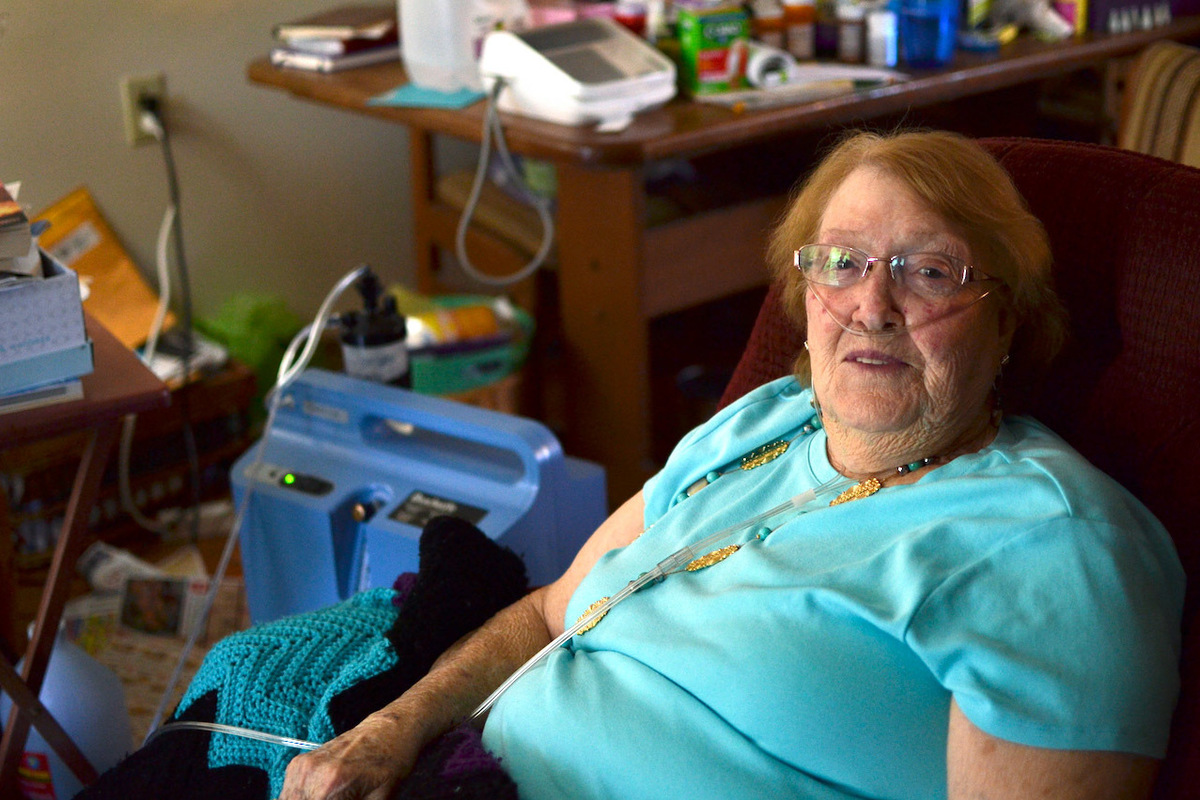





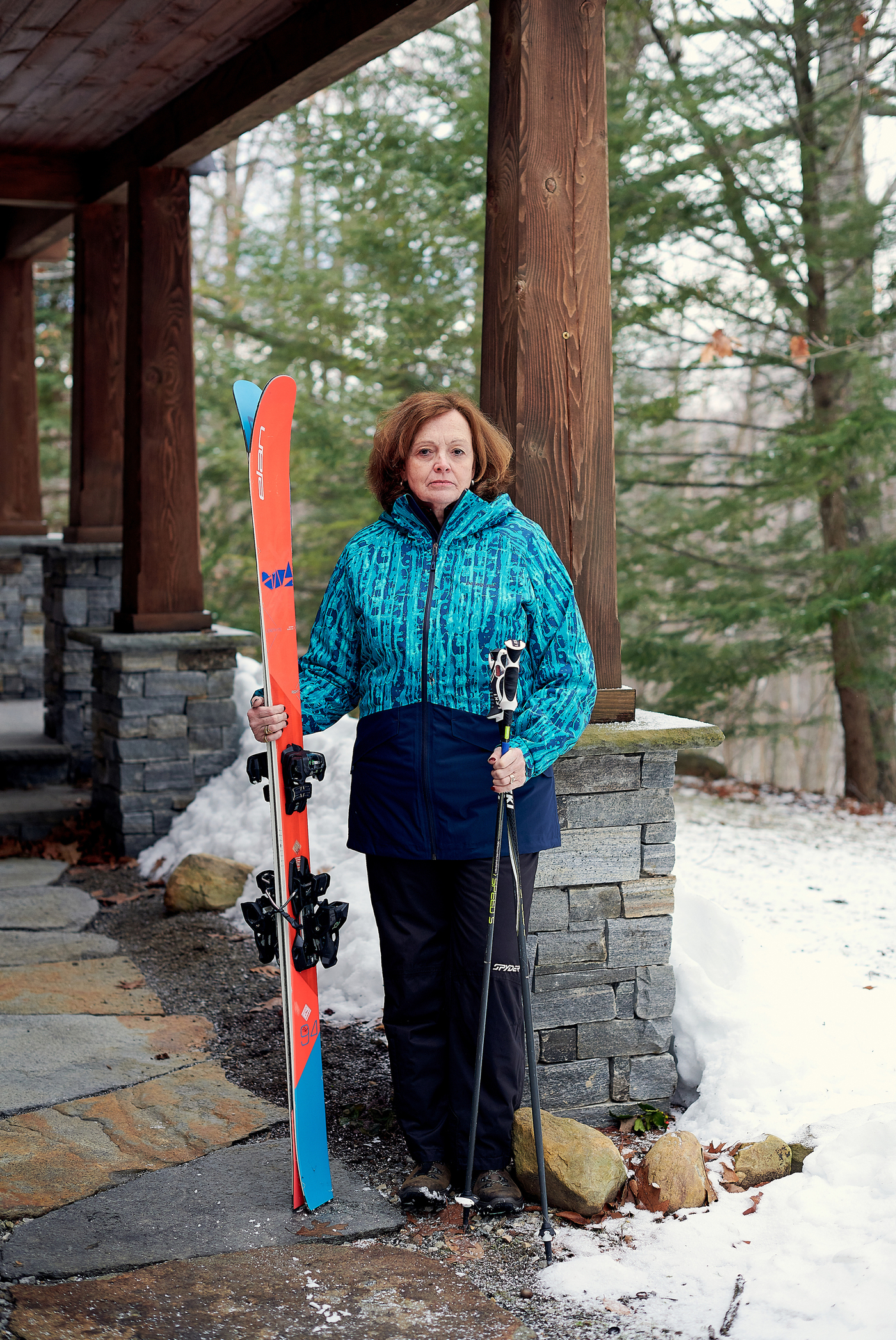

If implanted medical devices fail, as one of Witter’s metal plates did, patients and their insurers usually have to pay for repairs. “I hate to pay for it again, and the doctor clearly said it wasn’t anything I did,” she said.
Matt Baldelli for KHN
hide caption
toggle caption
Matt Baldelli for KHN
“When the plate breaks, it’s usually from overworking it, or a defect in the plate itself,” Rickert said. “The vast majority of people follow their instructions and are honest about it. If a person comes in and tells you they’ve been following their instructions and the surgery’s done properly, to me that’s a hardware failure.”
Nancy Foster, vice president for quality and patient safety policy at the American Hospital Association, said sometimes hospitals won’t charge for a second surgery “if they were aware that it was something they did that caused the patient to need follow-up care.”
Rutland Regional, Witter’s hospital, wouldn’t discuss Witter’s care or bills, even though she gave it permission to do so. “The organization is not comfortable in getting into the specifics of an individual patient’s case,” a spokeswoman wrote. The hospital also declined to discuss under what circumstances, if any, it would discount a second surgery’s cost because of the first’s failure.
Hospitals don’t consider it their responsibility if a medical device failure is the problem, Foster said. But manufacturers are reluctant to take the blame for an unsuccessful surgery.
AdvaMed, a trade group for medical device manufacturers, said some companies will provide replacement devices if theirs failed, but others don’t, especially if the failure of a procedure cannot “easily be attributed” to the device, the group said in a written statement.
“There are numerous factors outside of a manufacturer’s control — and unrelated to the safety of the device as designed — that could result in a device not performing as intended,” AdvaMed said.
These devices aren’t cheap: Witter’s hospital billed $9,706 for the first set of plates. It billed $12,860 for the replacement and an extra piece of equipment to attach it.
DePuy Synthes, which manufactured Witter’s plates, said in a written response that “in rare circumstances” metal plates “may fracture under normal weight-bearing or load-bearing in the absence of complete bone healing.” Even then, the company said, that is a chance patients have to take.
AdvaMed said it doesn’t keep statistics on device performance, and DePuy didn’t respond to questions about how often its plates fail.
Resolution: The second surgery delayed Witter’s recovery by four months and prevented her from gardening, golfing, hiking, biking and motorcycling through the summer and fall, as she usually does. “I was pretty much chair-bound for 20 weeks,” she said.
In November, she wasn’t able to join her husband and son on a trip to Iceland. Instead of volunteering at a nearby ski resort, as she had done for six years — and which carries the benefit of a free season pass — Witter said she tried selling hand warmers and lip balm out of a small kiosk and watching the skiers through a window. She said she had to quit after six days because of the pain in her feet.
“The biggest annoyance with this whole thing, even though it took eight months out of my life, is I hate to pay for it again, and the doctor clearly said it wasn’t anything I did,” she said.
Aetna said in a statement that while it doesn’t allow providers to charge for indisputably inept medical mistakes such as leaving a surgical sponge in a patient or operating on the wrong limb, a broken plate doesn’t qualify for such protection. (Medicare follows a similar approach.)
After reviewing Witter’s records, Aetna said it concluded the hospital had billed Witter for the portion of charges Aetna had considered excessive —a practice known as “balance billing.” While Aetna cannot reject those charges because the hospital doesn’t have a contract with it, the spokesman said Aetna would try to negotiate with the hospital on Witter’s behalf to reduce the bill.
Rutland Regional, however, indicated in its statement that the only reason it would discount a bill was for people who had inadequate insurance or were suffering financial hardship from the size of the bills. Witter said she doesn’t meet the hospital’s criteria.
The hospital invited her to meet with her surgeon and its chief financial officer.
The takeaway: Witter brought up the seeming unfairness of the double charges to the hospital’s billing department as well as to her doctor, who, she said, was “charming,” but told her “he had no wiggle room to do anything.” Patients are usually out of luck when a second surgery is needed because of the failure of a medical device or a surgeon’s mistake. A few places, most prominently the Geisinger health system in Pennsylvania, offer warranties for hip and knee, spine and coronary artery bypass surgeries, among other procedures.
AdvaMed says that if a company provides a replacement, the hospital or surgeon isn’t supposed to bill Medicare or the patient for the equipment — even if the operation incurs charges.
Patients should scrutinize their bills and question their doctor and hospital or surgical center about charges for replacement devices.
If the doctor or hospital is partially at fault for the failure of the first procedure, request that part or all of the costs of the second surgery be waived. Get it in writing so you can make sure the billing department follows through. Also, in a medical market where insurers want to pay only for value-based care, let your insurer or employer’s human resources department know that you are being charged twice for the same surgery. Let them fight the battle for you.
NPR produced and edited the interview with Kaiser Health News’ Elisabeth Rosenthal for broadcast. Nina Keck, a reporter with member station WVPR in Vermont, provided audio reporting.
Do you have an exorbitant or baffling medical bill that you’d like KHN and NPR to look into? You can tell us about it and submit a copy of the bill here.
KHN is a nonprofit news service covering health issues. It is an editorially independent program of the Kaiser Family Foundation that isn’t affiliated with Kaiser Permanente.