Migrant Kids Survive Hardship To Reunite With Parents. Then What?

Migrant children who travel to the United States to be reunited with a parent often make the difficult journey alone. But reunification with a parent after years of separation rarely goes as smoothly as they expect.

Sara Wong for NPR

For nearly a month, the two sisters — then ages 17 and 12 — traveled by road from their home in El Salvador to the southern border of the United States. They had no parent or relatives with them on that difficult journey in the fall of 2016 — just a group of strangers and their smugglers.

Ericka and her younger sister Angeles started out in multiple cars, Ericka remembers. “In Mexico, it was buses. And we changed buses very often.” (NPR is using only the sisters’ middle names to protect their identity as they await a decision on their application for asylum in the U.S.)

Please Tell Us What You Think About Shots

Help us make Shots more relevant for you by completing an NPR research survey. Click here to start the questionnaire.

Their mother, Fatima, had already been in the United States for more than a decade, working to provide money to fund a better life for her children. The girls had mostly been raised by a loving grandmother in El Salvador. But in 2016, when the grandmother died after a prolonged illness, some relatives started petitioning to have Ericka and Angeles put into a government-run institution as “abandoned” children.

By September of that year, the girls, an older brother and their mom decided that the time had come for Ericka and Angeles to take whatever chances necessary to get to America to reunite with their mother, who lives in a Virginia suburb of Washington, D.C.

Theirs is a common experience, say psychologists who work with migrant families in the U.S. Like these two sisters, most Central American children coming to the United States in recent years have arrived unaccompanied, fleeing from violence or poverty or because there was no longer anyone to take care of them in their home country.

U.S. Customs and Border Protection reports that, between 2010 and 2017, officers with the agency intercepted roughly 300,000 unaccompanied children. Many had at least one parent or a relative already living in the United States — these young people came to be reunited with family.

But, that reunification is rarely as easy or joyful as the children or their parents expect, at least initially, say researchers and therapists who work with these families. Years of separation, a history of grief and trauma, and the stresses of suddenly having to adapt to a new culture often get in the way.

And the cost of unhappiness at home can be high for such youth. They may be be at a higher risk of depression, anxiety and substance-abuse, says Rachel Osborn, a licensed social worker at Mary’s Center, a health clinic in Washington, D.C. And an unhappy family life can make it even less likely that those who are struggling in school will complete their education.

“What these families need is access to bilingual mental health help,” says Benjamin Roth, an assistant professor at the University of South Carolina’s school of social work, who has interviewed unaccompanied migrant children. With that sort of help these children can integrate well into their new homes, say Roth and others, although many families are not getting the help they need.

Before Ericka and Angeles could even see their mother, they had to spend a few weeks at the southern U.S. border, shuttled between a detention center and a shelter. Finally, they boarded a plane to the D.C. area. As they waited for Fatima at the airport, along with a chaperone from the shelter, Ericka wondered if she’d even recognize her mother.

“I practically didn’t remember her anymore,” says Ericka, “because I was very little when she left.”

Ericka was around 5 years old and Angeles still a baby when Fatima moved to the U.S., though Fatima had always stayed in close touch with her family through the years.

Their meeting at the airport was emotional. “I just wanted to hug them and touch them,” Fatima says. “As a mother you want your children to be with you.”

They were beyond happy to be together. But the first months were difficult for them all.

There were a lot of conflicts, says Fatima. Angeles, now a budding adolescent, acted out at home, especially when Fatima asked her to follow certain rules, like going to church with her on the weekend, and avoiding certain kinds of popular music that her mother found too racy.

There was trouble in Angeles’ school, too.

“She would be rebellious in school,” says Fatima. “Sometimes her schoolmates would tease her because she didn’t speak English.” But the teenager would respond defiantly, insisting on speaking only Spanish.

Angeles was also hungry all the time, says Fatima, and she’d take frequent bathroom breaks at school — common symptoms of the stress she was feeling at the time.

Ericka struggled, too. The more introverted of the two sisters, she withdrew and frequently complained of chest pain and had nightmares.

“In the beginning, I would have dreams and I would wake up,” the 19-year-old says now. Ericka’s nightmares were about the girls’ weeks on the road to the United States, never knowing at the start of each day where they would sleep that night, or if they were safe.

Ericka didn’t speak English, which made everything at school difficult, she says. “It was a little hard, because you have to adapt to something new. How do you start over?”

Ericka and Angeles with their mom, at home in a Washington, D.C., suburb. It’s been two years since the family was reunited, and the girls say they’re starting to feel more settled. As time goes on, Ericka says, “the hard times get left behind.”

Rhitu Chatterjee/NPR


hide caption

toggle caption

Rhitu Chatterjee/NPR

Both sisters desperately missed their now 22-year-old brother, who had always tried to look after the girls, especially after their grandmother’s death. “We were always together since we were very little,” says Ericka. “And we had never thought that at some point in our lives, we’d have to be separated.”

This longing for family left behind, the nightmares, the stress-eating and acting out are common symptoms of stress and trauma among unaccompanied children who come to the U.S., say teachers and health workers who treat these families.

“The kids often are behaving badly at school and at home,” says Rosario Carrasco, a parent-liaison at Angeles’s school in Fairfax, Va. “They can’t really develop relationships with others in school. It’s really difficult for them.”

Layers of trauma and stress

“To try to understand what it’s like to be an unaccompanied minor or any migrant youth, you really have to suspend your belief about what’s normal,” says Osborn. “It’s a totally different existence for these kids. They’re navigating so many different changes at the same time.”

The journey to the U.S. without the protection of a parent is traumatic, Osborn says, and that’s just the start.

Ericka and Angeles, for example, had to spend two days at a detention center in the U.S. and nearly a month at a shelter, where they were even separated from each other for a few days.

“The entire journey, we tried to stay together and we didn’t have to separate until we got there,” Ericka recalls, starting to cry. “And so, it was really hard.”

The girls’ had already experienced repeated separations from primary caregivers over the years — first from their mom when they were very young, then from their brother in El Salvador. And they barely had time to grieve the loss of their grandmother before setting out for the United States. Those types of traumas can leave a lasting mark on kids’ psyches, Osborn says.

Research studies done soon after World War II, for example, found that the separation from parents could make children more vulnerable to personality disorders and mental illnesses, like depression and anxiety. According to the Society for Research in Child Development, various other studies have shown that separation from parents puts kids at a higher risk for poor social functioning and problems in forming healthy relationships.

These problems some work suggests, can persist even after reunification with family, and on into adulthood.

“We found the longer the separation, the worse the [problems] — anxiety in particular,” says psychologist Carola Suárez-Orozco of the University of California, Los Angeles and the author of one such study in 2011.

Unfortunately, Osborn says, she sees all these issues among the children she works with.

“Kids might feel resentful,” she says. “They might feel abandoned.”

And they often don’t know how to express their feelings, says Roth, the researcher in South Carolina. “Kids process stress in different ways and sometimes they manifest in psychosomatic symptoms.”

It’s difficult for the parents, too.

“Parents feel like they’ve abandoned their son or their daughter, and they feel like it’s something they can’t forgive themselves for,” says Carrasco. “They feel incredibly guilty.”

These adults often are struggling to cope with traumas in their own lives.

“They’ve made these enormous sacrifices and they’ve probably been in survival mode in the United States,” says Osborn. Like Fatima, some parents of these children are in the U.S. illegally.

“There’s a lot of disillusionment from parents and kids, because they have a lot of lofty expectations about how beautiful things will be as soon as their family is reunited,” Osborn says. “And in a lot of cases, we see that it’s rarely that easy.”

But getting the right sort of mental health support can make a huge difference for kids and their families, Roth says.

When translated into English, this gift to Fatima from her eldest daughter says: “Happy Mother’s Day! May God always bless you and help you with everything. Thank you for always giving us the best, and always taking care of us and supporting us in what we do. Even though I don’t tell you this every day, I always love you.”

Rhitu Chatterjee/NPR


hide caption

toggle caption

Rhitu Chatterjee/NPR

Luckily for Fatima and her daughters, they got that sort of help through a program in Virginia’s Fairfax County Public Schools system called Families Reunite. It’s a three-day workshop that aims to accomplish some of what talk therapy might accomplish over a longer period of time.

“I truly believe that a family that is given the proper tools, can overcome all this,” says Carrasco.

The most important of tools, she says, is improving communication. Initially, she says, most families she has worked with tend to not talk about things that have hurt them. Carrasco helps change that.

“The kids, for example — we have them tell their parents what their life was like in the country they came from, [and] what they like to do,” says Carrasco. “And oftentimes they also express how much they miss the people they left behind.”

The parents, too, are invited to talk about their history and the sacrifices they’ve made to establish themselves in the United States.

Carrasco says she encourages the parents and children to sit down and speak openly with each other, so that as they go forward they can resolve any issues that may arise as they reforge family bonds.

She helps the parents let go of the guilt they still feel for having left their children behind. And she reinforces positive parenting skills.

“It’s showing parents that they need to recognize the positive things the children do,” Carrasco says, “not just the negative things.”

Fatima and her younger daughter Angeles participated in the school district’s workshop last year, and they say it helped them.

“I listen to my mom now, and I understand her,” says Angeles. “Before, I didn’t really understand where she was coming from.”

When I visit the family on a Saturday morning, Angeles is busy writing in a large notebook. She shows off her doodles and an essay she has written in Spanish.

“Many people travel to the United States,” she reads aloud in Spanish, as Ligia Diaz, another parent-liaison from the local public school system, translates it into English. “Many make it across the border. Others don’t cross.”

Angeles’ writing touches on the stories of the children she’s heard about in the newskids separated at the border from their families in recent months. Then, she recounts her own story, with a hint of the gratitude she now feels for her mother.

“I arrived here one year ago. And I have my purpose,” Angeles reads. “My purpose is to help my mom, because of all the different things she has done for me.”

These days, the teen says she tries to do what her mom says, like putting more time into her homework and into learning English. She also helps her mother at home when she’s cooking meals for the family.

Angeles and her sister still struggle — with speaking English and fitting in at school. And they miss their brother. But, Ericka says, they have already come a long way.

“As time goes on, you get used to things,” she says. “And the hard times get left behind.”

What helps along the way, she says, is having their mom with them now.

“It’s the only thing that makes me happy,” says Ericka. “It’s the only thing that gives me comfort.”


Let’s block ads! (Why?)

FDA Seeks Ban On Menthol Cigarettes To Fight Teen Smoking

FDA Commissioner Scott Gottlieb said he wants to ban menthol cigarettes because teenagers often become addicted to nicotine by smoking them.

Joe Raedle/Getty Images


hide caption

toggle caption

Joe Raedle/Getty Images

The Food and Drug Administration announced Thursday that it will seek a ban on the sale of menthol-flavored cigarettes.

The announcement came as the agency officially released a detailed plan to also restrict the sale of flavored electronic cigarettes. It also wants to ban flavored cigars.

In a statement, FDA Commissioner Scott Gottlieb says the moves are aimed at fighting smoking among young people. Flavored e-cigarettes, menthol-flavored tobacco cigarettes and flavored cigars are all popular among teenagers.

“Today, I’m pursuing actions aimed at addressing the disturbing trend of youth nicotine use and continuing to advance the historic declines we’ve achieved in recent years in the rates of combustible cigarette use among kids,” Gottlieb says.

While cigarette smoking has hit a record low in the United States, vaping has been skyrocketing. That trend has raised concerns that a new generation of young people will become addicted to nicotine.

Gottlieb says the moves were prompted by new data showing a 78 percent increase in e-cigarette use among high school students and a 48 percent increase among middle school students, from 2017 to 2018.

“These data shock my conscience,” Gottlieb says.

The ban on menthol, in particular, has been long sought by public health authorities and antismoking advocates. The concern is that the flavoring masks the harshness of tobacco smoke, making it easier for people to start smoking.

“I believe these menthol-flavored products represent one of the most common and pernicious routes by which kids initiate on combustible cigarettes,” Gottlieb says.

Menthol cigarettes are especially popular among African-Americans, leading some to charge that tobacco companies have been using the flavoring to target minorities.

Several groups, including the NAACP, endorsed the FDA’s plan even before it was officially announced. “For decades, data have shown that the tobacco industry has successfully and intentionally marketed mentholated cigarettes to African Americans and particularly African American women as ‘replacement smokers,’ ” the NAACP said in a statement.

Several cigarette companies that market menthol cigarettes didn’t immediately respond to requests for comment. In the past, they have vigorously opposed any effort to ban menthol cigarettes.

“We continue to believe that a total ban on menthol cigarettes or flavored cigars would be an extreme measure not supported by the science and evidence,” said a statement from Altria Group Inc., maker of Marlboro Menthol.

The proposed ban will require a lengthy rule-making process by the FDA before it can go into effect.

Antismoking groups hailed the announcement.

“FDA’s decision to move forward with a ban on menthol cigarettes is one of the most significant public health actions that the FDA has taken in years and will have a greater impact on the death and disease caused by tobacco in the United States than almost any other single action,” says Matthew Myers, president of the Campaign for Tobacco-Free Kids.

“Menthol cigarettes are the single most important pathway to get kids to start smoking in the United States. It makes sense because what it does is coat your throat. It makes it much easier to get used to the harshness of tobacco smoke,” Myers says.

Some opponents of a menthol ban have argued that it could create an underground market for menthol cigarettes. But Myers and others dismiss that concern.

While Myers praised the FDA’s new restrictions on e-cigarette flavorings, he called for the agency to go further and completely ban the flavorings. According to the plan released Thursday, the FDA would continue to allow adults to buy flavored e-cigarettes.

Let’s block ads! (Why?)

A Search For New Ways To Pay For Drugs That Cost A Mint

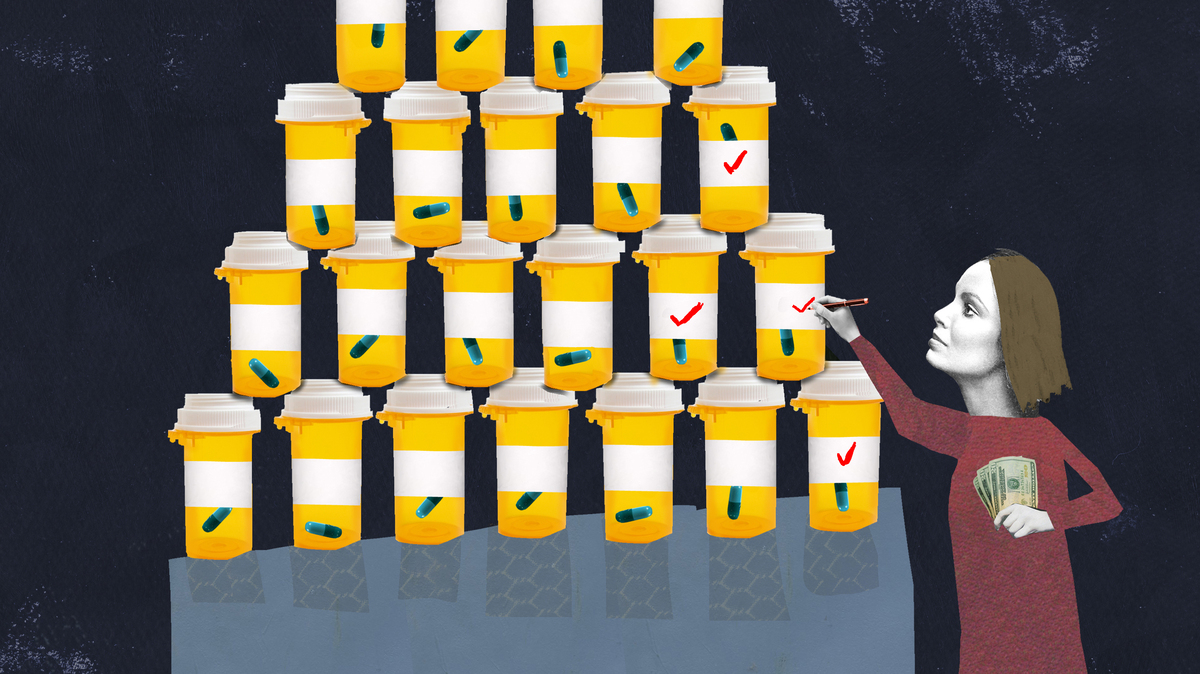
Expensive gene therapies could change the way we pay for medicines, such as making incremental payments over time.

Katherine Streeter for NPR

Researchers expect that three dozen new drugs will come on the market over the next few years with astronomical prices — some likely topping a million dollars per patient.

The drugmaker Novartis has told investors it might be able to charge $4 million to $5 million for one of its potential products, a treatment for a rare disease called spinal muscular atrophy.

Hundreds more ultra-expensive therapies are under development. They could drive up the cost of medicine and health insurance for everyone. So researchers have started to develop strategies to address that coming price shock.

These new treatments include gene therapies, which target certain cancers and rare diseases. Take for example hemophilia, an inherited disorder that prevents a person’s blood from clotting properly.

“When I was born, treatment did not exist for hemophilia,” says Mark Skinner, one of about 20,000 Americans with the condition. “Within my lifetime — I’m 58 years old — there have been remarkable advances.”

Skinner, an attorney in Washington, D.C., who is past-president of the World Federation of Hemophilia, now gives himself injections of expensive medication most days to prevent the painful and potentially dangerous bleeding episodes.

He says eight or nine companies are now working on gene therapies, which could potentially cure his underlying condition. “I think we could see a gene therapy within the clinics, and available to patients, within a couple of years,” he says.

One infusion of this therapy might be enough to correct the genetic flaw, and give him many years, maybe even a lifetime, free from bleeding episodes and daily medication.

Current hemophilia drugs cost many hundreds of thousands of dollars a year. Skinner’s treatment, in particular, can cost $800,000 a year, “so a gene therapy that costs $1 million, or even $2 million — you could see it becoming economically viable over a couple of years,” he says. It could actually save money for his health insurer.

But the new kind of treatment could also be a big shock to the health care system. Gene therapy for every American with hemophilia could cost tens of billions of dollars. One response might be to ration the treatment. That’s essentially what happened when expensive new drugs that could cure hepatitis C came on the market in 2013. Would that happen for hemophilia?

“If a gene therapy came through and was reasonably expensive, it would be terrible if we could only treat a thousand patients a year, and it took us 10 or 15 years to treat all those people,” says Mark Trusheim at MIT’s NEWDIGS program.

That program is trying to dream up better ways to pay for gene therapies for hemophilia as well as dozens of other diseases where long-term treatments are in the works. (NEWDIGS stands for the “New drug Development ParadIGmS Initiative”)

Under the current paradigm, we typically pay as we go for drugs, with monthly bills for monthly pills. Trusheim says it’s like paying rent on an apartment.

“But now with these new gene therapies, we get to take the treatment once and it can last for years,” he says. They may even last a lifetime. He says it makes more sense, then, to think of these drugs in terms of paying a mortgage over time – think of a condo, rather than a rental apartment.

That approach could spread out the payments, reducing the potential shock of a new treatment. “Plus we have the option here not just to turn it into a mortgage payment,” he says, “but make that mortgage payment contingent on whether the apartment is really a good apartment or not. If the roof begins to leak, maybe we won’t pay so much on the future payments.”

This strategy has already been put to use to pay for one gene therapy – Luxturna — which treats an inherited form of blindness at the cost of $850,000 per patient. The company that produces the therapy, Spark Therapeutics, has agreed to give payers a refund if a patients’ vision hasn’t improved sufficiently after two and a half years.

New therapies may not work at all, or their effects may wear off over time. There should be some way to reflect the actual long-term value to a patient in the price of treatment, says Trusheim.

He is eager to get funding schemes like this instituted now, because he expects to see another three dozen new expensive therapies coming to the market in just the next four years. Those include immune-system treatments called CAR-T for cancer, which may extend a person’s life but may not be curative. It also includes gene therapies for diseases that up till now have had no treatment at all.

“It could be really exciting,” he says, “but it could also be really expensive as we’re treating conditions never used to be able to treat.”

Many of these treatments are for rare diseases. There are about 7,000 rare diseases, so there could eventually be many products on the market. And because there are aren’t many patients who would benefit from any given therapy, the costs of developing each novel treatment has to be recouped from a small number of patients. That drives up the price.

One biopharmaceutical company, Alnylam, prices its drugs for rare diseases in the range of $250,000 to $650,000, says Yvonne Greenstreet, the company’s chief operating officer. Speaking at a recent meeting organized by the Milken Institute, she said the company has raised about $4 billion to develop the technology behind these medications.

Her company focuses on a method, called RNA interference, that can block genetic messages. Unlike other forms of gene therapy, RNAi treatments typically need to be given periodically. Among other projects, the company has a novel hemophilia treatment in development.

“I think it’s important to remember that when you are focused on coming up with true innovation, it’s a very capital-intensive, high-risk endeavor,” she says.

Yet in the United States, where drug companies set their prices based on whatever they believe the market can bear, this can potentially be overwhelming.

“If we get a cure for Alzheimer’s priced at $100,000 or $1 million a pop, we’re toast!” said Joe Grogan from the White House Office of Management and Budget, speaking at the Milken meeting. The costs for this one condition could run into the trillions of dollars.

Even if governments and insurers can rein in the price of drugs, therapies are still likely to cost a lot at the outset, and the health care system will need creative ways to manage that.

“At the pace at which gene therapy is coming, I think we have no choice,” says advocate Skinner. “I don’t think the public would tolerate cures sitting on the shelf that people don’t have access to.”

A solution will require not only new ways of thinking, but new rules and regulations that govern how insurance companies and government programs pay for medical care. MIT’s Trusheim says, for example, refunds for poorly performing drugs can fall afoul of current laws designed to prevent kickbacks.

Skinner says these conversations should also involve patients early on, to make sure that new treatments actually address the health concerns of the patients themselves. Value shouldn’t be measured simply in terms of drug-company profits, he says.

“Achieving an early alignment between patients, the drug developers and the payers in how value is going to be measured,” he says, “is going to be an important approach as we go forward.”

You can reach Richard Harris at rharris@npr.org.

Let’s block ads! (Why?)

Childbirth In The Age Of Addiction: New Mom Worries About Maintaining Her Sobriety

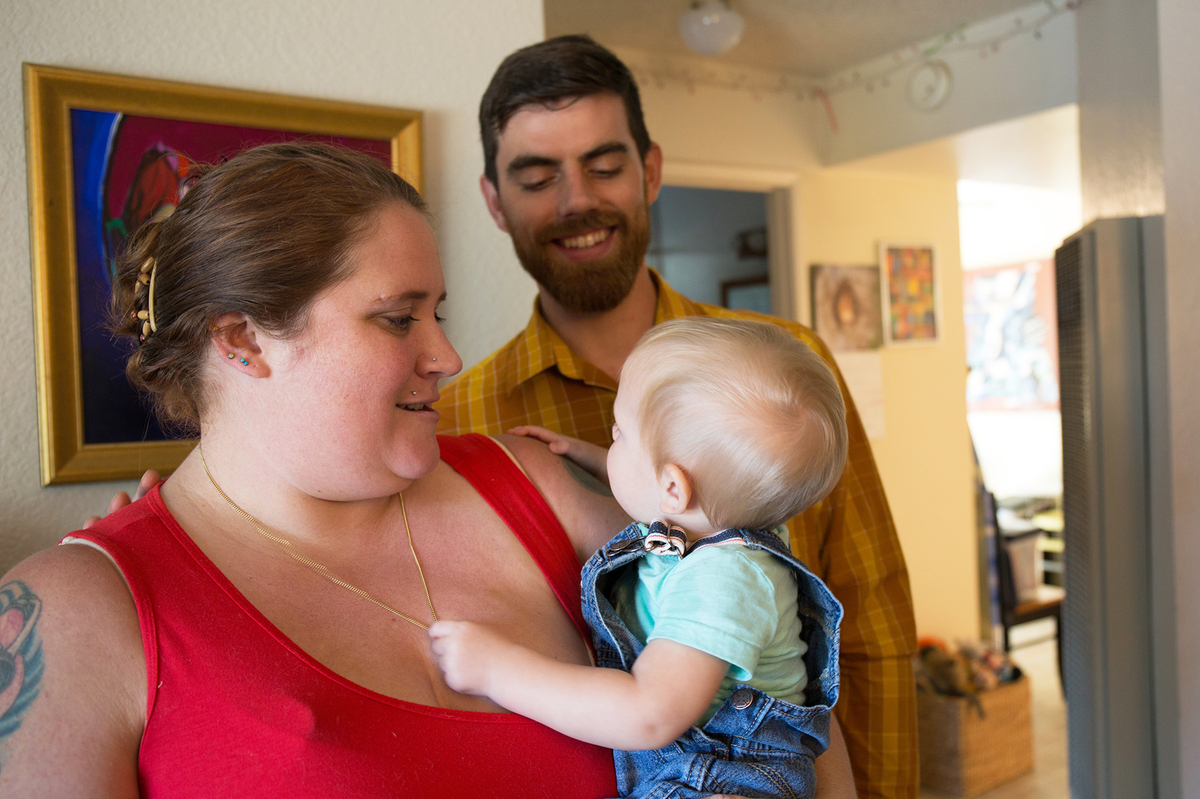
Nicole and Ben Veum, with their little boy, Adrian. Nicole was in recovery from opioid addiction when she gave birth to Adrian, and she worried the fentanyl in her epidural would lead to relapse, but it didn’t.

Adam Grossberg/KQED


hide caption

toggle caption

Adam Grossberg/KQED

When she was in her early 20s, Nicole Veum says, she made a lot of mistakes.

“I was really sad and I didn’t want to feel my feelings,” she says. “I turned to the most natural way I could find to cover that all up and I started using drugs: prescription pills; heroin for a little bit of time.”

Veum’s family got her into treatment. She’d been sober for nine years when she and her husband, Ben, decided to have a baby. Motherhood was something she wanted to feel.

If she needed an epidural during labor, Veum told her doctor, she didn’t want any fentanyl in it. She didn’t want to feel high.

“I remembered seeing other friends,” she says. “They’d used it, and they were feeling good and stuff. I didn’t want that to be a part of my story.”

An epidural is a form of regional anesthesia given via an injection of drugs into the space around the spinal cord. It’s usually a mix of two types of medication: a numbing agent, usually from the lidocaine family, and a painkiller, usually fentanyl.

The amount of fentanyl in the mix is limited, and little passes into the bloodstream, anesthesiologists say. But if a woman doesn’t want the fentanyl, it’s easy to formulate an epidural solution without it. Doctors either use a substitute medication or boost the concentration of the numbing agent.

“There’s no medical reason why someone should be forced to be exposed to opioids if they don’t want to,” says Dr. Kelly Pfeifer, a family physician and addiction expert who now works as director of high-value care at the California Health Care Foundation.

Pfeifer says there’s another situation to be aware of: pregnant women who are taking methadone or suboxone to manage opioid addiction. During labor, anesthesiologists often prescribe certain narcotics to help manage pain, but some of those commonly used — like Nubain — can immediately reverse the effects of methadone or suboxone.

“Suddenly, you’re in the middle of labor — which is already painful — and now you’re in the middle of the worst withdrawal of your life,” Pfeifer says.

For Veum, it was the worst wildfire in California’s recorded history that interrupted her birth plan. She and her husband live in Santa Rosa, Calif., and she was in active labor when devastating fires ignited nearby on Oct. 8, 2017. What are now known as the “Wine Country wildfires” burned more than 5,000 homes and killed 44 people.

“There was a ton of smoke in the hospital,” Veum says. “Like you could visibly see it outside — and smell it.”

Nurses told her everybody had to evacuate. Veum was transferred to another hospital, 5 miles away. And the special instructions for her epidural got lost in the chaos.

“Then, when they went to change the drug, I saw the tube said Fentanyl on it,” she remembers. “And by that point I was starting to feel ‘the itchies’ ” — one of the familiar physical signs she would experience when starting to get high.

Most women without a history of addiction wouldn’t experience these sensations when given opioid anesthesia, says Dr. Jennifer Lucero, chief of obstetric anesthesiology at the University of California, San Francisco Medical Center. Anytime a woman who is not in recovery asks for an epidural without fentanyl (usually out of the mom’s concern for the baby), Lucero explains why it’s there.

Adrian Veum plays at home; Nicole Veum says she’s loving being his mom, and feels “reborn.”

Adam Grossberg/KQED


hide caption

toggle caption

Adam Grossberg/KQED

The fentanyl allows the anesthesiologist to balance out the numbing agent in the solution, she says, so women don’t have as much pain from the contractions, but can still feel the pressure and are able to move their legs a bit or shift in bed during labor.

Once she explains the trade-offs, and assures women that the opioid will have no effect on their fetus, most of her patients opt to keep fentanyl in the epidural solution.

But doctors have been trying to cut down on opioids in other ways during labor and delivery, namely in what they prescribe for pain after the birth.

For years, women who had a normal, vaginal birth were sent home with a 30-day supply of Norco, Percocet or another opioid, Lucero says.

“Some people would think they’re supposed to take them all,” Lucero says, while other women “would not use it, and it would just be sitting in the bathroom cabinet.”

While most people who get a bottle of pills when leaving the hospital won’t develop dependence or an addiction, some will. When a patient is prescribed opioids for short-term pain, the risk of chronic use starts to increase as early as the third day of the prescription, according to a 2017 report published by the Centers for Disease Control and Prevention. A 2018 study suggests that every week of opioid use increases the risk of misuse.

As recently as 2017, postpartum women were routinely being prescribed three- to five-day supplies of opioids — even after an uncomplicated vaginal delivery. A study published that year of 164,720 Pennsylvania women on Medicaid who gave birth vaginally found that 12 percent of them filled an opioid prescription after they gave birth — even though most did not have a clear medical need for a painkiller, such as vaginal tearing or an episiotomy.

Now obstetricians are issuing new guidelines to patients, Lucero says, and they’re trying to prescribe limited amounts of opioids, and only post-surgically, to women who have had a C-section.

Nicole Veum ended up being one of those women. After she was transferred to the second hospital during the wildfire evacuation, she spent another 12 hours in the early stages of labor, but it didn’t seem to be progressing much. She agreed to a C-section.

After the birth of her son, doctors sent her home with a bottle of Percocet — another opioid. They told her that if she was worried about being able to maintain her sobriety, she could have her husband or a friend hold on to the bottle and control the dosage.

Pfeifer, the physician and addiction specialist, says that in a situation like that, sending Veum home with just a few Percocet pills, or even suggesting she take just take ibuprofen would have been fine.

“Any parent will tell you there’s nothing more stressful than the first week of being a parent and having a baby and being in sleep deprivation,” Pfeifer says. “And here you have a little bottle of Vicodin that you used to turn to, to make you feel better when you’re stressed.”

First the fires. Then the fentanyl in her epidural. Then the Percocet. It was Veum’s first test in seeing how her sobriety and motherhood would line up.

She called a friend who was also in recovery. They talked it all through, and Veum was fine.

“I was OK. I was OK with it. It was just something that happened,” she says as her baby, Adrian, now a year old, plays with a new toy.

Veum is 32 now. She’s returned to school this fall to work toward her college degree, after a 14-year break. And she is loving being a mom.

“A lot of people, metaphorically, felt it as a baby coming out of the ash — the life coming from the ashes,” she says about her child born in the midst of the 2017 wildfires.

“And I feel that,” Veum says. “I feel like it was a big time for our community — and me personally — to be reborn in some way.”

Let’s block ads! (Why?)

Another Mass Shooting? 'Compassion Fatigue' Is A Natural Reaction.

Mourners comfort each other Thursday during a vigil at the Thousand Oaks Civic Arts Plaza for the victims of the mass shooting at Borderline Bar and Grill in Thousand Oaks, Calif.

Kevork Djansezian/Getty Images


hide caption

toggle caption

Kevork Djansezian/Getty Images

Roger Chui first learned about the mass shooting that killed 12 people in a packed bar Wednesday night in Thousand Oaks, Calif., when he woke up the morning after and turned on his phone.

“And I was like ‘Oh, that seems really soon after Pittsburgh and Louisville,’ ” says the software developer in Lexington, Ky. “I thought we’d get more of a break.”

Chui feels like these kinds of shootings happen in the U.S. so often now that when he hears about them all he can think about is, “Oh well, it happened again I guess.”

He’s not alone.

Ginger Ellenbecker, a high school biology teacher in Lawrence, Kan., has similar feelings.

“My immediate reaction was, ‘Another one. Here’s another one. This is terrible!’ But I’m not incredibly surprised,” she says.

Both Ellenbecker and Chui say they feel bad about their immediate reactions, but science suggests that their feelings are quite normal.

It’s a natural response called compassion fatigue, says Charles Figley, a psychologist and director of the Tulane University Traumatology Institute.

He says thinking too much about traumatic events, whether it’s a refugee crisis on the other side of the world or a school shooting in our own country, can make people too anxious or depressed to function in their daily lives.

“We of course think about ourselves being in such a place, in which someone would suddenly burst in and shoot things up,” says Figley. “But if we think about that too much, then it deteriorates our sense of confidence and our sense of trust and our sense of safety.”

Numerous studies have shown that human service providers — doctors, nurses, case workers, counselors — can experience compassion fatigue because of having to constantly address, deal with and think through tragedy. Figley says people in these professions have what’s called secondary trauma, which can build up and lead to compassion fatigue.

“Human service providers are wanting to help — that’s one of the reasons why we go into the field — but we recognize we can only do so much,” says Figley. “But if they’re not able to process that then they gradually begin to shut down in order to protect themselves.”

Another reason why people might find themselves feeling desensitized in the face of the latest tragedy is something called psychic numbing, which happens when the emotional response to a tragedy doesn’t increase when the number of victims does.

“The statistics of large-scale killing don’t convey emotion,” says to University of Oregon psychologist Paul Slovic, a leading researcher of psychic numbing. He and his colleagues demonstrated the phenomena in a recent study that found people are much more willing to donate aid to an identified individual than to an unidentified group of people.

Slovic says this is because the emotional circuitry in our brains is bad with numbers. “It can’t add and it can’t multiply, it reacts very strongly to one person or a small number of people that we can connect with and empathize with and we become emotionally connected,” he says.

But when more people are added attention and emotion get diffused, response starts to diminish, says Slovic.

For Audrey Cho, a teenager living in Grosse Pointe Woods, Mich., reports of school shootings really worry her. She says it’s hard not to think it could happen to her, but Cho consciously tries to not let it take over her life.

“This is very serious,” she says. “But you can’t allow it to be so detrimental that you can’t leave the house or something, because that’s impossible.”

Let’s block ads! (Why?)

Forum: The Health And Economic Concerns Of Rural Americans

Join us for a webcast on life and health in rural America. From The Forum at Harvard T.H. Chan School of Public Health.

Courtesy of Harvard T.H. Chan School of Public Health


hide caption

toggle caption

Courtesy of Harvard T.H. Chan School of Public Health

What do rural Americans say are the biggest problems in their communities? A new poll finds that the top challenges are drug and opioid abuse and economic concerns.

Indeed, a majority of rural Americans put opioid and drug addiction on par with the local economy as serious problems in their community. The poll found rural Americans largely hold negative views of their local economy, but nearly one-third have seen economic progress in recent years.

You can read the full findings of the poll, conducted by NPR, the Robert Wood Johnson Foundation and Harvard T.H. Chan School of Public Health, here.

What may help? A majority of rural Americans believe outside assistance will be needed to solve major community problems in the future, and many believe government will play an important role.

These and other issues related to life and health in rural America will be highlighted in an expert panel discussion Friday, Nov. 9, to be live-streamed here at 12 p.m. ET, as part of The Forum at the Harvard Chan School.

Convened shortly before National Rural Health Day and after the nation’s midterm elections, our panel will look at the economic and day-to-day social concerns of rural Americans.

We’ll discuss possible solutions to economic decline and the opioid/drug crisis, and point to positive signs and optimism revealed by our poll.

Joe Neel, deputy senior supervising editor on NPR’s Science Desk, will moderate the discussion with:

Katrina Badger, program officer, Robert Wood Johnson Foundation,

Robert Blendon, professor of health policy and political analysis, Harvard T.H. Chan School of Public Health and Harvard Kennedy School,

Ted Strickland, former governor of Ohio, and

David Terrell, executive director, Indiana Communities Institute and RUPRI Center for State Policy, Rural Policy Research Institute.

This webcast is part of an ongoing series, “Life and Health In Rural America.” The series is based in part on a poll by NPR, the Robert Wood Johnson Foundation and the Harvard T.H. Chan School of Public Health.

Let’s block ads! (Why?)

New Medicare Advantage Benefits Are Supposed To Help Seniors Stay Out Of The Hospital

Services like rides to the doctor or wheelchair ramps are among those that some Medicare Advantage plans will begin to offer next year.

Razvan Chisu / EyeEm/Getty Images/EyeEm


hide caption

toggle caption

Razvan Chisu / EyeEm/Getty Images/EyeEm

For some older adults, private Medicare Advantage plans next year will include a host of new benefits, such as transportation to medical appointments, home-delivered meals, wheelchair ramps, bathroom grab bars, or air conditioners for asthma sufferers.

But the new benefits will not be widely available, and they won’t be easy to find, during this fall’s enrollment period.

Of the 3,700 plans across the country next year, only 273 in 21 states will offer at least one. About 7 percent of Advantage members — 1.5 million people — will have access, Medicare officials estimate.

That means even for the savviest shoppers it will be a challenge to figure out which plans offer the new benefits and who qualifies for them.

Medicare officials have touted the expansion as historic and an innovative way to keep seniors healthy and independent.

Despite that enthusiasm, a full listing of the new services are not available on Medicare’s web-based “plan finder,” the government tool used by beneficiaries, counselors and insurance agents to sort through dozens of plan options.

Medicare officials see the added benefits as a key to helping Advantage members prevent costly hospitalizations. Federal approval of new supplemental benefits is “one of the most significant changes made to the Medicare program,” said Seema Verma, the head of the Centers for Medicare & Medicaid Services, at an insurers’ meeting last month. She added that she expects plans to expand the number of services in coming years.

Medicare Advantage plans, which are an alternative to traditional Medicare, serve 21 million beneficiaries and limit their out-of-pocket expenses. But they also restrict members to a network of doctors, hospitals and other medical providers. They often offer benefits not available in traditional Medicare, such as dental and vision care, hearing aids and gym memberships. The federal government pays the plans to help cover the cost of each member.

Enrollment is underway now for choosing a Medicare Advantage plan, as well as for people in traditional Medicare who want to buy a policy for drug coverage. The deadline for both plans is Dec. 7.

Among the new benefits that some Medicare Advantage plans said they will offer are:

  • Trips to the pharmacy or fitness centerin addition to doctor’s appointments for plan members, depending on where they live or their health conditions.
  • A monthly or quarterly allowance for over-the-counter pharmacy products such as cold and allergy medications, eye drops, vitamins, supplements and compression stockings.
  • Doctors or other health care providers who make housecalls, under certain conditions.
  • A home health care aide for a limited number of hours to help with dressing, eating and other daily activities, sometimes including household chores and light housekeeping.

However, plans offering these services will likely have only some of the options and will have different eligibility criteria and other limitations. Advantage members will need a recommendation or referral from a health care provider in the plan’s network. Then they may need to have a certain chronic health problem, a recent hospitalization or meet other eligibility requirements.

Also, the same services likely won’t be available in every county the plan serves. For example, next year Humana Medicare Advantage members in Texas and South Florida in just two of the 43 states Humana serves will be able to get a free in-home personal care aide for up to 42 hours a year if they can’t be left alone at home. And more than half of the members in Cigna-HealthSpring Advantage plans will have access to free transportation services in all but five of the 16 states and the District of Columbia where the company sells coverage.

To find these supplemental benefits, seniors can go to the online plan finder. After they enter their Zip code and get a list of plans available locally, they can click on a plan name. That will take them to another page that offers more details about coverage, including a tab for health and drug plan benefits. That page might say whether the new services are offered.

But often the website will simply say that some benefits are available and advise consumers to contact the plan for more information.

“There is a lot of information on the plan finder, but there is a lot of information missing that requires beneficiaries to do more research,” says Deb McFarland, Medicare services program supervisor at the Southern Maine Agency on Aging.

There are also other variables to be considered when choosing an Advantage plan, such as which health care providers and pharmacies participate in a plan’s network, what drugs are covered and costs.

Where available, however, several insurers say the services will be free with no increase in monthly premiums.

“We certainly believe that all of the ancillary benefits we provide will help keep our members healthy which is good for them and it’s good for us in the long run,” said Steve Warner, head of the Medicare Advantage product team at UnitedHealthcare, which insures about 5 million seniors or one out of every four Medicare Advantage members.

Insurers are betting that services will eventually pay for themselves.

Dawn Maroney, consumer president at Alignment Healthcare, which serves eight counties in Southern California, says it’s much cheaper to give an air conditioner to someone with congestive heart failure to keep that patient healthy than to pay for expensive medical treatment.

But if the new benefits are such a good idea, they should be available to the majority of older adults in traditional Medicare, says David Lipschutz, a senior policy attorney at the Center for Medicare Advocacy.

Medicare Advantage plans have extra money to spend on benefits next year because the federal government increased its payments an average of 3.4 percent, seven times more than the rate of increase in 2018.

For free help with Medicare Advantage and drug plan enrollment, contact the Senior Health Insurance Information Program (www.shiptacenter.org) or the Medicare Rights Center (800-333-4114 or www.medicareinteractive.org). Find Medicare’s Plan Finder at www.medicare.gov/find-a-plan/questions/home.aspx or call 800-633-4227.

Kaiser Health News is a nonprofit news service covering health issues. It is an editorially independent program of the Kaiser Family Foundation that is not affiliated with Kaiser Permanente.

Let’s block ads! (Why?)

After Midterm Defeat, Advocates For Montana's Medicaid Expansion Turn To Legislature

Montana Gov. Steve Bullock, a Democrat, warned that failure of a Medicaid-funding initiative on the ballot could make for a tough legislative session in 2019.

William Campbell/Corbis via Getty Images


hide caption

toggle caption

William Campbell/Corbis via Getty Images

A ballot initiative that would have continued funding Montana’s Medicaid expansion beyond June 2019 has failed. But advocates say they’ll continue to push for money to keep the expansion going after that financial sunset.

“We now turn our attention to the legislature to maintain Montana’s bipartisan Medicaid expansion and protect those enrolled from harmful restrictions that would take away health insurance coverage,” said a concession statement Wednesday from Chris Laslovich, campaign manager with the advocacy group Healthy Montana, which supported the measure.

The initiative, called I-185, was the single most expensive ballot measure in Montana history. Final fundraising tallies aren’t in yet, but tobacco companies poured more than $17 million into Montana this election season to defeat the initiative. That’s more than twice as much cash as supporters were able to muster.

Most of the money in favor of I-185 came from the Montana Hospital Association. “I’m definitely disappointed that big money can have such an outsized influence on our political process,” said Dr. Jason Cohen, chief medical officer of North Valley Hospital in Whitefish.

The ballot measure would have tacked an additional $2 per-pack tax on cigarettes. It would have also taxed other tobacco products, as well as electronic cigarettes, which aren’t currently taxed in Montana.

Part of that $74 million in additional tax revenue would have funded continuation of Medicaid expansion in Montana.

Unless state lawmakers vote to continue funding the Medicaid expansion, it’s set to expire. If that happens, Montana would become the first state to undo a Medicaid expansion made under the Affordable Care Act.

In September, Gov. Steve Bullock, a Democrat, told the Montana Association of Counties that if the Medicaid initiative failed, “we’re going to be in for a tough [2019 legislative] session. Because if you thought cuts from last special session were difficult, I think you should brace, unfortunately, for even more.”

Republican State Rep. Nancy Ballance opposed I-185 and disagrees with Bullock’s position. “I think one of the mistakes that was made continually with I-185 was the belief that there were only two options: If it failed, Medicaid expansion would go away; if it passed, Medicaid expansion would continue forever as it was.”

Ballance, who didn’t receive money to campaign against the initiative, said Medicaid expansion in Montana can be tweaked without resorting to a sweeping new tax on tobacco products.

“No one was willing to talk about a middle-ground solution where Medicaid expansion is adjusted to correct some of the things that we saw as issues or deficiencies in that program,” she said. “I think now is the time to roll up our sleeves and come up with a solution that takes both sides into consideration.”

Ballance says conservatives in the Legislature want recipients of expansion benefits to face a tougher work requirement, and for means testing, so those with low incomes who also have significant assets like real estate won’t qualify.

In any event, Ballance said she suspects that if the initiative had passed, it would have immediately faced a court challenge.

North Valley Hospital’s Cohen said he hopes Montana will pass a tobacco tax someday. “We all know how devastating tobacco is to our families, our friends and our communities,” Cohen said. “And I think we also all know how important having insurance coverage is, and so I think people are dedicated to fighting this battle and winning it.”

This story is part of NPR’s reporting partnership with Montana Public Radio and Kaiser Health News. Montana Public Radio’s Edward O’Brien contributed to the story.

Let’s block ads! (Why?)

A Winning Idea: Medicaid Expansion Prevails In Idaho, Nebraska And Utah

“Most of us are ecstatic” about Medicaid expansion in Utah, said Grant Burningham, of Bountiful. “We were all together and hugging and kissing last night.”

Kim Raff for NPR


hide caption

toggle caption

Kim Raff for NPR

Voters in three traditionally Republican states supported ballot measures to extend Medicaid benefits to more low-income adults.

The results highlight the divide between voters, even in conservative states, who generally support providing health benefits to the poor, and conservative politicians who have rejected the expansion, which is a central part of the Affordable Care Act.

With the approval of the measures in Idaho, Utah and Nebraska, about 300,000 low-income people will gain access to health care coverage, according to estimates from government agencies and advocacy groups in those states.

“People are enthusiastic about Medicaid expansion because they recognize that it’s both good for health care but it’s also a compassionate thing to do,” says Jonathan Schleifer, executive director of The Fairness Project, which worked to get the questions on the ballots of the four states. “And it’s a financially sound thing to do. It’s a fiscally responsible thing to do.”

The Fairness Project is funded by the SEIU United Healthcare Workers West, a California health care workers union.

Voters in Montana, however, appeared to reject a proposal to raise taxes on tobacco and e-cigarettes to continue funding the state’s expansion of Medicaid, which is set to sunset next year, leaving 100,000 Montanans at risk of losing coverage.

Before the Affordable Care Act, Medicaid, the government health insurance for the poor and disabled, was reserved mainly for pregnant women, children, low-income seniors and people with disabilities.

Since the law passed, 32 states, plus the District of Columbia, have expanded access to childless adults whose incomes are below 138 percent of the federal poverty level. That cutoff is $16,753 for a single person and $34,638 for a family of four.

Maine voters approved an expansion in 2017, but Gov. Paul LePage, a Republican, has resisted implementing the law, even vetoing a $60 million funding bill that passed the Legislature. LePage was barred by term limits from seeking another term. Democrat Janet Mills, Maine’s governor-elect, has pledged to expand Medicaid on her first day in office.

One person who stands to gain coverage in Utah is Grant Burningham, of Bountiful. “Most of us are ecstatic,” he said, referring to his friends who worked to get the measure passed. “We were all together and hugging and kissing last night.”

Burningham has spent the past several years working for this day. A former financial adviser, he became seriously ill after having a severe reaction to a medication in 2001, lost his job, his home and his health care.

Burningham now has a place to live, and hopes that access to health care will help him get back on his feet.

Still, he’s a bit wary that members of the Utah Legislature will try to do something to derail the results before the expansion of Medicaid can be implemented next spring.

“We had a win last night. But we still have the fourth quarter to go through,” he said. “A lot of us are deadly sick and we’ll still wait until April (after the state’s legislative session ends) to turn in our applications.”

Utah has come close to expanding Medicaid several times in recent years. But those efforts were blocked by conservatives in the state’s House of Representatives.

Burningham says it was necessary to put the question directly to voters “because so many of our politicians have been out of touch with their constituents.”

That’s why voters had to step in, says The Fairness Project’s Schleifer, who helped organize the campaign to put the measure on Utah’s ballot.

“This election proves that politicians who fought to repeal the Affordable Care Act got it wrong. Americans want to live in a country where everyone can go to the doctor without going bankrupt. Expanding access to health care isn’t a blue state value or a red state value; it’s an American value,” Schleifer said in a statement.

Utah will pay for its share of expansion costs by increasing the state’s sales tax by 0.15 percentage points to 4.85 percent, which works out to about 1.5 cents for every $10 residents spend on nonfood purchases. The federal government pays for 90 percent of the health care costs incurred by those who get Medicaid benefits through the expansion measures.

RyLee Curtis, campaign managers for Utah Decides, an advocacy group that campaigned for the expansion, says many of the 150,000 Utahans who will benefit are employed, and about a third are parents.

“They’re working one or more jobs and they’re unable to afford health care coverage,” she says.

Nebraska and Idaho also had Medicaid questions on ballots in their states.

In Nebraska, about 90,000 people are now eligible for coverage. And a study by two University of Nebraska professors, commissioned by the Nebraska Hospital Association, concluded that the expansion would cost the state about $148 million over three years but bring $1.36 billion in federal health funding into the state over the same time frame.

The Nebraska analysis is one of several that suggest expanding Medicaid can also help improve employment in a state by supporting health care jobs.

In Idaho, Gov. Butch Otter, a Republican, endorsed the expansion initiative a week before Election Day.

Montana, voters appeared to reject a ballot measure to continue that state’s expansion, which originally passed in the state’s legislature in 2015, but included a built-in expiration date.

The Montana measure would have continued funding for Medicaid expansion with a combination of taxes on tobacco and e-cigarettes. The tobacco industry strongly opposed the measure. Tobacco giant Altria, the parent company of Philip Morris, which makes Marlboro cigarettes, contributed about $17 million on cash and loans to Montanans Against Tax Hikes, which opposed the measure, according to the state’s Campaign Electronic Reporting System.

Let’s block ads! (Why?)

Despite Warnings, FDA Approves Potent New Opioid Painkiller

Food and Drug Administration Commissioner Scott Gottlieb, testifying before a House subcommittee in May. There are “very tight restrictions” being placed on the distribution and use of Dsuvia, Gottlieb said Friday in addressing the FDA’s approval of the new opioid. But critics of the FDA decision say the drug is unnecessary.

Chip Somodevilla/Getty Images


hide caption

toggle caption

Chip Somodevilla/Getty Images

The Food and Drug Administration has approved a potent new opioid painkiller, despite warnings from physician critics who say the drug will contribute to the addiction epidemic.

Dsuvia, a 3-millimeter-wide tablet of sufentanil made by AcelRx, came before an FDA advisory committee on Oct. 12. Such committees weigh in on the safety and efficacy of proposed products, and the FDA generally follows committee guidance in its decisions about drugs. The FDA’s Anesthetic and Analgesic Drug Products Advisory Committee voted 10-3 to recommend approval for the medication, and the agency approved the drug Friday.

“There are very tight restrictions being placed on the distribution and use of this product,” said FDA Commissioner Scott Gottlieb in a written statement Friday regarding his agency’s approval of Dsuvia. “We’ve learned much from the harmful impact that other oral opioid products can have in the context of the opioid crisis. We’ve applied those hard lessons as part of the steps we’re taking to address safety concerns for Dsuvia.”

But vocal critics, including the chair of the FDA advisory committee and the consumer advocacy group Public Citizen, had urged the FDA to reject Dsuvia.

In approving the drug, the agency skirted its normal vetting process, these critics say. Dsuvia is an unnecessary opioid, they say, and its size and potency will appeal to people looking to sell or misuse it.

“We have worked very diligently over the last three or four years to try to improve the public health, to reduce the number of potent opioids on the street,” says Dr. Raeford Brown, an anesthesiologist at the University of Kentucky. Brown chairs the FDA committee that, despite his disagreement, voted for Dsuvia’s approval. “I don’t think this is going to help us in any way,” he says.

Dr. Pamela Palmer, an anesthesiologist and co-founder of AcelRx, argues that the risk of diversion — when drugs end up with people who are not the intended patients — is low with Dsuvia because it will not be dispensed to patients at pharmacies. Instead, health care providers will only be able to use it in medical centers, she says, arguing that few people misuse drugs from those settings.

“It will not contribute to the large outpatient opioid crisis,” Palmer maintains.

While sufentanil is potent, the dose in Dsuvia is premeasured and small: 30 micrograms, or millionths of a gram. And Palmer says the product fills a unique need — health care providers put it under patients’ tongues, rather than injecting it or giving them a pill to swallow, which, she says, can take too long to offer relief.

“If you want to get on top of someone’s pain quickly, you have to come up with a different route than swallowing a pill,” Palmer says. She envisions providers using the tablet when finding a vein is difficult and time-sensitive — in emergency room patients who are morbidly obese, for instance.

The company projects $1.1 billion in annual sales, and hopes to have its product in hospitals early next year.

Palmer also says the Department of Defense helped fund the company’s research because Dsuvia could potentially be used on the battlefield instead of morphine.

Dr. Sidney Wolfe, senior adviser to Public Citizen’s Health Research Group, dismisses Palmer’s claim that Dsuvia meets a crucial need. Along with Brown, the group sent a letter to the FDA expressing concerns about the drug.

“It is not unique at all,” Wolfe says, adding that the drug wasn’t adequately tested in emergency settings, and that in tests, pain relief with Dsuvia was slow. In two of the company’s studies, Dsuvia patients only felt “meaningful” pain relief at 54 minutes and 78 minutes.

“We may find a niche for [Dsuvia] but it’s not like we need it, and for sure, at some level, it’s going to be diverted,” says Dr. Palmer MacKie, assistant professor at the Indiana University School of Medicine and director of the Eskenazi Health Integrative Pain Program in Indianapolis. “Do we really want an opportunity to divert another medicine?”

Though the advisory committee ultimately voted in favor of the drug, Public Citizen contends the FDA sought to “tilt” the vote’s outcome toward approval. Brown, the committee chief, who has been outspoken against certain opioids in the past, says he was unable to attend the advisory committee meeting on Oct. 12 because of a scheduling conflict that he had informed the FDA about months in advance.

Brown says the FDA decided to hold the meeting anyway — without him.

“I have strong feelings about the opioid crisis, as someone who lives in the Commonwealth of Kentucky, where we continue to have people die,” Brown says. “My forthright nature may have played a role in their decision about how the agency was going to manage this advisory committee.”

The October meeting also left out most members of another FDA committee — the Drug Safety and Risk Management Advisory Committee — who are often included in regulatory discussions of new opioid drugs. Public Citizen says members of that committee were not invited to attend.

In an email, an FDA spokesman wrote that drug safety committee members “could not attend due to scheduling conflicts.”

“That’s not the full story,” Brown says.

On Wednesday, ahead of the FDA’s final decision, four U.S. senators — Ed Markey, Claire McCaskill, Joe Manchin and Richard Blumenthal — sent a letter to Gottlieb, the FDA’s commissioner, echoing concerns from Brown and Public Citizen and asking the agency to deny approval to Dsuvia until Brown and the full drug safety committee were allowed to participate.

Ultimately, the FDA approved the drug anyway.

“There should never again be a meeting on opioids that doesn’t include drug safety,” says Wolfe. “The FDA really screwed up.”

Let’s block ads! (Why?)