The Forgotten Needs Of Refugees From Hurricane Irma

trauma gif

Credit: Chris Nickels for NPR

In the small clinic where I work in Boston, it is rare to see a new, middle-aged patient who has yet to see a doctor in this city. Trust me — we are everywhere.

So when I saw an unfamiliar woman’s name pop-up on my list for the afternoon, I was surprised to find an otherwise empty medical file. A recent transplant to Boston, I guessed.

That turned out to be all too true. The woman had lived the majority of her life in St. John, one of the beautiful U.S. Virgin Islands that sustained severe damage from Hurricane Irma. As we began talking, she retold the details of her journey in a small boat to Puerto Rico hours before the storm struck. She traveled with only a bag of her valuables and her beloved cat. (I’m not using her name to guard the patient’s privacy.)

And now in Boston, she has to face the loss of her home, possessions, daily routines — and, as it turns out — her medical care.

Much media attention has centered on the immediate damage caused by the Category 4 hurricanes but less so on the long-lasting impact of these catastrophes and what they mean for people weeks, months, and years later.

When she presented to my clinic, her primary request was to be connected to mental health services to help cope with the severe trauma that she underwent. Obtaining health insurance was especially challenging, taking nearly five weeks before she was eventually signed up with MassHealth, the state-sponsored health insurance program. It took her nearly two months to have her first appointment with a mental health professional. She told me: “My life was planned elsewhere. Navigating the world here in the [mainland] United States. I still don’t know what I’m going to do with my life. I don’t know how to even begin to figure that one out.”

That kind of disorientation is to be expected — and it doesn’t necessarily go away after a few months. A study of 142 adult survivors of the 2004 Indian Ocean tsunami showed an 11.4 percent rate of post-traumatic stress disorder (PTSD) six years after the event.

The window of highest risk for developing PTSD was within one month after the disaster. But a quick response could be helpful. A study from Lorca, Spain, in 2011 examined the effects of a structured program that integrated mental health services into primary care clinics to anticipate the increased need for mental health support post-disaster after the earthquakes of May 11 that year. The results were promising, with significant improvement of symptoms reflecting anxiety, depression and PTSD.

Another new patient with no medical records, a man in his late 30s, arrived at my clinic with his wife a few weeks after I saw the woman from the Virgin Islands. He was walking with a slight limp, a smile on his face as he entered the exam room. I could tell he was happy — and would soon find that it was because he finally had a doctor again.

Displaced from his home of Puerto Rico because of Hurricane Irma, he and his wife moved to Boston to stay with extended family who provided them respite as they sought to re-establish their lives. Months earlier, he had suffered a severe fall in the bathroom of his home, causing short-term memory loss, difficulty with speech and movement and significant neck stiffness. He had been undergoing both speech and physical therapy in Puerto Rico, which he said had been greatly helping him to improve his neurological deficits.

When we first met, several weeks had already passed since he had come to the United States. One of his greatest challenges was obtaining his medications. “I was not able to receive my medication because the pharmacy in Puerto Rico did not have any communication with my insurance company there because the phone lines were down, so I had to pay out of pocket.” he told me.

Once in Boston, he had to go to the emergency department at a community hospital simply to get refills of his prescriptions for his chronic medical conditions because of delays in establishing primary care.

“It’s sad. I used to have a lot of communication with my doctor there,” the man told me. “Now I have to start all over again.”

Weeks later, I would find myself caring for a man in the emergency department who ran out of his anti-depressants when he was displaced by the hurricane. He expressed thoughts of wanting to end his own life to the attending doctors and had to be immediately evaluated by psychiatrists and placed on a medical hold.

What I have come to understand is that the medical consequences of natural disasters extend beyond the immediate challenges that we often hear of. Yes, it is important to stem the transmission of infectious diseases, to address the loss of basic necessities and physical harm. But for the survivors, there are other critical medical issues: finding a new primary-care doctor, connecting with mental health resources, creating a new foundation upon which to live a healthy lifestyle. But these challenges are typically brewing under the radar.

And these repercussions know no borders. The problems are equally true for Hurricane Irma survivors in the United States as for victims of the Bangladeshi floods of last summer, which caused emergency relocation and resettlement of nearly 50,000 people.

We must be vigilant in connecting refugees from natural disasters to primary care and mental health services quickly. Weeks after our first visit, the Puerto Rican man told that he has restarted physical and speech therapy. He’ll continue receiving medical care from a number of his new doctors here in Boston.

When asked how he feels now, he responded: “I feel like I’m home.”

Abraar Karan MD, MPH is a resident physician at the Brigham and Women’s Hospital and Harvard Medical School. Reach him @AbraarKaran

The opinions expressed in this article are solely those of the author and do not reflect the views and opinions of Brigham and Women’s Hospital.

Let’s block ads! (Why?)

New Rules May Make Getting And Staying On Medicaid More Difficult

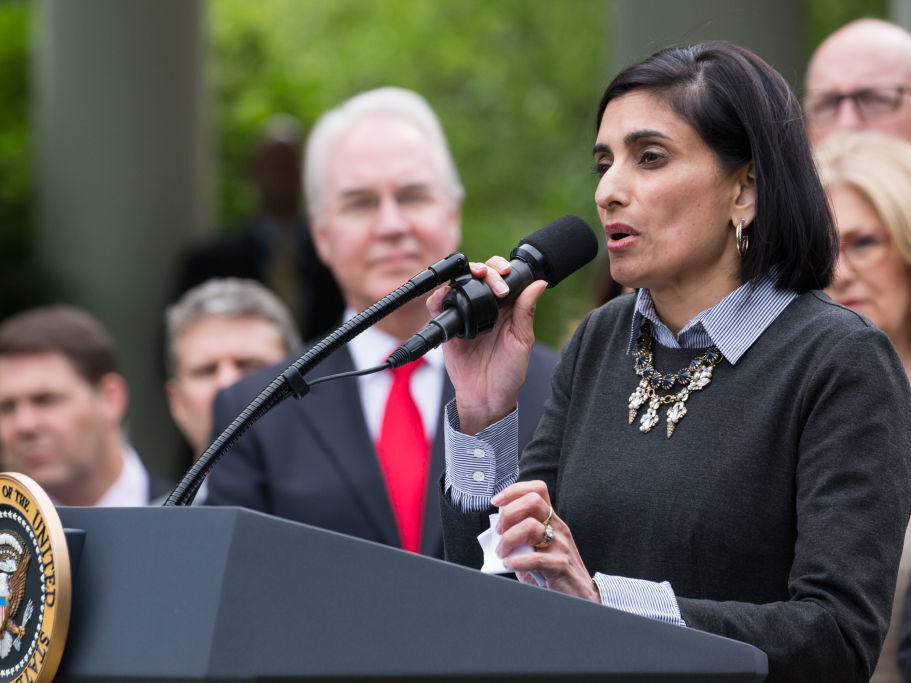
Seema Verma, administrator of the Centers for Medicare and Medicaid Services, at a White House press conference in May. More people moving off Medicaid, she says, would be a good outcome.

NurPhoto/NurPhoto via Getty Images

hide caption

toggle caption

NurPhoto/NurPhoto via Getty Images

Kentucky got the green light from the federal government Friday to require people who get Medicaid to work. It’s a big change from the Obama administration, which rejected overtures from states that wanted to add a work requirement.

Medicaid’s chief federal officer is Seema Verma; her home state of Indiana submitted plans for a work requirement last year, and the approval letter could come any day now. Under the proposal, people would have to average 20 hours a week of work or another qualifying activity — such as volunteering or getting an education — to get Medicaid.

The goal is to increase employment among Medicaid recipients. But Sara Rosenbaum, a professor of health law and policy at George Washington University, says there’s a problem with that — most people on Medicaid are already working, or looking for work. Or they’re caring for a child or family member, or they’re sick or disabled.

Many of those people would be exempt from a work requirement, and states could also make some allowances for people battling addiction. When you consider all those exemptions, says Rosenbaum, “There is this very, very tiny slice of [of the population] who can work and simply choose not to work and apply for public assistance.”

And even if states create programs that help people find jobs, and provide things like childcare and transportation, Rosenbaum says, there’s no evidence that they would lead to more employment. And those programs are expensive.

“If you do a work program, it costs real money,” she says, “and the federal government has said, ‘we won’t pay any of those costs.’ “

What’s more likely, Rosenbaum says, is that states will basically say, ‘Get a job on your own, or get off Medicaid.’ “

And what that does, she says, is create a hurdle for everybody on Medicaid. People who are working are going to have to prove they are employed, so even people with jobs could stand to lose their insurance because of red tape. In fact, the state of Indiana’s own projections show that with a work requirement, Medicaid will cover fewer people and cost more.

Adam Mueller is an attorney at Indiana Legal Services, which helps people navigate that state’s Medicaid program. He says people already lose coverage because the program can be confusing, and there are administrative errors.

“Somewhere along the way, paperwork gets lost; there’s a miscommunication,” he says, “Folks have sometimes had difficulty proving something as easy as residency.”

And people on Medicaid often deal with crises – they may move a lot, or change phone numbers, which makes it hard to keep track of paperwork. Adding a work requirement on top of all that, Mueller says, would make staying enrolled even harder.

“There are a lot of things that can trip folks up, and that could lead to falling through the cracks,” he says.

Judith Solomon, of the Center for Budget and Policy Priorities, points out that expanded Medicaid helps some employers, too.

“We have an economic structure where there are people whose employment doesn’t provide health care,” she says.

If employees lose Medicaid, get sick and can’t make it to work, she says that’s bad for business.

Verma told reporters during a conference call Thursday that the requirement is supposed to help people.

“People moving off of Medicaid is a good outcome,” she said, “because we hope that that means they do not need the program anymore, that they have transitioned to a job that provides health insurance or that they can afford insurance on their own. This policy helps people achieve the American dream.”

But advocates say the main purpose of Medicaid is to provide health insurance, not increase employment. And until now, the federal government agreed.

Susan Jo Thomas heads Covering Kids and Families of Indiana, which advocates for health coverage in the state. Under Medicaid’s new management, she says, the philosophy surrounding work requirements has changed.

“I don’t know if it jibes with my view of Medicaid, but my view of Medicaid now is irrelevant,” she says. “It’s what Seema Verma and the administration and the folks who are at CMS decide.”

Thomas says she is taking more of a wait and see approach — the details of the work requirement have yet to be ironed out. She says if too many people lose insurance, she’ll be raising concerns with the state.

This story is part of NPR’s reporting partnership with Side Effects Public Media, WFYI and Kaiser Health News.

Let’s block ads! (Why?)

Kentucky Gets OK To Require Work From Medicaid Recipients

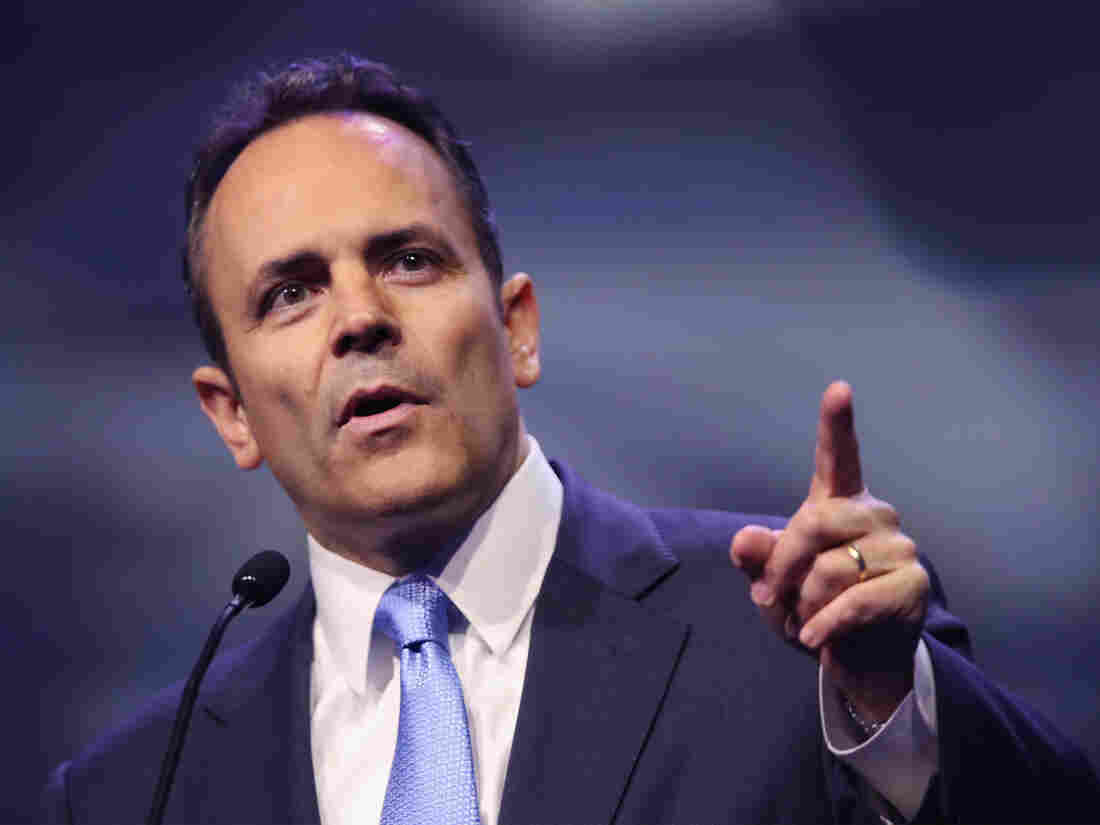
Kentucky Gov. Matt Bevin, R-Ky., has said he thinks that Medicaid recipients should have “skin in the game.”

Scott Olson/Getty Images

hide caption

toggle caption

Scott Olson/Getty Images

Poor residents in Kentucky will have to work or do volunteer work if they want to keep their Medicaid benefits after the Trump administration on Friday approved the state’s request to add the requirements to its Medicaid program.

The new requirements apply only to “able-bodied” adults who get their health insurance through Medicaid, the federal-state health insurance program for the poor. People with disabilities, children, pregnant women and the elderly are exempt from the requirement.

“Kentucky is leading the nation in this reform in ways that are now being replicated all over the nation,” said Kentucky Governor Matt Bevin, in announcing the plan’s approval.

Kentucky’s program was approved a day after the federal Centers for Medicare and Medicaid Services announced it would look favorably on proposals from state to require poor Medicaid beneficiaries to work, go to school, get job training or do volunteer work to earn health coverage.

Nine other states — Arizona, Arkansas, Indiana, Kansas, Maine, New Hampshire, North Carolina, Utah and Wisconsin — have asked CMS to allow them to add “community engagement” requirements to their Medicaid programs.

CMS Administrator Seema Verma says the work requirement option is designed improve people’s financial status and health outcomes.

In addition to the work requirement, some of Kentucky’s Medicaid beneficiaries will have to begin paying premiums for their coverage and will have to meet certain milestones to earn dental and vision care.

Before Verma joined CMS she was a private consultant and an architect of the Kentucky plan that was approved Friday.

It’s not clear how many people would be affected by the new rules in Kentucky and elsewhere.

A study by the Kaiser Family Foundation found that about 60 percent of “able-bodied” Medicaid beneficiaries already work. And a third of those who don’t have jobs say it’s because they are ill or disabled.

Let’s block ads! (Why?)

Scramble Is On To Care For Kids If Insurance Coverage Lapses

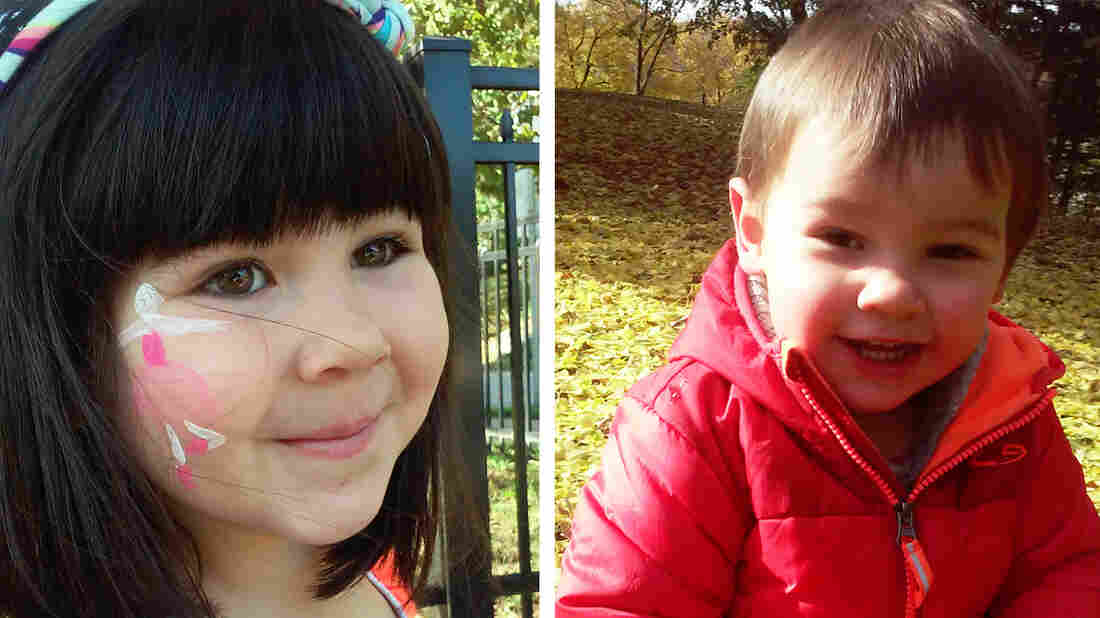
Ariel Haughton’s children Rose (left), 4, and Javier, 2, are covered by CHIP. Haughton is upset that lawmakers have left CHIP in flux for her two children and millions of kids around the country.

Courtesy of Ariel Haughton

hide caption

toggle caption

Courtesy of Ariel Haughton

Dr. Mahendra Patel, a pediatric cancer doctor, has begun giving away medications to some of his young patients, determined not to disrupt their treatments for serious illnesses like leukemia. He’s worried Congress will fail to renew funding soon for a health program that pays for the care of millions of children across the country.

In his 35 years of practice, Patel, of San Antonio, has seen the lengths to which parents will go for their critically ill children. He has seen couples divorce just to qualify for Medicaid coverage, something he fears will happen if the Children’s Health Insurance Program is axed. “They are looking at you and begging for their child’s life,” he said.

The months-long failure on Capitol Hill to pass a long-term extension to CHIP, which provides health coverage to 9 million lower-income children, portends serious health consequences for many of them.

About 1.7 million children in 20 states and the District of Columbia could be at risk of losing their CHIP coverage in February because of the funding shortfall, according to a report released Wednesday by the Georgetown University Center for Children and Families.

Treatment plans for serious diseases can span months, leaving some doctors, like Patel, to jury-rig solutions in case CHIP falls through. The challenges are particularly great for kids with chronic or ongoing illnesses like asthma or cancer.

Dr. Joanne Hilden, a pediatric cancer physician in Aurora, Colo., and past president of the American Society of Hematology-Oncology, said the families of cancer patients who depend on CHIP are in a difficult position because they can’t schedule care to be finished before program funding runs out.

A San Antonio pediatrician, Dr. Carmen Garza, is advising parents to be sure to keep their children’s asthma medications and other prescriptions current and to fill any refills they can so that they have vital medicines if CHIP expires.

Federal funding for CHIP originally expired Oct. 1. In December, Congress provided $2.85 billion to temporarily fund the program. That money was supposed to help states get through at least March, but it’s coming up short.

The Centers for Medicare & Medicaid Services last week said it couldn’t guarantee funding to all states past Jan. 19.

A few states, including Louisiana and Colorado, plan to use state funds to make up for the lack of federal money. It’s a drastic step, since the federal government pays, on average, nearly 90 percent of CHIP costs.

Most states can’t afford to make up the difference and will have to freeze enrollment or terminate coverage when their federal funding runs dry. Virginia and Connecticut, for instance, can promise to keep their CHIP program running only through February, officials said.

The largest states seem to be in the best shape, though even they can guarantee only a few months of care. Florida, California and Texas officials said they have enough CHIP funding to last through March. New York officials said they have enough money to last until at least mid-March.

Before Congress passed the short-term funding fix in late December, CHIP programs survived on the states’unspent funds and a $3 billion pool of CHIP money controlled by CMS.

Republicans and Democrats on Capitol Hill say they want to continue CHIP, but they have been unable to agree on how to fund it. The House plan includes a controversial provision — opposed by Democrats — that takes millions of dollars from the Affordable Care Act’s Prevention and Public Health Fund and increases Medicare premiums for some higher-earning beneficiaries.

The Senate Finance Committee reached an agreement to extend the program for five years but didn’t unite on a funding plan.

But two key Republican lawmakers — Sen. John Cornyn of Texas, who is part of the Senate leadership, and Rep. Greg Walden of Oregon, who chairs the House Energy and Commerce Committee — told reporters Wednesday that they think an agreement is close.

Alabama and Utah are among the states unsure how long their federal CHIP funding will last, according to interviews with state officials. Part of the problem is they haven’t been told by CMS how it will disburse money from the agency’s so-called redistribution pool. Under the pool’s restrictions, states with extra money would have to give it to states that are running low.

Although hospitals, doctor groups and child health advocates have been sounding the alarm about CHIP for months, the Trump administration has kept quiet, saying only that it’s up to Congress to renew the program.

Without CHIP, dental hygienist Marina Natali says she couldn’t afford health coverage for her sons, 15-year-old Marcus (left) and 12-year-old Ciro. When Ciro broke his arm ice-skating last year, CHIP covered his medical bills.

Courtesy of Marina Natali

hide caption

toggle caption

Courtesy of Marina Natali

When Marina Natali’s younger son broke his arm ice-skating in 2017, she didn’t have to worry about paying for so much as a doctor’s visit: CHIP footed all the medical bills.

If that accident happened later this year, though, Natali, 50, of Aliquippa, Pa., might be scrambling. She can’t afford private coverage for her two children on her dental hygienist pay.

“It’s creating a lot of anxiety about not having insurance and the kids getting sick,” she said.

Dr. Todd Wolynn, a Pittsburgh pediatrician, said families are reacting with “fear and disbelief” to CHIP’s uncertain future. The group practice hasn’t changed any scheduling for CHIP patients, but he said “families are terrified” about the coverage disappearing.

Pennsylvania officials notified CHIP providers in late December — who then informed enrollees — that the state would have to end the program in March unless Congress acts.

“These families don’t know if the rug is being pulled out from them at any time,” he said.

Dr. Dipesh Navsaria, a Madison, Wis., pediatrician and vice president of the state’s chapter of the American Academy of Pediatrics, worries that many parents will be surprised if their children are suddenly without coverage. They may not know that the state-branded programs they use, such as BadgerCare Plus in Wisconsin, Healthy Kids in Florida and All Kids in Alabama, are all part of CHIP.

Ariel Haughton of Pittsburgh said she’s upset her federal lawmakers have left CHIP in flux for her two children and millions of kids around the country. “They seem so cavalier about it,” she said.

If Pennsylvania cancels CHIP, she likely won’t bring Javier, 2, for his two-year checkup unless there’s something clearly wrong with him. “We will have to decide between their health and spending the money on something else,” she said.

Kaiser Health Newsis a nonprofit news service covering health issues. It is an editorially independent program of theKaiser Family Foundation that is not affiliated with Kaiser Permanente.

Let’s block ads! (Why?)

The Anti-Abortion Group That's Urging Clinic Workers to Quit Their Jobs

At a secluded retreat center outside Austin, about a dozen, mostly middle-aged women are gathered in a quiet conference room. Some huddle under blankets to ward off the chill from an unusual Texas cold spell.

Abby Johnson founded the anti-abortion group And Then There Were None after leaving her job running a Planned Parenthood clinic in Texas in 2009.

Courtesy Abby Johnson

hide caption

toggle caption

Courtesy Abby Johnson

This session’s topic: guilt and shame.

“Does anybody feel like they’re still dealing with, like, shame? Like, feeling bad about yourself as a person, because of what you’ve done in the clinics?” Abby Johnson asks the women seated in a circle of chairs around her.

The room is mostly silent. But as the weekend goes on and the participants get more comfortable, they begin to cry and pray together, and to share their stories.

This is a retreat for women who used to work in health centers that perform abortions and now feel conflicted about that work. Johnson, 37, is the CEO and founder of the Texas-based anti-abortion group And Then There Were None. (She says when she came up with the name, she didn’t really think about the Agatha Christie mystery by the same title.)

Most anti-abortion rights groups aim to restrict the procedure through state legislatures and the court system, or by urging pregnant women to carry to term.

Johnson’s goal is to persuade as many workers as possible to leave the field.

She and other members of And Then There Were None visit clinics where abortions are performed. They hold up signs, pass out pamphlets and urge the workers to quit their jobs.

For those who do leave clinic work, the group offers temporary financial assistance, resume help, and spiritual and emotional support, including retreats like the one near Austin. The group does not have a formal religious affiliation, but has a “prayer team” and offers to connect former clinic workers with Christian churches and pastors.

Johnson, a mother of seven, generated headlines — and a fair amount of skepticism and controversy about her story — after she quit her job as a Planned Parenthood clinic director in Bryan, Texas, in 2009. She says she had a change of heart about her work after viewing an abortion through an ultrasound. She describes the moment as a “spiritual awakening.”

Planned Parenthood has disputed some of the details of Johnson’s story, and at one point filed a restraining order against her, fearing she would release confidential patient records from the clinic. Johnson responded that she never intended to disclose any private information, and a judge dismissed the case.

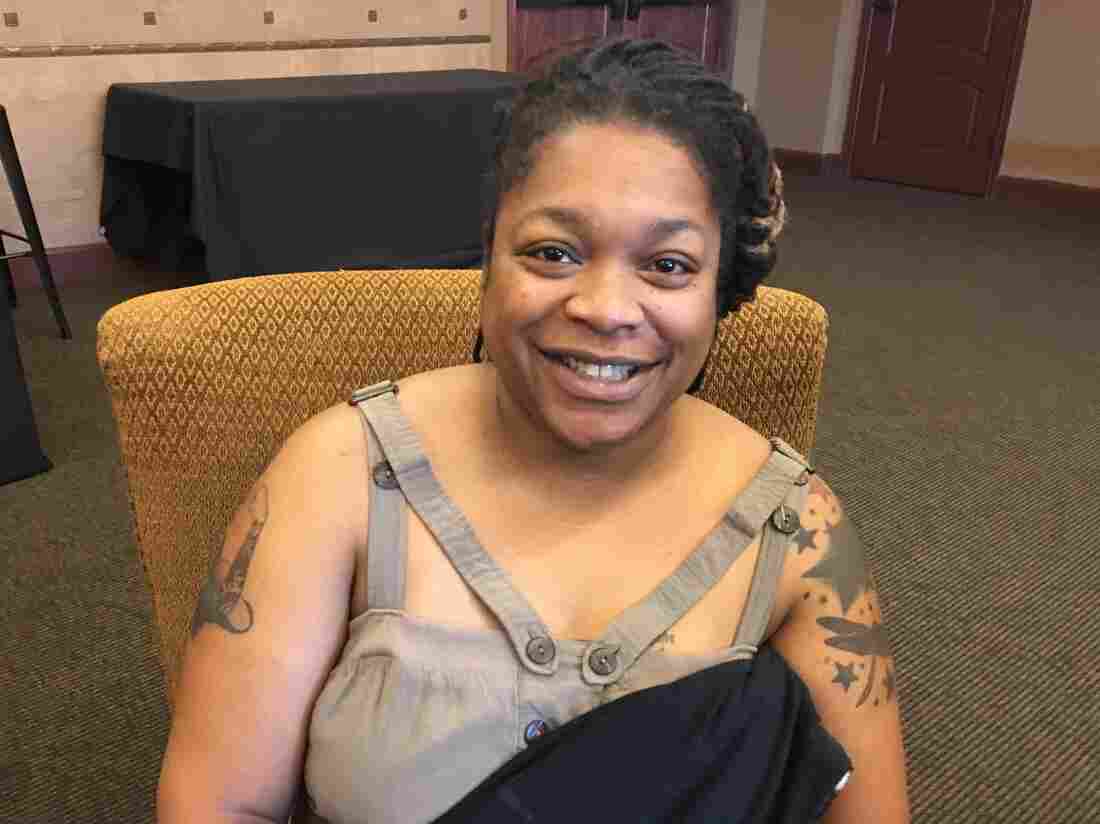
Annette Lancaster, 40, used to manage a Planned Parenthood health center in Chapel Hill, N.C. She says the work made her feel “dark and morbid.”

Sarah McCammon/NPR

hide caption

toggle caption

Sarah McCammon/NPR

Retreat participant Annette Lancaster, 40, is currently a stay-at-home mom. For several months, ending in May 2016, she managed a Planned Parenthood health center in Chapel Hill, N.C.

Lancaster says events like this one provide a place to talk about details that friends on both sides of the abortion debate can be reluctant to discuss.

“These are my sisters, who I can talk to about things I’ve seen and done in the clinic that other people would probably turn green and pass out about,” Lancaster says in a private moment away from the group.

She says the job began to make her feel “dark and morbid,” and she was troubled by the way she says she and some of the other workers referred to fetal remains.

“I just now started being able to use the deep freezer in my home by going through [therapy], because we used to call the freezer the ‘nursery’ … And we used to think that was funny,” she says.

Lancaster says she felt pressure to keep up the number of abortions performed at the clinic each month, even if patients seemed hesitant.

In a statement to NPR, Planned Parenthood South Atlantic denies those claims. The organization says Lancaster was fired for reasons related to her job performance.

The statement, attributed to Associated Affiliate Medical Director Dr. Matt Zerden, reads, in part:

“I would never tolerate my staff using disrespectful language, and Planned Parenthood does not have a fixed number required for any of its services. Planned Parenthood follows all applicable laws and advises patients on the full range of pregnancy options, including choosing adoption, ending a pregnancy, or raising a child. We insist on extremely high standards for all of our staff.”

After her departure, Lancaster says And Then There Were None helped cover a couple months’ salary and a few other expenses.

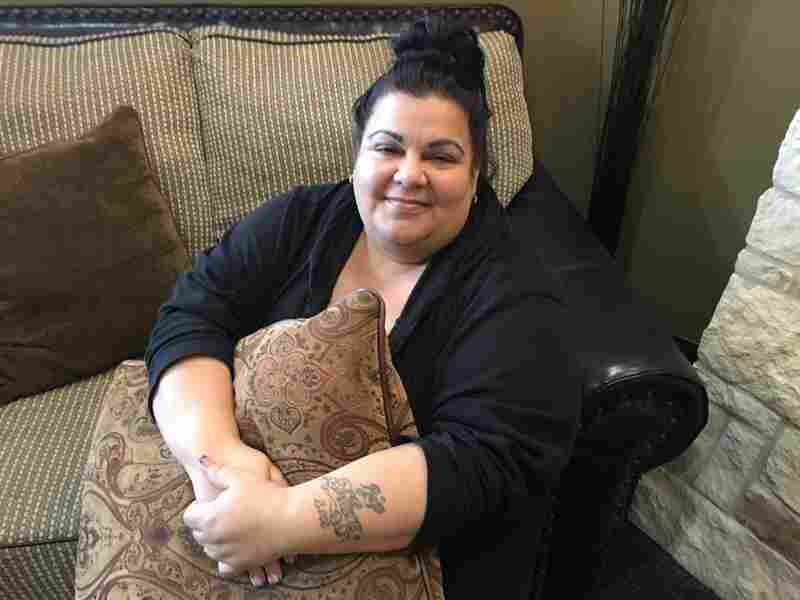
Noemi Padilla, 47, recently left Tampa Women’s Health, an independent clinic in Tampa, Fla. She worked there as a surgical nurse and assisted on abortion procedures up to about 23 weeks gestation.

Sarah McCammon/NPR

hide caption

toggle caption

Sarah McCammon/NPR

The group also provided temporary financial support to Noemi Padilla, a 47-year-old licensed practical nurse, who left her job at Tampa Woman’s Health Center last year.

“I just woke up one Monday morning and I was like, this is it. Today is the day,” Padilla says.

The Tampa clinic performs abortions well into the second trimester of pregnancy — up to 23 weeks, six days gestation. Padilla says the work had begun to plague her conscience.

In an interview with NPR, clinic director Dorothy Brown said several other workers have also left the clinic with assistance from Johnson’s group. She believes many were motivated by the chance to quit their jobs and still get a temporary paycheck.

Abby Johnson says it’s likely that a small number of former workers are primarily motivated by her group’s offer of money. But she says And Then There Were None remains in regular contact with more than 300 people who have left abortion-related jobs.

Abortion-rights advocates say they’re skeptical about that figure.

“The numbers just don’t add up,” saysElizabeth Toledo, a former vice president at Planned Parenthood who now runs a communications firm.

Toledo notes that only around a dozen people (And Then There Were None’s count is slightly higher) have gone public with their regrets about working in clinics where abortions are provided. Johnson’s group counters that many former workers are hesitant to speak out about their experiences because they are ashamed that they worked at a clinic, or they fear retaliation from former employers.

Whatever the total number of healthcare workers who’ve left abortion-related jobs as a result of Johnson’s advocacy, Toledo says it’s not enough to make a major impact on the availability of services. But, she says, the attrition can affect workers and patients nonetheless.

“It’s just another stressor on people who are already going to work in a highly-charged political environment,” Toledo says. “And I don’t think that they’re going to be successful, but they are going to make people have to deal with an additional layer of stress — about their workplace, about their decisions, about their families, and their lives.”

Abby Johnson says after she left her job at Planned Parenthood, she also suffered from that highly charged environment. Some abortion-rights opponents refused to accept her into the movement, calling her “disgusting” and saying she deserved imprisonment or eternal damnation because of her work at the clinic.

“They were, like, ‘You either need to go to jail or hell’ — those were the options,” she says with a laugh.

But Johnson says now those comments have largely faded. She has gradually been embraced by the anti-abortion-rights movement, as one of the rare people who has spent time publicly on each side of this divisive issue.

Let’s block ads! (Why?)

Trump Administration Will Let States Require People To Work For Medicaid

Seema Verma, administrator of the Centers for Medicare and Medicaid Services, led efforts to require work for Medicaid recipients while in charge of Indiana’s program. She was sworn in as administrator of the Centers for Medicare and Medicaid Services by Vice President Pence on March 14.

Nicholas Kamm/AFP/Getty Images

hide caption

toggle caption

Nicholas Kamm/AFP/Getty Images

Updated at 11:29 a.m. ET

The Trump administration is encouraging states to require “able-bodied” Medicaid recipients to work or volunteer in order to keep their health insurance coverage.

On Thursday, the Centers for Medicare & Medicaid Services, which is part of the Department of Health and Human Services, issued new guidelines for states that want some adults to work in exchange for the health insurance coverage.

Today @CMSGov is releasing guidance to support state efforts to improve #Medicaid enrollee #health outcomes by incentivizing community engagement among able-bodied beneficiaries.

— CMS Administrator (@SeemaCMS) January 11, 2018

Under the rules, states can require Medicaid beneficiaries to work, volunteer or participate in job training. People who are elderly or disabled, and pregnant women and children, would be excluded.

CMS Administrator Seema Verma said on Twitter that the new efforts will “improve Medicaid enrollee health outcomes by incentivizing community engagement.”

“This is about helping people rise out of poverty,” Verma said Thursday in a conference call with reporters.

She cited studies that show a correlation between good health and having a job.

But opponents to tying Medicaid to work argue that good health leads to the ability to hold down a job.

“Access to Medicaid makes it easier for people to look for work and obtain employment,” says Suzanne Wikle of the Center for Law and Social Policy. “A so-called work requirement does not support work but instead puts a critical support for work at risk.”

Ten states — Arizona, Arkansas, Indiana, Kansas, Kentucky, Maine, New Hampshire, North Carolina, Utah and Wisconsin — have already filed applications with CMS to add work requirements to their Medicaid programs.

But it’s not clear how many people would be affected by the new rules. A study in December in JAMA Internal Medicine found that about half of the Medicaid recipients in Michigan were already working.

In addition, people who are disabled under the Americans with Disabilities Act but have Medicaid benefits for another reason could be exempted, or the state would be required to make “reasonable modifications” such as a reduced hourly requirement to ensure that the requirements don’t disproportionately hurt people with disabilities.

And states are also required to make such accommodations for people with addiction to opioids and other substances. That could mean counting time spent in drug treatment as a form of “community engagement.”

The range of community engagement requirements can be quite broad, according to the CMS guidelines sent to states on Thursday. In addition to traditional work and job training, engagement could include caring for a child or elderly parent, seeking treatment for drug addiction or going to school.

Verma said the agency wants to give states as much latitude as possible to try out their own ideas.

“There are a lot of different ideas, and a lot of ways to go about this,” she said. “We want to give states as much flexibility as possible because that’s where we’ll be able to evaluate what actually works best.”

Let’s block ads! (Why?)

Fallout From 'Nuclear Button' Tweets: Jump In Sales Of Radiation Drug

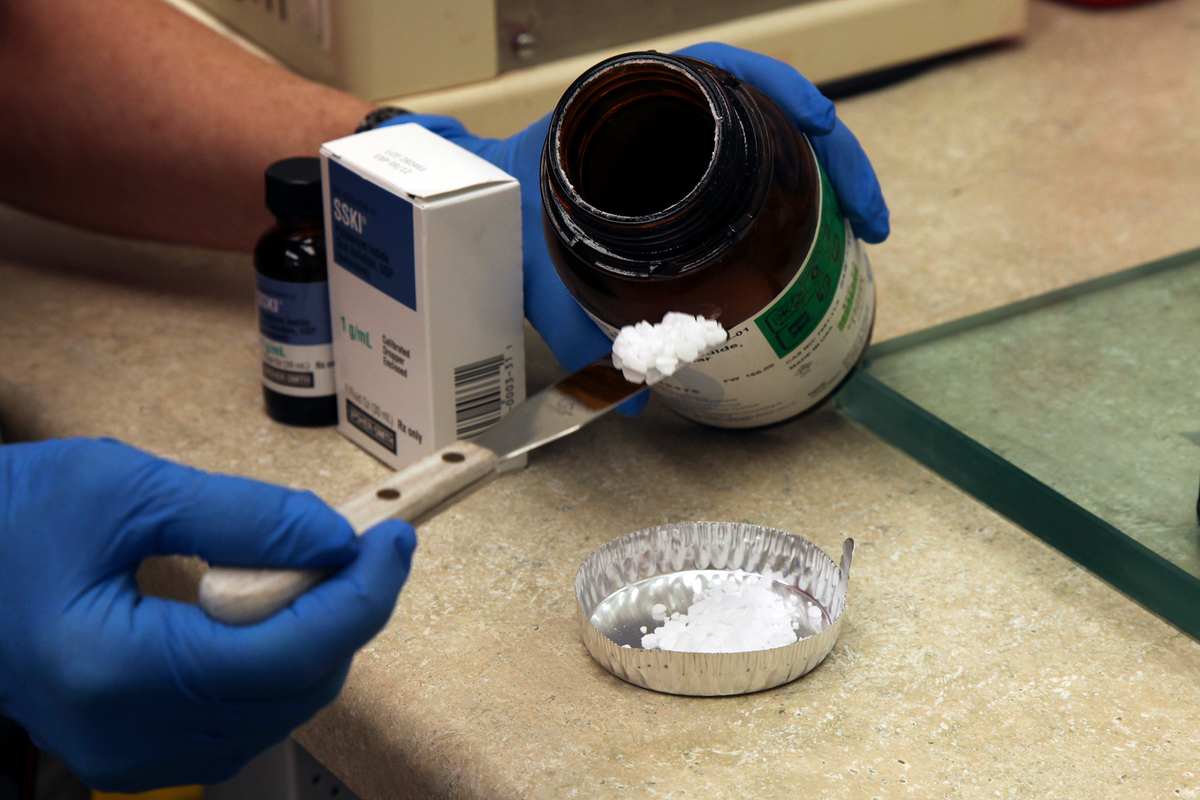
Pharmacist Donna Barsky measures potassium iodide at the Texas Star Pharmacy in 2011 in Plano, Texas.

Richard Matthews/AP

hide caption

toggle caption

Richard Matthews/AP

A Twitter battle over the size of each “nuclear button” possessed by President Trump and North Korea’s Kim Jong Un has triggered a surge in sales of a drug that protects against radiation poisoning.

Troy Jones, who runs the website www.nukepills.com, said demand for potassium iodide soared last week, after Trump tweeted that he had a “much bigger & more powerful” button than Kim – a statement that raised new fears about an escalating threat of nuclear war.

“On Jan. 2, I basically got in a month’s supply of potassium iodide and I sold out in 48 hours,” said Jones, 53, who is a top distributor of the drug in the United States. His Mooresville, N.C., company sells all three types of the over-the-counter product approved by the Food and Drug Administration. No prescription is required.

North Korean Leader Kim Jong Un just stated that the “Nuclear Button is on his desk at all times.” Will someone from his depleted and food starved regime please inform him that I too have a Nuclear Button, but it is a much bigger & more powerful one than his, and my Button works!

— Donald J. Trump (@realDonaldTrump) January 3, 2018

In that two-day period, Jones said, he shipped about 140,000 doses of potassium iodide, also known as KI, which blocks the thyroid from absorbing radioactive iodine and protects against the risk of cancer. Without the tweet, he typically would have sent out about 8,400 doses to private individuals, he said.

Jones also sells to government agencies, hospitals and universities, which aren’t included in that count.

Alan Morris, president of the Williamsburg, Va.-based pharmaceutical company Anbex Inc., which distributes potassium iodide, said he has seen a bump in demand, too.

“We are a wonderful barometer of the level of anxiety in the country,” Morris said.

A spokeswoman for a third company, Recipharm AB, which sells low-dose KI tablets, declined to comment on recent sales.

Jones said this isn’t the first time in recent months that jitters over growing nuclear tensions have boosted sales of the drug, which comes in tablet and liquid form and should be taken within hours of exposure to radiation.

It’s the same substance often added to table salt to provide trace amounts of iodine that ensure proper thyroid function. Jones sells his tablets for about 65 cents each, though they’re cheaper in bulk. Morris said he sells the pills to the federal government for about a penny apiece.

Yet, neither the FDA nor the Centers for Disease Control and Prevention recommends that families stockpile potassium iodide as an antidote against nuclear emergency.

“KI (potassium iodide) cannot protect the body from radioactive elements other than radioactive iodine — if radioactive iodine is not present, taking KI is not protective and could cause harm,” the CDC’s website states.

The drug, which has a shelf life of up to seven years, protects against absorption of radioactive iodine into the thyroid. But that means that it protects only the thyroid, not other organs or body systems, said Dr. Anupam Kotwal, an endocrinologist speaking for the Endocrine Society.

“This is kind of mostly to protect children, people ages less than 18 and pregnant women,” Kotwal said.

States with nuclear reactors and populations within a 10-mile radius of the reactors stockpile potassium iodide to distribute in case of an emergency, according to the Nuclear Regulatory Commission. An accident involving one of those reactors is far more likely than any nuclear threat from Kim Jong Un, Anbex’s Morris said.

Still, the escalating war of words between the U.S. and North Korea has unsettled many people, Jones said. Although some of his buyers may hold what could be regarded as fringe views, many others do not.

“It’s moms and dads,” he said. “They’re worried and they find that these products exist.”

Such concern was underscored last week, when the CDC announced a briefing on the “Public Health Response to a Nuclear Detonation.” One of the planned sessions is titled “Preparing for the Unthinkable.”

Hundreds of people shared the announcement on social media, with varying degrees of alarm that it could have been inspired by the presidential tweet.

Does 21st Century America realize the horror of all of this?
Remember duck-and-cover?
Time to watch “On The Beach” for a little wake-up reality.#VeteransAgainstTrump@TheDemocrats
RT
The #CDC Wants to Get People Ready for a Nuclear Detonation https://t.co/MP4h34p4IA

— Jackson Steele (@askboomer1949) January 8, 2018

A CDC spokeswoman, however, said the briefing had been “in the works” since last spring. The agency held a similar session on nuclear disaster preparedness in 2010.

“CDC has been active in this area for several years, including back in 2011, when the Fukushima nuclear power plant was damaged during a major earthquake,” the agency’s Kathy Harben said in an email.

Indeed, Jones saw big spikes in potassium iodide sales after the Fukushima Daichii disaster, after North Korea started launching missiles — and after Trump was elected.

“I now follow his Twitter feed just to gauge the day’s sales and determine how much to stock and how many radiation emergency kits to prep for the coming week,” Jones said, adding later: “I don’t think he intended to have this kind of effect.”

Kaiser Health News is a nonprofit news service covering health issues. It is an editorially independent program of the Kaiser Family Foundationthat is not affiliated with Kaiser Permanente. Follow JoNel Aleccia on Twitter: @JoNel_Aleccia.

Let’s block ads! (Why?)

Desperate Cities Consider 'Safe Injection' Sites For Opioid Users

The mix of people in rows of tents under a bridge in Philadelphia’s Kensington neighborhood includes homeless adults and some visitors from the suburbs who come here to inject opioids in secret.

Natalie Piserchio for WHYY

hide caption

toggle caption

Natalie Piserchio for WHYY

Top Philadelphia officials are advocating that the city become the first in the U.S. to open a supervised injection site, where people suffering from heroin or opioid addiction could use the drugs under medical supervision.

But the controversial proposal aimed at addressing the city’s deadly drug crisis must first overcome resistance from top city police officials, community residents and the federal government.

It’s a divisive idea: People bring their own drugs to shoot up under the watch of medical staff, in a facility that provides clean needles and other equipment. Advocates say the goal is to provide a bridge to treatment.

There are about 90 such official facilities around the world. Though some U.S. cities — including Seattle, San Francisco and Denver — are talking about establishing this sort of city-sponsored site, there are none in the United States, so far.

Philadelphia may be unusually well-positioned to be the first; its opioid crisis is mostly concentrated in one neighborhood, where some of the purest, cheapest and most deadly heroin in the nation can be purchased.

The city’s new district attorney, Larry Krasner, has promised he would not prosecute users at the safe-injection site.

“Supervised injection sites are a form of harm reduction,” says Krasner, who was sworn into office just last week.

The rise in opioid deaths in Philadelphia reflects a nationwide epidemic; the size and lethality of the problem, Krasner says, should be shifting the conversation away from the country’s long history of responding to drug users with criminal punishment.

“The only way to get people to turn their lives around,” he says, “is to keep them alive long enough so they can do that. And we’re going to do that.”

Philadelphia’s Mayor, Jim Kenney, says he soon will make a public announcement on the topic of establishing a supervised injection site — but, so far, he has refused to provide details.

Sources close to Kenney say he is still working to bring skeptical members of his administration and other opponents on board.

Kenney has been working on Philadelphia’s drug problem for months; first launching a task force to combat the opioid crisis, then creating a new position in city hall to coordinate so-called harm reduction initiatives.

Other plans underway include establishing rules for doctors to more safely prescribe opioids; public education campaigns aimed at combating the stigma around usage of the drugs; and ensuring that those whose overdose is reversed in an emergency room are put directly into treatment — what’s known as a “warm handoff.”

The idea of a safer place to use heroin appeals to people like Johnny, a 39-year-old electrician from Philadelphia’s suburbs. (Because he is using an illegal drug, NPR is using only his first name.)

“I would absolutely go there,” Johnny says, adding that he recently relapsed after being sober for seven years.

“Every shot — you never know what’s going to happen,” he says. “It can always be your last one.”

On his lunch breaks from work, Johnny says, he often travels to Philadelphia’s Kensington neighborhood — the epicenter of the city’s opioid crisis — to use drugs.

Recently, a sprawling open-air drug market and homeless encampment in Kensington along decommissioned train tracks was cleared out, prompting droves of opioid users to regroup in smaller pockets under bridges, in alleyways, on the streets and in abandoned buildings.

Proponents of medically supervised, indoor sites for opioid injection say such places would be much safer than tent encampments like this one — and could help people addicted to opioids transition into treatment and away from drug use.

Natalie Piserchio for WHYY

hide caption

toggle caption

Natalie Piserchio for WHYY

Under one of those bridges recently, there was a row of tents. Many people live there, and some visitors, like Johnny, use the tents as a private place to do heroin.

He says he would rather inject his drugs in a medically-supervised facility, and thinks Philadelphia residents would prefer that, too.

“People are not going to be shooting up on your front stoop” he says, “or in your backyard, hiding. It will cut down on people dying in abandoned house around here — or even here.” He motions to the tents. “They come down here and get high and die here under a bridge.”

But some law enforcement officers have a different view. Philadelphia’s police commissioner, Richard Ross, has been skeptical about designating a legal place for the use of an illegal narcotic.

And even if local police can be convinced, the proposal is likely to provoke a standoff with the federal government, which has promised to aggressively crack down on similar plans in Vermont.

Patrick Trainer, a special agent with the Drug Enforcement Agency’s Philadelphia field office, says he is no fan of the model.

“The concept, for us, with safe injection sites, is just not a concept we can get behind,” Trainer says.

Such a site could attract street drug dealers and increase their sales, Trainer worries. More than that, he says, the federal government is leery about looking the other way in the face of drug use, worried about where that first step might lead.

“Is it going to stop with a safe injection site?” he asks. “Are we going to do that and then, next year and the year following, are we then going to be talking about, OK, there are still overdose deaths, so maybe we need to look into government-supplied drugs?”

Jen Bowles, a researcher now at the University of California, San Diego, who has studied opioid use in Kensington, says research in other cities has shown that safe injection sites actually decrease fatal overdoses and do not cause a spike in crime.

“There’s a tremendous fear that says, ‘If we create a space in which drug users can more safely consume drugs, that may somehow be encouraging drug use,’ ” Bowles says. “But that conflicts with the science that finds that not to be true.

Still, evidence-based studies don’t change all minds. No Kensington residents agreed to speak out publicly for this story, since the exact proposal is still being hashed out. Some, though, say the idea of a safe-injection site makes them uneasy. Winning the support of the local community will likely be another battle.

Nonetheless, the statistics are creating new urgency.

Opioids were the main driver in what officials believe were 1,200 drug overdose deaths in Philadelphia last year.

That’s four times the city’s murder rate.

Standing along the row of tents, Johnny thinks he has a good counter-argument for those troubled by the notion that opioid injections by people like him can and should be made to be safer, and that the city should play a role in making that happen.

“Someday their children could be out here using,” he says. “Wouldn’t they want their children to be in a safe environment if they’re not able to beat the disease?”

Let’s block ads! (Why?)