New Mix: Better Oblivion Community Center, Bellows, Duster & More

Clockwise from upper left: Better Oblivion Community Center, Heather Woods Broderick, Mdou Moctar, Bellows

Courtesy of the artists


hide caption

toggle caption

Courtesy of the artists

On this edition of All Songs Considered I’m joined by Marissa Lorusso, our Tiny Desk Contest leader and also a critical contributor to NPR Music’s Turning the Tables project.

Marissa plays music from the ’90s San Jose trio, Duster. They’re getting back together, but not before a boxed set of their storied past comes out. Marissa is also a fan of Bellows, the music of Oliver Kalb, who we also know from the band Gabby’s World (formerly Eskimeaux and O). And we hear music from Heather Woods Broderick, a songwriter and singer we’ve featured not only for her own music but for being a stage and studio partner with Sharon Van Etten. I play music from Tiny Desk Contest entrant Jackie Mendoza who performs a stripped-down, more focused remake of the song she submitted to our contest called “De Lejos” about loving from afar. We also hear great trance guitar from a Tuareg musician from the Saharan region. It’s a recording he made in Detroit after a chance meeting with a producer who shared his love of ZZ Top’s Tres Hombres record.

But first, I open the show with my current favorite album of 2019, one that came out as huge surprise just last week, by Conor Oberst and Phoebe Bridgers. They call their project Better Oblivion Community Center. — Bob Boilen

Artists And Songs Featured On This Episode

Cover for Bett

Better Oblivion Community Center

  • Song: Dylan Thomas

Better Oblivion Community Center is last week’s surprise collaboration from the songwriting team of Conor Oberst and Phoebe Bridgers. It’s a harmonious fusion of alt-country and modern folk. Among the album’s standouts is “Dylan Thomas,” an homage to the Welsh poet and writer known for his idiosyncratic introspection and boisterous drinking — the latter ultimately leading to his untimely death in 1953.

Better Oblivion Community Center is available now from Dead Oceans.

[embedded content]

YouTube


Cover for The Rose Gardener

Bellows

  • Song: The Rose Gardener

“The Rose Gardener,” the new single from Bellows — the recording project of Brooklyn based songwriter and producer Oliver Kaib — examines the challenges of making art in the current climate of political divisiveness, comparing the creative process to the tending of a rose bud in the dead of winter. The record features support from a bevy of friends and fellow bedroom artists, including members of Gabby’s World and Florist.

The Rose Gardener is out Feb. 22 via Topshelf Records.

[embedded content]

YouTube


Cover for What You're Doing to Me

Duster

  • Song: What You’re Doing To Me

In the late ’90s, San Jose trio Duster quietly perfected a blend of slowcore-meets-space rock style of music. Stratosphere, the band’s 1998 debut, is regarded as an emblem of the decade’s lo-fi, indie movement. After nearly 20 years of inactivity, Duster is back with Capsule Losing Contact, a box set containing two full-length LPs, their 1975 EP, demos, and previously unreleased singles, including “What You’re Doing to Me.”

Capsule Losing Contact is available March 22 via Numero Group.

[embedded content]

YouTube


Cover for Invitation

Heather Woods Broderick

  • Song: Where I Lay

Although known for her contributions to influential projects, including Horse Feathers, Sharon Van Etten, and Laura Gibson, the songwriter Heather Woods Broderick has found her own voice in the world of folk, releasing two delicate and gorgeous records in the past decade: 2009’s From the Ground and 2015’s Glider. This April, Broderick returns with Invitation, a memento of the singer’s time spent recording in the mist of the Oregon coast last year. In a press release, Broderick shared that “Where I Lay,” the album’s lead single, is “a poem about the impermanence of all things.”

Invitation is out April 19 via Western Vinyl.

[embedded content]

YouTube


Cover for De Lejos

Jackie Mendoza

  • Song: De Lejos

With a playful combination of electro-pop and Latin-driven beats, Jackie Mendoza first caught our attention at last year’s SXSW music festival. Fans of the Tiny Desk series might remember “De Lejos” as Mendoza’s submission to last year’s Tiny Desk Contest, the NPR Music series that provides a platform for emerging artists from around the world. Recently signed to Luminelle Recordings, Mendoza is slated to announce her debut album’s release date in the coming weeks.

[embedded content]

YouTube


Cover for Illana (The Creator)

Kamane Tarhanin


Audio for this story is unavailable.

Mdou Moctar

  • Song: Kamane Tarhanin

Growing up in a small village outside of Niger, secular music was strictly off limits for the Tuareg guitarist Mdou Moctar. Flash forward to 2018 where, while recording his first studio album, the artist bonded with Detroit producer Chris Koltay over their mutual love of ZZ Top. It’s easy to imagine the breadth of Mocatar’s musical influences. “Kamane Tarhanin,” the debut single from Ilana (The Creator), is a droning, hypnotic, and psychedelic meditation.

Ilana (The Creator) is available March 29 via Sahel Sounds.

Ilana: The Creator by Mdou Moctar


Let’s block ads! (Why?)

A Fainting Spell After A Flu Shot Leads To $4,692 ER Visit

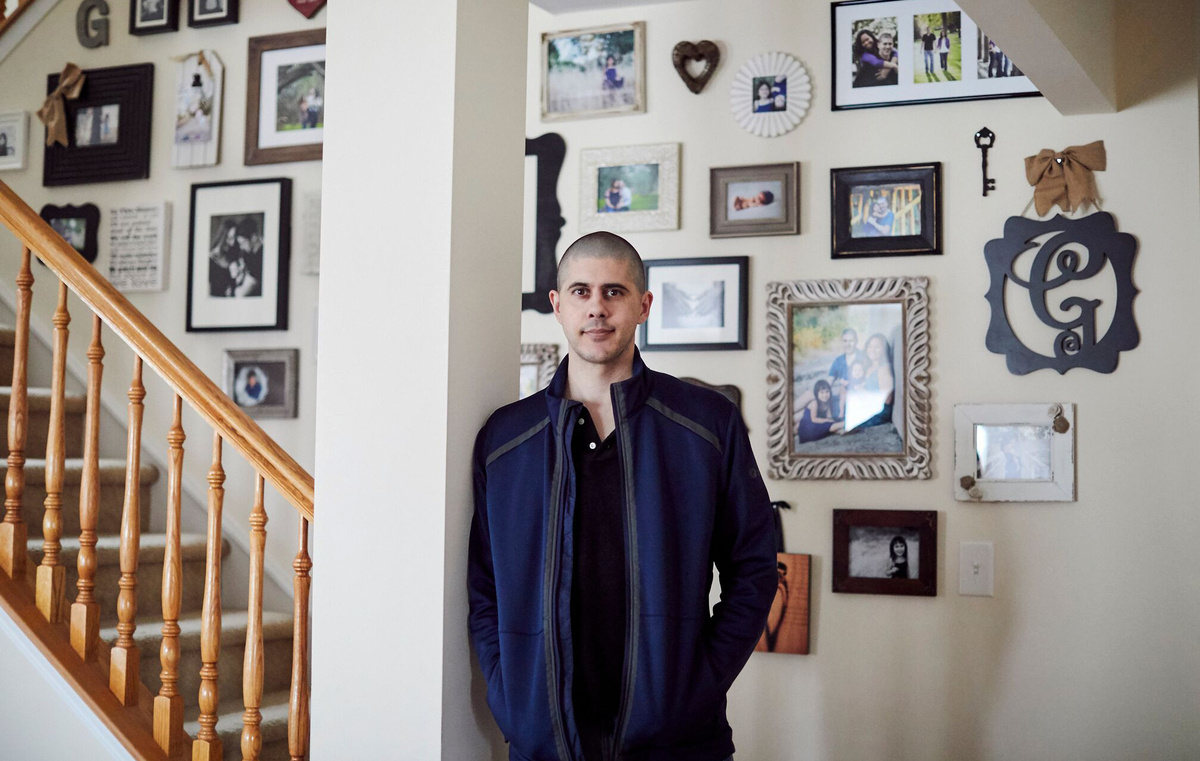
Matt Gleason fainted at work after getting a flu shot, so colleagues called 911 and an ambulance took him to the ER. Eight hours later, Gleason went home with a clean bill of health. Later still he got a hefty bill that wiped out his deductible.

Logan Cyrus for KHN


hide caption

toggle caption

Logan Cyrus for KHN

Matt Gleason had skipped getting a flu shot for more than a decade.

But after suffering a nasty bout of the virus last winter, he decided to get vaccinated at his Charlotte, N.C., workplace in October. “It was super easy and free,” said Gleason, 39, a sales operations analyst.

That is, until Gleason fainted five minutes after getting the shot. Though he came to quickly and had a history of fainting, his colleagues called 911. And when the paramedics sat him up, he began vomiting. That symptom worried him enough to agree to go to the hospital in an ambulance.

Bill Of The Month

Read the other stories in our series here.

He spent the next eight hours at a nearby hospital — mostly in the emergency room waiting area. He had one consult with a doctor via teleconference as he was getting an electrocardiogram. He was feeling much better by the time he saw an in-person doctor, who ordered blood and urine tests and a chest X-ray.

All the tests to rule out a heart attack or other serious condition were negative, and Gleason was sent home at 10:30 p.m.

And then the bill came.

The patient: Matt Gleason, who works for Flexential, an information technology firm in Charlotte. He is married with two children.

Total bill: $4,692 for all the hospital care, including $2,961 for the ER admission fee, $400 for an EKG, $348 for a chest X-ray, $83 for a urinalysis and nearly $1,000 for various blood tests. Gleason’s insurer, Blue Cross and Blue Shield of North Carolina, negotiated discounts for the in-network hospital and reduced those costs to $3,711. Gleason is responsible for that entire amount because he had a $4,000 annual deductible. (The ambulance company and the ER doctor billed Gleason separately for their services, each about $1,300, but his out-of-pocket charge for each was $250 under his insurance.)

Service provider: Atrium Health Pineville (formerly called Carolinas HealthCare System-Pineville), a 235-bed nonprofit hospital in Charlotte and one of more than 40 hospitals owned by Atrium.

Medical service: On Oct. 4, Gleason was taken by ambulance to Atrium Health Pineville’s emergency room to be evaluated after briefly passing out and vomiting following a flu shot. He was given several tests, mostly to check for a heart attack.

What gives: Fainting after getting the flu vaccine or other shots is a well-described phenomenon in the medical literature. But once 911 is summoned, you could be facing an ER work-up. And in the U.S., that usually means big money.

The biggest part of Gleason’s bill — $2,961 — was the general ER fee. Atrium coded Gleason’s ER visit as a Level 5 — the second-highest and second-most expensive — on a 6-point scale. It is one step below the code for someone who has a gunshot wound or major injuries from a car accident. Gleason was told by the hospital that his admission was a Level 5 because he received at least three medical tests.

Gleason argued he should have paid a lower-level ER fee, considering his relatively mild symptoms and how he spent most of the eight hours in the ER waiting area.

The American Hospital Association, the American College of Emergency Physicians and other health groups devised criteria in 2000 to bring some uniformity to emergency room billing. The different levels reflect the varying amount of resources (equipment and supplies) the hospital uses for the particular ER level. Level 1 represents the lowest level of ER facility fees, while ER Level 6, or critical care, is the highest. Many hospitals have adopted the voluntary guidelines.

David McKenzie, reimbursement director at the American College of Emergency Physicians, said the guidelines were set up to help hospitals charge appropriately. Asked if hospitals have an incentive to perform extra tests to get patients to a higher-cost billing code, McKenzie said: “It’s not a perfect system. Hospitals have an incentive to do a CT exam, and taxi drivers have an incentive to take the long way home.”

The guidelines don’t determine the prices hospitals set for each ER level. Hospitals are free to set whatever prices they want as long as their system is consistent among patients, he said.

He said the multiple tests on Gleason suggest the hospital was worried he could be seriously ill. But he questioned why Gleason was told to stay in the ER waiting area for several hours if that was the case. It’s also not clear if Gleason’s history of fainting and overall good health was considered.

Blue Cross and Blue Shield of North Carolina said in a statement that the hospital “appears to have billed Gleason appropriately.” It noted the hospital reduced its costs by about $980 because of the insurer’s negotiated rates. But the insurer said it has no way to reduce the general ER admission fee.

“We work hard to negotiate discounts that reduce costs for our members, but costs are still far too high,” the insurer said. “This forces consumers to pay more out of pocket and drives up premiums.”

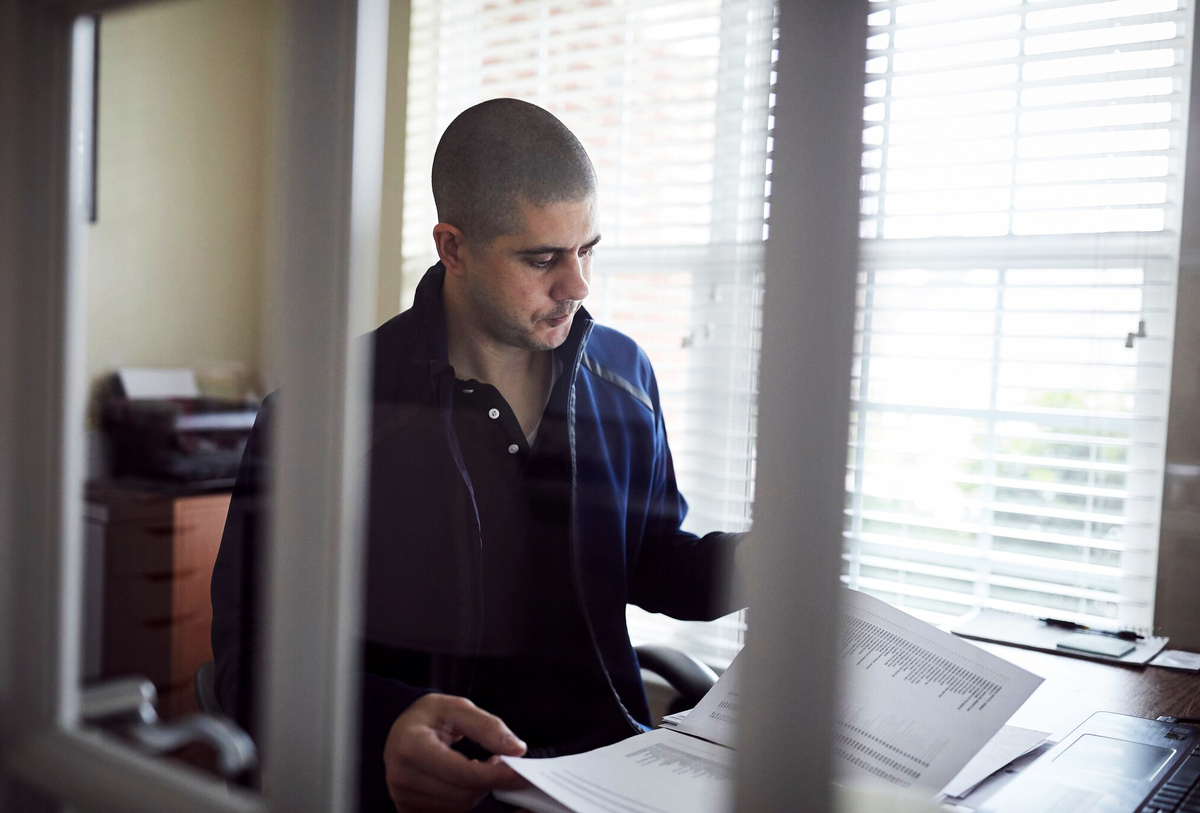
Gleason in fighting his bill actually got the hospital to send him its entire “chargemaster” price list for every code — a 250-page, double-sided document on paper. He was charged several hundred dollars more than the listed price for his Level 5 ER visit.

“In this specific example, the price of admission to the ER was more than $2,960. That was on top of more than $1,000 for the medical procedures actually performed. We won’t significantly bring down health care costs until we address the high prices like these,” BCBS-NC said in the statement.

John Hennessy, chief business development officer for WellRithms, a consulting firm that reviews bills for large employers, said the hospital charges are significantly higher than what Medicare pays in the Charlotte area, but those are the prices Gleason’s insurer has negotiated. “Seeing billed charges well in excess of what Medicare pays is nothing unusual,” Hennessy said.

He said the insurer most likely agreed to the higher charges to make sure it had the large hospital system in its network. Atrium is the biggest health system in North Carolina.

He said the coding “makes sense” because it meets the guidelines — even if that meant a nearly $4,000 bill for Gleason.

“The hospital has every right to collect it regardless if you or I think it’s a fair price,” he said.

Gleason reviews the chargemaster list of prices he received from Atrium Health. He questioned many of the charges on his bill after a trip to the ER.

Logan Cyrus for KHN


hide caption

toggle caption

Logan Cyrus for KHN

Resolution: After Gleason appealed, Atrium Health reviewed the bill but didn’t make any changes. “I understand you may be frustrated with the cost of your visit; however, based on these findings, we are not able to make any adjustments to your account,” Josh Crawford, nurse manager for the hospital’s emergency department, wrote to Gleason on Nov. 15.

Atrium Health, in a statement to KHN and NPR, defended its care and charges as “appropriate.”

“The symptoms Mr. Gleason presented with could have been any number of things — some of them fatal,” the hospital said.

“Atrium Health has set criteria which determines at what level an [emergency department] visit is charged. In Mr. Gleason’s case, there were several variables that made this a Level 5 visit, including arriving by ambulance and three or more different departmental diagnostic tests.”

Gleason said the $3,700 hospital bill won’t bankrupt his family. “What it does is wipe out our savings,” he added.

The takeaway: Gleason, understandably, says he’s reluctant to get a flu shot in the future. But that’s not the best response. It’s important to know that fainting is a known reaction to shots and some people seem particularly prone. It’s best to sit or lie down when you get the vaccine, and wait five to 10 minutes before jumping up and returning to business.

Be aware, if you — or someone else — calls 911 for a health emergency, you are very likely to be taken to the hospital. You probably won’t have a choice of which one. And a hospital trip may not even be needed, so think before you call: “How do I feel?”

The medical professional who administered the shot might have suggested that calling 911 wasn’t a smart or needed response for a known side effect of a vaccine injection in a young person.

The emergency room is the most expensive place to seek care.

In hindsight, Gleason might have gone to an urgent care facility or called his primary care doctor, who could have evaluated him and run some tests at much lower prices, if needed.

But employers, hospitals and doctors regularly tell patients if they need immediate care to go to the ER, and hospitals often tout short waiting times in their ERs.

With high deductibles becoming more common, consumers need to be aware that a single trip to the hospital, especially an ER, could cost them thousands of dollars — even for symptoms that turn out to be nothing serious.


Alex Olgin of WFAE and Elisabeth Rosenthal of Kaiser Health News contributed contributed to the audio version of this story.

Do you have an exorbitant or baffling medical bill? Please share it with us and and tell us about your experience here.

Let’s block ads! (Why?)

South Korea Will Interview Thousands Of Athletes After Rape And Abuse Allegations

Shim Suk-hee (front left) races during the women’s 1,500-meter finals at a World Cup short track speedskating event at the Utah Olympic Oval on Nov. 13, 2016, in Kearns, Utah.

Rick Bowmer/AP


hide caption

toggle caption

Rick Bowmer/AP

South Korea’s human rights commission is launching a sprawling investigation into sexual abuse and violence in sports, following multiple allegations that coaches mistreated and attacked athletes.

The National Human Rights Commission of Korea plans to interview thousands more athletes, including children and adults, about possible mistreatment.

“Physical and sexual harassment in the sports community take place repeatedly within a structured system, rather than accidentally,” the commission’s chief Choi Young-ae told a news conference in Seoul last week. “Violence is exonerated in the performance-centered culture.”

The commission, an independent body set up by the government, says it is assembling a team to carry out the interviews for one year, after which it might recommend further investigation and possible prosecution.

Earlier this month, three government ministries in charge of gender equality, education and sports pledged to coordinate action to make sure offenders, and those who ignore or cover up abuse, are prosecuted.

“From now on, we will make sure that victims of sexual abuse can call on the authorities without having to fear backlash,” Lee Sook-jin, vice minister of gender equality and family, told reporters on Thursday.

South Korea’s Olympic medal counts have ranked in the top 10 in recent years. But the new abuse accusations reveal entrenched problems in the competitive training culture of one of Asia’s rising sports powers, sports and human rights experts say.

The first case that appeared to lead a series of survivors to come forward was short track speedskater Shim Suk-hee, who went missing from the national team’s training camp in early 2018 — weeks before she competed in last year’s Pyeongchang Winter Olympics.

A Sports Ministry investigation found that Shim, a two-time Olympic gold medalist, was beaten by her coach Cho Jae-beom the day she went missing. Cho was fired and convicted of abusing four athletes, including Shim. He was sentenced to 10 months in jail last September.

Shim testified at Cho’s appeal hearing last month. Speaking to reporters outside the courthouse, she said, “I mustered my courage to come here today because I hope there will be no more victims like myself in the sports world and because I want to do what I can, not just for myself, but for the future.”

This month Shim went further, accusing Cho of repeatedly raping her since she was 17. She’s now 21.

Cho, who is 37, has denied the sexual abuse charges through his lawyer but admitted to physically abusing Shim and three other athletes.

As the scandal grabbed headlines, a petition on the presidential office’s website calling for harsher sentencing of Cho got more than a quarter of a million signatures.

Government officials and lawmakers promised to get tough on sexual abuse in sports.

“Recent allegations of physical and sexual violence in sports reveal a shameful side hidden beneath the shiny facade of South Korea as a sports powerhouse,” President Moon Jae-in told his aides in a speech this month.

Also in January, a former judo athlete as well as a taekwondo trainee stepped forward to accuse their coaches of physical and sexual violence.

But some observers say the recent series of accusations are just a drop in the bucket.

“Still, the numbers are low, and we all know why,” says Chung Yong-chul, a professor of sports psychology at Seoul’s Sogang University and an activist against abuse in sports. “Because of all the threats, [abused athletes] are afraid to talk about it.”

Sports and Olympics authorities say the government has taken disciplinary action in 124 cases of physical, sexual and verbal abuse against athletes in the past five years, including 16 incidents of sexual abuse.

Chung says the government has been promising to crack down further on abuse for the past decade, but because of a culture of impunity, little has changed.

Some of this culture, he notes, has roots in South Korea’s Confucian traditions, in which a teacher’s authority is just like a father’s: It must be obeyed and not challenged.

“That’s part of the reason why it’s so hard for athletes to speak out,” he says, “because you’re actually accusing a father-like figure, accusing him as an aggressor.”

That’s also why sports authorities who have the power to punish abusers often shield them, Chung says. He adds that athletes are suspicious of the help centers and hotlines set up for them, and that they fear the services may be working against them and protecting coaches and trainers.

Athletes also face limited educational and career prospects after they retire from sports, Chung notes, so they are often afraid of risking their futures by speaking out.

He acknowledges that the current scandal in South Korea bears some superficial resemblance to the case of Larry Nassar, the former USA Gymnastics national team doctor.

But Chung points out that Nassar was sentenced to a total of more than 300 years in prison for multiple sex offenses. In addition, USA Gymnastics’ entire board of directors resigned, as did the interim president of Michigan State University, where Nassar worked as a physician.

“That didn’t happen in Korea,” Chung says. Although the head of the Korean Sport and Olympic Committee apologized to victims and the public, officials have not resigned or lost their posts as a result of the allegations.

Chung adds that if the snowballing scandal and public outrage don’t force an overhaul of a system that has allowed such abuses, then perhaps nothing will.

“So I think this could be the last chance for Korean sports to actually eradicate all the problems,” he warns.

He hopes South Korea will accept a reduced gold medal haul at next year’s Tokyo Olympics, in exchange for an increase in athletes’ human rights.


NPR News Assistant Se Eun Gong contributed reporting.

Let’s block ads! (Why?)

Congratulations: 10-Year-Old Boy Bowls A Perfect Game

Over the weekend, Kai Struthers became the second youngest person in the country to bowl a perfect 300-point game.


RACHEL MARTIN, HOST:

Good morning. I’m Rachel Martin. When was the last time you went bowling? Maybe you got a few strikes and were pretty happy with yourself because bowling a strike every time is hard – right? – which is why Kai Struthers’ family is so excited. Kai, who is just 10 years old, became the second youngest person in the country to bowl a perfect 300-point game. His coach said when he doesn’t have a bowling ball in his hand, Kai is just a regular 10 year old, but when he does, he is bowling perfection. It’s MORNING EDITION.

Copyright © 2019 NPR. All rights reserved. Visit our website terms of use and permissions pages at www.npr.org for further information.

NPR transcripts are created on a rush deadline by Verb8tm, Inc., an NPR contractor, and produced using a proprietary transcription process developed with NPR. This text may not be in its final form and may be updated or revised in the future. Accuracy and availability may vary. The authoritative record of NPR’s programming is the audio record.

Let’s block ads! (Why?)

Kendall Coyne Schofield Makes History As First Woman To Compete In NHL Skills Competition

Kendall Coyne Schofield became the first woman to compete in the NHL All-Stars Skills Competition this past week. She subbed in for Nathan MacKinnon who couldn’t compete because of a bruised foot.


LULU GARCIA-NAVARRO, HOST:

It all began with a tweet. Colorado Avalanche Center Nathan MacKinnon was all set to compete in the National Hockey League’s All-Star Skills Competition, but he got a bruised foot. So he had to pull out. But McKinnon had another player in mind to fill in. And his team tweeted out an invitation to Kendall Coyne Schofield. She’s a forward for the U.S. women’s national team, which took the gold medal at last year’s Olympics. Her first thought, she said, was, I can do this. And so she did. In the fastest skater event, she posted a time of 14.346 seconds, which placed seventh among some of the NHL’s top players. And it made her the first woman to ever compete in the NHL All-Stars Skills Competition. Obviously, I was a little nervous, Coyne Schofield told ESPN. But she said, I knew it was a moment that was going to break a lot of barriers and a moment that would change the perception of our game.

Copyright © 2019 NPR. All rights reserved. Visit our website terms of use and permissions pages at www.npr.org for further information.

NPR transcripts are created on a rush deadline by Verb8tm, Inc., an NPR contractor, and produced using a proprietary transcription process developed with NPR. This text may not be in its final form and may be updated or revised in the future. Accuracy and availability may vary. The authoritative record of NPR’s programming is the audio record.

Let’s block ads! (Why?)

Naomi Osaka Of Japan Secures Her Second Grand Slam Title With Australian Open Victory

Japan’s Naomi Osaka reacts to her victory over Petra Kvitova of the Czech Republic in the women’s singles final at the Australian Open tennis championships in Melbourne.

Mark Schiefelbein/AP


hide caption

toggle caption

Mark Schiefelbein/AP

Naomi Osaka walked off the court at the Australian Open with her second consecutive Grand Slam victory, cementing her rise to the top of the women’s tennis world.

She defeated Petra Kvitova of the Czech Republic on Saturday, edging out a victory after losing the second set — a hitch that nearly derailed the 21-year-old player.

After winning the first set 7-6 (2), a visibly frustrated Osaka put her face in her hand during the second set, then covered her head with a towel as she walked off the court after losing 5-7. But she returned with renewed determination, sealing her victory with a 6-4 win in the third set.

“I felt like I didn’t want to have any regrets,” the Japanese player told reporters in Melbourne. “I think if I didn’t regroup after the second set, then I would have looked back on this match and probably cried or something.”

Saturday’s victory in the women’s singles final will catapult Osaka, ranked 72nd in the world this time last year, to number one in the Women’s Tennis Association rankings.

Naomi Osaka and Petra Kvitova embrace following Osaka’s victory in the match.

Cameron Spencer/Getty Images


hide caption

toggle caption

Cameron Spencer/Getty Images

That will make her the first Asian woman to top the rankings, according to the Australian Open, and the first Japanese player of either gender. She’ll also be the youngest woman to reach No. 1 in nearly a decade, following then 20-year-old Caroline Wozniacki’s rise to the top in 2010, the Associated Press reports.

Osaka’s last Grand Slam win — her defeat of Serena Williams at the U.S. Open in September — stirred controversy among fans. The referee issued a point penalty for Williams after she broke a racket, then a game penalty for arguing with him. Spectators booed.

Although that win marked the first Grand Slam singles victory to go to a Japanese player, the victory was bittersweet for Osaka, who idolized Williams. (Williams was eliminated in the quarterfinals of the Australian Open last Wednesday, dashing hopes of a rematch with Osaka.)

This time around, there were no jeers. ESPN’s Howard Bryant says Saturday’s contest saw a meeting of two champions.

“This was a match that … you didn’t want to see anybody lose,” Bryant told NPR’s Scott Simon.

Kvitova, who was playing in her first Grand Slam final since surviving a knife attack in her home in 2016, delivered a gracious and grateful speech during the trophy ceremony.

Petra Kvitova plays against Naomi Osaka in the Australian Open.

Kelly Defina/Getty Images for Tennis Australi


hide caption

toggle caption

Kelly Defina/Getty Images for Tennis Australi

“To my team, thank you for everything, but mostly thank you for sticking with me even [as] we didn’t know if I would [be] able to hold a racket again,” she said, fighting back tears amid booming applause.

“We didn’t even know if I would be able to hold the racquet again.”@Petra_Kvitova‘s comeback story is one in a million ?#AusOpen pic.twitter.com/XLz2tc703i

— #AusOpen (@AustralianOpen) January 26, 2019

“You’ve been through so much,” Osaka told Kvitova in her address. “You’re really amazing, and I’m really honored to have played you in the final of a Grand Slam.”

Osaka broke the top 10 in the WTA rankings just last September and made her top five debut the next month. The Florida-based player’s meteoric rise has been met with enthusiasm from Japanese fans, who see her as an inspiration.

“I never imagined in my lifetime that a Japanese player would reach No. 1,” one fan, Daisuke Aizawa, told the AP. “Tennis is already popular here, but this will just add to its popularity and I’m sure more young people will take up the sport now.”

Japanese Prime Minister Shinzo Abe even tweeted his congratulations, along with a picture of the victorious player.

Osaka was born in Japan to a Japanese mother and Haitain father and moved to New York at age 3, the AP reports. After her win, she laughed with reporters and admitted to being shocked by her own victory, but said she’s not focused on the ratings.

“Maybe if I see my sister, you know, I can be like, guess who’s the number one tennis player? Me,” she joked.

Let’s block ads! (Why?)

Not My Job: We Quiz NFL Defensive Back Charles Tillman On Offensive Words

Charles Tillman of the Chicago Bears poses for his 2009 NFL headshot.

NFL Photos/Getty Images

Charles “Peanut” Tillman — a former cornerback for the Chicago Bears — is one of football’s greatest defensive backs. So we’ve invited him to play a game called “Now that’s what I call an offensive line” — three questions about offending people.

Click the audio link above to hear how he does


PETER SAGAL, HOST:

And now the game where people who’ve proved how good they are at their chosen profession find out how well they do with something they didn’t choose. It’s called Not My Job. Charles Tillman, known as Peanut, was one of the greatest defensive backs ever to play football. He was the winner of the Walter Payton Man Of The Year Award for his charitable and community work off the field. And he will be at the Super Bowl next week to help present it to the next winner. Charles Tillman, welcome to WAIT WAIT… DON’T TELL ME.

(APPLAUSE)

CHARLES TILLMAN: Appreciate you – appreciate you. Are those real people clapping or is it…

SAGAL: They are. Yeah. They’re real people.

TILLMAN: …You know, like the…

(CHEERING)

TILLMAN: Oh, OK – cool. Well, you know, I’m on the phone, and I can’t see y’all. So I do a lot of radio interviews. And they have, like, applause on cue where they hit a button…

SAGAL: Yeah.

TILLMAN: …And people just clap.

SAGAL: Yeah.

TILLMAN: If y’all are real people, say peanut on three. One, two, three.

UNIDENTIFIED AUDIENCE: Peanut.

TILLMAN: Damn.

(LAUGHTER)

TILLMAN: That’s pretty cool.

SAGAL: So you’re, of course, one of the great quarterbacks. You actually went to the Super Bowl with the Bears. Not a lot of people can say that, sadly.

TILLMAN: Yeah. Yeah.

(LAUGHTER)

TILLMAN: Yeah.

SAGAL: Well, you got there. That’s all I can say. So I got to ask because, you know, the Super Bowl is this big event that we all watch. What is it like to be a player involved in it? I mean, you’re preparing for a football game. And I understand that’s a pretty hard thing to do. Did all the distractions of, like, media week and the week leading up – did that get in the way?

TILLMAN: It didn’t get in the way. It was just pretty damn boring.

(LAUGHTER)

TILLMAN: I wish I could show y’all a picture. You say the same question over and over.

SAGAL: Yeah.

TILLMAN: With us, it was, you know, hey, talk about Peyton Manning. You know, I talked about Peyton Manning for five days straight. And someone took a picture of me with my head on the table like a bored 5-year-old…

(LAUGHTER)

TILLMAN: …In kindergarten class getting ready to eat some glue.

(LAUGHTER)

TILLMAN: I was so sick of it. It was terrible.

SAGAL: Did you ever – it’s true. I hadn’t thought about that. You’re constantly getting the same boring questions. Did you ever, like, get fed up and just start making stuff up? Like, yeah, I saw Peyton Manning shoot a guy once.

(LAUGHTER)

TILLMAN: Yeah. So you make that up with the people from, like – the people who don’t really cover football…

SAGAL: Yeah.

TILLMAN: …You know, a couple Europeaners (ph)…

SAGAL: Sure, sure, sure.

TILLMAN: …Some people from Asia. And they’re just there because of the Super Bowl. So I give them real dumb answers.

(LAUGHTER)

TILLMAN: It was crazy.

SAGAL: Can you say…

BIM ADEWUNMI: Can I…

SAGAL: Can you remember a really good one?

TILLMAN: I got, like, a bunch of sex questions. So I just, like, made up a bunch of stuff. Like, I don’t know.

SAGAL: Wait a minute. You got sex questions? Like what? I hate to ask, but what kind of sex questions did you get?

TILLMAN: This lady was – I don’t know what exactly I said to the lady. I just made stuff up. I just – I lied. I was like, oh, yeah, yeah, yeah. I did that. Yeah. I did this, whatever…

(LAUGHTER)

TILLMAN: …So she could get out of my way.

SAGAL: That’s great. I love it. So among other extraordinary achievements, you played against Tom Brady. And you’ve intercepted, I think, twice in one game.

TILLMAN: Oh, yeah, buddy.

SAGAL: Yeah.

(LAUGHTER, APPLAUSE)

SAGAL: Tom Brady has such, like, a legend about him – greatest football quarterback who’s ever lived. I mean, do you guys find that, like, intimidating or, like, inspiring? Like, I’m going to go out and pick that guy off.

TILLMAN: I’m going to take option No. 2. I’m going to go out and pick that guy off. I think he is one of the greatest, if not, the greatest to play the game. But yeah. I don’t think anyone’s intimidated by him. I mean, there was a second-year player that went out damn near beat him. So…

SAGAL: Right.

TILLMAN: Yeah. I don’t think players are intimidated by him. I think he knows he has a target on his back. So guys are like, yo, if he’s the greatest, well, I want to go against the greatest to see how good I am.

SAGAL: We heard that you played a game when your wife was extremely pregnant, and she might have gone into labor at any moment.

TILLMAN: Yeah. So this was 2012. My wife was pregnant. I did an interview with Laurence Holmes. Laurence Holmes asked me the question, hey, what are you going to do if your wife goes into labor before the game? Well, I said, well, hell, I’m missing the game. I’m going to go see my daughter be born.

SAGAL: Right.

TILLMAN: A lot of players get ridiculed about how they’re not family men, and they’re just athletes. But I felt like I was attacked because I made the smart choice, the family choice, the more important choice to go be with my family and watch the birth of my daughter…

SAGAL: Right.

TILLMAN: …Because I know women – it’s hard. People think, aw, you just – you push and a baby comes out your vajayjay (ph). It ain’t like that, though.

(LAUGHTER)

TILLMAN: There are a lot of complications that can go wrong with it. You know, I wanted to make sure I was there for my baby.

SAGAL: All of a sudden, I’m really interested in what you told those reporters about sex.

(LAUGHTER)

ADAM BURKE: Also is there a cool nickname for that move?

(LAUGHTER)

SAGAL: What I read was that your wife…

TILLMAN: (Unintelligible) The doctor don’t catch it.

(LAUGHTER)

BURKE: Yeah because you intercepted it.

SAGAL: Exactly. There’s the doctor ready to catch…

TILLMAN: Yeah. My wife’s pretty good at it. She got…

SAGAL: …Your baby. And all of a sudden, you cut it in, intercept.

(LAUGHTER)

TILLMAN: My wife’s pretty good at it. So after – literally, after the game, my wife and I – we go home. She changes and everything, gets her bag. And we go straight to the hospital at, like, midnight, 12:30. And I had my daughter, literally, the next day. I had my daughter that night…

SAGAL: Well, that’s awesome, man.

TILLMAN: …Right after the game.

SAGAL: How she’s doing these days?

TILLMAN: Yeah. Come on, audience. That’s when y’all supposed to go, aw.

AMY DICKINSON: Yeah. We love it. Aw.

(LAUGHTER, APPLAUSE)

SAGAL: He knows what he’s doing. Well, Charles Tillman, it is an absolute joy to talk to you. But we have asked you here to play a game this time we’re calling…

BILL KURTIS: Now, That’s What I Call An Offensive Line.

UNIDENTIFIED AUDIENCE: Ooh.

TILLMAN: Ooh, OK.

SAGAL: You know a lot about defense. You were very good at that. But what do you know about offensive lines? That is things people said or did that offended people. We’re going to ask you about three offensive lines. Get two questions right, you’ll win a prize for one of our listeners. Bill, who is Charles Tillman playing for?

KURTIS: Diane Schultz of Austin, Texas.

SAGAL: All right – you ready to do this?

TILLMAN: All right – big Austin – is she on the phone or…

SAGAL: No, she’s not on the phone. She’s…

(LAUGHTER)

SAGAL: She’s presumably – she is presumably listening at home, though, so, you know.

TILLMAN: I sound real stupid right now talking.

(LAUGHTER)

SAGAL: All right. Here’s your first question, Charles. During the early days of spaceflight, TV stations would often broadcast the astronauts live. And NASA was worried that one of their astronauts, in particular, would swear when the whole world was watching him. In order to prevent that, NASA did what? A, they told him that for safety’s sake he had to wear a gag so he wouldn’t, quote, “inhale space…”

(LAUGHTER)

SAGAL: …B, through a careful PSYOPS campaign, they convinced him that the most offensive swear he could possibly say was gadzooks; or C, they hypnotized him so he would hum any time he wanted to swear.

TILLMAN: I’m going to go with option Charlie. I’m going to go with option C.

SAGAL: Option C – you’re right. That’s what they did.

(SOUNDBITE OF BELL)

DICKINSON: Wow.

SAGAL: NASA says – they admit they did this. They’ve never said what astronaut they did it to. But it is absolutely true that astronaut Pete Conrad, while he was on the moon in one of the Apollo missions, weirdly hummed all the time so…

DICKINSON: Oh, I remember that.

SAGAL: …We have our suspicions.

DICKINSON: Yeah.

SAGAL: All right, Charles, second question – BBC Radio goes to great lengths to keep its listeners safe from offensive content. They even put a decade-long ban on what song because they thought it was offensive? Was it, A, Madonna’s “Like A Virgin,” B, Ice-T’s “Cop Killer,” or C, Bobby Pickett’s “The Monster Mash?”

TILLMAN: I’m going to have to go with my guy Ice-T.

SAGAL: You’d think that. It was “The Monster Mash.”

(LAUGHTER)

DICKINSON: No.

TILLMAN: Oh.

SAGAL: They said – this was back in the ’60s when the song came out. They did not play it for 10 years because they thought it was, quote, “too morbid.”

DICKINSON: Well, it was a graveyard smash.

(LAUGHTER)

SAGAL: It was, but you – all right. This is fine.

TILLMAN: (Inaudible).

SAGAL: Game’s going back and forth, back and forth. The final play you can win. Here we go. Last question – even professional wrestling is not immune to worrying about giving offense. At one time, the World Championship Wrestling organization had to make what sweeping change? A, each wrestler required to say I’m just kidding before trash-talking their opponent; B, instead of heels, wrestling villains were to be called sensible flats…

DICKINSON: (Laughter).

SAGAL: Or C, they were told to stop calling chairs, guitars and ladders brought into the ring to hit people foreign objects and instead call them international objects.

TILLMAN: Based off of the audience and them laughing, I’m going to go with the last one. I’m going to go with C.

SAGAL: You’re all right. That’s what happened.

(SOUNDBITE OF BELL)

DICKINSON: Yeah.

TILLMAN: Boom.

SAGAL: Bill, how did Charles “Peanut” Tillman do on our quiz?

KURTIS: We just saw why the Peanut is Chicago’s champion.

SAGAL: Congratulations.

KURTIS: You won.

ADEWUNMI: Yay.

(LAUGHTER)

TILLMAN: You have, like, the sweetest voice, man. You know that? You could read me bedtime stories any minute.

DICKINSON: Aw.

ADEWUNMI: Aw.

KURTIS: I’ll be there.

(LAUGHTER)

DICKINSON: Sweet – sweet.

SAGAL: Charles “Peanut” Tillman is a former cornerback for the Chicago Bears and Carolina Panthers. He’s a recipient of the Walter Payton Man Of The Year Award, which is presented by Nationwide. Information about his charity, The Charles Tillman Cornerstone Foundation, can be found online. Charles “Peanut” Tillman, thank you so much for joining us on WAIT WAIT… DON’T TELL ME.

(APPLAUSE)

TILLMAN: Hey. Thank you, guys. Thanks, audience.

(SOUNDBITE OF MUSIC)

SAGAL: In just a minute, curl up with a blanket. I mean, really curl up with it in our Listener Limerick Challenge game. Call 1-888-WAIT-WAIT to join us on the air. We’ll be back in a minute with more of WAIT WAIT… DON’T TELL ME from NPR.

Copyright © 2019 NPR. All rights reserved. Visit our website terms of use and permissions pages at www.npr.org for further information.

NPR transcripts are created on a rush deadline by Verb8tm, Inc., an NPR contractor, and produced using a proprietary transcription process developed with NPR. This text may not be in its final form and may be updated or revised in the future. Accuracy and availability may vary. The authoritative record of NPR’s programming is the audio record.

Let’s block ads! (Why?)

Fear Of Deportation Or Green Card Denial Deters Some Parents From Getting Kids Care

Children of Mexican immigrants wait to receive a free health checkup inside a mobile clinic at the Mexican Consulate in Denver, Colo., in 2009. The Trump administration wants to ratchet up scrutiny of the use of social services by immigrants. That’s already led some worried parents to avoid family health care.

John Moore/Getty Images


hide caption

toggle caption

John Moore/Getty Images

As U.S. immigration enforcement becomes stricter under the Trump administration, more immigrant families are cutting ties with health care services and other critical government programs, according to child advocates who work with these families.

In Texas, researchers studying the issue say it’s a major reason why more children are going without health insurance.

Ana, who lives in Central Texas with her husband and two children, has been increasingly hesitant to seek help from the government. In particular, she’s worried about getting help for her 9-year-old daughter, Sara, who was diagnosed with autism a few years ago.

Ana entered the country without documentation about 10 years ago, which is why NPR has agreed not to use her last name. Both her children were born in the U.S. and have been covered by Medicaid for years. But ever since President Trump took office, Ana has only been using the program for basics — such as checkups and vaccinations for the kids.

This decision to forgo care comes at a cost. Managing Sara’s behavior has been challenging, even after the diagnosis brought some clarity about what was going on. Sara acts out and has tantrums, sometimes in public places. Ana finds it difficult to soothe her daughter, and it’s become more awkward as Sara grows.

“To other people, Sara just seems spoiled or a brat,” Ana says.

After the diagnosis, Ana felt unsure about her next steps. She eventually went to a nonprofit in Austin that guides and supports parents whose children have disabilities. It’s called Vela (“candle” in Spanish).

At Vela, Ana learned about a range of services Sara could get access to via her Medicaid plan — including therapy to help the child communicate better.

However, the thought of asking for more government services for her daughter increased Ana’s anxiety. “I am looking for groups who are not associated with the government,” Ana explains.

Ana is in the middle of the long, expensive legal process of applying for permanent resident status, known informally as a “green card.” Recently, the Trump administration announced that it may tighten part of this process – the “public charge” assessment. The assessment scrutinizes how many government services a green card applicant currently uses — or might use later in life. If a person uses many government services, they could pose a net financial burden on the federal budget — or so goes the rationale. The government’s algorithms are complex, but “public charge” is part of the determination for who gets a green card and who doesn’t.

The rule change proposed by the Trump administration — which may not come to pass — has already led many applicants, or would-be applicants, to be wary of all government services, even those that wouldn’t affect their applications.

“I am afraid they will not give me a legal resident status,” Ana says.

Her husband already has a green card, and the couple is determined to not jeopardize Ana’s ongoing application. So they have decided — just to be safe — to avoid seeking any more help from the government. That’s even though their daughter, who is a citizen, needs more therapy than she’s getting right now.

“I feel bad that I have to do that,” Ana says.

She says she would love to treat her daughter’s autism, but has decided that there is nothing more important than getting that green card, in order to keep the family together in the U.S.

“I’m running into families that, when it’s time for re-enrollment or reapplication, they are pausing and they are questioning if they should,” says Nadine Rueb, a clinical social worker dealing with Ana’s case at Vela.

Reub says a range of fears are behind immigrants avoidance of government services. Some are staying under the radar to avoid immediate deportation. Others are more like Ana — they just want to be in the best position possible to finally get permanent legal status and move on with their lives.

“The climate of fear is so pervasive at this point, and there is so much misinformation out there,” says Cheasty Anderson, a Senior Policy Associate with the Children’s Defense Fund in Texas.

Anderson thinks the parents’ fears have led to an uptick in children going without health coverage in Texas.

A recent study from Georgetown University’s Center for Children and Families found that one out of every five uninsured kids in the U.S. lives in Texas. And a big percentage of those uninsured children are Latino.

The report shows that after years of steady decline, the number (and percentage) of uninsured children in the U.S. increased in 2017, the first year of Trump’s presidency. Nationally, 5 percent of all kids are uninsured — and in Texas the rate rose to 10.7 percent, up from 9.8 percent in 2016.

Joan Alker, the author of the Georgetown report, says the Trump administration’s effort to crack down on both legal and illegal immigration is one of many factors driving up the uninsured rates. And it’s especially perceptible in Texas, where a quarter of children have a parent who is either undocumented, or who is trying to become a legal resident.

“For these mixed-status families, there is likely a heightened fear of interacting with the government, and this may be deterring them from signing up their eligible children up for government-sponsored health care,” Alker said in a phone call with reporters in November, when the report was released.

Anderson says the repercussions fall hardest on kids with disabilities — kids who need services.

“Texas is proud to be Texas in so many ways, but this is one way in which we are failing ourselves,” she says.

From the perspective of Reub, a disability rights specialist, timing is an essential issue for these children.

“The sooner you catch [the diagnosis or condition], the sooner you support the child [and] the sooner you support the family,” Reub says. “I think it’s just a win-win for everybody. You are supporting the emotions of the family, and then that supports the child.”

For now, Ana says she’s relying on the services offered by her daughter’s public school — which aren’t counted in the federal government’s “public charge” assessment. And she’ll keep doing that until she gets that green card.

This story is part of NPR’s reporting partnership with KUT and Kaiser Health News.

Let’s block ads! (Why?)

LA Rams And New England Patriots Face Off For Super Bowl LIII

NPR’s Scott Simon talks with ESPN’s Howard Bryant about the Australian Open and the upcoming Super Bowl match between the New England Patriots and the Los Angeles Rams.


SCOTT SIMON, HOST:

Now it’s time for sports.

(SOUNDBITE OF MUSIC)

SIMON: Spoiler alert – this is a news show. We’re going to have the results of the Australian Open. Naomi Osaka of Japan has won the women’s title at the Australian Open, defeating Petra Kvitova. And rumor has it there’s a big football game of some sort next week in the United States. Howard Bryant of ESPN The Magazine and espn.com joins us. Howard, thanks so much for being with us.

HOWARD BRYANT, BYLINE: Good morning, Scott. What do you mean you need a spoiler alert? You didn’t – you weren’t up at 3:30 in the morning to watch the women’s championship of the Australian Open…

SIMON: I was up at 4:30. And, you know…

BRYANT: (Laughter).

SIMON: …There are people who complain when we put the results of a sports event in – you know, on the news. So…

BRYANT: In real time.

SIMON: Yeah, exactly. Well, you know, it’s news, not a novel.

BRYANT: (Laughter).

SIMON: In any event, Naomi Osaka has followed her victory in the U.S. Open with this Grand Slam title. Makes her No. 1 in the world right now, doesn’t it?

BRYANT: First Asian woman to be named No. 1 in the world ever, amazing follow-up to winning her first major back in September at the U.S. Open over Serena Williams, first woman since 2001 – Jennifer Capriati – to win the next major following her first – so to go consecutively – an incredible match. It wasn’t easy for her at all, considering the fact that she was up a set and serving 5-3 – I’m sorry – receiving 5-3 for the match and ended up having three match points, lost them all, ended up losing four straight games. And she showed a lot of heart for a 21-year-old to…

SIMON: Yeah.

BRYANT: …Not finish off the match the way she did. And to really come back in the third set and claim this championship was remarkable and tough for Petra Kvitova as well. This was a match that I really had no – you didn’t want to see anybody lose…

SIMON: Yeah.

BRYANT: Coming back from the knife attack that the – Petra suffered in the Czech Republic in 2016, she didn’t think she was ever going to play tennis again. And it was just an amazing match between…

SIMON: Yeah.

BRYANT: …Two champions.

SIMON: We got to note to a particular significance in Japan. Naomi Osaka has become a national symbol there. She has a mixed racial background. That’s unusual in Japan…

BRYANT: Her Haitian father, Leonard, who we never see. We hear of him. We know he exists, but he never sits in her box because he is so nervous to watch the match, to see his daughter play that he sort of roams the stadium. He’s never on camera, but he’s always with her. And it’s a fantastic story.

SIMON: Aw, God bless him.

BRYANT: (Laughter) It’s a fantastic story, considering that this is one of the things that you look at with tennis, that at 20 years old, 18 years old, people have been talking about her being a great player. And now she’s really backed it up. And it’s also in this tournament, as well, that Serena Williams had a 5-1 lead against Pliskova in the quarterfinals to have a rematch with Osaka. And Serena ended up losing that match. She injured her ankle and lost the next six games and lost the match. That’s the beauty of tennis. It’s the reason why I love tennis so much. It’s the reason why I love baseball. You can’t run out the clock in this sport, Scott. You’ve got to get that – you’ve got to win the final point. You have to get the final out. Otherwise, things can happen.

SIMON: Let’s turn a little bit to that football game just a week away. The Rams are back in LA again, against the Patriots with what seems like their annual appearance in the Super Bowl. A lot of people, though, still aren’t over that controversial no-call of pass interference by officials.

BRYANT: In the NFC Championship game between the Rams and the Saints and then, also, the officiating between – in the Patriots game with the phantom roughing-the-passer call against – with Tom Brady in the Chiefs-Patriots game. It’s a really interesting thing, Scott, because you want to look at football and say that the sport is obviously in trouble for all the problems that it has. Aesthetically, of course, it has problems. You can’t tell what a catch is, you know, arguing about the rules and the referees getting involved. But, at the same time, when you look at the revenue, when you look at the excitement, when you look at the interest, it’s hard to say that the sport has a problem. But, at the same time, how do you look at a championship game – every year, we have these questions or these controversies. At some point, maybe you’re going to start reviewing even pass interference calls. I can’t imagine more conferences during a football game.

SIMON: Do you love or hate the Patriots?

BRYANT: I’m from Boston. I can’t answer that.

SIMON: Oh.

BRYANT: (Laughter).

SIMON: You can’t answer it, which suggests you don’t have, well – I – you got to respect Tom Brady, Bill Belichick and that dynasty headed back for their ninth Super Bowl.

BRYANT: Phenomenal accomplishment what that team has done.

SIMON: Howard Bryant of ESPN The Magazine and espn.com. Thanks very much, Howard. Talk to you soon.

BRYANT: My pleasure.

Copyright © 2019 NPR. All rights reserved. Visit our website terms of use and permissions pages at www.npr.org for further information.

NPR transcripts are created on a rush deadline by Verb8tm, Inc., an NPR contractor, and produced using a proprietary transcription process developed with NPR. This text may not be in its final form and may be updated or revised in the future. Accuracy and availability may vary. The authoritative record of NPR’s programming is the audio record.

Let’s block ads! (Why?)