Serena Williams And Roger Federer To Face Off For The First Time


Serena Williams and Roger Federer, shown here at the Wimbledon Championships 2012 Winners Ball, are set to play each other at a mixed doubles match on New Year’s Day at the Hopman Cup in Perth, Australia.
Clive Brunskill/Getty Images
hide caption
toggle caption
Clive Brunskill/Getty Images
On New Year’s Day, two of the greatest tennis champions ever will stride out onto a court in Perth, Australia, and play each other for the first time.
Serena Williams and Roger Federer have been on the international tennis circuit for decades — both are 37 years old — and they have won 43 Grand Slam titles between them.
“I’ve always thought, ‘How is it to return that serve, or to go head to head with her?’ ” Federer said, according to Tennis.com.
They’ll meet in a mixed doubles match at the Hopman Cup. Williams, representing the U.S., will play with Frances Tiafoe, while Federer will compete alongside Swiss player Belinda Bencic.
The match has been compared to the 1973 exhibition match known as Battle of the Sexes, where Billie Jean King roundly beat Bobby Riggs.
Both Federer and Williams say they’re excited about the historic matchup. Williams has called it a “dream come true,” the BBC reports. “I have been looking forward to it. This is so cool.”
As Tennis.com notes, Williams said: “You know, I’ve been training in the off-season to be ready for Roger. I’m not sure how I’m going to do, but we’ll see.”
Federer stressed that both players are looking for victory. “I admire everything she’s done on and off the court, we are both fierce competitors and we always want to win,” he said, according to Agence France-Presse.
“It is going to be one time, probably never again. She is one of the biggest champions in our sport ever, men and women combined, so it is great to be playing against her,” Federer added.
“I don’t know her very well,” he said. “In the corridors and cafes, walking by each other, sometimes in the past she has asked me how are the kiddies and how is everyone doing, but if I said I know her it would be a bit of an exaggeration.”
At the Hopman Cup, eight teams representing their nations compete in a round-robin format. Competitors play a men’s and women’s singles match along with the mixed doubles match.
Williams defeated Greece’s Maria Sakkari on Monday in her first tournament appearance since she lost to Japan’s Naomi Osaka in September’s controversial U.S. Open Final.
During the final against Osaka, Williams received multiple penalties from umpire Carlos Ramos. In an escalating argument, she called him a “thief” and accused him of stealing a point from her. Some commentators have suggested that Williams was penalized unfairly due to sexism and racism.
Federer also won his first match of the Cup on Sunday, easily defeating Great Britain’s Cameron Norrie, 6-1 6-1.
He and teammate Bencic are the defending champions at Hopman. Federer also won 17 years prior to that victory when he teamed up with tennis star Martina Hingis.
Opioid-Makers Face Wave of Lawsuits in 2019


John Moore/Getty Images
The next 12 months might just redefine the way America thinks about and responds to the opioid epidemic that now claims more than 40,000 lives each year. The nation’s biggest drugmakers and distributors face a wave of civil lawsuits that could total tens of billions of dollars in damages.
Thousands of state and local governments, including cities and tribal governments, are demanding that companies like Purdue Pharma, Walmart and Rite-Aid compensate them for the costs of responding to the crisis. They’re also pushing companies to reveal far more internal documents, detailing what they knew about the risks of prescription pain medications.
“Our next battle is to get the documents that are being produced made available to the public instead of everything being filed under confidentiality agreements so we can get the facts out,” said Joe Rice, an attorney representing local governments suing the drug industry.
How we got here
Some of that internal information could be explosive, changing the way America views the opioid crisis. We know already that in the 1990s there was growing pressure in the health care industry to treat pain more aggressively. Purdue Pharma created a game-changing, long-acting opioid called Oxycontin. The company marketed the drug aggressively to doctors as a safe medication that provided long-term relief.
“In fact, the rate of addiction amongst pain patients who are treated by doctors is much less than one percent,” claimed one of the company’s advertisements at the time, aimed at convincing skeptical physicians. “These drugs should be used much more than they are for patients in pain.”
In their lawsuits, local and state governments claim that dozens of companies — including drugmakers, suppliers and pharmacies — made billions of dollars flooding the U.S. with a variety of prescription pain pills. Critics also say there was a concerted effort by firms to mislead the public and physicians about the dangers.
One of the arguments being made is that pharmacies and drug distributors, including Walgreens, Walmart and CVS, knew that they were selling too many pills, helping to create dangerous levels of addiction and a new black market.
We now also know that the public health risk was severe.
Since 1999, millions of Americans have abused prescription opioids. The federal government reports that more than 130 people now die each day from opioid overdoses, though not all of those drugs were obtained by prescription.
The growing number of people who became addicted also overwhelmed many government agencies, from law enforcement to drug rehab clinics to foster care programs. That’s where a lot of these lawsuits come in. Thousands of local and state governments, tribes and cities argue that companies should pick up the tab for battling the epidemic.
Loading…
Don’t see the graphic above? Click here.
“We are still in the throes of a public health crisis in Summit County,” said Greta Johnson, a county official helping to coordinate the response in Akron, Ohio. She argued that the drug industry should be financially responsible for programs designed to ease the suffering in communities like hers. “We’re confident the court will see it that way as well.”
Paying the price for recovery
Public officials hope for an outcome similar to the massive tobacco settlement of the 1990s. Cigarette-makers have paid out more than $100 billion over the past 20 years to compensate Americans for high rates of illness and public health costs tied to smoking. Some of that money went to programs aimed at helping smokers quit.
Local and state officials say they desperately need that kind of cash settlement to solve this crisis. A lot of the worst opioid abuse is happening in poor, cash-strapped communities. A settlement worth tens of billions of dollars could revolutionize the national response, creating more drug rehab programs, detox beds, and more training for first responders.
Many claims will be tossed
NPR talked with experts who predicted that many of the specific claims in these lawsuits will eventually be tossed out for technical legal reasons. In court filings, companies have argued that local and state governments are the wrong entities to seek financial damages from the epidemic and that statutes of limitations have expired in many jurisdictions.
The industry has also argued that the epidemic was caused by numerous factors, including the actions of government regulators and policymakers, suggesting that firms profiting from opioid sales shouldn’t be held liable for misuse. They’ve also changed their marketing strategies in response to escalating rates of addiction.
Loading…
Don’t see the graphic above? Click here.
“Earlier this year we ended our practice of promoting opioid medications to prescribers through sales representatives,” Purdue Pharma announced on its website in 2018.
But legal scholars following these cases say evidence has emerged already that suggests significant wrongdoing by some of these companies, which could leave them vulnerable financially.
“The judge has made it clear that he wants a settlement ultimately from this, along the lines of the tobacco settlement,” said Richard Ausness, a law professor at the University of Kentucky who follows these cases closely. “If that is indeed the way that he feels, he is probably not going to let the defendants off the hook.
He was referring to Judge Dan Polster, whose federal court in Ohio is handling one of the largest test cases, which includes hundreds of consolidated lawsuits. Last month, Polster referred to the opioid crisis as a “man-made plague,” but so far no national settlement has materialized.
That sets the stage for big court fights around the country over the next year.
How Sen. Orrin Hatch Shaped America's Health Care In Controversial Ways
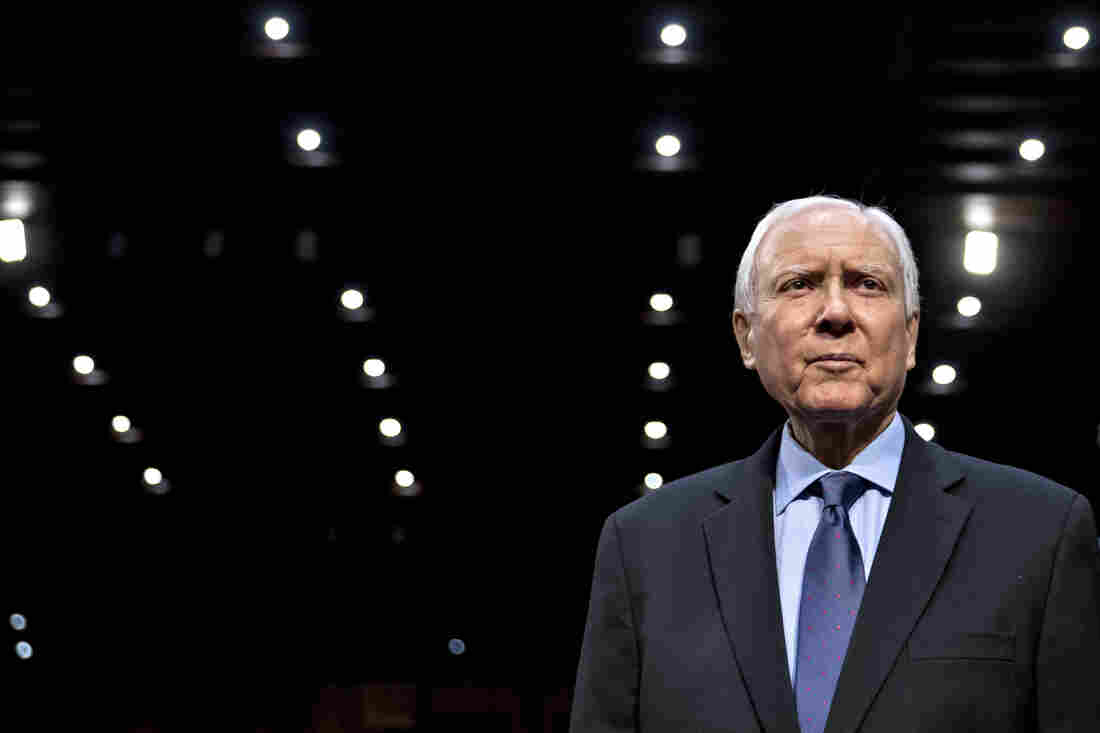
Though his politics are right of center and he lobbied hard against the Affordable Care Act, Republican Sen. Orrin Hatch also has been key to passing several landmark health laws with bipartisan support.
Bloomberg/Getty Images
hide caption
toggle caption
Bloomberg/Getty Images
Sen. Orrin Hatch, a Utah Republican retiring from 42 years in the Senate as a new generation is sworn in, leaves a long list of achievements in health care. Some were less controversial than others.
Hatch played key roles in shepherding the 1983 Orphan Drug Act to promote drug development for rare diseases, and the 1984 National Organ Transplant Act, which helped create a national transplant registry. And in 1995, when many people with AIDS were still feeling marginalized by society and elected leaders, he testified before the Senate about reauthorizing funding for his Ryan White CARE Act to treat uninsured people who have HIV.
“AIDS does not play favorites,” Hatch told other senators. “It affects rich and poor, adults and children, men and women, rural communities and the inner cities. We know much, but the fear remains.”
Hatch, now 84, cosponsored a number of bills with Democrats over the years, often with the late Sen. Ted Kennedy of Massachusetts. The two men were sometimes called “the odd couple,” for their politically mismatched friendship.
In 1997 the two proposed a broad new health safety net for kids — the Children’s Health Insurance Program.
“This is an area the country has made enormous progress on, and it’s something we should all feel proud of — and Senator Hatch should too,” says Joan Alker, executive director of Georgetown University’s Center for Children and Families.
Before CHIP was enacted, the number of uninsured children in America was around 10 million. Today, it’s less than half that.
Hatch’s influence on American health care came partly from the sheer number of bills he sponsored or co-sponsored — more than any other living senator — and because he was chairman of several powerful Senate committees.
“History was on his side because the Republicans were in charge,” says Dr. David Sundwall, an emeritus professor in public health at the University of Utah and Hatch’s health director in the 1980s.
When Ronald Reagan was elected president in 1981, the Senate became Republican-controlled for the first time in decades. Hatch was appointed chairman of what is now known as the Health, Education, Labor and Pensions Committee, which has oversight of the Food and Drug Administration, Centers for Disease Control and Prevention and the National Institutes of Health.
“He was virtually catapulted into this chairmanship role,” Sundwall says. “This is astonishing that he had chairmanship of an umbrella committee in his first term in the Senate.”
In 2011, Hatch was also appointed to the influential Senate Finance Committee, where he later became chairman. There he helped oversee the national health programs Medicare, Medicaid and CHIP.
Hatch’s growing influence in Congress did not go unnoticed by health care lobbyists. According to the watchdog organization Center for Responsive Politics, in the last 25 years of political campaign funding, Hatch ranks third among all members of Congress for contributions from the pharmaceutical and health sector. (That’s behind Democratic senators who ran for higher office — President Barack Obama and presidential nominee Hillary Clinton).
“Clearly, he was PhRMA’s man on the Hill,” says Dr. Jeremy Greene, referring to a trade group that represents pharmaceutical companies. Green is a professor of the history of medicine at Johns Hopkins University School of Medicine. Though Hatch did work to lower drug prices, Greene says, the senator’s record was mixed in the regulation of drug companies.
For example, an important piece of Hatch’s legislative legacy is the 1984 Hatch-Waxman Act, drafted with then Rep. Henry Waxman, an influential Democrat from California. While the law promoted the development of cheaper, generic drugs, it also rewarded brand-name drug companies by extending their patents on valuable medicines.
The law did spur sales of cheaper generics, Greene says. But drugmakers soon learned how to exploit the law’s weaknesses.
“The makers of brand-name drugs began to craft larger and larger webs of multiple patents around their drugs,” Greene says, aiming to preserve their monopolies after the initial patent expired.
Other brand-name drugmakers preserved their monopolies by paying generic manufacturers not to compete.
“These pay-for-delay deals effectively hinged on a part of the Hatch-Waxman Act,” Greene says.
Hatch also worked closely with the dietary supplement industry. The multibillion-dollar industry specializing in vitamins, minerals, herbs and other “natural” health products, is concentrated in his home state of Utah. In the early 90s there was disagreement about whether supplements should be regulated like foods or more strictly like drugs.
“There was really no place for these natural health products,” says Loren Israelsen, president of the United Natural Products Alliance and a Hatch staffer in the late 1970s.
In 1994 Hatch sponsored the Dietary Supplement Health and Education Act, known as DSHEA.
“It was necessary to have someone who was a champion who would say ‘All right, if we need to change the law, what does it look like,’ and ‘Let’s go,’ ” Israelsen says.
Some legislators and consumer advocacy groups wanted vitamins and other supplements to go through a tight approval process, akin to the testing the Food and Drug Administration requires of drugs. But DSHEA reined in the FDA, determining that supplements do not have to meet the same safety and efficacy standards as prescription drugs.
That legislative clamp on regulation has led to ongoing questions about whether dietary supplements actually work and concerns about how they interact with other medications patients may be taking.
DSHEA was cosponsored by Democrat Tom Harkin, then a Senator from Iowa.
While that kind of bipartisanship defined much of Hatch’s career, it has been less evident in recent years. He was strongly opposed to the Affordable Care Act, and in 2018 called supporters of the heath law among the “stupidest, dumb-ass people” he had ever met. (Hatch later characterized the remark as “a poorly worded joke.”)
In his farewell speech on the Senate floor in December, Hatch lamented the polarization that has overtaken Congress.
“Gridlock is the new norm,” he said. “Like the humidity here, partisanship permeates everything we do.”
This story is part of a reporting partnership that includes KUER, NPR and Kaiser Health News.
Affordable Care Act Can Stay In Effect While Under Appeal, Judge Says

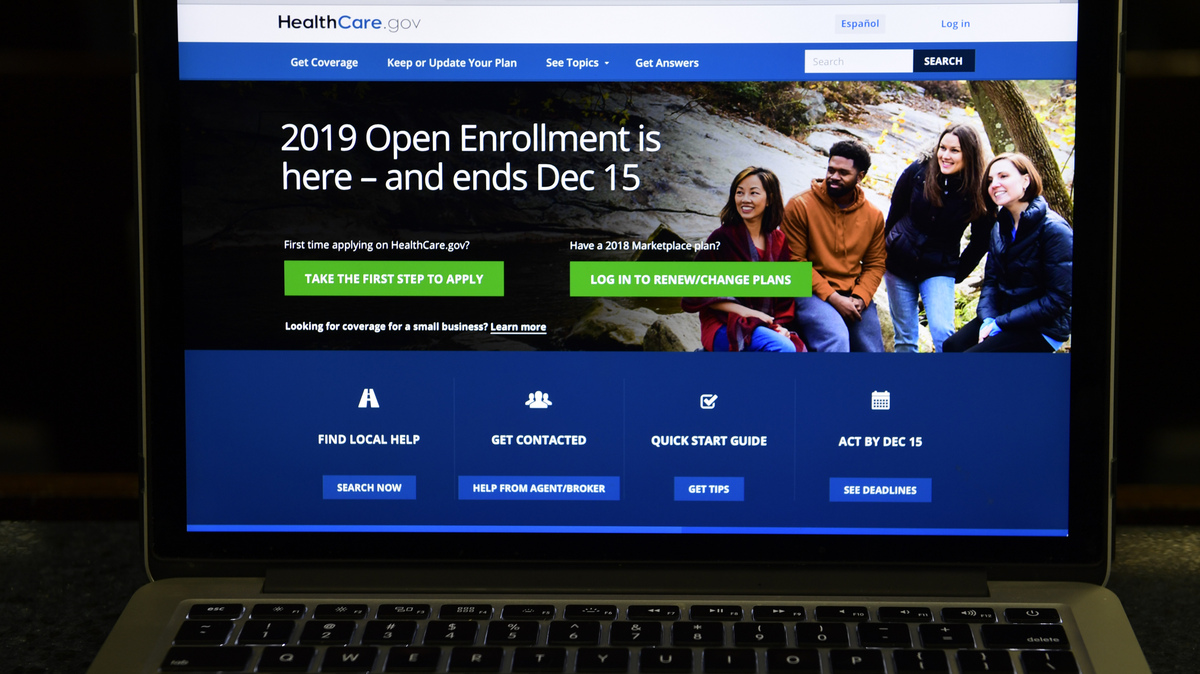
The federal website where consumers can sign up for health insurance under the Affordable Care Act is shown on a computer screen in Washington, D.C., last month. The federal judge in Texas, who earlier this month ruled the Affordable Care Act unconstitutional, said that the law can remain in effect while under appeal.
AP
hide caption
toggle caption
AP
The federal judge in Texas who ruled the Affordable Care Act unconstitutional earlier this month said that the law can remain in effect while under appeal.
U.S. District Court Judge Reed O’Connor wrote in his ruling filed on Sunday that “many everyday Americans would otherwise face great uncertainty during the pendency of appeal.”
But O’Connor still stands by his initial decision, he wrote, that a recent change in federal tax law that eliminated the penalty on uninsured people, in turn, invalidates the entire health care law, which is also referred to as Obamacare.
Before issuing the stay, O’Connor struck down the ACA on Dec. 14, siding with a group of 19 Republican attorneys general and a governor, led by Texas Attorney General Ken Paxton.
As Julie Rovner of Kaiser Health News wrote for NPR following the district court judges decision, “The plaintiffs argued that because the Supreme Court upheld the ACA in 2012 as a constitutional use of its taxing power, the elimination of the tax makes the rest of the law unconstitutional.”
Judge O’Connor agreed with that reasoning.
“In some ways, the question before the Court involves the intent of both the 2010 and 2017 Congresses,” O’Connor wrote in his 55-page decision. “The former enacted the ACA. The latter sawed off the last leg it stood on.”
Democrats, meanwhile, say they plan to challenge O’Connor’s partial judgment. A spokesperson for California Attorney General Xavier Becerra — who’s joined by 16 other states defending the ACA — said his state is “prepared to appeal the December 14 decision imminently.”
“We’ve always said we’re going to protect the healthcare of Americans and make clear that the ACA is the law of the land,” Becerra said in a statement emailed to NPR. “Today the judge granted what we asked for when we filed our expedited motion but at the end of the day, we’re working to keep healthcare affordable and accessible to millions of Americans, so we march forward.”
Former Phanatic, Who Helped Create Gritty, Opens Mascot Hall Of Fame

The first Mascot Hall of Fame opened recently in Whiting, Indiana. NPR’s Leila Fadel speaks with Dave Raymond, the founder and a former mascot himself.
LEILA FADEL, HOST:
Googly-eyed, furry, orange and terrifying – when the Philadelphia Flyers hockey team introduced its new mascot Gritty this year, it became an Internet sensation. Now there’s a new museum in Whiting, Ind. It opened last week, dedicated to honoring the hard-working mascots of college and professional sports teams – a Mascot Hall of Fame.
The man who connects these two things is Dave Raymond. He helped create Gritty and co-founded the museum after a long career as the original Philadelphia Phillies mascot, the Phanatic. And he joins me now.
Thank you for joining us.
FADEL: My pleasure.
DAVE RAYMOND: This has been a project of yours for a long time. You started this as a website in 2005. Now it’s a physical museum. What does this mean to you?
RAYMOND: Well, about five years ago, I got a call from the city of Whiting, Ind., that said, hey. How about we help you build a bricks-and-mortar hall of fame? And I actually thought – (laughter) I thought I was getting pranked by part of my organization, somebody…
FADEL: (Laughter).
RAYMOND: …Calling me from another phone. And so I asked a few questions. And lo and behold, a trip out to Whiting and meeting the mayor started the whole thing. So, you know, to say it’s a dream come true is almost underselling it, you know, for me, personally, and, I think, for the people who really love mascots and have, you know, built their career doing it.
FADEL: You were a mascot for a long time being Phanatic. What are some of the more bizarre moments or your most bizarre memory playing that character?
RAYMOND: There were many. I mean, I performed at a funeral for an 89-year-old Irishman who wanted his wake to be fun. And he was a…
FADEL: Wow.
RAYMOND: …Big Phillies fan. And I – coming into that environment in the beginning in costume, I wasn’t too sure how it would work out. But everybody cheered and slapped the Phanatic on his back in the Supreme Court justices’ private chambers, when Justice Alito was brought on the bench because he was from Trenton. This was at the Supreme Court. Oh, yeah, in their private chambers…
FADEL: Wow.
RAYMOND: …At dinner, so there was a lot of security (laughter).
FADEL: You know, you were one of the creators behind Gritty. Were you expecting the reaction that came…
RAYMOND: (Laughter).
FADEL: ..With Gritty (laughter)?
RAYMOND: Well, I’ll tell you what we were expecting, which is part of my preamble when I sat down with the Flyers for the very first time. And that was, hey, you guys recognize we’re going to get killed – right? – from the standpoint of social media and negative feedback. And sure enough, in the first 24 hours, they received it. But they actually celebrated it (laughter) by sharing, probably, the meanest tweets…
FADEL: Right (laughter).
RAYMOND: …Or the funniest tweets.
FADEL: Do you have a favorite meme or Gritty punchline?
RAYMOND: (Laughter) Well, my favorite was that fake ad for making sure that you’re following safe sex because it said, after all, if you look at Gritty, you see that he is the love child of the abominable snowman and Yukon Cornelius from “Rudolph The Red-Nosed Reindeer” animations. So (laughter) that was pretty creative and very funny.
FADEL: So we’ve talked about mascots being loved and adored, but they can sometimes be controversial and seen as polarizing or possibly prejudiced, depending on what they’re depicting. Can you react to that a little bit?
RAYMOND: So what I would say is it’s all about, you know, trying to do your best to be away from any of those lines, so neutral gender, fantasy character that doesn’t have a representation of an animal. And I’ve been asked this question a number of times throughout my career. And it’s just, like – it’s just – to say it’s counterproductive is not even reaching the level of what a mistake it would be to either honor or create a character that does those things.
FADEL: Dave Raymond, the original Philadelphia Phanatic and creator of the Mascot Hall of Fame. Thank you so much.
RAYMOND: Thanks.
Copyright © 2018 NPR. All rights reserved. Visit our website terms of use and permissions pages at www.npr.org for further information.
NPR transcripts are created on a rush deadline by Verb8tm, Inc., an NPR contractor, and produced using a proprietary transcription process developed with NPR. This text may not be in its final form and may be updated or revised in the future. Accuracy and availability may vary. The authoritative record of NPR’s programming is the audio record.
Barbershop: The Year In Sports
In the Barbershop, NPR’s Don Gonyea speaks with Washington Post‘s Kevin Blackistone, The Nation‘s Dave Zirin, and USA Today‘s Christine Brennan about the biggest stories in sports in 2018.
Cuba's Mobile Internet Access Is A Big Step, But It's Not Without Flaws
The Cuban government recently extended Internet to mobile devices, a big step for Cubans living on the island under the repressive communist regime.
ESPN's Howard Bryant Previews Saturday's College Football Semifinals
NPR’s Debbie Elliott speaks with ESPN’s Howard Bryant about the college football playoffs that begin Saturday.
How To Help Kids Overcome Their Fear Of Doctors And Shots


Ryan Johnson for NPR
Like many kids, Lisa Sparrell’s daughter never liked getting shots at the doctor’s office. “At first she’d cry some, but was quickly placated with rewards like a lollipop or a sticker,” says Sparrell, who lives in Honolulu.
But last year, Sparrell’s 10-year-old daughter was diagnosed with a heart defect. In preparation for surgery, the little girl’s trips to the doctor sharply increased –and so did her anxiety.
“The frequency of appointments — many of which included blood draws and IV placements — made her fears worse,” Sparrell says.
The concerned mom tried bringing electronics and books to medical appointments, hoping distraction might short-circuit her daughter’s fear. She also tried addressing the worries by asking the child, ahead of appointments, “OK, what’s our plan?”
None of these tactics worked. In fact, her daughter’s medical anxiety became so severe that she’d scream, “Please don’t do this to me!” whenever a health care provider tried to prick her with a needle.
That might sound extreme, but results of a nationally representative survey, released earlier this year by researchers at the University of Michigan, suggest that a significant number of young children fear doctor visits. In fact, of the 726 parents surveyed, roughly half said their kids disliked going to the doctor.
Not surprisingly, 66 percent of children between the ages of 4 and 5 hated getting shots, while 43 percent of 2- and 3-year-olds fear doctors as part of a more generalized stranger anxiety. The report also revealed that 1 in 25 parents surveyed had postponed a vaccine appointment because of their child’s medical anxiety.
Sparrell says she can relate. “When my daughter screams at the doctor’s office, I feel like I’m doing something terrible — even though it’s the right thing to do.” She, too, has delayed getting her daughter vaccinated against the flu this year, Sparrell admits, just to avoid that stress.
Seeing their child unhappy upsets many parents, especially when they can’t stop the pain. And witnessing an anxious kid’s tears and pleas to avoid getting pricked and probed can raise a parent’s anxiety levels, too.
When this happens, says Sasha Albani, a child and adolescent psychotherapist in San Francisco, many well-meaning parents either ignore the wails or jump into rescue mode. Both approaches can boomerang.
“Parents may avoid discussing the problem because they believe it will make things worse,” Albani says. “Sometimes, they cancel their child’s medical appointment.” Unfortunately, these behaviors undermine a child’s confidence that they can weather difficult situations, and only reinforce kids’ worries.
Children who withdraw from frightening situations or environments may be more likely to struggle with social anxiety, later in life, psychologists find. A 2018 report released by the Child Mind Institute suggests that untreated anxiety also can lead to depression, academic difficulties and substance use down the road.
But there’s hope! Albani suggests parents calm themselves and find age-appropriate ways to help children face their medical fears instead of fleeing them.
For very young kids, who have a hard time putting words to thoughts and emotions, imaginary play with mom or dad before the appointment can help, Albani says.
“Use a toy doctor kit to explain what will happen at the appointment and to discuss your child’s specific worries,” she advises.
Reading books and watching movies depicting children getting shots, going to the hospital, or visiting the doctor can remind kids they’re not alone, and introduce different ways of dealing with the anxiety.
Children under age 6 may benefit from the book, “Daniel Visits the Doctor” by Becky Friedman.
Kids with needle phobias may be helped by reading, “Lions Aren’t Scared of Shots: A Story for Children About Visiting the Doctor,” by Howard S. Bennett. And the book “Imagine a Rainbow: A Child’s Guide for Soothing Pain,” by Brenda S. Miles, may be useful for older kids between the ages of 8 and 10.
Playing The Coping Skills Board Game can bolster the confidence of preteens like Sparrell’s daughter, as it teaches techniques for handling life’s challenges. And smartphone apps like “Stop, Breathe & Think Kids” can be a fun way to learn mindful breathing techniques and other relaxation tips that help turn down the alarm of worrisome feelings.
Doctors have also had some success using more novel interventions with kids, like virtual-reality technology, says Dr. Tom Caruso, a pediatric anesthesiologist at Lucile Packard Children’s Hospital Stanford in Palo Alto, Calif.
“Virtual-reality technology can redirect a child’s attention by immersing them in a more calming experience,” says Caruso, who co-founded the hospital’s Chariot Program, a group dedicated to reducing the anxiety of hospitalized children.
Hospitals and clinics already have begun testing VR to soothe kids’ fears during a range of medical procedures, including IV placement, blood draws and vaccines. A 2017 review suggests the approach lessens pain and anxiety by diverting a child’s attention from the feared stimulus — and may be more effective than other distraction techniques.
But there’s no single best approach to easing fear, Caruso says. “It’s important to use tailored interventions. Children with mild worries may be calmed by listening to music, while others may be helped by virtual-reality techniques.”
Talk therapy can be helpful if anxiety persists or grows. Some children won’t outgrow their fears without such support, doctors find.
“Therapy doesn’t have to last forever,” Albani adds, “and brief cognitive-behavioral treatment or exposure therapy has been shown to help.”
Whatever strategy parents or other caregivers choose, acknowledging the child’s fear is the important first step, therapists say. Just like adults, kids feel validated when we acknowledge their worry, find them help and then let them know that everything is going to be OK.
And kids who learn to feel safe with their doctors early on are more likely to trust them with serious health concerns as they get older.
Cleveland Browns Are On The Verge Of A Winning Record
For fans of the NFL team, there’ve been some rough years. But finally, this weekend, the Browns go for their first winning record in 11 years.
DAVID GREENE, HOST:
Good morning. I’m David Greene. This song came out in 1998 to celebrate football returning to Cleveland. The Browns were back.
(SOUNDBITE OF SONG, “HERE WE GO AGAIN”)
THE BROWNS ALL-STAR BAND: (Singing) The Browns are going to show you how the game is played. Here we go again.
GREENE: There have been some rough years. But finally this weekend, the Browns will go for their first winning record in 11 years. Now, I need the Browns to win. If they beat Baltimore, my Steelers can make the playoffs. But this isn’t about Pittsburgh. I just want Cleveland to be happy. You’re listening to MORNING EDITION.
Copyright © 2018 NPR. All rights reserved. Visit our website terms of use and permissions pages at www.npr.org for further information.
NPR transcripts are created on a rush deadline by Verb8tm, Inc., an NPR contractor, and produced using a proprietary transcription process developed with NPR. This text may not be in its final form and may be updated or revised in the future. Accuracy and availability may vary. The authoritative record of NPR’s programming is the audio record.