Nassar Survivor On How USA Gymnastics Handled Abuse Crisis

It’s been a turbulent year for USA Gymnastics. Noel King talks to former gymnast Trinea Gonczar, about how the organization has dealt with the Larry Nassar abuse scandal, CEO issues and bankruptcy.


NOEL KING, HOST:

It’s been a turbulent year for USA Gymnastics. Back in January, dozens of women testified in a Michigan courtroom. They talked about years of sexual abuse they suffered at the hands of a prominent doctor, Larry Nassar. Trinea Gonczar was one of those women.

(SOUNDBITE OF ARCHIVED RECORDING)

TRINEA GONCZAR: This latest year has traumatized me in ways you cannot even begin to imagine, as I’ve had to realize I was abused for many years of my life. And this, my old friend, is because of you.

KING: Nassar was sentenced to decades in prison and a succession of USA Gymnastics CEOs have since stepped down. Then, this month, the organization filed for bankruptcy. I talked to Trinea Gonczar and I asked her how she thinks USA Gymnastics is handling all of this.

GONCZAR: I mean, I think that they’ve completely crumbled to their feet. I don’t think that they’ve done anything but make one bad decision after another and completely ruin the name of the sport and the organization. It looks worse and worse every time that they make these kind of decisions.

KING: If someone from the organization was to call you and say, Trinea, what should we do? – what would you tell them to do?

GONCZAR: Meet me. Talk to me. Meet with us. Talk to us. Learn about us. You know, I think that there is something to be said about character when you actually just say, we were wrong. How do we make this better?

KING: You’re saying, essentially, an apology would go a long way toward starting to heal this thing.

GONCZAR: Truly, that is all we have ever wanted from anyone, ever.

KING: Despite all of this, the U.S. women’s team did really well at the world championships in Qatar a couple months ago in October. Simone Biles, the top gymnast in the world, keeps on dominating the sport. When you see the U.S. team compete and do well, how do you feel about that?

GONCZAR: So proud. So, so proud. I mean, they’ve gone through the trenches at this stage. And to continue to fight? You know, I think there’s one thing about being a gymnast. Like, we’re trained to face fear. So he picked on, essentially, the worst group of athletes to do something like this, too, because we’re so focused, and we’re so taught how to overcome fear.

And I think USAG and United States Gymnastics being the powerhouse that we are, I think, just, I mean, speaks so loudly of the survivors of this case and the sport. I mean, we’re little, but we’re mighty. But it’s when they go out of competition and that door closes, unfortunately, is when you actually see the heartbreak. And that’s truly the reality for all survivors.

KING: Let’s talk about you as an individual for a moment because I know that you’ve taken on sort of a role in the past year as an advocate, as an activist. But you suffered very greatly as a young woman and as a girl. Your testimony at Larry Nassar’s trial was powerful. It was also agonizing. You talked for about 17 minutes. You said that, for many years, you had defended him. And you said that he was your friend. We’re going to play a little bit of that tape, Trinea.

(SOUNDBITE OF ARCHIVED RECORDING)

GONCZAR: I never doubted you. I never felt scared of you. We loved you like family. We believed you looked out for us and protected us from harm. We literally loved you like family.

KING: What did it mean for you to have the chance to talk directly to him in open court?

GONCZAR: Well, that moment, for me, was 1000 percent between he and I. It was a moment that the world saw that was extremely heartbreaking for me and, to be honest, heartbreaking for him. I never understood that this person could be the same person as the person that did this to all these girls and did so much harm. But now, as I go forward, I can understand, for these other amazing ladies and athletes and women, how this ruined a part of their life because they didn’t know him the same fashion that I knew him.

KING: Your last words to Larry Nassar in court were, goodbye, Larry. May God bless your dark, broken soul. When he went to prison, did you find closure?

GONCZAR: For me, no. For a lot of the other girls, it was a closure. For me, it was an opener. I had really not been able to start the healing process because I was still – I was very pregnant and really trying to understand what was happening. So for me, those words were the beginning of my journey, and it’s been a long one.

KING: Trinea Gonczar, thank you so much for joining us.

GONCZAR: Thank you so much for having me. I appreciate it so much.

KING: Trinea Gonczar works for Wayne County SAFE. They work with sexual assault survivors in and around Detroit.

Copyright © 2018 NPR. All rights reserved. Visit our website terms of use and permissions pages at www.npr.org for further information.

NPR transcripts are created on a rush deadline by Verb8tm, Inc., an NPR contractor, and produced using a proprietary transcription process developed with NPR. This text may not be in its final form and may be updated or revised in the future. Accuracy and availability may vary. The authoritative record of NPR’s programming is the audio record.

Let’s block ads! (Why?)

Safely Evacuating The Elderly In Any Emergency Takes Planning And Practice

Jay McAbee, a bus driver with the Greenville, S.C., school district, waits by his bus in Charleston, S.C., in October of 2016, for word of when to start evacuating the city’s residents in advance of Hurricane Matthew. Simply having enough buses to carry pets as well as people can be key to convincing residents they need to leave ahead of a big storm, emergency responders say.

Mic Smith/AP


hide caption

toggle caption

Mic Smith/AP

The benefits of retiring in South Carolina’s low country are clear to Joyce East. Her home, sandwiched between the Atlantic Ocean and downtown Charleston, overlooks 120 acres of lush marshland. Palm trees and Spanish moss dot the property.

But the drawbacks of retiring only a few meters above sea level have also become apparent to the 91-one-year-old retiree. Since 2016, her home within Charleston’s Bishop Gadsden Retirement Community has weathered one snow storm, one ice storm and three hurricanes. She has had to evacuate twice in two years.

For East, these evacuations are just the cost of growing old on the coast. Three decades ago, East and her husband decided they wanted to retire somewhere warm on the waterfront. Four days after arriving in Charleston, the couple was forced to flee inland as Hurricane Hugo ravaged the coast. East would evacuate again for Hurricane Matthew in 2016, and once more for Hurricane Florence this past September.

Joyce East (right) with fellow Bishop Gadsden resident Sarah Darwin during their evacuation from their community on the South Carolina coast in September 2018.

Courtesy of Bishop Gadsen


hide caption

toggle caption

Courtesy of Bishop Gadsen

“Now that we’ve done it this much, it’s more of a routine,” says East. She packs her belongings in a navy evacuation suitcase with her name printed on it in white lettering. “I have to kind of look at it as a mini-vacation now.”

As unpredictable weather starts to feel inevitable, staff at Bishop Gadsden have worked to make evacuations feel as routine to residents as Monday night’s pub trivia. This year’s personalized suitcases were a new touch.

“Our planning is 24/7, 12 months a year,” says Kimberly Borts, one of the staff members charged with ensuring Bishop Gadsden is ready to depart come hurricane season. “This isn’t just let’s get on a bus and go.”

When Governor Henry McMaster mandated residents evacuate in the lead up to Hurricane Florence, he set in motion a sequence of events staff had spent the year fine-tuning. Ambulances arrived at 2 a.m. to whisk away the 14 seniors too frail to make the journey upright. The remaining 111 residents boarded buses bound for a mountaintop inn. A U-Haul was loaded up with walkers and a bus carted off residents’ pets.

It’s high stakes logistics. Any hiccup — too few oxygen tanks, lost medication — would have been disastrous. But even a well-executed journey carries risks for Bishop Gadsden’s retirees, many of whom are accustomed to a regimented routine.

“When that schedule is altered, that’s when you begin to have some challenges,” says Borts. During this year’s departure, she saw anxious residents who traditionally require one oxygen tank per day go through two tanks or more. As the seniors made their journey inland, Borts noted more upset stomachs and more bathroom trips.

Immediately after they returned from the shelter, Borts says staff began plotting how to make the journey smoother for their seniors — next year.

“We would sort of say to our fellow staff members, ‘Well, next time we do this,’ or ‘Next year we need to do X,Y, Z,’ ” she recalls.

Statistics show there will be a next time. Far beyond the marshy coast of Charleston, emergency evacuations are starting to seem commonplace.

Susan Burns monitors evacuations for Sedgwick, a company that deals with insurance claims for senior-living communities across the U.S.

After nursing home owners made the fatal decision not to evacuate residents in advance of Hurricane Katrina, Sedgwick began offering to reimburse facilities for part of their evacuation costs. But, until recently, no facility had taken the company up on the offer.

“I had not seen this coverage triggered at all until last year,” says Burns. She traces the uptick in recent claims to the “amazing number of natural disasters back to back” that have ravaged states like Florida, California and Missouri.

“They’re just trying to recover some of the costs and lessen the financial blow,” she says. This year, Bishop Gadsden spent $350,000 on shelter and transportation. The facility had shelled out a similar amount in 2016 for Hurricane Matthew.

And they’re prepared to do it again.

“You take care of a residents during good times and bad times,” says Borts. “The most important thing we can do is plan to do this again.”

This story is part of NPR’s reporting partnership with Kaiser Health News, an editorially independent news service of the Kaiser Family Foundation. Rebecca Ellis is a Kroc Fellow at NPR.

Let’s block ads! (Why?)

Patients Are Turning To GoFundMe To Fill Health Insurance Gaps

Even for conventional medical treatments that are covered under most health insurance policies, the large copays and high deductibles have left many Americans with big bills, says a health economist, who sees the rise in medical fundraisers as worrisome.

Roy Scott/Ikon Images/Getty Images


hide caption

toggle caption

Roy Scott/Ikon Images/Getty Images

Tammy Fox wanted to help, after a friend took ill with a rare and difficult-to-diagnose autoimmune disorder that required many trips to the Mayo Clinic.

While Fox couldn’t do anything medically, she knew there was a way to ease some of the burden of medical bills and costs associated with doctor visits. She turned to the website GoFundMe and set up a site for her friend.

“You’ve got meals; you’ve got hotel stays,” she says. “And gas. So that all needed to be covered.”

Contributions came in from strangers, notes Fox, who lives in suburban Minneapolis. “It’s crazy cool how awesome people are and what they’re willing to give. People, when they come together, can just move mountains — and I think that’s awesome to see.”

GoFundMe, the largest online, crowdsourced fundraising platform, says contributors have raised more than $5 billion, all told, from 50 million donations in the eight years it has been in business.

Setting up a GoFundMe page has also become a go–to way for people in need of help to pay their doctors and other health providers. Medical fundraisers now account for 1 in 3 of the website’s campaigns, and they bring in more money than any other GoFundMe category, says GoFundMe CEO Rob Solomon.

“In the old paradigm you would give $20 to somebody who needed help,” Solomon says. “In the new paradigm, you’ll give $20, you’ll share that and that could turn into 10, 20, 50 or 100 people doing that. So, the $20 could turn into hundreds, if not thousands, of dollars.”

Stories of tragic illness and financial hardship — all of them with pictures of those suffering — are easy to find in GoFundMe’s medical section.

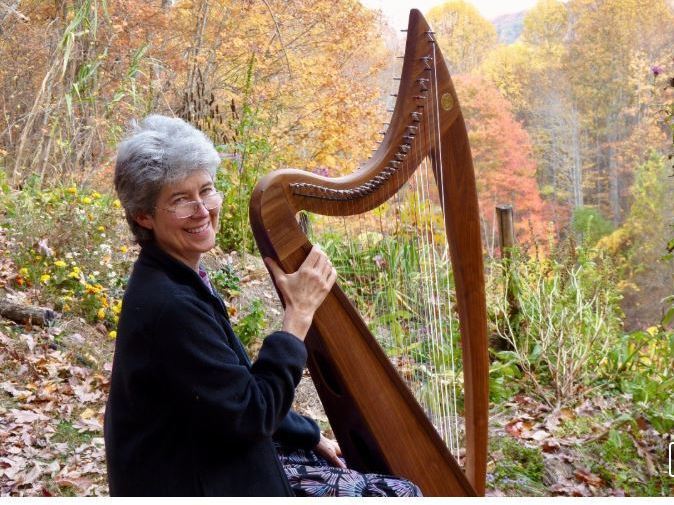
One such case is musician Carolyn Deal, from Marshall, N.C., who lost nearly all her hearing after a traumatic brain injury. Deal has raised nearly $25,000 for alternative treatments and procedures she would like to try that her health insurance won’t cover.

Carolyn Deal is hoping GoFundMe can help her with alternative treatments she wants to try in hopes of regaining some of her hearing. Here she is in 2016 with her 25-year-old double-strung harp.

Courtesy of Carolyn Deal


hide caption

toggle caption

Courtesy of Carolyn Deal

Americans’ confidence that they can afford health care is slipping, says Sara Collins, an economist at the Commonwealth Fund who studies American health care concerns. Even for conventional treatments that are covered under most health plans, the copays and high deductibles have left many people with health insurance they can’t afford to use.

Her organization recently surveyed working-age Americans, asking whether they felt they had the ability to pay an unexpected medical bill of $1,000 in 30 days. Nearly half said no.

“We find that underinsured people are nearly as likely to report problems paying their medical bills as people who don’t have any insurance,” she says. “And they also report not getting needed health care at rates that are nearly as high as those who are uninsured.”

So it shouldn’t be surprising that people are raising funds through crowdsourcing, Collins says.”But it really should be a deep concern for policymakers and providers.”

Solomon says there are challenges with how health insurance works and how people are covered.

“There’s just a lot of cost associated with the medical space, and it has become a very important category on GoFundMe,” he says.

Until about a year ago, GoFundMe kept 5 percent of fundraising proceeds in addition to collecting a nearly 3 percent credit card processing fee. It still charges the credit card fee but no longer collects the 5 percent surcharge.

This story is part of a reporting partnership with NPR, Minnesota Public Radio and Kaiser Health News.

Let’s block ads! (Why?)

Adults Come Under Scrutiny After HS Wrestler Told To Cut His Dreadlocks Or Forfeit

A video still shows Buena Regional High School wrestler Andrew Johnson getting his hair cut on Dec. 19, in Buena, N.J., after referee Alan Maloney told Johnson he would forfeit the match if he did not have his dreadlocks cut.

Michael Frankel/SNJToday.com via AP


hide caption

toggle caption

Michael Frankel/SNJToday.com via AP

A week after a white referee told a black high school wrestler that he needed to cut off his dreadlocks or forfeit a match, the referee has been suspended. But people in town — and on social media — are asking why other adults didn’t do more to prevent what happened: A school official cut the student’s hair as the crowd watched and the clock ticked down.

In a video that has been viewed millions of times, Buena Regional High School junior Andrew Johnson is seen having his hair cut by the team trainer. Johnson won the match in overtime. But as the referee, Alan Maloney, raised Johnson’s hand as the winner, the young man looks utterly miserable.

Epitome of a team player ??

A referee wouldn’t allow Andrew Johnson of Buena @brhschiefs to wrestle with a cover over his dreadlocks. It was either an impromptu haircut, or a forfeit. Johnson chose the haircut, then won by sudden victory in OT to help spark Buena to a win. pic.twitter.com/f6JidKNKoI

— Mike Frankel (@MikeFrankelSNJ) December 20, 2018

A local sports reporter tweeted video of the incident, and outrage followed.

“This is not about hair. This is about race,” tweeted the ACLU of New Jersey. “How many different ways will people try to exclude Black people from public life without having to declare their bigotry? We’re so sorry this happened to you, Andrew. This was discrimination, and it’s not okay.”

The New Jersey State Interscholastic Athletic Association said in a statement that it had suspended Maloney while the incident is investigated by the New Jersey Division on Civil Rights.

Athletic association Executive Director Larry White said the incident had hit close to home: “[A]s an African-American and parent — as well as a former educator, coach, official and athlete — I clearly understand the issues at play, and probably better than most. The NJSIAA takes this matter very seriously, and I ask that everyone respect the investigatory process related to all parties involved.”

It turns out that it’s not the first time that Maloney has been investigated on charges of racist conduct. At a party in 2016, he allegedly called a black referee the N-word. Maloney told the South Jersey Courier-Post that he didn’t remember using the slur, but he believed the accounts of witnesses who said he did. The New Jersey Wrestling Officials Association initially decreed that Maloney would be suspended for a year, but he filed an appeal. The association’s ethics committee overturned the suspension, ruling that it didn’t have jurisdiction.

Johnson’s family released a statement through its attorney, Dominic Speziali, that offered a more detailed accounting of what it says happened at the Dec. 19 match. Referee Maloney was reportedly late to the meet and missed weigh-ins when “scholastic wrestling rules clearly state that referees are to inspect wrestlers’ appearance and determine any rules violations prior to the start of the meet, typically during weigh-ins. … When he did evaluate Andrew, he failed to raise any issues with the length of his hair or the need to wear a head covering.”

Maloney rejected the covering that Johnson wore over his hair, and then started the clock, giving the wrestler 90 seconds to cut his hair or forfeit the match. The family says, “Under duress but without any influence from the coaching staff or the athletic trainer, Andrew decided to have his hair cut rather than forfeit the match.”

The family added that it is supportive of Buena’s coaches and trainer: “The blame here rests primarily with the referee and those that permitted him to continue in that role despite clear evidence of what should be a disqualifying race-related transgression.”

Buena’s school superintendent released a statement outlining the incident and pledged continued support for its student-athletes. The Buena Regional Board of Education convened an emergency meeting on Wednesday evening, and as WHYY’s Darryl Murphy reports, it served as an occasion for community members to voice their displeasure:

“Rajhon White, a Buena alum, said the fact that the adults in the gym let that haircut happen reflects a larger problem with the culture of the community.

” ‘It was a direct correlation of what happens. It was Andrew being put in a situation where no one is standing up and fighting for him. You seen the video,’ he said. ‘Everyone is sitting there like, “Hmm, this is happening,” and that is exactly what is happening in these hallways.’

” ‘It’s not surprising,’ said Alison Arne of Buena Vista. ‘It was shocking to see Andrew Johnson’s hair being cut, but it definitely was not shocking that it was allowed to happen.’ “

The state’s department of education tweeted that it had met with the NJSIAA on Thursday morning “about protecting the rights of all student-athletes across New Jersey.”

The episode brought Johnson tweets of support from Olympic gold-medal-winning wrestler Jordan Burroughs and film director Ava DuVernay, among others.

“I don’t just wear locs. They are a part of me. A gift to me. They mean something to me,” DuVernay wrote. “So to watch this young man’s ordeal, wrecked me.”

Burroughs called the incident “sickening.”

“I’ve been wrestling for 25 years, at every level, and I have never once seen a person required to cut their hair during a match,” he wrote. “My opinion is that this was a combination of an abuse of power, racism, and just plain negligence. As heroic as it was for Andrew to step up in the midst of what was happening, it shouldn’t have got that far. The parents and coaches of the Buena wrestling team should have intervened. This young man should have been protected in this moment. I’m sure his hair was a strong part of his identity, and no single victory is worth succumbing to the pressure of unjust oppression and the unwarranted stripping of that identity.”

Johnson’s parents said the family had been moved by the outpouring of support, and that wrestling has taught their son resilience against adversity.

“As we move forward, we are comforted by both the strength of Andrew’s character and the support he’s received from the community,” they wrote. “We will do all that we can to make sure that no student-athlete is forced to endure what Andrew experienced.”

Let’s block ads! (Why?)

Virtual Reality Helps Hospice Workers See Life And Death Through A Patient's Eyes

[embedded content]


Embodied Labs
YouTube

Sign up for the CommonHealth newsletter to receive a weekly digest of WBUR’s best health, medicine and science coverage.

You wait in the sterile purgatory of your oncologist’s office, between your spouse and your daughter, for the doctor to give you the verdict on your latest scans.

“I’m afraid it’s not good news,” she says quietly, hands clasped.

Your lung cancer has grown despite your recent chemotherapy. Surgery, chemo and other treatments, she tells you, will likely only make you sicker.

“How long?” asks your spouse.

Four to six months, the doctor answers.

A moment from Embodied Labs’ virtual reality video of Clay Crowder, a fictional 66-year-old man with incurable lung cancer. In this scene, Clay’s family gathers around his bed, reassuring him that it’s OK to let go of life.

Embodied Labs


hide caption

toggle caption

Embodied Labs

You may feel a surge of terror, confronted so starkly with news of your own death. You may also feel a welling-up of empathy.

And that’s the point of the exercise — the reason you’re wearing a heavy headset. You aren’t really dying, but you are looking out into a virtual world through the eyes of Clay Crowder, a fictional 66-year-old man who has incurable lung cancer.

The University of New England College of Osteopathic Medicine in Biddeford, Maine, and a nearby hospice are using this virtual reality simulation, developed by California-based Embodied Labs, to help nurses, other hospice workers and students learn about and empathize with patients at the ends of their lives.

“I was skeptical at first that a virtual reality tool could be so realistic,” says Daryl Cady, CEO of Hospice of Southern Maine. “But once I went through it, I realized what a viable method it could be, for not only teaching but also helping people understand [the] end of life better.”

The “Clay” virtual reality project is now used by some schools, hospice and senior care centers, including Comfort Keepers, a large system of in-home caregivers; Ohio’s Hospice of Dayton; and several locations of the Benedictine Health System’s elder care communities.

Researchers have discovered that virtual reality simulations like this one, can make viewers more empathetic to people they virtually embody: people of different races; people with colorblindness; even an avatar of an older version of themselves.

The United Nations has created about 20 virtual reality films, including one about a 12-year-old Syrian refugee and another profiling a Liberian woman whose family died from Ebola.

Last month, Stanford University’s Virtual Human Interaction Lab, which studies the link between virtual reality and empathy, found that people shown an immersive VR film built around the experience of a homeless man were more likely to sign a petition supporting affordable housing than people who read a narrative asking them to imagine themselves homeless.

In medicine, virtual reality has been used to reduce pain, help stroke victims recover, and allow doctors to plan and watch surgery.

Embodied Labs is one of the first companies whose videos have allowed viewers to “experience” dying. Elsewhere, virtual reality has been used directly with dying patients.

Hospitals and hospices have fitted patients with headsets to allow them to see realistic simulations of places on their bucket lists.

At the Royal Trinity Hospice in London, a dying woman and her husband revisited Venice, where they had gotten engaged — the simulation was part of a larger study about VR’s effect on physical and psychological symptoms at the end of life. Another woman walked the beaches of the Maldives. A third returned to Jerusalem, the city where she grew up.

What they’re going through

Carrie Shaw was 19 when her mother was diagnosed with early-onset Alzheimer’s disease. Five years later, when she hired caregivers for her mother, she wanted them to understand how brain atrophy had left her unable to see from the left sides of her eyes. So she covered one side of goggles with masking tape. This helped the aides understand, for instance, why her mother ate only the food on the right side of her plate.

Later, earning a master’s degree in biomedical visualization, Shaw used virtual reality to help health care providers feel what their patients felt. She founded Embodied Labs in 2016.

The company’s first virtual reality project was called “Alfred” Viewers don a VR headset to experience the world through the eyes of 74-year-old man with hearing loss, and vision loss from macular degeneration. Next, Shaw and her colleagues created the VR story of “Beatriz,” a fictional middle-aged woman who progresses through early and advanced stages of Alzheimer’s disease. “Clay” is their newest simulation.

“It’s so vitally important that people not fear hospice, but understand hospice,” says Cady, of Hospice of Southern Maine. “Virtual reality is appealing to the next generation. And if they take 30 minutes and put on the goggles and run through it and have even just a little sense of an understanding, just think of the change we might be able to make.”

Victoria Nguyen, a second-year medical student at the University of New England, experienced the “Clay” simulation at Gosnell Memorial Hospice House in Scarborough, Maine. As part of a geriatrics class, students can shadow hospice nurses for 48 hours.

Nguyen says experiencing the world as “Clay” made her think more about what dying patients might comprehend as they’re slipping away.

“I think it will help us become more empathetic with our patients,” she says. “Being able to experience the virtual reality kind of gives us an idea of what they might be going through and the frustration that comes along with it.”

Virtual reality may also encourage people to plan for the end of life, says Marilyn Gugliucci, director of geriatric education and research at the College of Osteopathic Medicine. Hospice of Southern Maine’s new building, expected to open in 2020, will have a simulation lab for families. Gugliucci has collaborated with the hospice; her geriatrics students, for instance, have the option of spending 48 hours at the hospice, shadowing nurses who care for the dying, and watching the VR video.

“People don’t really prepare for death,” Gugliucci says. “We’re trying to get more people doing advance directives and being thoughtful about what they want at the end of life, rather than being surprised by what’s going to happen. I think this lab really does that.”

Research suggests that as students progress through medical school, they tend to lose empathy for their patients. “So we definitely want to make sure they remain empathic,” Gugliucci said.

Real empathy, but for whom?

Not everyone believes that virtual reality is beneficial in that way. Researchers already know that simulations of being disabled must be constructed carefully to avoid creating prejudice.

Blindness simulations, for instance, can give a viewer an experience that’s more like becoming blind rather than the experience of a person who has adjusted to living with blindness. The initial experience might cause viewers to believe blind people are less capable than they are, critics say.

Yale psychologist Paul Bloom has been outspoken in his criticism of virtual reality being used to create empathy. Empathy, he argues, can be manipulated: A simulation could create empathy for a Syrian refugee — or for a man, “standing hungry in a food line” because a Syrian refugee took his job.

And more research is needed on whether these gains in empathy last.

In the last scene of the “Clay” simulation, Clay’s breath — yours — grows raspy and uneven. One of your daughters reads to you. Your wife tells you gently that you can go.

“It’s OK, honey,” she says. “You’ve got your girls here.”

You stop breathing. Your family kisses you goodbye. Aides push a gurney with your body, covered in an American flag, outside into the sunshine.Your wife and daughters walk behind you, a final procession.

The screen goes dark.


Kathleen Burge is writing about end-of-life care as part of a reporting fellowship on health care performance, sponsored by the Association of Health Care Journalists and supported by the Commonwealth Fund.

A version of this story originally ran on WBUR’s Common Health.

Let’s block ads! (Why?)

Pitcher Brady Singer Gives His Parents A Memorable Christmas Gift

Brady Singer recently joined the Kansas City Royals and received a $4.25 million signing bonus. He wrote his parents a holiday letter and told them he would be paying off all their debts.


DAVID GREENE, HOST:

Good morning. I’m David Greene. After pitcher Brady Singer signed with the Kansas City Royals, he wrote his parents a letter this holiday. He posted video of them reading it.

(SOUNDBITE OF VIDEO)

JACQUELYN SINGER: I love you, Mom and Dad.

GREENE: The Kansas City Star reports Singer used his $4 million signing bonus to thank mom and dad for their support and all the travel to games.

(SOUNDBITE OF VIDEO)

SINGER: I am paying off the loan from the bank. Also, I paid off all your debt, as well. What?

GREENE: You’re listening to MORNING EDITION.

Copyright © 2018 NPR. All rights reserved. Visit our website terms of use and permissions pages at www.npr.org for further information.

NPR transcripts are created on a rush deadline by Verb8tm, Inc., an NPR contractor, and produced using a proprietary transcription process developed with NPR. This text may not be in its final form and may be updated or revised in the future. Accuracy and availability may vary. The authoritative record of NPR’s programming is the audio record.

Let’s block ads! (Why?)

Insured, But Indebted: Couple Works 5 Jobs To Pay Off Medical Bills

Robert and Tiffany Cano of San Tan Valley, Ariz., have a new marriage, a new house and a 10-month-old son, Brody. Since Brody was born, the Canos have racked up nearly $12,000 in medical debt.

Heidi de Marco/Kaiser Health News


hide caption

toggle caption

Heidi de Marco/Kaiser Health News

Robert and Tiffany Cano of San Tan Valley, Ariz., have a new marriage, a new house and a 10-month-old son, Brody, who is delighted by his ability to blow raspberries.

They also have a stack of medical bills that threatens to undermine it all.

In the months since their sturdy, brown-eyed boy was born, the Canos have acquired nearly $12,000 in medical debt — so much that they need a spreadsheet to track what they owe to hospitals and doctors.

“I’m on these payment arrangements that are killing us,” said Tiffany Cano, 37, who has spent her lunch hours from her job at a regional bank on the phone negotiating payoff plans that now total $700 a month. “My husband is working four jobs. I work full time. We’re a hardworking family doing our best and not getting anywhere.”

The pair, who earn nearly $100,000 a year, are insured and have had no major illnesses or injuries. Still, the Canos are among the 1 in 4 Americans who report in multiple polls that the high cost of health care is the biggest concern facing their families. And they’re at risk of filing for bankruptcy; 62 percent of people who file do so, in part, because of medical bills.

“Oh, yes, that worry is always in the back of my mind,” Tiffany said.

The family is part of a struggling group: Middle-class folks who have followed the rules and paid for employer-based medical insurance, only to find that soaring health care costs — combined with high deductibles, high copayments and surprise medical bills — leave them vulnerable.

“I thought we’d be covered, and it’s just not enough coverage at all,” she said.

Robert Cano, also 37, had family health insurance for 2018 through his job as a manager at a large chain retail store, for which he pays nearly $500 per month. The plan’s $3,000 annual deductible and 40 percent coinsurance fees have added up faster than the Canos anticipated.

First came the nearly $4,000 bill from the in-network hospital where Brody was born Jan. 2, followed by separate fees from the anesthesiologist and the doctor who performed the routine delivery. Then, at 2 months, Brody was hospitalized with breathing problems that doctors said could be related to allergies or asthma. In May, Tiffany came down with a stomach virus that sent her to the emergency room for drugs to treat nausea and dehydration. Last month, the baby developed a bad case of bacterial conjunctivitis, or pinkeye.

“It’s been, like, $300 here, $700 there,” said Tiffany. “We had a hospital bill for him being sick of, like, $1,800.” Unable initially to find a pediatrician she liked, Tiffany has agonized over whether to use the ER when Brody gets sick. When he had pinkeye, she debated whether to take him in, hoping it would get better on its own.

Then he got worse, she said, pulling up a photo on her phone of her son with half-moons of red, puffy flesh under his dark eyes.

“I let him suffer for a day like that,” she said.

The Canos lost their first child, a girl, midway through her pregnancy in 2016. Tiffany acknowledges that experience has left her more anxious than the average first-time mom.

“It gave me so much fear that something would happen to him,” she said.

As for their own health care needs, the couple put themselves lower on the priority list. Tiffany has used a prosthetic limb since childhood, when her lower left leg was amputated because of a birth defect.

She needs a new prosthesis because her body changed during pregnancy, but she can’t see how to afford it.

A model suitable for the busy life of a working mom would easily cost $10,000 to $15,000, according to Tom Fise, executive director of the American Orthotic & Prosthetic Association.

“We’re a hardworking family doing our best and not getting anywhere,” said Tiffany Cano, with tears in her eyes.

Heidi de Marco/Kaiser Health News


hide caption

toggle caption

Heidi de Marco/Kaiser Health News

“I try to push through,” Tiffany said. “I put on that brave face of just walking, but it’s so painful to walk. I have bruises all over my leg. I get blisters all the time.” Lately, she has been wearing an old prosthesis, one she used in high school, because it’s a little bit more comfortable.

The Canos don’t know how exactly they fell into such debt, because they tried hard to make responsible decisions. After meeting three years ago, they knew quickly that they wanted to marry and have a family.

“I waited until I found the right guy,” said Tiffany, who was thrilled when, in 2016, they were able to afford a 2,500-square-foot, two-story home in one of the stucco-and-tile neighborhoods an hour outside Phoenix.

But, taken together, the medical payment plans and premiums are almost as much as their $1,300 monthly mortgage. All told, the Canos spend about 15 percent of their annual income on health care, almost three times the average for non-Medicare households in the U.S.

That leaves too little for day care, car payments, gas, food and dozens of other domestic expenses, Tiffany said.

For 17 years, Robert had comprehensive health insurance through his job as a soldier in the Army Reserve and paid little or nothing for medical care. He left the Army in 2017, however, after he learned he would be deployed for an extended time away from his wife and new son.

“I told them, ‘I have to be at home,’ ” he recalled. The Army insurance ended on Dec. 31, two days before Brody was born.

That meant moving to his employer’s insurance plan. Like more than 40 percent of 152 million Americans who get health insurance through work, the Canos are enrolled in a plan that demands thousands of dollars before any coverage kicks in.

The couple discovered that they earn too much to qualify for financial assistance from medical providers or for subsidies if they shifted their insurance to a plan under the federal health insurance exchange. She is a full-time bank compliance officer. He is a full-time store manager.

Tiffany wrote to Kaiser Health News after seeing stories about sky-high medical bills on TV.

Dr. Merrit Quarum, the chief executive of WellRithms, a health care consulting firm, reviewed the family’s medical bills and the responses from their health care providers.

Though Quarum had questions about some of the fees in the itemized bills — $4 for a 600-milligram ibuprofen tablet? $3,125 to place an epidural? — he found the charges were legitimate under the terms of the contract between the hospital and the Canos’ insurer.

Tiffany’s only recourse was to set up the five payment plans she navigates each month.

“I wish I could say it wasn’t so, but it is,” Quarum said.

Robert Cano works up to 120 hours a week, mostly to cover the extra costs of his family’s health care. Besides a retail job, he works as a substitute teacher, a nighttime security guard and as a sandwich deliveryman.

Heidi de Marco/Kaiser Health News


hide caption

toggle caption

Heidi de Marco/Kaiser Health News

Mostly to pay off that health care debt, Robert has taken several part-time gigs this year — as a substitute teacher, a nighttime security guard and a sandwich deliveryman for a fast-food chain in Scottsdale, 40 miles away, where tips are better. He said he sometimes works up to 120 hours in a week.

“I’m not ashamed or embarrassed, even as old as I am, to deliver sandwiches,” he said, pulling on his retail chain polo shirt before rushing to a Saturday morning shift. “I know people, they’d rather get food stamps and feel sorry for themselves. But I’m a fighter. I will not give up … If I can bring in an extra $400 a week or $800 a month, she can get what she needs for the baby.”

Often home after midnight, he keeps shampoo and shaving cream in his car and naps in parking lots between jobs, relying on Red Bull to stay alert.

That means on many nights, when Tiffany picks up Brody from day care after her 90-minute commute, she handles most of the chores at home.

“Sometimes I feel like a single mom because my husband is never around,” she said.

She carefully tracks the family’s medical expenses, trying to juggle them with ordinary outlays that can’t wait — like $500 for the brakes that went out on her car this month.

At the rate they’re going, the bills won’t be paid until Brody is 3, Tiffany said. The Canos are getting older and they would like to have another baby before it’s too late, but, for now, that seems impossible.

For 2019, the couple have decided to switch to a different plan offered through Tiffany’s employer. The premium is higher — $650 a month — but the deductible is $1,500 with just 10 percent coinsurance.

“It is going to be a lot more per paycheck, which is going to hurt us,” Tiffany said. “But after what just happened, I want to make sure we are prepared in case anything does occur.”

How to fix a health care system that burdens middle-class families so heavily is beyond her, she said.

“The only thing we can do is just keep working,” Tiffany said. “I always wonder: How does everybody else do it?”

Kaiser Health News is a nonprofit news service covering health issues. It is an editorially independent program of the Kaiser Family Foundation that is not affiliated with Kaiser Permanente.

Let’s block ads! (Why?)

How Working On Christmas Became A Privilege For 2 Young Doctors

Illustration of a young doctor trapped in a snowglobe by Katherine Streeter for NPR.

Katherine Streeter for NPR

In what has become a holiday tradition for Shots, we’re encoring a piece by Dr. John Henning Schumann that first ran in 2013. He reminisced then about a difficult assignment during his medical residency that helped him understand what it meant to be a good doctor.


December is supposed to be the time of year filled with family gatherings and holiday good cheer. For medical residents, quite the opposite is true.

There are no school breaks during residency. Being a medical resident is a real job, and a stressful one at that. Residents work long shifts, even with caps that max out at 16 hours for the newbies and up to 28 hours for those beyond the first year.

For many of our trainees — especially those fresh out of medical school — this will be the first holiday season without time off.

It’s well-known among residency program directors like me that interns, trainees in their first year, enter the doldrums as daylight wanes and they have to come to and leave the hospital in cold darkness.

At holiday time, interns are approaching the midpoint of their year. That’s long enough to feel committed to their chosen path but not nearly far enough along to see the finish line’s banners. Doubts amplify.

Combine the low emotional ebb with the knowledge that more of our patients die at this time of year, and interns feel understandably vulnerable. Many wonder at this point if they’ve made the right professional choice. In extreme cases, they wonder if they’ll survive.

I remember lamenting my first December having to work straight through. A wise mentor helped me reframe my self-pity. “It’s a privilege to work on Christmas,” he told me. “Our patients count on us. You may not want to be in the hospital, but think of what they’re going through.” He smiled, as if he were welcoming me to a special club, one that I wasn’t wholeheartedly ready to join. “Your mere presence helps reduce each patient’s sense of loss.”

I was rotating in intensive care, where the outlook for patients can be quite grim on any day, regardless of the season.

A 30-something patient I’ll call Will was brought in after paramedics found him unconscious on the street.

He was in a coma. We didn’t know the cause but set to work trying to give him every opportunity to arise from the slumber of his critical illness.

I was on the rotation with two other interns. We took turns spending nights in the hospital — each of us taking every third night on call. The first night, my buddy Paul spent the night at Will’s bedside trying to figure out a way to replenish his body with fluid, given the massive output that was draining into his urine bag.

Will had suffered a brain injury. One effect was diabetes insipidus, a condition that meant his kidneys couldn’t hold on to his body’s water. The result can be rapid dehydration and death.

Paul’s work saved him. Paul squeezed a few bags of IV fluid into Will to rehydrate him and administered a drug called desmopressin that restored his water balance.

I was certain I wouldn’t have known what to do.

It soon became clear that Will wouldn’t recover from his brain injury. His brain had simply been without oxygen too long before Will got medical attention.

When it was my turn on call, the instructions were simple: Keep Will alive until his relatives could come and say goodbye in person. Will’s grieving mother had expressed the wish, and we felt honor-bound to make it happen. We saw ourselves in Will, and his mother could easily have been our own.

Two days later, when everybody had said their goodbyes, we somberly withdrew the ventilator keeping Will alive. He died soon thereafter.

Years later, reflecting on my first holidays in the hospital, I realized that my mentor’s wisdom had been crucial. That December, Paul and I had started the long process of becoming professionals.


John Henning Schumann is a writer and doctor in Tulsa, Okla. He serves as president of the University of Oklahoma, Tulsa. He also hosts Public Radio Tulsa’s Medical Matters and is on Twitter: @GlassHospital

Let’s block ads! (Why?)