Cancer Complications: Confusing Bills, Maddening Errors And Endless Phone Calls

Carol Marley, a hospital nurse with private insurance, says coping with the financial fallout of her pancreatic cancer has been exhausting.
Anna Gorman/KHN
hide caption
toggle caption
Anna Gorman/KHN
Carol Marley wants everyone to know what a life-threatening cancer diagnosis looks like in America today.
Yes, it’s the chemotherapy that leaves you weak and unable to walk across the room. Yes, it’s the litany of tests and treatments – the CT scans and MRIs and biopsies and endoscopies and surgeries and blood draws and radiation and doctor visits. Yes, it’s envisioning your funeral, which torments you day and night.
But none of these is her most gnawing, ever present concern.
That would be the convoluted medical bills that fill multiple binders, depleted savings accounts that destroy early retirement plans and so, so many phone calls with insurers and medical providers.
“I have faith in God that my cancer is not going to kill me,” says Marley, who lives in Round Rock, Texas. “I have a harder time believing that this is gonna get straightened out and isn’t gonna harm us financially. That’s the leap of faith that I’m struggling with.”
Coping with the financial fallout of cancer is exhausting — and nerve-wracking. But the worst part, Marley says, is that it’s unexpected.
Share Your Story And Bill With Us
If you’ve had a medical-billing experience that you think we should investigate, you can share the bill and describe what happened here.
When she was diagnosed with adenocarcinoma of the pancreas head in July, she didn’t anticipate so many bills, or so many billing mistakes. After all, she is a hospital nurse with good private insurance that has allowed her access to high-quality doctors and hospitals.
Randall Marley, a computer systems engineer, says he frequently comes home from work to find his wife feeling unwell and frustrated about having spent a precious day of her recovery making phone calls to understand and dispute medical bills. One recent night she was in tears and “emotionally at a breaking point,” he says. “The hardest part of this is seeing the toll it’s taken on my wife.”
Stress-inducing bills accumulate
More than 42 percent of the 9.5 million people diagnosed with cancer from 2000 to 2012 drained their life’s assets within two years, according to a study published last year in the American Journal of Medicine. Cancer patients are 2.65 times more likely to file for bankruptcy than those without cancer, and bankruptcy puts them at a higher risk for early death, according to research.
But those statistics don’t convey the daily misery of a patient with a life-threatening disease trying to navigate the convoluted financial demands of the U.S. health care system while simultaneously facing a roller coaster of treatment and healing.
Stephanie Wheeler, a professor at the University of North Carolina at Chapel Hill, said the number of bills coming from different providers can be overwhelming.
“It’s oftentimes multiple different bills that are rolling in over a period of several months and sometimes years,” says Wheeler, who has conducted survey research with metastatic cancer patients. “As those bills start to accumulate, it can be very stress inducing.”
Given that many patients can’t work during treatment, these bills may force even relatively well-to-do cancer patients to take out second mortgages, spend college savings or worry about leaving debt behind for their families, Wheeler says.
Carol Marley is a slight woman who dotes on her two dogs and is involved in her church. Her 88-year-old father, who has dementia, had moved in a few years earlier. She and her husband, Randall, pride themselves on living frugally. They pay their credit card off every month and don’t have car payments.
Carol and her daughter, June Marley, who is a second-year college student, have health insurance through Carol’s employer, Ascension Health, a large faith-based health care system with facilities across the nation. Carol’s husband has separate insurance through his job.
They were hoping to retire early, buy an RV and drive around the country. Instead, they see their meticulous plans disappearing, even if Carol recovers.
Their high-deductible insurance policy meant they had to spend $6,000 before their insurance started covering her treatment expenses. They hit their annual out-of-pocket maximum of $10,000 well before the year was over.
But Carol says she was prepared for that. “What I didn’t anticipate is the knock-down, drag-out fight that I would have to engage in to get people to see there were errors and address it.”
Since she’s unable to work, the family lost her nursing salary.
“Money is not coming in, and it’s going out by the thousands,” she says.
From nurse to patient
Carol had treated cancer patients before. She had seen them come in with unexplained aches and leave with devastating diagnoses. Now it was her turn.
Though she didn’t recognize it at the time, her symptoms were textbook. Fatigue. Back pain. Weight loss. In July, doctors told her she had pancreatic cancer.
Her first thought was that she was going to die. One nurse friend asked if she had her affairs in order. That’s because pancreatic cancer is usually discovered too late. Just 9 percent of patients are alive five years after diagnosis, compared with 90 percent of breast cancer patients.
Carol knew she was lucky. Hers hadn’t spread. She might be able to undergo surgery. But first, four months of chemotherapy and five weeks of radiation.

After Carol Marley was diagnosed with pancreatic cancer last July, she worried what it would mean for her family, including her 88-year-old father with dementia.
Anna Gorman/KHN
hide caption
toggle caption
Anna Gorman/KHN
The chemotherapy — seven or eight rounds, she can’t quite remember — drained her. “I couldn’t put words together in my head,” she says. She had muscle spasms and developed fevers that landed her in the emergency room.
As she became weaker, Carol realized she could no longer care for her father at home. On a recent morning in early January, she sat down with a nurse from a memory-care facility where a space had become available. Holding back tears, Carol told the nurse she knew this day would come. “I didn’t think it would be so soon, and I didn’t know under these circumstances.”
Different insurers lead to different bills
Later that same day, Carol’s energy was up. She adjusted the colorful scarf on her head, turned on her computer and pulled out a pen. Some days she spends hours trying to clarify and fix medical bills. “But I don’t do that frequently because it is so fruitless and it is stressful,” she said.
Often, she is just trying to figure out what different bills mean. “Even as a nurse, I feel like it’s impossible to understand,” she said. “I can’t make heads or tails of it.”
Sometimes there are errors.
Part of the problem, she contends, is that one insurance company covers visits with Ascension providers and hospitals and another company covers pharmacy claims, specialty drugs and providers outside Ascension’s network. Some of the bills, including a $1,400 one from an ER visit — were sent to the wrong insurer, she says.
Carol cites other issues. An $18,400 chemotherapy bill was submitted with missing information and then denied because it arrived late. An $870 MRI bill was denied because the provider said there was no pre-authorization.
“It’s not any one individual. It’s not any one system or provider,” she says. “The whole system is messed up. … There’s no recourse for me except to just keep making phone calls.”
On this particular afternoon, Carol has a long list of calls to make. One to figure out why she couldn’t access her insurance claims online. Another to a medical provider that urged her to pay $380, even though it acknowledged that it owed her about $80 of that total.
Someone who answers the phone suggests again that Carol pay the entire amount. “Once it’s posted to your account and it goes through, we would send you a check,” the woman says.
Carol shakes her head. “I’m sure y’all are fine people over there, but I’m not trusting a refund to come,” she responds, reflecting on her experience as a consumer of cancer care. “The problem is, they want their money and they are going to get it one way or the other.”
As for her hospital bills, Ascension declined to comment, citing protected health information. But spokesman Nick Ragone said, “The matter at issue was favorably resolved.”
He didn’t say which issue was resolved.
Kaiser Health News is a nonprofit news service covering health issues. It is an editorially independent program of the Kaiser Family Foundation and is not affiliated with Kaiser Permanente.
Pharmaceutical Company CEOs Face Grilling in Senate Over High Drug Prices

Sen. Ron Wyden, D-Ore., left, and Sen. Chuck Grassley, R-Iowa, right, chairman of the Senate Finance Committee, asked drug company CEOs some tough questions about drug prices on Tuesday during a hearing before the Senate Finance Committee.
Pablo Martinez Monsivais/AP
hide caption
toggle caption
Pablo Martinez Monsivais/AP
The leaders of seven drug industry giants were forced to defend their industry’s prices and business practices on Capitol Hill on Tuesday, as lawmakers criticized them for failing to put patients before profits.
“Prescription drugs did not become outrageously expensive by accident,” said Sen. Ron Wyden, D-Ore. “Drug prices are astronomically high because that’s where pharmaceutical companies and their investors want them.”
The pharmaceutical company leaders, testifying at a hearing of the Senate Finance Committee, acknowledged that their prices are high for many patients, but they deflected blame onto the insurance industry, government and middlemen known as pharmacy benefit managers.
They each acknowledged briefly that they have some role to play in helping lower drug prices. But they defended their industry by touting their multibillion-dollar investments in research and development and praising advances in treatments for cancer, hepatitis C, schizophrenia and autoimmune diseases.
“Last year, Janssen invested $8.4 billion globally in research and development, making Janssen one of the top research and development investors in any industry anywhere in the world,” said Jennifer Taubert, worldwide chairman of pharmaceuticals for Johnson & Johnson, which owns Janssen.
The drug industry leaders also pointed out that the list prices they set for drugs are not what they are actually paid by insurance companies or pharmacy benefit managers, the middlemen that negotiate discounts and rebates on behalf of employers or insurers, which include companies like CVS Caremark and Express Scripts.
“We want these rebates, which lower net prices, to benefit patients,” said Olivier Brandicourt, CEO of Sanofi, which makes Lantus, one of the highest priced brands of insulin, whose list price has risen from $244 to $431 since 2013, according to the committee.
“Unfortunately, under the current system, savings from rebates are not consistently passed through to patients in the form of lower deductibles, co-payments or coinsurance amounts,” Brandicourt said in testimony prepared for the hearing.
According to investment research firm SSR Health, the net price of Lantus has declined 28 percent over the last two years because of those discounts and rebates.
“Addressing list prices alone will not be sufficient for solving the problem of patients’ out-of-pocket costs,” Brandicourt said.
But the Senators had little patience for those arguments.
“For a patient taking a drug that has no competition, the list price becomes very important,” said Sen. Chuck Grassley, R-Iowa, the committee’s chairman. “I’ve heard about people skipping doses of their prescription drugs to make them last until the next paycheck.”
Wyden piled on.
“I think you and others in the industry are stonewalling on the key issue, which is actually lowering list prices,” he said. “Lowering those list prices is the easiest way for consumers to pay less at the pharmacy counter.”
Many patients have to pay the full price for a prescription drug until they meet their deductible, and others have payments that are calculated as a percentage of the list price. So higher list prices often translate to higher costs at the pharmacy counter, even when pharmacy benefit managers and insurers have negotiated discounts.
Several of the drug company leaders said they support a Trump administration proposal to change the current system in which drug prices are set using secret rebates negotiated by pharmacy benefit managers.
The change would make those rebates illegal and force pharmacy benefit managers to instead negotiate discounts upfront so that people will get the discounts at the pharmacy counter even if they haven’t yet met their deductible.
Several of the CEOs, under pressure from Grassley, said they would lower their list prices if that proposal is finalized and the rule applied to both government and commercial prescription drug plans.
“It is our very clear intention that we will not keep a single dollar from these rebates. We will try to move every single penny to the patients,” said Albert Bourla, CEO of Pfizer.
Taubert of Johnson & Johnson said the company’s final price would depend on whether additional fees were imposed by pharmacy benefit managers.
However, they said they don’t want to see the government negotiating drug prices directly through Medicare, a proposal that has been brought forward by Democrats and was originally embraced by President Trump.
“The government should not directly control the price of medicines either through federal government price controls or worse, outsourcing prices to other countries,” Brandicourt said.
Even as the companies protest that the high list prices of their products don’t reflect what they actually make on those products, drugmakers have consistently enjoyed some of the highest profit margins of any industry.
Pharmaceutical manufacturers’ profit margins have exceeded 26 percent for the last three years and 22 percent for the past 10 years, according to a presentation by CVS Health that cited Macrotrends.net as its source.
The company executives were not supportive of another Trump proposal to tie the price that Medicare pays for drugs to the prices paid in other developed countries.
“We need an American solution to this American challenge,” said Taubert of Johnson & Johnson’s Janssen unit.
Wyden grilled Richard Gonzalez, CEO of AbbVie, about why his company’s drugs cost on average 40 percent less in Germany and France than in the United States. (AbbVie makes the drug Humira, which generates about $18 billion in revenue for the company each year.)
“You’ve got a double standard,” Wyden said. “You’re willing to sit by and hose the American consumer and give the breaks to people overseas.”
Gonzalez acknowledged that the company makes a profit in those countries, even with the lower prices, but warned of dire consequence if U.S. prices fell to those levels.
“If a market the size of the U.S. were to collapse to the lower end of that pricing model, I can just tell you that AbbVie would not be able to invest in the level of R & D that it invests in today,” Gonzalez said.
In response to a question from Grassley, all the CEOs said they consider the risk of negative public opinion when they decide on their list prices. The Trump administration has proposed requiring companies to include their drugs’ list prices in all their direct-to-consumer advertising, a plan the companies have resisted.
They also said they consider the reaction of federal officials to their price announcements.
“The federal government is a very key aspect of our deliberations,” said Pascal Soriot of AstraZeneca, an answer echoed by all seven industry leaders.
Controversial Serena Williams Cartoon Ruled 'Non-Racist' By Australia's Press Council

Serena Williams (left) and Naomi Osaka during the trophy ceremony after Osaka defeated Williams in the U.S. Open final on Sept. 8, 2018, that inspired a controversial cartoon mocking Williams.
Greg Allen/Invision/AP
hide caption
toggle caption
Greg Allen/Invision/AP
Nearly six months after a cartoon mocking Serena Williams unleashed immediate international rebuke, with critics calling it a racist Jim-Crow-era-like rendering of the sports star, the Australian Press Council weighed in on Monday, defending the image.
The cartoon, published last September in Australia’s The Herald Sun following Serena Williams’ stinging U.S. Open loss to Naomi Osaka of Japan, shows Williams in mid-tantrum and stamping on her tennis racket. The umpire is shown asking Osaka, “Can you just let her win?”
The Council said the cartoon “uses exaggeration and absurdity to make its point but accepts the publisher’s claim that it does not depict Ms Williams as an ape, rather showing her as ‘spitting the dummy’, a non-racist caricature familiar to most Australian readers.” (A “dummy” is an Australian term for a pacifier, which was drawn lying alongside Williams’ racket on the ground.)
@Knightcartoons cartoon is not racist or sexist …. it rightly mocks poor behavior by a tennis legend … Mark has the full support of everyone @theheraldsun pic.twitter.com/KWMT3QahJh
— damon johnston (@damonheraldsun) September 11, 2018
The Council, a watchdog group responsible for promoting good media practice standards in Australia, said it “accepts that the cartoon was illustrated in response to the events that occurred at the US Open final.”
On Sept. 8, 2018, Williams was playing the Grand Slam final against an opponent 16 years her junior, when in the second set, the chair umpire determined Williams’ coach was directing her from the sidelines and called a code violation.
Williams protested. “I don’t cheat to win,” she told the ump, Carlos Ramos. “I’d rather lose.”
As the game continued and Williams grew more frustrated, she slammed her racket onto the court, bending it. It was her second violation, and Osaka automatically got a point.
Visibly upset, Williams went on to confront Ramos and demand an apology, calling him a “liar” and a “thief.”
“You will never, ever, ever be on another court of mine as long as you live,” she told him. Williams was given a third code violation.
Osaka ultimately won — becoming the first Japanese player to win a Grand Slam title — but there was little joy evinced at a game that saw both players in tears at points and the crowd jeering the trophy ceremony. Williams was fined $17,000.
Williams, a winner of nearly two dozen Grand Slam titles, and her defenders have pointed to what they say is a double standard, whereby male players can get away with on-court outbursts for which female players are likelier to be called out. Williams’ coach later said he was trying to guide her from the sidelines, but said it is a common practice that is rarely penalized.
London-based writer Tobi Oredein told NPR’s Rachel Martin that what happened was not only about sexism but also racism.
“At the heart of ‘misogynoir’ — because it only affects black women — is a caricature of the angry, black woman,” she said. “And it dehumanizes us, and it stops us showing emotion.”
Well done on reducing one of the greatest sportswomen alive to racist and sexist tropes and turning a second great sportswoman into a faceless prop. https://t.co/YOxVMuTXEC
— J.K. Rowling (@jk_rowling) September 10, 2018
Mark Knight, who penned the cartoon, told the Herald Sun, he was inspired to draw the cartoon when he saw “the world’s best tennis player have a tantrum and thought that was interesting.”
The Herald Sun has stood by Knight, even as critics have said there is no getting around the stereotypical depictions in the drawing.
The National Association of Black Journalists called the cartoon “repugnant on many levels. The Sept. 10 cartoon not only exudes racist, sexist caricatures of both women, but Williams’ depiction is unnecessarily sambo-like,” a reference to the racist Jim Crow caricatures popularized in the 19th century.
.@heraldsun cartoonist Mark Knight reflects on how he should have drawn Serena Williams #USOpenFinal pic.twitter.com/zG8zqqkGVH
— Herald Sun (@theheraldsun) September 16, 2018
Knight defended his rendering of Williams. “I drew her as an African American woman,” he said in a video published on the Herald Sun’s web site. “She’s powerfully built. She wears these outrageous costumes when she plays tennis. She is interesting to draw.”
“This whole business that I’m some sort of racist calling on racial cartoons from the past — it’s just made up,” Knight said. “The cartoon was about her behavior on the day.”
Knight said he had to suspend his Twitter account because of the onslaught he faced after the cartoon was published.
He was also criticized for his rendering of Osaka. Oredein said he “whitewashed” the player, who is of Japanese and Haitian descent. Osaka “was seen as heroic and good and within her place,” Oredein said. “And she had blonde hair, and it was straight.”
In its ruling, the Australian Press Council said it had considered complaints about how the women were depicted and “that the cartoon should be considered in the context of the history of caricatures based on race and historical racist depictions of African Americans. “
Nevertheless, the Council said it found the publication did not fail “to take reasonable steps to avoid causing substantial offence, distress or prejudice, without sufficient justification in the public interest,” and so it did not breach the Council’s standards of practice.
Oredein said the cartoon embodies a wider problem in the industry, “that black women and their talents, especially in sports, are treated with suspicion.”
Robert Kraft Is Formally Charged With Solicitation Over Visits To Florida Day Spa

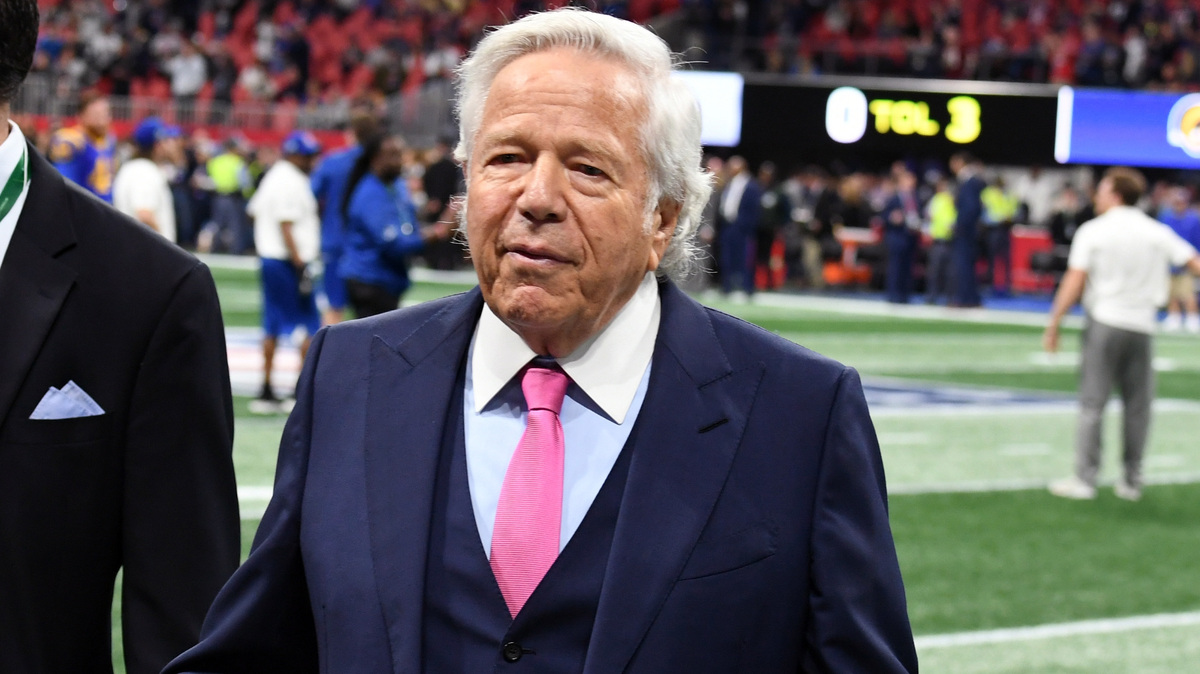
New England Patriots owner Robert Kraft faces misdemeanor charges over two visits to a Jupiter, Fla., day spa, where police allege that he paid for sex acts.
Kevin Winter/Getty Images
hide caption
toggle caption
Kevin Winter/Getty Images
Updated at 5:46 p.m. ET
The Florida state attorney’s office in Palm Beach says New England Patriots owner Robert Kraft has been charged with two counts of soliciting prostitution, days after police alleged surveillance video had caught Kraft during two visits to the Orchids of Asia Day Spa in Jupiter, Fla.
State Attorney Dave Aronberg said at a news conference Monday that Kraft, a resident of Massachusetts who also has a home in Palm Beach, is among 25 people facing first-degree misdemeanor charges of soliciting another to commit prostitution.
As for potential penalties, Aronberg said the charge potentially carries a prison sentence of up to one year, along with “mandatory 100 hours of community service, a mandatory $5,000 fine, and a mandatory class on the dangers of prostitution and human trafficking.”
The police investigation into the spa was aimed at stopping human trafficking, which Aronberg equated to “modern day slavery” and called an “evil in our midst.”
Officials will send Kraft a summons about the charge, the state attorney said. He also said all of the cases will be handled in the same way.
“No one gets any special justice in Palm Beach County,” Aronberg said. He later added that none of the alleged “johns” were targeted, saying they come from “all walks of life — there’s rich [and] poor, there’s young and old.”
The women who worked at the spa were victims of a criminal enterprise who deserve the government’s help, Aronberg said. While he didn’t provide new details about how the women who worked at the Jupiter spa arrived in the U.S., the state attorney described how human traffickers often lure women to come to the U.S. for the promise of a better life, but instead force them into becoming sex workers.
Kraft and the other men, including former Citigroup President and COO John Havens, and Wall Street financier John Childs, were snared in a sting operation that targeted the strip-mall massage parlor and spa — part of a broader investigation into what officials allege is a system of human trafficking and money-laundering.
Martin County Sheriff William Snyder, whose office opened the investigation that led to more than 300 arrest warrants across Florida counties, told NPR’s All Things Considered the sting was launched after receiving a tip about one of the illicit businesses.
A health care worker visiting one of the day spas noticed suitcases in one of the massage parlors and other indicators that some of the women might be living in the storefront business, Snyder said. Eventually, officials discovered that six to eight women were living in the small commercial space at any given time.
“They were staying inside the massage parlor for 24 hours a day, seven days a week,” Snyder explained, adding that the women, most of whom do not speak English, “were working seven days a week.”
He said the women cooked food on hot plates and slept on the same massage tables where they were forced to provide sexual services for eight to 15 men per day.
A Chinese woman currently in protective custody has provided grim details about how some of the women ended up working there.
She told investigators she was offered a job “making a lot of money” in an American nail salon, Snyder said. “And before she knew it she came here and found herself in the sex trafficking industry in massage parlors.”
She did not speak out because she feared her family in China would be put at risk if she cooperated with law enforcement.
In other cases, he said, women are trafficked into the country with their children and forced into making a horrible bargain with their captors: Engage in sex work in exchange for the well-being of their children.
“There are coercion points that keep them in bondage and the person with the key is not the trafficker. It’s the men who go into these parlors and avail themselves of this human misery,” Snyder told NPR. “I think they are monsters.”
The Martin County probe quickly led to a multi-jurisdictional investigation in Indian River County — where billionaire Childs and three law enforcement officers were snagged — and Palm Beach County, where Kraft and Havens were charged.
Jupiter Police Chief Daniel Kerr said in a press conference on Friday that there is video evidence of the criminal acts “for all of the individuals being charged,” including Kraft.
“We categorically deny that Mr. Kraft engaged in any illegal activity,” a spokesman for The Kraft Group told NPR Friday in a statement about the case. “Because it is a judicial matter, we will not be commenting further.”
Jupiter police raided the Orchids of Asia spa early last week, Kerr said at a news conference Friday. In addition to Jupiter, the coordinated police operation targeted businesses in Martin County and Indian River County. The Jupiter raid came after police collected video evidence from cameras hidden inside the facility.
“We’re as equally stunned as everybody else,” Kerr said of the high-profile suspects who now faced solicitation charges.
Kraft’s is not the only boldface name among the spa’s alleged clients. Also on the list is Citigroup’s former president and chief operation officer John Havens.
The spa charges $59 for a half-hour treatment and $79 for a full hour, Detective Andrew Sharp said on Friday. When Sharp was asked if there is video evidence of Kraft in the massage parlor room receiving alleged sex acts, he replied, “The answer to that is yes.”
In addition to seeking charges against men who visited the spa, Jupiter police also arrested its owner, Hua Zhang, and its manager, Lei Wang.
Kraft, 77, has a net worth that’s estimated at some $6.6 billion. He was recently ranked No. 79 on Forbes magazine’s list of the wealthiest people in the U.S. Most famously, Kraft has turned the Patriots into a dynasty, winning multiple Super Bowl titles since its first championship in 2002. He acquired the franchise in 1994.
Childs, founder of private equity firm J.W. Childs Associates, was among 165 people charged by the Vero Beach Police Department and whose photo was released on the police website.
“I have received no contact by the police department about this charge,” he told Bloomberg on Friday. “The accusation of solicitation of prostitution is totally false. I have retained a lawyer.”
A man who answered the listed phone number for Havens told the news outlet: “I have no idea what you are talking about,” when asked about the charges.
In addition to the criminal charge in Florida, Kraft also faces the possibility that the NFL could take action against him.
League spokesman Brian McCarthy said on Friday that the NFL is “aware” of the allegations and is monitoring the case. The NFL’s personal conduct policy explicitly prohibits sex offenses — and the rules apply to everyone in the league, McCarthy said.
The policy also seeks to impose a higher order of responsibility for one’s actions than simply avoiding being found guilty by the justice system.
On Monday, the NFL issued an updated statement saying that it is “seeking a full understanding of the facts,” and pledging to “take appropriate action as warranted based on the facts.”
New Mexico Eyes A 'Medicaid Buy-In' Plan To Insure More Residents

Leah Steimel (center) says she would consider buying insurance through a Medicaid-style plan that the New Mexico Legislature is considering. Her family includes (from left) her husband, Wellington Guzman; their daughter, Amelia; and sons Daniel and Jonathan.
Courtesy of Leah Steimel
hide caption
toggle caption
Courtesy of Leah Steimel
Laura Lucero Y Ruiz De Gutierrez has a heart condition and fibromyalgia and is at high risk of developing diabetes. She has health insurance through her husband’s job. But between the $800 monthly premium for the couple’s coverage and the $2,100 deductible she has to pay down before insurance starts picking up the tab, she doesn’t feel she can afford to go to the doctor when she needs to.
She hopes that this may soon change. Identical bills proposed in recent weeks in the New Mexico House and Senate would make Gutierrez eligible to buy into a public health plan modeled on the Medicaid program, with funding support from the state of New Mexico. She could receive state-funded assistance via the program that would save her hundreds of dollars a month on premiums.

Laura Lucero Y Ruiz De Gutierrez has health insurance but says she still can’t afford to go to the doctor when she’s sick. She hopes the public health plan New Mexico is considering will change that.
Courtesy of Laura Lucero Y Ruiz De Gutierrez
hide caption
toggle caption
Courtesy of Laura Lucero Y Ruiz De Gutierrez
“Medicare for all” – often described as a national, single-payer health system built on the Medicare model — has become a rallying cry for some progressive Democrats. Meanwhile, New Mexico is one of several states looking at offering consumers a different type of government-sponsored plan to provide a health care option that’s more affordable than current options.
These states’ proposals are often referred to as “Medicaid buy-in” plans because, typically, they would offer benefits similar to what is available through Medicaid, the state-federal health plan for people who have low incomes.
The proposals under consideration vary from state to state. Variables include eligibility criteria, how they might be funded and whether they would be offered on the Affordable Care Act’s insurance exchange.
And depending on how they structure their plan, states may have to get approval from the federal government to move ahead.
States that are interested in a buy-in plan typically are considering taking advantage of the Medicaid program’s provider networks and reimbursement rates. Those payment rates generally are lower than for Medicare and for commercial plans.
That may help keep costs down, though in some states it also means the network of doctors would likely not be as large as that found with Medicare or some commercial plans.
“Medicare-for-all is not going to happen legislatively in the next couple years,” says Heather Howard, who directs Princeton University’s State Health and Value Strategies program and is working closely with some of the states. “In the meantime, states are saying, ‘What about “Medicaid-for-more”?’ “
In New Mexico, the buy-in plan would be similar to the state’s Medicaid program. It would be offered outside the exchange and would not require federal approval to implement. The state would provide financial assistance to help people with lower incomes buy into it.
A report commissioned by New Mexico projected that up to 16,000 people would enroll in a program like the one originally proposed in the state’s bills and that their premiums would be 15 to 28 percent lower than plans sold on the individual market.
New Mexico Gov. Michelle Lujan Grisham favors a Medicaid buy-in option. She doesn’t have a position on the current bill, but she is following it closely, says Nora Sackett, the governor’s deputy press secretary.
In addition to the governor’s and lawmakers’ interest, other stakeholders have been deeply involved, increasing the odds of success, Howard says.
Lawmakers in Colorado, Oregon, Washington and Minnesota are among others exploring similar options, says Howard. Nevada lawmakers passed a bill last year that would have set up a Medicaid buy-in plan, but the Republican governor vetoed it.
“The proposals take on different flavors depending on the state” and what officials are trying to accomplish, she says, whether it’s increasing the number of people with insurance, making coverage more affordable or helping states avoid having “bare” counties where no marketplace plans are offered.
New Mexico’s bill would target individuals who aren’t eligible for Medicaid or Medicare and those who can’t get the Affordable Care Act’s premium subsidies because their incomes are above 400 percent of the federal poverty level (about $50,000 for one person or $103,000 for a family of four). The plan would also be available to state residents whose immigration status in the U.S. is undocumented.
And the measure would help people like Gutierrez who are vulnerable to the ACA’s so-called family glitch. Her husband’s $100 monthly premium for single coverage through his employer plan is considered affordable under the law because it costs less than 9.86 percent of their family’s income of about $46,000 a year. That makes her ineligible for premium subsidies on the exchange, even though the $800 premium for the two of them through her husband’s employer plan far exceeds that affordability percentage. Their three children already have Medicaid coverage.
“Right now, I pay to have the health care, but I can’t afford to use it,” says Gutierrez.
The bill would provide financial assistance from the state, with premiums and cost sharing for people whose incomes are less than 200 percent of the federal poverty level, or $60,340 for a family of five. The new coverage would take effect by January 2021.
Gutierrez, whose family lives in Albuquerque, would be eligible for financial assistance to help her buy into the Medicaid-like plan, while her husband stays on his employer plan. Because their $46,000 annual income is just above 150 percent of the federal poverty level, her monthly premium would likely be about $160 per month for a comprehensive plan with a $150 deductible, according to estimates by Manatt Health, which did the original state analyses of buy-in options that were published before the bills were introduced in January.
New Mexico has high levels of poverty, and 40 percent of New Mexico residents are already enrolled in the state’s Medicaid program, compared with about 23 percent nationwide.
“It’s the cornerstone” of our health care system, says Colin Baillio, director of policy and communication at Health Action New Mexico, an advocacy group. The legislation would use “those levers that Medicaid has to provide comprehensive coverage and a comprehensive provider network.”
The bills were passed by two legislative committees this month, with instructions for further study to examine expanding the buy-in plan to more groups. They now move to two other legislative committees for consideration, Baillio says.
And though hospitals and other health care providers would be reimbursed at Medicaid rates — typically lower than those for commercial plans — to the extent that people who are uninsured enroll in the new plan, some providers say they stand to gain financially.
“We’re obviously very supportive of anything that expands coverage,” says Jeff Dye, president of the New Mexico Hospital Association. “It’s the issue of getting some payment versus no payment for services rendered.”
If the Medicaid buy-in bill passes, Blanca and her husband, Hugo, could have health insurance for the first time since they moved to New Mexico 14 years ago. The couple and their oldest son, now 18, are undocumented immigrants from Mexico. (NPR is not using their last names, to protect the family’s privacy.) Their two younger children, who were born in the United States, are enrolled in Medicaid.
Hugo works as a plumber, and Blanca is studying early childhood development at a community college near their home in Albuquerque. Because they are unauthorized immigrants, they’re not permitted to buy health insurance on the ACA exchanges, even if they’re willing to pay the full price.
So like many people without insurance, they wait until they’re really sick before seeking help. When Blanca developed pneumonia a few years ago, the waiting lists for an appointment at community clinics that would see her without insurance were long. Finally, when she could no longer breathe comfortably, she went to the emergency department.
“It would bring us peace of mind not having to worry about our health care situation,” Blanca says through an interpreter.
Providing health care for residents who lack proper immigration status is “an underlying issue with many states that are considering a Medicaid buy-in,” said Chiquita Brooks-LaSure, managing director at Manatt Health, who co-authored the reports evaluating Medicaid buy-in options for New Mexico.
The New Mexico bill also would provide some relief for Leah Steimel’s family. Neither she nor her husband has employer-sponsored coverage, and with a family income of about $100,000, they don’t qualify for tax credits that would reduce their ACA premiums. They now pay more than $1,900 per month for a silver-level plan with a $10,000 deductible to cover themselves and two of their kids (the third is older than 26).
Buying into a Medicaid-like plan would be tempting, says Steimel, who works as a community health consultant with some of the groups advocating for the buy-in. Sure, she says, she does wonder if the Medicaid plan would be as easy to use as a regular commercial plan and if it would give the family access to as many providers.
“But being able to pay into something that would reduce by even a third what I’m paying now — I’d love that,” she says.
Kaiser Health News is an editorially independent news service that is part of the nonpartisan Henry J. Kaiser Family Foundation and is not affiliated with Kaiser Permanente. Michelle Andrews is on Twitter: @mandrews110.
Beyond 'Bumper Sticker' Slogans: 2020 Democrats Debate Details Of Medicare-For-All

Sen. Bernie Sanders, I-Vt., promotes his Medicare-for-all proposal at the 2017 Convention of the California Nurses Association/National Nurses Organizing Committee in San Francisco, Calif., an issue that is dominating the early debate in the 2020 presidential contest.
Justin Sullivan/Getty Images
hide caption
toggle caption
Justin Sullivan/Getty Images
Bernie Sanders is back, but one of his signature policies never left.
In 2015, he introduced Medicare-for-all to many Democrats for the first time. Since Sanders’ first run for president, that type of single-payer health care system has become a mainstream Democratic proposal.
Last week, Sanders launched his second presidential campaign, amid a field of presidential candidates who are trying to figure out how to position themselves around the policy. Trying to stand out from the pack, though — especially on health care — poses a problem: Differentiating yourself means getting into the details, and getting into the details can turn voters off.
Over the last few weeks, candidates have been working to show voters the daylight between their respective health care proposals.
New Jersey Sen. Cory Booker has stressed that he supports Medicare-for-all, and that he wants private insurers to have a role in that system. “Even countries that have vast access to publicly offered health care still have private health care,” he told reporters this month.
Minnesota Sen. Amy Klobuchar says she wants a public option, in the form of letting people buy into Medicaid. As for single-payer health care, she says it’s a possibility in the long-term.
Ohio Sen. Sherrod Brown, who says he’s still debating a run, also wants a sort of public option, but only for people above age 50, whom he would allow to buy in to Medicare. “I think Medicare-for-all will take a while, and it’s difficult,” he told CNN’s State of the Union.
Long story short: In a huge Democratic presidential field, health care is the first issue where candidates are really differentiating themselves.
Bumper sticker politics
“Health reform is always more popular as a bumper sticker than as a piece of legislation,” said Larry Levitt, senior vice president for health reform at the Kaiser Family Foundation.
He points to both the Obamacare and the Obamacare repeal efforts as examples — some ideas behind Obamacare, like insuring pre-existing conditions, were popular. But other aspects that proponents said were necessary to make it work, like the individual mandate, infuriated some voters, helping propel Republicans to big wins in 2010.
Likewise, the Obamacare repeal effort fired up many Republican voters, but the implications of the various repeal plans — fewer people with insurance, lack of protections for pre-existing conditions — ultimately helped doom the effort.
Medicare-for-all may prove to be yet another example of this trend, according to Levitt.
“There’s a huge political benefit for candidates to be in favor of the idea of Medicare-for-all in a primary,” he said. “But the more the details get filled in, the less popular that idea will be.”

When Sen. Bernie Sanders, I-Vt., introduced his Medicare-for-all legislation in 2017, he was joined by several other senators now seeking the 2020 Democratic presidential nomination, including Elizabeth Warren of Massachusetts, Kirsten Gillibrand of New York, Cory Booker of New Jersey and Kamala Harris of California.
JIM WATSON/AFP/Getty Images
hide caption
toggle caption
JIM WATSON/AFP/Getty Images
California Sen. Kamala Harris may be the first to face a big lesson in this. At a recent CNN town hall, host Jake Tapper asked her about her support of Sanders’ Medicare-for-all bill, which he said would “totally eliminate private insurance.”
(A quick note here: Sanders’ plan does not totally eliminate private insurance, but it would vastly diminish its role.)
Harris said that she would eliminate private insurance — but after a quick backlash, the next day clarified, with a campaign spokesman saying she also supports more incremental health care overhauls.
Polling also shows how tricky selling Medicare-for-all could be once the details come into play. A January poll from Kaiser shows that nearly 7 in 10 Americans like Medicare-for-all if they hear it will eliminate premiums and out-of-pocket costs. But that support drops to around 4 in 10 if people hear it will mean higher taxes.
Both of those things could be true of a Medicare-for-all system. But trying to sell even this basic trade-off on the campaign trail — especially this early — is tough.
At the other, more moderate end of the spectrum, Klobuchar said she’s for the broad goal of “universal health care,” and did get specific on her support of a public option. But when it comes to Medicare-for-all, she remained vague, saying it could be a possibility. Voters will almost certainly try to pin her down more on that in coming months, but for now her answer may help keep her from alienating some more liberal voters.
For many candidates, keeping health care rhetoric broad might be a smart move for now, says Nadeam Elshami, former chief of staff to House Speaker Nancy Pelosi.
“It’s okay for a candidate to say, ‘Look: This is generally what I believe in. But I’m willing to hear first and then get into specifics later, after I have a deeper discussion of this issue,'” he said.
The “socialist” threat
Progressive health care overhauls will also likely feed into one of President Trump’s main attack lines: labeling Democrats as “socialists” as a way of painting them as extreme.
“It’s a surprising development that 10 years after the passage of the Affordable Care Act and after a massive political backlash against it, and a huge effort to defend it, Democrats are in there immediately swerving so hard to an even greater government role for health care,” said Michael Steel, a Republican strategist who worked for former House Speaker John Boehner and Jeb Bush’s 2016 campaign.
Republicans know political backlash well — the backlash to their repeal efforts culminated in the GOP losing the House in 2018. Whatever criticism Trump throws Democrats’ way on health care for 2020, they will likely counter by asking him if he has his own alternative to Obamacare, having failed to fully repeal it.
Until then, Democrats will be doing similar calculations on both health care and a variety of other issues: weighing sweeping, progressive ideas that the president could try to label as “socialist” against incremental policies that might not excite liberal voters — and deciding which choice is most likely to get a Democrat into office.
Voters want sweeping health care changes …maybe
A basic tension underlies Democratic plans to overhauls the health care system: Only 1 in 3 Americans rate health care in the U.S. as “excellent” or “good,” according to Gallup. But at the same time, a large majority — 7 in 10 — view their own personal health care as “excellent” or “good.”
Which is to say, it’s easy to see how voters might want the system massively reformed. In addition, incremental changes that don’t go as far as Medicare-for-all might particularly infuriate progressive voters.
But at the same time, voters will likely bristle if that reform threatens to change their own health coverage, as some major health care overhauls, like Medicare-for-all, might do.
“There is a reason that President Obama’s signature promise on Obamacare was ‘If you like your plan, you can keep it,'” Steel said.
That promise proved untrue — some Americans saw their health care plans canceled under the new Obamacare rules, and Politifact named Obama’s statement the “lie of the year” in 2013.
Should a Democratic candidate’s health care proposal similarly threaten people’s current health plans, it’s a safe bet that it will become a major Republican line of attack.
Planned Parenthood President Leana Wen On Trump Administration Title X Changes

NPR’s Lulu Garcia-Navarro talks with Leana Wen, a physician and the president of Planned Parenthood, about how a rule change from the Trump administration on Title X will affect her organization.
LULU GARCIA-NAVARRO, HOST:
Planned Parenthood, long the target of social conservatives, could lose a significant portion of its funding under a new Trump administration rule released on Friday. The rule will cut federal funding from organizations that make referrals for abortions or provide the procedure. This is a win for anti-abortion activists who pressured lawmakers to defund organizations with ties to abortion.
But critics say it will hurt lower-income women who depend upon family planning centers that receive what are known as Title X funds. Leana Wen is a physician and the president of Planned Parenthood, and she joins us now.
Welcome to WEEKEND EDITION.
LEANA WEN: Thank you, Lulu – good to be with you.
GARCIA-NAVARRO: You call these changes to the Title X program a gag rule. Explain.
WEN: This is a gag rule because what President Trump is doing is to put a gag on doctors like me to prevent us from providing our patients with full and accurate medical information. So if you are a woman who goes to a health center that receives public funding, you cannot be referred to abortion care, even if your life depends on it. This gag rule is unethical and unconscionable.
I mean, imagine if the Trump administration issued a rule that forbid doctors from telling our patients about their options for any other aspect of health care. It’s a direct interference with the practice of medicine and with our ethical obligation to our patients. And this is why over 100 medical and public health organizations oppose the gag rule, including the American Medical Association, the American Nurses Association and the American College of Obstetricians and Gynecologists.
GARCIA-NAVARRO: I’ve read that you won’t accept funds under the new rules.
WEN: Planned Parenthood will never force our doctors and nurses to compromise their ethics. We will never let politicians censor our health care providers and erode the trust that our patients have placed in us, which is to provide them with compassionate, judgment-free and comprehensive care. That’s our promise to our patients.
GARCIA-NAVARRO: But you could receive federal funds if you separated abortion services from family planning centers. The new rules say there needs to be clear physical and financial separation between government-funded services and abortion-related services.
WEN: This Title X gag rule isn’t about providing good medical care. It only does one thing, which is to restrict patients’ access to reproductive health care. It has no basis in medicine or science. And the only effect is going to be preventing 4 million Americans from receiving basic health care, including breast and cervical cancer screenings, affordable birth control and STI tests.
GARCIA-NAVARRO: Religiously affiliated groups are hoping to get the money instead. Conservatives say this provides good alternatives to women.
WEN: We should talk about what is evidence-based, science-based methods for ensuring that all people have access to the health care that they need. Title X is our nation’s program for affordable birth control and health care. And this program is intended to ensure that people with low incomes who live in rural areas or who don’t have health insurance still have access to cancer screenings and preventive care.
And I think it’s important to talk about the individuals who it will affect the most. It will disproportionately affect those who already face the greatest barriers to care. It’s women of color and families of low income. And we need to talk about the discrimination involved here because if you are wealthy and you have private insurance, you can still get the best medical care.
GARCIA-NAVARRO: But religious groups say they could provide those alternatives, that they feel like they too deserve these funds so that there isn’t a monopoly on care.
WEN: Look. I’m a doctor and a scientist. And I need to do what’s best for my patients based on medicine and science. And what we have done for nearly 50 years through Title X is to follow the best available medicine and science. Title X is recognized to be one of the most successful public health programs in reducing sexually transmitted infections and reducing unintended pregnancies. This is what works.
GARCIA-NAVARRO: Leana Wen is the president of Planned Parenthood. Thank you very much.
WEN: Thanks so much, Lulu. And thank you for your time.
Copyright © 2019 NPR. All rights reserved. Visit our website terms of use and permissions pages at www.npr.org for further information.
NPR transcripts are created on a rush deadline by Verb8tm, Inc., an NPR contractor, and produced using a proprietary transcription process developed with NPR. This text may not be in its final form and may be updated or revised in the future. Accuracy and availability may vary. The authoritative record of NPR’s programming is the audio record.
Against The Odds, A Pro Soccer Team In Kashmir Is Close To Winning India's Top Title

Snowflakes began accumulating on the turf by halftime during a Feb. 6 game at Real Kashmir’s home stadium in Srinagar. The coach of the visiting team said later that some members of his team, from southern India, had never seen snow.
Lauren Frayer/NPR
hide caption
toggle caption
Lauren Frayer/NPR
They play soccer in a disputed Himalayan valley prone to car bombs, strikes and heavy snow. Soldiers with machine guns patrol their home stadium. Players sometimes have to arrive at practice three hours early to avoid police curfews. Their team is less than three years old, with a budget that’s one-tenth that of some of their competitors.
Now, against all odds, Real Kashmir Football Club, from Indian-controlled Kashmir, is tantalizingly close to winning India’s top professional soccer title. They’ve been flitting back and forth between first, second and third place, and the season ends in early March.
“We’re the only club in India that has sold-out stadiums at almost every game,” says the team’s co-founder Shamim Mehraj. “What we have done is give people some hope in a place that has actually been taken down by conflict and violence for the past 60 years. It’s helping this place heal.”
Kashmir’s recent history has been chaotic. It has seen three wars between India and Pakistan and is the site of a decades-long separatist insurgency that Indian forces have often dealt with violently. The valley is part of Hindu-majority India’s only Muslim-majority state, Jammu and Kashmir.
A natural disaster helped give birth to this soccer team. In 2014, the Kashmir Valley suffered devastating floods. Hundreds of people were killed. Schools were closed, and young people spilled out onto the streets of Mehraj’s hometown Srinagar, the summer capital of Jammu and Kashmir and one of the largest cities in the valley.
One evening, Mehraj and a friend had an idea.
“We used to go for evening walks. We would see a lot of kids hanging around doing nothing, and I had been a footballer myself. That’s when I thought, ‘Why don’t I get some balls and at least give these kids something to do?'” recalls Mehraj, 38. He had played for his college team in New Delhi, and for his state in amateur soccer tournaments.
Mehraj, who is Muslim, and his Hindu friend Sandeep Chattoo, 52, got friends and neighbors to pitch in and buy 1,000 soccer balls, which they handed out to flood victims. But why stop there? In March 2016, they started a team.

Mahak Farooq (center), 24, watches her brother Danish Farooq, who plays midfield for Real Kashmir, alongside 12-year-old Urooj Ayyub Bhat (left), a local boy who’s one of the team’s most loyal fans and a fixture at home games.
Furkan Latif Khan/NPR
hide caption
toggle caption
Furkan Latif Khan/NPR
They applied for the team to compete in India’s I-League 2nd Division — the pro soccer equivalent of baseball’s minor leagues. Mehraj and Chattoo invested their own money to pay players’ salaries. They also hired a Scottish former player, David Robertson, who had been coaching a professional soccer team in Phoenix, Arizona, to coach Real Kashmir, a.k.a. the “Snow Leopards.”
Robertson had never been to India, and admits he probably couldn’t have placed Kashmir on a map.
“All I ever saw was TV shows that showed it’s 90 degrees — it’s hot in India! But I arrived here and the next day, it was snowing,” says Robertson, 50, now in his third season as Real Kashmir’s coach. “There was no Internet, the electricity was out, and I just thought, ‘I want to go home.'”
Mehraj invited Robertson over to his family’s house, gave him a hot water bottle and some home-cooked Kashmiri food — and convinced him to stay. Since then, Robertson has recruited his own son, Mason Robertson, 24, to play for Real Kashmir. By the end of the 2017-2018 season, several Robertson relatives were in the stands at the team’s home stadium in Srinagar, to watch Real Kashmir win the 2nd Division title.
This season, the team was promoted to the I-League’s top division, the first soccer team from Kashmir ever to qualify. (There is one other Kashmiri pro soccer team, Lone Star Kashmir FC, which plays in the I-League’s 2nd Division). In October, Real Kashmir signed a lucrative sponsorship deal with the sports giant Adidas. The brand features prominently on team uniforms and advertisements, and helps pay the salaries Mehraj and Chattoo had initially paid from their own pockets.
Now the team is neck-and-neck with Chennai City FC and East Bengal FC for the top title in Indian professional soccer. (Besides the I-League, India also has another pro soccer league called the Indian Super League, or ISL, but the I-League’s top division is considered the most competitive.)

Fans braved sleet and snow to watch Real Kashmir play a home game on Feb. 6 in Srinagar.
Furkan Latif Khan/NPR
hide caption
toggle caption
Furkan Latif Khan/NPR
“I never did think we would go this far,” Mehraj tells NPR, as he looks out over the turf at Real Kashmir’s home stadium.
There are constant reminders of the violence. On Feb. 14, a suicide car bomber killed dozens of Indian security forces on a main highway on the outskirts of Srinagar, where Real Kashmir plays home games. Curfews were imposed in the aftermath. The I-League Division 1 reigning champions Minerva Punjab FC, who were supposed to travel to Srinagar for a match four days later, refused to show up, citing safety concerns.
In Srinagar’s old quarter, the Muslim call to prayer reverberates through a warren of lanes sprayed with militant graffiti saying “India Go Home” and “Free Kashmir,” with the names of Kashmiri militants who have been killed in fighting. Kashmir’s 21 percent unemployment rate is triple that of the rest of India and militant groups recruit from the ranks of young, idle Kashmiri men.
Soccer “keeps him away from that,” says Ishfaq Hussain, 52, a former professional cricket player whose son Muhammad Hammad plays center-back for Real Kashmir. “He thinks always about when to play, when to practice. He’s got no time to join politics or go shouting or pelleting stones.”
Hammad, 21, often has to circumvent police curfews to make it to morning soccer practice.

Muhammad Hammad, 21, kicks a soccer ball outside his family home in Srinagar. Hammad plays center-back for Real Kashmir as it vies for the top title in Indian professional soccer.
Furkan Latif Khan/NPR
hide caption
toggle caption
Furkan Latif Khan/NPR
“If the practice is at 11 o’clock, I have to leave home at 8 or 7 a.m. because there will be curfew around the city and you are not able to move around,” says Hammad. “The conditions here, you get much more motivation to achieve something. I have struggled a lot. These things also motivate you.”
When NPR visited Hammad at his parents’ home, his mother Mahjabeen, 46, got choked up describing how proud she is to watch her son play professional soccer. She has a giant flat-screen TV mounted on the wall of her living room to watch all of her son’s games. She describes how neighborhood children constantly ring their doorbell, hoping for a chance to kick around a soccer ball with Hammad.
His teammates include fellow Kashmiris and recruits from Africa, Europe and across India — including Muslims, Hindus, Christians and atheists.
Mehraj says he can’t manufacture T-shirts, stickers and banners fast enough to keep up with fans’ demand.

Muhammad Hammad (right), 21, who plays center-back for Real Kashmir, sits at home with his mother Mahjabeen.
Furkan Latif Khan/NPR
hide caption
toggle caption
Furkan Latif Khan/NPR
At a Feb. 6 home game, fat snowflakes began accumulating on the turf at a scoreless halftime. Drenched fans huddled in the bleachers under long plastic tarps, screaming. Schoolgirls in headscarves swooned.
Real Kashmir scored the winning goal against Gokulam Kerala FC, from southern India, in the 51st minute. As the referee’s whistle sounded and the home team moved one match closer to India’s top soccer title, the crowd of shivering, ecstatic Kashmiris erupted in cheers.
“You’re always rooting for the underdog, and I think Kashmir are that,” observes Sumedh Bilgi, an Indian sports journalist who’s watched the team’s improbable rise. “Ultimately, money rules the world. But you always want your fairy tale, don’t you?”











Team photo after Real Kashmir won India’s I-League 2nd Division title in May 2018.
Courtesy of Umar Amin
hide caption
toggle caption
Courtesy of Umar Amin
NPR Producer Furkan Latif Khan contributed to this report.
Big Pharma Heads To Capitol Hill
The heads of the largest pharmaceutical companies will defend their pricing before the Senate next week. STAT reporter Nicholas Florko tells NPR’s Scott Simon that this will be a televised crucible.
SCOTT SIMON, HOST:
Criticism of America’s major drug companies is one of the few areas of bipartisan agreement of the U.S. Congress. Lawmakers in both parties profess to be outraged about price increases for life-saving drugs and treatments. Next Tuesday, the executives of some of the largest pharmaceutical companies in the country will go before the Senate Finance Committee. It’s expected to be a rough day for them. Nicholas Florko is the Washington correspondent for STAT, a news organization that covers health and the life sciences. He joins us in our studios. Thanks so much for being with us.
NICHOLAS FLORKO: Thanks for having me.
SIMON: Is it a little surprising they even agreed to come in?
FLORKO: Well, they really didn’t have a choice, quite frankly. If a congressional hearing – congressional committee wants to hear from you, either you come in voluntarily, or they can issue you a subpoena. And, frankly, they’re a lot nicer when you come in voluntarily.
SIMON: Can we assume the PR firms that are of counsel to all these major corporations have been working overtime to try and help them?
FLORKO: Yes, absolutely – not only PR firms but probably law firms that specialize in this as well.
SIMON: What kind of reception do you think they’re going to get?
FLORKO: It’s probably not likely that they’re going to get a friendly reception. I mean, these hearings are just as much about getting information from the drug companies as it is an opportunity for the lawmakers to make a public stand about this issue.
SIMON: I imagine no legislator thinks he or she will look very good if they say, by the way, I think price increases are great. Thank you.
FLORKO: Exactly. They realize that they are going to be on TV, the nightly news. And they want to make a point about this issue to their constituents.
SIMON: Tell us about some of the figures we’re going to be seeing – for example, Richard Gonzalez.
FLORKO: Yeah. They’re a really interesting group. So Richard Gonzalez is the CEO of the company AbbVie. Interesting company because they are not a household name, but they make a drug that’s a household name, which is Humira. You’ve probably seen the TV ads for them.
SIMON: An expensive household name.
FLORKO: Very expensive household name and on pace to be the most lucrative drug in pharmaceutical history. He is a college dropout. But he has worked his way up to CEO at AbbVie. But he’s going to face some really tough questions about these strategies the company’s used to protect this drug for so long from competition that would lower the price.
SIMON: The producer of the top-selling insulin in this country is Sanofi. I hope I’m pronouncing that correctly.
FLORKO: Yes.
SIMON: And Olivier Brandicourt.
FLORKO: That’s correct. So I call him the heel of the group because he is the one who’s going to probably face some of the toughest questions. There is bipartisan anger over the issue of insulin prices. And he is sort of No. 1 target for asking questions about why the price of insulin is so high.
SIMON: It’s essentially quadrupled for a lot of people, right?
FLORKO: That’s correct.
SIMON: Pascal Soriot of AstraZeneca.
FLORKO: So he’s my favorite of the group. My guess is if you’re going to have somebody who’s going to have a slightly embarrassing soundbite on the nightly news, it might be him. He’s kind of known for being the outspoken one, grew up in the suburbs of Paris, has talked a lot about how he used to be in fistfights as a kid. He’s actually groused to the media about how he’s the lowest paid CEO in the group, even though he makes over $12 million a year. It’s going to be interesting to see how he handles the questions that he gets.
SIMON: Whatever speeches lawmakers are going to deliver, is it a little too simplistic to hold the pharmaceutical companies responsible in and of themselves for drug prices? Because, of course, there’s a third-party payment system.
FLORKO: Yeah. I mean, it’s a super complicated area – no doubt that’s going to be the line that a lot of these companies use is you have to look at others in the supply chain. But my guess is that – obviously, the members of Congress want to hear from the drugmakers. But my guess is they want to hear from others, too. So I’d stay tuned in that round to see if there’s other hearings where we might hear from others in the supply chain.
SIMON: Pharmaceutical companies, I imagine, will also argue that you have to have, let’s say, an increasing price for insulin so they have the money to develop whatever eventually replaces insulin.
FLORKO: Of course. The issue with that argument, though – somebody like Richard Gonzalez is going to have some trouble with that because that’s a drug – his drug Humira as a reminder – that drug has been – was supposed to be eligible for generic competition a long time ago. And they’ve been accused of essentially gaming the system to keep their protection longer and longer. So the argument from lawmakers is you had your time to recoup your investment. Now it’s time to let cheaper drugs come on the market.
SIMON: Do your reportorial instincts tell you the hearing will be fair and real in attempt to discover something or just an opportunity for politicians to get soundbites?
FLORKO: It’s a little bit of both, honestly. It’s definitely going to be a show. I mean, we’ve looked at the hearings that have happened previously. You know, you had the Martin Shkreli pharma bro hearing a few years ago. And you had the EpiPen hearing about the price of that drug. There’s definitely going to be a fair bit of just grandstanding and opportunities to slam drug companies. But between the lines, these lawmakers are interested in figuring out how to legislate here. So there’ll be some interesting questions, too, that can inform legislation.
SIMON: Nicholas Florko, reporter for STAT news, thanks so much for being with us.
FLORKO: Thank you so much for having me.
Copyright © 2019 NPR. All rights reserved. Visit our website terms of use and permissions pages at www.npr.org for further information.
NPR transcripts are created on a rush deadline by Verb8tm, Inc., an NPR contractor, and produced using a proprietary transcription process developed with NPR. This text may not be in its final form and may be updated or revised in the future. Accuracy and availability may vary. The authoritative record of NPR’s programming is the audio record.
Jack Davidson On Breaking An NCAA Free Throw Record
NPR’s Scott Simon talks to Jack Davidson, a student at Wabash College. He broke the NCAA record for all-time consecutive free throws. He made 95 consecutive free throws, breaking a 22-year-old record.
SCOTT SIMON, HOST:
Jack Davidson is in the record books. The sophomore at Wabash College in Indiana hit his 95th free throw in a row last Saturday in a 13-point win over Oberlin, and he established a new all-time, all-divisions NCAA record for consecutive free throws. And then he missed his next free throw. Jack Davidson joins us now from the team bus. Thanks very much for being with us, Mr. Davidson.
JACK DAVIDSON: For sure. Thanks for having me on.
SIMON: Well, congratulations. What did it feel like to make that shot?
DAVIDSON: Yeah, it was a great feeling. Just to have the crowd’s support behind you and my teammates and coaches supporting me, it was a great feeling.
SIMON: So you must have known it was coming up, right?
DAVIDSON: Yeah. We knew before the game I was at 92, and we knew it was just three more to get the record. My parents were definitely really nervous about that. And my mom actually said she had some trouble sleeping the night before because how nervous she was.
SIMON: Yeah.
DAVIDSON: But I tried to stay calm and just try to win the game and let the record take care of itself.
SIMON: So I have to ask, what happened on the next shot?
DAVIDSON: Yeah, that’s what everyone keeps asking. But honestly, I just missed it. I left it short. It is what it is. And I’m glad I could make the 95th and just miss the next one.
SIMON: I gather your record – 22-year-old record that was set by Paul Cluxton of Northern Kentucky.
DAVIDSON: Yeah.
SIMON: Have you heard from Mr. Cluxton?
DAVIDSON: Yeah. He did – he actually reached out to me the other day and texted me and congratulated me, which was pretty awesome. And also, Darnell Archey, who had the Division 1 record at Butler, gave me a call, and then we had a nice conversation. So it’s been really nice – the outreach of everyone congratulating me. And that’s been really cool.
SIMON: I did a little research. Paul Cluxton is now running a car dealership.
DAVIDSON: Is that right?
SIMON: Yeah. So what do you see in your future?
DAVIDSON: It’s hard to tell right now. I’m just trying to get a good education and see where that takes me.
SIMON: Want to play basketball in the pros?
DAVIDSON: Yeah, that’s definitely a dream of mine. To play overseas somewhere would be pretty awesome. And so I’m always going to work towards that. But for right now, I’m just not really sure what I’m going to do after college. But just trying to live each day and then try to get better in every aspect.
SIMON: There are people all over America – well, all over the world – who practice free throw shots in gyms and backyards. Any tips, since you’re kind of the ranking expert?
DAVIDSON: Yeah. I’d just say try to keep your routine simple. Don’t do anything too crazy to distract you from just making the shot.
SIMON: What do you think about those people that do it underhand?
DAVIDSON: If that works for them – you know, Rick Barry obviously had a lot of success with that.
SIMON: Yeah.
DAVIDSON: But it’s definitely, I think, probably more difficult. But if you can master that, then do what you please. But it’s definitely been easy for me shooting overhand.
SIMON: Yeah. You do have two more years to break your own record, you know?
DAVIDSON: Yeah. It would be tough to make that many in a row again, but it sure is something I could strive for to do the next two years. And that’d be pretty crazy if I got that done.
SIMON: Yeah. How many consecutive do you have now?
DAVIDSON: I think it’s just seven or eight. I missed one last game…
SIMON: Oh.
DAVIDSON: …In the middle of the game, and then I finished by making seven or eight in a row.
SIMON: OK. Well, we’ll keep an eye on it, all right?
DAVIDSON: Sounds good.
SIMON: Jack Davidson, Wabash College basketball player, thanks so much for being with us.
DAVIDSON: Yeah, thanks for having me on.
(SOUNDBITE OF MUSIC)
Copyright © 2019 NPR. All rights reserved. Visit our website terms of use and permissions pages at www.npr.org for further information.
NPR transcripts are created on a rush deadline by Verb8tm, Inc., an NPR contractor, and produced using a proprietary transcription process developed with NPR. This text may not be in its final form and may be updated or revised in the future. Accuracy and availability may vary. The authoritative record of NPR’s programming is the audio record.