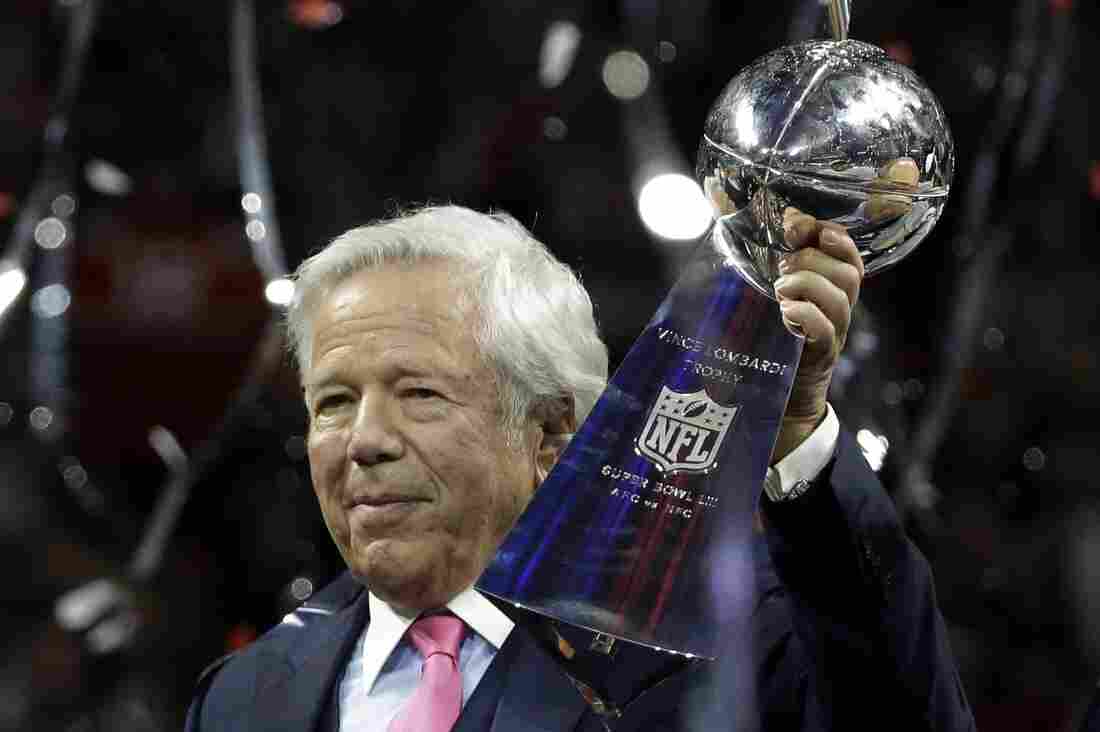
Saturday Sports: Robert Kraft, Zion Williamson

NPR’s Scott Simon talks to ESPN’s Howard Bryant about the week in sports, including criminal charges facing Patriots owner Robert Kraft and Zion Williamson’s injury on the basketball court.


SCOTT SIMON, HOST:

And it’s time for sports. There are more charges of misbehavior in the NFL – this time by an owner. A major college star sprains his knee when his Nike comes apart – so did their stock prices. We’re going to turn now to Howard Bryant of ESPN The Magazine and espn.com. Howard, thanks so much for being with us.

HOWARD BRYANT, BYLINE: Good morning, Scott. How are you?

SIMON: Fine, thanks. Robert Kraft, owner of the Super Bowl-winning New England Patriots, faces misdemeanor charges of solicitation at a day spa in Palm Beach County, Fla. He denies the charges. They are serious because police say that the solicitation at this spa is tied to human trafficking. Now how likely is it the NFL will discipline maybe its most powerful owner?

BRYANT: Well, I think it’s pretty likely that he’ll be disciplined at some level. The severity of the discipline I would tend to doubt is going to be particularly harsh. I could be wrong about this, but I think when you look at the history of owners dealing with their own – it’s not like they’re dealing with a player because you have an owner-management-labor relationship where they are – they took a long time to go after their greatest superstar, Tom Brady, over a couple of years’ worth. But I don’t think they’ll ever do that to another owner. You remember Robert Irsay the – I’m sorry, Jim Irsay, the owner of the Colts, had his drug issue, and he didn’t really – I mean, he got a little bit punished but not really punished I think.

Let’s also not forget the Washington Redskins had the – in 2013, they had forced their own cheerleaders to go on a business trip to Costa Rica and be escorts for some of the ownership group, for some of their executives. So I think, obviously, owners are not going to be as harsh on other owners. Let’s not forget that the commissioner may discipline ownership, but the owner works for the commissioner. So we’ll see what happens, but I have a hard time believing the billionaire class is going to be that hard on itself.

SIMON: I want to tie two stories of the week together, if I can. Thirty seconds into the Duke-Carolina game, President Obama in the stands, Zion Williamson, Duke’s transcendent player, sprained his knee. His Nike came apart like a cheap suit in a rain storm. And then USA Today reports the NBA has proposed lowering the league’s draft age to 18. Zion Williamson is 18. Isn’t it only fair to him and other great 18-year-old athletes to be allowed to play pro ball? So if they’re going to risk a career injury, they do it while being paid gobs of money.

BRYANT: Yeah. Well, in my opinion 15, 16, 17 and 18-year-old players – and you watch tennis – Tracy Austin was 14 years old when she played up against Chris Evert. And so to me, it’s always been collusion. You always look at what’s taken place between the leagues and the colleges. If you have the ability to play a certain sport, you should be able to play it. I think that we remember not too long ago – it was only about 15 years ago – where they had the rookie age limit when they raised it because they didn’t think that the players were mature enough for their millions because they didn’t like the look of the new hip-hop generation walking around with gold chains instead of three-piece suits. And so there was a lot of consternation about that.

And then they are the ones that created this one-and-done situation that you have now where you have these great players who are eligible – Zion Williamson could play in the NBA right now, and the only reason that his shoe blew up and he’s playing for no money and risked an entire future in the NBA is because the NBA doesn’t let him play in the league right now. So the fact that they’re finally going back to lowering the age limit to 18 is a good thing. And I think it’s a smart thing that they should have never raised it in the first place.

And once again, I think, when you’re looking at this – obviously, you can look at this from an amateur standpoint that the – this is another example that amateurism in the college game has to go. It’s not – especially because the irony of this, Scott, is that Mike Krzyzewski, he’s the one who controls the shoe contract for the players. So the players have to wear his shoe, he makes the money off of it, and they risk the injury and have no recourse.

SIMON: Oh, mercy. And I wonder – I – does Coach Krzyzewski even wear Nikes on the sidelines? He usually wears a suit, right?

BRYANT: Yeah, but those checks cash, that’s for certain. And so Zion Williamson has an $8 million insurance policy now. The bottom line is that this has to change, and the NBA should do its part. If you’re good enough to play in the league, go play in the league.

SIMON: Howard Bryant of ESPN The Magazine and espn.com. Yeah, I mean, ballet dancers, right? They – you know, nobody says to them one and done. Howard Bryant, thanks very much for being with us.

BRYANT: Thank you, Scott.

(SOUNDBITE OF ERIC VLOEIMANS AND GATECRASH’S “PICCOLO DAVID”)

Copyright © 2019 NPR. All rights reserved. Visit our website terms of use and permissions pages at www.npr.org for further information.

NPR transcripts are created on a rush deadline by Verb8tm, Inc., an NPR contractor, and produced using a proprietary transcription process developed with NPR. This text may not be in its final form and may be updated or revised in the future. Accuracy and availability may vary. The authoritative record of NPR’s programming is the audio record.

Let’s block ads! (Why?)

Breakdancing In The Olympics? Paris 2024 Organizers Say, 'Oui, Garçon!'

Paris Olympics organizers want breakdancing to be part of the 2024 Olympics. The sport was part of the Youth Olympic Games in Buenos Aires last fall, when Russian b-boy Bumblebee (left) defeated Japan’s b-boy Shigekix in the gold-medal battle.

Eitan Abramovich /AFP/Getty Images


hide caption

toggle caption

Eitan Abramovich /AFP/Getty Images

The world’s best breakdancers could compete for Olympic gold medals at the 2024 Summer Games in Paris, if the event’s organizers succeed in getting the hip-hop dance style recognized as an Olympic sport.

As Paris organizers proposed adding breakdancing to the roster, the International Olympic Committee said the idea fits with its goal of making the Olympics “gender-balanced, more youth-focused and more urban.”

Breakdancing was part of the Youth Olympic Games in Buenos Aires 2018, with participants competing as b-girls, b-boys and on mixed teams. At the Olympics, the discipline would be known simply as “breaking.”

In Buenos Aires, the b-girls competition was won by Ram (Japan’s Ramu Kawai), and the b-boy’s medal was won by Bumblebee (Russia’s Sergei Chernyshev).

[embedded content]

YouTube

“The Paris organizing committee also wants to include climbing, surfing and skateboarding, which are already on the roster for the 2020 Tokyo Games,” Jake Cigainero reports for NPR’s Newsdesk. “Karate will also make its Olympic debut in Tokyo, but Paris snubbed the sport for its lineup.”

In breaking battle competitions, judges vote to decide the winner of multiple rounds of dancing, in which two dancers take turns on the floor — with rivals often doing their best not to look impressed with their opponent.

Discussing “le breakdance” at a news conference on Thursday, Paris organizers said that it speaks to young people worldwide and that it has more than 1 million practitioners in France — second only to the U.S.

Praising the dancers’ acrobatic ability and innovation and the dramatic suspense of battles, organizers said it would offer a completely new type of competition at the Olympics.

If breaking does become an Olympic sport, the dance style that has its roots in New York City’s streets will achieve a status that ballroom dancing aficionados have been pursuing for years. That effort has been led by the World DanceSport Federation — which now finds itself celebrating the inclusion of a different discipline.

“It is an incredible honor and privilege that, for the first time, a dance discipline is being considered for inclusion in the Olympic Games,” said WDSF President Shawn Tay, adding that breaking would be “an outstanding success” in Paris.

The Paris committee’s decision to back the four new arrivals means that baseball and softball will be left out of the Paris Olympics, after a brief return for the Tokyo Games. Squash is also shut out; so are chess and snooker, which were seen as facing long odds to become Olympic sports in 2024.

While a gritty sport that started in the U.S. has a shot at being in the Olympics, a gritty and acrobatic French sport — parkour — was left out of the Paris proposals. As NPR’s Laurel Wamsley has reported, the International Gymnastics Federation has increasingly sought to bring parkour under its purview and reportedly lobbied to make it part of the 2024 Games.

Paris organizers predict the new sports will boost the Olympics’ appeal to a younger generation that might not be transfixed by more traditional sports. While they sketched out how the competitions would be held in 2024, final details about the proposed sports aren’t likely to emerge until after the Tokyo Summer Olympics in 2020.

The International Olympic Committee will review the Paris group’s proposals, with an initial decision possible in March, when the Olympic Program Commission is slated to make its recommendation to the IOC Executive Board. Final approval could come in June, when the IOC will meet in Lausanne, Switzerland.

Let’s block ads! (Why?)

Florida Police: Robert Kraft, Owner Of Patriots, To Face Solicitation Charges

New England Patriots owner Robert Kraft is being charged with soliciting prostitution.

Mark Humphrey/AP


hide caption

toggle caption

Mark Humphrey/AP

Updated at 4:45 p.m. ET

A Florida police chief has announced that Robert Kraft, the owner of the New England Patriots, will face charges of soliciting prostitution after he was caught on surveillance video allegedly in the midst of a sexual act.

Jupiter Police Chief Daniel Kerr announced the charges on Friday as part of a sting on a local spa suspected of human trafficking and potential money laundering.

Kraft is one of dozens to face similar charges. Kerr says he is being charged with two counts of soliciting prostitution, a misdemeanor, tied to two different visits to the Orchids of Asia Day Spa.

Detective Andrew Sharp was asked at the Friday news conference if there is video evidence of Kraft in the massage parlor room receiving the alleged acts. “The answer to that is yes,” he said.

Sharp later elaborated, saying the footage — collected over several months — had been recorded by secret cameras mounted inside massage parlor rooms throughout the spa.

He added that Kraft, who he said was a regular, visited twice “approximately a month ago” and was taken to the spa, located in a strip mall, by a driver.

“I can’t speak to the exact dollar number that [Kraft] paid; however, there is a specific number for a time frame when you are there that you pay,” Sharp told reporters.

According to the detective, customers at the day spa typically paid $59 for a half-hour and $79 for a full hour. Sharp did not confirm how much time Kraft allegedly spent at the spa.

Kerr said that an arrest warrant will be issued for Kraft.

The 77-year-old Kraft has been the owner of the Patriots since 1994.

“We categorically deny that Mr. Kraft engaged in any illegal activity,” a spokesman for The Kraft Group told NPR in statement. “Because it is a judicial matter, we will not be commenting further.”

In an emailed statement, NFL spokesman Brian McCarthy wrote, “The NFL is aware of the ongoing law enforcement matter and will continue to monitor developments.”

McCarthy added that “all personnel” are subject to the league’s personal conduct policy which explicitly prohibits sex offenses.

“It is not enough simply to avoid being found guilty of a crime,” the policy states. “We are all held to a higher standard and must conduct ourselves in a way that is responsible, promotes the values of the NFL, and is lawful.”

Let’s block ads! (Why?)

CVS Looks To Make Its Drugstores A Destination For Health Care

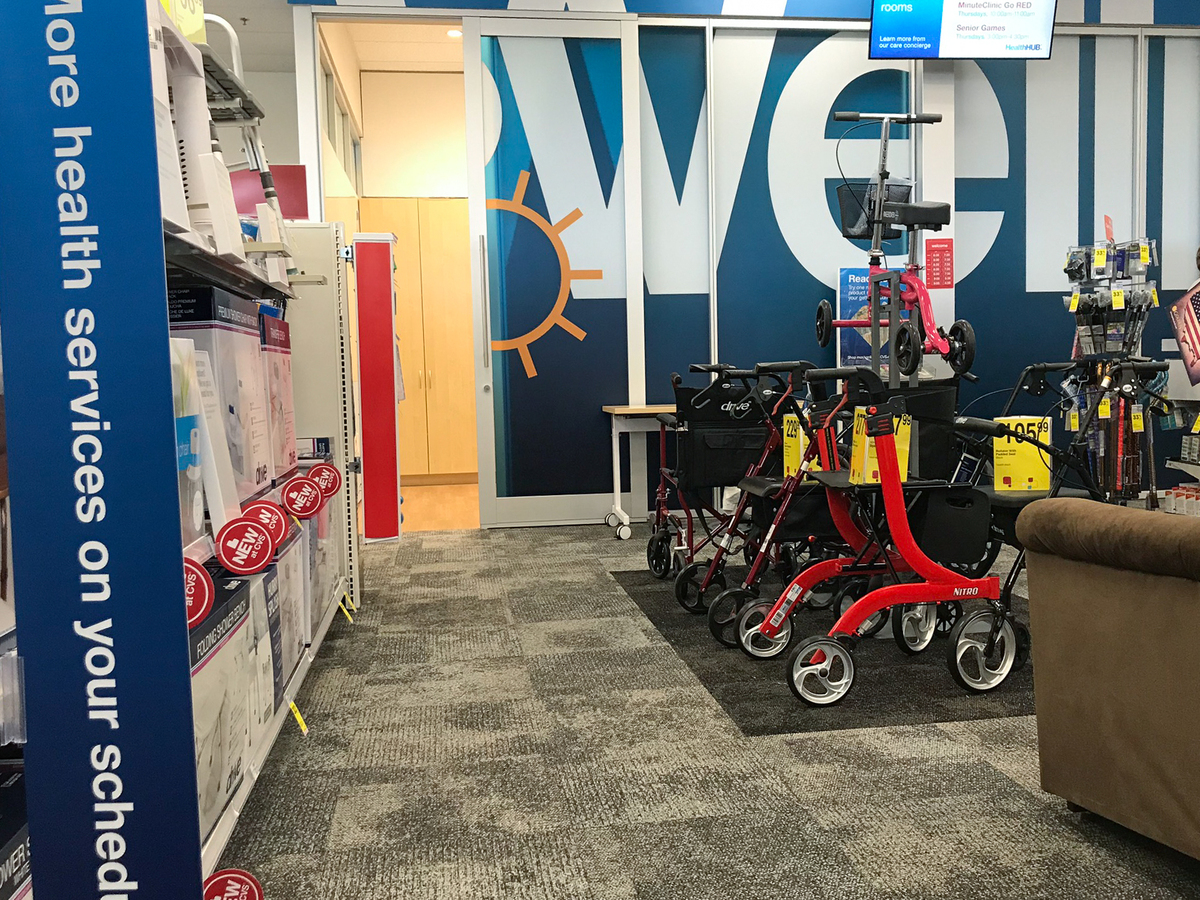
CVS plans to transform some of its stores into “health hubs,” retail locations revamped to include more health care services and products. One of the first is in Spring, Texas, a suburb of Houston.

Alison Kodjak/NPR


hide caption

toggle caption

Alison Kodjak/NPR

When it comes to making changes in health care, CVS Health isn’t settling for tinkering around the edges. The company is looking to strike at the heart of how health care is delivered in the U.S.

In November, the drugstore chain completed a $70 billion acquisition of health insurance giant Aetna that CVS has said will change the company and in the process alter the way consumers experience health care.

“We’re trying to transform the industry,” says Dr. Alan Lotvin, executive vice president for transformation for the company. The health care industry, he says, is now organized for the convenience of doctors, hospitals and other providers of care. “I think there’s an opportunity to organize around the consumer,” Lotvin says.

With almost 10,000 retail stores across the country, CVS says it is already where consumers are. Now, with the addition of Aetna, CVS also provides health coverage for 22 million people.

CVS plans to transform some of its stores and their existing retail clinics into hubs that will offer more health care services and products. The company put its first test locations in areas with lots of Aetna patients, in hopes of directing patients away from expensive emergency rooms to the stores’ less pricey MinuteClinics.

The company says this retail approach will make it easier and cheaper for people — particularly those with chronic illnesses like diabetes, heart disease or asthma — to manage their conditions.

But the company faces challenges in making the combination of an insurance company and drugstore chain work. In a statement about quarterly financial results released Wednesday, CVS CEO Larry Merlo said, “2019 will be a year of transition as we integrate Aetna and focus on key pillars of our growth strategy.”

Some of CVS’s lines of business have suffered lately, including its business supplying medicines to long-term-care facilities. CVS shares fell 8 percent Wednesday after the company posted a $2.2 billion loss for the fourth quarter and lowered its profit outlook for 2019. The pressure is on CVS to get the Aetna addition to pay off quickly.

CVS Health began talking about the idea of health care hubs in late 2017 when it launched its bid to buy Aetna. At the time, Merlo asked NPR’s Steve Inskeep to “imagine a world where [a] patient can walk into a CVS pharmac[y], they can engage with a nutritionist about their diet. They can talk to a nurse practitioner, perhaps have their blood glucose level checked, talk to their pharmacist about medication.”

But there were few details about how the company would pull it off, until now. CVS has opened three test locations in Texas, including one in the Houston suburb of Spring.

At first glance, it’s not all that different from any other CVS. There are aisles packed with candy and Band-Aids, fridges full of soda and in the back a bustling pharmacy counter.

Rosita Rodriguez uses the expanded MinuteClinic at a local CVS store to help her manage her arthritis pain and diabetes.

Alison Kodjak/NPR


hide caption

toggle caption

Alison Kodjak/NPR

But over to the side there are sliding doors with the word “WELLNESS” in giant letters, and behind them a dozen seniors are taking a free yoga class.

Rosita Rodriguez, 68, is one of them. “I did yoga,” she says. “And it was such a joy.”

She says she found out about the yoga class when she came into the store to find some painkillers for her arthritis that wouldn’t nauseate her. The store’s “care concierge,” Jesse Gonzalez, helped her choose a medication and told her about the yoga class and about how she could get her diabetes checked as well.

“Whenever I need something, I see Jesse here,” she says. “I talk to him and, you know, he’s there for me.”

Rodriguez says the store is easier to get to than her doctor’s office, which is about 20 miles away in central Houston.

The MinuteClinic here is a major department. In addition to the care concierge, there are three exam rooms, a dietitian, a respiratory therapist and a lab where people can have blood drawn.

On a recent afternoon, a patient who came to see the nurse practitioner was rushed to a nearby hospital.

“They weren’t feeling well and they were actually about to have a significant heart event,” says Kevin Hourican, president of CVS Pharmacy, who oversees the company’s entire retail operation. “So they were sent to the emergency room.”

That incident, he says, shows why it’s good to have retail clinics all over the country. About 1,000 CVS locations currently have a small version of the MinuteClinic, he says, and 85 percent of Americans live within about 4 miles of a CVS store. The need for ER care for this patient also shows the limits of what a retail clinic can do.

CVS’s health hubs, like this one in Spring, Texas, offer a wider array of health products and equipment than the company’s typical drugstore.

Alison Kodjak/NPR


hide caption

toggle caption

Alison Kodjak/NPR

To help people manage their chronic diseases, CVS will expand its services to include eye and foot exams for patients with diabetes and airflow monitoring for people with asthma.

“I see a number of upsides for patients,” says Dora Hughes, a physician and associate professor of health policy at George Washington University.

“Managing a chronic disease, I mean, that is hard work,” Hughes says. “To have CVS and their broad community footprint available, to have providers that you can see at nights and on the weekends, to be able to get your bloodwork done when you want — I mean, that could be hugely beneficial for patients.”

But Hughes says the company will do the most good only if it locates “health hubs” where there is the greatest need — where people with chronic diseases like diabetes don’t have easy access to doctors.

The company chose the locations for its first three test stores where there are a large number of patients covered by Aetna, including its commercial, Medicare and Medicaid businesses, and a lot of people with diabetes.

Another question, Hughes says, is whether CVS can communicate well with patients’ primary care doctors. Some research shows that people with a regular primary care doctor have better health in general, and some shows that people with diabetes get higher quality care from a regular primary care physician than when receiving episodic care from other doctors or nurse practitioners.

“I can see concerns that people might have that this might make that connection with the primary care home lower, says Kosali Simon, a health economist at Indiana University in Bloomington. “I now might say, ‘Maybe I don’t need to have a primary care physician that’s connected to a hospital.’ “

In fact, a survey by J.D. Power showed that 45 percent of people said they would consider getting their primary medical care at a CVS clinic. Older people were more hesitant to try a MinuteClinic, the survey shows. Only 36 percent of people 65 and over said they would go to CVS for primary care.

But Simon says, and the survey confirms, that the added convenience is likely to draw people in.

After buying Aetna, CVS expects these new clinics will help keep some Aetna patients out of the hospital and allow the insurance side of the company to avoid the high costs of hospital care.

At the same time, the expanded stores will make money treating patients at the MinuteClinic and selling an array of health care products. The store in Spring, in addition to the usual CVS products, has an aisle stocked with wheelchairs, walkers and CPAP machines that help people with sleep apnea. There are yoga equipment, snacks appropriate for people with diabetes and electronic activity monitors.

CVS says the health care services will be available to patients with any kind of insurance.

The company won’t say how many stores it plans to convert to health hubs. CVS’s Hourican says the company first wants to see how it goes in three Texas trial locations.

Let’s block ads! (Why?)

A Blown-Out Sneaker, An Injured Superstar And A Night To Forget For Nike

Duke’s Zion Williamson reacts after falling as his shoe breaks in the game against the North Carolina Tar Heels Wednesday in Durham, N.C.

Streeter Lecka/Getty Images


hide caption

toggle caption

Streeter Lecka/Getty Images

It was the most highly anticipated college basketball game of the season: Duke was facing archrival North Carolina, with the spectacular talents of Duke’s freshman sensation Zion Williamson on display.

Former President Barack Obama was there. Tickets for the game were reselling for more than $3,000 — Super Bowl prices. Duke’s exuberant student section, known as the Cameron Crazies, was extra hyped.

And then a mere 33 seconds into the game, on a routine play, Williamson dribbled near the foul line when his left leg buckled, his left blue-and-white Nike sneaker ripped apart at the seams and he tumbled to the floor, grabbing his right knee in pain.

Williamson limped off the court. Hearts sank everywhere. Obama visibly mouthed “his shoe broke.” And in mere seconds, Nike was facing a marketing nightmare. The offending shoes were stashed away by a trainer. But the images of the young star being felled by his footwear couldn’t be erased.

“His shoe broke.”

President Barack Obama knew what was happening as soon as Zion Willamson went down

? @ChaseHughesNBCS pic.twitter.com/7sneMhzlOD

— SB Nation (@SBNation) February 21, 2019

On social media, messages of concern and sympathy for Williamson were mixed with dishy remarks about the shoes. A Nike rival tweeted, “Wouldn’t have happened in the pumas.” The tweet was later deleted.

In a statement, Nike said it was “obviously concerned” and wished Williamson a speedy recovery. “The quality and performance of our products are of utmost importance. While this is an isolated occurrence, we are working to identify the issue.”

Thankfully Williamson’s injury does not appear to be serious. Though the freshman didn’t return to the game, Duke’s coach Mike Krzyzewski described it as a mild right knee sprain.

But Williamson’s shoe implosion is an embarrassment for Nike, which also had a problem in 2017 with NBA jerseys that were tearing. But whether it will have any long-term impact on the world’s largest sports apparel brand is another matter. Nike’s shares were down about 1.7 percent in late morning trading — not good news, but not a major selloff.

Zion’s shoe: destroyed ? pic.twitter.com/LqQ2te0Jay

— SportsCenter (@SportsCenter) February 21, 2019

Nike’s markets are so global and its products are so diversified that it’s unlikely the sad fate of one shoe will have a meaningful impact on sales.

But then there’s the young man who was wearing those shoes — Zion Williamson. Possessing a unique combination of leaping ability, power, speed and basketball IQ, he is widely expected to be the No. 1 pick in June’s NBA draft.

At a mere 18 years old, his skills, athletic ability and court demeanor are already being compared to LeBron James’. Companies will be vying fiercely to sign him to a multimillion-dollar shoe deal. And when he plays his first NBA game, likely later this year, millions of people will be watching; many will be looking at the brand of sneakers he’s wearing.

Nike had better hope the memories of what happened 33 seconds into the North Carolina game don’t stay top of mind for Williamson.

Let’s block ads! (Why?)

Insurers Hand Out Cash and Gifts To Sway Brokers Who Sell Employer Health Plans

For employers choosing a health care plan for staff can be tricky and they often reply on independent insurance brokers. But these brokers are rewarded for making big sales for insurance companies.

Katherine Streeter for NPR

The pitches to the health insurance brokers are tantalizing.

“Set sail for Bermuda,” says insurance giant Cigna, offering top-selling brokers five days at one of the island’s luxury resorts.

Health Net of California’s pitch is not subtle: A smiling woman in a business suit rides a giant $100 bill like it’s a surfboard. “Sell more, enroll more, get paid more!” In some cases, its ad says, a broker can “power up” the bonus to $150,000 per employer group.

Not to be outdone, New York’s EmblemHealth promises top-selling brokers “the chance of a lifetime:” going to bat against the retired legendary New York Yankees pitcher Mariano Rivera. In another offer, the company, which bills itself as the state’s largest nonprofit plan, focuses on cash: “The more subscribers you enroll … the bigger the payout.” Bonuses, it says, top out at $100,000 per group, and “there’s no limit to the number of bonuses you can earn.”

Such incentives sound like typical business tactics, until you understand who ends up paying for them: the employers who sign up with the insurers — and, of course, their employees.

Human resource directors often rely on independent health insurance brokers to guide them through the thicket of costly and confusing benefit options offered by insurance companies. But what many don’t fully realize is how the health insurance industry steers the process through lucrative financial incentives and commissions. Those enticements, critics say, don’t reward brokers for finding their clients the most cost-effective options.

We want to hear from you.

Have you worked in health insurance? ProPublica and NPR are investigating the industry and want to hear from you. Please complete our brief questionnaire.

Here’s how it typically works: Insurers pay brokers a commission for the employers they sign up. That fee is usually a healthy 3 to 6 percent of the total premium. That could be about $50,000 a year on the premiums of a company with 100 people, payable for as long as the plan is in place. That’s $50,000 a year for a single client. And as the client pays more in premiums, the broker’s commission increases.

Commissions can be even higher, up to 40 or 50 percent of the premium, on supplemental plans that employers can buy to cover employees’ dental costs, cancer care or long-term hospitalization.

Those commissions come from the insurers. But the cost is built into the premiums the employer and employees pay for the benefit plan.

Now, layer on top of that the additional bonuses that brokers can earn from some insurers. The offers, some marked “confidential,” are easy to find on the websites of insurance companies and broker agencies. But many brokers say the bonuses are not disclosed to employers unless they ask. These bonuses, too, are indirectly included in the overall cost of health plans.

These industry payments can’t help but influence which plans brokers highlight for employers, says Eric Campbell, director of research at the University of Colorado Center for Bioethics and Humanities.

“It’s a classic conflict of interest,” Campbell says.

There’s “a large body of virtually irrefutable evidence,” Campbell says, that shows drug company payments to doctors influence the way they prescribe. “Denying this effect is like denying that gravity exists.” And there’s no reason, he says, to think brokers are any different.

Critics say the setup is akin to a single real estate agent representing both the buyer and seller in a home sale. A buyer would not expect the seller’s agent to negotiate the lowest price or highlight all the clauses and fine print that add unnecessary costs.

“If you want to draw a straight conclusion: It has been in the best interest of a broker, from a financial point of view, to keep that premium moving up,” says Jeffrey Hogan, a regional manager in Connecticut for a national insurance brokerage and one of a band of outliers in the industry pushing for changes in the way brokers are paid.

As the average cost of employer-sponsored health insurance premiums has tripled in the past two decades, to almost $20,000 for a family of four, a small, but growing, contingent of brokers are questioning their role in the rise in costs. They’ve started negotiating flat fees paid directly by the employers. The fee may be a similar amount to the commission they could have earned, but since it doesn’t come from the insurer, Hogan says, it “eliminates the conflict of interest” and frees brokers to consider unorthodox plans tailored to individual employers’ needs. Any bonuses could also be paid directly by the employer.

Brokers provide a variety of services to employers. They present them with benefits options, enroll them in plans and help them with claims and payment issues. Insurance industry payments to brokers are not illegal and have been accepted as a cost of doing business for generations.

When brokers are paid directly by employers, the results can be mutually beneficial. In 2017, David Contorno, the broker for Palmer Johnson Power Systems, a heavy-equipment distribution company in Madison, Wisconsin, saved the firm so much money while also improving coverage that Palmer Johnson took all 120 employees on an all-expenses paid trip to Vail, Colorado, where they rode four-wheelers and went whitewater rafting. In 2018, the company saved money again and rewarded each employee with a health care “dividend” of about $700.

Contorno was not being altruistic. He earned a flat fee, plus a bonus based on how much the plan saved, with the total equal to roughly what he would have made otherwise.

Craig Parsons, who owns Palmer Johnson, says the new payment arrangement puts pressure on the broker to prevent overspending. His previous broker, he says, didn’t have any real incentive to help him reduce costs. “We didn’t have an advocate,” he says. “We didn’t have someone truly watching out for our best interests.” (The former broker acknowledged there were some issues, but said it had provided a valuable service.)

Working for employers, not insurers

Contorno is part of a group called the Health Rosetta, which certifies brokers who agree to follow certain best practices related to health benefits, including eliminating any hidden agreements that raise the cost of employee benefits. To be certified, brokers (who refer to themselves as “benefits advisers”) must disclose all their direct and indirect sources of income — bonuses, commissions, consulting fees, for example — and who pays them, to the employers they advise.

David Contorno at an office in Mooresville, NC. Contorno is the founder of E Powered Benefits which is aimed at reducing the cost of healthcare coverage for employers by cutting ties between brokers and insurance companies.

Travis Dove for ProPublica


hide caption

toggle caption

Travis Dove for ProPublica

Dave Chase, a Washington businessman, created Rosetta in 2016 after working with tech health startups and launching Microsoft’s services to the health industry. He says he saw an opportunity to transform the health care industry by changing the way employers buy benefits. He says brokers have the most underestimated role in the health care system.

“The good ones are worth their weight in gold,” Chase says. “But most of the benefit brokers are pitching themselves as buyer’s agents, but they are paid like a seller’s agent.”

There are only 110 Rosetta certified brokers in an industry of more than 100,000, although others who follow a similar philosophy consider themselves part of the movement.

From the employer’s point of view, one big advantage of working with brokers like those certified by Rosetta, is transparency. Currently, there’s no industry standard for how brokers must disclose their payments from insurance companies, so many employers may have no idea how much brokers are making from their business, says Marcy Buckner, vice president of government affairs for the National Association of Health Underwriters, the trade group for health benefits brokers. And thus, she says, employers have no clear sense of the conflicts of interest that may color their broker’s advice to them.

Buckner’s group encourages brokers to bill employers for their commissions directly to eliminate any conflict of interest, but, she says, it’s challenging to shift the culture. Nevertheless, Buckner says she doesn’t think payments from insurers undermine the work done by brokers, who must act in their clients’ best interests or risk losing them. “They want to have these clients for a really long term,” Buckner says.

Industrywide, transparency is not the standard. ProPublica sent a list of questions to 10 of the largest broker agencies, some worth $1 billion or more, including Marsh & McLennan, Aon and Willis Towers Watson, asking if they took bonuses and commissions from insurance companies, and whether they disclosed them to their clients. Four firms declined to answer; the others never responded despite repeated requests.

Insurers also don’t seem to have a problem with the payments. In 2017, Health Care Service Corporation, which oversees Blue Cross Blue Shield plans serving 15 million members in five states, disclosed in its corporate filings that it spent $816 million on broker bonuses and commissions, about 3 percent of its revenue that year. A company spokeswoman acknowledged in an email that employers are actually the ones who pay those fees; the money is just passed through the insurer. “We do not believe there is a conflict of interest,” she says.

In one email to a broker reviewed by ProPublica, Blue Cross Blue Shield of North Carolina called the bonuses it offered — up to $110,000 for bringing in a group of more than 1,000 — the “cherry on top.” The company told ProPublica that such bonuses are standard and that it always encourages brokers to “match their clients with the best product for them.”

Cathryn Donaldson, spokeswoman for the trade group America’s Health Insurance Plans, wrote in an email that brokers are incentivized “above all else” to serve their clients. “Guiding employees to a plan that offers quality, affordable care will help establish their business and reputation in the industry,” she wrote.

Some insurer’s pitches, however, clearly reward brokers’ devotion to them, not necessarily their clients. “To thank you for your loyalty to Humana, we want to extend our thanks with a bonus,” says one brochure pitched to brokers online. Horizon Blue Cross Blue Shield of New Jersey offered brokers a bonus as “a way to express our appreciation for your support.” Empire Blue Cross told brokers it would deliver new bonuses “for bringing in large group business … and for keeping it with us.”

Delta Dental of California’s pitches appears to go one step further, rewarding brokers as “key members of our Small Business Program team.”

ProPublica reached out to all the insurers named in this story, and many didn’t respond. Cigna said in a statement that it offers affordable, high-quality benefit plans and doesn’t see a problem with providing incentives to brokers. Delta Dental emphasized in an email it follows applicable laws and regulations. And Horizon Blue Cross said its gives employers the option of how to pay brokers and discloses all compensation.

The effect of such financial incentives is troubling, says Michael Thompson, president of the National Alliance of Healthcare Purchaser Coalitions, which represents groups of employers who provide benefits. He says brokers don’t typically undermine their clients in a blatant way, but their own financial interests can create a “cozy relationship” that may make them wary of “stirring the pot.”

Employers should know how their brokers are paid, but health care is complex, so they are often not even aware of what they should ask, Thompson says. Employers rely on brokers to be a “trusted adviser,” he says. “Sometimes that trust is warranted and sometimes it’s not.”

Bad faith tactics

When officials in Morris County, New Jersey, sought a new broker to manage the county’s benefits, they specified that applicants could not take insurance company payouts related to their business. Instead, the county would pay the broker directly to ensure an unbiased search for the best benefits. The county hired Frenkel Benefits, a New York City broker, in February 2015.

Now, the county is suing the firm in Superior Court of New Jersey, accusing it of double-dipping. In addition to the fees from the county, the broker is accused of collecting a $235,000 commission in 2016 from the insurance giant Cigna. The broker got an additional $19,206 the next year, the lawsuit claims. To get the commission, one of the agency’s brokers allegedly certified, falsely, that the county would be told about the payment, the suit says. The county claims it was never notified and never approved the commission.

The suit also alleges the broker “purposefully concealed” the costs of switching the county’s health coverage to Cigna, which included administrative fees of $800,000.

In an interview, John Bowens, the county’s attorney, says the county had tried to guard against the broker being swayed by a large commission from an insurer. The brokers at Frenkel did not respond to requests for comment. The firm has not filed a response to the claims in the lawsuit. Steven Weisman, one of attorneys representing Frenkel, declined to comment.

Sometimes employers don’t find out their broker didn’t get them the best deal until they switch to another broker.

Josh Butler, a broker in Amarillo, Texas, who is also certified by Rosetta, recently took on a company of about 200 employees that had been signed up for a plan that had high out-of-pocket costs. The previous broker had enrolled the company in a supplemental plan that paid workers $1,000 if they were admitted to the hospital to help pay for uncovered costs. But Butler says the premiums for this coverage cost about $100,000 a year, and only nine employees had used it. That would make it much cheaper to pay for the benefit without insurance.

Butler suspects the previous broker encouraged the hospital benefits because they came with a sizable commission. He sells the same type of policies for the same insurer, so he knows the plan came with a 40 percent commission in the first year. That means about $40,000 of the employer’s premium went into the broker’s pocket.

Butler and other brokers say the insurance companies offer huge commissions to promote lucrative supplemental plans like dental, vision and disability. The total commissions on a supplemental cancer plan one insurer offered come to 57 percent, Butler says.

These massive year-one commissions lead some unscrupulous brokers to “churn” their supplemental benefits, Butler says, convincing employers to jump between insurers every year for the same type of benefits. The insurers don’t mind, Butler says, because the employers end up paying the tab. Brokers may also “product dump,” Butler says, which means pushing employers to sign employees up for multiple types of voluntary supplemental coverage, which brings them a hefty commission on each product.

Carl Schuessler, a broker in Atlanta who is certified by the Rosetta group, says he likes to help employers find out how much profit insurers are making on their premiums. Some states require insurers to provide the information, so when he took over the account for the Gasparilla Inn, an island resort on the Gulf Coast of Florida, he obtained the report for the company’s recent three years of coverage with UnitedHealthcare. He learned that the insurer had only paid out in claims about 65 percent of what the Inn had paid in premiums.

But in those same years the insurer had increased the Inn’s premiums, says Glenn Price, its chief financial officer. “It’s tough to swallow” increases to our premium when the insurer is making healthy profits, Price says. UnitedHealthcare declined to comment.

Schuessler, who is paid by the Inn, helped it transition to a self-funded plan, meaning the company bears the cost of the health care bills. Price says the Inn went from spending about $1 million a year to about $700,000, with lower costs and better benefits for employees, and no increases in three years.

A need for regulation

Despite the important function of brokers as middlemen, there’s been scant examination of their role in the marketplace.

Don Reiman, head of a Boise, Idaho, broker agency and a financial planner, says the federal government should require health benefit brokers to adhere to the same regulation he sees in the finance arena. The Employee Retirement Income Security Act, better known as ERISA, requires retirement plan advisers to disclose to employers all compensation that’s related to their plans, exposing potential conflicts.

The Department of Labor requires certain employers that provide health benefits to file documents every year about their plans, including payments to brokers. The department posts the information on its website.

But the data is notoriously messy. After a 2012 report found 23 percent of the forms contained errors, there was a proposal to revamp the data collection in 2016. It is unclear if that work was done, but ProPublica tried to analyze the data and found it incomplete or inaccurate. The data shortcomings mean employers have no real ability to compare payments to brokers.

***

About five years ago, Contorno, one of the leaders in the Rosetta movement, was blithely happy with the status quo: He had his favored insurers and could usually find traditional plans that appeared to fit his clients’ needs.

Today, he regrets his role in driving up employers’ health costs. One of his LinkedIn posts compares the industry’s acceptance of control by insurance companies to Stockholm Syndrome, the feelings of trust a hostage would have toward a captor.

Contorno began advising equipment distribution company Palmer Johnson in 2016. When he took over, the company had a self-funded plan and its claims were reviewed by an administrator owned by its broker, Iowa-based Cottingham & Butler. Contorno brought in an independent claims administrator who closely scrutinized the claims and provided detailed cost information. The switch led to significant savings, says Parsons, the company owner. “It opened our eyes to what a good claims review process can mean to us,” he says.

Brad Plummer, senior vice president for employee benefits for Cottingham & Butler, acknowledged “things didn’t go swimmingly” with the claims company. But overall his company provided valuable service to Palmer Johnson, he says.

Contorno also provided resources to help Palmer Johnson employees find high-quality, low-cost providers, and the company waived any out-of-pocket expense as an incentive to get employees to see those medical providers. If a patient needed an out-of-network procedure, the price was negotiated up front to avoid massive surprise bills to the plan or the patient.

The company also contracted with a vendor for drug coverage that does not use the secret rebates and hidden pricing schemes that are common in the industry. Palmer Johnson’s yearly health care costs per employee dropped by more than 25 percent, from about $11,252 in 2015 to $8,288 in 2018. That’s lower than they’d been in 2011, Contorno says.

“Now that my compensation is fully tied to meeting the clients’ goals, that is my sole objective,” he says. “Your broker works for whoever is cutting them the check.”

ProPublica data fellow Sophie Chou contributed to this story.

ProPublica is a nonprofit newsroom based in New York. Sign up for ProPublica’s Big Story newsletter to receive stories like this one in your inbox as soon as they are published.

Let’s block ads! (Why?)

Colin Kaepernick's Long Legal Battle With The NFL Is Over

David Greene talks to Jemele Hill of The Atlantic about the NFL’s settlement with Colin Kaepernick, who claimed team owners conspired to blacklist him for taking a knee during the national anthem.


DAVID GREENE, HOST:

Colin Kaepernick’s long legal battle with the NFL is over. He and his former San Francisco 49ers teammate Eric Reid have signed confidential agreements settling claims that team owners conspired to blacklist them for taking a knee during the national anthem to protest racial injustice.

Reid now plays for the Carolina Panthers, but no one has signed Kaepernick since his final 2016 season. Jemele Hill writes for The Atlantic, and we reached her via Skype. She is doubtful that Kaepernick will ever play for the NFL again. But she says, in one respect, he did win.

JEMELE HILL: The NFL, their playbook is really trying to pummel their opponents in court. And they’ve done that very successfully. They did it to Tom Brady, who eventually had to drop his fighting, as the NFL and Deflategate happened, and serve his four-game suspension. And Tom Brady is arguably the face of the NFL. And they had no problem going after him.

It’s very rare that a player has the league in the position that Colin Kaepernick kind of had them in, where in the fact that, you know, they didn’t want, I think, certain information to come out and be on the public record. You know, there have been plenty of reports and, certainly, it leads me to believe it was true, that there were emails, and text messages and other communication that probably would have been embarrassing to the NFL about this entire issue.

GREENE: So what do you think the NFL was trying to hide that had them under so much pressure to keep things under wraps?

HILL: They probably were worried about being tagged as racist. And already, in just the little bit of reporting that’s been done about what’s happened in some closed-door meetings and depositions – if you recall the late Bob McNair, the owner of the Houston Texans, when that comment that he said, calling the players inmates.

Once that became public, he had to apologize. And I would just imagine that there were probably more conversations that people would look at as being racist in nature, in terms of how they were discussing this protest and maybe other of the black athletes who were protesting in the same vein that Colin Kaepernick was.

GREENE: So no matter what side of this debate someone is on, couldn’t you argue that Kaepernick lost a lot? I mean, this is a young, talented, aspiring quarterback who already played in a Super Bowl, almost won a Super Bowl. And now there’s a chance that he may never play football again. Isn’t that losing a lot, personally, for him?

HILL: It is definitely losing a lot. I mean, a lot of people will look at the last contract that he had in the NFL, which was a very handsome contract. They’ll theorize about what his settlement is financially with the NFL in this lawsuit. And they’ll say from a financial standpoint, or even if you include his Nike deal, they’ll say from a financial standpoint that he won, and that should make everything better.

But I’ve always said, you know – and this is sort of the disheartening thing about this whole thing, is that Colin Kaepernick has spent pretty much his whole life trying to become a professional NFL player. He obviously loves football. And to have his career taken away from him is something that’s never going to be right. The NFL can never amend that, no matter how much money they give him, especially for the reason that they did, which is important.

I mean, this is a league that has welcomed, you know, players who have hit women, players who’ve been accused of sexually assaulting people. Players who’ve been accused of a number of different crimes, they have been welcomed back into the NFL. And the one person that is blackballed, that is kept out of that NFL dream, is somebody who merely wanted to bring attention to the racial injustice that we see every day. And forever in history, the NFL will have to answer to that.

GREENE: Jemele Hill is a staff writer for The Atlantic. Jemele, thanks a lot.

HILL: Thank you.

Copyright © 2019 NPR. All rights reserved. Visit our website terms of use and permissions pages at www.npr.org for further information.

NPR transcripts are created on a rush deadline by Verb8tm, Inc., an NPR contractor, and produced using a proprietary transcription process developed with NPR. This text may not be in its final form and may be updated or revised in the future. Accuracy and availability may vary. The authoritative record of NPR’s programming is the audio record.

Let’s block ads! (Why?)
Remembering Former Dodger Great Don Newcombe

Don Newcombe, who joined the Brooklyn Dodgers as a pitcher in the 1940s died on Tuesday. He was 92. Newcombe was one of the first black pitchers in Major League Baseball.


DAVID GREENE, HOST:

The baseball pitcher Don Newcombe has died. He was 92 years old, a man who broke barriers in the early days of baseball desegregation.

STEVE INSKEEP, HOST:

The world knows the name of Jackie Robinson, who broke a racial barrier when he played for the Brooklyn Dodgers in 1947. By 1949, the Dodgers had three black players – Robinson, Roy Campanella and Don Newcombe. Bill Plaschke as a columnist at the LA Times.

BILL PLASCHKE: He was as much a part of the civil rights movement as much as anybody. At age 92, he outlived many of those who harassed him and tormented him.

GREENE: The first black major league players faced segregated quarters when they traveled. They endured racial slurs and death threats. But Newcombe says opposing teams knew better than to insult him. He spoke with All Things Considered in 1975.

(SOUNDBITE OF ARCHIVED BROADCAST

DON NEWCOMBE: I was big, I was young, and I could throw that baseball awful hard. And players weren’t about to call me any names outside of hello, Mr. Newcombe or Don or whatever. They had to get up to that plate with that baseball bat in their hand, and they – you know, that ball hurts when it hit you.

INSKEEP: Newcombe became the first African-American pitcher to start a World Series game. He was named national league rookie of the year. And, in later years, he received a Cy Young Award, then awarded to baseball’s best pitcher. He did all that despite missing two years of play while serving in the Korean War.

GREENE: Newcombe believed he could have accomplished even more had he not suffered from alcoholism. He later helped other players facing addiction.

(SOUNDBITE OF ARCHIVED BROADCAST)

NEWCOMBE: I’m asked many times, Don, what do you do now? And I tell them that I am an ex-alcoholic, had the life that I lived, got weak in the sense and got involved with alcohol. I didn’t take care of myself, like a lot of athletes do today and have done in the past. But I consider myself sort of an evangelist.

INSKEEP: Columnist Bill Plaschke says that attitude is what he’ll remember about Newcombe.

PLASCHKE: You learn from him that every day is a good day, that every day you can make a positive influence on somebody, that every day, you know, no matter what’s going on around you, you can judge your day by how you affect others.

GREENE: Don Newcombe died here in California yesterday just under 70 years after his first Major League Baseball game.

(SOUNDBITE OF LYMBYC SYSTYM’S “PITTSBURGH LEFT (ELIOT LIPP REMIX)”)

Copyright © 2019 NPR. All rights reserved. Visit our website terms of use and permissions pages at www.npr.org for further information.

NPR transcripts are created on a rush deadline by Verb8tm, Inc., an NPR contractor, and produced using a proprietary transcription process developed with NPR. This text may not be in its final form and may be updated or revised in the future. Accuracy and availability may vary. The authoritative record of NPR’s programming is the audio record.

Let’s block ads! (Why?)

How One Woman Is Working To Educate Parents On Vaccinations

Public health advocates have struggled to change the minds of these so called anti-vaxxers. But one South Carolina woman has a different approach: reaching parents before they even become parents.


ARI SHAPIRO, HOST:

An outbreak of measles in Washington and Oregon has refocused attention on parents who choose not to vaccinate their kids, often known as anti-vaxxers. Public health advocates have struggled to change these parents’ minds. One South Carolina woman has a different approach. She is reaching out to people before they even become parents. Alex Olgin of member station WFAE has the story.

ALEX OLGIN, BYLINE: In 2017, Kim Nelson had just moved her family back to her hometown in South Carolina. Moving boxes were still scattered around. While her two young daughters played, Nelson scrolled through a newspaper article on her phone. It said religious exemptions for vaccines had jumped nearly 70 percent in recent years in their part of the state, around Greenville. She yelled to her husband in the other room.

KIM NELSON: David, you have to get in here. I can’t believe this because, you know, I just – all my mom friends had vaccinated. I’d never encountered somebody who didn’t.

OLGIN: Nelson had her immunizations, and so did her kids. But this news scared her. She didn’t want anyone in her hometown to get sick. Nelson decided she had to do something.

NELSON: I very much believe that if you have the ability to advocate, then you have to. The onus is on us if we want change.

OLGIN: Like a lot of moms, Nelson had spent hours online. And she knew how easy it was to fall down an Internet hole into the world of fake studies and scary stories.

NELSON: As somebody who just cannot stand wrong things being on the Internet, if I saw something with vaccines, I was very quick to chime in, that’s not true, or no, that’s not how that works. I usually got banned.

OLGIN: Nelson started her own group for South Carolina parents. She began posting scientific articles online, but then she thought it would be best to zero in on moms that were still on the fence about vaccines.

NELSON: It’s easier to pull a hesitant parent over than it is somebody who is firmly anti-vax. They feel validated by that choice. It’s part of their community. It’s part of their identity.

OLGIN: And the most important thing was timing – reaching moms during pregnancy when they’re actually going online to figure out how to keep their babies healthy. Nelson latched onto one study that showed 90 percent of expectant women have made up their minds on vaccines by the time they were six months pregnant. After that, it’s kind of too late.

NELSON: They’re not going to a pediatrician. Their OBGYN is probably not speaking to the pediatric vaccine schedule. So where are they going? They’re going online.

OLGIN: Before parents got bad information, Nelson would be there first with facts – online, but also in person. She rented out a room at the public library and advertised on mom forums. She was nervous that the anti-vaxxers might show up.

NELSON: Are they here to rip me a new one, or are they here to learn about vaccines? And I just decided if they’re here, I’m going to give them good information.

OLGIN: Amy Morris was pregnant, but she drove an hour and a half to attend the class. It wasn’t her first pregnancy. She already had three kids. But this time around, she was nervous about vaccines. In Nelson’s class, she learned the risks of not vaccinating.

AMY MORRIS: That spoke to me more than anything.

OLGIN: Now, holding her healthy 8-month-old son Thorin on her lap, she says she’s glad she went because she was feeling vulnerable.

MORRIS: I always knew it was the right thing to do. I was listening to that fear monster in the back of my head.

OLGIN: Nelson says that fear is what the anti-vaccine community feeds on. She’s learned to ask questions to help parents get at the root of their anxiety.

NELSON: I do think they appreciate it when you meet them sympathetically, and you don’t just try to blast facts down their throat.

OLGIN: Nelson is now trying to get local hospitals to integrate that vaccine talk into their birthing classes. And she’s studying for a master’s in public health and even considering a run for office. For NPR News, I’m Alex Olgin in Greenville, S.C.

SHAPIRO: And this story is part of a partnership between NPR, Kaiser Health News and WFAE.

Copyright © 2019 NPR. All rights reserved. Visit our website terms of use and permissions pages at www.npr.org for further information.

NPR transcripts are created on a rush deadline by Verb8tm, Inc., an NPR contractor, and produced using a proprietary transcription process developed with NPR. This text may not be in its final form and may be updated or revised in the future. Accuracy and availability may vary. The authoritative record of NPR’s programming is the audio record.

Let’s block ads! (Why?)