USA Gymnastics Announces New CEO, The Fourth In Less Than 2 Years

USA Gymnastics has hired a new CEO: the embattled organization’s fourth leader in the past two years. The organization is trying to get beyond a widening sexual abuse scandal.
USA Gymnastics has hired a new CEO: the embattled organization’s fourth leader in the past two years. The organization is trying to get beyond a widening sexual abuse scandal.

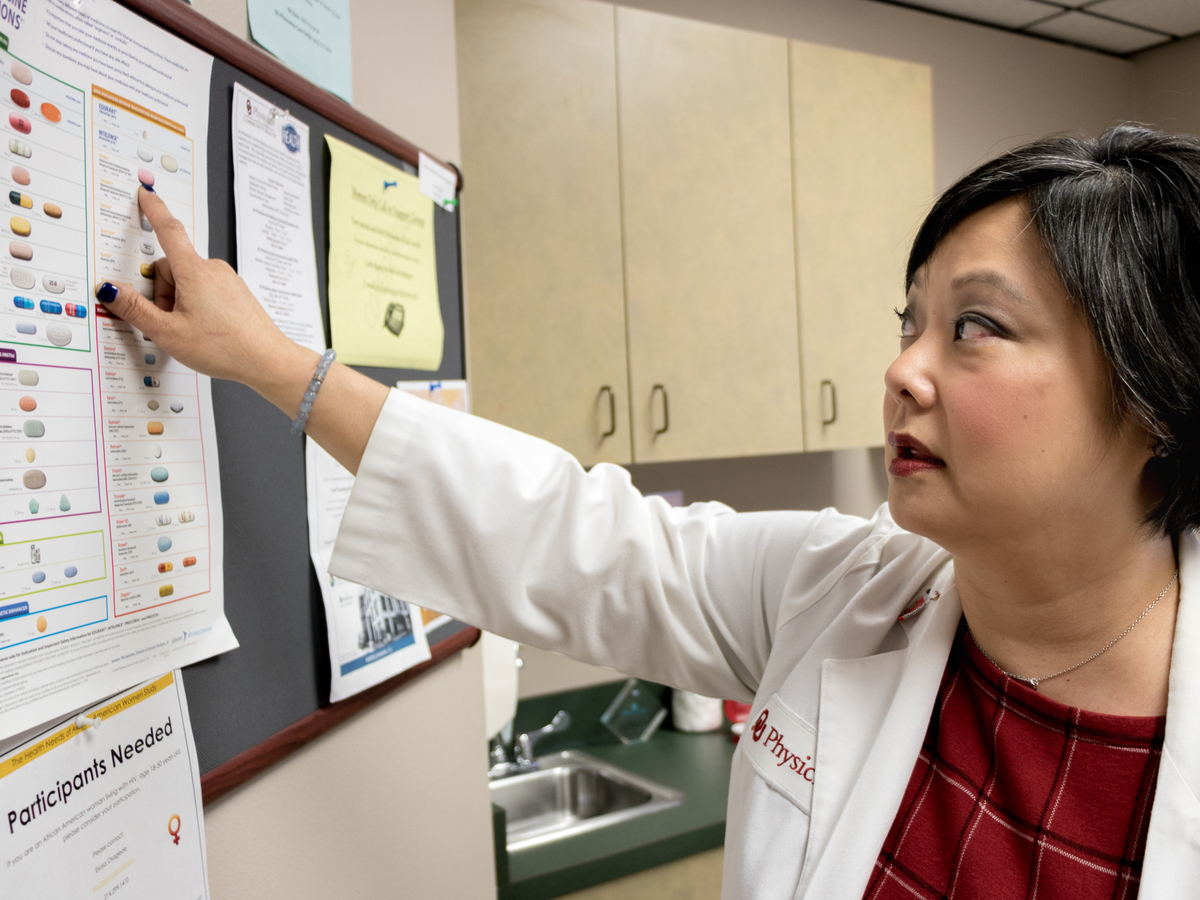
Dr. Michelle Salvaggio, medical director of the Infectious Diseases Institute at the University of Oklahoma Health Sciences Center in Oklahoma City, points to drugs used to treat HIV/AIDS. Medical advancements since the epidemic surfaced in the 1980s have helped many of her HIV-positive patients lead healthy lives.
Jackie Fortier/StateImpact Oklahoma
hide caption
toggle caption
Jackie Fortier/StateImpact Oklahoma
One of the goals President Trump announced in his State of the Union address was to stop the spread of HIV in the U.S. within 10 years.
In addition to sending extra money to 48 mainly urban counties, Washington, D.C., and San Juan, Puerto Rico, Trump’s plan targets seven states where rural transmission of HIV is especially high.
Health officials and doctors treating patients with HIV in those states say any extra funding would be welcome. But they say that strategies that work in progressive cities like Seattle won’t necessarily work in rural areas of Alabama, Arkansas, Kentucky, Mississippi, Missouri, Oklahoma and South Carolina.
Stigma around HIV and AIDS and around being gay runs deep in parts of Oklahoma, says Dr. Michelle Salvaggio, medical director of the Infectious Diseases Institute at the University of Oklahoma Health Sciences Center in Oklahoma City. The institute is one of two federally funded HIV clinics in Oklahoma; the other is in Tulsa, the second-largest city in the state.
A long drive for anonymity
Salvaggio’s clinic has six exam rooms where she sees patients, many of whom drive hours for treatment. The clinic used to employ a case manager in rural Woodward County, a little more than two hours’ drive northwest of Oklahoma City.
But Salvaggio says that having a case manager there ended up being a waste of money. “We had to let that position go, because nobody would go see her,” Salvaggio says. “Because they didn’t want to be seen walking into the HIV case manager’s office in that tiny town — that can only mean one thing.”
In Oklahoma, as in much of the U.S., black gay and bisexual men have the highest risk of HIV infection. Other groups with elevated risk in Oklahoma include Latinos, heterosexual women and Native Americans.
Salvaggio applauds the goal of ending HIV transmissions within 10 years, but says she doesn’t think it’s feasible in Oklahoma. The plan fails to recognize the particular ways different populations experience the epidemic, she says.
Native Americans in Oklahoma, for example, can’t count on the anonymity of a large health clinic.
“When they go into an Indian Health Service clinic, it is possible that they will see their cousin behind the desk, and their cousin’s brother-in-law working in medical records, and their niece’s boyfriend working in the pharmacy,” Salvaggio says.
Even if Native Americans have access to HIV care at the clinic, she says, “they are literally in fear of being outed.”
Ky Humble, who now lives in Oklahoma City, says there needs to be more support for people who are HIV-positive.
Jackie Fortier/StateImpact Oklahoma
hide caption
toggle caption
Jackie Fortier/StateImpact Oklahoma
Social support services needed
Ky Humble’s hometown is Afton, Okla., which had a population of about 800 people when he was growing up. He belongs to the Cherokee Nation, and was raised a Southern Baptist. He doesn’t remember learning about HIV at all when he was in school.
“Even if I did, it clearly wasn’t enough,” Humble says. “I knew I was gay in middle school; I think I would have paid attention.”
When he was diagnosed with HIV six years ago, at age 21, Humble felt like his life was ending.
“I knew that that was a thing, [but] I was very ignorant,” he recalls. “I was two weeks away from graduating from college — you’re supposed to be on top of the world. I thought it was a death sentence.”
He called his mom right away. She immediately drove across the state to be with him.
“We just sat there and cried for six hours straight,” Humble says. “And then we actually went [out] and bought several books on HIV, and just started reading them — to try to figure out what was going on.”
Today, Humble is healthy. His HIV levels are undetectable and he gets regular medical treatment to keep it that way. He now lives in Oklahoma City, but his family still lives in his hometown. He says some people back in Afton know he has HIV, and some don’t.
“It’s like coming out as diabetic,” Humble says. “I don’t necessarily tell people that I’m HIV-positive. It’s just part of who I am; it doesn’t define me.”
He says he is cautiously optimistic that the Trump administration’s plan could mean more funding for HIV prevention in Oklahoma. But rural Oklahomans, Humble says, also need access to “wraparound services” — such as food pantries, mental health therapy and transportation assistance — to help them deal with the disease.
“I have friends who have HIV and live in rural areas, and just getting to appointments is challenging,” he says.
Oklahoma’s uninsured rate is the second-highest in U.S.
Exactly how much money the president’s HIV plan will get is up to Congress. But even inexpensive, proven methods for fighting HIV — like distributing condoms — can be a tough sell in a state that doesn’t mandate comprehensive sex education.
Informational HIV talks with teenagers often turn into a basic health class for dispelling myths, says Andy Moore, clinic administrator of the Infectious Diseases Institute at the University of Oklahoma.
Dr. Michelle Salvaggio holds one of the medicines she prescribes to her patients with HIV.
Jackie Fortier/StateImpact Oklahoma
hide caption
toggle caption
Jackie Fortier/StateImpact Oklahoma
“We’ve had teenagers write questions like, ‘I’ve heard that if you douche with Mountain Dew after sex that it kills sperm,’ ” Moore says. They earnestly want to know if that’s true. “We have to back way up, and explain what sex is, how babies are made, different types of sex — before we can teach them about HIV prevention,” he says.
Salvaggio says thousands of people across Oklahoma would need to be tested for HIV to reach the administration’s goal. And Oklahoma has the second-highest uninsured rate in the nation after Texas — meaning many people don’t have a primary care doctor, let alone prescription drug coverage for drugs like Truvada, which can be used to prevent HIV infection.
It’s also one of 14 states that hasn’t expanded Medicaid under the Affordable Care Act. So, even if more people were HIV-tested, getting those that need it into treatment wouldn’t be easy, Salvaggio says.
Health care in Oklahoma is underfunded, she says, and couldn’t cope with a sudden influx of new patients. “I don’t know what we’d do with all those new patients,” she says. “We don’t have a facility to see them in, and we don’t have [the] providers.”
This story is part of NPR’s reporting partnership with StateImpact Oklahoma and Kaiser Health News. You can follow Jackie Fortier on Twitter: @JackieFortier.
Alex Chu is a freshman at Wheaton College, where he was recruited to play goalie. But because his head won’t fit into a regular helmet, he’s been benched. A custom helmet costs thousands of dollars.
RACHEL MARTIN, HOST:
Good morning, I’m Rachel Martin. Nineteen-year-old Alex Chu is a lacrosse superstar. He is also a freshman at Wheaton College where he was recruited to play goalie. But he can’t because he has a really large head. In high school, Alex used two helmets forged together. But that doesn’t meet NCAA double standards, and a custom helmet would cost tens of thousands of dollars. His mom told The Boston Globe, quote, “all he wants is to play lacrosse.” He’s got the dedication. He’s got the skill. He just needs the helmet. It’s MORNING EDITION.
Copyright © 2019 NPR. All rights reserved. Visit our website terms of use and permissions pages at www.npr.org for further information.
NPR transcripts are created on a rush deadline by Verb8tm, Inc., an NPR contractor, and produced using a proprietary transcription process developed with NPR. This text may not be in its final form and may be updated or revised in the future. Accuracy and availability may vary. The authoritative record of NPR’s programming is the audio record.

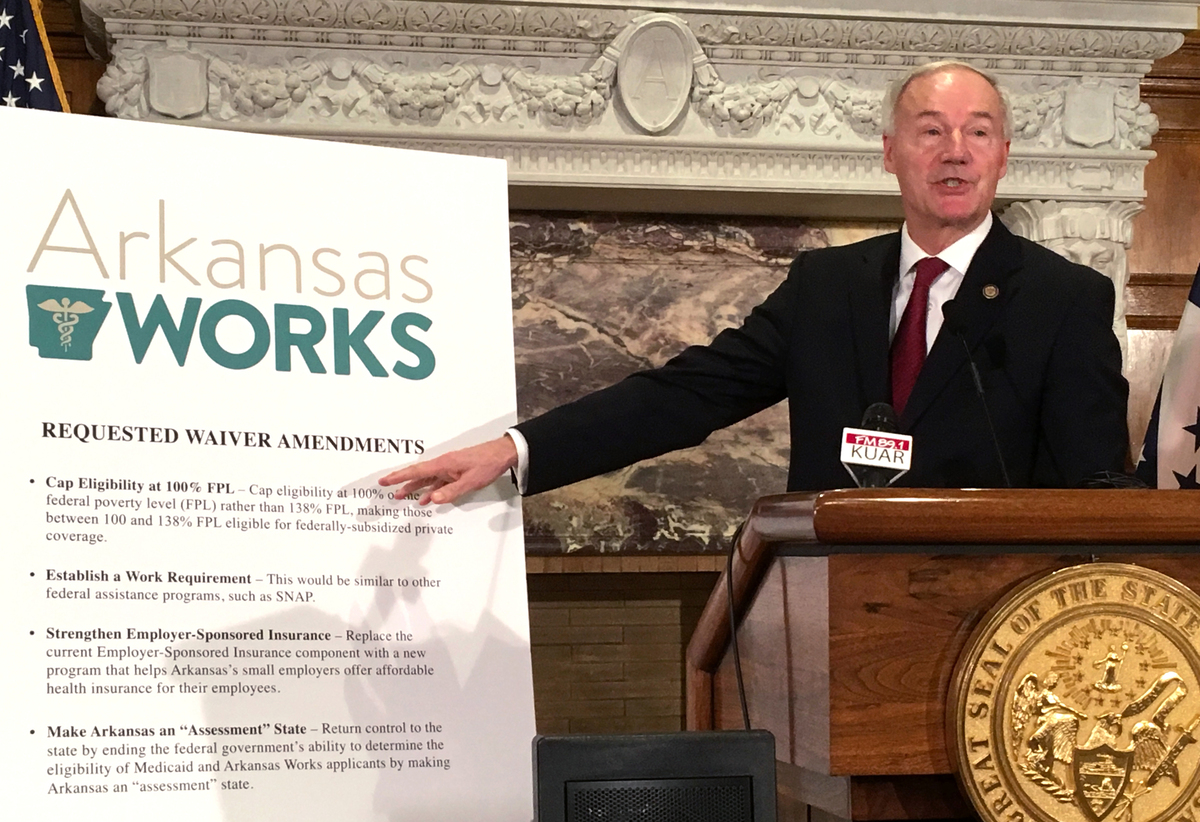
Arkansas Gov. Asa Hutchinson announces changes to the state Medicaid program called Arkansas Works, including the addition of a work requirement for certain beneficiaries, on March 6, 2017.
Michael Hibblen/KUAR
hide caption
toggle caption
Michael Hibblen/KUAR
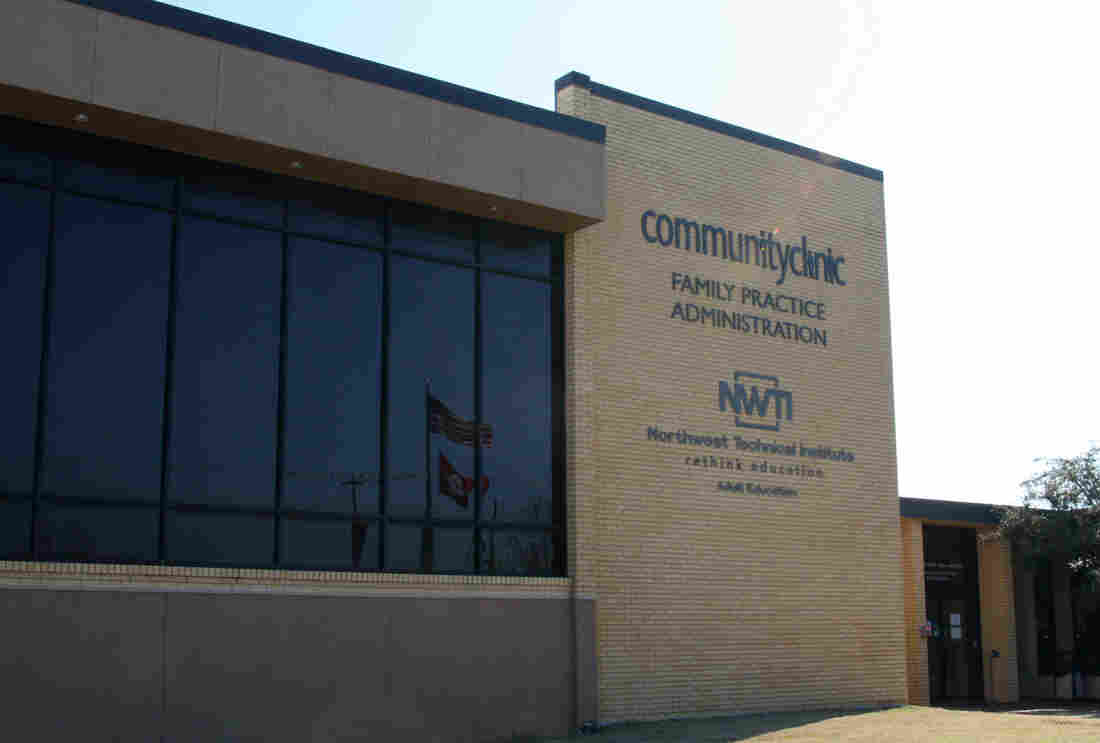
Grisel Sustache Flores takes a seat at a health clinic in Springdale, Ark., for low-income patients. The 46-year old Puerto Rico native says she learned last fall that she qualified for Medicaid, which Arkansas expanded under the Affordable Care Act to cover more adults. It would cost her only $13 a month, so Flores, who suffers from multiple sclerosis, eagerly signed up.
“My doctors in Puerto Rico say my condition is very difficult,” Flores says through an interpreter at the Community Clinic facility. “Every day, it gets harder and harder.”
She holds out both hands. “Today my fingers are swollen and numb,” she says. “Some days it’s hard to stand for long periods.”
But in Arkansas, as in a handful of other states, Medicaid coverage now comes with some strings attached for certain beneficiaries. The Trump administration has allowed states to impose what’s known as a work requirement. In Arkansas, that means Flores has to work, volunteer or attend school at least 80 hours a month and periodically file progress reports to prove she’s doing so.
“Recently they have taken me out of enrollment because I was not reporting my hours of work,” she says.
Flores says losing her Medicaid health coverage was devastating because she needs medicines and physical therapy to control her disease. “I cried. I cried a lot,” she says.
Community Clinic serves 37,000 low-income patients in the northwest part of the state. Irvin Martinez, its health insurance enrollment specialist, says he’s witnessed a lot of turmoil among patients attempting to comply with the new Medicaid rules. In Arkansas, the program is called Arkansas Works.
Using his keyboard, Martinez opens the Arkansas Works web portal and clicks on some arrow icons. “I’ve actually seen, when I’ve logged into the website with them, that they are being locked out of their accounts if they enter the wrong data,” he says.
Patients who are locked out are instructed to call a hotline to help them complete their paperwork.
“But that has problems, too,” Martinez says. “I had one patient call and he was given the number to a prison, then to a private home. It took him three calls to the call center to get access to his account.”
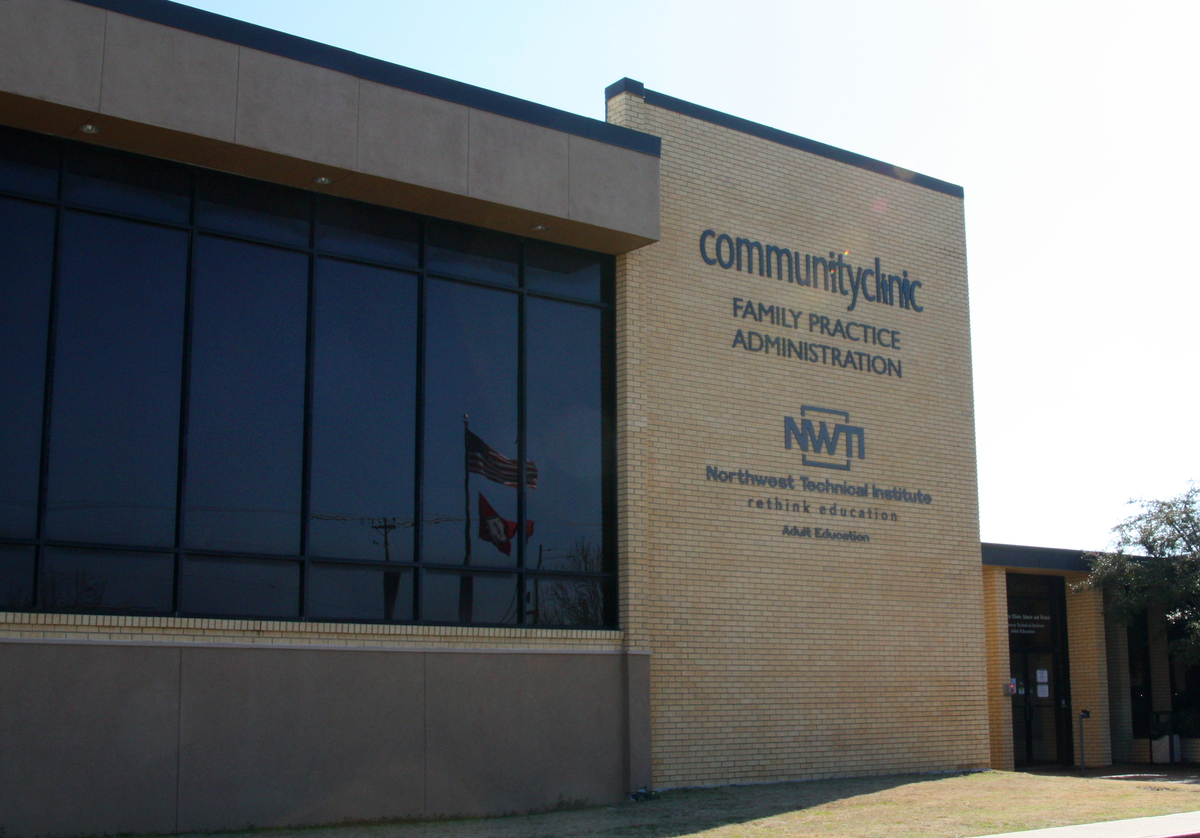
Community Clinic serves 37,000 low-income patients in northwest Arkansas at 13 locations, such as this one in Springdale. A Community Clinic insurance enrollment specialist says he’s seen firsthand the difficulties people have had trying to comply with the state’s new Medicaid work rule.
Courtesy of Lea Ann Thomas/Community Clinic
hide caption
toggle caption
Courtesy of Lea Ann Thomas/Community Clinic
In August 2018, a month after the work reporting requirement took effect, the state Department of Human Services said there were 265,223 total enrollees in Arkansas Works, with more than 62,000 of them subject to the new rule. By December, more than 18,000 had been disenrolled from their Medicaid insurance because they didn’t meet the requirement.
In response, DHS says it has beefed up its call center and is doing outreach to locate beneficiaries who might have lost insurance — by phone, email and home visits. The department has also launched an awareness campaign with paid advertising on public transit systems across the state and in college newspapers reminding people they need to comply with the work rule.
The department does offer a “good cause exemption” for beneficiaries dealing with unexpected circumstances that make it hard to meet the work requirement. But Martinez says Arkansas Works private insurance carriers and local nonprofits have had to step up to help confused patients navigate enrollment and reporting.
“Before the Affordable Care Act, nearly half of our patients were uninsured,” says Kathy Grisham, CEO of Community Clinic. “Many resorted to local emergency rooms for free health care.”
More people got insured when Arkansas expanded Medicaid. But Grisham says this new work requirement poses a serious burden on patients — and the providers who serve them.
“People do freak out when they find they are cut off,” she says. “So we shift them to our uninsured population because we are obligated to take care of them.”
Robin Rudowitz, associate director for the Kaiser Family Foundation Program on Medicaid and the Uninsured, says a few other states have also been approved by the Trump administration to test expanded Medicaid work rules, but those experiments cost money.
“We know Kentucky had done some original estimates that were in the range of $375 million to implement their waiver over two years,” she says.
Arkansas has spent $7.5 million on startup costs, according to the Department of Human Services.
But Gov. Asa Hutchinson, who initiated Arkansas Works, says the program is a success. “We’ve already had more than 7,000 Arkansas Works participants who have moved into work,” he says.
People disenrolled from Arkansas Works failed to comply, according to the governor, who says the work rule instills responsibility among certain Medicaid recipients who need a push.
“We are simply saying if you are able-bodied and able to work, and you don’t have dependent children at home,” he says, “you ought to either be working or you ought to be in school or you ought to be volunteering or contributing.”
Hutchinson says Medicaid case closures are often the result of churn — people moving away, earning too much money to qualify or securing health insurance elsewhere.
“There’s not an increase in uncompensated care,” he says. “There is not a huge flock of those coming back and re-enrolling this year, so I think we are seeing that the system is removing people who have been ineligible for the service.”
But KFF’s Rudowitz held anonymous enrollee focus groups and says enrollees reported steep learning curves in following the rules.
“The rules are complicated and involve multiple steps to comply, and many who were trying to comply faced some problems such as creating these online accounts or navigating the monthly reporting. They had problems with passcodes or couldn’t get assistance or had difficulty accessing the Internet, couldn’t find a computer, or were uncomfortable using a computer.”
In Springdale, Flores was able to re-enroll in Medicaid with the help of Martinez at Community Clinic. She pulls out her new insurance paperwork from her briefcase.
“My new documents have arrived,” she says, “and I am learning how it works.”
But Flores says she is now seeking counseling to help her cope with the stress of complying with her new health insurance.
Legal Aid of Arkansas, acting on behalf of nine Arkansas Works patients, has filed a lawsuit against the federal government over the regulations. The suit argues that the requirements are too cumbersome and cause harm to recipients.
Italian soccer team Pro Piacenza is in last place in its division. They’re also broke. On Sunday they lost 20 to 0.
The collapse of the health care system in Venezuela is having ramifications throughout Latin America. Disease outbreaks across the continent are being linked back to Venezuela.
Colin Kaepernick reached an agreement with the NFL. Sports sociologist Harry Edwards joins NPR’s Michel Martin to discuss what it means for the future of protest in the NFL.
Lulu Garcia-Navarro speaks with Jason Reid, senior NFL writer at The Undefeated, about Colin Kaepernick’s settlement with the NFL.
LULU GARCIA-NAVARRO, HOST:
Former San Francisco 49ers quarterback Colin Kaepernick and defensive back Eric Reid have settled with the NFL over allegations that teams colluded to keep the two players from playing football in the league.
Kaepernick gained national attention in 2016 for taking a knee during the national anthem as a protest against racial and social injustice. Eric Reid was the first player to kneel alongside Kaepernick. Both eventually ended up unsigned after their contracts expired, although Reid was signed last year by the Carolina Panthers.
Jason Reid, senior NFL writer for ESPN – no relation – is here to explain what Friday’s deal means for Kaepernick and the league. Welcome to the program.
JASON REID: Oh, thank you.
GARCIA-NAVARRO: So, Jason, what do we know about the two settlements? I mean, they’re sort of under a veil of secrecy, right?
REID: Yeah. The settlements are cloaked in a nondisclosure agreement, so unless someone leaks the terms, we’re not going to know. But it’s fair to say that based on Kaepernick’s last couple years in which he did not play, he was not able to earn income from the NFL over the last two years.
And in any model that any competent lawyer would use in this situation, you’re going to look at his future earnings, as well, because the assumption is going to be that he’ll never play in the NFL again. Then there are other factors that labor lawyers would look at in terms of his reputation, endorsements lost.
So when you calculate all those things – look; it’s all speculation because there’s a nondisclosure agreement. However, given what quarterbacks make in the NFL, and it’s the most important position in the NFL, if 20 years from now we found out that Colin Kaepernick walked away with $50 million or more, I would not be shocked.
GARCIA-NAVARRO: This was expected to go into a full hearing sometime this year. Why did the NFL settle?
REID: Well, the NFL really did not have a credible argument as to why Colin Kaepernick was not on an NFL roster. The amount of ineffective, downright inept quarterbacks who have been signed while Colin Kaepernick has been sitting out there, it just was not an argument that made sense.
It’s one thing to advance that argument when you have people in the media who will basically listen to that nonsense and say, oh, well, yeah, the NFL’s right. He’s just not good. It’s another thing entirely to go in front of an arbitrator when the arbitrator is going to look at all this information that Colin Kaepernick’s side is putting out about the level of quarterback play in the league.
Also, the NFL tried to get the case dismissed in August. And the arbitrator was like, no, there’s enough here to move forward. My belief is that once the arbitrator did not throw out the case in August, that at that point, the NFL had to start thinking about an exit strategy.
GARCIA-NAVARRO: Right. This has played out where Kaepernick said the NFL conspired to keep him unemployed because of his protests. The NFL said that that wasn’t true. This seems to be the end of a long battle between the two sides. You wrote that Colin Kaepernick won.
REID: Well, yeah. I think he won for several reasons. First of all, you have to understand what a horrible look this is for the league. At the heart of Kaepernick’s allegations about his employment were that the owners tried to ruin his career, essentially, because they were upset that he took a knee to shine a light on racism.
So what the NFL was willing to say is, well, you know what? It’s better for us to settle with him instead of taking this to the limit in a full arbitration hearing. And I think when you talk about winners and losers, clearly, he got a substantial financial payout.
He also additionally – remember, his kneeling is what led to the Players Coalition – NFL social justice deal – an $89 million unprecedented deal between a league and its players to fund social justice causes. He also started this national conversation that is still ongoing. And wherever you come down on that, Colin Kaepernick obviously accomplished a lot.
GARCIA-NAVARRO: Jason Reid is a senior writer for ESPN’s The Undefeated. Thank you so much.
REID: You’re welcome.
Copyright © 2019 NPR. All rights reserved. Visit our website terms of use and permissions pages at www.npr.org for further information.
NPR transcripts are created on a rush deadline by Verb8tm, Inc., an NPR contractor, and produced using a proprietary transcription process developed with NPR. This text may not be in its final form and may be updated or revised in the future. Accuracy and availability may vary. The authoritative record of NPR’s programming is the audio record.

Survivor Maryland kicks off its 12th season with a challenge where participants’ arms are tied to a plastic cup of water that’s resting on the top of a ledge. One wrong move and the cup (and its contents) will tumble.
Olivia Sun/NPR
hide caption
toggle caption
Olivia Sun/NPR
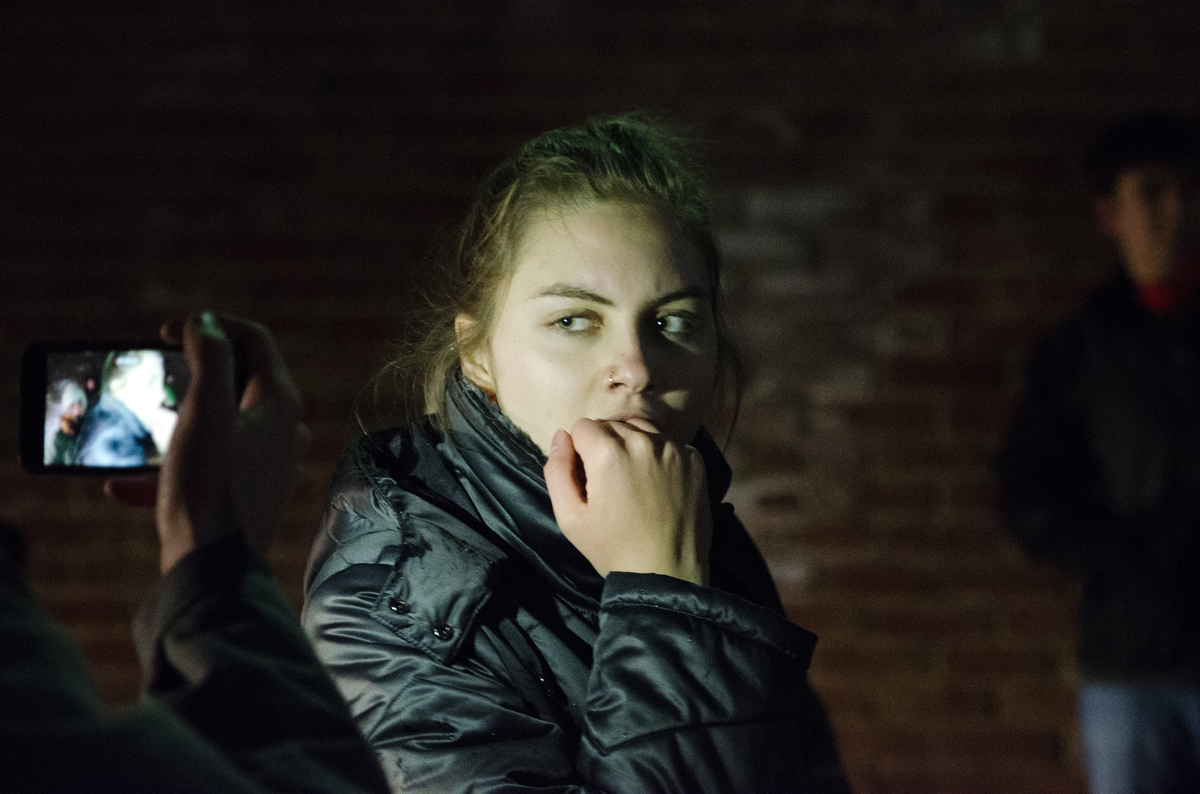
College sophomore Jake Schwartz looks up at the red Solo cup teetering dangerously close to the 15-foot ledge above him.
The cup is full of water, and it’s attached to his arm by a string. One wrong move and it will dump on his head.
Schwartz tries to be still, but it’s hard not to move. The cup inches forward.
Then it happens: about 10 minutes in, his arm jerks and the cup drops, soaking him and his leather jacket – in 30-degree weather.
He has lost the challenge. But the 17 other strangers surrounding him sigh in relief. No one wanted to be the first one out.
This may seem like a typical hazing scenario, but it’s Survivor Maryland, a fan-made version of CBS’ hit television show Survivor. Created in 2012 by Survivor fan Austin Trupp, Survivor Maryland was the first college version, but many more have followed. Now, college students around the country – from University of Virginia to Ohio State University – are remaking the show in between classes and homework. At least six campuses post their Survivor re-creations on YouTube. Others are competing, but haven’t posted their episodes yet. And around 20 schools reached out about starting their own versions, Trupp says.
“I think the moment of real emotion, real fights, real anger, real joy, are what make this more than just like an extracurricular – it makes it an actual experience that makes it something worthwhile,” says Anders Norberg, former host of Survivor Maryland. Norberg graduated in May, and now lives in Los Angeles where he’s working in the entertainment business.
Survivor Maryland‘s 12th season kicked off with the Solo cup challenge on Feb. 10. The challenges, tribal councils, secret meetings and confessionals are all recorded and edited into episodes and then posted on YouTube. (You can watch previous seasons here and here.)
And as some Survivor fans are gearing up for the premiere of the 38th season of CBS’ Survivor on Wednesday, the 18 players of Survivor Maryland are fully focused on the game unfolding on their campus.

Survivor Maryland crewmembers tie participants’ arms to cups of water before the challenge begins. After it starts, some players start singing Journey’s “Don’t Stop Believin'” to distract from the cold.
Olivia Sun/NPR
hide caption
toggle caption
Olivia Sun/NPR
Game culture
The campus shows have taken on a life online — and have an extremely devoted fan base.
There are super fans. They tune into live steam recaps of the newly released episodes, some which have more than 25,000 views on YouTube.
One super fan, Jack Estavanik of Ramapo College of New Jersey, spends a few hours a week updating wiki pages he created for Survivor Boston, Survivor Maryland and Survivor Michigan. Recently, an immunity necklace used in season 5 of Survivor Maryland sold for more than $380 on eBay. And past Survivor Maryland player Alex Paskal says fans have reached out to him from as far as Peru.
“I find this Survivor fan base as a whole to be a bizarrely varied group of people,” says Alex Thal, a former contestant on Survivor Michigan. “It seems like you almost just take the most random possible subsection of America and you get Survivor fans.”
Just like on the real television show, the campus contestants are split into tribes and vote each other out. Contestants use various strategies – from forging alliances to outright deception – as they strive to be the last person standing and ultimate survivor.
“There were definitely times where people cried, people were in distress, people were furious at each other,” Norberg says. “Like, friendships ended because of the game.”
However, while there are similarities between the TV and campus versions – the tiki torch props, the hidden immunity idols and the drama – there are key differences. Survivor lasts 39 days, whereas the college shows last one semester – anywhere from 75 and 100 days depending on the school. The television series offers a $1 million prize for winning, while most college shows offer $100. And there’s no tropical island.
But the biggest difference: the game takes its cues from campus life. Red Solo cups. Players in university-themed gear. Crew members recording footage not with a big video camera rig, but on smartphones. And it’s primarily self-financed.
This game screams college.
Contestant Alejandro Valdes, a sophomore at the University of Maryland, decided to compete in Survivor Maryland because he wanted to be uncomfortable. “I just want to see how long I can last,” he says.
Olivia Sun/NPR
hide caption
toggle caption
Olivia Sun/NPR
Then there’s the strategizing.
Contestants have tricked other players into thinking some of them were hooking up, spent hours searching campus for hidden clues or even bought fake idols to trick other players. One player even hid in another contestant’s closet for hours to avoid being seen colluding.
“If you want to do well in the game on a social level, you have to put in that amount of time,” says Amani Desormeaux, a past Survivor Maryland player who admitted to skipping class to strategize. “If I wasn’t in class, if I wasn’t sleeping, I was doing Survivor.”
Thal says he spent 20 hours a week playing and strategizing. Chris LeCompte, a two-season Survivor Maryland veteran, says the game starts to blend with real life.
“You’re always thinking about it, and you’re always on, because the thing about it is it’s not a clock-in-and-clock-out-type … game,” he says. “It really is a live 24/7 game.”
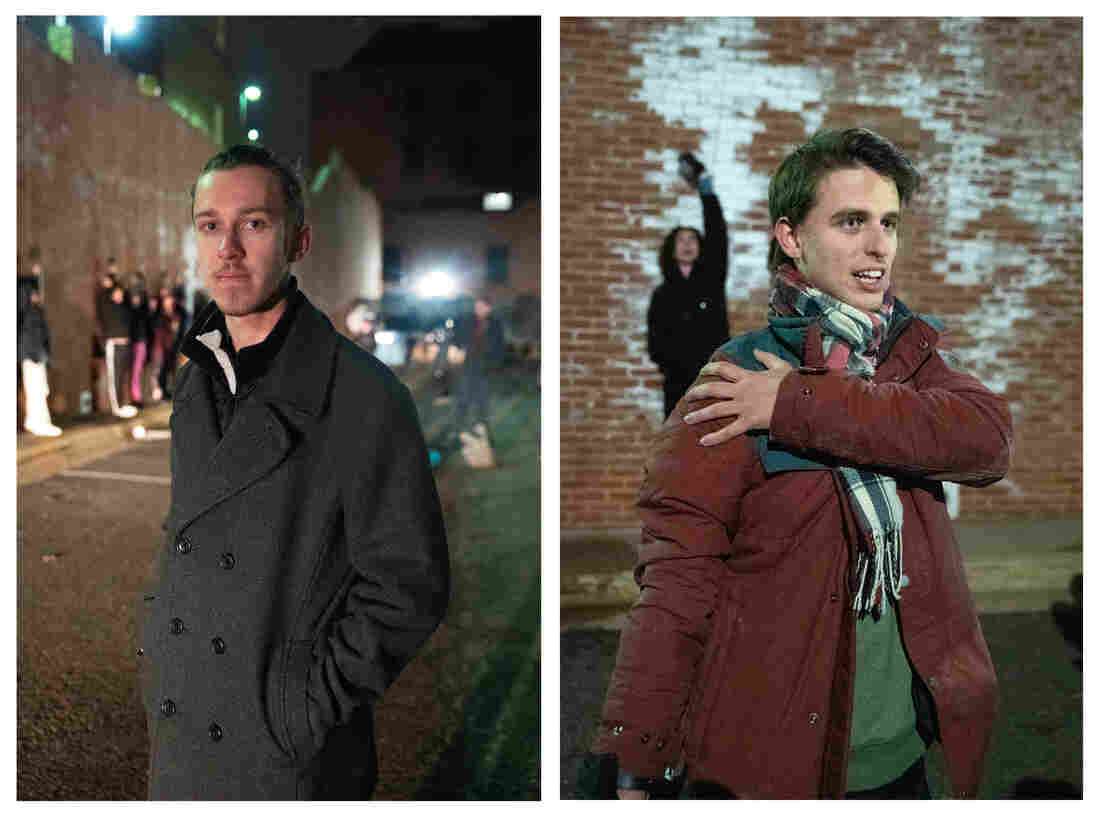
Left: Junior Drew Lerner, in his second season as host, poses for a portrait. Right: Sophomore Adriano Backes Pilla cradles his shoulder after the Solo cup challenge.
Olivia Sun/NPR
hide caption
toggle caption
Olivia Sun/NPR
‘Huge Survivor family’
Executing a show like this is a mammoth undertaking.
Before each season, hosts spend months planning out each week’s challenge and interviewing potential contestants. George Jayne, former host for Survivor Michigan, received 130 applications for the first season of 18 contestants. Host of Survivor Boston Jacob Falberg says he focuses on making sure the chosen players have the drive to win. That means interviewing everyone who applies, which at its peak was 60 applicants.
In addition to the host and cast, a crew of anywhere from five to 20 students constantly films during challenges, so no moment goes unseen. And for Survivor Michigan, there’s an entire social media team along with an editing team dedicated to the show.
Trupp says for his last season as host, he had to sift through 300 hours of footage while editing it, which took about two years. The season aired in 2018.
Norberg, who is currently editing his seasons as host, spends 15 hours editing the show each week – basically whenever he isn’t at work, he says. He releases a new episode of season six every Monday.
A Survivor Maryland player is filmed after she gets out in the Solo cup challenge. An hour into the challenge, half the players are out. “The emotion and the drive and everything is so real and so raw, you don’t get that anywhere else,” says Anders Norberg, former Survivor Maryland host. “You probably won’t get it for the rest of your life after this.”
Noah Fortson/NPR
hide caption
toggle caption
Noah Fortson/NPR
While critics say playing the game cuts into schoolwork, many contestants say they received higher grades when they played the game.
“That was my best semester … academically because it made me be more in tune with my time management,” says Survivor Maryland crewmember Swale Nida.
Even through the turmoil and backstabbing, most players end up as friends and many return in later seasons or become part of the crew. Even after graduating, some still come by to help out.
“Once you play, once you’re a part of it, it’s like this huge Survivor family, and I didn’t want my journey to end just with playing,” says Carly Weinstein, a former Survivor Maryland player and current crewmember.
Survivor Maryland‘s 12th season kicked off with the Solo cup challenge on Feb. 10. Maryland’s version was the first of the fan-made campus re-creations. Its creator, Austin Trupp, estimates hundreds of college students have played in fan-made Survivor shows by now.
Noah Fortson/NPR
hide caption
toggle caption
Noah Fortson/NPR
‘You dream about Survivor‘
Back at the Solo cup challenge, contestants have been at it for about an hour and 20 minutes, and there are two players left, one from each tribe. Both refuse to give up. Current host Drew Lerner has them each stand on one foot. Seven minutes later, there is a winner. Everyone cheers, excited to go back to warmth. A similar challenge on CBS’ Survivor has lasted six hours — although it wasn’t so cold out.
While one tribe disperses into small groups, the other meets as a whole. The strategic game play has already begun.
“There’s something about this game that keeps you coming back … It takes up your entire mental capacity all the time,” says Liam Mercer, a past player of Survivor Maryland. “You dream about Survivor when you’re playing, and you dream about Survivor after you get out.”
Olivia Sun and Noah Fortson contributed to this story.
Lindsey Feingold is the NPR digital content intern.
NPR’s Scott Simon talks to NASCAR driver Darrell “Bubba” Wallace. Wallace returns to Daytona International Speedway for his second Daytona 500 this weekend.
SCOTT SIMON, HOST:
Bubba Wallace made history last year at the Daytona 500. He finished second. He became the first African-American stock car driver since 1971 to compete in that most famous stop on the stock car circuit. And, by the way, he drove a Chevy Camaro for Richard Petty Motorsports – No. 43, like the founder.
The 500 opens the season tomorrow – Bubba Wallace, second season on the circuit. And Darrell “Bubba” Wallace joins us now from Daytona International Speedway. Thanks so much for being with us, Mr. Wallace.
DARRELL WALLACE: Yeah, thank you. It’s a pleasure to be on here with you.
SIMON: What’s this last year been like for you?
WALLACE: It’s definitely been the toughest year I’ve ever had in my career. It’s not just taking that next step. You have to – you have to be on top of your game from point A to point Z and back again. So it’s been fun learning the ins and outs of the sport and, you know, who you can work with, who you can’t. And it’s just all part of the game.
SIMON: Let me ask you a little bit about your background. You grew up in Charlotte I gather, right?
WALLACE: Yes, sir.
SIMON: And one of the homes of motor racing, obviously.
WALLACE: Absolutely.
SIMON: How did you begin to race?
WALLACE: I started racing when I was 9 years old. My dad bought a Harley Davidson, got it all chromed out, took it to a bike shop. The guy who owned the bike shop raced go-karts. And he invited us to come out one weekend and come watch him. So it was as simple as going out and watching and getting hooked and buying a go-kart and went out racing the next weekend – and never turned back.
SIMON: What do you think hooked you?
WALLACE: I think, you know, we got to travel a lot. That was fun. And you just got to do something where we thought we were pretty decent at. And we kept trying to be better and better in each series. We’d spend about two years in every series and move up to the next bigger and better and faster car. Next thing you know, you’re driving the famed No. 43.
SIMON: And the name Bubba, how did that get into your life?
WALLACE: Yeah, Bubba came about I think the day I was born, from my sister, Brittany. She called me that ever since I came out. And it kind of stuck. And now we’ve kind of created a brand around it.
SIMON: As I don’t have to tell you, some places in the South – and not just the South – the number 43 and the name Richard Petty are pretty much interchangeable.
WALLACE: Yes.
SIMON: What is it like to drive the car that bears his name and number for the man himself?
WALLACE: Oh, it’s awesome, you know, to hear the stories and the history behind the 43 and him and Dale Inman at the track. It’s – I wouldn’t trade it for anything. Honestly, it’s fun trying to bring the legacy back and build the program back up to what it once was.
There’s a lot of work that needs to be done, but we all know how much it takes to be successful in the sport. And we’re trying to do everything under our power to do that. And so I’ve learned a lot, you know, in the last year I’ve been around them. But I’ve still got to dig deep and press hard on for this year.
SIMON: He must really believe in you.
WALLACE: He does. He gave me the opportunity back when their former driver got hurt. And I was able to fill in for them. And then next thing you know, I get a phone call to come drive full-time.
SIMON: And how is the sport changing?
WALLACE: It’s changing every day. You know, I’m trying to do my best of filling out the demographic side of things and getting more faces in the stands and in the sport, whether that’s behind the scenes or on pit crews or even in the seats to drive. So it’s been a – it’s been a fun journey. It’s been a – it’s been cool to see how things have changed over the years.
SIMON: Bubba Wallace, about to drive in his second Daytona 500. Good luck to you, sir. Thanks so much.
WALLACE: All right. Thank you, I appreciate it.
Copyright © 2019 NPR. All rights reserved. Visit our website terms of use and permissions pages at www.npr.org for further information.
NPR transcripts are created on a rush deadline by Verb8tm, Inc., an NPR contractor, and produced using a proprietary transcription process developed with NPR. This text may not be in its final form and may be updated or revised in the future. Accuracy and availability may vary. The authoritative record of NPR’s programming is the audio record.