PHOTOS: Highlights Of Week 1 At The Pyeongchang Winter Olympics


'This Must Be Some Mistake,' Says Snowboarder After Winning Olympic Gold In Skiing
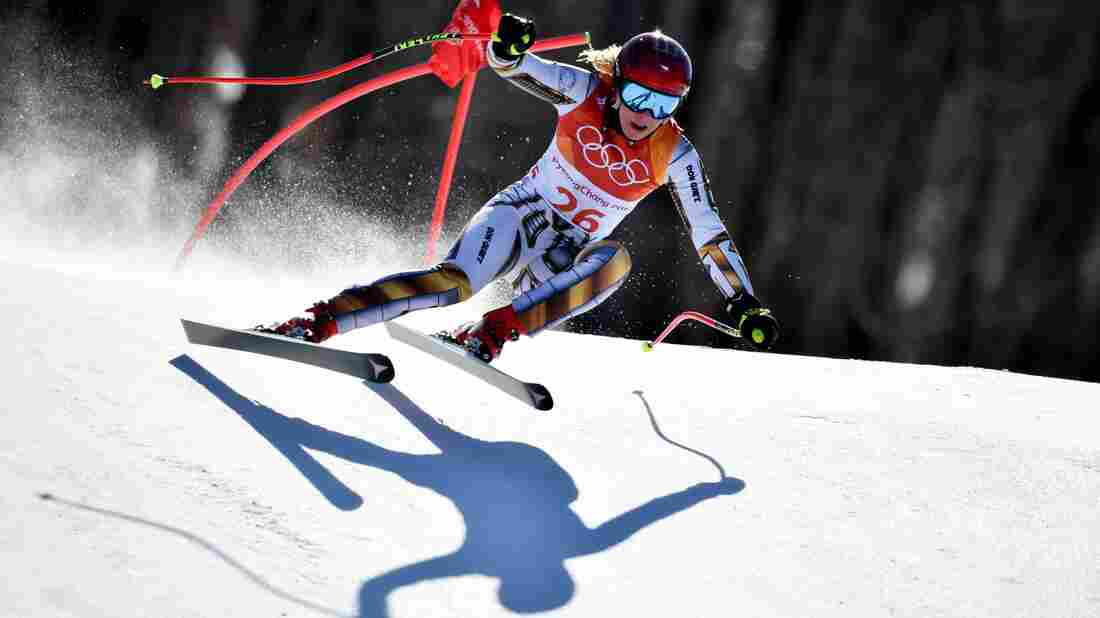
The Czech Republic’s Ester Ledecka won the women’s Super-G race at the Jeongseon Alpine Center by just 0.01, pulling off an upset at the Pyeongchang 2018 Winter Olympics in South Korea.
Fabrice Coffrini/AFP/Getty Images
hide caption
toggle caption
Fabrice Coffrini/AFP/Getty Images
She went up the hill a snowboarder but came down an Olympic champion skier. That’s one way to tell the story of Ester Ledecka, the Czech athlete who stunned the world — and herself — by winning the women’s Super-G race at the Pyeongchang Winter Olympics.
“How did that happen?” she asked a cameraman at the bottom of her run.
Before today, Ledecka had been most well-known as a snowboarder — that’s where she’s had the most success, including world titles and a trip to the Sochi Games in 2014. But she has refused to specialize in one sport, and she started racing on the World Cup Alpine circuit two years ago.
As for how she won, an elated Ledecka said, in a transcription from the Olympics’ news service, “I really don’t know what happened. You tell me … I was riding. I really don’t know what happened. It was great.”
When asked for her reaction after seeing her name flash on top of the leaderboard, Ledecka said she thought, “This must be some mistake, that they’re going to switch the time for some others.”
Ledecka, 22, beat Austria’s Anna Veith — the defending champion in this event — by a sliver: 0.01 seconds, in a time of 1:21.11. Liechtenstein’s Tina Weirather finished third. In the women’s Super-G race, skiers take just one run down the hill.
For a sense of the magnitude of this upset, consider that ahead of the Olympics, Ledecka had been ranked 43rd in the Super-G and 68th overall in the World Cup Alpine skiing rankings. Weirather was sixth overall; Veith was 17th. Before today, Ledecka had never stood on a podium for international-level Alpine skiing; in snowboarding, she’s won multiple championships.
The Czech Olympic team is calling it the “Miracle on Snow,” echoing the Miracle on Ice of 1980, when the U.S. ice hockey team beat Russia.
Ahoj! ? #MiracleOnSnow ? #czechteam ?? pic.twitter.com/t48s0c8Cjo
— ?eský olympijský tým (@olympijskytym) February 17, 2018
At a news conference that followed her upset win, Ledecka wore her ski goggles — “Because I wasn’t prepared to be at the ceremony and I don’t have makeup on,” she said.
The field for the women’s Super-G also included American Lindsey Vonn (No. 10 in the world overall), who sped out of the gate and topped 100 kph in the first portion of the course — but lost her way in the middle and lower portion, losing time as she redirected herself. Vonn was the first racer on the hill Saturday; she wound up finishing in a tie for sixth.
Even before her gold medal shocker, Ledecka had already made Olympic history: She’s the first person to enter both Alpine skiing and snowboarding events. But she proved here on Saturday (Friday night in the U.S.) that she’s not just a novelty in the record books.
“All the other girls didn’t risk a lot,” Ledecka said afterwards. “There must be a lot of pressure on them. I was just trying to do my best run.”
As Ledecka thundered down the mountain at Jeongseon Alpine Center, she recorded her fastest intervals at the bottom of the course, making her result even more astounding to those watching.
Ledecka has several events remaining on her Olympics schedule in South Korea, from the women’s parallel giant slalom in snowboarding to the downhill and Alpine combined in skiing.
When she was asked about the people who have told her to specialize in either skiing or snowboarding, Ledecka replied that if she were pressured to choose one sport, she would choose another coach, instead.
Contingent Of Teenagers Rock Pyeongchang

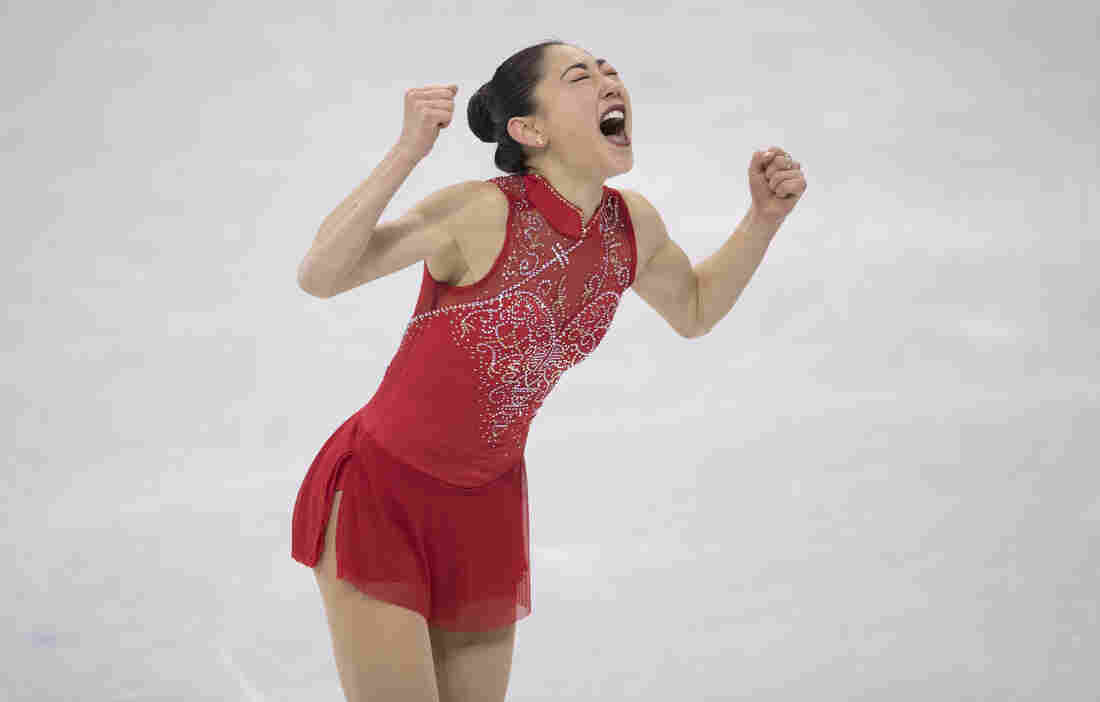
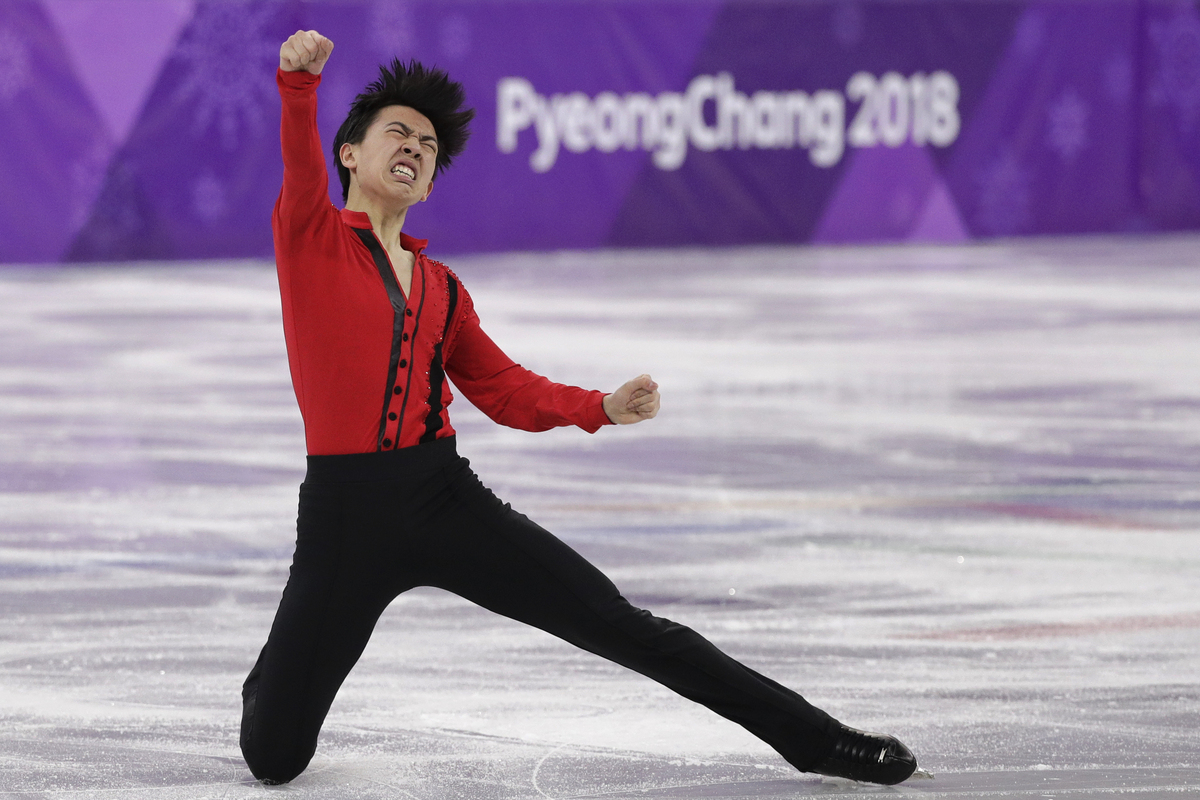
Vincent Zhou of Team USA reacts following his performance in the men’s free figure skating final. Zhou is one of many teenagers who made it to the Winter Games.
David J. Phillip/AP
hide caption
toggle caption
David J. Phillip/AP
The angst of teenage life can be overwhelming. The angst of being an adult and watching teenagers — some of whom aren’t old enough to vote in the U.S. — complete amazing feats of human strength and mental fortitude is … well, also overwhelming. An impressive number of adolescents are not only competing in the 2018 Winter Games. In some cases, they’re winning.
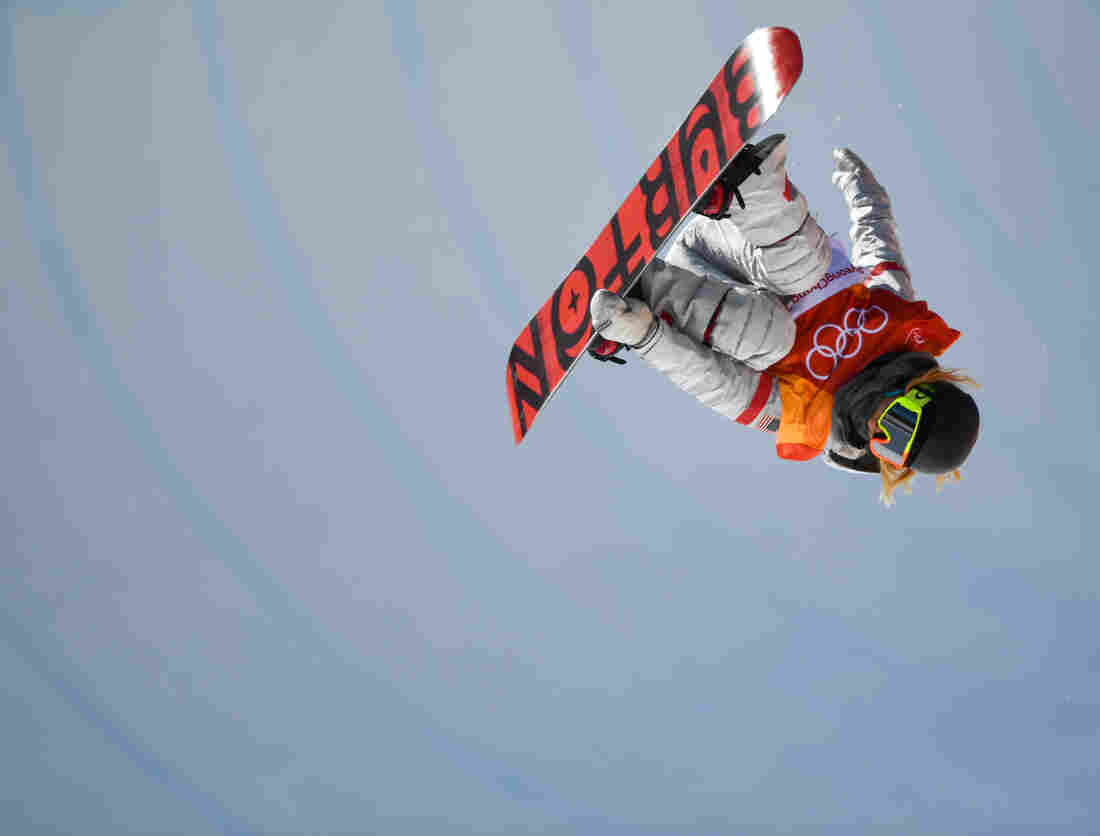
American Chloe Kim, 17, grabbed headlines and hearts with her outstanding gold medal performance in the women’s snowboarding halfpipe. NPR’s Bill Chappell reports that Kim is already considered one of the best snowboarders in history, and her tenacious commitment to scoring well, but also enjoying herself bodes well for her future Olympic prospects.
” ‘Going to my third run I knew I had the gold,’ Kim said. ‘But I also knew I wouldn’t be satisfied taking the gold and knowing that I hadn’t put down my best. That third run was for me — to put down the best run I could do.’ “
Kim also shared her humanity — and her high metabolism — in a few tweets.
Wish I finished my breakfast sandwich but my stubborn self decided not to and now I’m getting hangry
— Chloe Kim (@chloekimsnow) February 13, 2018
Could be down for some ice cream rn
— Chloe Kim (@chloekimsnow) February 12, 2018
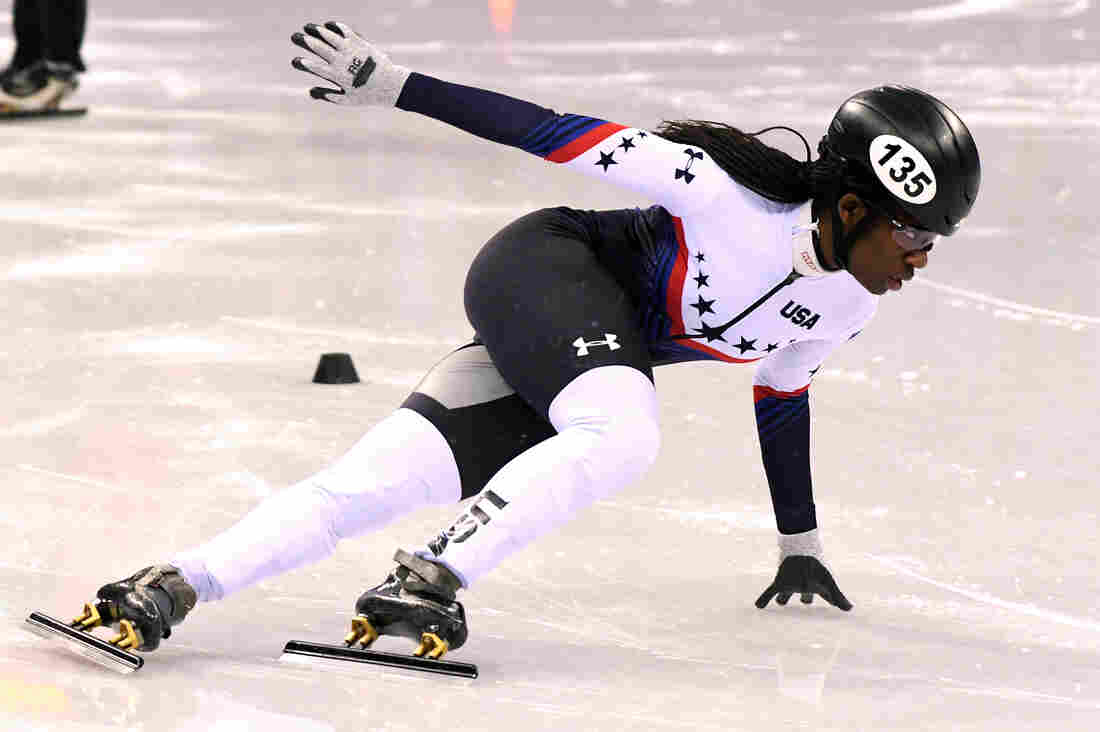
Another American, speed skater Maame Biney, turned 18 a few weeks before arriving in South Korea. Biney came to the U.S. when she was 5 and is the first African-American woman to qualify for a U.S. Olympic speedskating team. Biney has an immensely positive spirit.
Smile. That’s the best you can do when you’re having a bad day. It won’t be bad forever. So just keep cheesin’?I’m excited for Saturday and I’m definitely going to give it my all! Thank you guys for all of the supportive messages, means a lot???? #teamusa?? pic.twitter.com/NLHkZswTUw
— Maame Biney (@BineyMaame) February 15, 2018
She had second and fourth place finishes in qualifying races earlier in the week. Biney is ranked second ahead of the 1,500 meter heat scheduled for Saturday night, Korea time.
The baby of Team USA is figure skater Vincent Zhou, who turns 18 in October. The California native had an exuberant performance on Saturday morning in South Korea. While he finished in sixth place, it was clear from his reaction that he was thrilled with his free skate performance. Social media responses highlighted great anticipation of American medal potential in Beijing 2022.
.@TeamUSA‘s 17-year-old @govincentzhou has been absolutely BRILLIANT in his first #WinterOlympics! https://t.co/fmMl0C4Amfpic.twitter.com/UNBhME38lh
— NBC Olympics (@NBCOlympics) February 17, 2018
Zhou and teammate Nathan Chen skated early and then waited anxiously through the men’s free skate on Saturday to see if they could hold their podium positions. Chen, 18, came in to the free skate after a disappointing 17th place in the men’s short program, and wowed the crowd with a historic six quad jumps. But after explosive programs from Japan’s Yuzuru Hanyu and Shoma Uno and Spain’s Javier Fernandez, Chen and Zhou landed in fifth and sixth place, respectively.
Holding down the title of the youngest competitor across the Winter Games is Wu Meng, competing with the People’s Republic of China for the freestyle skiing competition in halfpipe. She’s one of many 15-year-olds who made it to Pyeongchang. Wu worked her way up through competitions in the U.S., New Zealand and China, ranking higher each time. The women’s ski halfpipe competition begins Monday.
Other teen Olympic titans include, via NBCSports:
- Jennie-Lee Burmansson (15) — Ski Slopestyle (Sweden)
- Zhang Kexin (15) — Ski Halfpipe (China)
- Alina Zagitova (15) — Figure Skating (Russia)
- Kim Hanul (15) — Figure Skating (South Korea)
- Hiroaki Kunitake (15) — Snowboard Big Air/Slopestyle (Japan)
- Reira Iwabuchi (16) — Snowboard Big Air/Slopestyle (Japan)
- Alice Robinson (16) — Alpine Skiing (New Zealand)
- Ayaulum Amrenova (16) — Moguls (Kazakhstan)
- Nico Porteous (16) — Ski Halfpipe (New Zealand)
Tongan Skier Finishes Strong In Olympics After Just 12 Weeks Of Training In Snow

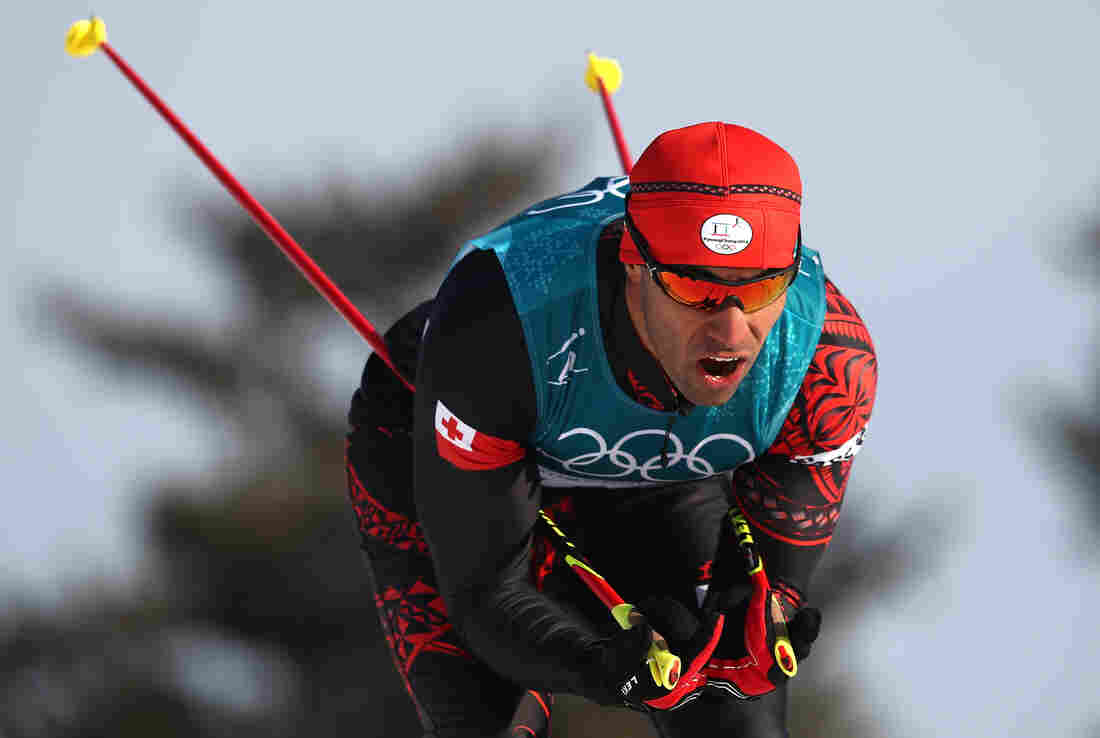
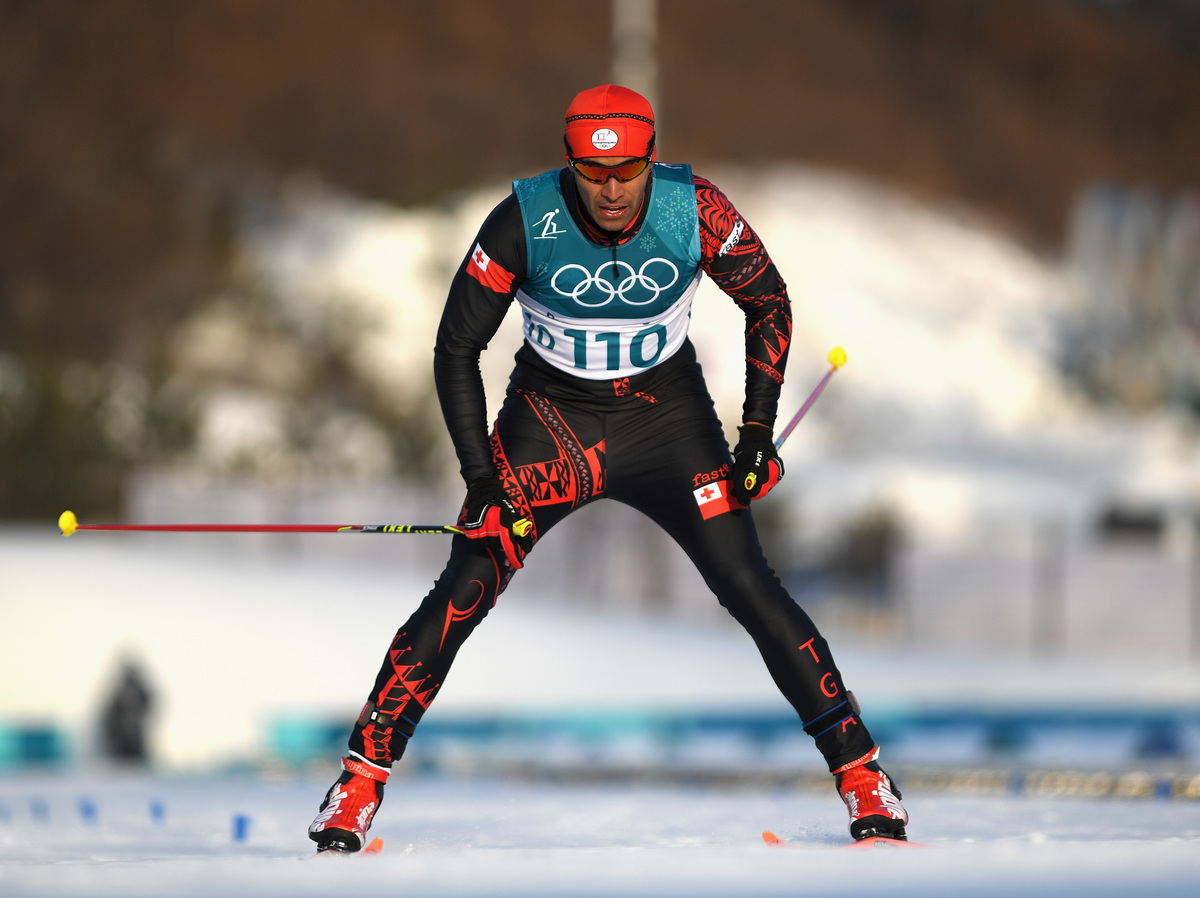
Pita Taufatofua of Tonga crosses the finish line during Friday’s 15-kilometer cross-country ski competition. His goal, he’d said earlier, was to finish the race — and not hit a tree.
Matthias Hangst/Getty Images,
hide caption
toggle caption
Matthias Hangst/Getty Images,
Pita Taufatofua, who lit the Internet on fire with his coconut-oiled, shirtless walk as Tonga’s flag-bearer during the Pyeongchang Winter Olympics opening ceremony, had two goals for his cross-country skiing event on Friday.
They were not lofty — but that makes sense for a man who has tried skiing on snow for only three months.
“First step, finish before they turn the lights off,” the 34-year-old told reporters. “Don’t ski into a tree, that’s No. 2.”

Taufatofua leads his country’s delegation during the Feb. 9 opening ceremony of the Pyeongchang 2018 Winter Olympic Games.
Sean M. Haffey/AFP/Getty Images
hide caption
toggle caption
Sean M. Haffey/AFP/Getty Images
He met both goals — and actually beat four other competitors — in the 15km cross-country skiing event.
Taufatofua competed in taekwando at 2016’s Rio Olympics and was similarly a crowd favorite when he appeared shirtless at that opening ceremony. He is the first athlete from Tonga to compete in both the Summer and Winter Olympics. The Pacific island nation, located near Fiji and American Samoa, has a population of about 106,000.
In a promotional video set to a score of sweeping music, Taufatofua gives a sense of what a long shot it was for him to qualify in cross-country skiing at all.
“Here was this guy who had never put skis on in his life, from an island of sand and coconut trees,” he says. “And I thought if I could do this, then anyone who’s following this journey could achieve anything they want to achieve.”
A post shared by Pita Taufatofua (Pita T) (@pita_tofua) on Feb 16, 2018 at 5:58am PST
Naturally, Tonga’s lack of snow was an obstacle in his training.
“When you’ve got no snow, it’s really hard to learn a snow sport,” he told CNN. He was attracted to the difficulty of the brutal endurance event. “The goal was to do it within a year, and we just made it within that year, but it wasn’t easy.”
Taufatofua studied YouTube videos of skiers and tried to find ways to mimic the feeling of being on snow, like strapping planks of wood to his feet and sliding across a beach or using roller skis. Once he got to real snow in Germany, according to his fundraiser page, he trained on rental skis that “felt like dragging a sack of sweet potatoes through the snow.”
It was tough going, he told CNN, adding that roller skiing is “quite possibly the worst thing ever invented.” He added: “You can’t stop. … The only way to stop is to fall. And I learned that the hard way many, many a time.” One of those times was captured on his Instagram feed:
And For My Next Trick ? @tongaskiteam
A post shared by Pita Taufatofua (Pita T) (@pita_tofua) on Oct 14, 2017 at 2:47pm PDT
The most intense part of this experience came as he was trying to qualify for the Olympics in January. He felt “a lot of relief” when he met the criteria — just one day before the deadline, according to NBC.
Ahead of competing in Pyeongchang, he told CNN that he felt he was “going in there without pressure.”
“I’ve come in as the last seed,” he said. “If I get a gold medal, I’ll be happy. If I come last, I’ll be happy. I made it to the Olympics and I got Tonga to the Olympics.”
He certainly looked happy as he started the course Friday, which is about 9 miles long. And he didn’t come in last.
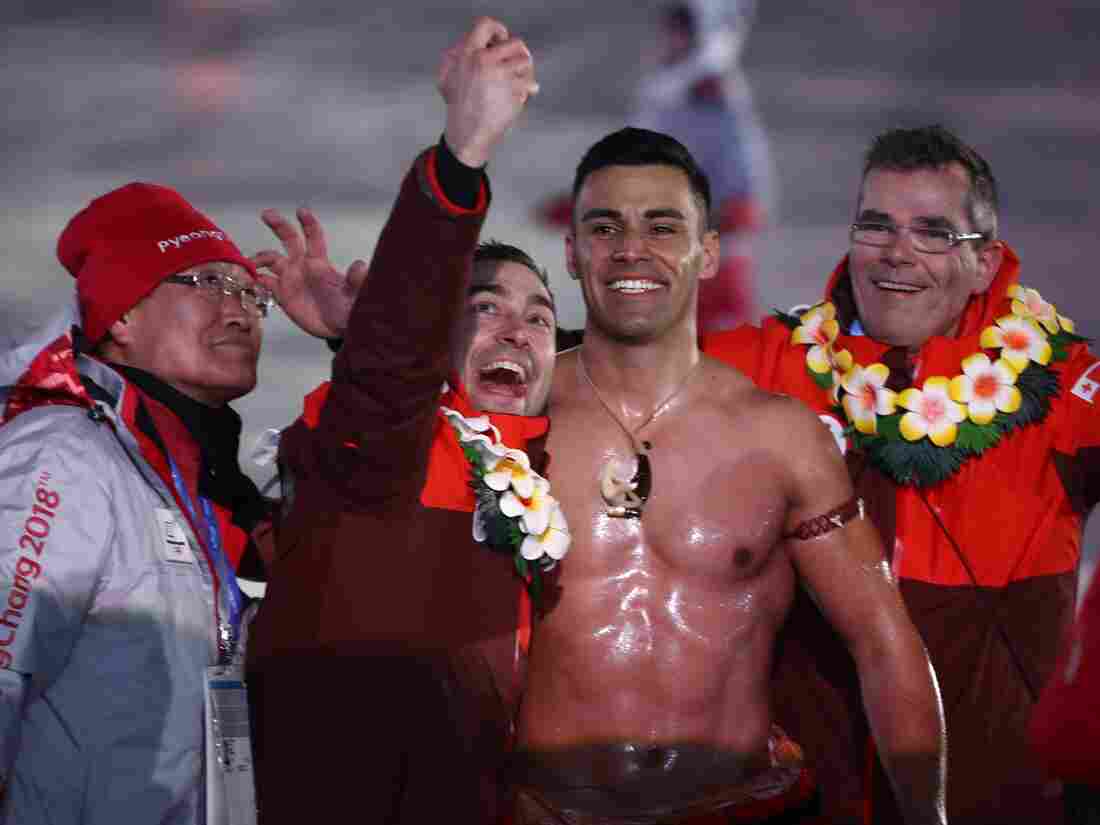
Taufatofua and another participant take a selfie during the opening ceremony.
AFP/Getty Images
hide caption
toggle caption
AFP/Getty Images
“He looks pretty good for how long he’s been skiing,” the NBC announcer commented. “Twelve weeks.”
Up and down hills, in red metallic glasses and a red cap, the Tongan battled through fatigue and cold temperatures.
He grinned as he surged forward to the finish line, clocking in at 56:41.1 — 22 minutes and 57 seconds behind the gold medalist, Switzerland’s Dario Cologna.
Taufatofua was faster than a skier from Colombia and one from Mexico, and two others did not finish the race at all.
“This has always been about challenging myself, but also opening doors for the next generation … of youth that come up from Tonga and the Pacific,” he told CNN, “so that they can see that there’s more opportunities outside of what they’re currently exposed to.”
His road to the Summer Olympics in Rio also took serious perseverance. According to his Olympic profile, he qualified for the Summer Games in taekwondo on his fourth attempt. He was the first athlete to compete for Tonga in the event.










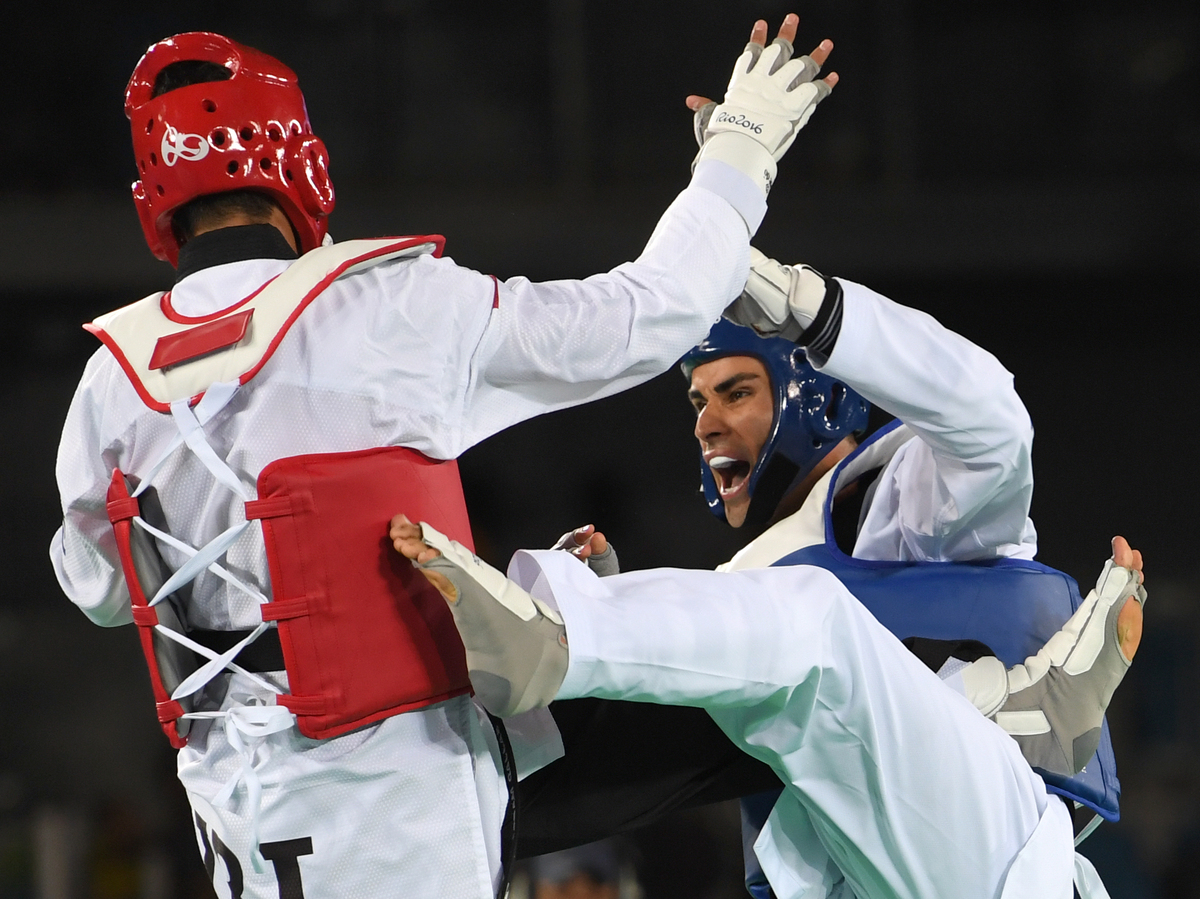
Taufatofua (right) competes against Iran’s Sajjad Mardani in the men’s taekwondo qualifying bout at the 2016 Rio Olympics.
Kirill Kudryavtsev/AFP/Getty Images
hide caption
toggle caption
Kirill Kudryavtsev/AFP/Getty Images
And while he seems to welcome marveling at his feat of qualifying for the Winter Games, he put his shirtless, freezing walk at the opening ceremony into perspective at a recent news conference.
“If my ancestors could sail across the Pacific Ocean for a thousand years, not knowing where the next piece of land was going to be, not knowing where their next meal was going to be, going to war, then I can walk for 25 minutes through an opening ceremony without a shirt on [in the frigid cold] and represent a thousand years of heritage,” he said, according to The Washington Post. (For the record, he also notes that coconut oil is superior to olive for oiling the body.)
And luckily for all his fans around the world, Taufatofua has suggested that he is thinking ahead to the 2020 Summer Games in Tokyo.
“Maybe water is the next thing,” he said. “Stay tuned.”
Friday News Roundup – Domestic

One hour — or even 24 hours — might not be enough to wrap up this week’s news.
We’ll get the latest from Florida after a deadly school shooting. There have been the usual calls for thoughts and prayers, but at least one survivor has asked for something more.
Student David Hogg who survived the school shooting looks directly in the camera, and sends a message to President Trump and lawmakers: “Please, take action. Ideas are great… But what’s more important is actual action… saving thousands of children’s lives. Please, take action.” pic.twitter.com/C5mf9qPlqA
— CNN (@CNN) February 15, 2018
U.S. intelligence officials gave a dire warning about upcoming elections and Russian interests.
In other international competitions, there was high drama at the Olympics.
Fans raved over a Marvel Comics masterpiece (which is also our next 1A Movie Club topic) selection.
Also … it’s infrastructure week.
News Brief: Florida School Shooting, Immigration Plans Stall, Olympics

The 19-year-old shooter at a Florida high school has confessed to investigators. Also, the Senate failed to pass any immigration plan before a self-imposed deadline and we have an Olympics update.
Olympics: U.S. Falls Behind In Skiing, Figure Skating
American skier Mikaela Shiffrin narrowly missed out on winning her third gold medal Friday. And in men’s figure skating, top U.S. medal hope Nathan Chen had a disappointing performance.
The Bittersweet Beauty Of U.S. Figure Skater Adam Rippon
Vanity Fair’s Richard Lawson reflects on what figure skater Adam Rippon means to him. Rippon is the first openly gay American athlete to qualify for the Winter Olympics.
Mikaela Shiffrin, Of The U.S., Wins Gold In Women's Giant Slalom
Mikaela Shiffrin won an Olympic gold medal in the giant slalom on Thursday. It’s her second career Olympic title. At the 2014 Sochi Games, Shiffrin won the slalom — a title she will defend Friday.
'You Don't Hold Back': Mikaela Shiffrin Wins Gold At 2018 Winter Olympics


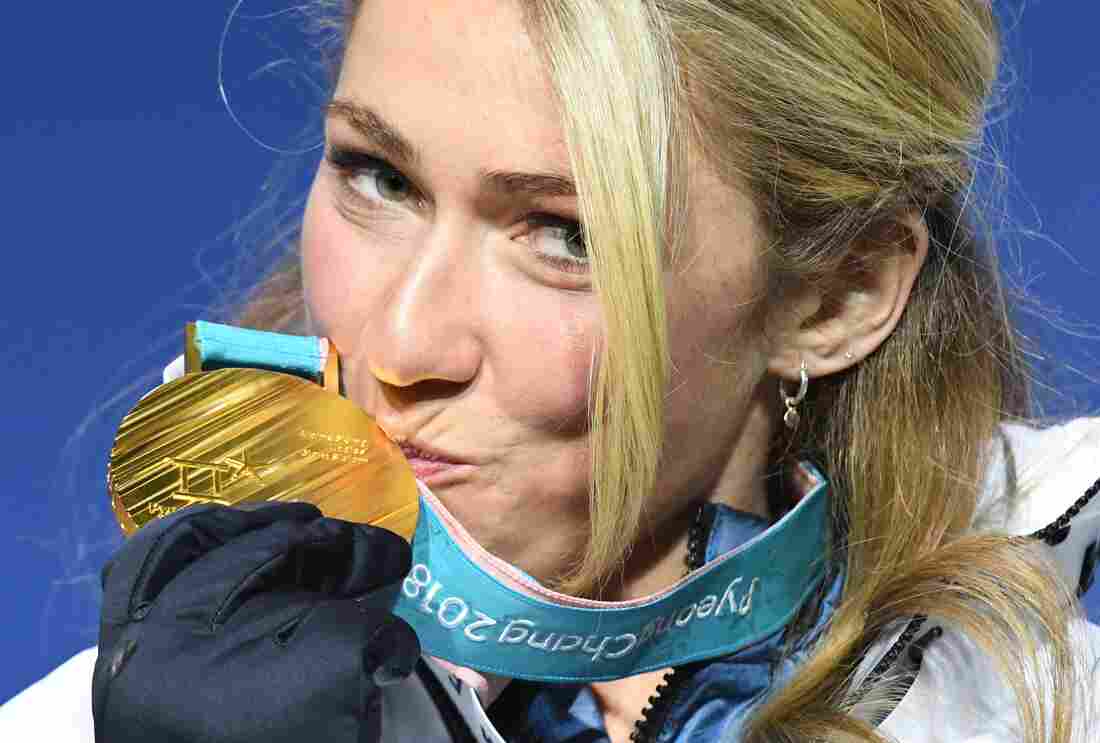
U.S. skier Mikaela Shiffrin won her second career gold medal and her first of the Pyeongchang Winter Olympics in the women’s giant slalom at the Yongpyong Alpine Center in South Korea.
Sean M. Haffey/Getty Images
hide caption
toggle caption
Sean M. Haffey/Getty Images
Mikaela Shiffrin overcame both delays and some of the best skiers in the world to claim her first gold medal at the 2018 Winter Olympics, winning the giant slalom. The weather finally cooperated, with sunny, clear skies over the Yongpyong Alpine Center in Pyeongchang.
Norway’s Ragnhild Mowinckel won silver, 0.39 behind Shiffrin’s combined time of 2:20.02.
It was a hard-won medal, on a day where 20 racers crashed out of the course. Shiffrin set herself up for a podium finish by turning in a time of 1:10.82 on her first run of the day, taking second place just 0.2 seconds behind Italy’s Manuela Moelgg. Another Italian racer, Federica Brignone, trailed Shiffrin by 0.09 seconds.
“The conditions are great, the weather is beautiful, and it’s a pleasure to be skiing today,” Shiffrin told reporters after her first run.
.@MikaelaShiffrin‘s dad’s reaction to her gold medal is everything. ???? pic.twitter.com/NOFetK7SjX
— U.S. Ski & Snowboard Team (@usskiteam) February 15, 2018
Shiffrin continued:
“But I also feel like I can go a little bit harder and you know, there’s nothing to hold back for in the second run. The nice thing about the Olympics is, you don’t hold back. And I’m excited to see what I can do.”
Shiffrin gave this rundown of the course, part of which was somewhat obscured by shadows from nearby trees:
“The top is kind of like a false flat. You just, you can push into it so hard it feels like, perfect. And then on the middle, it got a little bit more chattery. There’s some sort of micro-terrain that, especially when it’s a little darker, you can’t see it that well. It seems like it’s been tossing everybody around a little bit more.”
On her first run, Shiffrin had sped through the first half of the course, but she lost a little time on the bottom portion; in her second run, she started slightly slower than some of the other skiers — but she blazed through the rest of the course, turning in a time of 1:09.20 to put her atop the leader board. Only a handful of skiers were faster than Shiffrin in their second runs; none of them had top-five times in their first attempts.
“I don’t know when it was, at some point today after the first run I thought, like, ‘I can really win this’. I just tried to hang on to that feeling and then focus on my skiing a bit,” Shiffrin said, in remarks transcribed by the Olympics’ news service.
Like Shiffrin, Brignone went down the hill in under 1:10.00 on her second run – and Brignone’s combined time kept her in third place for a bronze medal. Her fellow Italian Moelgg lost her No. 1 spot, and a place on the podium, after a slow second run. She finished eighth.
After Shiffrin set the bar, her Olympic race turned into a waiting game, and she settled in at the scoring area at the bottom of the course to see if any other skier could beat her time.
As racers tried to carve tenths of a second out of the course, the number of DNF — did not finish — statistics piled up. They included two women who might have challenged Shiffrin: Austria’s Stephanie Brunner and Switzerland’s Lara Gut. France’s Tessa Worley, another contender, was undone by a slow first run that left her with too much time to recover.
The course in Pyeongchang comprised 49 turning gates and a vertical drop of 400 meters (1,312 feet). The race began at an altitude of 1365 meters (4,478 feet).
At the Sochi Games of 2014, Shiffrin finished in fifth place in the giant slalom. She won gold in the slalom – an event in which she’ll race tomorrow (Friday morning in Korea, and Thursday night in the continental U.S.).