Olympic Organizers Face Blowback Over How They Handled High Winds
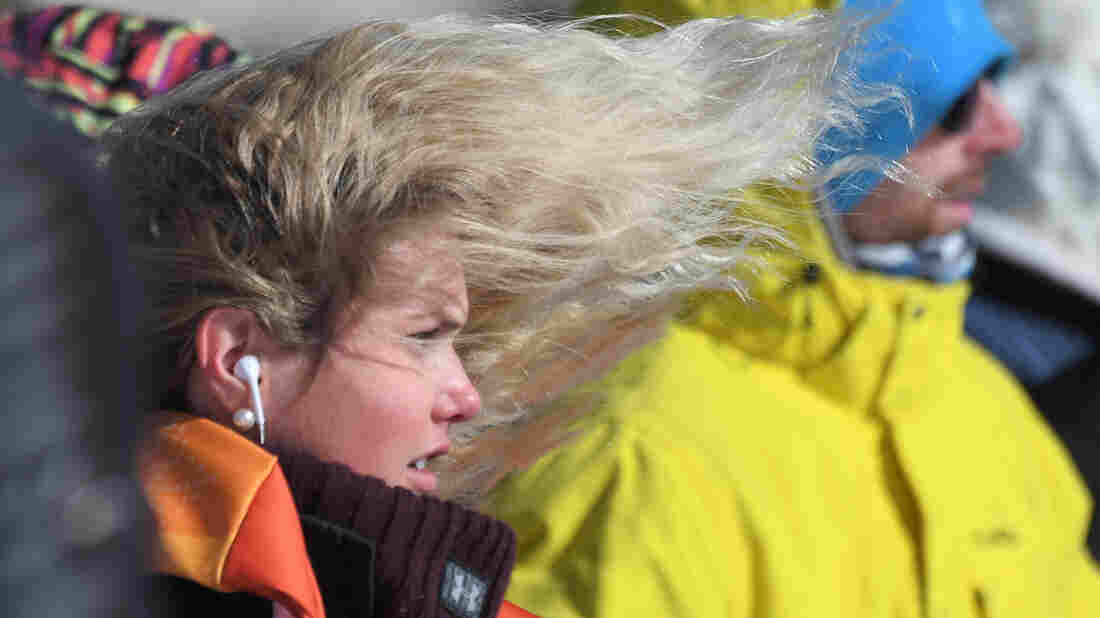
Norway’s Silje Norendal’s hair blows in the strong wind during the women’s snowboard slopestyle final event at the Phoenix Snow Park during the Pyeongchang 2018 Winter Olympic Games on Monday.
Loic Venance/AFP/Getty Images
hide caption
toggle caption
Loic Venance/AFP/Getty Images
Big air. Big victories. Big emotion: They’re all par for the course at any Olympics.
Big winds, on the other hand, are a big problem.
Over the past few days Pyeongchang, home of the 2018 Winter Games, has seen wind gusts up to 45 mph — more than enough to wreak havoc with winter sports that remain on the ground, let alone those where athletes fling themselves into the air.
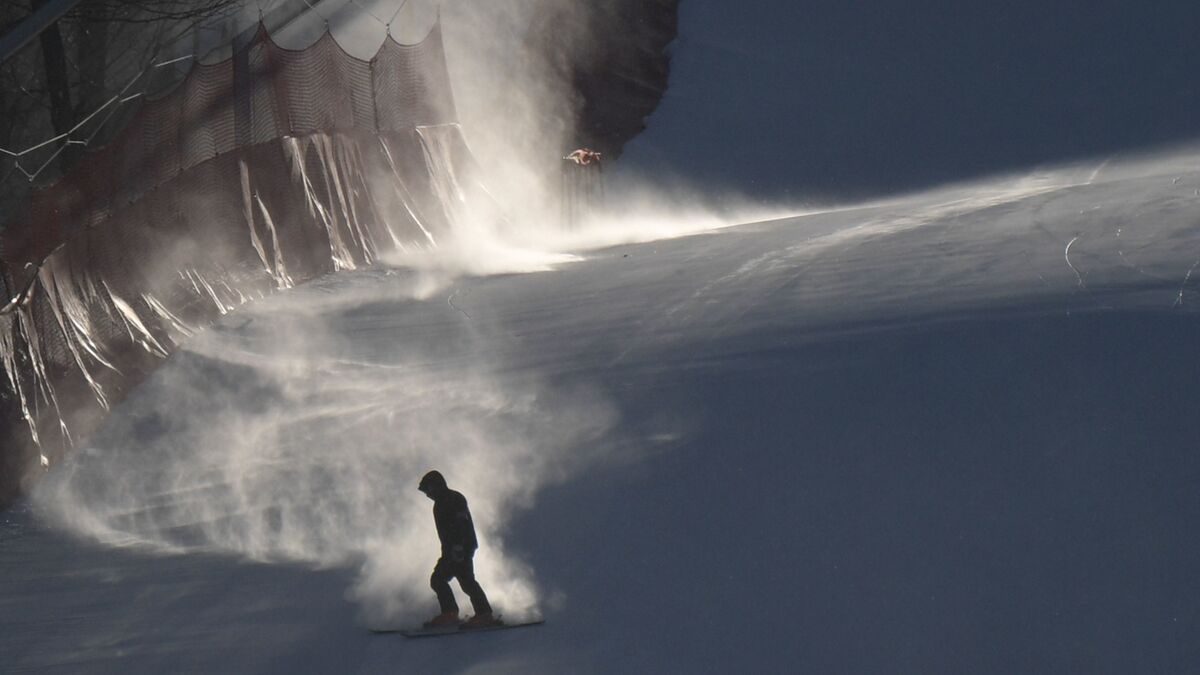
The high winds prompted the postponement of the women’s giant slalom race, a major downhill event.
But the International Ski Federation, or FIS, still sent female snowboarders to compete in the slopestyle event — a decision that has been much-criticized after the event, as NPR’s Melissa Block reported from Pyeongchang.
The winds created “treacherous conditions,” Melissa says:
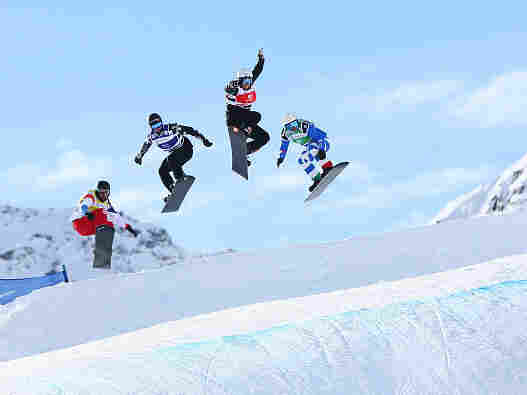
“And the slopestyle snowboarders — who fly through the air off jumps and rails — took a pounding. More than 40 of the 50 runs ended with falls.
American Jamie Anderson fared the best, winning gold for her second straight Olympics. … Other Olympians, though, said the race was dangerous, and should have been postponed. Austrian Anna Gasser told reporters, ‘We tried to speak to officials but the Olympics put us under pressure to do it today.’
“And Norwegian Silje Norendal said, ‘All I wanted to do …. was sit up top and cry.’ She finished fourth.”
NBC published a compilation video of women crashing after big jumps in the “challenging weather conditions,” as the network put it.
Sports commentators and fans have shared the athletes’ concerns about their safety.
There were no serious injuries in the park on Monday, but the risk was present, writes Jeff Passan for Yahoo Sports:
“The whipping wind — the same wind that prompted the International Ski Federation earlier in the day to cancel an alpine-skiing event — flung snowboard riders about the course at Phoenix Snow Park and impelled others simply to pull up before jumps, lest they subject themselves to shattered bones or shredded ligaments … the riders were convinced their well-being was sacrificed to the altar of the television networks that pay billions of dollars to program the Olympics.”
Australian snowboarder Tess Coady tore her ACL on Sunday, in a training crash she blamed on high winds, The Guardian notes.
Postponing the high-profile skiing event, but not the snowboarding event, also pokes at long-standing resentments between the two snow sports.

A crew member skis slowly down the slopes after the Women’s Giant Slalom was cancelled on Monday because of strong winds at the Jeongseon Alpine Center during the Pyeongchang 2018 Winter Olympic Games.
Martin Bernetti/AFP/Getty Images
hide caption
toggle caption
Martin Bernetti/AFP/Getty Images
“For snowboarders convinced that their sport will always be treated as an afterthought by FIS, they’ve got plenty of ammunition today,” Barry Petchesky wrote at Deadspin.
Then there’s the question of simple fairness. The intensity of the wind ebbed and flowed, causing British athlete Jenny Jones to call it a “total lottery,” as The Guardian reports:
“Britain’s Aimee Fuller, who finished 17th after crashing on her second run, described conditions as among the [worst] she had ever encountered, saying it was like a sailboat under her board. ‘Unfortunately it wasn’t the best day for our sport,’ she added. ‘We’re flying over 30 metre [100 foot] jumps and if it gusts you’re going to go down. Some people got lucky and I didn’t.’
“And Austria’s Anna Gasser, who entered among the favourites but finished 15th, decried it as a ‘lottery’ before criticising the FIS for their decision. ‘I don’t think it was a fair competition and I’m a little disappointed in the organisation that they pulled through with it.’ “
And finally — if safety, inter-sport anxieties and an even playing field weren’t enough — there were criticisms over the limitation the weather put on a still-developing sport.
Rachel Axon, writing for USA Today sports, notes that women’s snowboarding has “progressed dramatically since it made its debut in Sochi … Not that anyone would know that from watching the Olympic slopestyle final on Monday.”
Instead of pushing boundaries, the competitors were fighting to stay upright — and choosing smaller tricks that they had a better chance of landing in the wind.
Even Anderson’s gold-medal-winning run was clean, but not precisely spectacular. She landed a backside 540 and a cab 540, each with a twist and a half, and one 720, or two full twists. That’s less impressive than her performance at Sochi four year ago — and these days, female snowboarders are routinely landing 900s (two and a half twists), and even 1080s (three twists) and inverted tricks, Axon writes.
“That’s the biggest shame,” Canadian snowboarder Spencer O’Brien told Axon, “is that watching the ladies ride the past season and a half and to know the show we could have put on, I’m just so bummed we didn’t get to do that for the world.”
“I had planned on doing a better run,” Anderson said after her win, as NPR’s Bill Chappell reported from Pyeongchang. She was ecstatic with her victory, she said, but “it’s hard. We have to be so intuitive with the weather, the course, with how you feel … it was really tough conditions today and a lot of people were struggling.”
FIS has defended its choice, saying that the event was safe even if conditions were “challenging,” AFP reports. “FIS always aims for the athletes to be able to stage their best performances, which some athletes have expressed was not the case today,” the group wrote. “But the nature of outdoor sports also requires adapting to the elements.”
Meanwhile, the event’s race director, Roby Moresi, told Reuters that Olympic officials were told that the weather was not going to see much improvement by Tuesday.
“We played our cards. We evaluated the situation with what we had at that moment,” Moresi told the wire service. “It would always be great if we could shine for the high end spectacular sport it is, but it is not always like that. Sometimes you have to adapt to what Mother Nature gives us.”
Maame Biney Came To The U.S. From Ghana At 5. Now 18, She's A Team USA Speedskater
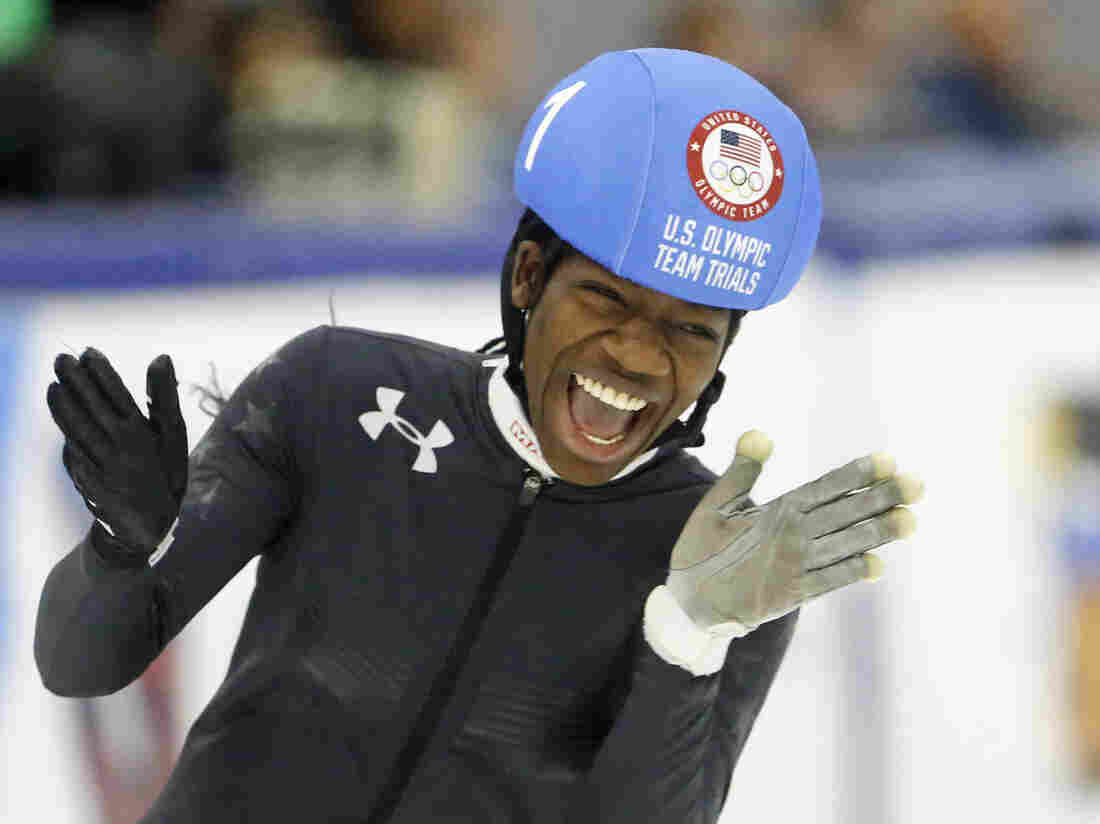
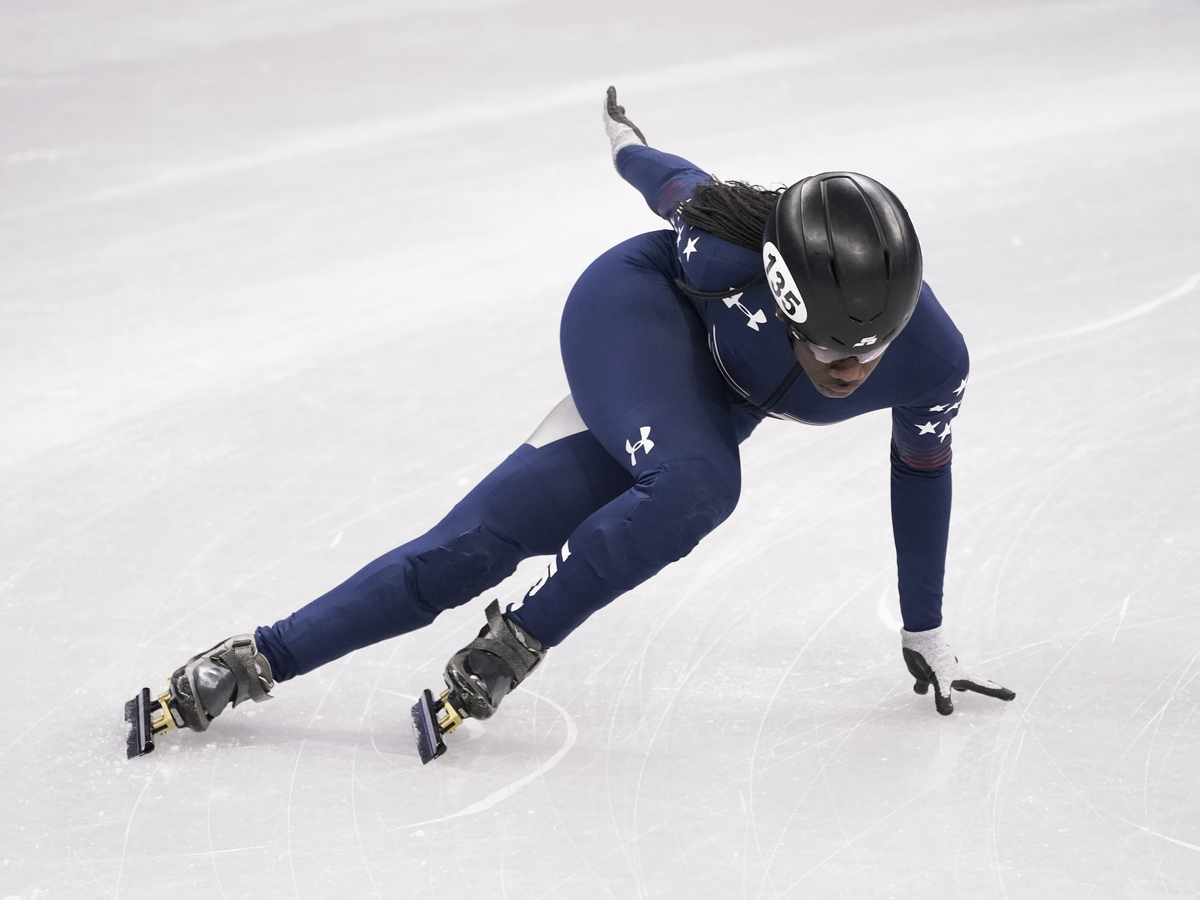
Maame Biney reacts after winning the women’s 500-meter A final race during the U.S. Olympic short track speedskating trials in December.
Rick Bowmer/AP
hide caption
toggle caption
Rick Bowmer/AP
Remember this name: Maame Biney.
The short track speedskater just turned 18; she’s not even out of high school. But she’s already one of the biggest U.S. names at the Winter Olympics.
When Biney won the 500-meter finals at team trials in December, with a personal-best time of 43.161 seconds, she became the first African-American woman ever to qualify for a U.S. Olympic speedskating team. (Twenty-five-year-old Erin Jackson is the second, qualifying in long track.) She is competing this week in the women’s 500- and 1,500-meter races in Gangneung, South Korea.
Biney has a goofy giggle and an electric, nonstop smile. Her game face, though, is something else.
“It’s not this!” she says. “It’s like, ‘Don’t be in my way, ‘cuz I’m probably gonna kill you!'”
And with that, realizing she’s blurted something impolitic, she covers her face with her hands and collapses in laughter.
‘Fierce and strong’
Just about everything Biney says ends with her irrepressible teenage giggle. She has a built-in joyfulness that charms everyone she meets, including the U.S. team head coach Anthony Barthell.
“Even when she’s mad, she’s still smiling,” Barthell says. “That’s just Maame.”

Maame Biney skates during a short track speedskating training session in Gangneung, South Korea, on Feb. 6.
Felipe Dana/AP
hide caption
toggle caption
Felipe Dana/AP
Barthell first saw Biney skate when she was 11, and even then, he realized this girl was special.
“Explosiveness?” he says. “She has a ton of that.”
Biney has the speed and power of a sprinter. It’s her powerful start — thighs like pistons, arms pumping — that makes her so formidable in the 500-meter race.
But ask Biney what makes her great in short track, and she demurs.
“I wouldn’t exactly call myself great,” she says. “I’ll just call myself, like, in there, in the little mix!”
That “little mix,” though, is brutal.
Short track speedskating demands smart, aggressive strategy as the skaters jockey for position on their 111-meter oval track, leaning into tight corners, zooming at speeds up to 30 miles an hour. A false move will send them crashing into the pads.
“I like to call myself fierce,” Biney says. “Fierce and strong and — just go out there!”
Too fast for figure skating
Biney took an unlikely path into her sport. She was born in Ghana, where — her father Kweku jokes — their only use for ice is to chill beer.
Kweku Biney emigrated to the U.S., settling in the Washington, D.C. area. Maame came to visit him when she was five. She ended up staying; her mother and brother still live in Ghana.

Maame Biney laughs with her dad, Kweku Biney, in December. After visiting from Ghana at age five, Maame stayed with him in the U.S. Her mother and brother still live in Ghana.
The Washington Post/The Washington Post/Getty Images
hide caption
toggle caption
The Washington Post/The Washington Post/Getty Images
One day, driving through the Virginia suburbs, her father saw a sign for a local rink that said “Learn to Skate.”
Maame tried it, and started figure skating — but she was so fast, the teacher steered her to speedskating.
Obviously, it took.
Kweku Biney, who for years took his daughter to her early-morning practices, will be watching from the stands when his daughter competes in the 500-meter race on Tuesday. Maame says he will be holding up the same sign he held at the Olympic trials in December.
“Yes!” she says. “He’s gonna bring that ‘Kick Some Hiney Biney’ sign!”
So, just how good can this young speedskater eventually be? Barthell sees huge potential.
That’s her dad. pic.twitter.com/2bxjVAuTxY
— Nick Zaccardi (@nzaccardi) December 16, 2017
“Once she learns a little more finesse and being able to conserve, she’s gonna be even better,” he says. “I think you guys have seen only a quarter of what she has. Maybe less than that.”
For now, Biney is trying to stay focused and shrug off the pressure of these Games. It’s hard not to feel giddy, though.
“When I get on that line,” she says, “I’ll be like, ‘Holy moly! I’m actually here! This is the Olympics! WOW!'”
But she recognizes that her achievement is bigger than herself.
“That means I get to inspire other kids in the United States, maybe all over the world,” she says, “to just go out there and do what you love, because you never know! You just might accomplish your goal.”
U.S. Soccer Has A New President, But Many Question If It Represents A New Path
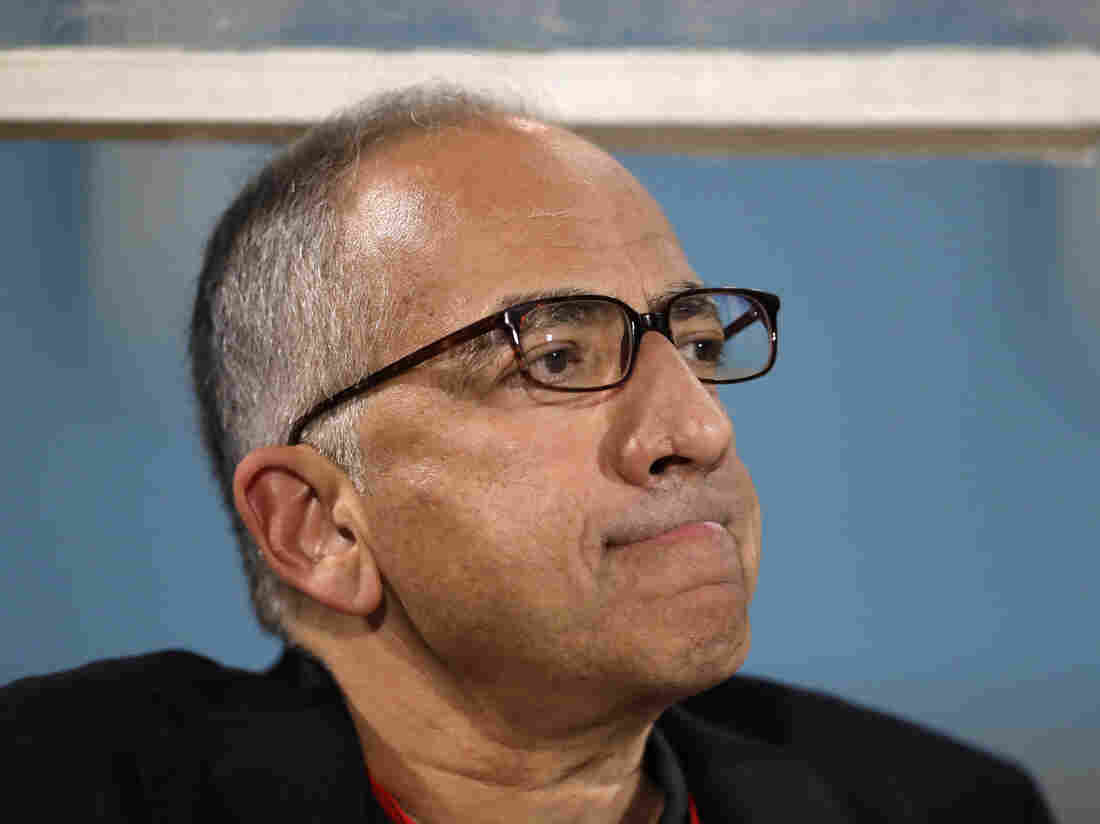
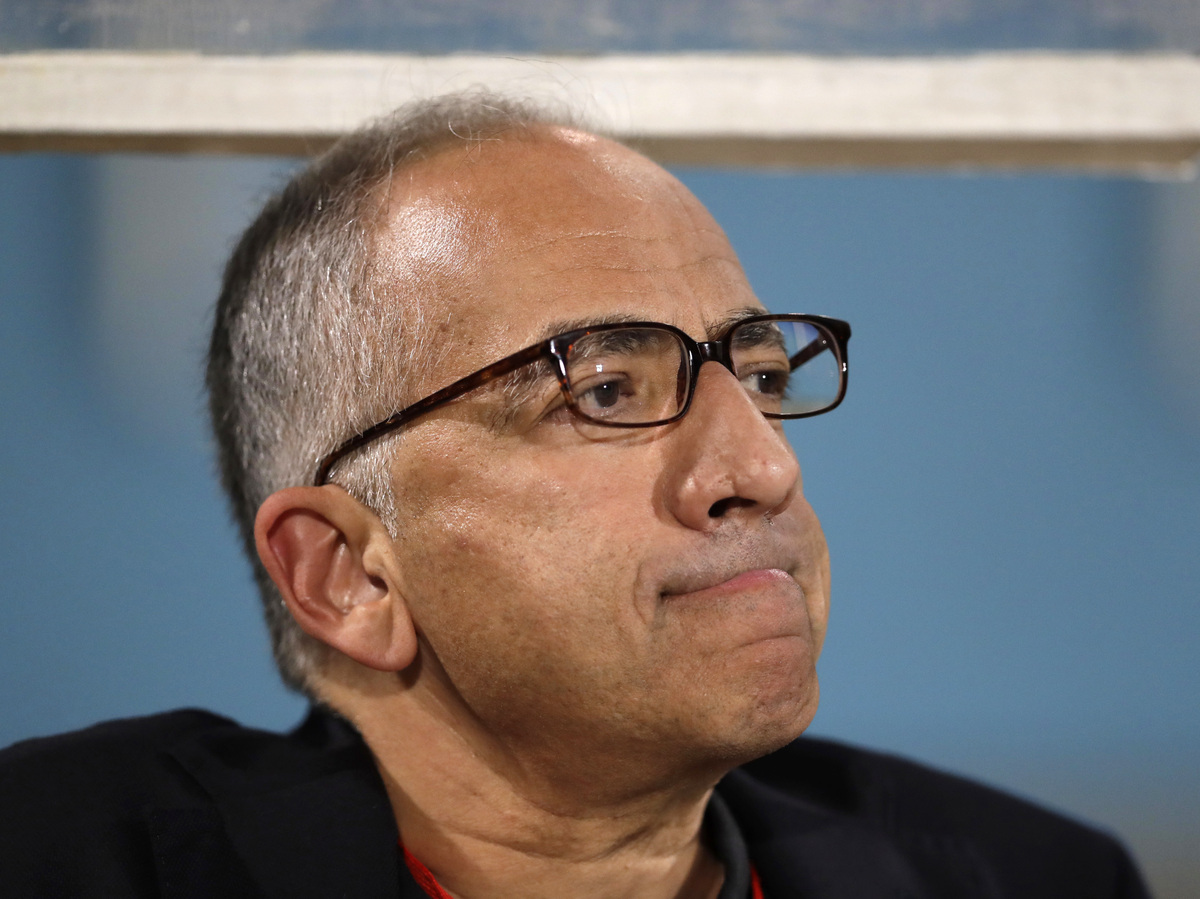
Carlos Cordeiro, vice president of U.S. soccer, watches warmups from the team bench ahead of the start of the U.S.’s final World Cup qualifying match against Trinidad and Tobago at Ato Boldon Stadium in Couva, Trinidad, in October.
Rebecca Blackwell/AP
hide caption
toggle caption
Rebecca Blackwell/AP
Carlos Cordeiro is the new president of the U.S. Soccer Federation, succeeding his boss, Sunil Gulati, in a final vote over the weekend that concluded a contentious race.
Gulati, who has served as head of the organization since 2006, declined to run for reelection after the U.S. men’s national team failed to qualify this year for the World Cup for the first time since 1986.
Gulati also steps down amid multiple lawsuits between U.S. Soccer — the sport’s official governing body in the U.S. — and the North American Soccer League. The suits are explained here.
There’s also considerable frustration that one of the most promising young players in the U.S., Jonathan Gonzalez, decided recently to sign with Mexico.
Soccerwire.com writes of the vote that it “capped some three days of lobbying and intrigue at the federation’s annual general meeting, where hundreds of delegates from all segments of American soccer gathered.”
But, as ESPN reports, “The win for Cordeiro, whose role as president is effective immediately, deals a blow to those who called for changes in the sport’s national governing body after the World Cup qualifying failure …”
Ahead of the vote, two-time Olympic gold medalist Hope Solo ripped into Cordeiro as representing everything that needed to be left behind if the sport was to move forward.
“For those of you who think the state of soccer today is good enough, then you should vote for more of the same,” Solo said in a speech quoted by Sports Illustrated.
“I was a player for 20 years, and I saw first-hand what Carlos Cordeiro’s idea of change is. You cannot, as a vice president, claim you are the lone voice for change while all of this happened under your watch. And you as delegates cannot buy that,” she said. “He was part of a federation that generated millions of dollars off the backs of its players, and much of it off the back of its women’s players, who have been the economic engine of this federation for years, yet treated like second-class citizens.”
Cordeiro was among eight qualified candidates vying for the post. He’s a former Goldman Sachs executive and “considered one of two business-oriented, establishment candidates…— along with SUM president Kathy Carter — though during his campaign he called for considerable restructuring of the federation,” according to ESPN.
“I think we are at an inflection point in soccer history in this country,” Cordeiro said following his win on Saturday. “I think we have an opportunity to really transform it into a No. 1 sport. I think the demographics favor that.”
Cordeiro is calling for U.S. Soccer to grow the sport at all levels, starting with “[bringing] more young people into our ranks as registered players and [to] focus on Youth Soccer less as a business and more as a way to develop talent on the field and nurture our next generation of young adults,” according to his published platform.
The platform also calls for “collaborating more with adult groups and recognizing that the millions of Youth Soccer players could bolster the ranks of the 250,000 adult players if we invest more in existing tournaments, support new membership drives and better link Adult Soccer programs with Youth Soccer and fans across the country.”
Cordeiro is expected to get to work immediately on a number of pressing issues, including hiring a new men’s national team coach and putting together a combined United States-Canada-Mexico bid to host the 2026 World Cup.
Jamie Anderson Repeats, Winning Olympic Gold In Slopestyle
[unable to retrieve full-text content]
Strong winds forced a change: instead of snowboarders getting three runs to net a best score, they got just two tries. Jamie Anderson needed only one — and, she said, “my lion power.”
A Round-Up Of The Winter Olympics So Far

It’s been a busy weekend at the Winter Olympics in Pyeongchang, South Korea. High winds postponed the men’s downhill skiing event, and the United States won its first gold medal.
When Being An Olympic Snowboarder Doesn't Pay The Bills

Chris Mazdzer Slides Into History As First U.S. Man To Medal In Singles Luge

Chris Mazdzer, on a run Saturday in Pyeongchang, South Korea. Mazdzer would go on to make the podium at the 2018 Winter Olympics — a first for a U.S. athlete in men’s singles luge.
Adam Pretty/Getty Images
hide caption
toggle caption
Adam Pretty/Getty Images
Chris Mazdzer has used his runners to etch himself a place in history.
The 29-year-old won silver in singles luge on Sunday, becoming the first American man ever to medal in the event. His podium finish ends a drought that extends to the sport’s Olympic debut back in 1964.
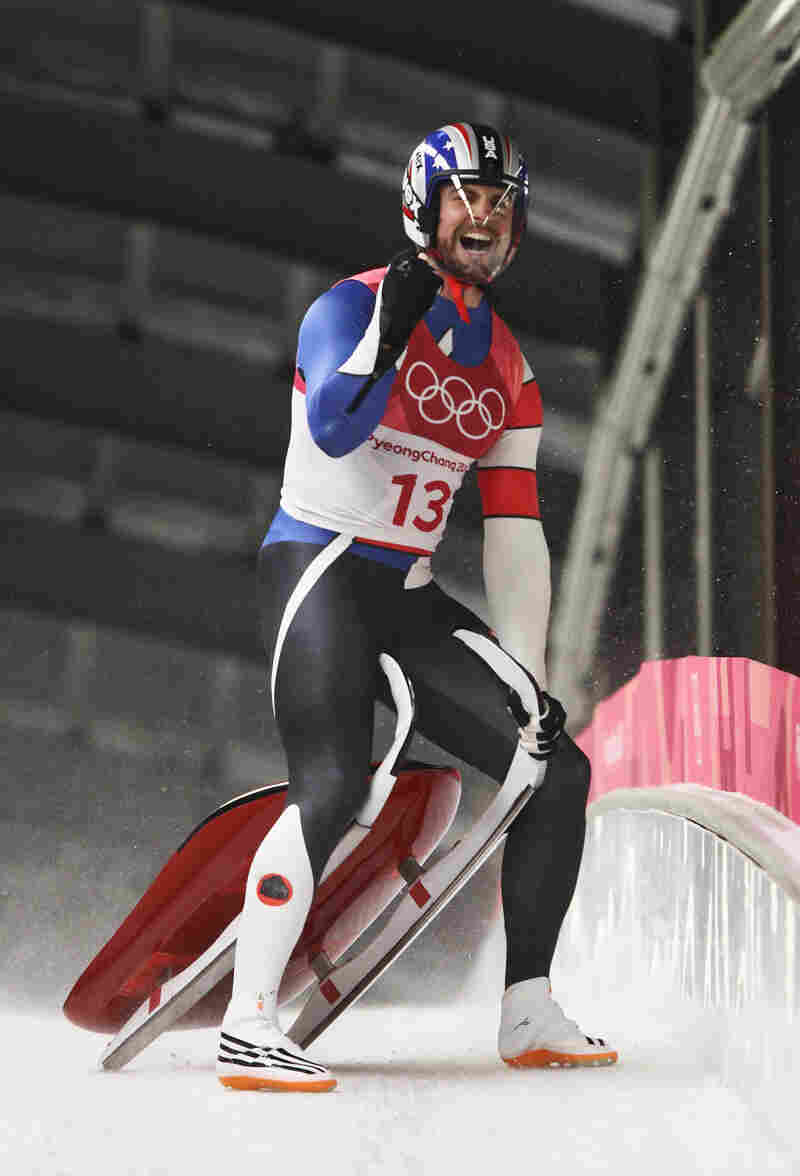
Chris Mazdzer celebrates his silver following run 4 on Sunday in Pyeongchang, South Korea. His performance marks the first time an American has earned an Olympic medal in the men’s singles luge.
Adam Pretty/Getty Images
hide caption
toggle caption
Adam Pretty/Getty Images
Also on that podium were Austria’s David Gleirscher, who won gold in a shocker of his own, and bronze medalist Johannes Ludwig of Germany.
Noticeably absent from the medal ceremony: Felix Loch, the German powerhouse who won gold at the past two Winter Games. Loch had appeared well on his way to earning his third Olympic gold medal in a row — but a disastrous final run unraveled his bid for a three-peat, knocking him not only out of the top spot but also off the podium entirely.
Loch’s loss translated into big gains for Mazdzer and Gleirscher, who beat out the American by just over two hundredths of a second to become the first Austrian to win the event in five decades.
After the event Sunday, Mazdzer said his silver capped years of struggle.
“It’s 16 years in the making,” Mazdzer, a three-time Olympian, told NBC afterward. “I’ve had a rough last two years, and it just shows: Don’t ever give up. Whenever you lose, keep fighting.”
Indeed, his previous Olympic showings didn’t exactly augur this historic feat. Mazdzer finished both the 2010 Vancouver Games and the 2014 Sochi Games in 13th place.
Wearing a No. 13 bib this time around, Mazdzer set himself up in better position in Pyeongchang with a fifth-place standing after the opening run. But it was only with his second and third runs — which he finished second and first, respectively — that Mazdzer climbed the leader board. His solid final run then shored up his claim on silver.
NPR’s Melissa Block reports he leaped from his sled after that final run, vaulting “into the stands to hug his family and grab an American flag.”
The U.S. had already medaled in women’s singles luge — Erin Hamlin was the first to do so, winning bronze in 2014 — as well as doubles luge. Now that an American has earned a medal in men’s singles luge too, team spokesman Sandy Caligiore said Sunday they’ve got their sights set even higher.
“The men’s medal and then the gold medal, and then we’ll be a happy organization,” Caligiore said. “We like bronze, we like silver. We want gold!”
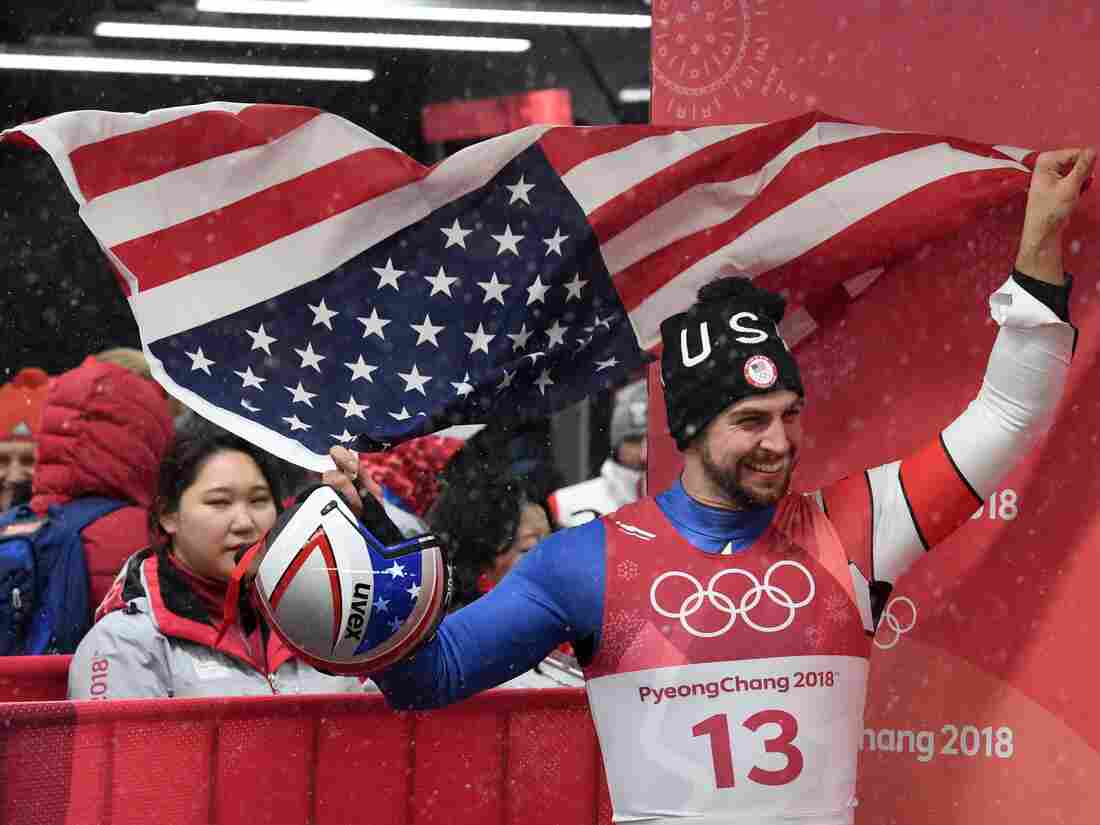
Chris Mazdzer waves the American flag after earning his silver medal in men’s singles luge Sunday in Pyeongchang.
Mark Ralston/AFP/Getty Images
hide caption
toggle caption
Mark Ralston/AFP/Getty Images
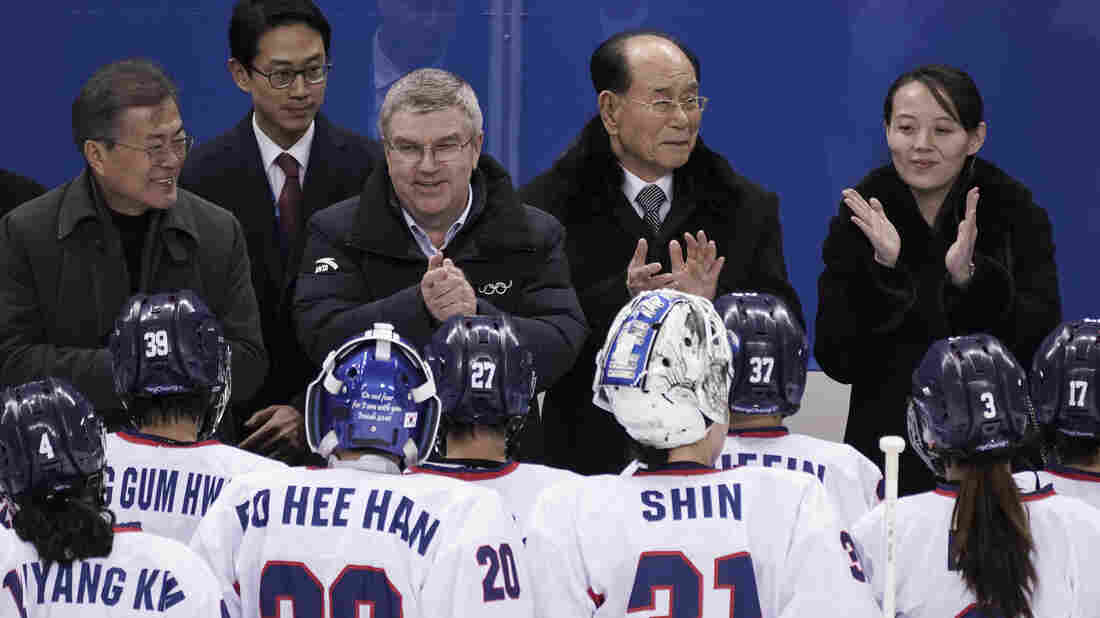
Kim Yo Jong Fascinates, And Puzzles, In South Korea

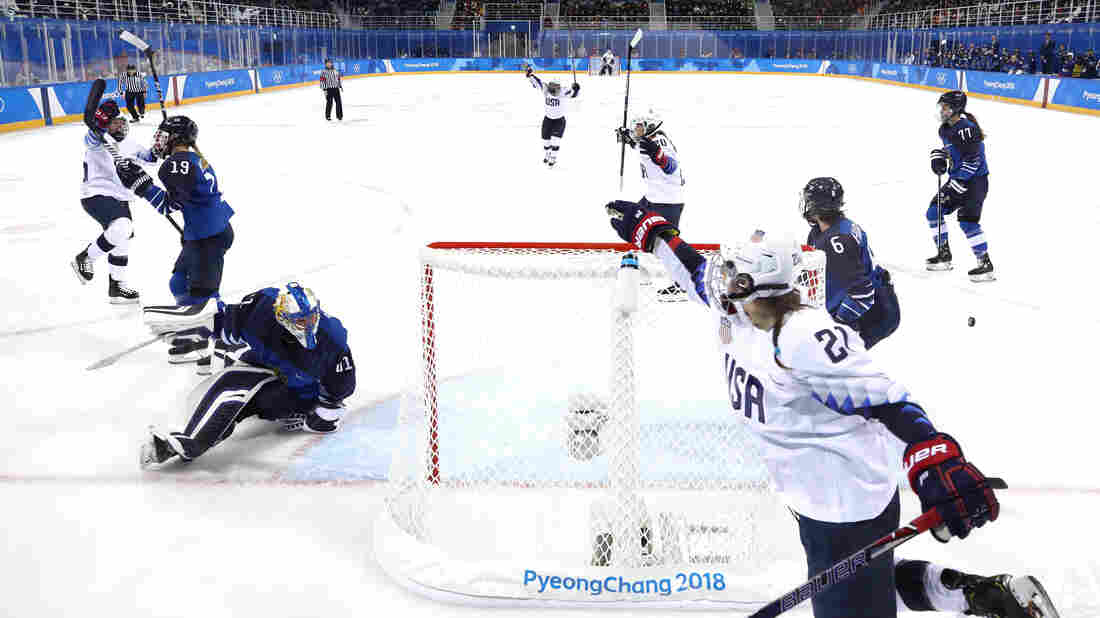
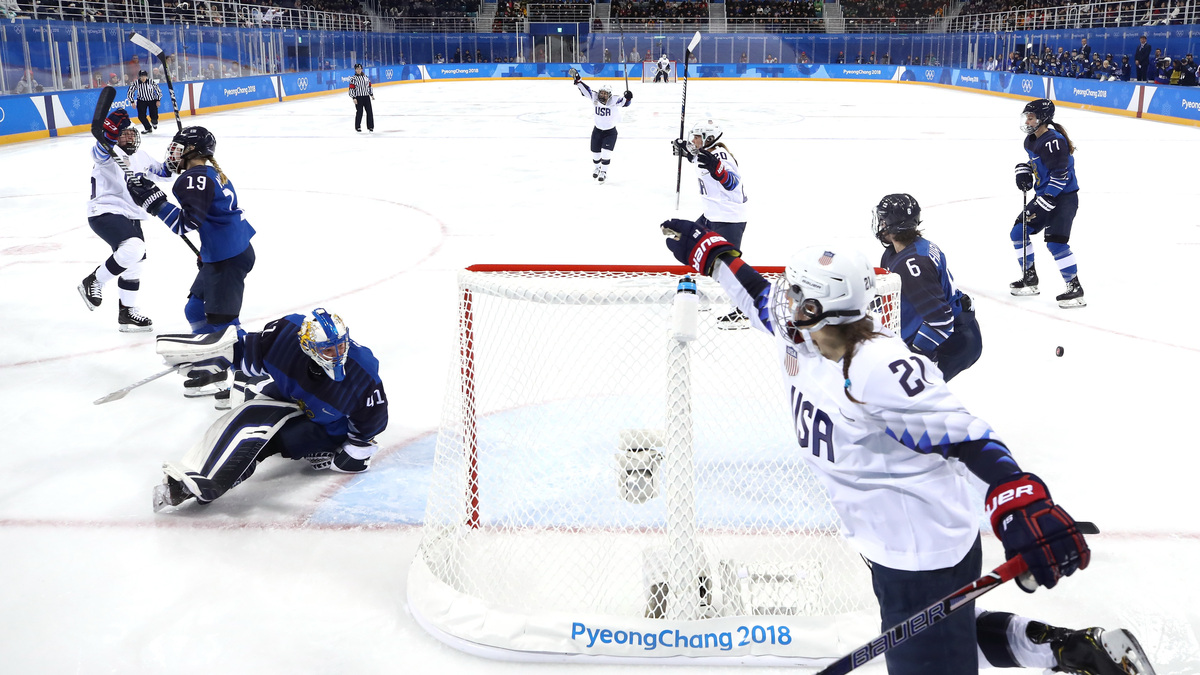
U.S. Women's Hockey Team Wins First Game In Winter Olympics





Amid Olympic Détente, Pence Snubs North Koreans In Visit To Pyeongchang


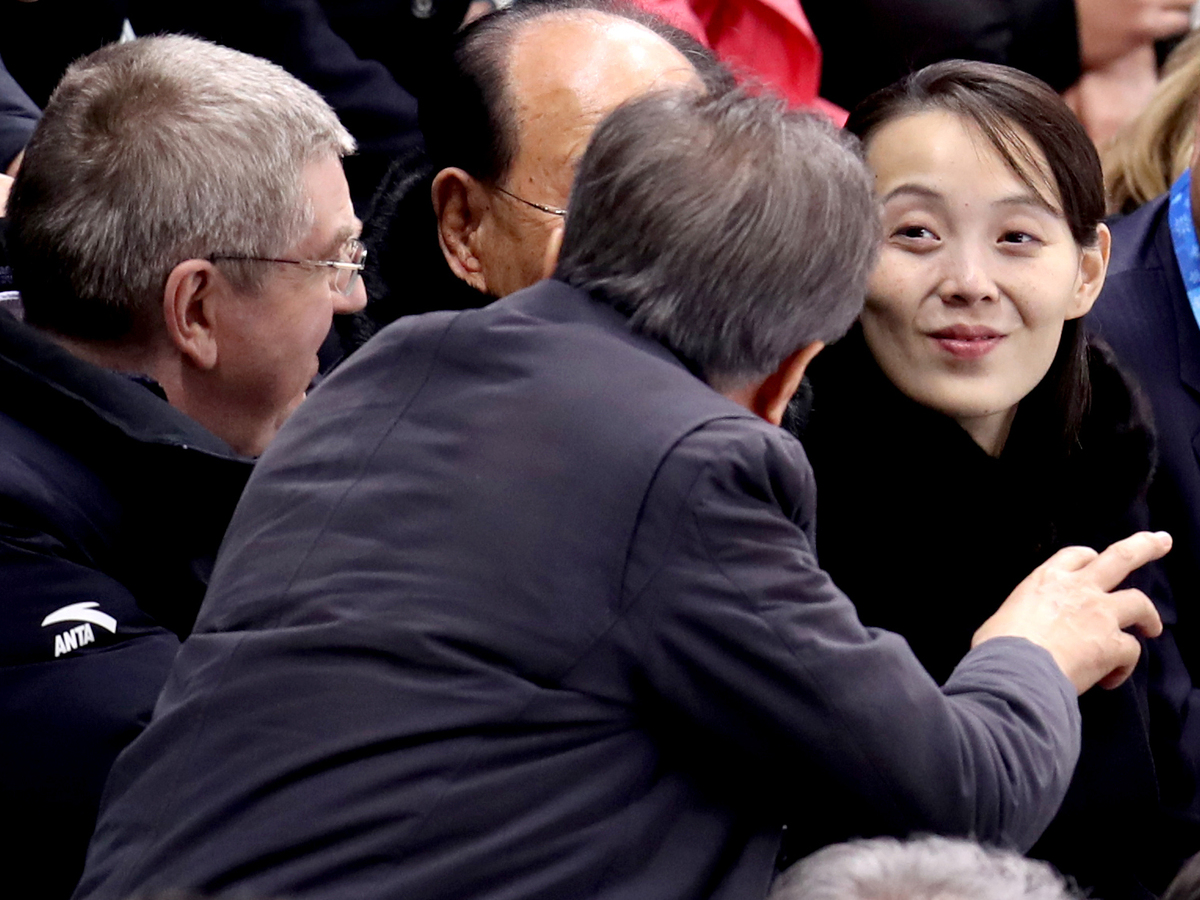
Kim Yong Nam, top left, president of the Presidium of North Korean Parliament, and Kim Yo Jong, sister of North Korean leader Kim Jong Un, top right, sit behind U.S. Vice President Mike Pence, bottom left, and Japanese Prime Minister Shinzo Abe, bottom right, as they watch the opening ceremony of the 2018 Winter Olympics in Pyeongchang, South Korea.
Patrick Semansky/AP
hide caption
toggle caption
Patrick Semansky/AP
Vice President Mike Pence is facing backlash for his staunch efforts to ignore North Korean officials at the Winter Olympic Games, even as the two Koreas continued their temporary truce, marching and competing as one team.
Pence’s cold demeanor toward the North Koreans at the Pyeongchang games was overshadowed by friendly cooperation between the North and South. The vice president also drew criticism from some openly gay members of Team USA, who questioned his role at the Olympics due to his anti-LGBT views.
Pence continued his tough rhetoric even after South Korean officials announced North Korean leader Kim Jong Un had invited President Moon Jae-in to Pyongyang for talks. He insisted on Saturday that the U.S., South Korea and Japan were united in their goal of isolating North Korea over the country’s nuclear weapons program.
“There is no daylight between the United States, the Republic of Korea and Japan on the need to continue to isolate North Korea economically and diplomatically until they abandon their nuclear and ballistic missile program,” Pence told reporters aboard a flight back to the U.S.
In the days leading up to the Olympics, Pence warned that the North was trying to “hijack the message and imagery” of the event with a propaganda campaign, according to Reuters.
Prior to the opening ceremony on Friday night, Pence arrived late to a dinner reception between the two Koreas and greeted everyone at a main table except for Kim Yong Nam, North Korea’s nominal head of state, Reuters reports. He left the reception five minutes later.
“South Korea has some difficult homework to solve regarding some countries,” President Moon said in a speech before Pence arrived. “There are some who would not want to be in the same room together if it wasn’t for the Pyeongchang Winter Olympics. But what is more important than anything is that we are together.”
In a rare public moment, President Moon shook hands with Kim Yo Jong, the younger sister of Kim Jong Un, at start of the opening ceremony. Pence, who was seated just a few feet away from Kim, did not appear acknowledge her. Then when the Korean team entered the stadium under a unified flag, Pence sat stone-faced while Moon and North Korean officials stood together in applause.
A senior White House official said Pence was not trying to avoid the delegation from North Korea but rather ignore them, according to the AP. Asia experts said Pence’s sour conduct toward the North Koreans could be seen as disrespectful to the South Korean hosts, who were demonstrating a moment of harmony with the North.
“The grievances that the world has about North Korea are very legitimate,” Frank Jannuzi, an expert on East Asia at the Mansfield Foundation told the AP. “But the Olympic moment that President Moon is trying to generate here is not a time to nurse those grievances. It’s a time to focus on messages of reconciliation and peace.”
The vice president’s visit was also marked by bad blood between Pence and some U.S. athletes. Openly gay American freestyle skier Gus Kenworthy took a swipe at Pence in an Instagram post, posing with fellow openly gay figure skater Adam Rippon.
“I feel incredibly honored to be here in Korea competing for the US and I’m so proud to be representing the LGBTQ community alongside this amazing guy! Eat your heart out, Pence,” Kenworthy wrote.
In January, Rippon criticized Pence’s role in the Olympics, citing the widespread belief that the vice president supports gay conversation therapy. In an appearance on Ellen earlier this month, Kenworthy called out Pence, saying he has “directly attacked the LGBT community.”