USA Gymnastics Announces New CEO, The Fourth In Less Than 2 Years

USA Gymnastics has hired a new CEO: the embattled organization’s fourth leader in the past two years. The organization is trying to get beyond a widening sexual abuse scandal.
USA Gymnastics has hired a new CEO: the embattled organization’s fourth leader in the past two years. The organization is trying to get beyond a widening sexual abuse scandal.
Alex Chu is a freshman at Wheaton College, where he was recruited to play goalie. But because his head won’t fit into a regular helmet, he’s been benched. A custom helmet costs thousands of dollars.
RACHEL MARTIN, HOST:
Good morning, I’m Rachel Martin. Nineteen-year-old Alex Chu is a lacrosse superstar. He is also a freshman at Wheaton College where he was recruited to play goalie. But he can’t because he has a really large head. In high school, Alex used two helmets forged together. But that doesn’t meet NCAA double standards, and a custom helmet would cost tens of thousands of dollars. His mom told The Boston Globe, quote, “all he wants is to play lacrosse.” He’s got the dedication. He’s got the skill. He just needs the helmet. It’s MORNING EDITION.
Copyright © 2019 NPR. All rights reserved. Visit our website terms of use and permissions pages at www.npr.org for further information.
NPR transcripts are created on a rush deadline by Verb8tm, Inc., an NPR contractor, and produced using a proprietary transcription process developed with NPR. This text may not be in its final form and may be updated or revised in the future. Accuracy and availability may vary. The authoritative record of NPR’s programming is the audio record.
Italian soccer team Pro Piacenza is in last place in its division. They’re also broke. On Sunday they lost 20 to 0.
Colin Kaepernick reached an agreement with the NFL. Sports sociologist Harry Edwards joins NPR’s Michel Martin to discuss what it means for the future of protest in the NFL.
Lulu Garcia-Navarro speaks with Jason Reid, senior NFL writer at The Undefeated, about Colin Kaepernick’s settlement with the NFL.
LULU GARCIA-NAVARRO, HOST:
Former San Francisco 49ers quarterback Colin Kaepernick and defensive back Eric Reid have settled with the NFL over allegations that teams colluded to keep the two players from playing football in the league.
Kaepernick gained national attention in 2016 for taking a knee during the national anthem as a protest against racial and social injustice. Eric Reid was the first player to kneel alongside Kaepernick. Both eventually ended up unsigned after their contracts expired, although Reid was signed last year by the Carolina Panthers.
Jason Reid, senior NFL writer for ESPN – no relation – is here to explain what Friday’s deal means for Kaepernick and the league. Welcome to the program.
JASON REID: Oh, thank you.
GARCIA-NAVARRO: So, Jason, what do we know about the two settlements? I mean, they’re sort of under a veil of secrecy, right?
REID: Yeah. The settlements are cloaked in a nondisclosure agreement, so unless someone leaks the terms, we’re not going to know. But it’s fair to say that based on Kaepernick’s last couple years in which he did not play, he was not able to earn income from the NFL over the last two years.
And in any model that any competent lawyer would use in this situation, you’re going to look at his future earnings, as well, because the assumption is going to be that he’ll never play in the NFL again. Then there are other factors that labor lawyers would look at in terms of his reputation, endorsements lost.
So when you calculate all those things – look; it’s all speculation because there’s a nondisclosure agreement. However, given what quarterbacks make in the NFL, and it’s the most important position in the NFL, if 20 years from now we found out that Colin Kaepernick walked away with $50 million or more, I would not be shocked.
GARCIA-NAVARRO: This was expected to go into a full hearing sometime this year. Why did the NFL settle?
REID: Well, the NFL really did not have a credible argument as to why Colin Kaepernick was not on an NFL roster. The amount of ineffective, downright inept quarterbacks who have been signed while Colin Kaepernick has been sitting out there, it just was not an argument that made sense.
It’s one thing to advance that argument when you have people in the media who will basically listen to that nonsense and say, oh, well, yeah, the NFL’s right. He’s just not good. It’s another thing entirely to go in front of an arbitrator when the arbitrator is going to look at all this information that Colin Kaepernick’s side is putting out about the level of quarterback play in the league.
Also, the NFL tried to get the case dismissed in August. And the arbitrator was like, no, there’s enough here to move forward. My belief is that once the arbitrator did not throw out the case in August, that at that point, the NFL had to start thinking about an exit strategy.
GARCIA-NAVARRO: Right. This has played out where Kaepernick said the NFL conspired to keep him unemployed because of his protests. The NFL said that that wasn’t true. This seems to be the end of a long battle between the two sides. You wrote that Colin Kaepernick won.
REID: Well, yeah. I think he won for several reasons. First of all, you have to understand what a horrible look this is for the league. At the heart of Kaepernick’s allegations about his employment were that the owners tried to ruin his career, essentially, because they were upset that he took a knee to shine a light on racism.
So what the NFL was willing to say is, well, you know what? It’s better for us to settle with him instead of taking this to the limit in a full arbitration hearing. And I think when you talk about winners and losers, clearly, he got a substantial financial payout.
He also additionally – remember, his kneeling is what led to the Players Coalition – NFL social justice deal – an $89 million unprecedented deal between a league and its players to fund social justice causes. He also started this national conversation that is still ongoing. And wherever you come down on that, Colin Kaepernick obviously accomplished a lot.
GARCIA-NAVARRO: Jason Reid is a senior writer for ESPN’s The Undefeated. Thank you so much.
REID: You’re welcome.
Copyright © 2019 NPR. All rights reserved. Visit our website terms of use and permissions pages at www.npr.org for further information.
NPR transcripts are created on a rush deadline by Verb8tm, Inc., an NPR contractor, and produced using a proprietary transcription process developed with NPR. This text may not be in its final form and may be updated or revised in the future. Accuracy and availability may vary. The authoritative record of NPR’s programming is the audio record.

Survivor Maryland kicks off its 12th season with a challenge where participants’ arms are tied to a plastic cup of water that’s resting on the top of a ledge. One wrong move and the cup (and its contents) will tumble.
Olivia Sun/NPR
hide caption
toggle caption
Olivia Sun/NPR
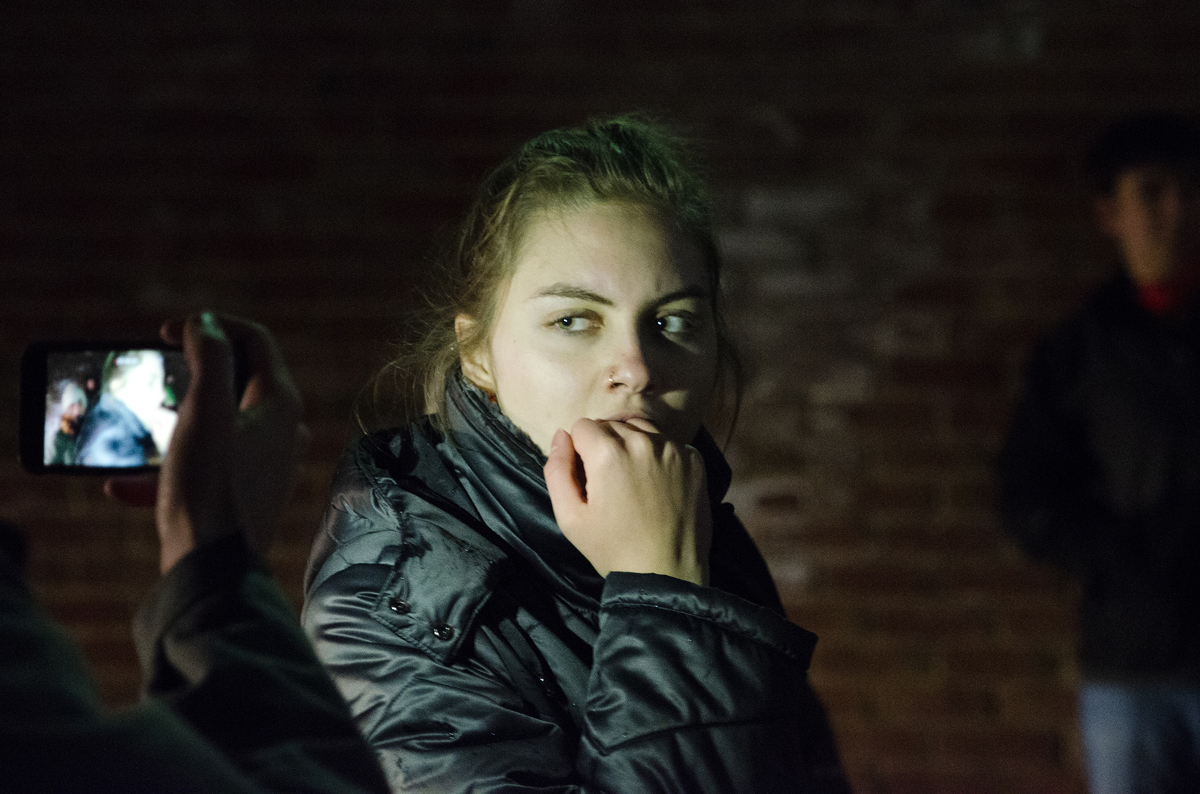
College sophomore Jake Schwartz looks up at the red Solo cup teetering dangerously close to the 15-foot ledge above him.
The cup is full of water, and it’s attached to his arm by a string. One wrong move and it will dump on his head.
Schwartz tries to be still, but it’s hard not to move. The cup inches forward.
Then it happens: about 10 minutes in, his arm jerks and the cup drops, soaking him and his leather jacket – in 30-degree weather.
He has lost the challenge. But the 17 other strangers surrounding him sigh in relief. No one wanted to be the first one out.
This may seem like a typical hazing scenario, but it’s Survivor Maryland, a fan-made version of CBS’ hit television show Survivor. Created in 2012 by Survivor fan Austin Trupp, Survivor Maryland was the first college version, but many more have followed. Now, college students around the country – from University of Virginia to Ohio State University – are remaking the show in between classes and homework. At least six campuses post their Survivor re-creations on YouTube. Others are competing, but haven’t posted their episodes yet. And around 20 schools reached out about starting their own versions, Trupp says.
“I think the moment of real emotion, real fights, real anger, real joy, are what make this more than just like an extracurricular – it makes it an actual experience that makes it something worthwhile,” says Anders Norberg, former host of Survivor Maryland. Norberg graduated in May, and now lives in Los Angeles where he’s working in the entertainment business.
Survivor Maryland‘s 12th season kicked off with the Solo cup challenge on Feb. 10. The challenges, tribal councils, secret meetings and confessionals are all recorded and edited into episodes and then posted on YouTube. (You can watch previous seasons here and here.)
And as some Survivor fans are gearing up for the premiere of the 38th season of CBS’ Survivor on Wednesday, the 18 players of Survivor Maryland are fully focused on the game unfolding on their campus.

Survivor Maryland crewmembers tie participants’ arms to cups of water before the challenge begins. After it starts, some players start singing Journey’s “Don’t Stop Believin'” to distract from the cold.
Olivia Sun/NPR
hide caption
toggle caption
Olivia Sun/NPR
Game culture
The campus shows have taken on a life online — and have an extremely devoted fan base.
There are super fans. They tune into live steam recaps of the newly released episodes, some which have more than 25,000 views on YouTube.
One super fan, Jack Estavanik of Ramapo College of New Jersey, spends a few hours a week updating wiki pages he created for Survivor Boston, Survivor Maryland and Survivor Michigan. Recently, an immunity necklace used in season 5 of Survivor Maryland sold for more than $380 on eBay. And past Survivor Maryland player Alex Paskal says fans have reached out to him from as far as Peru.
“I find this Survivor fan base as a whole to be a bizarrely varied group of people,” says Alex Thal, a former contestant on Survivor Michigan. “It seems like you almost just take the most random possible subsection of America and you get Survivor fans.”
Just like on the real television show, the campus contestants are split into tribes and vote each other out. Contestants use various strategies – from forging alliances to outright deception – as they strive to be the last person standing and ultimate survivor.
“There were definitely times where people cried, people were in distress, people were furious at each other,” Norberg says. “Like, friendships ended because of the game.”
However, while there are similarities between the TV and campus versions – the tiki torch props, the hidden immunity idols and the drama – there are key differences. Survivor lasts 39 days, whereas the college shows last one semester – anywhere from 75 and 100 days depending on the school. The television series offers a $1 million prize for winning, while most college shows offer $100. And there’s no tropical island.
But the biggest difference: the game takes its cues from campus life. Red Solo cups. Players in university-themed gear. Crew members recording footage not with a big video camera rig, but on smartphones. And it’s primarily self-financed.
This game screams college.
Contestant Alejandro Valdes, a sophomore at the University of Maryland, decided to compete in Survivor Maryland because he wanted to be uncomfortable. “I just want to see how long I can last,” he says.
Olivia Sun/NPR
hide caption
toggle caption
Olivia Sun/NPR
Then there’s the strategizing.
Contestants have tricked other players into thinking some of them were hooking up, spent hours searching campus for hidden clues or even bought fake idols to trick other players. One player even hid in another contestant’s closet for hours to avoid being seen colluding.
“If you want to do well in the game on a social level, you have to put in that amount of time,” says Amani Desormeaux, a past Survivor Maryland player who admitted to skipping class to strategize. “If I wasn’t in class, if I wasn’t sleeping, I was doing Survivor.”
Thal says he spent 20 hours a week playing and strategizing. Chris LeCompte, a two-season Survivor Maryland veteran, says the game starts to blend with real life.
“You’re always thinking about it, and you’re always on, because the thing about it is it’s not a clock-in-and-clock-out-type … game,” he says. “It really is a live 24/7 game.”
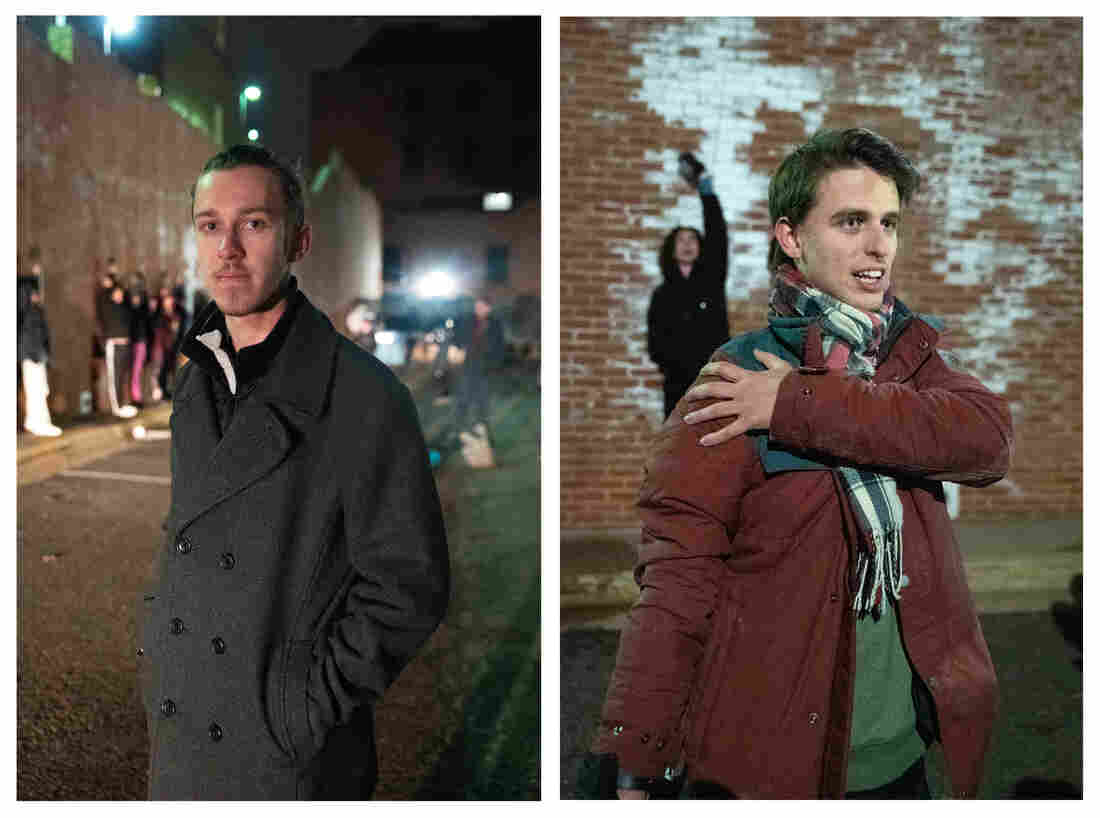
Left: Junior Drew Lerner, in his second season as host, poses for a portrait. Right: Sophomore Adriano Backes Pilla cradles his shoulder after the Solo cup challenge.
Olivia Sun/NPR
hide caption
toggle caption
Olivia Sun/NPR
‘Huge Survivor family’
Executing a show like this is a mammoth undertaking.
Before each season, hosts spend months planning out each week’s challenge and interviewing potential contestants. George Jayne, former host for Survivor Michigan, received 130 applications for the first season of 18 contestants. Host of Survivor Boston Jacob Falberg says he focuses on making sure the chosen players have the drive to win. That means interviewing everyone who applies, which at its peak was 60 applicants.
In addition to the host and cast, a crew of anywhere from five to 20 students constantly films during challenges, so no moment goes unseen. And for Survivor Michigan, there’s an entire social media team along with an editing team dedicated to the show.
Trupp says for his last season as host, he had to sift through 300 hours of footage while editing it, which took about two years. The season aired in 2018.
Norberg, who is currently editing his seasons as host, spends 15 hours editing the show each week – basically whenever he isn’t at work, he says. He releases a new episode of season six every Monday.
A Survivor Maryland player is filmed after she gets out in the Solo cup challenge. An hour into the challenge, half the players are out. “The emotion and the drive and everything is so real and so raw, you don’t get that anywhere else,” says Anders Norberg, former Survivor Maryland host. “You probably won’t get it for the rest of your life after this.”
Noah Fortson/NPR
hide caption
toggle caption
Noah Fortson/NPR
While critics say playing the game cuts into schoolwork, many contestants say they received higher grades when they played the game.
“That was my best semester … academically because it made me be more in tune with my time management,” says Survivor Maryland crewmember Swale Nida.
Even through the turmoil and backstabbing, most players end up as friends and many return in later seasons or become part of the crew. Even after graduating, some still come by to help out.
“Once you play, once you’re a part of it, it’s like this huge Survivor family, and I didn’t want my journey to end just with playing,” says Carly Weinstein, a former Survivor Maryland player and current crewmember.
Survivor Maryland‘s 12th season kicked off with the Solo cup challenge on Feb. 10. Maryland’s version was the first of the fan-made campus re-creations. Its creator, Austin Trupp, estimates hundreds of college students have played in fan-made Survivor shows by now.
Noah Fortson/NPR
hide caption
toggle caption
Noah Fortson/NPR
‘You dream about Survivor‘
Back at the Solo cup challenge, contestants have been at it for about an hour and 20 minutes, and there are two players left, one from each tribe. Both refuse to give up. Current host Drew Lerner has them each stand on one foot. Seven minutes later, there is a winner. Everyone cheers, excited to go back to warmth. A similar challenge on CBS’ Survivor has lasted six hours — although it wasn’t so cold out.
While one tribe disperses into small groups, the other meets as a whole. The strategic game play has already begun.
“There’s something about this game that keeps you coming back … It takes up your entire mental capacity all the time,” says Liam Mercer, a past player of Survivor Maryland. “You dream about Survivor when you’re playing, and you dream about Survivor after you get out.”
Olivia Sun and Noah Fortson contributed to this story.
Lindsey Feingold is the NPR digital content intern.
NPR’s Scott Simon talks to NASCAR driver Darrell “Bubba” Wallace. Wallace returns to Daytona International Speedway for his second Daytona 500 this weekend.
SCOTT SIMON, HOST:
Bubba Wallace made history last year at the Daytona 500. He finished second. He became the first African-American stock car driver since 1971 to compete in that most famous stop on the stock car circuit. And, by the way, he drove a Chevy Camaro for Richard Petty Motorsports – No. 43, like the founder.
The 500 opens the season tomorrow – Bubba Wallace, second season on the circuit. And Darrell “Bubba” Wallace joins us now from Daytona International Speedway. Thanks so much for being with us, Mr. Wallace.
DARRELL WALLACE: Yeah, thank you. It’s a pleasure to be on here with you.
SIMON: What’s this last year been like for you?
WALLACE: It’s definitely been the toughest year I’ve ever had in my career. It’s not just taking that next step. You have to – you have to be on top of your game from point A to point Z and back again. So it’s been fun learning the ins and outs of the sport and, you know, who you can work with, who you can’t. And it’s just all part of the game.
SIMON: Let me ask you a little bit about your background. You grew up in Charlotte I gather, right?
WALLACE: Yes, sir.
SIMON: And one of the homes of motor racing, obviously.
WALLACE: Absolutely.
SIMON: How did you begin to race?
WALLACE: I started racing when I was 9 years old. My dad bought a Harley Davidson, got it all chromed out, took it to a bike shop. The guy who owned the bike shop raced go-karts. And he invited us to come out one weekend and come watch him. So it was as simple as going out and watching and getting hooked and buying a go-kart and went out racing the next weekend – and never turned back.
SIMON: What do you think hooked you?
WALLACE: I think, you know, we got to travel a lot. That was fun. And you just got to do something where we thought we were pretty decent at. And we kept trying to be better and better in each series. We’d spend about two years in every series and move up to the next bigger and better and faster car. Next thing you know, you’re driving the famed No. 43.
SIMON: And the name Bubba, how did that get into your life?
WALLACE: Yeah, Bubba came about I think the day I was born, from my sister, Brittany. She called me that ever since I came out. And it kind of stuck. And now we’ve kind of created a brand around it.
SIMON: As I don’t have to tell you, some places in the South – and not just the South – the number 43 and the name Richard Petty are pretty much interchangeable.
WALLACE: Yes.
SIMON: What is it like to drive the car that bears his name and number for the man himself?
WALLACE: Oh, it’s awesome, you know, to hear the stories and the history behind the 43 and him and Dale Inman at the track. It’s – I wouldn’t trade it for anything. Honestly, it’s fun trying to bring the legacy back and build the program back up to what it once was.
There’s a lot of work that needs to be done, but we all know how much it takes to be successful in the sport. And we’re trying to do everything under our power to do that. And so I’ve learned a lot, you know, in the last year I’ve been around them. But I’ve still got to dig deep and press hard on for this year.
SIMON: He must really believe in you.
WALLACE: He does. He gave me the opportunity back when their former driver got hurt. And I was able to fill in for them. And then next thing you know, I get a phone call to come drive full-time.
SIMON: And how is the sport changing?
WALLACE: It’s changing every day. You know, I’m trying to do my best of filling out the demographic side of things and getting more faces in the stands and in the sport, whether that’s behind the scenes or on pit crews or even in the seats to drive. So it’s been a – it’s been a fun journey. It’s been a – it’s been cool to see how things have changed over the years.
SIMON: Bubba Wallace, about to drive in his second Daytona 500. Good luck to you, sir. Thanks so much.
WALLACE: All right. Thank you, I appreciate it.
Copyright © 2019 NPR. All rights reserved. Visit our website terms of use and permissions pages at www.npr.org for further information.
NPR transcripts are created on a rush deadline by Verb8tm, Inc., an NPR contractor, and produced using a proprietary transcription process developed with NPR. This text may not be in its final form and may be updated or revised in the future. Accuracy and availability may vary. The authoritative record of NPR’s programming is the audio record.
Keith Hamilton of Toronto talks about what it’s like to be a rent-a-goalie for amateur ice hockey teams.
SCOTT SIMON, HOST:
To the ice rinks of Toronto now where there are a lot.
KEITH HAMILTON: In the 20-mile radius of downtown Toronto, there’s at least 100 rinks.
SIMON: Keith Hamilton is a musician, DJ and ice hockey rent-a-goalie, a hired schtick, if you please, for amateur ice hockey teams in need. Why the demand? Is there a goalie shortage? Keith Hamilton muses…
HAMILTON: The equipment to play goalie is quite a bit more expensive than it is for a standard player. And I guess there’s also – not many people are super keen to stand in front of flying rubber pucks. They prefer to shoot them.
SIMON: Wouldn’t you? Mr. Hamilton estimates he’s played more than 4,000 games in eight years as a rent-a-goalie for 40 Canadian dollars per game.
HAMILTON: I’m very fortunate in this job that the hours are all over the place. So without having a standard nine-to-five Monday to Friday, I can still log enough games for it to pretty much be a full-time job.
SIMON: But, Keith, 40 Canadian dollars to risk getting a puck in your teeth? – he says the flexible hours allow him to pursue a music career. He was parked outside of a hockey rink when we reached him.
HAMILTON: I need one second here. I’m so sorry.
SIMON: Rushing from one game to another.
HAMILTON: There’s a dump truck that was trying to get by. I had to move my vehicle (laughter). I just finished playing my third game of the day. And I have to more this afternoon.
SIMON: In Toronto, hockey isn’t just a game. It’s the game. And if a team doesn’t have a guy in the goal, they can’t play the game.
HAMILTON: The vast majority – they’re just super grateful that I’m there. And if we play, if we get a win then they’re even more grateful. But even if we lose – just the fact that they didn’t lose the opportunity to play their game – they’re always quite grateful. I helped them save the game.
SIMON: Keith Hamilton, a rent-a-goalie in Toronto.
Copyright © 2019 NPR. All rights reserved. Visit our website terms of use and permissions pages at www.npr.org for further information.
NPR transcripts are created on a rush deadline by Verb8tm, Inc., an NPR contractor, and produced using a proprietary transcription process developed with NPR. This text may not be in its final form and may be updated or revised in the future. Accuracy and availability may vary. The authoritative record of NPR’s programming is the audio record.
Colin Kaepernick has reached a settlement with the NFL after alleging collusion to deprive him employment. Meanwhile, the league is keeping Kareem Hunt in its ranks.
SCOTT SIMON, HOST:
I wait every week to say it’s time for sports.
(SOUNDBITE OF MUSIC)
SIMON: The NFL and Colin Kaepernick and Eric Reid have reached an agreement – nondisclosure agreement. But we’ll talk about it. Also, the debate in Cleveland over signing a player who shoved and kicked a woman in a hotel hallway. NPR’s Tom Goldman joins us. Tom, thanks so much for being with us.
TOM GOLDMAN, BYLINE: Good to be with you, Scott.
SIMON: Colin Kaepernick’s lawyer put out a statement on Twitter saying they had, quote, “resolved pending grievances.” Is that agent talk for they threw money at my client?
GOLDMAN: Well, we think so. But we don’t know. Kaepernick and Eric Reid sued the NFL, claiming the league conspired to not hire them after their protests during the national anthem, as you remember – started by Kaepernick in 2016 to protest police brutality and racial injustice. Now, Yahoo Sports said it was told previously the players would only settle if a lucrative financial agreement was reached. But we don’t know for sure because a confidentiality agreement, as you pointed out, is sealing everyone’s lips.
SIMON: Well, let me ask. Why didn’t the NFL want the case to go to trial?
GOLDMAN: It’s a big, powerful business. It doesn’t like its inner workings exposed. So it makes sense the league didn’t want this to go the distance. Last August, an arbitrator rejected the NFL request to dismiss the case. A hearing was coming up. And there would have been potentially sensitive NFL material revealed. There was also the chance that even though collusion is hard to prove, Kaepernick and Reid might have had enough to win. And that would have been a huge PR hit for the NFL.
SIMON: Does this necessarily mean Colin Kaepernick’s going to be signed by any team?
GOLDMAN: We don’t know. We really don’t know at this point. It means, perhaps, that that he got a lot of money. But we just don’t know at this point.
SIMON: Moving on. Kareem Hunt has signed with Cleveland Browns two months after he was cut by the Kansas City Chiefs when video surfaced of him shoving and kicking a woman. The NFL always says they won’t tolerate players who commit domestic violence. But Kareem Hunt is just the latest link to domestic violence to be signed to get another chance.
GOLDMAN: Yeah. That’s right. There is Joe Mixon in Cincinnati, Tyreek Hill in Kansas City. The NFL does have a – shall we call it – a difficult history with this issue. In Hunt’s case, though, Scott, this isn’t simply a green light and you’re back. He can’t play until the NFL finishes investigating and decides on punishment. He’s still facing multiple game suspension. And the Browns say they will have zero tolerance for any other incidents involving Hunt.
SIMON: A great Cleveland sportswriter, Mary Kay Cabot, wrote what – you and I both read it – a very provocative column…
GOLDMAN: Right.
SIMON: …This week in which she said – I’m going to paraphrase – look, Kareem Hunt grew up in a violent neighborhood near Cleveland. Many of his immediate family members, including his father and uncles were in prison and are now – so is his mother. He needs help. He’s getting it. He has a chance to turn this around. It could be a victory for victims of violence for everyone he helps in the future.
GOLDMAN: Yeah. It was revealing and significant, as you say, that it was written by a woman. It’s tricky because the NFL has this difficult history that we’ve talked about when it comes to domestic violence cases. And let’s be clear, Scott, this isn’t just altruism. The Browns are getting a great running back. He led the NFL in rushing as a rookie in 2017. But Hunt is getting another chance to move beyond this toxic…
SIMON: We should explain he wasn’t charged.
GOLDMAN: Right. Right. He wasn’t charged. And he’s getting this second chance to move beyond this toxic world you talk about. Cleveland general manager John Dorsey reportedly is a religious man who believes strongly in Hunt’s character and believes in that chance that the team’s giving him.
SIMON: Tom Goldman, thanks so much.
GOLDMAN: You’re welcome.
Copyright © 2019 NPR. All rights reserved. Visit our website terms of use and permissions pages at www.npr.org for further information.
NPR transcripts are created on a rush deadline by Verb8tm, Inc., an NPR contractor, and produced using a proprietary transcription process developed with NPR. This text may not be in its final form and may be updated or revised in the future. Accuracy and availability may vary. The authoritative record of NPR’s programming is the audio record.
Former 49ers quarterback Colin Kaepernick says he ‘resolved’ his grievances with the NFL. In 2016, he became the face of a protest movement in the NFL against racial injustice and police brutality.