Opinion: Now Is The Winter Of The NBA Players' Discontent

Sports commentator Mike Pesca opines on the high levels of discontent among the NBA’s top players.
Sports commentator Mike Pesca opines on the high levels of discontent among the NBA’s top players.
The two teams combined for 16 points, and the Patriots won. That’s unlike last year when the teams combined for 74 points, and the Patriots lost. TV ratings were down to about 100 million viewers.
STEVE INSKEEP, HOST:
Good morning. I’m Steve Inskeep. Many viewers called Sunday’s Super Bowl dull. The two teams combined for only 16 points, and the Patriots won, as usual. That’s unlike last year when the teams combined for 74 points, and the Patriots lost. And now we know this year’s TV ratings are down to about 100 million viewers. But if you do the math and count it as TV viewers per point scored, this year’s game was a big success. It’s MORNING EDITION.
Copyright © 2019 NPR. All rights reserved. Visit our website terms of use and permissions pages at www.npr.org for further information.
NPR transcripts are created on a rush deadline by Verb8tm, Inc., an NPR contractor, and produced using a proprietary transcription process developed with NPR. This text may not be in its final form and may be updated or revised in the future. Accuracy and availability may vary. The authoritative record of NPR’s programming is the audio record.
There was little drama during Sunday’s Super Bowl. But one ad did start a Twitter war between Bud Light and Big Corn.
Fans of SpongeBob signed a change.org petition to compel the Super Bowl to honor the show’s creator Stephen Hillenburg, who died last year, with the cartoon’s rendition of “Sweet Victory.” It worked.
RACHEL MARTIN, HOST:
Good morning. I’m Rachel Martin. A lot of people are trying to process what they saw yesterday. No, I’m not talking about the lowest-scoring Super Bowl in history. I mean the halftime show and specifically a seemingly random appearance by SpongeBob SquarePants. Turns out, fans of SpongeBob signed a change.org petition to compel the Super Bowl to honor the show’s creator, who passed away last year – and it worked.
(SOUNDBITE OF ARCHIVED RECORDING)
RODGER BUMPASS: (As Squidward) And now, a true musical genius who needs no introduction.
TRAVIS SCOTT: (Singing) It’s lit.
MARTIN: It’s MORNING EDITION.
Copyright © 2019 NPR. All rights reserved. Visit our website terms of use and permissions pages at www.npr.org for further information.
NPR transcripts are created on a rush deadline by Verb8tm, Inc., an NPR contractor, and produced using a proprietary transcription process developed with NPR. This text may not be in its final form and may be updated or revised in the future. Accuracy and availability may vary. The authoritative record of NPR’s programming is the audio record.

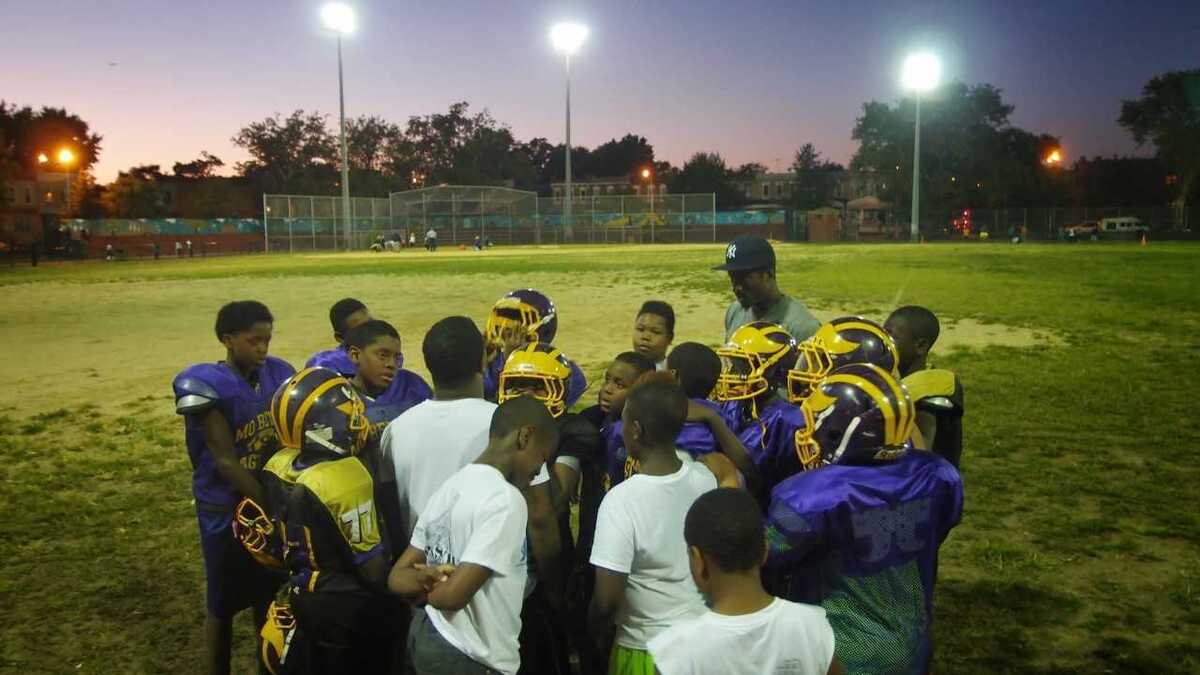
Mo Better Jaguars’ coaches and players huddle at the end of practice at Betsy Head Park in Brownsville, Brooklyn in September 2014.
Courtesy of Albert Samaha
hide caption
toggle caption
Courtesy of Albert Samaha
Fears of brain injuries has deterred many parents and their children from choosing to play football.
After years of publicity about how dangerous football can be, football enrollment has declined 6.6 percent in the past decade, according to data from the National Federation of State High School Associations.
Those who still play the sport are increasingly low-income students.
Over the past five years in Illinois, the proportion of high school football rosters filled by low-income boys rose nearly 25 percent – even as the number of players in the state has fallen by 14.8 percent over the same period, according to a story out this week from HBO’s Real Sports.
HBO
YouTube
This doesn’t surprise Albert Samaha, a BuzzFeed News investigative reporter and author of “Never Ran, Never Will: Boyhood and Football in a Changing American Inner City.”
Samaha spent two seasons embedded with the Mo Better Jaguar football program in Brownsville, a small Brooklyn neighborhood overburdened with poverty and crime. The program is for children ages 7-13, who are all aware of the risks of playing football, but play anyway.
“The reason that football is so valuable to them is the fact that it’s still the sport that that’s the most popular in America, that is getting the most money from high schools and colleges in America,” Samaha said in an interview with NPR’s Michel Martin on All Things Considered. “At a time when the educational gap continues to widen between low income, particularly black and brown kids, and higher income white kids, football offers a path to upward mobility that is not really available through any other extracurricular activity.”
Many of the 10, 11, and 12-year olds who Samaha reported on told him that they were playing football not just for the chance of getting a college scholarship, but also for the chance to get financial aid for top private high schools in New York City.
Their hopes were reinforced by private high school coaches who attended Mo Better Jaguar football games and told the boys that if they played well enough, they could get a scholarship, and with that scholarship, avoid the student debt and poverty that so many in generations before them faced.
“Kids feel pressured to play football, it’s rooted in the problem of education,” Samaha said.
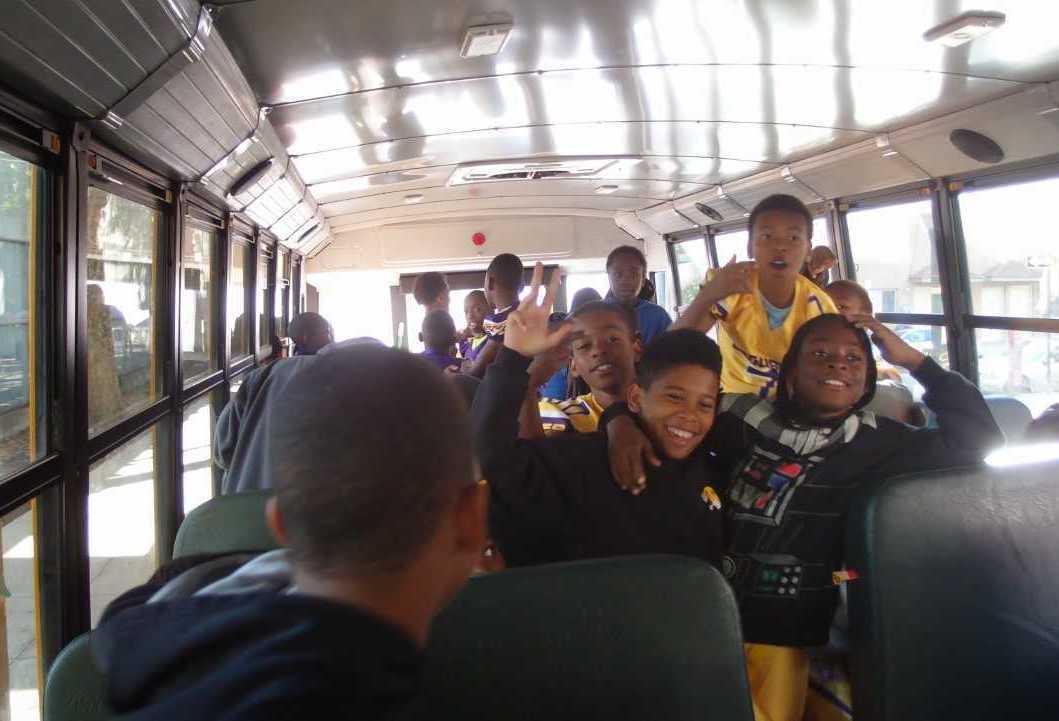
Kids on the Mo Better Jaguars football team board a bus in Brownsville, Brooklyn to go to a game in September 2014.
Courtesy of Albert Samaha
hide caption
toggle caption
Courtesy of Albert Samaha
So why do so many low-income students choose football, and not a different, less dangerous, sport? Why not try for a baseball scholarship? Or soccer?
It’s a numbers game.
The odds of getting a college scholarship for a man playing football at a NCAA or NAIA school is 43:1, according to MarketWatch, and football offers far more athletic scholarships at NCAA and NAIA schools than any other sport, numbering close to 26,000 per year.
At the high school level, schools are investing big money into football as well. One high school in Katy, Texas, just outside of Houston, recently spent over 70 million dollars on a new state-of-the-art football stadium.
“As long as the money is going into this activity this is where the opportunities are going to be,” Samaha said.
Additionally, unlike some sports, football has a relatively low barrier of entry of participation, because there are so many positions that rely on differing capabilities.
“Football unlike other sports doesn’t require you to be a certain size or certain height,” Samaha said. “You can sort of play it whether you’re overweight whether you’re underweight. It’s sort of the most in some ways meritocratic of all the sports available for these opportunities.”
But with the opportunity to achieve affordable higher education, playing football also brings the risk of long-term brain damage.
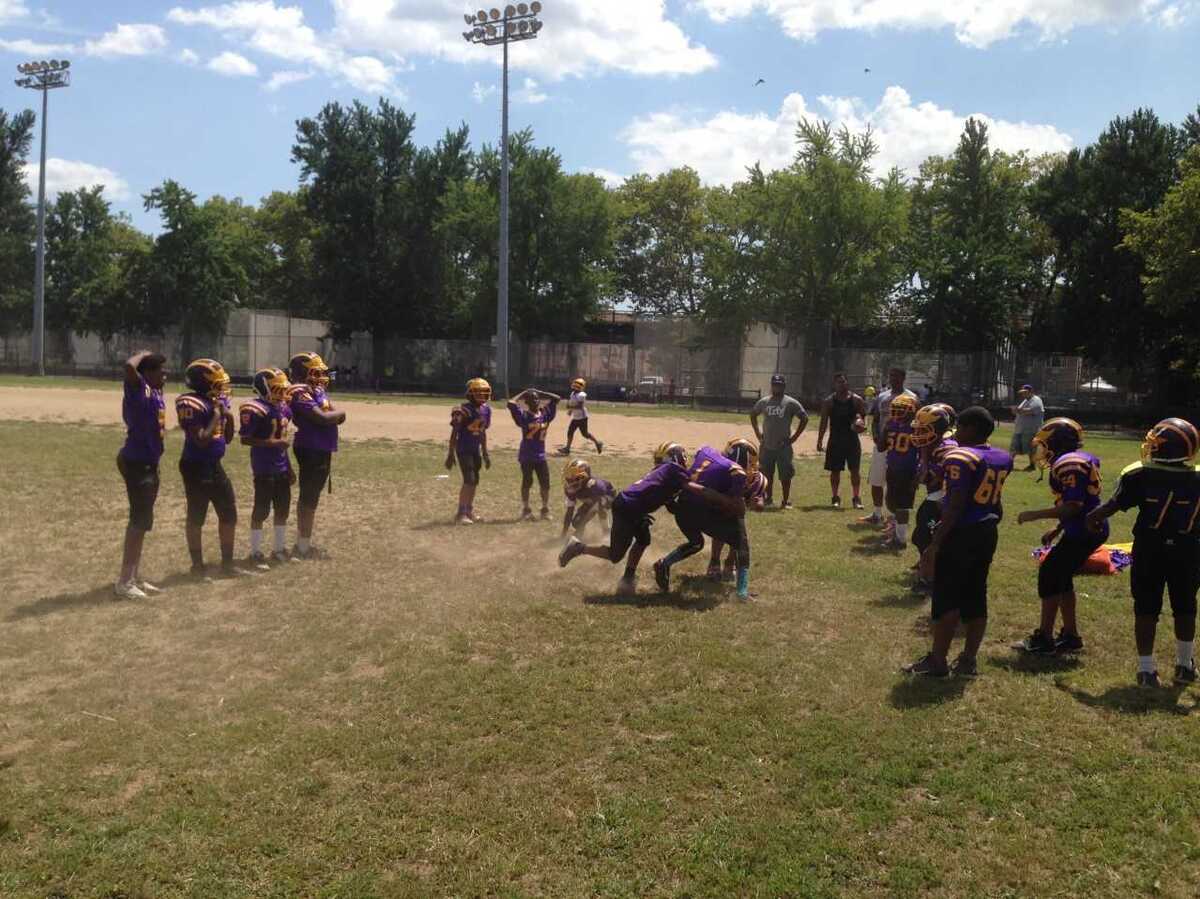
Boys on the Mo Better Jaguars Pee Wee football team collide during tackling drills on the first full-contact practice of the season in August 2014.
Courtesy of Albert Samaha
hide caption
toggle caption
Courtesy of Albert Samaha
A report by the Journal of the American Medical Association, published in 2017, showed that in a study of 111 brains of deceased former National Football League players, 110 had evidence of chronic traumatic encephalopathy (CTE).
CTE has been linked with repeated blows to the head, and can result in behavioral changes and cognitive decline.
Some of the behavioral side effects include difficulty with impulse control, aggression, emotional volatility and rage behavior. Extensive signs of CTE has been found in the brains of former NFL stars such as former New England Patriots tight end Aaron Hernandez, who hung himself in a prison cell while serving a life sentence for murder.
It’s not just NFL players though. The same study showed that in the 202 brains examined across all levels of play, nearly 88 percent of all the brains, 177, had CTE.
Low-income students who choose to play football know about these risks, Samaha said, but have factored it into a bigger risk assessment calculation. For them, playing football is still worth the risk, because they’re trying to avoid other dangers.

Boys on the Mo Better Jaguars youth football team line up for warm ups during practice in September 2014.
Courtesy of Albert Samaha
hide caption
toggle caption
Courtesy of Albert Samaha
“It’s a luxury to worry about these long-term, sort of abstract damages to these kids and their parents,” Samaha said. “The risks are all around them — the risks of not going to high school, the risks of not making it into college, or the risks of of falling into kind of the street path that they’d seen other people around them fall into.”
Football is their ticket out. But Samaha argues that America needs to reckon with the broader ethical implications of the sport.
“America’s dual commitments to football and racial oppression have meant that the danger of the sport will increasingly fall on the shoulders of low income black and brown kids,” Samaha said.
Meanwhile, he says, the money from the sport is mainly going to white coaches and white owners.
Samaha likened the disparity between the people who participate in football and the people who benefit to a “gladiatorial dichotomy.”
Meanwhile, there has been no real decline in viewership for the sport. A 2017 Gallup poll showed that football still leads as America’s favorite sport, with 37 percent of U.S. adults choosing it as their favorite sport to watch.
Millions are expected to watch the Super Bowl on Sunday, including Samaha.
“I feel guilty about it but I watch every Sunday,” he said. “I don’t know how to reckon with that.”
Sunday night, as millions look on, the players will inevitably clash in tangled lines of bodies on the field, perhaps risking a lot for a few yards — risking more to win.

The sun sets behind Mercedes-Benz Stadium in Atlanta, just days before the Los Angeles Rams and New England Patriots take the field in Super Bowl LIII.
David Goldman/AP
hide caption
toggle caption
David Goldman/AP
Better shake off that déjà vu, dear friends.
Sure, for the second time in as many decades, the Super Bowl features a David versus Goliath clash between the Patriots and the Rams — but this time, the teams have swapped roles. The Rams aren’t the big, bad favorites they were back in 2002, the last time they met the Patriots on the NFL’s biggest stage. And the Patriots aren’t exactly the lovable underdogs they were when Tom Brady was just a blushing sophomore.
These days, the Rams hail from Los Angeles, Brady’s Hall of Fame career is old enough to vote and the question on the minds of everyone outside New England is some variation on the following: Could the Patriots please quit winning already?
It’s far from the only question that may get an answer Sunday. Both sides are entering the game with a teeming host of them. That includes what defensive mastermind Bill Belichick has up his sleeve to stop the Rams’ inventive offense, and whether the Patriots coach can be convinced to even wear sleeves with his trademark hoodie.
Whatever answers may come, we’ll be here, live-blogging it all — and because we’re NPR, occasionally tweeting poetry while we’re at it. Check back here around kickoff, and be sure to send us your own #superbowlhaiku if inspiration so moves you.
If we like it, your little poetic gem may just make an appearance here.
In honor of Super Bowl LIII, sports fans across the U.S. tell us what superstitions and rituals they cling to when the pressure is on for their favorite team.
LULU GARCIA-NAVARRO, HOST:
Sports seems to bring out the superstitions in everyone. This Super Bowl Sunday, New England Patriots and Los Angeles Rams fans are going all out for their teams by wearing their lucky shirts, watching their lucky TV’s, eating that game-changing sandwich, like Ellen Straus from Medfield, Mass.
ELLEN STRAUS: I am a rabid Patriots fan and will be rooting for them on Sunday.
GARCIA-NAVARRO: Each week, Straus and a group of friends give the Patriots all the winning energy by eating food and drinks inspired by the opposing team’s city. On the menu today, Korean street tacos, Moscow mules and hot fudge sundaes, all of which have a history in LA. Other match-ups have featured…
STRAUS: Maryland crab cakes for the Baltimore Ravens, Coney Island hot dogs and Reuben sandwiches for the Jets, for Chicago, the Bears, deep-dish pizza.
GARCIA-NAVARRO: In North Conway, N.H., sports is like a religion for some Patriots fans. And the Reverend Doctor Ruth Shaver says in her congregation, it’s encouraged.
RUTH SHAVER: I will wear red, white and blue over to the church. And then I will wear my blue robe with my white stall. And very likely, most of my congregation will either be wearing Pats jerseys, Pats hats, Pats sweatshirts or be wearing red, white and blue.
GARCIA-NAVARRO: But those across the country pulling for the Rams aren’t taking any chances either. Jose Francisco Fonseca of Alpine, Texas, has a superstition about eating anchovies on just about everything.
JOSE FRANCISCO FONSECA: Could be a torta, could be a pizza, a burrito, tacos, whatever. I just eat anchovies on that Sunday.
GARCIA-NAVARRO: He says the game day anchovy tradition came from his uncle.
FONSECA: He would say something about the bounty of the sea and that it brings good fortune.
GARCIA-NAVARRO: But you’re going to be hard-pressed to find anyone who puts more effort into their sports superstitions than Mike Flowers of Fort Defiance, Ariz. He’s rooting for the Patriots tonight. But the lucky Kentucky native reserves his full routine for his favorite team, the University of Kentucky.
MIKE FLOWERS: On game day, I have a certain outfit that I have to wear. And it consists of a pair of old brown Dockers. They’re my lucky pants. So one hour before the games, I light what I call my lucky UK lamp. It’s a clay…
And then I also have a lucky UK banner that I hang outside of my house, so – at 10 minutes before the game. Then I have to open up my lucky UK beer, which is the Sierra Nevada IPA. I have to put the television remote in a certain place. And after halftime, I have to stand. And when I stand, I can only hold my beer in my right hand. I can’t hold it…
At exactly 10 minutes after the game, if we win, I have to blow out my lucky UK lamp. I go outside to take the banner down off the garage door. And it has to be taken down in a certain special manner. And I really can’t give a lot of details about it because if I do, then maybe I’m going to jinx myself.
GARCIA-NAVARRO: So whichever team you’re rooting for tonight, good luck.
Copyright © 2019 NPR. All rights reserved. Visit our website terms of use and permissions pages at www.npr.org for further information.
NPR transcripts are created on a rush deadline by Verb8tm, Inc., an NPR contractor, and produced using a proprietary transcription process developed with NPR. This text may not be in its final form and may be updated or revised in the future. Accuracy and availability may vary. The authoritative record of NPR’s programming is the audio record.
NPR’s Michel Martin discusses how politics have seeped into this year’s Super Bowl with Mark Leibovich of The New York Times, Megan McArdle of The Washington Postand Rodney Carmichael of NPR Music.

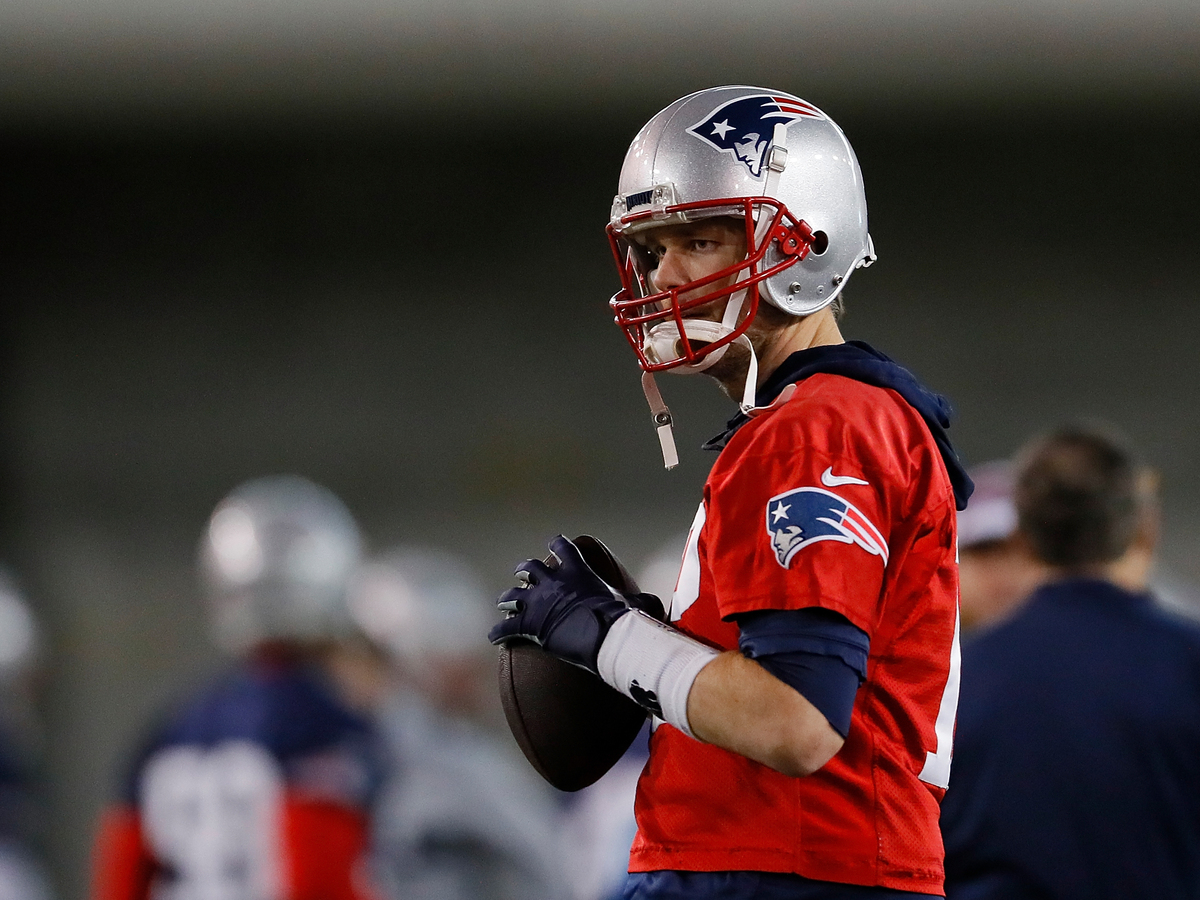
New England Patriots quarterback Tom Brady during practice ahead of Super Bowl LIII.
Kevin C. Cox/Getty Images
hide caption
toggle caption
Kevin C. Cox/Getty Images
Sunday in Atlanta, Super Bowl LIII matches the New England Patriots against the Los Angeles Rams.
Again.
Well not exactly. Seventeen years ago, it was the St. Louis Rams.
But there are parallels between Super Bowls LIII at Mercedes-Benz Stadium and XXXVI at what is now the Mercedes-Benz Superdome, beyond luxury cars.
In 2002, the Patriots were led by second year head coach Bill Belichick and second year quarterback Tom Brady. In 2019, they’re appearing in their ninth Super Bowl together — they’ve won five — and they are considered by many to be the GOAT of their professions — Greatest Of All Time.
In 2002, the Rams had the league’s most combustible offense. Averaging 32 points per game for the entire season leading up to the Super Bowl, the Rams were nicknamed “The Greatest Show on Turf.” In 2019, the Rams again are an offensive juggernaut, again averaging 32 points per game for the entire season leading up to the Super Bowl.

New England Patriots head coach Bill Belichick walks the field during Super Bowl practice on Feb. 1, 2019.
Kevin C. Cox/Getty Images
hide caption
toggle caption
Kevin C. Cox/Getty Images
New England won Super Bowl XXXVI by a score of 20-17 and they did it by grounding the high-flying Rams’ offensive attack. Specifically, Belichick set the tone for the team’s future success by identifying the Rams’ offensive strength, and then neutralizing it. Rams all-pro running back Marshall Faulk was the man in the crosshairs, and New England battered him, holding Faulk to a pedestrian 76 yards rushing and no touchdowns, and successfully flustered the St. Louis offense in the process.
Will Belichick and the Patriots have the same success against the 2019 Rams?
That leads us to….
1) Who exactly do the Patriots neutralize?
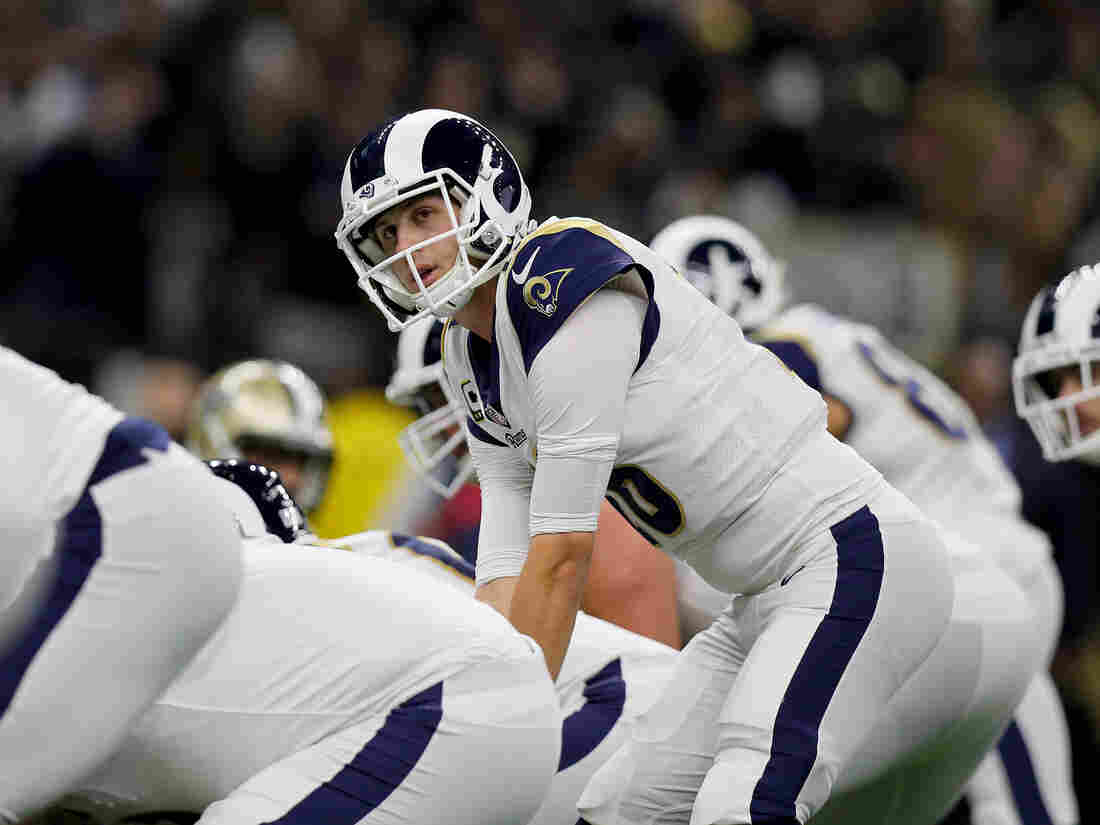
The Rams are loaded with offensive talent, but here’s the challenge for Belichick: there’s no real key to LA’s offense. Shut down star running back Todd Gurley (more on him coming up), and suddenly resurgent C.J. Anderson will hurt you. Commit to stopping wide receiver Brandin Cooks, Robert Woods will fill the void, and vice versa. Josh Reynolds also is a dangerous pass catcher. There are two tight ends who contribute to the offense. And tying it all together is young, up-and-coming quarterback Jared Goff. Of all of those, Goff may be the man Belichick singles out.
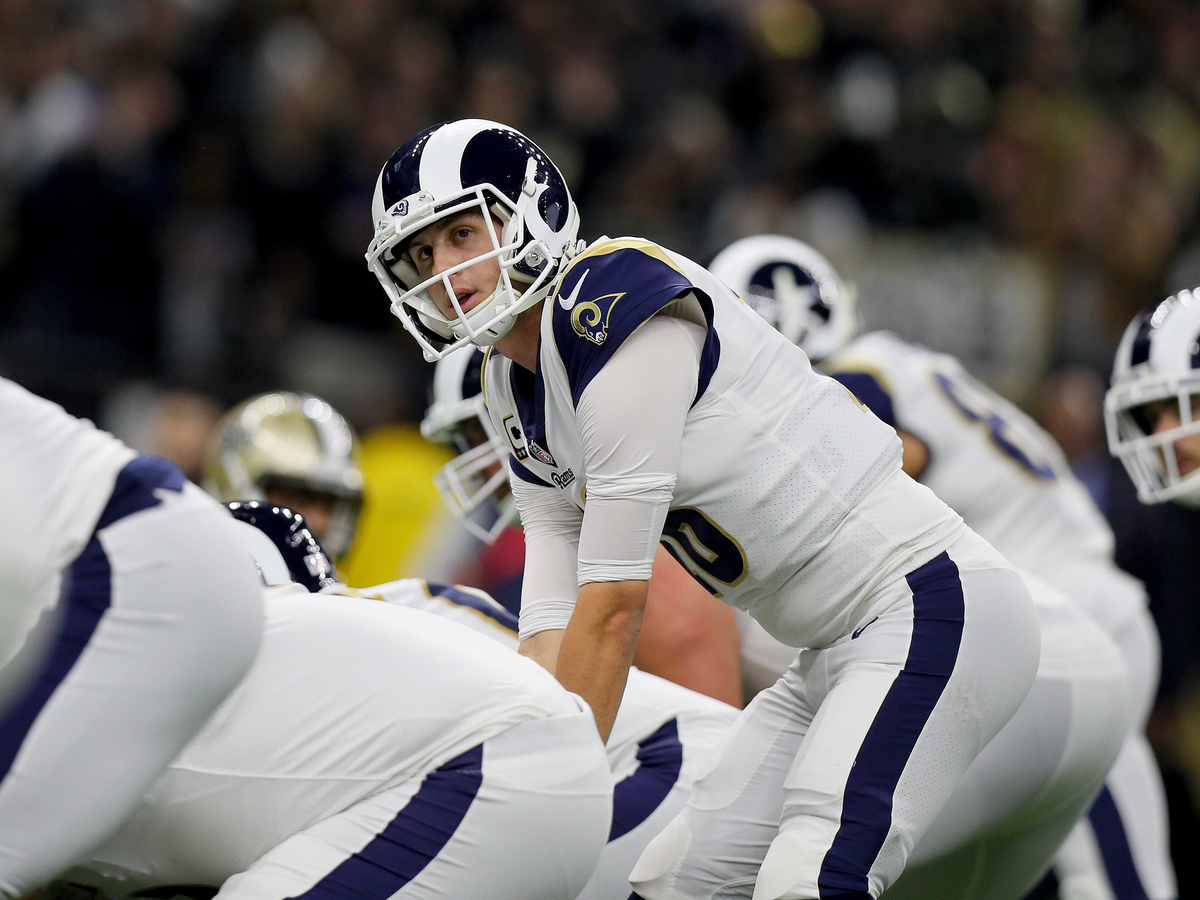
Jared Goff of the Los Angeles Rams takes a snap during the second half of the NFC Championship game on Jan. 20, 2019.
Jonathan Bachman/Getty Images
hide caption
toggle caption
Jonathan Bachman/Getty Images
Belichick has had two weeks to figure out a plan. Most assume he’s concocted something ingenious. Or? Are the Rams simply too dynamic, too versatile to stop with 33-year-old head coach and offensive mastermind Sean McVay calling the kind of game that leaves the veteran Patriots trying, and failing, to keep their balance?
2) Tom Brady vs. Aaron Donald
It’s totally unfair to distill a football game, with all its working parts, down to two opposing players. The sports media do it as a lazy way to gin up interest. “Ooooo, it’s Brady versus Goff for Super Bowl LIII!”
No it isn’t.
But in this case, it’s fair to say whoever wins a battle between Brady, New England’s GOAT quarterback, and Donald, LA’s defensive tackle of the moment, could signal who wins the game.
Aaron Donald, pictured left, and Dante Fowler, Jr. of the Los Angeles Rams chat before practice for Super Bowl LIII on Jan. 30, 2019.
Scott Cunningham/Getty Images
hide caption
toggle caption
Scott Cunningham/Getty Images
Today’s NFL is about passing, on offense, and trying to disrupt the passer, on defense. There’s a premium on lightening quick pass rushers — Khalil Mack transformed Chicago’s defense and the entire Bears team into a fearsome opponent. Likewise, Donald has become the face of a menacing Rams pass rush. His practice regimen of catching a tennis ball ball before it bounces twice doesn’t seem particularly menacing. But when the tennis ball becomes a quarterback? Quarterback beware.
Which is what Brady will have to do Sunday. But there’s a reason Brady is not only standing at 41, but thriving. He’s a master at getting rid of the ball quickly, around two-and-a-half seconds on average from snap to throw. There are other elements, including New England’s diverse and effecting rushing attack, that allow Brady to remain largely untouchable. But the quick pass is a key, and it presents a challenge for Donald, Ndamukong Suh and the rest of the Rams rushers. Can New England’s underrated but very good offensive line contain Donald, keep him from breaking through the middle of the line and give Brady those precious two to three seconds? If so, the Patriots have a much better chance for success. If not, advantage Rams.
A post shared by 2Tenths (@210ths) on Jul 26, 2018 at 10:20am PDT
3) Which Todd Gurley will show up?
For most of the 2018 season, Todd Gurley again was one of the best running backs in the NFL. He led the league in regular season touchdowns and was third in yards gained. He was slowed at the end of the season with an injured knee, but returned in the Rams first playoff game, a win over Dallas in which Gurley looked like Gurley — 115 yards and a touchdown.
The thing was, in that same game, another Rams running back stole the show. C.J. Anderson ran for 123 yards and scored two touchdowns. LA signed Anderson late in the season. He played in two Super Bowls for the Denver Broncos, and was a major contributor in Denver’s 2016 Super Bowl victory over the Carolina Panthers. The Broncos released Anderson last year. He cycled through two teams before signing with LA less than two months ago.
And he’s been a revelation.
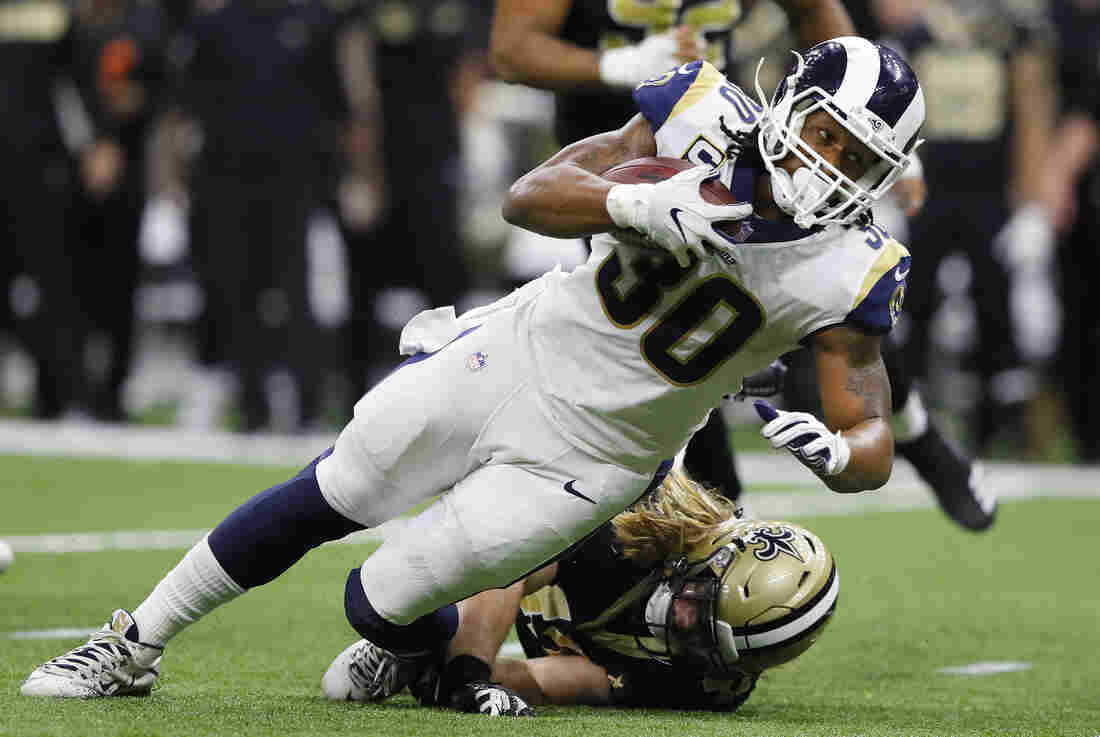
Todd Gurley of the Los Angeles Rams runs the ball during the fourth quarter in the NFC Championship game on Jan. 20, 2019.
Kevin C. Cox/Getty Images
hide caption
toggle caption
Kevin C. Cox/Getty Images
Anderson has turned the Rams rushing attack into a two-headed monster. His different style of running from Gurley, more straight ahead, low to the ground — he’s only 5’8 — allows the Rams to vary their attack within a game, which leaves defenses trying to react quickly. Anderson, in fact, was the featured back in LA’s NFC Championship game win, even though Gurley reportedly was healthy. Gurley’s measly four carries in that game was a major topic of conversation and concern afterwards — head coach McVay kind of defused things with his post game comments.
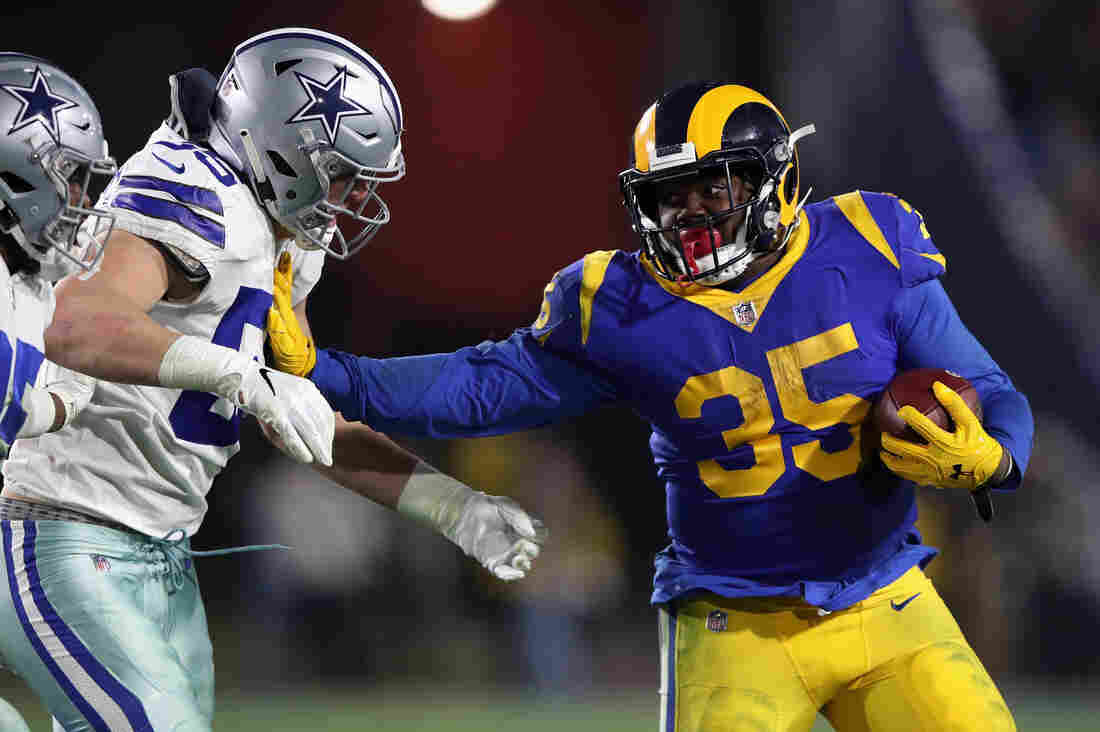
C.J. Anderson of the Los Angeles Rams runs the ball during the NFC Divisional Playoff game on Jan. 12, 2019.
Sean M. Haffey/Getty Images
hide caption
toggle caption
Sean M. Haffey/Getty Images
Rams quarterback Jared Goff said he expects Gurley to have “a hell of a game in the Super Bowl.” But will he? This take says Anderson should be the preferred runner because of his loose hips and ability to head outside but then cutback to inside rushing lanes.
Gurley has MVP talent. But in Atlanta, Anderson may have the ball.
4) Will the halftime show be more than music?
A number of high profile artists, including Jay-Z, Rihanna and Cardi B, turned down the chance to perform at halftime as a way to support former San Francisco 49ers quarterback Colin Kaepernick. In 2016, Kaepernick became the first player to take a knee during the national anthem as a way to protest police treatment of minorities and social injustice. He filed a grievance against the NFL alleging teams have colluded to keep him out of the league.
Asked about Kaepernick at his pre-Super Bowl press conference this week, NFL Commissioner Roger Goodell said, “I think if a team decides that Colin Kaepernick, or any other player, can help their team win, that’s what they’ll do. They want to win and they make those decisions individually, to the best interest of their club.”
In response, Kaepernick’s lawyer, Mark Geragos said, “I think the Commissioner was roasted appropriately on social media [for his comments]. Anybody who believes that will believe that Mark Sanchez [a journeyman quarterback signed this year by Washington] was a better choice, or some of the other, how shall I put it delicately, people that were well past their prime that were signed this year.”
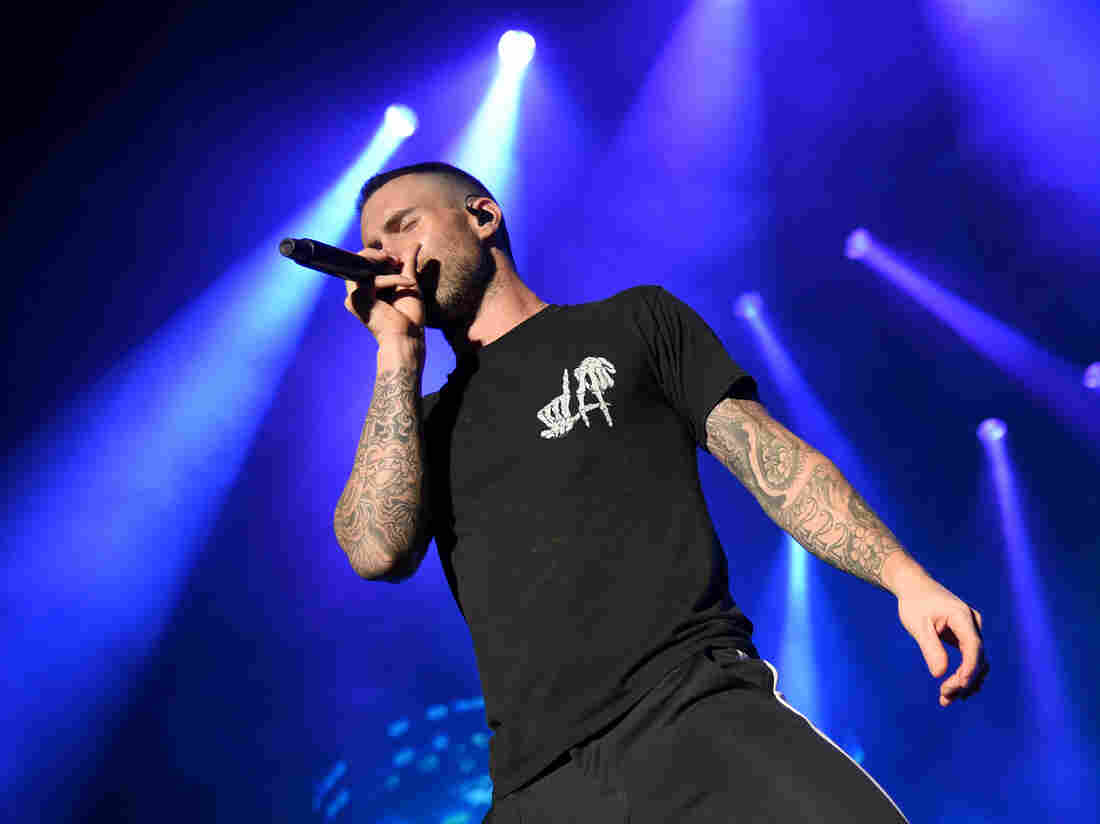
The halftime show now is part of the Kaepernick controversy. Maroon 5 signed up as the lead act and the band will be joined by rappers Travis Scott and Big Boi. A petition asking Maroon 5 to drop out has gotten more than 100, 000 signatures, and there have been calls for the performers to take a knee in solidarity with Kaepernick. In an interview, Maroon 5’s Adam Levine said activists “will be [heard], that’s all I want to say because I don’t want to spoil anything.”
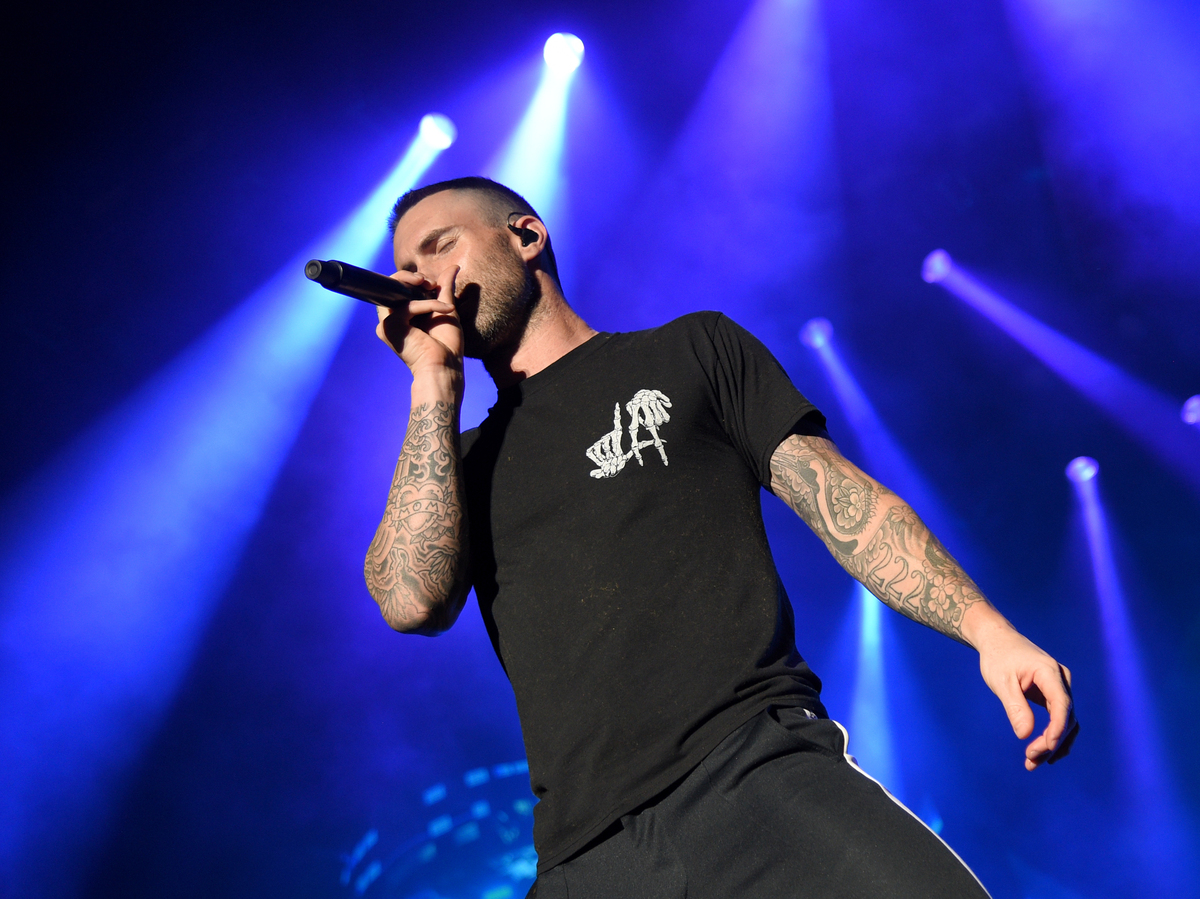
Adam Levine of Maroon 5 performs during the NCAA March Madness Music Festival on April 1, 2018.
Michael Loccisano/Getty Images for Turner
hide caption
toggle caption
Michael Loccisano/Getty Images for Turner
No follow up to that comment, because the NFL cancelled a Maroon 5 press conference this week in Atlanta.
5) You wanna bet? CBS doesn’t.
In May of last year, the Supreme Court struck down a 26-year-old federal law banning sports betting in most states.
In the 6-3 opinion, Justice Samuel Alito wrote, “The legalization of sports gambling requires an important policy choice, but the choice is not ours to make. Congress can regulate sports gambling directly, but if it elects not to do so, each state is free to act on it own.”
Several did, and they’re hoping to take full advantage of the Super Bowl, aka the biggest sports betting day of the year. People in Rhode Island, Delaware, Mississippi, New Jersey, Pennsylvania, West Virginia and the District of Columbia, who want to lay down bets on the Patriots, Rams, or the over/under on the length of Gladys Knight’s rendition of the national anthem, can stay home instead of travelling to Nevada, which basically had a monopoly on sports gambling until the Supreme Court’s decision.
But despite the decision, CBS won’t say a peep about it during its broadcast of the game, or during the pregame show.
“It’s only legalized in a few states,” says CBS Sports chairman Sean McManus. “We just had made the decision that it’s not the right thing to do now.”
Critics say CBS’s decision is shortsighted. According to the American Gaming Association, 22.7 million American adults plan to bet a total of six billion dollars on the Super Bowl.
“It’s real. It’s happening and you’re sticking your head in the sand if you’re an executive and you don’t at least address it,” says former veteran network sportscaster Brent Musburger. He now works for VSiN, a national sports gambling news network in Las Vegas.
“There should be part of the [Super Bowl] pregame show, in fact the last hour should show some of the crowds in New Jersey because it’s coming,” Musburger said on the Sports Illustrated Media Podcast.
McManus says the ban on gambling talk isn’t new and that it includes college football telecasts of the SEC on CBS as well as the NFL. He adds, “We’re very flexible, and we’re talking to all the different gaming companies out there. We may change, but right now, we’ve decided not to do it.”
So those tuning in to hear CBS analyst Tony Romo’s popular predictions won’t hear anything about point spreads or prop bets. Although Romo did offer a little guidance during a pre-Super Bowl press conference this week.
“I’m going to go 28-24,” Romo answered when asked to predict a final score. “And I think the team who has 24 has the ball at the end, and they don’t score.”
It’s up to bettors to figure out which team scores 28 and which scores 24. Because Sunday, Romo won’t be giving up anything else. Network orders.
As more states legalize marijuana, there are growing calls from professional football players to let them use pot to manage and alleviate their pain.
SCOTT SIMON, HOST:
The NFL season comes to an end with the Super Bowl tomorrow. For many players, the season’s been long, bruising and filled with injuries. Some take painkillers to make it through. But there is one drug they are not allowed to use – marijuana. As more states legalize marijuana for medicinal and recreational use, pro football is wrestling with whether they ought to, as well. From member station WGBH in Boston, Esteban Bustillos has our report.
ESTEBAN BUSTILLOS, BYLINE: Jamie Brown’s NFL career wasn’t one that would make headlines.
(SOUNDBITE OF ARCHIVED RECORDING)
UNIDENTIFIED COMMENTATOR: Up front – Jamie Brown, Ray Brown, Chris Dalman…
BUSTILLOS: This was back in 1998 when he played for the San Francisco 49ers. He would spend five seasons in the NFL as an offensive lineman, including stints with Denver and Washington. His body got pummeled. Brown says he took whatever he could stay on the field – Advil, Tylenol and stronger drugs, like Percocet. Eventually, a habit grew.
JAMIE BROWN: It’s a ugly cycle that has no like – at least when I was playing, it had no shame associated with it. It was just mandatory. You got to do what you got to do so you can do what you want to do.
BUSTILLOS: Brown’s story isn’t unusual for NFL players. And now there’s a growing movement to use alternatives to painkillers, including the use of marijuana. For now, the NFL bans its use. If a player is caught, they can be fined or suspended. As more states have legalized marijuana, the public stigma has decreased. Brandon Parker with the NFL Players Association says he’s hearing from more players who wants to use marijuana to help treat their pain.
BRANDON PARKER: We’re still definitely in the exploratory phase. But the fact that we’re having these discussions, looking into this research – we’re definitely aware of the possibilities that it could have to help our players.
BUSTILLOS: One of the union’s priorities is making sure it’s complying with the law. But the patchwork of different legal policies in states makes that difficult – even as marijuana is prohibited federally. There are 32 NFL teams in 23 states. About half those states allow medical marijuana and another five also permit recreational marijuana. Gary Feldman is an attorney in Boston. He says in several states where marijuana is legal, there are no protections for employees who use recreational weed. But if employers don’t want to disqualify large chunks of potential employees, he can see policies changing.
GARY FELDMAN: Or it’s going to take legislative action at the state level to give job-related protections to people who use marijuana where it’s lawful and their use is not during working time and they’re not impaired in any way during working hours.
BUSTILLOS: After Jamie Brown retired from football, he started using weed socially. And it helped him cope with pain he still had. So he began to advocate for its use. He doesn’t take pain pills anymore to deal with the residual effects of his career.
BROWN: My pain management, especially when it comes to having issues with headaches and not being able to sleep and – gosh, I can’t describe how this flower is everything to me when it comes to that. And I’m extremely thankful.
BUSTILLOS: For now, marijuana use remains out of bounds for NFL players. But that might change. The players union is having early talks to decide whether medical marijuana should be a permitted drug when the next the union contract is up for debate in two years. For NPR News, I’m Esteban Bustillos in Boston.
(SOUNDBITE OF DANIJEL ZAMBO’S “SUNNY DAY”)
Copyright © 2019 NPR. All rights reserved. Visit our website terms of use and permissions pages at www.npr.org for further information.
NPR transcripts are created on a rush deadline by Verb8tm, Inc., an NPR contractor, and produced using a proprietary transcription process developed with NPR. This text may not be in its final form and may be updated or revised in the future. Accuracy and availability may vary. The authoritative record of NPR’s programming is the audio record.




/cdn.vox-cdn.com/uploads/chorus_image/image/61519737/1038904254.jpg.0.jpg)